


Latest by
-
 Another fire breaks out at SK hynix's plant in Cheongju SEOUL, June 12 (AJP) - A fire broke out at SK hynix's chip plant in Cheongju, North Chungcheong Province on Friday, injuring one worker and forcing about 4,000 employees to evacuate. The fire came less than two weeks after a similar incident at the same plant on June 1. According to workers and fire officials, flames started at around 9:55 a.m. in a gas room on the second floor of its M15X facility at the plant. The fire was fully extinguished within about 10 minutes after the automatic sprinkler system was activated. The fire is believed to have occurred while six workers were mixing fluorine and nitrogen inside the room. Fluorine is toxic to humans. All employees were immediately evacuated due to concerns over a possible gas leak. Fire authorities said no gas leak was detected, but about 13 workers who complained of symptoms such as dizziness were taken to an on-site hospital. One worker at the scene suffered a first-degree burn to his ankle, while the rest were apparently found to have no health issues. With authorities reportedly still unable to determine the cause of the fire earlier this month, SK hynix had launched a companywide campaign from June 4 to June 10 in response to a series of recent incidents. The M15X facility is one of SK hynix's key production bases for manufacturing next-generation high-bandwidth memory (HBM) chips, a critical component used in artificial intelligence (AI)-related applications. 2026-06-12 14:29:24
 -
![[North and Central America World Cup] New Soccer Rules: 8-Second Rule and More](https://image.ajunews.com//content/image/2026/06/12/20260612142011350235_518_323.jpg) [[North and Central America World Cup]] New Soccer Rules: '8-Second Rule' and More As the 2026 North and Central America World Cup kicks off, attention is focused on new game regulations introduced by FIFA and the International Football Association Board (IFAB). The main goal of these regulatory changes is to reduce time-wasting and increase actual playing time. Changes have been made in various areas, including player substitutions, goalkeeper ball handling, injury treatment, and communication between players. The most notable change is the player substitution rule. Players leaving the field must exit within 10 seconds after the referee's signal. They can leave through the nearest touchline or goal line, and failure to comply means the incoming substitute cannot enter immediately. The substituted player may only return to the field after at least one minute has passed following the resumption of play and during the next stoppage. An '8-second rule' has also been introduced to prevent goalkeepers from wasting time. If a goalkeeper holds the ball for more than 8 seconds after gaining possession, a corner kick will be awarded to the opposing team. Previously, a goalkeeper holding the ball for over 6 seconds would result in an indirect free kick, but this was rarely enforced in actual matches, prompting the change. The rules regarding goal kicks and throw-ins have also been strengthened. However, contrary to what some fans might think, the rule stating that a goal kick must be taken within 8 seconds to avoid a corner kick is not accurate. This is a separate rule from the goalkeeper's 8-second possession rule. If the referee determines that there is intentional time-wasting, they will publicly count down, and if the game is not resumed within the time limit, possession will be awarded to the opposing team. In the case of a goal kick, this could lead to a corner kick for the opposing team, while a throw-in situation could result in a throw-in for the other side. Injury treatment regulations have also changed. If a field player is injured and requires medical attention, they cannot return to the field for one minute after play resumes. However, exceptions are made for serious injuries such as goalkeeper injuries, head collisions, and penalty kick situations. This aims to reduce unnecessary delays and time-wasting. Player conduct regulations have been tightened as well. FIFA is focusing on preventing unsportsmanlike behavior, such as racist remarks or insults, particularly in situations where players confront or engage with each other while covering their mouths. Additionally, the scope of Video Assistant Referee (VAR) intervention has been expanded. VAR will now be involved in cases of mistaken warnings, missed second yellow cards, and some clear errors in judgment, which is expected to enhance the accuracy of game management. Soccer fans have reacted positively, stating, "Time-wasting tactics will likely become more difficult now," "The goalkeeper's 8-second rule will be noticeable," "There will be fewer players delaying substitutions," and "Actual playing time will increase, making the game more enjoyable."* This article has been translated by AI. 2026-06-12 14:27:00
[[North and Central America World Cup]] New Soccer Rules: '8-Second Rule' and More As the 2026 North and Central America World Cup kicks off, attention is focused on new game regulations introduced by FIFA and the International Football Association Board (IFAB). The main goal of these regulatory changes is to reduce time-wasting and increase actual playing time. Changes have been made in various areas, including player substitutions, goalkeeper ball handling, injury treatment, and communication between players. The most notable change is the player substitution rule. Players leaving the field must exit within 10 seconds after the referee's signal. They can leave through the nearest touchline or goal line, and failure to comply means the incoming substitute cannot enter immediately. The substituted player may only return to the field after at least one minute has passed following the resumption of play and during the next stoppage. An '8-second rule' has also been introduced to prevent goalkeepers from wasting time. If a goalkeeper holds the ball for more than 8 seconds after gaining possession, a corner kick will be awarded to the opposing team. Previously, a goalkeeper holding the ball for over 6 seconds would result in an indirect free kick, but this was rarely enforced in actual matches, prompting the change. The rules regarding goal kicks and throw-ins have also been strengthened. However, contrary to what some fans might think, the rule stating that a goal kick must be taken within 8 seconds to avoid a corner kick is not accurate. This is a separate rule from the goalkeeper's 8-second possession rule. If the referee determines that there is intentional time-wasting, they will publicly count down, and if the game is not resumed within the time limit, possession will be awarded to the opposing team. In the case of a goal kick, this could lead to a corner kick for the opposing team, while a throw-in situation could result in a throw-in for the other side. Injury treatment regulations have also changed. If a field player is injured and requires medical attention, they cannot return to the field for one minute after play resumes. However, exceptions are made for serious injuries such as goalkeeper injuries, head collisions, and penalty kick situations. This aims to reduce unnecessary delays and time-wasting. Player conduct regulations have been tightened as well. FIFA is focusing on preventing unsportsmanlike behavior, such as racist remarks or insults, particularly in situations where players confront or engage with each other while covering their mouths. Additionally, the scope of Video Assistant Referee (VAR) intervention has been expanded. VAR will now be involved in cases of mistaken warnings, missed second yellow cards, and some clear errors in judgment, which is expected to enhance the accuracy of game management. Soccer fans have reacted positively, stating, "Time-wasting tactics will likely become more difficult now," "The goalkeeper's 8-second rule will be noticeable," "There will be fewer players delaying substitutions," and "Actual playing time will increase, making the game more enjoyable."* This article has been translated by AI. 2026-06-12 14:27:00 -
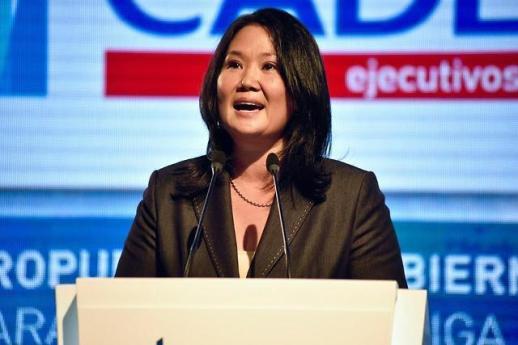 Keiko Fujimori Wins Peru Presidential Election Amidst Rising Conservative Trend in Latin America Keiko Fujimori, leader of the Popular Force party and daughter of former Peruvian President Alberto Fujimori, has won the presidential election. Her conservative platform, emphasizing a strong response to violent crime, aligns Peru with the growing trend of conservative and right-wing governments in Latin America. The Wall Street Journal reported on June 11 that Fujimori has effectively secured victory in the runoff election, leading leftist candidate Roberto Sanchez by a narrow margin. With over 98% of votes counted, Fujimori received 50.002% of the votes, with the gap between the candidates amounting to just a few hundred votes out of approximately 20 million cast. Sanchez has not yet conceded defeat, and some of his supporters have raised unfounded allegations of electoral fraud. Sanchez stated, "We will protect the victory of the people." Given the slim margin, there is potential for ongoing opposition challenges even after the new government takes office. The key issue in this election was public safety. Peru has seen a rise in violent crime, extortion, illegal mining, and cocaine trafficking, leading to increased social unrest. Fujimori promised to build high-security prisons, deport illegal immigrants, and allow masked trials to protect judges. The new president is the eldest daughter of Alberto Fujimori, who ruled Peru from 1990 to 2000. While he is credited with suppressing Maoist insurgents and hyperinflation, his presidency ended amid controversies over congressional dissolution, political repression, corruption, and human rights abuses, leading to his imprisonment for extrajudicial killings. Keiko Fujimori entered politics at age 19 when her father appointed her as First Lady in 1994. After winning a seat in Congress in 2006, she made three unsuccessful bids for the presidency before finally winning in her fourth attempt. Her father's political legacy has been both an asset and a burden throughout her career. However, her presidency will face challenges. She becomes the tenth president of Peru in the last decade. The political landscape has been marked by extreme instability, with Congress frequently using a "moral incapacity" clause to swiftly impeach presidents. Concerns about a return to authoritarianism also linger. Critics argue that the conservative coalition led by Fujimori has weakened investigative bodies and the judiciary, undermining democracy. In response, Fujimori's camp insists they will adhere to constitutional term limits and deny any intent to govern in a dictatorial manner. This election result reflects a shift in the political landscape of Latin America. The Wall Street Journal noted that the only remaining center-left governments in South America are in Uruguay, Colombia, and Brazil, with the possibility of conservative victories in upcoming elections in Colombia and Brazil. Frustrated by rising crime and economic stagnation, voters are increasingly opting for messages of order and stability, tilting the regional political landscape toward conservatism.* This article has been translated by AI. 2026-06-12 14:24:00
 -
 Partial Remains Found in Incheon Raise Concerns for Local Schools Incheon authorities are on high alert after partial human remains, believed to belong to a student or a woman, were discovered at a public recycling facility. According to Yonhap News on June 12, the Incheon Police Agency sent an emergency notice to all elementary, middle, and high schools, as well as special education institutions in the area, requesting their cooperation in the investigation. The notice asked schools to provide lists of students who were absent or had been absent for an extended period from June 10 to 11, to assist in identifying the victim. On June 10, a leg, presumed to be human, was found at the Southern Incheon Resource Recovery Center in Songdo-dong. The remains measured over 40 centimeters from just below the left knee to the heel and were reportedly wrapped in bandages. Police are considering the possibility that the victim may be a young student or a woman based on the foot size, which is estimated to be between 210 and 220 millimeters. Following the news, schools have shown heightened concern. Some institutions have begun contacting parents directly to verify the whereabouts of absent students. The Incheon Metropolitan Office of Education also distributed a notice and response manual to educational support offices and schools, emphasizing the need to strengthen monitoring of unexcused absences. An official from the Incheon Metropolitan Office of Education stated, "So far, there have been no unusual reports among students with unexcused absences, and we plan to cooperate fully with the police investigation."* This article has been translated by AI. 2026-06-12 14:21:00
 -
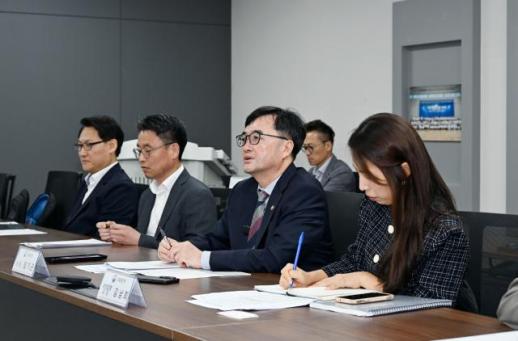 Government Disburses 5.7 Trillion Won in Support for 32.38 Million Amid High Oil Prices The government is accelerating its financial execution efforts to meet its budget goals for the first half of the year. The rapid execution in the public sector has surpassed 348 trillion won, and support payments for those affected by high oil prices have reached a total of 5.7 trillion won for 32.38 million recipients. On June 12, Im Gi-geun, Vice Minister of the Ministry of Economy and Finance, chaired the 11th joint financial execution review meeting at the Government Sejong Center, where he assessed the status of rapid execution of the main budget and supplementary budget for the first half of the year. As of June 5, the rapid execution in the public sector (including finance, public institutions, and private investment) was recorded at 348.4 trillion won, achieving an execution rate of 53.0%. This marks an increase of 16.8 trillion won compared to the same period last year. Among the key projects under close management, 22.2 trillion won out of a total of 34.5 trillion won has been executed, with an execution rate of 64.4%, on track to meet the first-half target of 70%. For the supplementary budget, 7.4 trillion won has been executed out of a management target of 10.5 trillion won, resulting in an execution rate of 71%. The government is enhancing execution management across departments to ensure that the effects of supplementary budget projects, including those addressing high oil prices, are realized promptly. By the end of May, 4.7 trillion won had been disbursed from the national budget of 4.8 trillion won for the high oil price support program, achieving a remarkable execution rate of 99%. As of May 28, a total of 32.38 million applicants had been recorded, with total payments, including local funding, amounting to 5.7 trillion won. The government has assessed that this support is contributing to alleviating the burden of high oil prices and revitalizing local economies. Vice Minister Im stated, "Thanks to the efforts of each department to achieve the first-half execution goals, the overall execution performance is showing a positive trend. I urge everyone to ensure that the execution plans are implemented without any setbacks in the remaining period." He added, "We must not only focus on increasing the execution rate but also ensure that the effects of financial support are felt in the lives of the people by continuously monitoring project-specific challenges and resolving procedural bottlenecks."* This article has been translated by AI. 2026-06-12 14:18:00
 -
 Increased Awareness of Cybersecurity Risks Among SMEs Following Data Breaches Amid rising concerns over cybersecurity following a series of data breaches at major platforms, the South Korean government is taking steps to protect small and medium enterprises (SMEs) that hold critical technologies. According to the Korea Internet & Security Agency (KISA), 89.4% of ransomware attack reports in the country last year were concentrated among SMEs and mid-sized companies. Notably, the manufacturing sector accounted for 47.4% of these incidents, surpassing traditionally security-focused industries like information services (15.8%) and finance (10.5%). In response to the threats facing the backbone of the national supply chain, the Ministry of SMEs and Startups has allocated 2.2 billion won this year to significantly enhance the 'Technology Guardian Service' under Article 18 of the Technology Protection Act. This initiative aims to prevent both external cyberattacks and insider technology leaks. The core of this strategy is to establish a 24/7 defense system to support SMEs that lack dedicated cybersecurity personnel. The ministry will implement a '365-day, 24-hour security monitoring' system to detect unusual signs of technology leaks from online hacking in real-time, effectively blocking cyberattacks and preventing technology theft. Additionally, the ministry will bolster its capabilities in detecting malicious software and ransomware. It plans to provide companies with malware detection and blocking programs, while central monitoring will proactively defend against illegal data leaks and file encryption due to ransomware infections. The initiative also includes measures to prevent internal information leaks, which can be just as damaging as external breaches. Solutions will be provided to detect and respond to illegal technology leaks by employees using USB drives or email. Through the Technology Guardian Service, selected SMEs will receive free cybersecurity monitoring and software support for three years. After this period, the ministry plans to offer up to 8.8 million won per company for ongoing online and offline security activities. Special provisions will be made for defense companies and SMEs in critical national industries, extending support periods and adding benefits to minimize risks to the national supply chain. A ministry official stated, "The Technology Guardian Service will serve as a strong defense for small manufacturers that have become targets for hackers, even without a dedicated security staff."* This article has been translated by AI. 2026-06-12 14:12:00
 -
 Hanmi Semiconductor Shares Surge Over 20% Following SpaceX Investment Announcement Hanmi Semiconductor's shares have risen over 20% following the announcement of a 50 billion won investment in SpaceX. According to the Korea Exchange, as of 1:48 PM, Hanmi Semiconductor's stock was trading at 349,500 won, up 58,500 won (20.10%) from the previous trading day. The decision to invest in the aerospace company SpaceX has sparked optimism among investors regarding future growth potential. Hanmi Semiconductor announced at 9:01 AM that its board of directors had resolved to invest 50 billion won in SpaceX. This investment represents approximately 7.24% of the company's equity, which totals 690.3 billion won. The acquisition is scheduled for June 16 and will be conducted through on-market purchases. The company stated that the investment aims to capitalize on the explosive demand for artificial intelligence (AI), satellite communications, aerospace, and advanced semiconductor technologies, highlighting the growth potential of Elon Musk's Terafab and SpaceX. SpaceX is set to go public tonight, with an expected market capitalization of $1.75 trillion based on an offering price of $135 per share. The offering size is projected to be $75 billion, surpassing the previous record held by Saudi Aramco at $29.4 billion. Lee Jae-gwang, a researcher at LS Securities, noted that while the price-to-sales ratio (PSR) is high based on the offering price, SpaceX has secured a near-monopoly position in the infrastructure layer of the AI, connectivity, and space markets. He added that the vertical integration from infrastructure to chips (Terafab) to models (Grok) and applications (Cursor) could significantly improve profitability in the long term.* This article has been translated by AI. 2026-06-12 14:09:00
 -
 SpaceX Faces Valuation Debate Ahead of IPO as Investors Express Concerns SpaceX has announced a staggering valuation of $1.77 trillion ahead of its initial public offering (IPO). However, some investors are expressing skepticism, suggesting that the company is overly reliant on CEO Elon Musk's future visions rather than its current performance, according to a report by The New York Times on June 11. According to the Times, the company has set its IPO price at $135 per share, which translates to a valuation of $1.77 trillion. SpaceX is expected to begin trading on the stock market on Friday, with this IPO seen as a test of market confidence in Musk's strategies related to space and artificial intelligence (AI). The primary concern revolves around the company's financial health. The Times reported that SpaceX incurred a loss of $4.3 billion in the first quarter of this year, while revenue for the same period was $4.7 billion. Although revenue is increasing, there are doubts about whether the valuation exceeding $1 trillion can be justified given the substantial costs associated with AI development. Long-term growth projections are also fueling controversy. The company claims that the market it anticipates tapping into could reach $28.5 trillion, which includes plans for AI data centers in space and factories on the Moon. The Times noted that “to realize such blueprints, unproven technologies and business viability must be demonstrated.” Prominent investors have publicly raised questions as well. Jim Chanos, who predicted the Enron collapse, expressed concerns about SpaceX's financial structure. Michael Burry, known for predicting the 2008 financial crisis, pointed out that even if the stock price rises post-IPO, it may rely more on investor enthusiasm and buying pressure than on actual performance. Ross Gerber, CEO of Gerber Kawasaki and an existing shareholder, remarked, “The company’s valuation has skyrocketed from $400 billion 13 months ago to $1.77 trillion now,” adding that “investors are paying a very high price.” Investment banks are presenting even more aggressive figures. The Times, citing the Financial Times, reported that Goldman Sachs informed investors that SpaceX's revenue, which was $18.7 billion last year, could increase to $474 billion by 2030. According to The Wall Street Journal, Morgan Stanley shared projections estimating revenue could reach $3.4 trillion by 2040. Conversely, investment analysis firm Morningstar has deemed the IPO price as overvalued, estimating the fair value at around $780 billion. However, they noted that in the most optimistic scenario, where the technology for reusing the Starship rocket like an aircraft and the economics of space data centers are proven, the valuation could rise to $1.97 trillion. Musk's rapid shifts in business direction ahead of the IPO are also seen as a source of uncertainty. The Times reported that Musk began mentioning plans for space data centers last year and has emphasized related strategies after merging his AI company, xAI, with SpaceX in February. Since then, the company has been increasing its focus on AI, pursuing acquisitions like the coding startup 'Cursor' and contracts to lease AI computing servers to Anthropic and Google. Skeptics believe that the long-term plans are undergoing significant changes just before the IPO. Chanos stated, “xAI is transitioning from a company developing AI models to an emerging cloud service provider renting servers to other firms,” adding that this sector is akin to an infrastructure business that tends to receive relatively low valuations in public markets.* This article has been translated by AI. 2026-06-12 13:57:00
 -
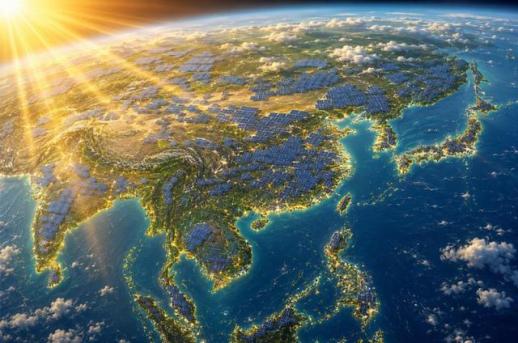 Asia races toward solar as energy security trumps fuel imports SEOUL, June 12 (AJP) - From rooftops in Manila to industrial parks outside Seoul, Asia is rapidly turning to solar power as Middle East instability and soaring AI-driven electricity demand force governments to rethink energy security. The blockade of the Strait of Hormuz earlier this year exposed the vulnerability of fuel-importing economies across Asia, accelerating what analysts describe as a race to generate more power at home. For many governments, renewable energy is increasingly viewed not only as a climate solution but as a strategic asset. Indonesia has elevated solar development to a national priority, while the Philippines recorded a surge in imports of Chinese solar equipment in the weeks following the conflict. Similar shifts are emerging across the region as policymakers seek to reduce exposure to volatile fuel markets and geopolitical disruptions. The trend is becoming visible in global electricity markets. Natural gas accounted for 21.8 percent of global power generation in 2025, down from 23.9 percent in 2020, according to energy think tank Ember. Solar generation expanded by 636 terawatt-hours last year — roughly 17 times the growth contributed by gas — and supplied about three-quarters of new global electricity demand. China remains the dominant force behind the expansion. Chinese solar cell and panel exports to Southeast Asia jumped 75 percent from a year earlier in April, while shipments to Africa climbed 83 percent, customs data showed. The gains came even after Beijing ended export tax rebates that had helped keep global solar prices exceptionally low. The flood of low-cost Chinese equipment has accelerated deployment across emerging markets while simultaneously putting pressure on manufacturers in Europe, North America and parts of Asia. Yet governments appear increasingly willing to tolerate dependence on Chinese hardware if it allows them to build domestic power capacity more quickly. The urgency is being amplified by a second force: artificial intelligence. Across Asia, governments and utilities are preparing for a surge in electricity demand from data centers, cloud computing facilities and semiconductor manufacturing complexes. Industry forecasts suggest AI-related power consumption could become one of the largest drivers of electricity demand growth over the next decade. South Korea offers perhaps the clearest example. Despite being one of the world's leading technology exporters, South Korea remains a laggard in renewable energy adoption. Its share of renewable electricity generation remains among the lowest in the OECD, reflecting decades of reliance on imported fossil fuels and nuclear power. Now, policymakers are attempting to reverse that trend. Under its first renewable energy master plan unveiled in May, Seoul aims to nearly triple renewable power capacity to 100 gigawatts by 2030 from about 37 GW today. Solar power is expected to account for 57 GW of that total, requiring the installation of roughly 11 GW of new solar capacity annually. The government also plans to expand domestic solar module production capacity beyond 10 GW per year, develop more than 10 gigawatt-scale solar projects in central regions including the capital area, and strengthen transmission infrastructure needed to integrate new renewable generation. Lawmakers are simultaneously moving to ease setback regulations that have constrained solar development for years and are advancing legislation that would allow wider deployment of agrivoltaic projects combining agriculture and solar generation. Additional support may arrive through the tax system. A production tax credit modeled in part on the U.S. Inflation Reduction Act is currently under review, with a tax code revision expected in July viewed by analysts as one of the most important policy catalysts for the sector this year. "The renewable energy master plan and the power supply plan are the two pillars for resolving the national tasks of realizing carbon neutrality and securing a stable energy supply," Minister of Climate, Energy and Environment Kim Sung-hwan said during a recent Energy Committee meeting in Seoul. Financial markets have already begun positioning for the shift. DS Investment & Securities this week identified HD Hyundai Energy Solution and SK Eternix among its preferred renewable-energy plays, forecasting annual energy-storage demand of 4-6 GW by 2030 and approximately 72.8 trillion won ($48 billion) in grid investment through 2038. Much of that spending is expected to be driven by AI infrastructure projects, including hyperscale data centers and the massive semiconductor manufacturing cluster under construction in Yongin, south of Seoul. "Given the policy direction and timing, solar companies stand to gain considerably," said Ahn Joo-won, an analyst at DS Investment & Securities. "What is needed are incentive programs with clearly defined timelines that can support investment visibility for at least five to 10 years." Opportunities may also be emerging beyond Asia. The European Union last month restricted public funding for solar inverters sourced from what it classified as high-risk countries, including China. The decision affects a market representing more than 14 GW of annual installations and potentially creates openings for suppliers from South Korea, Japan and the United States. Korean electrical equipment makers such as LS Electric and Hyosung Heavy Industries are viewed as potential beneficiaries, although analysts caution that inverter-specific manufacturing capacity and European certification requirements could limit near-term gains. Competition from low-cost Chinese producers is unlikely to disappear. Chinese manufacturers continue to dominate global solar supply chains, from polysilicon and wafers to cells and finished modules, allowing them to undercut rivals on price even as governments diversify procurement. Yet the direction of travel is becoming increasingly clear. As countries from Indonesia and the Philippines to South Korea and members of the European Union seek to reduce dependence on imported fuels and diversify critical supply chains, solar power is evolving from an environmental policy objective into a strategic component of national security. For South Korea, the challenge is no longer whether the solar transition is coming. The question is whether the country can move fast enough to secure a meaningful position in one of the fastest-growing energy markets in the world. 2026-06-12 13:51:38
 -
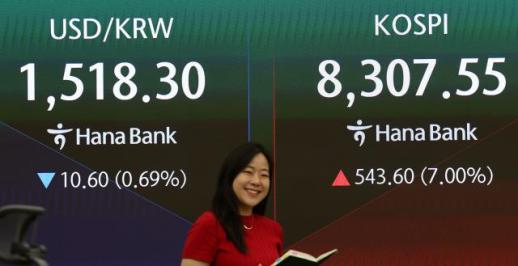 KOSPI Surges Over 8% to Break 8400 Mark Amid Foreign and Institutional Buying The KOSPI index surged over 8% during trading on June 12, breaking the 8400 mark as foreign and institutional investors poured in over 5 trillion won. This surge triggered a buying sidecar, reflecting a strong appetite for riskier assets. Major stocks, including Samsung Electronics and SK Hynix, led the index's rise. As of 1:29 PM, the KOSPI was up 654.32 points (8.44%) at 8418.92, according to the Korea Exchange. The index opened at 8263.85, rising by 499.90 points (6.44%) before surpassing 8400. In the early trading session, a buying sidecar was activated in the securities market. The Korea Exchange announced that it halted the effectiveness of program buy orders for five minutes at 9:06 AM due to a sharp rise in KOSPI 200 futures, which jumped 7.76% to 1332.00 points. Demand was robust, with foreign and institutional investors net buying 2.4589 trillion won and 3.2953 trillion won, respectively, driving the index higher. In contrast, individual investors sold off 5.558 trillion won. Most large-cap stocks showed strong performance. Samsung Electronics rose by 12.29%, SK Hynix by 8.90%, SK Square by 13.93%, Samsung Life by 8.63%, Samsung C&T by 6.83%, Hyundai Motor by 5.70%, and LG Energy Solution by 4.55%. However, Samsung Electro-Mechanics, which had seen recent gains, dipped by 0.11% as it took a breather. The KOSDAQ also experienced a rise, with the index up 49.45 points (4.96%) at 1046.38 at the same time. In the KOSDAQ market, institutions net bought 482.2 billion won, while individuals and foreigners sold off 75 billion won and 427.1 billion won, respectively. Among the top market-cap stocks, EcoPro BM rose by 5.72%, EcoPro by 7.72%, Rainbow Robotics by 8.26%, and Rino Technology by 8.42%. Meanwhile, Wonik IPS surged to its price limit, hitting the upper limit. However, some biotech stocks, including Alteogen (-0.14%) and Peptron (-0.21%), showed weakness.* This article has been translated by AI. 2026-06-12 13:48:00