


Latest by
-
 Yoo Seung-min Calls for Government Action Amid Prolonged Handball Arena Blockade As the blockade of the Jamsil Handball Arena continues following a shortage of ballots during the June 3 local elections, Yoo Seung-min, president of the Korean Sports Council, has strongly urged the government to intervene. The ongoing situation has increasingly impacted sports organizations, leading to significant losses. On June 15, Yoo and officials from nine member sports organizations—including billiards, dance sports, mountaineering, sepak takraw, water skiing, underwater fin swimming, wushu, fencing, and handball—held a press conference at the Olympic Parktel in Songpa-gu, Seoul, calling for guaranteed access to their workplaces and the release of essential supplies. Yoo stated, "This situation is obstructing public duties entrusted by the state, and the rights and livelihoods of athletes and sports professionals are being infringed upon. The Constitution of the Republic of Korea guarantees not only the freedom of assembly but also the right to choose one’s profession and the right to work. It is unacceptable for workplace access to be restricted without just cause, making normal operations impossible for an extended period." He added, "As the damage continues to escalate, the Korean Sports Council and the member organizations will take responsible actions if the disruption and damages are confirmed. We will thoroughly investigate the facts and consider all legal responses, including civil and criminal liabilities." Yoo formally requested the government to deploy public power to resolve the situation promptly. According to the Korean Sports Council, 79 employees of the sports associations stationed at the handball arena have been working from home since June 5. The prolonged protests by citizens have prevented the removal of accounting equipment (such as OTP devices, joint certificates, and corporate cards) and uniforms necessary for administrative tasks, effectively paralyzing operations. Delays in payments for national team coaching fees, employee salaries, and social insurance contributions have resulted in an estimated loss of 6 billion won for the sports organizations. Particularly affected are the sports organizations preparing for international competitions. The fencing team is scheduled to depart for the Asian Championships on June 16 but has been unable to gather essential equipment, including personal fencing blades and jackets. A representative from the fencing association lamented, "Due to global supply issues exacerbated by the Russia-Iran conflict, we are scrambling to borrow blades and prepare for the competition. We are also embarrassed to inform foreign agencies that we cannot pay for airline and hotel costs due to financial disruptions." The underwater fin swimming association, which is set to host a world championship next week, is facing serious challenges in preparing for the arrival of foreign teams due to visa issuance and hotel arrangements. The protests have also led to secondary damages due to aggressive actions by citizens. Young handball players have faced bag searches while trying to access facilities, and staff attempting to retrieve documents were surrounded by over 100 citizens, facing verbal abuse and requiring medical treatment. One federation official reported receiving threatening phone calls after their business card and photo were circulated while trying to negotiate with the protesters. Following the ballot shortage on election day, citizens have been protesting daily in front of the handball arena designated as a counting center. What began as a protest led by young individuals condemning the election commission's ballot shortage has grown in size as supporters of former President Yoon Suk-yeol and Jeon Han-gil, a lecturer who has previously claimed election fraud, have joined the demonstrations. They have clashed with athletes attempting to enter the arena and have caused controversy by inspecting players' belongings. 2026-06-15 16:27:00
 -
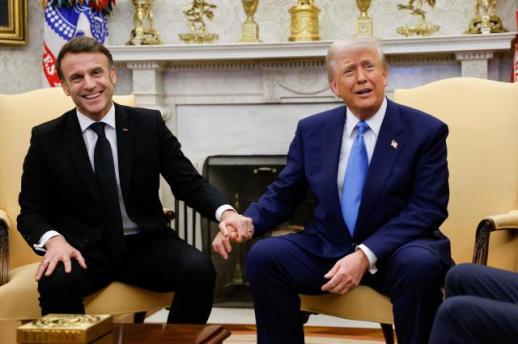 Trump Warns of 100% Tariff on French Wine and Champagne Ahead of G7 Donald Trump, the President of the United States, issued a warning of high tariffs on French goods ahead of the G7 summit. In an interview with the New York Post on June 14, Trump stated that he has demanded French President Emmanuel Macron abolish the digital services tax (DST) imposed on American tech companies. "I asked that they not tax our companies," Trump said, adding, "If France does that, we will have no choice but to impose a 100% tariff on all champagne and wine coming from France." He emphasized that the only action Macron needs to take is to eliminate the tax, stating, "Then there will be no pressure." The DST was introduced to prevent multinational companies from shifting profits to countries with lower corporate taxes to evade taxes. Since 2019, France has imposed a 3% tax on revenues generated by major tech firms, including Amazon, Meta, Apple, and Google's parent company, Alphabet. According to the French Ministry of Finance, the DST generated approximately $700 million (about 1 trillion won) in revenue last year. This tax is based on revenue rather than profit, which has drawn criticism for placing a heavy burden on American tech giants. Recently, the French government indicated that the conflict with the U.S. over the DST had been largely resolved. However, Trump's comments reveal that opposition to the DST from the U.S. persists. Trump has opposed the French DST since his first term, arguing that it is a discriminatory measure targeting American companies. In fact, the U.S. Trade Representative (USTR) considered imposing a 100% tariff on French products in response to the DST back in 2019. In this context, the New York Post reported that the USTR and the U.S. Treasury are currently reviewing whether to resume an official investigation into the French DST.* This article has been translated by AI. 2026-06-15 16:24:00
 -
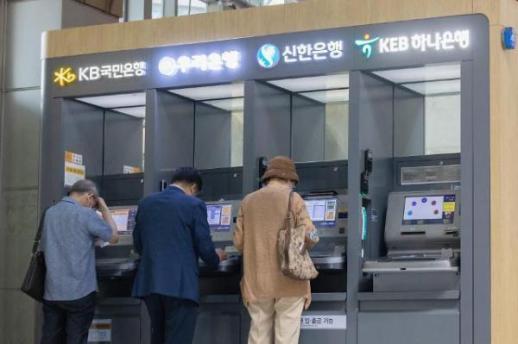 Rising Mortgage Rates Approach 8% as Borrowers Face Increased Financial Strain As loan interest rates rise sharply, borrowers engaged in "debt investment" and "soul-sucking" financing are feeling the pressure. The upper limit for mortgage rates is nearing 7.5%, with concerns that rates could soon reach 8%. Variable mortgage rates are also on the rise, as the COFIX (Cost of Funds Index) has increased for two consecutive months, raising fears of further loan rate hikes.According to financial sources on June 15, the five major banks—KB Kookmin, Shinhan, Hana, Woori, and NH Nonghyup—are offering fixed mortgage rates ranging from 4.42% to 7.46%. This marks an increase of 0.24 to 0.36 percentage points from the end of last month, when rates were between 4.26% and 7.10%. Some banks have seen their lower rates exceed 5%.The surge in loan rates is attributed to prolonged tensions in the Middle East and growing concerns over tightening monetary policies in major economies, which have led to rising bond market rates. Speculation that the Bank of Korea will raise interest rates in the second half of the year is also contributing to the increase in market rates.A significant concern is that borrowers are shifting from fixed-rate mortgages, which have climbed to the mid-7% range, to variable-rate products. According to the Bank of Korea, the proportion of variable-rate mortgages among new loans in April was 52.2%.If interest rate hikes materialize, borrowers who opted for variable rates will face even greater financial strain, as these rates adjust quickly to market changes. Given that a substantial number of recent loans have been issued at variable rates, the impact of rising rates is likely to be felt more acutely by households than in the past.The recent upward trend in variable mortgage rates, which had previously been in a relatively low range, adds to the burden on borrowers. According to the Bank Federation, the COFIX for new loans in May was 2.90%, up from 2.89% the previous month. Consequently, variable mortgage rates based on the new COFIX are expected to rise. Starting June 16, KB Kookmin Bank will increase its six-month variable mortgage rates from 4.06%-5.46% to 4.07%-5.47%. Similarly, the rates for Jeonse loans (guaranteed by the Korea Housing Finance Corporation) will rise from 3.7%-5.1% to 3.71%-5.11%. Woori Bank's variable mortgage rates based on the new COFIX will also increase from 4.37%-5.57% to 4.38%-5.58%.A financial industry official stated, "With household loans showing an upward trend again, regulations are tightening. The possibility of the Bank of Korea raising interest rates is also increasing, so the rise in loan rates is likely to continue for the time being."* This article has been translated by AI. 2026-06-15 16:24:00
 -
 Daewoong Pharmaceutical and Arc Collaborate on AI Healthcare Lounge Daewoong Pharmaceutical is expanding its distribution channels into consumer living spaces. On June 15, Daewoong announced that it has signed a memorandum of understanding (MOU) with Arc, a company specializing in AI-based chronic disease complication screening, to collaborate on the SANVEL health management service project based on an AI healthcare lounge in residential complexes. The agreement aims to combine the digital healthcare capabilities and AI technology of both companies to create a service that allows residents to continuously monitor and manage their health in their daily living spaces. SANVEL will be an AI healthcare lounge established within apartment communities. Residents will be able to measure their health status in the lounge, where AI analysis will help identify health risk signals at an early stage. The lounge is designed to facilitate connections to medical services as needed. Under the agreement, Daewoong will provide health supplements, digital healthcare capabilities, and chronic disease management solutions, while Arc will handle service planning, development, operations, sales, and marketing. The two companies plan to continue discussions on customized services and specialized programs in the future. With this collaboration, Daewoong is set to expand its digital healthcare business from a focus on hospitals and health check-up centers to residential complexes. The company aims to achieve annual sales of 300 billion won in its digital healthcare sector this year. Park Hyung-cheol, head of Daewoong's ETC Marketing Division, stated, "This is the starting point for expanding our healthcare capabilities into living spaces. We will provide an environment where people can monitor and prevent health issues in their daily lives."* This article has been translated by AI. 2026-06-15 16:24:00
 -
 Incheon Airport's Disjointed Transport System Hinders Foreign Travelers As demand for rail travel among foreign visitors rapidly increases, concerns are growing over the fragmented transportation system connecting Incheon Airport to Busan and Gyeongju. The lack of a direct connection from the airport to the high-speed rail service in the southern region has led to repeated bottlenecks during transfers at Seoul Station, including luggage handling and seat reservations. According to the railway industry on June 15, foreign travelers typically take the airport train to Seoul Station before transferring to the KTX. While there is a connection between the airport and the rail system, the actual travel process is far from a seamless journey that integrates air travel, airport rail, and high-speed trains. The most significant issue is the discontinuation of KTX service directly from Incheon Airport. The Incheon Airport KTX, which began operations in June 2014 with 22 daily trains, was officially discontinued in September 2018 due to low passenger numbers and operational inefficiencies. Since then, direct high-speed rail routes from Incheon Airport to major regional cities like Busan, Gyeongju, and Daegu have been eliminated. The KTX service planned to open by the end of this year will not provide a direct alternative to Incheon Airport. This KTX service will start from Songdo Station on the Suin-Bundang Line, connecting the southern Incheon area to the national KTX network, but it does not allow incoming passengers at Incheon Airport to board the KTX directly to regional destinations. The city of Incheon is pursuing an extension of the airport rail through a second airport railway, but it has not yet been confirmed whether this will be included in the national railway network construction plan. Reviving the Incheon Airport KTX is not a straightforward task. The previous service shared tracks with the airport rail, which raised concerns about operational efficiency for both express and regular trains. To reconnect Incheon Airport with the high-speed rail network, considerations must include track capacity, train frequency, stop locations, and existing demand for the airport rail. Under the current system, travelers must account for delays in flight arrivals, immigration processing, and baggage claim times. If a flight arrives late, passengers risk missing their reserved KTX. Conversely, if they allow for extra time, they may face longer waits at Seoul Station. For first-time foreign travelers, the variables involved in getting from the airport to the train station remain a personal burden. Transfers at Seoul Station are also seen as a bottleneck. This complex station serves as a hub for the airport rail, subway, conventional rail, and high-speed trains. During peak travel times, foreign travelers with large suitcases must navigate multiple levels and platforms simultaneously. Although the rail network is connected, users often find that the experience is far from a seamless journey. The reservation and payment systems also operate separately. Airline tickets, airport rail tickets, and KTX tickets must be booked and paid for on different platforms. While Korail is working to improve convenience through multilingual app enhancements, expanded acceptance of foreign credit cards, and dedicated transportation passes for foreigners, an integrated booking system that automatically connects KTX schedules to flight delays and immigration times is still lacking. Baggage handling remains another challenge. The urban airport terminal at Seoul Station assists departing passengers with check-in and baggage drop-off, but it does not alleviate the burden of luggage transfer for foreign travelers arriving at Incheon Airport and heading to Busan or Gyeongju. As the demand for rail travel among foreigners increases, managing elevators, escalators, baggage movement, and crowd control at transfer stations will become increasingly important. A guesthouse operator near Busan Station noted, "Foreign guests who arrive via KTX from Incheon often mention how difficult it is to manage their luggage." They added, "First-time visitors sometimes struggle with the transfer process at Seoul Station itself." A Korail official stated, "We are continuously working to improve services for foreign users," but acknowledged that creating an integrated booking system encompassing airlines, airports, and railways is a complex challenge that a single organization cannot tackle alone. Experts emphasize the need for a long-term roadmap that encompasses both airport and rail policies, going beyond short-term convenience improvements. They argue that plans for a direct high-speed rail network from Incheon Airport, the second airport railway, the KTX extension from Incheon, transfer routes at Seoul Station, baggage handling systems, and integrated booking for air and rail travel should all be considered together. Professor Kang Kyung-woo of Hanyang University’s Department of Transportation and Logistics Engineering stated, "We need to explore ways to utilize Gimhae Airport as a second airport, and if we can reduce travel time between Seoul and Busan to around 1 hour and 20 minutes through KTX upgrades, it would significantly enhance the flow of foreign visitors traveling from Incheon Airport to Busan via Seoul." 2026-06-15 16:21:00
 -
 Foreign KTX Passengers Surge to 600,000 Monthly Amid Transportation Bottlenecks The number of foreign railway passengers in South Korea has recently surpassed 600,000 per month, indicating a significant surge in demand. This increase is particularly concentrated on the Seoul-Busan route, where congestion at Gimhae Airport, the gateway to Busan, has intensified due to limited flight slots. With the opening of Gadeokdo New Airport pushed back to 2035, calls for structural solutions to distribute foreign railway demand are growing. According to Korea Railroad Corporation (KORAIL), the number of foreign passengers using domestic railways jumped from 3.44 million in 2023 to 6.06 million last year, marking a 76% increase over three years. In the first quarter of this year alone, 1.693 million foreign passengers utilized domestic rail services, a 46.5% rise compared to the same period last year. The monthly foreign railway passenger count first exceeded 600,000 in October 2024, and the trend of increased foreign travelers during September and October suggests that this year could see record annual numbers. Demand for foreign railway transport is heavily concentrated on specific routes. KORAIL's statistics show that the top two routes—Seoul to Busan (15.2%) and Busan to Seoul (15.1%)—account for a combined 30.3% of foreign passenger traffic. This is nearly ten times higher than the third-ranked route from Dongdaegu to Seoul (1.6%). Notably, Seoul Station (27.4%) and Busan Station (20.0%) together account for almost half of all foreign railway passengers. This trend is attributed to long-haul tourists from North America and Europe arriving at Incheon International Airport and then taking the KTX to Busan, creating a de facto travel pattern. Foreign travelers heading to Busan or nearby areas are often forced to transit through Seoul, leading to a bottleneck. The limitations at Gimhae Airport are cited as a key issue. As a military airport sharing runways, Gimhae Airport has a structurally limited number of takeoff and landing slots. The average number of international arrivals is about 100 per day, which is only one-fifth of the volume at Incheon Airport (approximately 500). Additional restrictions on late-night flights further complicate the establishment of new long-haul direct routes to North America and Europe. In the first quarter of this year, foreign arrivals at Gimhae Airport reached 430,000, a 45.5% increase from the previous year. The government's proposed solution is the Gadeokdo New Airport, but its opening has been delayed from the originally planned 2029 to 2035 due to ground stabilization issues. The surge in foreign passengers has led to competition for limited seats between domestic and international travelers. Lee Jang-ho, a professor at Korea National Transport University, noted, "If large events like BTS concerts coincide, the bottleneck will become even more pronounced. The structural issues at Gimhae Airport mean it cannot accommodate the demand directly, leading to ongoing problems." 2026-06-15 16:15:00
 -
 Gmarket and Auction Launch Summer Promotion with Discounts on Seasonal Foods and Cooling Products Gmarket and Auction announced on June 15 that they will hold a "June SUPER Mart & Living" promotion until June 21, featuring discounts on popular summer foods and household items.The event focuses on summer products that are in high demand as the heat intensifies. Gmarket will offer discounts on cooling items such as the Wellabed DuraWell Alaska cooling mattress pad, a portable cooling fan from Bendict, a hotel towel set, an ice water dispenser, and deodorants.Seasonal foods will also be available, including fresh peaches and domestic mini pumpkins, along with convenient meals like chicken sausage and acorn jelly, all at reasonable prices.The live commerce platform "G Live" will provide exclusive offers during broadcasts. From June 19, five themed broadcasts will take place, featuring summer health foods and cooling bedding.A brand section will showcase popular products from major brands such as Tefal, Dongkuk Pharmaceutical, and Maniker, offering three types of coupons, including a 15% discount coupon worth up to 30,000 won, as well as 12% and 10% coupons. Customers can receive these coupons without any limit on the number of times during the promotion period.A Gmarket representative stated, "As summer approaches, we focused on providing benefits centered around seasonal foods and products that customers frequently seek. We aim to expand practical discount benefits to alleviate the burden of high prices on consumers."Additionally, Gmarket will participate in the "Korea Accommodation Sale Festa Summer Edition" until the end of next month. The event will feature over 16,000 accommodation options from 11 travel agencies, including Yanolja and Here You Go, allowing customers to save up to 80,000 won on lodging costs when combining government support discount coupons with Gmarket and credit card discounts.* This article has been translated by AI. 2026-06-15 16:12:00
 -
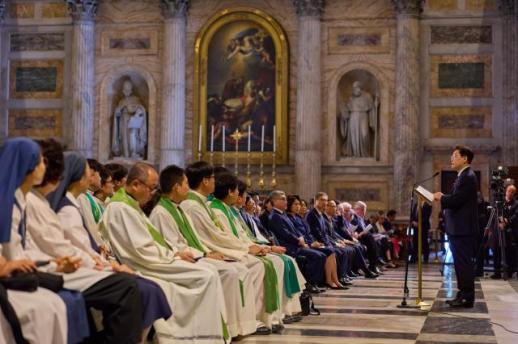 President Lee Calls June 15 Declaration a Starting Point for Peace on Korean Peninsula President Lee Jae-myung stated on June 15 that the June 15 Inter-Korean Summit and the Inter-Korean Joint Declaration are the starting points for peace on the Korean Peninsula.During a commemorative event marking the 26th anniversary of the June 15 Inter-Korean Summit at the Kim Dae-jung Library at Yonsei University in Seoul, Lee's speech was delivered by Chief of Staff Kang Hoon-sik.Lee emphasized that the June 15 Joint Declaration was a valuable promise to develop inter-Korean relations and achieve peaceful unification based on understanding and respect for one another. He noted that the government is translating that spirit into action, not just words.He acknowledged the challenges in reopening dialogue between the two Koreas, stating, "Despite our government's efforts to resume dialogue and cooperation, the door to inter-Korean talks has not opened easily." However, he stressed that they cannot be discouraged or give up due to temporary difficulties.The president highlighted that peaceful coexistence is the only way for both Koreas to prosper together, asserting that peace on the Korean Peninsula is also in the common interest of Northeast Asia and the world.Lee reiterated the importance of transforming changes in the international situation surrounding the Korean Peninsula into new opportunities for joint prosperity. He promised to do his utmost to ensure that the two Koreas can sit down and continue dialogue, just as they did 26 years ago.Meanwhile, during his official visit to the Vatican, President Lee also remarked at a special mass held at St. Paul Outside the Walls on June 14 that the June 15 Joint Declaration was a historic turning point that signaled the possibility of dialogue and cooperation beyond long-standing hostility and tension. He expressed confidence that the spark of hope remains alive today.* This article has been translated by AI. 2026-06-15 16:12:00
 -
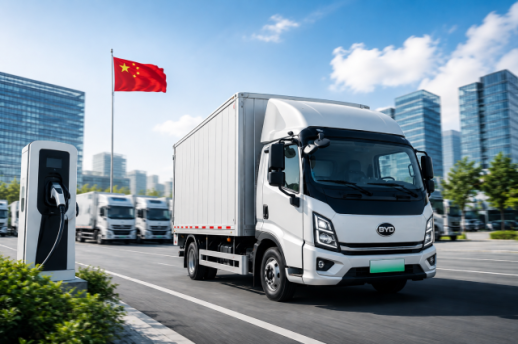 China Accelerates Growth in Medium and Heavy Electric Truck Market China is rapidly developing its medium and heavy electric truck market. Following the near cessation of subsidies for passenger vehicles, the government is expanding support in the commercial vehicle sector as a new growth driver. Analysts suggest that South Korea's medium electric truck market remains in its infancy, widening the gap between the two countries. According to industry sources, the Chinese government has implemented a policy since last month that provides up to 140,000 yuan (approximately $20,000) in subsidies for replacing old trucks with electric models. This support covers more than half the cost of the vehicles, encouraging the transition to eco-friendly commercial vehicles. Considering that BYD's 4.5-ton medium electric truck T5 starts at 185,800 yuan, the maximum subsidy amounts to about 75% of the vehicle's price. China ended its electric passenger vehicle purchase subsidies in 2023 and has halved tax reduction benefits this year. In contrast, the government is strengthening support for commercial vehicles, shifting its policy focus. The market is responding quickly. Medium electric trucks are becoming increasingly visible on Chinese roads. On June 12, a ceremony took place at BYD's headquarters in Shenzhen, where 100 units of 3-ton electric trucks were delivered to transport workers. According to the International Council on Clean Transportation (ICCT), battery electric vehicles accounted for 17% of the medium truck market in China during the first half of last year, ranking second after diesel vehicles (76%). Notably, the share of zero-emission vehicles in the logistics and delivery utility vehicle sector has expanded to 25%, driving the electrification of commercial vehicles. In contrast, South Korea's medium electric truck market remains in its early stages. The government has introduced subsidies for medium electric trucks for the first time this year, offering up to 40 million won (approximately $30,000) for 1.5 to 5-ton electric trucks and up to 60 million won (approximately $45,000) for vehicles over 5 tons. However, high vehicle prices and differences in manufacturers' cost structures are hindering market expansion. Industry experts believe that electrifying medium and heavy commercial vehicles is essential for reducing logistics costs and achieving carbon neutrality. According to a report released by the Korea Automotive Research Institute this month, logistics costs account for 11.5% of South Korea's GDP, the second highest after China (14.2%). As of 2023, 92.7% of domestic freight transport is conducted via road.* This article has been translated by AI. 2026-06-15 16:06:00
 -
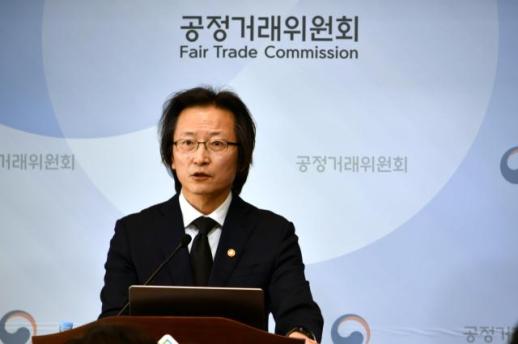 Fair Trade Commission Chair Joo Byeong-gi to Introduce Collective Bargaining Rights for Dealers On June 15, Joo Byeong-gi, Chair of the Fair Trade Commission, stated, "The gap in bargaining power between suppliers and dealers is significant, making it difficult for cooperative practices to spread throughout the market." He announced plans to introduce collective bargaining rights under the Dealer Law and establish procedures for contract termination to address this imbalance.Joo made these remarks during a visit to the Maeil Dairies factory in Pyeongtaek, Gyeonggi Province. Maeil Dairies has received the highest rating for five consecutive years in evaluations of compliance with fair trade agreements in the dealer sector. This visit aimed to observe successful examples of cooperation and hear firsthand experiences from dealers.He emphasized, "Dealers play a crucial role as a distribution network connecting consumers and manufacturers," noting that over 200,000 dealers operate nationwide, serving as vital components of the local economy.However, he acknowledged that dealers still face structural disadvantages compared to headquarters, with poor negotiating positions regarding transaction terms. He pointed out that rising raw material prices, increased interest and rent burdens, and prolonged consumer spending declines have exacerbated challenges in the field.Joo noted that since the Dealer Law was enacted in 2015, the Fair Trade Commission has worked to promote fairness in dealer transactions, but regulations alone have limitations. He stressed the importance of fostering a culture where headquarters and dealers grow together.During the visit, Maeil Dairies presented examples of fair trade and cooperative practices, including the full implementation of a standard dealer contract that specifies the dealer's right to request adjustments in supply prices, guarantees the dealer's choice of sales policies, and ensures long-term contracts with transparent termination procedures.Additionally, dealers shared their experiences of cooperation through various sales support policies and welfare programs provided by Maeil Dairies.Joo concluded, "Cooperation is significant as it represents a process where headquarters and dealers enhance their competitiveness together. The Fair Trade Commission will continue to provide institutional support to improve the dealer transaction environment."* This article has been translated by AI. 2026-06-15 16:03:00