


Latest by
-
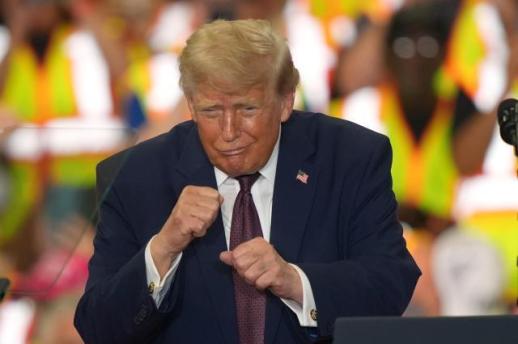 Trump Clashes with Republicans Over Iran War and Election Bill Donald Trump has clashed with Republican senators over the Iran war and election legislation. The president strongly reacted to internal criticism demanding an explanation of the Iran war plans and linked the signing of a housing relief bill to the processing of the election bill, escalating tensions within the GOP. According to the Wall Street Journal on June 24, Trump engaged in a heated exchange with Senator Bill Cassidy during a luncheon with Republican senators regarding the Iran war. Cassidy is one of the Republican lawmakers who recently supported a resolution to limit Trump’s war powers. After the meeting, Cassidy told reporters, "I told the president, 'You have not told the American people what is happening.'" He added, "The war was supposed to last four weeks, but it has now continued for four months," criticizing the administration for its lack of explanation. This confrontation occurred amid growing dissatisfaction among Republicans regarding the White House's insufficient communication about the Iran war. Cassidy, along with Senators Lisa Murkowski, Rand Paul, and Susan Collins, voted the previous day in favor of a non-binding resolution urging Trump to withdraw U.S. troops from hostilities with Iran. Last week, Trump signed a memorandum of understanding (MOU) regarding the reopening of Iran and the Strait of Hormuz and the initiation of negotiations to end its nuclear program. However, there are ongoing concerns about the clarity of the war objectives and the scope of U.S. military involvement. That evening, the White House also revealed an additional budget request of $87.6 billion focused on the Iran war. Trump also pressured senators regarding the election bill, asserting that the GOP must pass the "SAVE America Act," which requires proof of citizenship for voter registration, to win the midterm elections. However, the bill requires 60 votes to advance in the Senate, and its chances of passing are low due to Democratic opposition. The conflict extended to the housing relief bill as well. Trump announced that he would not sign the bipartisan housing bill until Congress passes the SAVE America Act. The housing bill passed the Senate with a vote of 85 to 5 and the House with a vote of 358 to 32. The housing bill aims to streamline the permitting process for housing projects and ease restrictions on the construction of modular homes. Republicans had hoped to highlight achievements in alleviating the cost of living ahead of the midterm elections, but Trump's delay in signing has disrupted that strategy. Senator Thom Tillis criticized the situation, stating, "I don’t understand why a bill ready for signature is being held hostage by a bill that has no chance of passing this Congress." In contrast, Trump reportedly claimed in a private meeting, "No one cares about the housing bill at my rallies," asserting that the SAVE America Act energizes his base more effectively.* This article has been translated by AI. 2026-06-25 14:28:00
 -
 KCC Shares Surge Over 11% Amid Optimism for Improved Earnings KCC's stock has risen over 11% due to expectations of improved earnings and a reassessment of its corporate value. According to the Korea Exchange, as of 1:56 PM on June 25, KCC shares were trading at 534,000 won, up 55,000 won (11.48%) from the previous trading day. The stock opened at 502,000 won and reached a high of 555,000 won during the session, demonstrating strong performance. Although some gains were later surrendered, the stock maintained a double-digit increase. The surge in stock price is attributed to improved investor sentiment, as analysts positively evaluated the potential for earnings improvement and a reassessment of asset values. Shinhan Investment Corp. stated that KCC's current stock price does not fully reflect the recovery of its core business and the value of its assets, setting a target price of 750,000 won and recommending a 'buy' rating. Lee Jin-myung, a researcher at Shinhan Investment, noted in a report, "The silicone business has entered a phase of profitability improvement after passing its low point. The coatings business continues to generate solid profits based on a high-value portfolio, and with the rise in the value of investment assets and share buybacks, a reassessment of corporate value is expected to gain momentum." He added, "The increase in the value of investment assets, including Samsung C&T, share buybacks, and rising foreign ownership are all positive factors. The value of investment assets (8.6 trillion won) significantly exceeds the market capitalization (4.1 trillion won), and the strengthening of shareholder return policies is expected to change market evaluation criteria."* This article has been translated by AI. 2026-06-25 14:28:00
 -
 Makinarax Shares Surge Over 15% Following Overseas Order Growth Shares of Makinarax have risen over 15% following news of significant growth in overseas business. As of 2:11 PM on the Korea Exchange, Makinarax's stock was trading at 16,390 won, up 2,340 won (16.65%) from the previous trading day. The surge in investor sentiment comes after the company announced that its overseas order volume for the first half of the year reached approximately 3 billion won, doubling compared to the same period last year. According to the company, existing overseas clients, including a global semiconductor equipment firm in Europe, a wind energy company, a major domestic battery manufacturer’s overseas plants, and Japanese automotive and measurement control firms, have all extended their contracts. Additionally, the scope of its artificial intelligence (AI) solutions has reportedly expanded. Notably, the market has taken interest in the fact that all global clients secured last year have signed follow-up contracts. This indicates not only the acquisition of new clients but also the generation of repeat revenue from existing customers. Makinarax provides solutions that integrate and operate AI in manufacturing sites and industrial infrastructure through its self-developed AI operating system, Runway. This platform is applicable not only in data centers but also in factory equipment with limited network connectivity, enhancing its competitiveness in security-conscious and localized markets in Japan and Europe. The company plans to continue acquiring new clients in Japan and Europe in the second half of the year. It is currently conducting proof of concept (PoC) tests with multiple global manufacturing firms and is pursuing additional orders.* This article has been translated by AI. 2026-06-25 14:24:00
 -
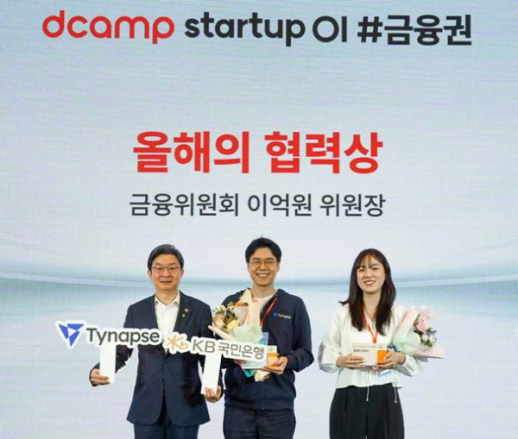 KB Financial Group Wins Financial Services Commission Award for AI Collaboration KB Financial Group received the Financial Services Commission Award for Best Collaboration at the 'Startup OI (Open Innovation)' event.On June 25, KB Financial Group announced that KB Kookmin Bank was awarded the 'Collaboration of the Year' by the Financial Services Commission during the event co-hosted by D.CAMP and the Korea Fintech Support Center.At the event, KB Kookmin Bank presented a case study on establishing a 'real-time answer quality evaluation and control system' to ensure the reliability of a generative artificial intelligence (AI)-based financial consulting agent in collaboration with the startup Tinaps. The two companies have been working together on joint projects this year as part of the KB Innovation Hub Center's 'KB Open Innovation Program,' which includes designing a finance-specific real-time answer evaluation model and implementing reliability verification technology based on retrieval-augmented generation (RAG).The KB Open Innovation Program provides startups with opportunities for proof of concept (PoC) to validate and apply innovative technologies in collaboration with KB Financial affiliates.Through this collaboration, KB Kookmin Bank reported that it has successfully preemptively blocked over 90% of instances where AI generates false information, thereby reducing the risk of incorrect answers. The bank plans to expand the application of this technology to other consulting areas in the future.A KB Financial representative stated, "This collaboration is significant as it lays the groundwork for solving field challenges by combining the innovative technologies of startups with the expertise of financial institutions. We will support innovative companies to enhance the overall competitiveness of the financial industry."* This article has been translated by AI. 2026-06-25 14:24:00
 -
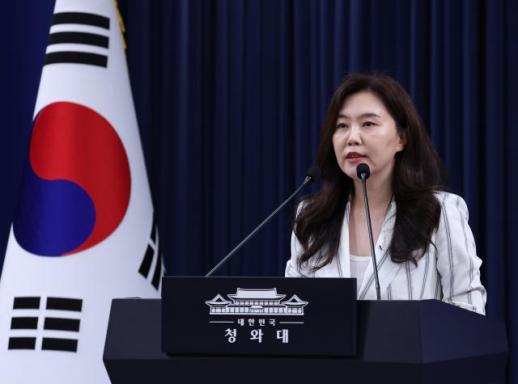 Lee to Meet Moon at the Blue House for Lunch on July 1 President Lee Jae-myung is scheduled to have lunch with former President Moon Jae-in at the Blue House on July 1.This meeting comes amid ongoing conflicts within the Democratic Party regarding leadership competition, leading to interpretations of its significance for party unity.Kang Yoo-jung, the chief spokesperson for the Blue House, announced during a briefing on June 25 that President Lee will meet with former President Moon at 11:30 a.m. for lunch.This will be the first official lunch meeting between the two since President Lee took office, and there is keen interest in the messages that may emerge from the gathering.However, Moon's wife, Kim Jung-sook, will not attend due to overseas commitments.Consequently, it is reported that President Lee's wife, Kim Hye-kyung, will also not be present at the lunch.* This article has been translated by AI. 2026-06-25 14:24:00
 -
 Hormuz or not, Korea's petrochemicals glut is far from over SEOUL, June 25 (AJP) - South Korea's petrochemical makers, forgotten and forgiven under the silicon windfall, are biding time with their promised capacity cuts still unfinished while the Middle East drags on and the country's single largest petrochemical project prepares to flood the market with fresh supply. Chinese overcapacity has been swamping Asia with cheap basic chemicals, with or without disruption from the Middle East and stranded shipments at the Strait of Hormuz chokepoint. S&P Global expects new capacity in Asia and the Middle East to add about 6 million tons of ethylene in 2026 alone, enough to overshadow Korea's rationalization drive. It sees global supply outpacing demand through 2027, when capacity additions are expected to peak. That imbalance had already pushed margins to the floor before any geopolitical shock. The ethylene spread — the gap between ethylene and naphtha prices that gauges industry profitability — collapsed to about $55 a ton in February, before the Gulf crisis, far below the $250 to $300 break-even range producers say they need to avoid losses, according to government commodity-price data. Then came the war premium, masking the rot. As the conflict choked off feedstock supply, the spread swung from negative territory and briefly breached $500, Hana Securities analyst Yoon Jae-sung said, flipping LG Chem's and Hanwha Solutions' chemical units back into the black on cheaply stocked naphtha. The reprieve proved fleeting. By early July, the spread had slid back to about $96 a ton as ethylene prices cooled and the lagging effect that had cushioned first-quarter earnings gave way to what Yoon called a reverse-lagging phase. "In June and July, petrochemical firms will enter a reverse-lagging phase and slip into an earnings downturn," Yoon said, noting that companies had stopped scrambling to stock up as ceasefire prospects emerged, leaving product prices and spreads on a clear downward path. Against that backdrop, the industry's own remedy remains only half-administered. Under an August 2025 voluntary pact, ten naphtha-cracker operators agreed to trim 2.7 million to 3.7 million tons of capacity, or about 18 to 25 percent of the nation's 14.7 million-ton base, in exchange for state financial and regulatory support. Progress has been halting. The Lotte Chemical-HD Hyundai Chemical merger at Daesan won approval and will retire a 1.1 million-ton cracker, but talks elsewhere have dragged amid disputes over asset valuations and how the pain should be shared, leaving the full reduction target unmet. Looming over the unfinished cuts is S-Oil's Shaheen Project, a 9.26 trillion won ($5.98 billion) complex in Ulsan and the largest petrochemical project in the country's history. Once running, it will churn out about 1.8 million tons of ethylene a year, alongside propylene, butadiene and benzene. The project is advancing on schedule. As of late April, its engineering, procurement and construction progress stood at 96.9 percent, with mechanical completion targeted for the end of June, S-Oil said in materials accompanying its first-quarter results. "Major facilities including the steam cracker and the TC2C heating furnace have been installed, and feeder piping to customers is set to be completed in the first half," the company said, adding that trial runs and commercial-operation preparations would be completed by year-end. For an industry still struggling to take supply off the table, the timing is fraught. Analysts warn that if geopolitical premiums evaporate and China presses ahead with expansion, Korean producers could be pulled straight back into the oversupply and margin squeeze they have spent two years trying to escape — just as Shaheen's volumes arrive. 2026-06-25 14:23:34
 -
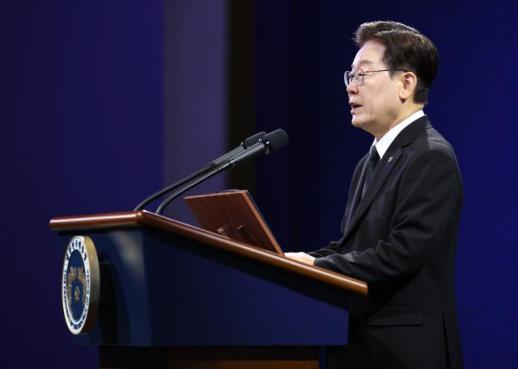 President Lee to Host Luncheon with Former President Moon on July 1 President Lee Jae-myung will host a luncheon with former President Moon Jae-in at the Blue House on July 1 at 11:30 a.m.Chief Spokesperson Kang Yoo-jung announced the schedule during a briefing on June 25.However, Moon's wife, Kim Jung-sook, will not attend due to prior commitments abroad. Consequently, First Lady Kim Hye-kyung is also expected to be absent from the luncheon.* This article has been translated by AI. 2026-06-25 14:20:00
 -
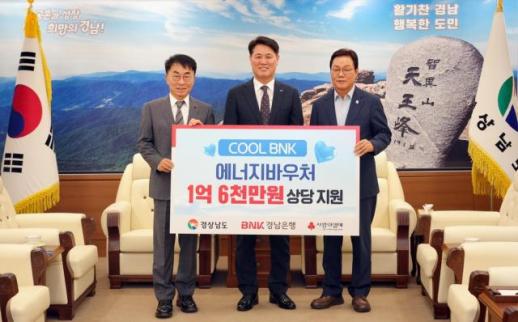 BNK Kyongnam Bank's CEO Emphasizes AI as Key to Future Manufacturing Finance AI revolution is fundamentally changing the competitive landscape of finance. Today, a bank's competitiveness relies more on how well it utilizes data and integrates AI into its operations than on asset size or the number of branches. For regional banks, leveraging AI is an urgent challenge, as they must combine local strengths with AI to survive between mega banks and internet-only banks. Kim Tae-han, CEO of BNK Kyongnam Bank, has a clear understanding of this reality. Since taking office, he has emphasized 'new finance' as a core value of management, focusing on enhancing productivity and stability through AI and digital technologies rather than merely pursuing digital transformation. He envisions becoming a financial partner that supports the digital transformation of local manufacturing by connecting the industrial base of Gyeongnam, which is home to shipbuilding, defense, machinery, and automotive industries, with AI. Understanding Local Industry is Essential for Successful AI Finance Kim's initial focus was not on AI technology itself but on the local industry. Gyeongnam is the heart of South Korea's manufacturing sector, with concentrated industries in Changwon (machinery), Geoje (shipbuilding), Sacheon (aerospace), and automotive parts. He believes that the future of the bank must align with the future of these industries. Instead of merely increasing loans, Kyongnam Bank has adopted productive finance as its core strategy to enhance the competitiveness of the manufacturing sector. Kim's philosophy is that as AI enhances productivity and transforms factories, banks must evolve into financial institutions that support AI industries and manufacturing innovation. Establishing AI and Digital Innovation as Future Growth Pillars During a management strategy meeting in the first half of 2026, Kim presented 'strengthening core foundations through new finance' as a management policy. This new finance is not just about mobile banking; it refers to a future-oriented finance that enhances both profitability and public service while leveraging AI and digital technologies to bolster productivity and stability. To realize this vision, Kyongnam Bank has identified AI and digital finance innovation as a key pillar of future growth and has developed a comprehensive execution strategy. This includes establishing a system where personal finance, corporate finance, wealth management, and AI and digital sectors collaborate. AI is Transforming Financial Services for Manufacturing Kim's AI strategy differs from those of other banks, placing greater emphasis on innovation in manufacturing finance rather than on chatbots or generative AI services. Most of Kyongnam Bank's corporate loans are concentrated in manufacturing sectors such as machinery, metals, automotive, and shipbuilding. As AI promotes smart factories and autonomous manufacturing, the financial sector must adapt accordingly. He argues that finance must evolve to analyze corporate productivity and technological competitiveness through data and use AI to assess future growth potential. This aligns with the government's policies promoting AI transformation in manufacturing. Kim is pursuing a strategy to position Kyongnam Bank as a financial partner in the AI revolution for manufacturing. Internal Innovations Begin with AI Implementation Kim does not limit AI applications to customer service; he aims to change the way the bank operates internally first. BNK Financial Group is advancing its AI transformation by building a shared generative AI platform, establishing AI governance, and hosting AI hackathons. Under this strategy, Kyongnam Bank is laying the groundwork for using generative AI in document creation, information retrieval, task automation, and decision support. The goal is to embed AI into the organizational culture rather than having it be a tool used by only a few employees. The Essence of Financial Entrepreneurship Kim's vision of financial entrepreneurship can be summarized as 'finance that connects local industry with AI.' He does not view AI merely as a cost-cutting tool or a digital trend. Instead, he believes that enhancing the competitiveness of local manufacturing and revitalizing the regional economy through AI is the bank's new role. Ultimately, the future of regional banks lies not in following the metropolitan area but in creating a new financial model that connects local industries with AI. Kim's AI strategy at Kyongnam Bank represents a financial innovation that aims to co-design the future of Gyeongnam, the heart of South Korea's manufacturing sector. Strengths Kim is a hands-on CEO who understands the manufacturing-centered regional economy better than anyone. His strategy of combining productive finance with regional coexistence is a significant strength. The bank also has a differentiated foundation that can connect corporate finance with AI in the manufacturing sector. Weaknesses Compared to large commercial banks, the scale of AI investment and digital platform competitiveness is limited. The high dependence on local manufacturing also poses a structural limitation, making it vulnerable to economic fluctuations. Opportunities Government policies promoting AI transformation in manufacturing and nurturing aerospace, defense, and shipbuilding industries present new growth opportunities for Kyongnam Bank. Expanding AI-based corporate finance and productive finance could establish a new competitive model for regional banks. Threats Intensifying digital competition from internet-only banks and mega banks, a slowdown in the manufacturing sector, and the financial burden of increased AI investment are ongoing risks. If the pace of AI transformation does not meet expectations, securing competitiveness may be delayed.* This article has been translated by AI. 2026-06-25 14:16:00
 -
 Bitcoin Falls Below $60,000 for the First Time in 20 Months Amid Market Concerns The price of Bitcoin, the leading cryptocurrency, has fallen below $60,000 (approximately 91,840,000 won) for the first time in 20 months. This decline is attributed to concerns over potential interest rate hikes by the U.S. Federal Reserve, outflows from Bitcoin exchange-traded funds (ETFs), and the burden of large options expirations, which have led to the breach of key support levels. Analysts warn that if a short-term rebound fails to materialize, the downward trend could deepen due to ongoing liquidity concerns. According to Coinbase and other sources, Bitcoin briefly dropped to the $59,000 range (about 90,310,000 won) on the morning of June 25, marking a decline of over 5% from the previous day. This is the first time Bitcoin has fallen below $60,000 since October 2024. Compared to its all-time high of approximately $126,000 (about 192,860,000 won) recorded in October 2025, Bitcoin has lost more than half of its value. It has also seen a decline of over 30% this year, continuing its poor performance among risk assets. The primary concern is interest rates. As the likelihood of rate hikes by the Federal Reserve increases, volatile cryptocurrencies like Bitcoin often face selling pressure. Additionally, high U.S. Treasury yields negatively impact Bitcoin, which does not generate income. Supply and demand dynamics have also weakened. Bloomberg reports that approximately $3 billion (about 4.59 trillion won) has flowed out of U.S.-listed Bitcoin funds so far in June. This outflow has diminished the buying power that supported Bitcoin's price during last year's rally. In the short term, the expiration of large options contracts poses a variable. On expiration days, existing buy and sell contracts are settled simultaneously, which can lead to significant price fluctuations. Adam Hims, head of asset management at Tesseract Group, noted, "This volatility may be a temporary shake-up rather than a long-term trend change," suggesting that the actual market direction will become clearer in the first week of July. Investor interest has also shifted towards artificial intelligence (AI) stocks, contributing to Bitcoin's decline. Recently, sectors such as semiconductors, AI infrastructure, and major tech stocks have shown strength, while cryptocurrencies have failed to exhibit a notable recovery even as the stock market rebounds. Griffin Ardon, co-founder of Primal Fund, stated, "Long-term investors are increasingly bearish on Bitcoin." He explained that investors are reflecting liquidity reduction in their pricing based on the Fed's hawkish statements and high U.S. Treasury yields. Ardon added, "In an environment of reduced liquidity, Bitcoin generally does not perform well." If Bitcoin does not quickly recover the $60,000 level, the combination of fund outflows and interest rate pressures could lead to further selling pressure after the options expiration.* This article has been translated by AI. 2026-06-25 14:16:00
 -
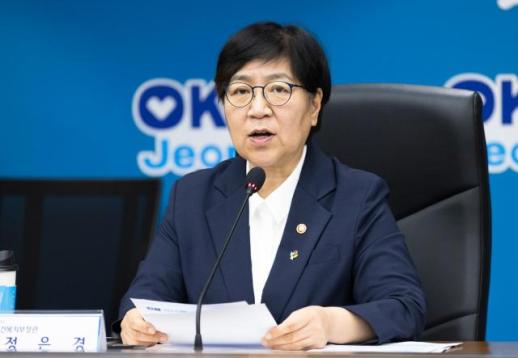 AI Revolution in Healthcare: South Korea Aims to Become a Global Leader in Digital Health AI is transforming hospitals. Diagnoses that once relied on a physician's experience are evolving through precise AI analysis, while patient medical records are becoming valuable assets for new healthcare innovations. The focus of treatment is rapidly shifting from reactive care to preventive and personalized health management.At the center of this change is healthcare data. Jeong Eun-kyeong, Minister of Health and Welfare, has clearly outlined her commitment to fostering medical AI and the digital health industry as key drivers of national growth since taking office.She has held policy meetings with medical AI companies to hear directly about regulatory challenges and concerns from the field. Her vision includes establishing a data utilization ecosystem based on a health information highway, a national integrated bio big data system, and hospitals centered around healthcare data. Additionally, she is working on legislation to create a legal framework for AI in healthcare through the Digital Healthcare Act.The question is clear. Can South Korea truly become the world's leading AI healthcare nation? The focus of healthcare is shifting from hospitals to data.The starting point of the healthcare revolution is not AI.It is data.AI can only predict diseases, enhance diagnostic accuracy, and suggest personalized treatments when sufficient healthcare data is available.Minister Jeong emphasizes this transformation more than anyone else.During a policy meeting with medical AI and digital health companies, she expressed her intention to improve regulations surrounding the use of healthcare data and foster an industrial ecosystem. The government is expanding the foundation for AI utilization through initiatives like the health information highway (medical MyData), national integrated bio big data, and support for data-centric hospitals.Ultimately, the competitiveness of healthcare in the AI era depends not on the size of hospitals but on how safely data can be utilized.Minister Jeong views the medical AI industry not merely as a healthcare technology but as a strategic national industry.AI image analysis, digital therapeutic devices, personal health management services, and AI drug development are already emerging as central components of the global healthcare industry.At a recent meeting hosted by the Ministry of Health and Welfare, representatives from 15 companies in the medical AI, digital health, and healthcare data sectors attended. The companies proposed improvements to the standards for utilizing medical MyData, safe cloud-based data sharing, and standardization of healthcare data, which the government plans to incorporate into regulatory reforms.This shift indicates that the government is evolving from a regulatory role to one that creates growth strategies in collaboration with the industry.The core of the AI healthcare revolution lies not in hospitals but in the industrial ecosystem.Digital Healthcare Act as the starting point for the healthcare revolutionAI in healthcare cannot succeed on technology alone.It requires a supportive legal framework.Minister Jeong is prioritizing the enactment of the Digital Healthcare Act as a key task.This legislation aims to establish a legal foundation for the use of healthcare data, digital therapeutic devices, and AI-based healthcare services. The Ministry is continuing legislative discussions through public hearings after gathering input from various stakeholders.Just as healthcare laws shaped the medical system during the industrial revolution, the Digital Healthcare Act is poised to create a new order in healthcare in the AI era.The biggest misconception surrounding AI in healthcare is the belief that AI will replace doctors.However, the reality is different.AI analyzes vast amounts of medical images, identifies risk signals, and supports physicians' judgments.In particular, AI can reduce the workload of medical staff and enhance diagnostic accuracy in emergency care, rare diseases, and chronic disease management.The government is also working to reduce gaps in essential medical services and regional healthcare through the establishment of an AI-based healthcare system. Key tasks under discussion include AI-based collaborative care, emergency medical systems, and expansion of medical infrastructure.AI is not a technology that replaces doctors but one that enables better healthcare.Welfare evolves with AI integrationThe role of the Ministry of Health and Welfare extends beyond healthcare.It also encompasses welfare responsibilities.AI is bringing about new changes in the welfare sector as well.A new era is emerging where AI detects anomalies in elderly individuals living alone, supports welfare consultations, and provides care services tailored to individual circumstances.In South Korea's aging society, AI can serve as a crucial means to supplement the shortage of caregiving personnel.Minister Jeong does not view healthcare and welfare as separate entities.The core direction of AI welfare is to connect the health and quality of life of citizens through a unified data-driven service.The conditions for becoming an AI healthcare nation are trust.Healthcare data is among the most sensitive personal information.While utilization is important, safety is paramount.Minister Jeong emphasized, "Given that healthcare data is a representative sensitive information, it is crucial to ensure safety while utilizing it." This means that achieving both data utilization and personal information protection is essential for the sustainable growth of the AI healthcare industry.The success of the AI healthcare revolution hinges not on technology but on the trust of the people.When safely protected data is utilized securely, a healthcare revolution becomes possible.Can South Korea become the world's leading digital health nation?South Korea boasts a world-class healthcare insurance system, medical institutions, and ICT infrastructure.When combined with AI and healthcare data, new opportunities arise.The integration of semiconductors, biotechnology, and AI in the healthcare industry is likely to become a new growth engine for South Korea.The ecosystem for medical AI, the Digital Healthcare Act, and policies for utilizing healthcare data promoted by Minister Jeong are ultimately the cornerstones for making South Korea a leading nation in AI healthcare.Now, the key is the speed of institutional innovation rather than the speed of technological development.ConclusionMinister Jeong's AI policies aim for a healthcare revolution beyond mere digitization.Fostering the medical AI industry, expanding the use of healthcare data, enacting the Digital Healthcare Act, and building a national integrated bio big data system all point toward a single goal: creating a country where citizens live longer and healthier lives through AI.AI makes healthcare more accurate, and data personalizes it.South Korea already has an excellent healthcare system.With the addition of AI, there is ample potential to leap from being a healthcare advanced nation to a leader in AI healthcare.Jeong Eun-kyeong, Minister of Health and Welfare, is a public health expert who previously served as the head of the Korea Disease Control and Prevention Agency, leading the response to infectious diseases. Since her appointment as Minister, she has focused on fostering medical AI and the digital health industry, expanding the use of healthcare data, and enacting the Digital Healthcare Act as core tasks.Recently, she held policy meetings with medical AI and digital health companies to discuss regulatory improvements and data utilization strategies, concentrating her policy efforts on building an AI healthcare ecosystem based on the health information highway and national integrated bio big data.* This article has been translated by AI. 2026-06-25 14:12:00