
Journalist

Ahn Seon-Young
asy728@ajunews.com
-
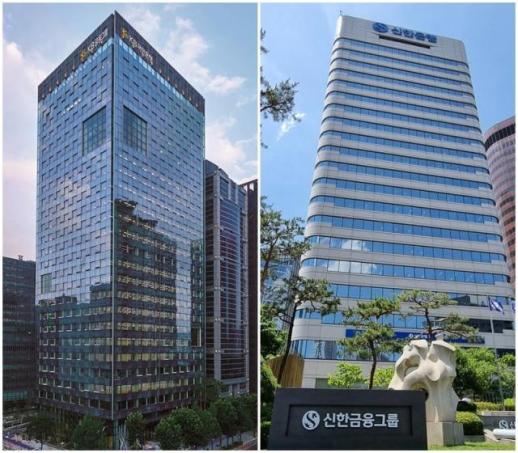 KB Financial, Shinhan post record Q1 profits on stock-market boom; step up shareholder returns KB Financial Group and Shinhan Financial Group, South Korea’s top two financial holding companies, posted record quarterly results, driven by steady net interest income and a surge in fee income tied to a strong stock market. Both groups also announced steps aimed at boosting shareholder value, including share cancellations and a new value-up plan. KB Financial said in a regulatory filing on Wednesday that its first-quarter 2026 net profit rose 11.5% from a year earlier to 1.8924 trillion won, the highest on record and above market expectations. Net interest income totaled 3.3348 trillion won, while net fee income jumped 45.5% to 1.3593 trillion won. The share of group earnings from nonbank units rose to 43%, as affiliates posted broadly even growth. By unit, KB Kookmin Bank earned 1.1010 trillion won in first-quarter net profit, up 7.3% from a year earlier. The group cited the fading impact of one-off provisioning booked last year, stable management of interest income and higher wealth-management fee income. KB Securities posted net profit of 347.8 billion won, up 93.3% from a year earlier, as higher stock trading value lifted brokerage commissions and other wealth-management revenue. Shinhan Financial also reported record quarterly results. In a filing Wednesday, it said first-quarter net profit rose 9.0% from a year earlier to 1.6226 trillion won, the highest for any quarter. As with KB, improved securities performance sharply lifted noninterest and nonbank earnings. Noninterest income, including securities fee income and the bank’s exchange-traded fund fees and trust income, rose 26.5% to 1.1882 trillion won. Shinhan Bank’s net profit increased 2.6% to 1.1571 trillion won, while Shinhan Investment Corp. surged 167.4% to 288.4 billion won on higher trading value amid a stronger market. Hana Financial Group and Woori Financial Group, set to report first-quarter results on Thursday, are expected to post net profits of 1.1553 trillion won and 815.2 billion won, respectively, up 2.45% and 32.42% from a year earlier. Shareholder returns also ramp up as groups move to lift value Following the record results, both groups unveiled shareholder-return measures. KB Financial said it plans to cancel all treasury shares it holds, totaling about 14.26 million shares, or roughly 3.8% of shares outstanding. The move follows a recent Commercial Act revision related to mandatory cancellation of treasury shares. KB said it is the industry’s largest single share-cancellation case by value. Although the mandatory cancellation comes with a 1 1/2-year grace period, KB said it decided to proceed immediately after the legal revision to maximize shareholder value and align with government policy. Shinhan Financial announced a new corporate value-enhancement plan, “Shinhan Value-Up 2.0.” It centers on managing its common equity Tier 1 ratio at an appropriate level and introducing a new shareholder-return target that links return on equity and growth. Growth will be set by the board, taking into account increases in capital and risk-weighted assets. With a target ROE of 10% and growth of 4% to 5%, Shinhan said the expected shareholder-return ratio would be 50% to 60%. The structure raises the return ratio as growth increases, effectively removing an upper limit. Shinhan also said it will seek, starting with this year’s year-end dividend, to expand tax-free dividends and dividends per share by at least 10% annually over the next three years, and use remaining resources for share buybacks and cancellations to improve consistency and flexibility in its shareholder-return policy. Jang Jeong-hun, executive vice president for finance at Shinhan Financial, said the plan is meaningful because it “builds a sustainable system in which the group’s growth and shareholder returns reinforce each other,” adding that the group will work to raise shareholder value through higher ROE and a predictable shareholder-return framework.* This article has been translated by AI. 2026-04-23 16:34:32
 -
 Shinhan Financial Q1 Net Profit Rises 9% to 1.62 Trillion Won on Strong Non-Interest Income Shinhan Financial Group posted another record quarterly result, reporting first-quarter net profit of more than 1.6 trillion won as strong brokerage performance and a sharp rise in non-interest income lifted earnings. In a regulatory filing Thursday, Shinhan Financial said first-quarter net profit rose 9.0% from a year earlier to 1.6226 trillion won. Operating profit increased as net interest income stayed solid and non-interest income, led by securities, improved markedly. Net interest income rose 5.9% to 3.0241 trillion won. The group’s net interest margin, a key profitability gauge, increased 3 basis points to 1.93%. Non-interest income climbed 26.5% to 1.1882 trillion won as fee income, gains related to securities and insurance income all grew. Non-operating income added 66.9 billion won, up 276.5 billion won from the previous quarter as one-off costs such as bank penalties and contributions to the New Leap Fund fell away. Loan-loss provisions increased 17.5% from a year earlier, reflecting higher credit costs tied to expanded sales and write-offs at the bank. Shinhan said its credit cost ratio was 0.46%, within its plan for the year. As of the end of March, the group’s preliminary BIS capital ratio was 15.72% and its common equity Tier 1 ratio was 13.19%, maintaining stable capital levels. By unit, Shinhan Bank posted first-quarter net profit of 1.1571 trillion won, up 2.6% from a year earlier. Non-interest income fell due to weaker securities-related results amid greater market volatility, but solid net interest income supported operating profit. Shinhan Card’s net profit fell 14.9% to 115.4 billion won after recognizing costs for a voluntary retirement program. Shinhan Investment Corp. reported net profit of 288.4 billion won, up 167.4%, as a stronger stock market boosted trading value. Shinhan Life posted 103.1 billion won in net profit, down 37.6%, hit by weaker insurance profit due to a wider gap between expected and actual claims and lower financial profit amid rising market rates. Separately, Shinhan Financial said its board approved a new corporate value plan, dubbed “Shinhan Value-Up 2.0.” The plan centers on managing an appropriate CET1 ratio while introducing a new shareholder return target that links return on equity and growth, with the payout ratio rising as growth increases. The group also said it will pursue tax-free dividends for the next three years and aim to raise dividends per share by at least 10% annually, using remaining resources for share buybacks and cancellations to add consistency and flexibility to shareholder returns. For the first quarter, Shinhan resolved a dividend of 740 won per share and said it is proceeding with a planned 700 billion won share buyback program scheduled to run through July.* This article has been translated by AI. 2026-04-23 14:01:42
 -
 NH Financial Group’s 100-Year Life Research Institute Targets Retirement Planning As South Korea moves deeper into a super-aged society, competition in finance is shifting. Wealth management, once centered on high-yield products and affluent clients, is increasingly focused on planning for 30 to 40 years after retirement. With pensions, inheritance, housing and medical costs now requiring integrated management, firms are competing less on returns and more on retirement-planning capability. NH Financial Group has moved early. In 2011, it established the 100-Year Life Research Institute under NH Investment & Securities and built the “100-year life” brand. The institute helped frame retirement not as a social exit but as managing a second chapter of life, putting “100-year life” ahead of the term “retirement.” The institute has grown beyond research into a core unit shaping the group’s pension and wealth-management strategy, while also serving as a hub linking affiliates. Combined with the group’s customer base in rural areas and among older adults, it has become a key part of NH’s differentiation. A field-based approach is another strength. The institute visits local agricultural cooperatives and underserved areas to provide lifetime asset-management education, extending programs into rural communities nationwide. It also regularly publishes retirement planning materials for office workers and asset-management reports tailored to rural households. Backed by a nationwide branch network, NH can deliver retirement content to older customers even at the township level, a system competitors find difficult to replicate. Recently, the institute has focused on “pension withdrawal strategy,” arguing that in retirement the order and timing of withdrawals matter more than saving. How people manage the national pension, retirement pension, personal pension and other financial assets can change after-tax income and how long assets last, making tax-saving simulations an important part of retirement planning. Kim Dong-ik, head of the 100-Year Life Research Institute, often stresses that “pensions are not only about saving, but about the science of withdrawals.” Its education platform is also expanding. The “100-Year Life University,” jointly run with Seoul National University’s Center for Senior Retirement Planning Support, has produced more than 1,500 graduates. The institute is widening its reach through programs such as “Life University on the Road” and “Noble Class,” expanding beyond financial education into consulting for major life transitions. * This article has been translated by AI. 2026-04-23 11:06:06
 -
 Banks Expand ‘Productive Finance,’ but Public Takes Risk as Funds Favor Top Borrowers Banks have increased corporate lending in the name of expanding “productive finance,” but critics say the money is flowing more to top-rated borrowers than to innovative firms and small merchants. That helps explain why, despite announcements of trillion-won support packages, many businesses say the impact on the ground remains limited. According to the financial sector on Tuesday, KB Kookmin, Hana, Woori and IBK Industrial Bank of Korea have contributed a combined 36.5 billion won to the Korea Credit Guarantee Fund so far this year. The total includes 30.5 billion won in special contributions and 6.0 billion won in support for guarantee fees. Including those banks, seven lenders have contributed 67.2 billion won to support non-capital regions. When banks make special contributions to policy guarantee institutions such as the Korea Credit Guarantee Fund and the Korea Technology Finance Corp., the agencies use the money to issue partnership guarantees. Banks then lend to small and midsize companies using those guarantees as collateral. The industry typically estimates the contributions can generate lending equal to 20 to 100 times the amount, meaning a 100 billion won contribution can translate into several trillion won in financing. The concern is that public institutions effectively take on the credit risk. If a guaranteed loan turns sour, banks face limited losses because the guarantee agency repays the debt, allowing banks to recover up to 90% to 100% of principal. That lets banks expand loan assets without a comparable hit to their soundness ratios. Supporters say the guarantees can serve as seed money for productive finance by helping lower-credit firms raise working capital and funds for facilities. But the burden on guarantee agencies inevitably grows as they absorb more risk. Subrogation payments by guarantee institutions have been rising. As of March, the number of troubled companies that received guarantees from the Korea Credit Guarantee Fund, the Korea Technology Finance Corp. and regional credit guarantee foundations, then failed to repay bank loans on time, jumped to 13,851 — 2.8 times the previous month’s 4,907. Subrogation payments tied to those cases totaled 594.8 billion won, up more than 40 billion won in a month. Meanwhile, loans that banks extend while directly bearing the risk have largely gone to stronger borrowers. As of the end of March, outstanding large-company loans at the five major banks — KB Kookmin, Shinhan, Hana, Woori and NH NongHyup Bank — stood at 179.0119 trillion won, up 5.12% from the end of last year. Over the same period, outstanding loans to small and midsize companies rose just 0.94% to 680.7618 trillion won. The figures suggest that while productive finance is billed as support for innovative firms, venture companies and small businesses, much of the money is still flowing to creditworthy conglomerates. One reason is that formal-sector finance remains difficult for vulnerable borrowers. Of loans to small merchants and self-employed borrowers, 79.8% are secured loans and 10.6% are loans with guarantors, while unsecured credit loans account for only 9.6%. A financial industry official said the sector agrees with the goal of expanding productive finance, but added that “to maintain soundness regulations, funds inevitably concentrate in relatively safe borrowers.” The official said improving productive finance in line with its stated purpose will require “qualitative improvements through a risk-sharing structure and better allocation of funds.” 2026-04-22 15:03:06
 -
 Korea Finance Union Seeks 8% Pay Raise, 4.5-Day Workweek Ahead of Local Elections The Korea Finance Union has launched this year’s industrywide bargaining, raising its demands for higher pay and shorter working hours. With June local elections approaching and politicians courting labor support, analysts say the union’s voice is growing louder. According to the financial sector on April 21, the union recently held its “2026 first delegation bargaining session” and began full talks with the Financial Industry Employers Association. Its key demands include an 8.0% increase in total wages, adoption of a 4.5-day workweek, raising the retirement age to 65 while scrapping the wage-peak system, and blocking relocation of headquarters outside the capital area. The two sides plan to hold main bargaining talks on May 27. For its 2026 wage proposal, the union is seeking an 8.0% increase in total wages — about 2.5 times last year’s agreed raise of 3.1%. The union said the figure reflects projected economic growth of 2.0% and consumer inflation of 2.2%, as well as a 3.8% decline in real wages over the past five years. A 4.5-day workweek without pay cuts is also a central issue. The union says it will not accept reductions tied to shorter hours, while management argues some adjustment is needed, leaving the issue unresolved. Yoon Seok-gu, the union’s chairman, said, “It’s time for workers to receive fair compensation,” adding, “Just as spring does not come on its own, our rights must be won through a fierce struggle.” In and outside the industry, some see the election calendar as strengthening the union’s bargaining position. The union has about 100,000 members, including workers at major commercial and state-run banks, and has drawn political attention during election seasons. The article noted that the union formed a policy alliance with the Democratic Party during last year’s presidential election, fueling expectations that the ruling camp will find it difficult to ignore labor demands. The union’s standing has also been bolstered by recent political messages urging labor to take a more active role. President Lee Jae-myung told a labor event to “fight hard for workers’ rights,” and Democratic Party leader Jung Cheong-rae said, “Make more noise at worksites,” according to the article. Still, the union’s demands may struggle to win broad public support. Average annual pay for employees at the four major banks — KB Kookmin, Shinhan, Hana and Woori — was 122.75 million won last year, up 4.03% or 4.75 million won from 118.00 million won a year earlier. By contrast, the average total pay for regular workers last year was 50.61 million won, less than half the level for bank employees. A financial industry official said the union has in recent years proposed high wage increases and shorter hours and, if management refuses, moved toward strikes. “This year as well, the domestic and external business environment is not good, so difficult labor-management talks are expected,” the official said.* This article has been translated by AI. 2026-04-21 14:50:16
 -
 Banks Keep Selling Equity-Linked Deposits Despite Regulator Warning on Mis-Selling Risk Rising stock-market volatility amid external uncertainty, including the Iran war, is fueling consumer complaints about equity-linked deposits, or ELDs. Financial regulators have warned banks to tighten controls because the products could be mis-sold, but banks have opted to keep selling them rather than shut the window. The move reflects a balancing act: staying mindful of regulators while trying not to give up fee-based income. According to the financial sector on the 16th, the Financial Supervisory Service on April 9 called in vice presidents from major banks and urged stricter management of sales limits for investment products such as ELDs by risk rating. The watchdog said that if sales of high-risk products rise in a period of heightened volatility, it could lead to mis-selling. The FSS views ELDs and exchange-traded funds, or ETFs, as having potential mis-selling risks similar to the Hong Kong H-index equity-linked securities, or ELS, episode. ELDs advertise maximum rates in the 10% to 14% range, but actual returns can vary widely depending on the performance of the KOSPI 200. If the index moves outside a set range, the return can be fixed at around 2%, widening the gap between expected and realized returns when markets swing sharply. As a result, more investors who signed up expecting principal protection and high yields are ending up with rates lower than regular time deposits, the report said. Complaints have also continued from customers who said they joined without fully understanding that early cancellation triggers fees and that interest is not paid. Even so, banks have not closed ELD sales channels. KB Kookmin Bank recently launched a similar product while strengthening customer guidance and staff training. Shinhan Bank has responded by revising product brochures, and NH NongHyup Bank is preparing internal steps to improve brochures and non-face-to-face guidance. Rather than cut sales, banks are seeking to limit liability by strengthening explanations. Some in the industry say the burden has grown. As regulators emphasize risk controls for investment-product sales, pressure has increased, while the need to secure non-interest income remains. A commercial bank official said, “Risk-management demands have grown, but with alternative products available, it is difficult to completely stop selling investment products.” For now, banks appear set to keep searching for a balance between regulatory warnings and revenue, maintaining sales while trying to reduce responsibility through tighter disclosures and controls. 2026-04-16 14:57:41
 -
 South Korea’s Self-Employed Debt Shifts to Nonbank Lenders, Raising Default Risks Debt held by South Korea’s self-employed is nearing a breaking point and is emerging as a broader financial risk as more borrowers are pushed out of banks and into higher-cost nonbank lenders. As bank lending standards tighten, delinquencies and business closures are rising in tandem, reinforcing a negative cycle. According to Korea Credit Data on April 13, outstanding loans to sole proprietors totaled 729.2 trillion won at the end of last year, up 13.2 trillion won from a year earlier (716 trillion won). Bank lending stayed around 433 trillion won over the year, but nonbank loans rose 14 trillion won, to 296 trillion won from 282 trillion won, lifting the overall total. Mutual finance institutions, often cited as a blind spot in household loan oversight, also led nonbank lending to sole proprietors, accounting for 32.1% of the total. These second-tier lenders, including mutual finance, typically charge higher interest rates than banks but apply looser screening, making it easier for vulnerable borrowers to enter. That also means credit problems can spread faster. Bank delinquency rates were managed at about 0.6%, but savings banks’ delinquency rate rose to 5.4% at the end of 2025 from 5.0% at the end of 2024. Mutual finance institutions’ delinquency rate increased to 2.9% from 2.7% over the same period. By amount, delinquent loans at banks remained at 2.4 trillion won, while nonbank delinquent loans jumped 17.9% to 10.5 trillion won from 8.9 trillion won. In a period of rising interest rates, interest burdens can climb quickly, increasing default risks among borrowers with weak repayment capacity. The structural weakness is also showing up in closures. Of 3.62 million businesses that held sole proprietor loans last year, 507,000, or 14.0%, were already closed. The closure share was 8.5% among businesses with bank loans, compared with 17.3% among those borrowing from nonbank lenders. Experts said the issue has moved beyond simple debt growth and into a stage of structural risk. As bank regulations tighten, funding demand shifts to nonbanks, which can feed higher interest burdens, rising delinquencies and more closures. If distress among the self-employed concentrates in nonbank lenders, financial risks could spread across the broader market. Seon Yong-uk, an associate research fellow at the Korea Institute for Small and Medium Enterprise, said nonbank loan balances and delinquency rates among small merchants have remained high since the COVID-19 pandemic. “If a recovery in domestic demand is not supported, there is little room for small merchants’ business performance to improve, making it difficult for their loan soundness to improve structurally,” he said.* This article has been translated by AI. 2026-04-14 06:03:20
 -
 Hana Financial to consolidate key units at new Cheongna headquarters in Incheon Hana Financial Group is preparing to open what it calls a new “Cheongna era” in Incheon’s Cheongna International City, consolidating key affiliates at a new headquarters complex and aiming to build a finance cluster modeled on Spain’s Santander City. The plan traces back to 2007, when former Hana Financial Group Chairman Kim Seung-yu visited Santander City and Banco Santander and began shaping the idea. Banco Santander, once a regional bank in northern Spain, built a financial town on the western outskirts of Madrid and used it as a base to expand overseas, growing into a major global lender. According to the Incheon Free Economic Zone Authority on Sunday, the third-phase Hana Dream Town project, which includes the group’s headquarters building, was 92% complete and is scheduled to be finished in June. The building will have seven basement levels and 15 above-ground floors, with a total floor area of 128,474 square meters. Once completed, Hana Financial plans to begin moving major affiliates to Cheongna starting in September, including the holding company as well as its bank, securities, card and insurance units. The group said it aims to bring together offices now spread across areas including Jung-gu, Yeouido and Gangnam, narrowing physical distance between affiliates and speeding decision-making. The complex is planned as a multi-use campus designed to strengthen data- and digital-based collaboration, rather than a simple office relocation. The move is notable as the first case among major South Korean financial holding companies to relocate a headquarters outside Seoul. Other large groups keep headquarters in central Seoul, including KB Financial in Yeouido, Shinhan Financial near City Hall, Woori Financial in Myeong-dong and NH NongHyup Financial in Seodaemun. Incheon City expects the complex, once fully operating, to generate an estimated 877.3 billion won in production-inducing effects and create 7,666 jobs. Officials also anticipate broader spillover effects such as an inflow of younger residents, higher consumption, increased business activity and growth in local tax revenue. With large-scale financial infrastructure concentrated in Cheongna, the area is expected to accelerate its shift toward a self-sustaining city combining work, housing and commercial functions, analysts said. Hana Financial Chairman Ham Young-joo said in his New Year’s address that the Cheongna relocation is “not simply moving office locations,” but “a comprehensive change” and a starting point for a major transformation in how the group works and its culture. He said the group would lead digital finance and aim to take a bigger role in global financial markets.* This article has been translated by AI. 2026-04-06 15:03:12
 -
 Mideast Tensions Stoke Korea’s Strong Dollar, Inflation Fears, Pressuring Banks Rising geopolitical risk tied to the Middle East is increasingly hitting South Korea’s financial markets with a double shock: a weaker won and higher inflation. With oil prices and the exchange rate climbing at the same time, pressure on consumer prices is building, raising concerns the path of the policy rate could shift and adding to strain across the financial sector. According to the Korea Center for International Finance on Saturday, the average 2026 consumer inflation forecast from eight major global investment banks rose to 2.4% at the end of March from 2.0% at the end of February, an increase of 0.4 percentage points. Such a jump in the average outlook in just one month is unusual. South Korea relies on the Middle East for about 70% of its oil resources, leaving it directly exposed to energy-price shocks. The won-dollar exchange rate moving above 1,500 won has also pushed up import costs. If the Middle East situation drags on, the Bank of Korea is expected to raise its benchmark rate once or twice in the second half of the year, which could increase interest burdens for households and companies and weigh on the real economy. Those risks are also sharpening concerns about the soundness and profitability of financial holding companies and banks. If high rates and high inflation persist together, repayment capacity for households and businesses can weaken, lifting delinquency rates. The industry is watching closely for a buildup of potential bad loans, especially in sectors sensitive to the business cycle. A higher exchange rate can also increase risk-weighted assets, adding pressure to manage common equity Tier 1 (CET1) ratios. The financial industry estimates that every 10-won rise in the won-dollar rate could lower financial groups’ CET1 ratios by about 0.01 to 0.03 percentage points. To offset that, groups are expected to step up loan-loss provisions and tighten risk-weighted asset management. Funding costs are rising as well. While banks’ funding rates are climbing quickly due to higher market rates and intensifying competition for deposits, loan demand is showing signs of slowing as high borrowing costs combine with measures to manage household debt. With net interest income accounting for around 80% of financial groups’ earnings, a narrower net interest margin would translate into weaker profits. Financial groups moved to emergency management systems soon after the Middle East crisis erupted and have stepped up risk responses. They shifted to real-time monitoring of exchange-rate moves and their impact, checked foreign-currency deposit liquidity, and focused on foreign-currency soundness management. They have also continued sending customer alerts to help clients navigate volatility in exchange rates and stock prices. Annual business plans drawn up earlier are now likely to be revised. Plans were based on an expected average won-dollar rate of about 1,410 this year, but the March average was 1,492.5 won, the highest monthly level since the financial crisis. With market conditions deteriorating faster than expected, firms are being forced to review overall business strategies. 2026-04-05 14:48:00
 -
 Mortgage Rates Hit 7% in South Korea, Raising Repayment Pressure for Borrowers After moving in step with expectations of U.S. rate cuts, the broader downtrend in interest rates has been jolted by the unexpected shock of the Iran war. With hopes fading for policy-rate cuts by central banks at home and abroad, and market rates — a key benchmark for lending — rising quickly, borrowers are facing tougher choices. As of Thursday, five-year fixed-rate mortgage loans at South Korea’s five major commercial banks — KB Kookmin, Shinhan, Hana, Woori and NH NongHyup — were quoted at annual rates of 4.42% to 7.02%, according to the financial industry on April 3. The top end of the fixed-rate range rising above 7% marks the first time since October 2022, about three years and five months ago. Compared with mid-January (4.13% to 6.29%), the upper bound is up 0.72 percentage points and the lower bound up 0.29 points. Experts say the upswing is unlikely to reverse sharply in the near term and advise consumers to adjust their financial plans accordingly. With interest burdens rising, managing debt to reduce repayment pressure is emerging as the immediate priority. Borrowers who bought homes in 2020 and 2021 by maximizing loans in a low-rate environment — and who are now renewing five-year fixed-rate mortgages — are entering a period of full rate resets starting this year. In many cases, monthly interest payments are expected to rise by hundreds of thousands of won or more. Borrowers should consider using the right to request a rate cut when their circumstances qualify. Those whose loans are more than three years old may also want to use rules that waive early repayment fees, allowing them to respond more quickly as market rates move. When choosing between fixed and variable rates, borrowers should factor in the possibility that rates may stay elevated rather than fall. For customers with heavy principal-and-interest payments or high debt relative to income, a fixed rate may be more stable by reducing exposure to rate swings. By contrast, higher-income borrowers with smaller loans and a strong likelihood of early repayment may find a variable rate — with a lower initial burden — more practical. “If the war drags on and oil prices stay above $100, the Fed could raise its policy rate, and the Bank of Korea could respond with hikes,” said Choi Ji-hoon, a gold private banker team leader at Hana Bank’s Club1 Hannam PB Center. “If the policy rate rises, loan rates have no choice but to rise as well.”* This article has been translated by AI. 2026-04-04 07:03:40