
Journalist

Ahn Seon-young
asy728@ajunews.com
-
 Woori Bank Adds Mobile Transit Card Top-Ups to Samsung Wallet Money Woori Bank said on the 27th it has added a mobile transit card top-up feature to Samsung Wallet Money. Samsung Wallet Money is a simple payment service that lets users pay with a Samsung Galaxy smartphone without a physical card by linking a bank account or adding funds. With the update, Samsung Wallet Money users can top up the balance of a T-money mobile transit card in the Samsung Wallet app using Samsung Wallet Money. The related app update has been rolling out since the 23rd and is expected to be completed by the end of April. Woori Bank said it also plans to launch top-ups for the EZL (formerly Cashbee) mobile transit card in the third quarter of this year. To mark the launch, Woori Bank will run a special promotion through the end of June. Customers who link a Woori Bank account as the funding account and use Samsung Wallet Money to top up a T-money mobile transit card for the first time will receive 2,000 Samsung Wallet Money points immediately. “This service is meaningful not only as an expansion of payment options, but also because it further strengthens everyday financial convenience through Samsung Wallet Money,” said Heo Min-woo, a deputy manager in Woori Bank’s platform business division. “We will continue to introduce services that are convenient to use at a reasonable cost.”* This article has been translated by AI. 2026-04-27 15:16:11
 -
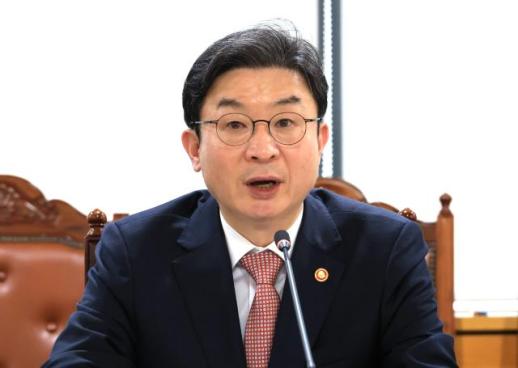 South Korea to Ease Loan Caps for Mid-Rate Lending; Card Issuers to Offer Saitdol Loans Financial authorities said they will ease household-loan volume caps to expand access to credit for mid-tier borrowers, excluding up to 80% of private-sector mid-rate loans from the overall lending limits. They also plan to allow credit card companies to offer Saitdol loans, aiming to increase mid-rate lending and encourage funding at lower interest rates. The Financial Services Commission announced the measures on 27 at a meeting titled the fourth Inclusive Finance Transformation Conference, held at the KB Hope Finance Center in Seoul's Dongjak district. The supply target for mid-rate loans this year is 31.9 trillion won, up 1.1 trillion won from last year. The plan calls for 3.6 trillion won in Saitdol loans and at least 28.3 trillion won in private mid-rate loans. Under the plan, when financial firms manage their overall lending volumes, private mid-rate loans will be excluded by sector by up to 80%. The FSC said the step is intended to prevent a sharp contraction in access to credit for mid-tier borrowers as lenders tighten volume controls to manage household debt. The government will also narrow eligibility for Saitdol loans to borrowers in the bottom 20% to 50% of credit scores, from the previous bottom 50%, to help mid-tier borrowers obtain sufficient funding at lower rates. Officials said the change addresses criticism that Saitdol loans, introduced as a stepping-stone for mid-tier borrowers, have in practice been supplied mainly to low-credit borrowers in the bottom 20% or below. With the overhaul, Seoul Guarantee Insurance premium rates are expected to fall by up to 5.2 percentage points, and the supply amount is projected to increase by up to 100 billion won. The FSC said it will expand Saitdol loan providers beyond banks, mutual finance institutions and savings banks to include specialized credit finance firms such as credit card companies and capital firms. It said participation by those firms, which hold customer data and credit-assessment capabilities for mid-tier borrowers, is expected to provide Saitdol loans at 8% to 12% interest and ease a so-called interest-rate cliff. That would be well below the existing 15.5% rate. Rules for private mid-rate loans will also be revised. When calculating the interest-rate criteria used to recognize mid-rate loans, the FSC will reflect actual loan costs such as funding costs and credit costs, lowering sector-specific benchmarks by up to 1.25 percentage points. Second-tier financial products will be split into mid-rate loan categories 1 and 2 depending on rate levels, and category 1 products will apply interest rates at least 3 percentage points lower than current levels. Financial Services Commission Chairman Lee Eok-won said inclusive finance must also serve as a reliable backstop so mid-tier borrowers can maintain stable financial lives. He said the government will work in balance with the private sector to support both low-credit and mid-tier borrowers and build what he called genuine inclusive finance. 2026-04-27 14:43:28
 -
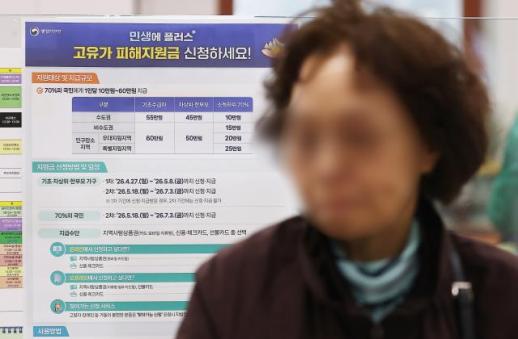 South Korea to Start High Fuel Price Relief Payments; Eligibility, Amounts and Use Rules Applications and payments for South Korea’s high fuel price relief payment begin April 27, drawing attention to who qualifies and how much they can receive. The government is rolling out the program to help stabilize household finances as international oil prices rise and inflation pressures grow. Payments vary by income and place of residence, ranging from 100,000 won per person to a maximum of 600,000 won. Basic livelihood security recipients will receive 550,000 won in the Seoul metropolitan area and up to 600,000 won outside the capital region. Near-poverty households and single-parent families will receive about 450,000 to 500,000 won. Among the general public, those in the bottom 70% by income can receive 100,000 won to as much as 250,000 won depending on region. The schedule is split by group. Vulnerable households — including basic livelihood security recipients, near-poverty households and single-parent families — will be paid first starting April 27. A second round of applications for the bottom 70% by income begins May 18. People who want advance notice can sign up for application-period alerts through the National Secretary service. Alerts can also be set through Naver, KakaoTalk and Toss. Applications and payments will be handled both online and in person. During the first week, a day-of-week system based on the last digit of a person’s birth year will be used to reduce crowding, as in past disaster relief programs. Those who want the payment on a credit or debit card can apply online through their card issuer or a mobile payment app, or apply in person at a bank branch linked to the card. Card-based payments are charged the day after application, and the relief funds are used before regular card balances. Remaining balances will be provided by text message or app notifications. Those who prefer a mobile or card-type local gift certificate can apply online through the local gift certificate app or website run by their local government. People seeking paper certificates or a prepaid card can visit their local eup, myeon or dong administrative welfare center. The funds can be used through Aug. 31 at eligible small businesses in the recipient’s local jurisdiction, including merchants with annual sales of 3 billion won or less. Use is restricted at certain businesses, including adult entertainment and gambling-related venues, online e-commerce and cash-convertible businesses. Any unused balance will expire automatically after the deadline.* This article has been translated by AI. 2026-04-25 07:03:38
 -
 JB Financial Posts Q1 Net Profit of 166.1 Billion Won, Lifted by JB Woori Capital JB Financial Group said in a regulatory filing on the 23rd that it posted first-quarter net profit of 166.1 billion won, up 2.1% from a year earlier. The group reported a return on equity attributable to controlling shareholders of 11.2% and a return on assets of 0.94%. Its preliminary common equity Tier 1 ratio stood at 12.61%, up 0.03 percentage points from the end of last year. By affiliate, JB Woori Capital led results with net profit of 72.7 billion won, a 24.3% increase from a year earlier. Banking units Jeonbuk Bank and Gwangju Bank posted net profit of 39.9 billion won and 61.1 billion won, respectively, weighed down by higher selling, general and administrative expenses tied to special retirement programs and losses from securities valuation. JB Asset Management and JB Investment reported net profit of 1.1 billion won and 3.0 billion won, respectively. The group’s second-tier subsidiary Phnom Penh Commercial Bank in Cambodia posted net profit of 12.4 billion won, up 21%. JB Financial also said its board approved a quarterly cash dividend of 311 won per common share, about double the 160 won paid for the first quarter of last year.* This article has been translated by AI. 2026-04-23 17:36:06
 -
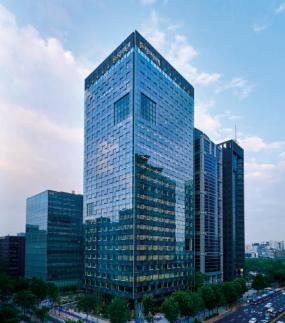 KB Financial Q1 Net Profit Rises 11.5% to 1.8924 Trillion Won; Nonbank Share Hits 43% KB Financial Group reported near-record quarterly earnings and said it will cancel all treasury shares it currently holds, signaling a push to pair strong results with bigger shareholder returns. In a regulatory filing on Thursday, KB Financial said its 2026 first-quarter net profit totaled 1.8924 trillion won, up 11.5% from a year earlier and the highest level on record. Results were supported by solid net interest income of 3.3348 trillion won and a sharp rise in net fee income, which grew 45.5% to 1.3593 trillion won. The nonbanking businesses accounted for 43% of group earnings, reflecting broad-based growth across affiliates. As of the end of March, the group’s nonperforming loan ratio stood at 0.73%. Its common equity Tier 1 ratio was 13.63%, and its BIS capital ratio was 15.75%, the company said. By unit, KB Kookmin Bank posted first-quarter net profit of 1.1010 trillion won, up 7.3% from a year earlier. KB Financial cited the fading impact of last year’s one-off, large provisioning, stable management of interest income and higher wealth-management fee income. The bank’s net interest margin rose 2 basis points to 1.77%. KB Securities reported net profit of 347.8 billion won, up 93.3%, helped by higher brokerage commissions and other wealth-management revenue as stock trading value increased amid a more active capital market. KB Insurance posted 200.7 billion won, KB Kookmin Card 107.5 billion won, and KB Life 79.8 billion won in net profit. KB Financial also announced it will cancel all 14.26 million treasury shares it holds, about 3.8% of shares outstanding, following a recent Commercial Act revision tied to mandatory treasury-share cancellations. The company said it is the industry’s largest single cancellation by value. Although the mandatory cancellation comes with a 1 1/2-year grace period, KB Financial said it decided to proceed immediately after the legal revision to maximize shareholder value and support government policy. The board also approved a quarterly cash dividend of 1,143 won per share and an additional 600 billion won share buyback and cancellation plan. * This article has been translated by AI. 2026-04-23 16:35:03
 -
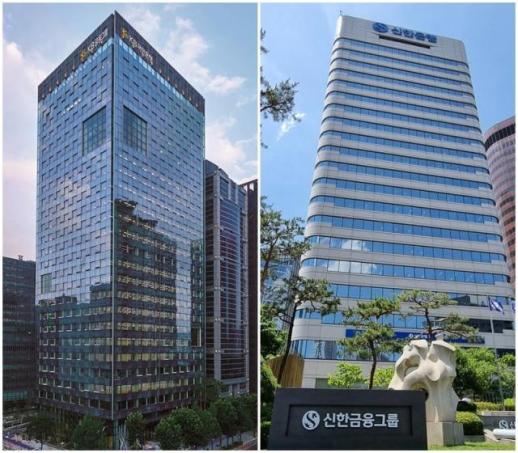 KB Financial, Shinhan post record Q1 profits on stock-market boom; step up shareholder returns KB Financial Group and Shinhan Financial Group, South Korea’s top two financial holding companies, posted record quarterly results, driven by steady net interest income and a surge in fee income tied to a strong stock market. Both groups also announced steps aimed at boosting shareholder value, including share cancellations and a new value-up plan. KB Financial said in a regulatory filing on Wednesday that its first-quarter 2026 net profit rose 11.5% from a year earlier to 1.8924 trillion won, the highest on record and above market expectations. Net interest income totaled 3.3348 trillion won, while net fee income jumped 45.5% to 1.3593 trillion won. The share of group earnings from nonbank units rose to 43%, as affiliates posted broadly even growth. By unit, KB Kookmin Bank earned 1.1010 trillion won in first-quarter net profit, up 7.3% from a year earlier. The group cited the fading impact of one-off provisioning booked last year, stable management of interest income and higher wealth-management fee income. KB Securities posted net profit of 347.8 billion won, up 93.3% from a year earlier, as higher stock trading value lifted brokerage commissions and other wealth-management revenue. Shinhan Financial also reported record quarterly results. In a filing Wednesday, it said first-quarter net profit rose 9.0% from a year earlier to 1.6226 trillion won, the highest for any quarter. As with KB, improved securities performance sharply lifted noninterest and nonbank earnings. Noninterest income, including securities fee income and the bank’s exchange-traded fund fees and trust income, rose 26.5% to 1.1882 trillion won. Shinhan Bank’s net profit increased 2.6% to 1.1571 trillion won, while Shinhan Investment Corp. surged 167.4% to 288.4 billion won on higher trading value amid a stronger market. Hana Financial Group and Woori Financial Group, set to report first-quarter results on Thursday, are expected to post net profits of 1.1553 trillion won and 815.2 billion won, respectively, up 2.45% and 32.42% from a year earlier. Shareholder returns also ramp up as groups move to lift value Following the record results, both groups unveiled shareholder-return measures. KB Financial said it plans to cancel all treasury shares it holds, totaling about 14.26 million shares, or roughly 3.8% of shares outstanding. The move follows a recent Commercial Act revision related to mandatory cancellation of treasury shares. KB said it is the industry’s largest single share-cancellation case by value. Although the mandatory cancellation comes with a 1 1/2-year grace period, KB said it decided to proceed immediately after the legal revision to maximize shareholder value and align with government policy. Shinhan Financial announced a new corporate value-enhancement plan, “Shinhan Value-Up 2.0.” It centers on managing its common equity Tier 1 ratio at an appropriate level and introducing a new shareholder-return target that links return on equity and growth. Growth will be set by the board, taking into account increases in capital and risk-weighted assets. With a target ROE of 10% and growth of 4% to 5%, Shinhan said the expected shareholder-return ratio would be 50% to 60%. The structure raises the return ratio as growth increases, effectively removing an upper limit. Shinhan also said it will seek, starting with this year’s year-end dividend, to expand tax-free dividends and dividends per share by at least 10% annually over the next three years, and use remaining resources for share buybacks and cancellations to improve consistency and flexibility in its shareholder-return policy. Jang Jeong-hun, executive vice president for finance at Shinhan Financial, said the plan is meaningful because it “builds a sustainable system in which the group’s growth and shareholder returns reinforce each other,” adding that the group will work to raise shareholder value through higher ROE and a predictable shareholder-return framework.* This article has been translated by AI. 2026-04-23 16:34:32
 -
 Shinhan Financial Q1 Net Profit Rises 9% to 1.62 Trillion Won on Strong Non-Interest Income Shinhan Financial Group posted another record quarterly result, reporting first-quarter net profit of more than 1.6 trillion won as strong brokerage performance and a sharp rise in non-interest income lifted earnings. In a regulatory filing Thursday, Shinhan Financial said first-quarter net profit rose 9.0% from a year earlier to 1.6226 trillion won. Operating profit increased as net interest income stayed solid and non-interest income, led by securities, improved markedly. Net interest income rose 5.9% to 3.0241 trillion won. The group’s net interest margin, a key profitability gauge, increased 3 basis points to 1.93%. Non-interest income climbed 26.5% to 1.1882 trillion won as fee income, gains related to securities and insurance income all grew. Non-operating income added 66.9 billion won, up 276.5 billion won from the previous quarter as one-off costs such as bank penalties and contributions to the New Leap Fund fell away. Loan-loss provisions increased 17.5% from a year earlier, reflecting higher credit costs tied to expanded sales and write-offs at the bank. Shinhan said its credit cost ratio was 0.46%, within its plan for the year. As of the end of March, the group’s preliminary BIS capital ratio was 15.72% and its common equity Tier 1 ratio was 13.19%, maintaining stable capital levels. By unit, Shinhan Bank posted first-quarter net profit of 1.1571 trillion won, up 2.6% from a year earlier. Non-interest income fell due to weaker securities-related results amid greater market volatility, but solid net interest income supported operating profit. Shinhan Card’s net profit fell 14.9% to 115.4 billion won after recognizing costs for a voluntary retirement program. Shinhan Investment Corp. reported net profit of 288.4 billion won, up 167.4%, as a stronger stock market boosted trading value. Shinhan Life posted 103.1 billion won in net profit, down 37.6%, hit by weaker insurance profit due to a wider gap between expected and actual claims and lower financial profit amid rising market rates. Separately, Shinhan Financial said its board approved a new corporate value plan, dubbed “Shinhan Value-Up 2.0.” The plan centers on managing an appropriate CET1 ratio while introducing a new shareholder return target that links return on equity and growth, with the payout ratio rising as growth increases. The group also said it will pursue tax-free dividends for the next three years and aim to raise dividends per share by at least 10% annually, using remaining resources for share buybacks and cancellations to add consistency and flexibility to shareholder returns. For the first quarter, Shinhan resolved a dividend of 740 won per share and said it is proceeding with a planned 700 billion won share buyback program scheduled to run through July.* This article has been translated by AI. 2026-04-23 14:01:42
 -
 NH Financial Group’s 100-Year Life Research Institute Targets Retirement Planning As South Korea moves deeper into a super-aged society, competition in finance is shifting. Wealth management, once centered on high-yield products and affluent clients, is increasingly focused on planning for 30 to 40 years after retirement. With pensions, inheritance, housing and medical costs now requiring integrated management, firms are competing less on returns and more on retirement-planning capability. NH Financial Group has moved early. In 2011, it established the 100-Year Life Research Institute under NH Investment & Securities and built the “100-year life” brand. The institute helped frame retirement not as a social exit but as managing a second chapter of life, putting “100-year life” ahead of the term “retirement.” The institute has grown beyond research into a core unit shaping the group’s pension and wealth-management strategy, while also serving as a hub linking affiliates. Combined with the group’s customer base in rural areas and among older adults, it has become a key part of NH’s differentiation. A field-based approach is another strength. The institute visits local agricultural cooperatives and underserved areas to provide lifetime asset-management education, extending programs into rural communities nationwide. It also regularly publishes retirement planning materials for office workers and asset-management reports tailored to rural households. Backed by a nationwide branch network, NH can deliver retirement content to older customers even at the township level, a system competitors find difficult to replicate. Recently, the institute has focused on “pension withdrawal strategy,” arguing that in retirement the order and timing of withdrawals matter more than saving. How people manage the national pension, retirement pension, personal pension and other financial assets can change after-tax income and how long assets last, making tax-saving simulations an important part of retirement planning. Kim Dong-ik, head of the 100-Year Life Research Institute, often stresses that “pensions are not only about saving, but about the science of withdrawals.” Its education platform is also expanding. The “100-Year Life University,” jointly run with Seoul National University’s Center for Senior Retirement Planning Support, has produced more than 1,500 graduates. The institute is widening its reach through programs such as “Life University on the Road” and “Noble Class,” expanding beyond financial education into consulting for major life transitions. * This article has been translated by AI. 2026-04-23 11:06:06
 -
 Banks Expand ‘Productive Finance,’ but Public Takes Risk as Funds Favor Top Borrowers Banks have increased corporate lending in the name of expanding “productive finance,” but critics say the money is flowing more to top-rated borrowers than to innovative firms and small merchants. That helps explain why, despite announcements of trillion-won support packages, many businesses say the impact on the ground remains limited. According to the financial sector on Tuesday, KB Kookmin, Hana, Woori and IBK Industrial Bank of Korea have contributed a combined 36.5 billion won to the Korea Credit Guarantee Fund so far this year. The total includes 30.5 billion won in special contributions and 6.0 billion won in support for guarantee fees. Including those banks, seven lenders have contributed 67.2 billion won to support non-capital regions. When banks make special contributions to policy guarantee institutions such as the Korea Credit Guarantee Fund and the Korea Technology Finance Corp., the agencies use the money to issue partnership guarantees. Banks then lend to small and midsize companies using those guarantees as collateral. The industry typically estimates the contributions can generate lending equal to 20 to 100 times the amount, meaning a 100 billion won contribution can translate into several trillion won in financing. The concern is that public institutions effectively take on the credit risk. If a guaranteed loan turns sour, banks face limited losses because the guarantee agency repays the debt, allowing banks to recover up to 90% to 100% of principal. That lets banks expand loan assets without a comparable hit to their soundness ratios. Supporters say the guarantees can serve as seed money for productive finance by helping lower-credit firms raise working capital and funds for facilities. But the burden on guarantee agencies inevitably grows as they absorb more risk. Subrogation payments by guarantee institutions have been rising. As of March, the number of troubled companies that received guarantees from the Korea Credit Guarantee Fund, the Korea Technology Finance Corp. and regional credit guarantee foundations, then failed to repay bank loans on time, jumped to 13,851 — 2.8 times the previous month’s 4,907. Subrogation payments tied to those cases totaled 594.8 billion won, up more than 40 billion won in a month. Meanwhile, loans that banks extend while directly bearing the risk have largely gone to stronger borrowers. As of the end of March, outstanding large-company loans at the five major banks — KB Kookmin, Shinhan, Hana, Woori and NH NongHyup Bank — stood at 179.0119 trillion won, up 5.12% from the end of last year. Over the same period, outstanding loans to small and midsize companies rose just 0.94% to 680.7618 trillion won. The figures suggest that while productive finance is billed as support for innovative firms, venture companies and small businesses, much of the money is still flowing to creditworthy conglomerates. One reason is that formal-sector finance remains difficult for vulnerable borrowers. Of loans to small merchants and self-employed borrowers, 79.8% are secured loans and 10.6% are loans with guarantors, while unsecured credit loans account for only 9.6%. A financial industry official said the sector agrees with the goal of expanding productive finance, but added that “to maintain soundness regulations, funds inevitably concentrate in relatively safe borrowers.” The official said improving productive finance in line with its stated purpose will require “qualitative improvements through a risk-sharing structure and better allocation of funds.” 2026-04-22 15:03:06
 -
 Korea Finance Union Seeks 8% Pay Raise, 4.5-Day Workweek Ahead of Local Elections The Korea Finance Union has launched this year’s industrywide bargaining, raising its demands for higher pay and shorter working hours. With June local elections approaching and politicians courting labor support, analysts say the union’s voice is growing louder. According to the financial sector on April 21, the union recently held its “2026 first delegation bargaining session” and began full talks with the Financial Industry Employers Association. Its key demands include an 8.0% increase in total wages, adoption of a 4.5-day workweek, raising the retirement age to 65 while scrapping the wage-peak system, and blocking relocation of headquarters outside the capital area. The two sides plan to hold main bargaining talks on May 27. For its 2026 wage proposal, the union is seeking an 8.0% increase in total wages — about 2.5 times last year’s agreed raise of 3.1%. The union said the figure reflects projected economic growth of 2.0% and consumer inflation of 2.2%, as well as a 3.8% decline in real wages over the past five years. A 4.5-day workweek without pay cuts is also a central issue. The union says it will not accept reductions tied to shorter hours, while management argues some adjustment is needed, leaving the issue unresolved. Yoon Seok-gu, the union’s chairman, said, “It’s time for workers to receive fair compensation,” adding, “Just as spring does not come on its own, our rights must be won through a fierce struggle.” In and outside the industry, some see the election calendar as strengthening the union’s bargaining position. The union has about 100,000 members, including workers at major commercial and state-run banks, and has drawn political attention during election seasons. The article noted that the union formed a policy alliance with the Democratic Party during last year’s presidential election, fueling expectations that the ruling camp will find it difficult to ignore labor demands. The union’s standing has also been bolstered by recent political messages urging labor to take a more active role. President Lee Jae-myung told a labor event to “fight hard for workers’ rights,” and Democratic Party leader Jung Cheong-rae said, “Make more noise at worksites,” according to the article. Still, the union’s demands may struggle to win broad public support. Average annual pay for employees at the four major banks — KB Kookmin, Shinhan, Hana and Woori — was 122.75 million won last year, up 4.03% or 4.75 million won from 118.00 million won a year earlier. By contrast, the average total pay for regular workers last year was 50.61 million won, less than half the level for bank employees. A financial industry official said the union has in recent years proposed high wage increases and shorter hours and, if management refuses, moved toward strikes. “This year as well, the domestic and external business environment is not good, so difficult labor-management talks are expected,” the official said.* This article has been translated by AI. 2026-04-21 14:50:16