
Journalist

Kim Seong-se
biblekim@ajunews.com
-
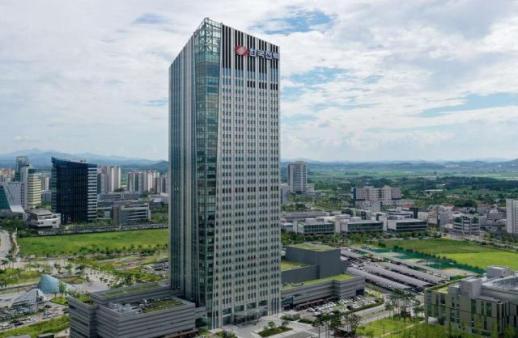 Korea Electric Power Corporation Reports Record 1st Quarter Operating Profit Korea Electric Power Corporation (KEPCO) reported a record operating profit of 3.7842 trillion won for the first quarter of this year. However, concerns are growing about the impact of rising international oil and liquefied natural gas (LNG) prices on the company's second-quarter performance. On May 13, KEPCO announced that its operating profit increased by 0.7% compared to the same period last year, reaching 3.7842 trillion won, while its net profit rose by 6.7% to 2.519 trillion won. This marks the highest operating profit in the company's history and continues an 11-quarter streak of profitability since the third quarter of 2023. The increase in profits is largely attributed to a decline in the standard market price (SMP) of electricity. The average SMP for the first quarter was 107.1 won per kilowatt-hour, down 7.4% from a year earlier, while electricity sales revenue increased by 121 billion won (0.1%). Additionally, KEPCO reduced costs by 400 billion won through a strict management system and financial stabilization plans. The company saved approximately 300 billion won in power purchase costs by easing transmission constraints and expanding low-cost generation. An enhanced asset management system utilizing artificial intelligence also contributed to around 100 billion won in savings on maintenance costs. As a result, some of the financial burdens accumulated due to soaring fuel costs during the Russia-Ukraine war have been alleviated. The cumulative operating loss, which reached 47.8 trillion won in 2023, has been reduced to 34 trillion won as of the first quarter of this year. However, KEPCO still faces significant challenges, with debts totaling 206 trillion won and borrowings amounting to 128 trillion won. This situation results in daily interest expenses of 11.4 billion won. Looking ahead, the second quarter poses greater challenges. There is a high likelihood of increased international fuel prices and exchange rates due to the ongoing conflict in the Middle East. International oil prices, which were around $64.9 per barrel before the conflict, surged to $105.7 last month. The won-dollar exchange rate rose from 1,453.3 won to 1,487.4 won during the same period. A KEPCO official stated, "The impact of the Middle East conflict does not appear to have been reflected in the first-quarter results, but it is expected to affect the second quarter. While restoring financial stability is urgent, the conflict may delay the normalization of our finances due to its lagging effects." The official added, "We will continue to implement internal and external measures to improve the power market system and enhance maintenance standards to reduce costs effectively."* This article has been translated by AI. 2026-05-13 18:12:00
 -
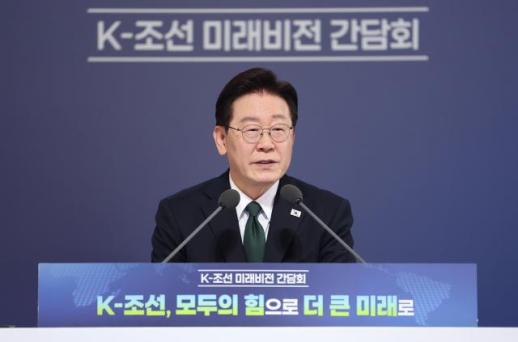 South Korea Invests 525 Billion Won in Key Shipbuilding Technologies Amid intensifying global competition in the shipbuilding industry, the South Korean government plans to invest 525 billion won to secure the future of its shipbuilding sector. The initiative includes the development of the world’s first 24-hour autonomous AI shipyard project by 2030 and aims to accelerate results based on the MASGA project. On May 13, Minister of Trade, Industry and Energy Kim Jeong-kwan announced the "K-Shipbuilding Future Vision" during a meeting led by President Lee Jae-myung in Ulsan. The government recognizes the growing importance of the shipbuilding industry amid rapidly changing geopolitical conditions, such as conflicts in the Middle East. The United States has initiated efforts to revitalize its shipbuilding sector through the Maritime Action Plan (MAP) introduced in February, while countries like China and Japan are also expanding their shipbuilding capabilities. After enduring a restructuring phase, South Korea's shipbuilding industry is showing signs of recovery. In the first quarter of this year, domestic orders reached 20.2 million CGT, a 1.5-fold increase compared to the same period last year. However, concerns are rising about the competitiveness of smaller shipbuilders compared to larger firms, particularly due to low-cost competition from China. To secure a competitive edge in the global shipbuilding market, the Ministry of Trade, Industry and Energy has outlined three key strategies: strengthening the core industry, expanding markets, and fostering a cooperative ecosystem. First, the government will activate the "Shipbuilding and Shipping Cooperative Council" to ensure domestic orders for four essential types of vessels: car carriers, energy carriers, bulk carriers, and offshore wind support vessels. This decision comes in response to the increasing reliance on foreign vessels for critical security-related transport. Additionally, the government plans to invest up to 525 billion won over five years in seven types of vessels that represent the future of the shipbuilding industry, including LNG carriers, ammonia carriers, hydrogen carriers, liquefied CO2 carriers, electric propulsion vessels, offshore wind support vessels, and polar icebreakers. The focus will be on securing specialized cargo tank technologies and developing a unique Korean model. The ministry is also advancing its key initiative for manufacturing AI transformation (M.AX). By 2030, it aims to invest approximately 1 trillion won in a public-private partnership to develop the world’s first fully autonomous AI shipyard, focusing on automation technologies across design, production, and operations. Furthermore, the government is accelerating global projects by establishing a "Shipbuilding Alliance" with countries such as India, Vietnam, the Philippines, and Saudi Arabia, which have shown interest in shipbuilding cooperation with South Korea. In these countries, the focus will be on enhancing collaboration in the construction of general-purpose vessels, where South Korea lacks price competitiveness, while exporting key materials and designs. The MASGA initiative, which provided a breakthrough in U.S.-Korea tariff negotiations, is now set to yield tangible results. Following a memorandum of understanding signed on May 9 between the Ministry of Trade, Industry and Energy and the U.S. Department of Commerce, the two countries will communicate closely through the "Korea-U.S. Shipbuilding Partnership Center" to explore ways to ensure that the revitalization of the U.S. shipbuilding industry translates into domestic work and exports. Plans for workforce development and support for small shipbuilders are also in place. By 2030, the government aims to train 15,000 skilled professionals in the shipbuilding sector and will explore options for adjusting foreign labor. Given the challenges smaller firms face in obtaining refund guarantees (RG), the government will mobilize policy financing to provide support. Additionally, digital technology will be applied to enhance safety equipment for small shipyards and their partners, which often lack the financial capacity for safety investments. Minister Kim Jeong-kwan emphasized, "In the current global order competition, our K-Shipbuilding must establish a solid foundation, innovative strategies, and robust readiness. As competition shifts from individual companies to ecosystems, collaboration among all stakeholders is crucial."* This article has been translated by AI. 2026-05-13 18:08:22
 -
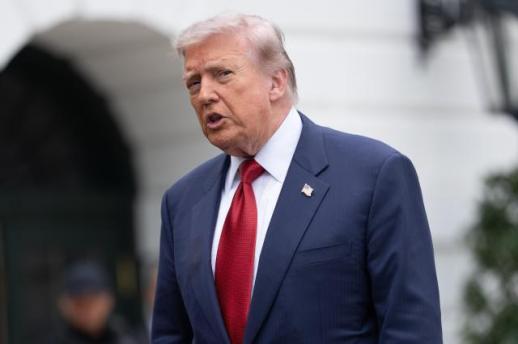 Limited Impact of U.S. Court Ruling on Global Tariffs for South Korea As a U.S. court deliberates on the legality of the 10% global tariffs imposed during the Trump administration, experts suggest that the impact on South Korea may be limited. This is primarily because the tariffs were introduced as part of a transitional phase in U.S. trade policy, and their effects are expected to be minimal. Additionally, it is important to note that South Korea is not a direct party to the court's ruling, as the tariff negotiations between the two countries have already concluded. According to reports from Reuters and other international news outlets, the U.S. Court of Appeals for the Federal Circuit temporarily stayed a ruling from the U.S. Court of International Trade that deemed the global tariffs illegal. On May 7, the U.S. Court of International Trade ruled that the 10% global tariffs imposed by the Trump administration under Section 122 of the Trade Act were unlawful. As a result, the Trump administration can maintain these tariffs while the appeal process is underway. This is not the first time U.S. trade policies have faced judicial scrutiny. In February, the U.S. Supreme Court ruled that reciprocal tariffs based on the International Emergency Economic Powers Act (IEEPA) were illegal. However, some analysts believe that the current ruling may have limited implications for South Korea. Following the Supreme Court's decision on the IEEPA, the U.S. has been imposing the 10% global tariffs based on Section 122 of the Trade Act, which allows for tariffs to be imposed for up to 150 days to address severe international balance of payments deficits. The time-limited nature of these tariffs suggests a lack of long-term policy stability. Moreover, South Korea has already completed tariff negotiations with the U.S., meaning that the global tariffs, which are lower than the reciprocal tariffs, are unlikely to significantly alter the conditions for South Korean exports. Nonetheless, the new tariff system being pursued by the U.S. could create market shocks. Following the ruling on the illegality of reciprocal tariffs, the U.S. is working to restore its tariff framework using Sections 301 and 232 of the Trade Act. Section 301 allows for retaliatory tariffs against unfair trade practices by specific countries, while Section 232 permits the imposition of import restrictions and high tariffs if foreign imports are deemed a threat to U.S. national security. Given the diminishing legal sustainability of the global tariffs that served as a bridge in U.S. trade policy, the Trump administration may accelerate the introduction of a new tariff system. The Office of the United States Trade Representative (USTR) has already initiated investigations under Section 301 related to unfair trade practices linked to overproduction in the manufacturing sector and goods produced through forced labor. Once the USTR's investigation concludes, further actions from the U.S. are likely. For South Korea, the potential risks stemming from the USTR investigation and subsequent actions may outweigh the immediate implications of the court ruling. There are concerns that the U.S. may change its pressure tactics, including not only item-specific tariffs but also stricter origin standards and supply chain regulations. As a result, attention is focused on the implementation of investment projects in the U.S. The South Korean government plans to establish the Korea-U.S. Strategic Investment Corporation next month to support strategic investments based on the Special Law on U.S. Investment, which passed the National Assembly last March. The Ministry of Trade, Industry and Energy stated, "We will continue to communicate closely regarding strategic investment projects in the U.S. and strive to ensure that trade issues are managed stably."* This article has been translated by AI. 2026-05-13 18:06:00
 -
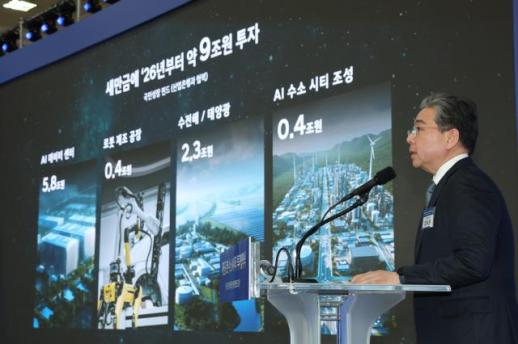 Hyundai Vice Chairman Jang Jae-hoon Receives Gold Tower Industrial Medal Jang Jae-hoon, Vice Chairman of Hyundai Motor, has been awarded the Gold Tower Industrial Medal for his leadership in transitioning to future vehicles through significant domestic investments and securing key technologies. The Ministry of Trade, Industry and Energy presented the awards during the 23rd annual Automotive Day ceremony held at the JW Marriott Hotel in Seoul on May 12. The event was attended by over 300 industry representatives, including Deputy Minister Moon Shin-hak, Korea Automobile Mobility Industry Association President Jung Dae-jin, Korea Automobile Industry Cooperative Chairman Lee Taek-seong, and Jang Jae-hoon. This year’s Automotive Day event commemorated the 50th anniversary of the Pony's export and last year's record-high export performance, marking the first Gold Tower Industrial Medal awarded since 2007. Jang was recognized for leading a historic 125 trillion won investment aimed at enhancing competitiveness in core future industries and revitalizing the mobility industry ecosystem. His efforts to establish and expand electric vehicle manufacturing plants in key locations such as Ulsan and Gwangyang also contributed to local economic development and job creation. The Silver Tower Industrial Medal was awarded to Ham Seong-sik, CEO of MR Infra Auto, for being the first in South Korea to apply fine blanking technology for precision cutting and processing of metal sheets in automotive parts production. The Bronze Tower Industrial Medal went to Hwang Gi-young, CEO of KG Mobility, for pioneering new overseas markets, particularly in Turkey and Dubai, focusing on eco-friendly SUVs. Other recipients of industrial commendations included Lee Jong-ha, Executive Director of Hyundai Mobis; Kim Hyun-cheol, Research Fellow at the Korea Automotive Technology Institute; Jang Gil-jae, Executive Director of GM Korea; and Min Seung-jae, a professor at Hanyang University. Deputy Minister Moon Shin-hak emphasized the need to maintain domestic automobile production above 4 million units and to proactively prepare for a rapid transition to future vehicles. He stated that the ministry would focus its policy efforts on ensuring the existing internal combustion engine parts ecosystem remains robust in the future vehicle market by establishing an 'Automotive Ecosystem Transition Council' and developing comprehensive support measures for the transition.* This article has been translated by AI. 2026-05-12 06:03:27
 -
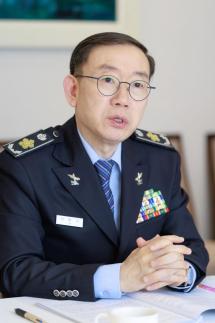 Customs Chief Lee Myung-goo: Strengthening Drug Prevention Efforts Lee Myung-goo has become the fourth internal appointee to serve as the head of the Korea Customs Service since its establishment. Born in 1969 in Miryang, South Gyeongsang Province, he graduated from Seoul National University with a degree in business administration and earned a Ph.D. in economics from the University of Birmingham. He entered public service after passing the 36th National Civil Service Examination and has held various key positions within the Customs Service. Lee has served as the director of the Foreign Exchange Investigation Division, the Planning and Finance Officer, and the Director of Customs Support. He also gained practical experience as the head of customs in Daegu, Seoul, and Busan. From 2007 to 2011, he worked at the World Customs Organization, broadening his expertise in international trade and customs. Uncommonly for a customs official, he was recognized for his tax expertise while serving as a permanent judge at the National Tax Tribunal. After being appointed as the Deputy Commissioner of the Korea Customs Service in September 2023, Lee was promoted to Commissioner in July of the following year. This marks the first time since 2020 that an internal candidate has been appointed as Commissioner, and it is only the fourth instance since the agency's founding in 1970. Recently, Lee has focused on efforts to restore the country’s status as a 'drug-free nation.' He noted, "As of last year, the majority of drug inflows occurred through travelers, international mail, and express cargo," adding that customs inspections are being significantly strengthened to prevent smuggling through travelers. To combat the spread of drugs via international mail, the Customs Service is enhancing its so-called 'secondary barrier' system. This involves redesigning the postal logistics network to improve inspection efficiency and accuracy. Targeted inspections of express cargo from high-risk countries have resulted in a 5% increase in the weight of seized drugs compared to the previous year as of the end of March. Lee is also intensifying vigilance against new drugs such as fentanyl. He stated, "Fentanyl poses a serious threat to our society. It has already become a significant social issue in the United States, with considerable concerns about misuse." He emphasized that while domestic seizures are currently low, investigators must continue to monitor the situation closely. Furthermore, he noted, "Recently, there have been attempts to import raw materials for drug manufacturing and produce them domestically," and pledged to enhance information analysis capabilities and tighten the secondary barrier system to improve inspection accuracy.* This article has been translated by AI. 2026-05-12 05:43:21
 -
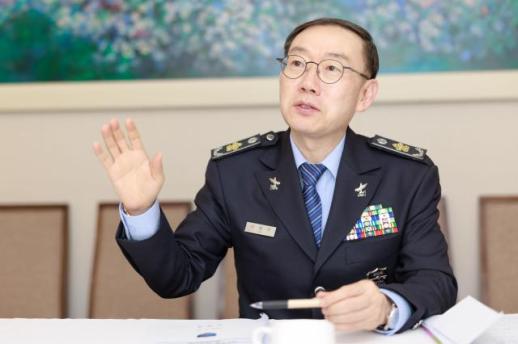 Korea's Customs Chief Discusses Tariff Changes for Canadian Oil Imports As uncertainty surrounding oil supplies through the Strait of Hormuz increases due to ongoing conflicts in the Middle East, the need for diversifying energy sources has become more pressing. Given South Korea's heavy reliance on Middle Eastern oil, there are concerns that escalating geopolitical crises could disrupt not only prices but also the overall industrial supply chain. In this context, Customs Commissioner Lee Myung-koo spoke with Aju Economy, stating, "We recently issued a joint statement with the Alberta provincial government to simplify origin documentation for expanding the supply of Canadian crude oil. By utilizing the Free Trade Agreement (FTA), Alberta is optimistic about exporting an additional 33 million barrels of oil to Korea annually, reducing tariff burdens significantly." Previously, Alberta crude oil faced challenges in benefiting from FTA tariff advantages due to the structural complexities of mixing oils from various producers during transport, making it difficult to prove origin. However, with the Alberta provincial government's official confirmation, it will now be possible to recognize the origin, allowing for the application of preferential tariffs. This is expected to reduce tariff burdens by approximately 3%, contributing to the stability of the energy supply chain. Lee also emphasized the role of the customs agency in supporting exports. He noted, "To support exports in advanced industries such as semiconductors and biotechnology, we are improving the system to designate advanced research institutes as bonded factories, thereby assisting in securing cutting-edge technologies. We are also focusing on supporting K-food exports in line with the spread of Korean culture." He added, "We have submitted a proposal to the World Customs Organization for a dedicated HS code for kimchi, with plans to expand this to include ramen and rice cakes in the future." Below is a Q&A with Commissioner Lee: - The expansion of imports of Alberta crude oil has been achieved. What does this mean? "Alberta accounts for about 80% of Canada's crude oil production. We have been gathering opinions from the refining industry and conducting legal reviews to diversify oil supply, and the need has increased following the Middle Eastern conflicts, prompting us to expedite the signing of a memorandum of understanding (MOU). Alberta crude oil is evaluated as highly usable by domestic refiners due to its medium to heavy oil characteristics. Expanding the supply of North American crude oil, which is relatively free from geopolitical risks from the Middle East, is expected to enhance supply stability and contribute to price stability and cost competitiveness through reduced tariffs." - It seems that the customs agency staff worked hard to achieve the joint statement. "When the Ministry of Trade, Industry and Energy was negotiating tariffs with the U.S., they once created a special hat to promote the U.S. shipbuilding revival project known as the MASGA project. Inspired by this, our customs agency staff suggested putting a traditional hat on our mascot doll. One of our employees, who enjoys knitting, proposed this idea. Given that traditional hats have recently gained attention overseas alongside K-culture, we felt a more emotional approach was necessary. The response in Canada has been quite positive, helping to create a friendly atmosphere." - Exports have exceeded $80 billion for two consecutive months. What are the customs agency's policies for expanding exports? "One of the core tasks of the customs agency is to support the utilization of FTAs. We assist our exporting companies in receiving tariff benefits by issuing certificates of origin. Recently, we have been simplifying the origin certification process to reduce the burden on companies, particularly for consumer goods like K-beauty and K-food. We are continuously proposing the establishment of HS codes for K-food exports and are working on expanding this to various items in the future." - The improvement in designating advanced research institutes as bonded factories is noteworthy. "We are expanding the scope of the bonded processing system, which allows for the import of foreign raw materials for manufacturing and processing under deferred tariffs. Previously, research and development could not utilize this system, but as of April 29, we improved the system to allow for the designation of bonded factories through a ruling from the Ministry of Finance. Research and development is essentially a 'competition in seconds,' and this measure aims to reduce delays caused by customs procedures. We are also utilizing the bonded processing system to support Arctic shipping routes, focusing on continuously expanding comprehensive bonded zones to manufacture eco-friendly ship fuel." - The reverse direct purchase market for K-consumer goods is also growing rapidly. What support measures are in place? "Japan accounts for a significant portion of reverse direct purchases. Last October, Japan introduced a simplified customs clearance system for maritime cargo, allowing for the omission of specific reporting items for goods under 10,000 yen. Once this system is established, it will greatly assist domestic small and medium-sized enterprises in entering the Japanese market through e-commerce. We are also linking international postal export data with the National Tax Service to support the application of zero tax rates, and we are working on extending the deadline for price reporting for export companies utilizing fulfillment services. These related measures are set to be implemented in June, aiming to reduce institutional and administrative burdens so that our companies can more easily sell products directly to consumers worldwide." - There is growing uncertainty regarding U.S. tariff policies and the EU's Carbon Border Adjustment Mechanism (CBAM). What are the response measures? "In the face of rising global protectionism and geopolitical risks, we are preparing response measures to minimize damage to our companies. Regarding U.S. tariff policies, we are providing a linkage table of item numbers for South Korea and the U.S. to help companies accurately identify affected items. The core of the EU CBAM is the calculation of carbon emissions. We have developed a program for small and medium-sized enterprises to manage and calculate carbon emissions, and we are continuously updating it in line with EU regulatory changes." - What is the direction for addressing circumvention of exports? "As major countries like the U.S. strengthen their tariff policies, concerns about circumvention of exports through third countries are growing. To proactively respond to illegal trade, we are restructuring our existing temporary organization, the 'Trade Security Special Investigation Team,' into the 'Trade Security Investigation Team' and establishing a professional investigation system. Last year, the scale of trade security violations detected amounted to 655.6 billion won, nearly tripling from the previous year. As of the end of March this year, we have already detected violations amounting to 537.5 billion won. We will continue to strengthen our capabilities to crack down on trade security violations through a unified national command system." - The spread of artificial intelligence (AI) has made AI transformation (AX) a key topic. What is the current status of customs administration's AX efforts? "While the volume of customs transactions continues to increase, managing everything solely with personnel has its limits. Therefore, the customs agency is promoting an Information Strategy Plan (ISP) for transitioning to AI-based customs administration. We plan to redesign AI-based operations across all sectors by the second half of this year. Since AI performance ultimately depends on data quality, we are also focusing on establishing a system that can reliably generate, secure, and manage refined data." - Any final message to the public? "The customs agency is an institution that protects our society by preventing illegal activities that threaten the daily lives and economic security of citizens, establishing trade order through fair enforcement based on law and principles. We will thoroughly block the inflow of harmful goods and strictly crack down on trade crimes to strengthen the foundation of our economy. Additionally, we will create an optimal export-import environment that businesses and citizens can feel through communication that listens to on-the-ground voices and bold innovation based on that feedback." Interview conducted by Jeon Un, Deputy Head of the Economy Department Edited by Kim Seong-seo* This article has been translated by AI. 2026-05-12 05:37:00
 -
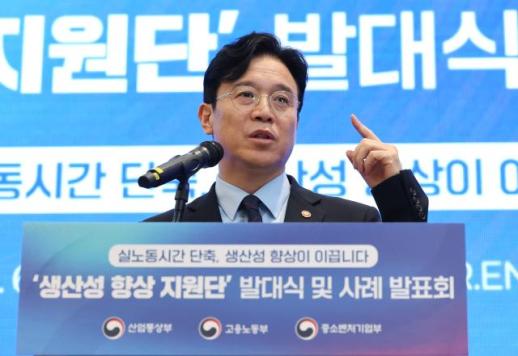 Labor Minister Kim Young-hoon Welcomes Samsung Labor Adjustment Process Kim Young-hoon, the Minister of Employment and Labor, expressed his support on May 11 for the initiation of post-adjustment procedures by the Central Labor Relations Commission, following an agreement between Samsung Electronics and its labor union. He urged both parties to approach the adjustments with a sense of social responsibility, in line with Samsung's motto of being "Another Family, Samsung." During a policy review meeting at the Government Sejong Center, Minister Kim stated, "Just as Samsung Electronics has become a world-class company through technology, it should also set a new standard in labor relations." Previously, the Samsung Electronics labor union had been negotiating with management since December of last year, demanding the elimination of the cap on performance bonuses. However, after failing to reach an agreement, the union declared a breakdown in negotiations and announced plans for a general strike starting on May 21. In this context, the Samsung Electronics mega union will participate in the post-adjustment procedures at the Central Labor Relations Commission on May 11 and 12, following mediation by labor authorities. Minister Kim also noted on his social media platform X earlier that morning, "Today marks the start of the hard-won post-adjustment process for Samsung Electronics. I thank both labor and management for their decisions. While this adjustment may not be easy, the solution may already be closer than we think." The Ministry of Labor plans to support Samsung Electronics and its labor union in finding common ground through dialogue and compromise. Minister Kim emphasized, "We must build a labor relationship that transcends individual interests and fosters mutual growth. I hope this situation sparks active social discussions on the appropriate sharing and distribution of corporate performance, and the government will provide support for this."* This article has been translated by AI. 2026-05-11 13:20:03
 -
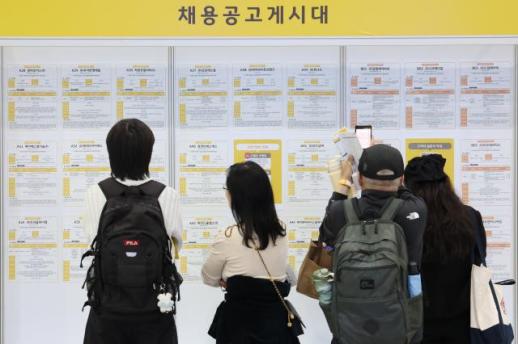 Employment Insurance Enrollment Rises by Nearly 200,000 for Four Consecutive Months The number of regular enrollees in employment insurance has increased by nearly 200,000 for four consecutive months, driven by growth in the service sector. However, the manufacturing and construction industries continue to see declines, and the employment situation for those under 29 remains challenging. According to the Ministry of Labor's "Labor Market Trends Based on April Employment Statistics" released on May 11, the total number of regular enrollees in employment insurance reached 15.807 million at the end of April, an increase of 269,000 (1.7%) compared to the same period last year. The growth in regular enrollees has consistently been in the high 200,000s since January (263,000). This increase is primarily attributed to a robust rise in the service sector, which saw an increase of 284,000 enrollees (2.6%) compared to a year ago. Notable growth was observed in health and welfare (117,000), accommodation and food services (54,000), business services (26,000), and professional, scientific, and technical services (23,000). In contrast, the manufacturing sector experienced a decline of 8,000 (-0.2%) enrollees, marking 11 consecutive months of decrease. While there were increases in sectors such as other transportation equipment, electronics and communications, food, and medical substances and pharmaceuticals, significant reductions were seen in metal processing, textiles, rubber and plastics, and electrical equipment. Regarding the recent decline in manufacturing enrollment due to the impact of the Middle East conflict, Cheon Gyeong-gi, head of the Ministry of Labor's Future Employment Analysis Division, stated, "We need to closely examine the decreases in the oil refining and chemical manufacturing sectors. However, given the ongoing trend of decline, we should monitor the situation a bit longer." The construction sector also saw a decrease of 8,800 enrollees, bringing the total to 746,000, marking 33 consecutive months of decline. However, the rate of decrease has slightly lessened recently due to a reduction in sluggish construction investment. Cheon noted, "New applications for unemployment benefits in the construction sector have been on a downward trend since the second half of last year." By age group, there were increases among those in their 30s (88,000), 50s (47,000), and those aged 60 and above (206,000), while there were declines among those under 29 (-64,000) and in their 40s (-7,000). The number of young enrollees has been decreasing for 44 consecutive months since September 2022. The number of new applicants for unemployment benefits was 100,000, down by 3,000 (-2.7%) compared to a year earlier, marking three consecutive months of decline. The total number of beneficiaries was 667,000, a decrease of 34,000 from the previous year, and the total payout was 1.1091 trillion won, down 4.1%. The job vacancy ratio, which indicates the number of job openings per job seeker, rose slightly to 0.45 from 0.43 a year ago. Cheon remarked, "There has been an upward trend in job openings for two consecutive months; however, considering the long-term decline, it is still difficult to view this as a recovery."* This article has been translated by AI. 2026-05-11 12:03:28
 -
 Growing Need for Economic Cooperation with India: Developing Global Production and Export Hubs Amid increasing calls for enhanced economic cooperation with India, experts have suggested that India’s production base should be developed into a global production and export hub. They also emphasized the need for a sustainable cooperation framework between the two countries through a localization strategy for intermediate goods. On May 11, the Ministry of Trade held an expert meeting chaired by Minister Kim Jeong-kwan to discuss ways to expand economic cooperation with India. This meeting was organized to review the implementation direction of economic achievements following President Lee Jae-myung's state visit to India from April 19 to 21. India, with a population of approximately 1.43 billion, is the world’s sixth-largest economy, with an estimated GDP of around $4.15 trillion. The trade volume between Korea and India stands at about $25 billion annually, with both leaders aiming to increase this to $50 billion by 2030. Additionally, they plan to expedite negotiations to improve the Comprehensive Economic Partnership Agreement (CEPA) between the two nations. The meeting included experts from major economic research institutions such as the Korea Institute for International Economic Policy (KIEP), Korea Institute for Industrial Economics and Trade (KIET), Korea Trade-Investment Promotion Agency (KOTRA), Korea International Trade Association, and Korea Industrial Complex Corporation. They engaged in in-depth discussions on various topics, including plans for establishing dedicated industrial complexes for Korean companies in India, examples of economic cooperation policies from other countries, structural analysis and responses to the trade deficit concerns raised by India regarding Korea, and cooperation strategies in promising sectors. Experts noted that India is emerging as a key production base and promising market amid the global supply chain restructuring. However, they expressed concerns that the market remains challenging for small and medium-sized enterprises due to infrastructure deficits and complex regulations, which create high entry barriers. They highlighted the need to alleviate infrastructure and permitting burdens through the establishment of industrial complexes dedicated to Korean companies, as well as the necessity of restructuring supply chains to focus on local processing and domestic sales of intermediate goods, which contribute to India’s trade deficit. They proposed developing India’s production base into a global production and export hub, particularly in promising sectors, while also advocating for a localization strategy for intermediate goods. The Ministry of Trade plans to actively incorporate the opinions raised during the meeting into policy to enhance the effectiveness of industrial cooperation between the two countries. They also intend to work closely with relevant ministries and agencies to ensure that the outcomes of the state visit are realized promptly. Minister Kim Jeong-kwan stated, "During the summit, we agreed to establish the Korea-India Industrial Cooperation Committee, the first ministerial-level platform for industrial and resource cooperation between our two countries," adding that several investment and cooperation memorandums of understanding (MOUs) were signed in sectors with high cooperation demand, such as shipbuilding and steel. He also acknowledged that, "The current level of economic and industrial cooperation between our countries is still insufficient compared to our potential and expectations," urging participants to provide practical policy recommendations based on field experiences and research outcomes.* This article has been translated by AI. 2026-05-11 11:09:28
 -
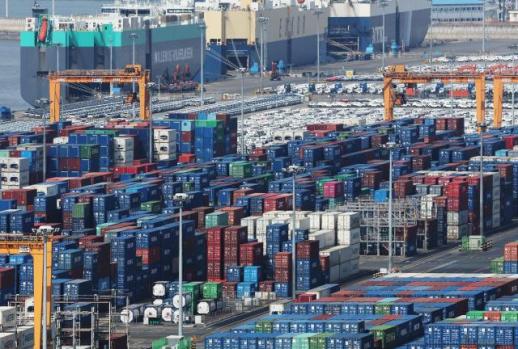 South Korea's Early May Exports Surge 43.7% to Record $18.4 Billion Amid Rising Energy Imports South Korea's exports surged 43.7% in early May compared to the previous year, driven by strong semiconductor sales. The total export value reached $18.434 billion, marking the highest level for the month of May. Exports of related products, such as computer peripherals, also showed significant growth. However, the ongoing conflict in the Middle East has led to an 8% increase in crude oil import costs. According to the Customs Office, the preliminary export figures for May 1-10 indicate a 43.7% increase from the same period last year. Adjusting for the number of working days (5.0), the average daily export also rose by 43.7% year-on-year. Monthly exports have been on a positive trend since June of last year, with exports in March and April exceeding $80 billion, largely due to the booming semiconductor market. During this period, semiconductor exports soared by 149.8% to $8.539 billion. Exports of computer peripherals increased by 382.8%, petroleum products by 2.4%, and wireless communication devices by 6.4%. Semiconductors accounted for 46.3% of total exports, up 19.7 percentage points from the same period last year. In contrast, passenger car exports fell by 26.0% to $830 million. Exports of steel products decreased by 3.2%, automotive parts by 4.6%, ships by 58.6%, precision instruments by 13.6%, and home appliances by 13.6%. By destination, exports to China (up 81.8%), Vietnam (up 89.3%), the United States (up 17.9%), Taiwan (up 96.7%), and the European Union (up 11.3%) increased. Conversely, exports to India (down 14.8%) and Singapore (down 6.0%) declined. The top three export markets— the U.S., Vietnam, and China—accounted for 55.3% of total exports. Imports also rose by 14.9% to $16.737 billion. The increase in crude oil imports, driven by rising international oil prices due to the Middle East conflict, saw a 7.9% rise to $2.776 billion. Overall energy imports, including oil, gas, and coal, increased by 8.9% year-on-year. Petroleum product imports doubled, reaching $875 million. Additionally, imports of semiconductor manufacturing equipment (up 129.7%), semiconductors (up 41.4%), and precision instruments (up 16.8%) also showed growth. However, imports of machinery (down 1.9%), passenger cars (down 16.3%), and coal (down 12.2%) decreased. By country, imports from China (up 28.8%), the U.S. (up 22.9%), the EU (up 45.3%), Saudi Arabia (up 19.6%), and Japan (up 7.2%) increased. However, imports from Taiwan (down 3.4%), Vietnam (down 0.7%), and Russia (down 40.2%) fell. With exports exceeding imports, the trade balance recorded a surplus of $1.698 billion.* This article has been translated by AI. 2026-05-11 09:15:27