

Journalist

Kim SeongSeo
biblekim@ajunews.com
-
 Greenhouse Heat Pumps and Solar Panels Now Eligible for Carbon Credits Installing heat pumps in agricultural greenhouses or solar panels in buildings and public facilities will now qualify for carbon credits. The Ministry of Climate, Energy, and Environment announced on June 2 that it held the 69th Carbon Emission Certification Committee meeting, where it reviewed and approved projects related to heat pumps, solar energy systems, and fuel conversion. External projects refer to initiatives that reduce, absorb, or eliminate greenhouse gases from emission facilities or activities outside of companies participating in the carbon trading system. Certified reductions from these projects can be utilized in the carbon credit market. The feasibility assessment included six heat pump projects aimed at improving heating energy efficiency in agricultural greenhouses and four solar panel installation projects designed to reduce greenhouse gas emissions in buildings and public facilities. Additionally, a total of 20 reduction projects, including fuel conversion, vegetation restoration, sulfur hexafluoride recovery, high-efficiency compressor replacement, and biomass fuel usage, were approved, with an expected reduction of 73,433 tons of greenhouse gases. Notably, many of the approved projects focus on heat pumps in the agricultural sector, which is currently facing the dual challenges of carbon neutrality policies and rising energy costs. For farmers in facility horticulture, heating expenses constitute a significant portion of production costs, making the expansion of heat pump adoption beneficial not only for reducing greenhouse gases but also for easing financial burdens. This transition is expected to shift fossil fuel-based heating methods in agricultural greenhouses to heat pumps utilizing air and geothermal energy. Furthermore, the approval of four solar panel projects is anticipated to accelerate the transition to renewable energy in everyday life. For existing projects, a total of 32,930.6 tons of greenhouse gas reductions were certified across 13 initiatives, including heat pumps, landfill gas incineration, heating method conversions, fuel conversions, and the decomposition of hydrofluorocarbon (HFC) refrigerants. The certified reductions can later be converted into offset credits for use in the carbon trading system. Additionally, two new methodologies were approved: one for recovering and decomposing halogenated fire extinguishing agents generated during the disposal of extinguishing systems, and another for reducing energy consumption through the application of a recirculating aquaculture system. Lee Kyung-soo, Director of Climate Energy Policy at the Ministry of Climate, stated, "Heat pumps and solar energy systems are representative greenhouse gas reduction measures that can be directly applied in the lives of citizens and industries. We will actively discover methodologies and projects to create tangible reduction results across various sectors through external projects."* This article has been translated by AI. 2026-06-02 16:03:00
 -
 Increase in Foreign Tourists Boosts South Korea's Labor Market Last year, South Korea welcomed a record 19.84 million foreign tourists, significantly impacting the expansion of the domestic service sector. Notably, this growth is primarily seen in stable regular employment rather than temporary or part-time jobs. According to relevant authorities, of the total foreign visitors, approximately 15.82 million came for tourism, accounting for 83.5% of all arrivals. Since 2012, the number of foreign tourists has consistently exceeded 10 million annually, peaking at 14.43 million in 2019. After a sharp decline to around 800,000 in 2021 due to the COVID-19 pandemic, the numbers rebounded to pre-pandemic levels last year. Foreign tourists' spending in South Korea is also on the rise. Based on credit card data, foreign tourist spending increased from 7.9 trillion won in 2019 to 17.4 trillion won in 2025, a 2.2-fold increase. In comparison, domestic tourism spending grew from 160.5 trillion won to 180.3 trillion won, a 12% increase during the same period, indicating a much faster recovery for foreign spending. The spending by foreign tourists is concentrated in shopping and accommodation sectors. Last year, foreign tourist spending reached approximately 14.9 trillion won in real terms, with shopping accounting for 37.4%, accommodation for 21.2%, wellness and medical services for 15.2%, and food and beverage for 13.8%. Compared to 2019, the share of spending in the food and beverage sector increased by 4.4 percentage points, and transportation by 2.1 percentage points. Notably, shopping at duty-free stores and large shopping malls, as well as accommodation in hotels and leisure services like casinos, dominated the spending landscape, highlighting a trend toward larger retail channels. The increase in foreign spending is also affecting the domestic job market. The Korea Labor Institute's report on the impact of rising foreign tourists on service sector employment indicates that the influx of foreign visitors is contributing to an increase in wage-earning jobs in the service sector. While the employment response was not immediately evident in the first three months following the increase in foreign visitors, a gradual rise in employment began to show around four months later. Specifically, a 10% increase in foreign tourists in a given month is estimated to result in an additional 6,000 wage-earning jobs six months later, compared to industries with no exposure to tourism. This includes an estimated 3,500 jobs in retail, 2,100 in accommodation and food services, 330 in transportation and warehousing, and 80 in arts, sports, and leisure. Moreover, as foreign spending is concentrated in large businesses such as duty-free shops, large malls, and casinos, there has been a notable increase in stable regular employment. Regular employment began to rise significantly about five months after the increase in foreign tourists, peaking around nine months later. In contrast, temporary and part-time employment did not show statistically significant changes. The Labor Institute noted, "In the first quarter of this year, foreign tourist arrivals reached 3.91 million, with tourism expenditures totaling 4.2 trillion won, marking increases of 27.3% and 23.9%, respectively, compared to the same period last year. Considering the positive impact on regular employment in the service sector, we expect continued growth in stable regular jobs beyond just the overall expansion of service sector employment." 2026-06-02 15:27:00
 -
 Government Conducts Surprise Inspections at Power Line Construction Sites Ahead of Rainy Season The government is conducting surprise inspections at power line and tower construction sites in preparation for the upcoming rainy season. The Ministry of Climate, Energy, and Environment announced on June 2 that it will visit the construction site office and tower construction areas of the Donghae-Shin Gapyeong power line project in Hongcheon County, Gangwon Province, to assess disaster prevention measures ahead of the rainy season. This initiative comes as localized heavy rainfall has become more frequent due to climate change, increasing the risk of disasters at large infrastructure construction sites, including power lines, roads, and railways. The mountainous terrain of Gangwon Province particularly raises concerns about soil erosion and landslides during heavy rains, underscoring the need for proactive measures before the rainy season. The ministry aims to ensure that safety measures are effectively implemented at the sites ahead of the expected rainy season, which is scheduled to begin in mid to late June. Recent incidents of soil erosion at certain sections during the tower construction have heightened these concerns. During the inspection, the ministry will evaluate the status of emergency and permanent restoration efforts at locations where soil erosion has occurred outside designated areas. It will focus on checking drainage maintenance and slope stabilization measures as part of disaster prevention strategies. Additionally, considering the nature of power line construction, which often involves elevated work, the ministry will assess whether safety management protocols are being properly followed at the construction sites. The ministry will also emphasize thorough site management to prevent safety blind spots, including the monitoring of helicopter transport and elevated work, the provision and usage of safety gear, and communication management for foreign workers. Lee Jae-sik, the Director of Power Network Policy at the ministry, stated, "Thorough reinforcement work and disaster preparedness must be completed before the rainy season begins. I urge Korea Electric Power Corporation, construction companies, and supervisory teams to work together to operate site patrols and ensure comprehensive measures to prevent disasters and mitigate safety risks during the rainy season."* This article has been translated by AI. 2026-06-02 14:27:00
 -
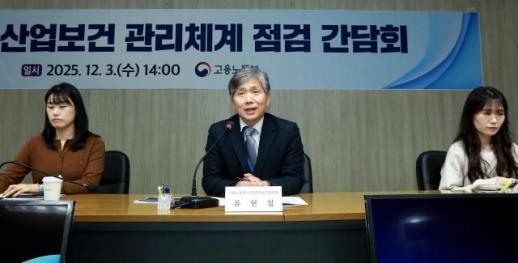 Labor Authorities Discuss Heat Wave Safety Measures with Logistics and Distribution CSOs Labor authorities held a meeting with safety officers from the logistics and distribution sectors to discuss measures against heat waves as summer approaches. On June 2, Ryu Hyun-cheol, head of the Occupational Safety and Health Agency, met with Chief Safety Officers (CSOs) from logistics and distribution companies, along with representatives from related associations, to address the prevention of heat-related illnesses. The meeting comes amid rising concerns about the potential for extreme heat this summer due to climate change, including the effects of a super El Niño. Last summer recorded the highest average temperatures since observations began, and this year is expected to exceed normal averages. The incidence of heat-related occupational injuries has also been increasing. In the past five years, there have been a total of 228 cases of heat-related injuries due to heat waves. After remaining in the 20-30 range from 2021 to 2023, the number surged to 70 in 2024 and reached 71 in 2025. In response, labor authorities conducted this meeting following a gathering with CEOs of major construction companies on May 29, focusing on the logistics and distribution sectors, which are particularly vulnerable to heat. During the meeting, CSOs from six major logistics companies, including CJ Logistics and Hanjin, as well as four major retailers, including E-Mart and Lotte Mart, presented their plans to implement five basic safety rules for heat waves and committed to preventing heat-related illnesses. Ryu pointed out issues raised last summer and urged the implementation of practical measures that can operate in the field, rather than just paperwork. He specifically highlighted the need for accurate temperature measurements in front of air conditioning units in some logistics centers and the inadequate protection measures for outdoor workers. The Ministry of Labor plans to activate a "Heat Wave Safety Task Force" until September 30, mobilizing administrative resources and recommending strict adherence to work stoppage measures based on heat wave levels. They are particularly emphasizing compliance with the five basic safety rules for heat waves, which were legislated last year. Additionally, the ministry plans to hold relay meetings with CSOs in key sectors vulnerable to heat, such as shipbuilding, aviation, and port operations, to address gaps in heat safety in industrial workplaces. Ryu stated, "We need to ensure accurate temperature measurements and the actual implementation of work stoppages, along with thorough management of outdoor workers in vulnerable areas. Starting from the 15th, we will mobilize local offices nationwide to rigorously supervise compliance with the five basic safety rules for heat waves." He also urged, "Please pay special attention to ensuring that the action plans announced today in the logistics and distribution sectors are faithfully implemented on the ground. We will spare no effort to create a workplace that prioritizes safety and protects workers' lives."* This article has been translated by AI. 2026-06-02 14:03:00
 -
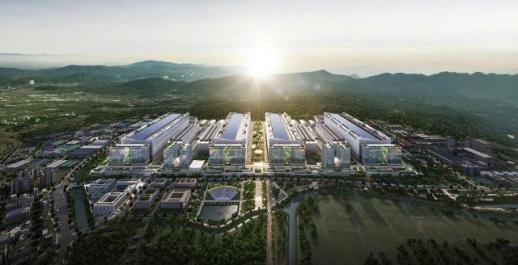 South Korea Streamlines EUV Equipment Import Process for Semiconductor Production The South Korean government is significantly simplifying the domestic import procedures for extreme ultraviolet (EUV) equipment to support the growing semiconductor production for artificial intelligence (AI) exports. As a result, the import timeline will be reduced from 34 days to just 9 days, with an expected cost savings of approximately 500 million won (about $375,000). On June 2, the Ministry of Trade, Industry and Energy announced that the Cabinet approved amendments to the High-Pressure Gas Safety Management Law. The key change allows semiconductor manufacturing equipment that meets global safety standards to be classified under specific equipment criteria rather than general manufacturing facilities for high-pressure gas. Recently, semiconductor exports have been a driving force for the South Korean economy. Last month, semiconductor exports reached $37.16 billion, a staggering 169.4% increase compared to the previous year, largely due to increased capital investments from major U.S. tech companies and sustained rises in memory fixed prices. There are predictions that South Korea's exports, led by semiconductors, could achieve the ambitious target of $1 trillion. However, while companies are increasing imports of essential equipment for advanced semiconductor production lines, delays in equipment installation have been a concern. In response, the government has decided to streamline the import procedures for EUV equipment, which is crucial for semiconductor manufacturing. This initiative aims to ensure that domestic semiconductor companies can timely acquire and quickly operate advanced manufacturing equipment, thereby maintaining the industry's competitive edge. Previously, EUV equipment was classified as high-pressure gas manufacturing equipment due to the inclusion of high-pressure gas piping and devices. Each installation required technical reviews, interim inspections, and final inspections, extending the import process to about 34 days. The interim inspection process also necessitated pressure-tightness testing by overseas accredited inspection agencies, resulting in inspection costs of 500 million won per unit. The Ministry of Trade, Industry and Energy has gathered feedback from the semiconductor industry through multiple consultations to address on-site challenges. It also carefully reviewed the alignment between global safety standards and domestic safety management systems, deciding to manage the safety of EUV equipment under specific equipment criteria. As a result, the technical review period will be reduced from 15 days to 2 days, interim inspections will be eliminated, and the final inspection period will be shortened from 7 days to 2 days. The total time required for the import process is expected to decrease from 34 days to 9 days, alleviating the financial burden associated with interim inspections. Additionally, new tailored inspection standards will be established to facilitate the commercialization of eco-friendly liquefied carbon dioxide cleaning equipment, which uses carbon dioxide instead of water and detergents. The safety management criteria for commercial liquefied carbon dioxide cleaning equipment and low-risk high-pressure gas facilities have also been revised to better reflect current realities. The amendments will be announced next week and will take effect immediately. Minister of Trade, Industry and Energy Kim Jeong-kwan stated, "This legislative amendment is a prime example of regulatory innovation aimed at simultaneously ensuring safety and enhancing the competitiveness of advanced industries. We will actively support investments in advanced industries through a rational safety management system that aligns with global standards." 2026-06-02 13:42:00
 -
 Expansion of New Technologies in Water Facilities and Revised Staffing Standards New technologies applicable to water facilities are set to expand significantly, and the standards for staffing water treatment facilities will be refined to better reflect current operational realities.The Ministry of Climate, Energy and Environment announced that the "Partial Amendment to the Water Supply Act Enforcement Decree" was approved at the Cabinet meeting on June 2 and will take effect on June 10.The core of this amendment is to broaden the range of new technology products applicable to general and dedicated water supply installations, including metropolitan and local water supply systems. Previously limited to technologies recognized under the Industrial Technology Innovation Promotion Act, the scope will now include new technologies certified in the fields of environment, construction, and disaster safety. Additionally, the criteria for staffing water treatment facility managers have been adjusted to reflect changes in operational conditions and work environments.This move comes as digital transformation and the establishment of smart infrastructure have emerged as key tasks in the water management sector. With rapid advancements in technologies such as AI-based water quality prediction, smart network management, and real-time leak detection, there is a growing demand to integrate new technologies into existing water infrastructure.In response, the government has expanded the range of new technology products that can be applied to water facilities. Previously, only products certified as new technologies in the industrial sector could be used in water facilities. Now, technologies certified in the fields of environment, construction, and disaster safety will also be permitted, laying the groundwork for the dissemination of various new technologies needed at water facility sites.The staffing criteria for water treatment facility managers will be rationalized. To operate and manage water treatment plants efficiently, the government has been assigning managers based on the scale of the facilities. Under current law, for plants with a capacity of 100,000 to 500,000 tons per day, at least one first-class manager, three second-class managers, and four third-class managers must be assigned. This will be refined to create a new category for facilities with a capacity of 100,000 to 250,000 tons per day, reducing the requirement for second-class managers from three to two.Furthermore, for small water treatment plants with a capacity of 20,000 to 100,000 tons per day that only disinfect without filtration or use slow filtration methods, the staffing criteria will be rationalized. For plants with a capacity of 20,000 to 30,000 tons, the requirement will be one first-class manager, one second-class manager, and one third-class manager. For those with a capacity of 50,000 to 100,000 tons, the requirement will be one first-class manager, one second-class manager, and two third-class managers, thereby reducing the operational burden on local management agencies.Kim Ji-young, Director of Water Use Policy at the Ministry of Climate, stated, "Through this amendment to the enforcement decree, excellent new technology products will be actively introduced in water facilities, ensuring that the public receives safe and clean water. We expect that the rational adjustment of staffing criteria for water treatment facility managers, considering the conditions on-site, will further enhance the effectiveness of facility operations."* This article has been translated by AI. 2026-06-02 13:39:00
 -
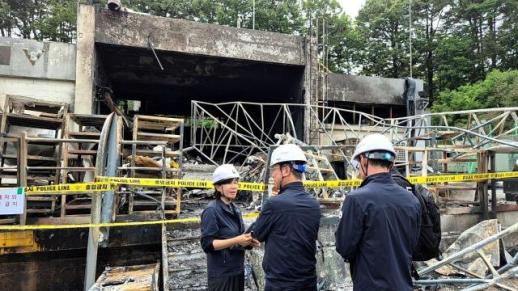 Labor Minister Kim Young-hoon: No Safe Workplaces in Arms Manufacturing Kim Young-hoon, the Minister of Employment and Labor, stated on June 2 that "there are no less dangerous workplaces in arms manufacturing" in response to the recent explosion at Hanwha Aerospace in Daejeon. He emphasized the need for a thorough investigation to fulfill the duty to protect the living. In a post on his social media, Minister Kim recalled a saying from his days as a train engineer: "Even a slight mistake can be fatal." He noted that a joint on-site investigation would begin shortly. According to the Labor Ministry, a joint investigation involving the ministry, the Korea Occupational Safety and Health Agency, and the National Forensic Service commenced at 10 a.m. on the same day. During a second meeting of the Central Industrial Accident Response Headquarters, Kim directed that the investigation be conducted safely and that the causes of the accident be thoroughly identified. He also instructed that necessary follow-up measures for accident prevention be implemented based on the findings. As this incident falls under the Serious Accident Punishment Act, the minister ordered a swift and strict investigation into violations of relevant laws, including the Industrial Safety and Health Act and the Serious Accident Punishment Act, with severe penalties for any infractions. Additionally, he called for comprehensive emergency safety inspections across booming sectors, such as semiconductor and defense manufacturing. Investigations into Hanwha Aerospace revealed a significant increase in contract volumes recently. This follows a fluorine leak incident at SK Hynix the previous day, which resulted in multiple injuries. Minister Kim plans to hold a national meeting with agency heads on June 4 to encourage local authorities to actively guide and inspect workplaces to enhance safety awareness. Earlier, at 10:59 a.m. on June 1, a fire caused by an explosion occurred in the cleaning room of the Hanwha Aerospace Daejeon plant, resulting in five fatalities, one serious injury, and one minor injury. This facility had previously experienced explosion incidents in 2018 and 2019, which resulted in the deaths of five and three individuals, respectively. It was revealed that safety management was inadequate at that time, leading to convictions for responsible parties on charges of negligent homicide. 2026-06-02 10:24:00
 -
 Korean Government Expands Public Stockpile of Non-Ferrous Metals The South Korean government is expanding its public stockpile of non-ferrous metals amid increasing supply chain uncertainties. On June 2, the Ministry of Trade, Industry and Energy held the 19th Non-Ferrous Metals Day ceremony at the LSMnM Onsan smelter, attended by key figures including Yang Gi-wook, head of the Industrial Resource Security Office, Do Seok-gu, president of the Non-Ferrous Metals Association, and Cho Si-young, chairman of the Korea Copper and Metal Industry Cooperative. Non-Ferrous Metals Day commemorates the first melting of copper ore at the Janghang smelter. The ministry has hosted this event since 2008, marking the 90th anniversary of the initial production this year. During the ceremony, 18 individuals were recognized for their contributions to the non-ferrous metals industry, receiving awards including one presidential citation, two prime ministerial citations, and 15 ministerial citations. Jo In-rae, team leader at LSMnM, received the presidential citation for significantly increasing the smelting of copper concentrate and scrap through equipment improvements and process optimization, contributing to supply chain stabilization. Last month, non-ferrous metal exports surged by 41.5% year-on-year, reaching $16.7 billion, reflecting growing demand. The demand for copper and aluminum has risen due to expansions in artificial intelligence and digital infrastructure, with raw material prices also increasing, resulting in 12 consecutive months of export growth. The non-ferrous metals industry relies heavily on imported raw materials, making supply chain stability crucial for competitiveness. As this sector evolves into a strategic industry that underpins advanced manufacturing, effective supply chain management becomes essential. In response, the government plans to enhance the non-ferrous metals industry by expanding public stockpiles, diversifying raw material procurement for a stable supply chain, developing high-value materials and recycling technologies linked to demand industries, and addressing trade uncertainties. Yang Gi-wook stated, "The non-ferrous metals industry is the foundation of South Korea's manufacturing sector and a key asset for the future. I appreciate the efforts of those in the non-ferrous metals industry for driving export growth and strengthening industrial competitiveness despite challenging domestic and international conditions, including U.S. tariff policies."* This article has been translated by AI. 2026-06-02 06:03:00
 -
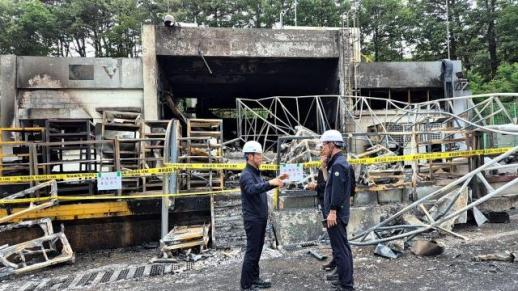 Labor Ministry Forms Investigation Team Following Hanwha Aerospace Explosion A blast of unknown origin at Hanwha Aerospace in Daejeon has resulted in the deaths of five individuals, prompting labor authorities to establish a dedicated investigation team of over 20 members to begin a thorough inquiry. According to the Ministry of Employment and Labor, Minister Kim Young-hoon dispatched Ryu Hyun-cheol, head of the Industrial Safety and Health Agency, and Lee Min-jae, head of the Industrial Safety and Health Policy Division, to the scene shortly after the incident. He also visited the site personally to oversee the response and directed a comprehensive investigation into the cause of the explosion. In response, the ministry set up a Central Industrial Accident Response Headquarters and a Regional Industrial Accident Response Headquarters at the Daejeon Regional Employment and Labor Office. Additionally, a dedicated investigation team, comprising around 20 members from the Daejeon Labor Office's Serious Industrial Accident Investigation Division and the Serious Industrial Accident Prevention Center, has commenced its work. Labor authorities are committed to thoroughly identifying the structural causes of the incident and ensuring prompt and rigorous oversight and investigation. The ministry stated, "We plan to rigorously investigate whether safety measures for handling hazardous materials and obligations under the Serious Accident Punishment Act were properly implemented. The dedicated investigation team will work closely with relevant agencies, including the prosecution and the Occupational Safety and Health Agency, to clarify the specifics of the accident and determine accountability." Minister Kim expressed condolences to the workers who lost their lives in the incident, stating, "We will exert every effort to ensure a swift and thorough response to the accident and prevent any secondary incidents." Earlier that day, at 10:59 a.m., a fire broke out in a cleaning room at Hanwha Aerospace's weapons manufacturing facility due to an explosion of unknown origin. Fire authorities issued a Level 1 response at 11:17 a.m. and managed to control the blaze within 32 minutes, declaring it fully extinguished by 1:07 p.m. As of 1:30 p.m., five individuals were confirmed dead, with one seriously injured and another sustaining minor injuries.* This article has been translated by AI. 2026-06-01 16:09:00
 -
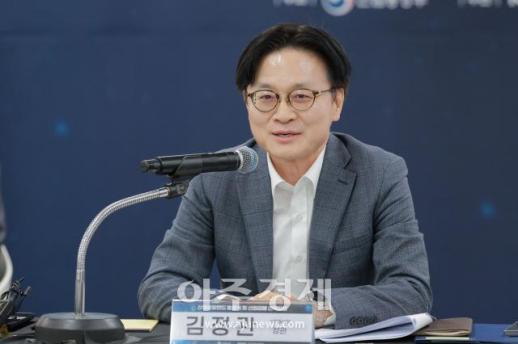 Industry Minister Urges Steady Oil and Naphtha Supply in Talks with Oman The South Korean government is engaging with Oman to diversify its oil supply and enhance the use of the Duqm Port, a bypass route for the Strait of Hormuz. The Ministry of Trade, Industry and Energy announced that Minister Kim Jeong-kwan held a video conference on June 1 with Mohammed Al Yousuf, chairman of the Oman Free Trade Zone Authority. The two sides discussed key economic cooperation issues, including stable resource supply, plant contracts, and logistics facilitation. Since the outbreak of conflict in the Middle East, the government has been working to secure stable resources and minimize the impact on supply chains and exports. Notably, a presidential envoy delegation visited Oman in April, achieving a commitment to secure 5 million barrels of crude oil and 1.6 million tons of naphtha by the end of the year. This amount exceeds the total crude oil imports of 4.5 million barrels from the previous year. Oman is also a strategic location that allows for bypassing the Strait of Hormuz, a key transit route for Middle Eastern crude oil and liquefied natural gas (LNG). If alternative routes combining ports and land transport networks within the region, such as Duqm Port, are secured, stable oil supply can be maintained even amid heightened risks in the Strait of Hormuz. To expand cooperation with Oman, which has potential as an alternative logistics hub and resource supplier outside the Strait of Hormuz, the Ministry of Trade arranged this meeting. During the discussion, Minister Kim requested support to ensure the smooth supply of crude oil and naphtha as agreed upon in the envoy delegation's talks in April. He also highlighted the successful execution of major projects in Oman, such as the Duqm refinery and the Mena solar power plant, and expressed interest in participating in new projects. Additionally, they discussed utilizing Oman's major ports as alternative logistics hubs to bypass the Strait of Hormuz. Minister Kim noted, "Our companies are facing challenges with customs payments and refunds in Oman, as well as duplicate inspections and quarantines at the Saudi Arabian border during the transportation of goods through Duqm Port. We need cooperation to simplify these procedures to ensure swift delivery of goods to their final destinations." The two sides agreed to promptly resume the Korea-Oman Economic Cooperation Committee, which has not met since 2016, to discuss economic issues. Minister Kim emphasized, "Oman, with its geographical advantage outside the Strait of Hormuz and abundant energy resources, is an important partner for strengthening future cooperation in the Middle East. Through this meeting and the upcoming Economic Cooperation Committee, we will actively seek ways to enhance cooperation in resource security, plants, and logistics."* This article has been translated by AI. 2026-06-01 16:03:00