

Journalist

Kim SeongSeo
biblekim@ajunews.com
-
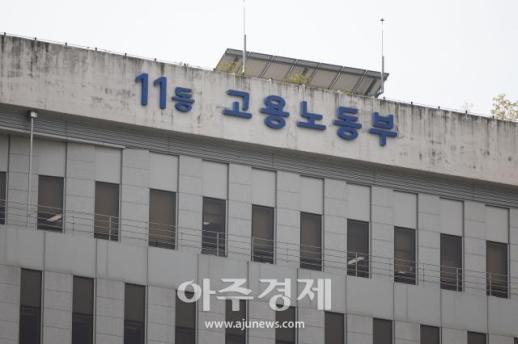 34 Businesses Caught Engaging in Unpaid Labor, Owing 448 Million Won 34 businesses have been caught by labor authorities for engaging in what is termed "unpaid labor" by misusing comprehensive wage systems, including fixed overtime pay. The Ministry of Employment and Labor announced on May 28 that it identified these businesses during a two-month oversight initiative aimed at eradicating the misuse of comprehensive wage systems, which began on February 26. The total amount of unpaid wages owed by these businesses is 448 million won. Comprehensive wage systems are intended for limited use in sectors where calculating working hours is challenging. However, they have faced criticism for being exploited as a means to evade paying overtime. This raises concerns about the normalization of excessive working hours through fixed overtime or flat-rate allowances. In response, the Ministry launched targeted oversight on 79 businesses suspected of misusing comprehensive wage systems, based on external complaints, petitions, and anonymous tips. Among these, 73 utilized fixed overtime, while six employed flat-rate pay systems. It was found that 43% of these businesses misused the comprehensive wage system. Of the 34 businesses that violated overtime limits, many failed to manage overtime properly. Additionally, 27 businesses did not accurately record actual hours worked, including overtime, night, and holiday hours, violating labor time record-keeping regulations. The government focused on confirming violations related to unpaid wages due to the misuse of comprehensive wage systems, as well as breaches of overtime limits and labor time record-keeping. For instance, a software development company paid only fixed overtime without verifying actual working hours. One cosmetics manufacturer failed to maintain any records of employee attendance while neglecting to pay over 100 million won in overtime and night work allowances. The Ministry has ordered these violating businesses to rectify their labor time violations and pay all owed wages. Failure to comply will result in legal action. Businesses that have completed corrections will be subject to repeated oversight until all legal violations are resolved. The Ministry of Employment and Labor plans to establish a continuous oversight system to prevent the misuse of comprehensive wage systems from being a one-time issue. Given the high detection rate of legal violations reported through the anonymous tip-off center, efforts to promote this reporting mechanism will be strengthened. Minister of Employment and Labor Kim Young-hoon emphasized, "Ensuring that workers receive fair compensation is a fundamental principle for normalizing the labor market. Compensation for labor must not be denied under the guise of comprehensive wages."* This article has been translated by AI. 2026-05-28 12:03:00
 -
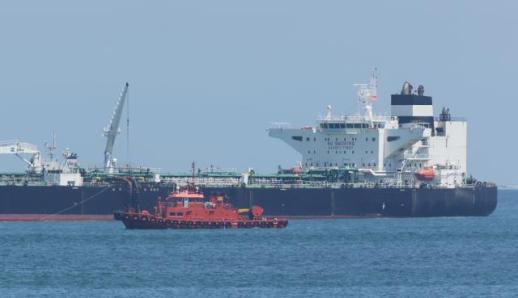 South Korea to Release 12 Million Barrels of Strategic Oil Reserves With about ten days remaining until the deadline for releasing strategic oil reserves under the International Energy Agency (IEA) joint resolution, the South Korean government has decided to lower the mandatory private stockpile days. This decision comes as refiners accelerate the import of alternative crude oil, and approximately 15 million barrels of strategic oil swap are already circulating in the market, leading to the conclusion that government releases would be less effective. Yang Gi-wook, head of the Ministry of Trade, Industry and Energy's Resource Security Division, announced on May 28 during a briefing at the Sejong Government Complex, "We have decided to implement the IEA international cooperation by adjusting the mandatory private stockpile days. We will issue a notice to reduce the requirement from 40 days to 20 days, effective from May 29." Previously, on March 11, shortly after the outbreak of war in the Middle East, the IEA decided to release a record 400 million barrels of strategic oil. South Korea's share of this release amounts to 22.46 million barrels, which must be completed by June 9. According to the Ministry of Trade, the IEA's release conditions differentiate between government releases from strategic oil storage facilities and private releases through the adjustment of mandatory stockpile days. Initially, the government had informed the IEA that it would utilize both government and private releases equally. This new approach indicates a preference for proceeding primarily with private releases. Yang emphasized, "We made this decision based on three factors: the national interest, the current domestic crude oil supply situation, and the prolonged uncertainty in the Middle East. Given that there are no significant issues with the current domestic supply situation, we are moving forward with private releases to comply with the IEA joint resolution." The estimated volume for the private release under the joint resolution is 12 million barrels. The government believes that reducing the mandatory private stockpile will allow refiners to manage their inventories more effectively. However, since refiners currently have sufficient stock, the release of private reserves is not expected to happen immediately. Yang noted, "This means that the private sector will have more flexibility in how they utilize their reserves, but it does not imply that they will be released right away. We also considered that the private stockpiles are not significantly different from pre-war levels in the Middle East." The government estimates that the private sector holds about 90 million barrels of crude oil and products, exceeding the mandatory holding requirement. Given the heightened uncertainty surrounding the Middle East conflict, the government plans to conserve its strategic reserves as much as possible. Yang stated, "During discussions with refiners, it was suggested that since they have secured alternative supplies, it would be prudent to proceed with strategic oil swaps for the time being, and to release government reserves only if the situation worsens. This was a comprehensive assessment considering the supply situation of the nation and refiners." Among the 22 million barrels to be released under the IEA joint resolution, the 10.46 million barrels not allocated for private release are unlikely to be released. Yang explained, "Of the 32 IEA member countries, four have not participated in the joint resolution, and as of June 8, ten countries have yet to release any strategic oil. Each country has considerable discretion in this matter." He added, "Since each country has flexibility regarding their situation, release methods, timing, and volumes, there are no penalties for not releasing. We believe that if we communicate our intentions adequately, the non-release of about 10 million barrels will not become a major issue." Yang also mentioned, "The strategic oil swap is being viewed as a new method for government reserves to enter the market, and we will be able to explain this adequately to the IEA in the future." Meanwhile, the government expects to secure crude oil at about 85% of the previous year's levels by July and anticipates no significant issues with crude oil supply in August. Yang remarked, "As we continue to secure alternative supplies, the supply situation does not seem to be difficult, and we do not expect significant differences from June and July."* This article has been translated by AI. 2026-05-28 11:39:00
 -
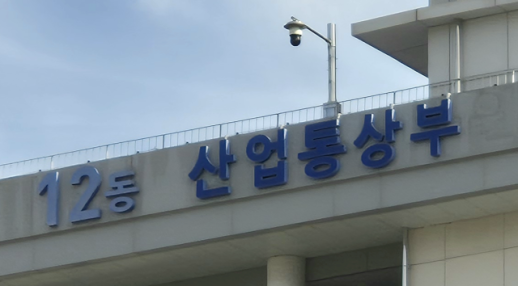 South Korea to Develop Specialized AI Models for Home Appliance Manufacturing Government officials are set to accelerate the transition to manufacturing artificial intelligence (AI) in the home appliance industry by developing specialized AI models. As mixed production becomes essential, the aim is to create AI systems that manage production and logistics schedules. This initiative includes building AI training data and establishing K-AI standards as part of the "Home Appliance M.AX Three Major Tasks." On May 28, the Ministry of Trade, Industry and Energy held the third general meeting of the "Home Appliance M.AX Alliance" at the Electronics Hall, attended by Choi Woo-hyuk, Director of Advanced Industry Policy, and over 80 participating companies and institutions. During the meeting, the ministry outlined plans for the "Home Appliance M.AX Three Major Tasks." The home appliance industry is facing increasing challenges due to global supply chain disruptions exacerbated by recent conflicts in the Middle East. Coupled with fierce competition from companies in rival nations, the domestic and international landscape is more precarious than ever. This risk is reflected in the numbers. According to the Korea Customs Service, home appliance exports fell to $6.9 billion last year, a 17% decrease from the previous year. In the current year, exports have only reached $2.246 billion, marking a 6.2% decline compared to the same period last year. In response, the government plans to fundamentally improve the industry by integrating AI into all aspects of home appliance manufacturing, from production processes to innovative product development, centered around the M.AX Alliance. Specifically, the government will develop specialized manufacturing AI models that reflect the unique characteristics of home appliance production. As consumer preferences diversify, mixed production—where multiple products are manufactured on a single line—has become essential. To accommodate frequent line changes, the government will develop AI models that manage production and logistics schedules autonomously, utilizing automated guided vehicles (AGVs) and autonomous mobile robots (AMRs). The initiative will also support the rapid and efficient development of innovative AI-powered home appliances. A roadmap for building AI training data will be established, and a survey of corporate demand will be conducted to systematically collect public data for AI training. Alongside data construction, the government will initiate the development of universal modules, including standard hardware and software development kits for AI home appliances, to alleviate the economic and technological burdens on companies. An AI home appliance support center will open in July to assist with the entire development process, from product design to prototype production. To prevent "AI washing"—the misleading practice of claiming AI capabilities for non-AI products—the government will establish standards. The National Institute of Technology and Standards will swiftly prepare national standards for the technical grading of AI home appliances and inter-device security by the end of the year. The goal is to ensure that reliable products that meet quality and security standards can establish a foothold in the market, while also identifying and linking government policy support measures. The Ministry of Trade, Industry and Energy will operate the Home Appliance M.AX Alliance with a focus on three key functions: manufacturing processes, product innovation and data, and standard cooperation, to execute these three major tasks with urgency. Choi Woo-hyuk stated, "The overall AI transformation of the manufacturing ecosystem is a necessary strategy for survival in fierce global competition. We will concentrate all policy efforts to ensure that the intelligence of home appliances and the AI transformation of manufacturing processes are organically aligned, establishing global leadership for domestic home appliances."* This article has been translated by AI. 2026-05-28 11:06:00
 -
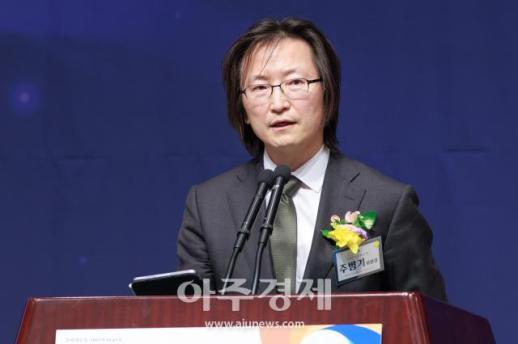 Korea's Fair Trade Commission Calls for End to Retention Practices in Construction Industry Joo Byeong-gi, chairman of the Fair Trade Commission, stated on May 28 that the revised subcontracting law focuses on significantly strengthening the payment security framework to ensure that small subcontractors receive fair compensation for their work. He expressed hope for a healthy relationship that promotes mutual growth by correcting unfair clauses that shift costs, such as industrial safety expenses, onto subcontractors. Joo made these remarks during a signing ceremony for a cooperation and fair trade agreement held at the Specialized Construction Hall, attended by representatives from the comprehensive and specialized construction sectors. The agreement aims to eliminate unfair trading practices in the construction industry and establish a system linking subcontractor payments. Previously, the Fair Trade Commission announced comprehensive measures to enhance payment security for small subcontractors, which include expanding payment guarantee obligations, introducing the right to request information related to primary contracts, and mandating the use of electronic payment systems to ensure timely payments. In February of last year, the commission also announced a revision to the subcontracting law, significantly reducing exceptions to payment guarantees to ensure payment stability. Additionally, the scope of the payment linkage system was expanded to include not only the prices of raw materials but also key energy costs. However, concerns remain that unfair practices continue in the field ahead of the law's implementation in August. In response, the Fair Trade Commission, along with 19 major construction companies and the Korea Association of Specialized Contractors, agreed to the cooperation pact, which includes measures for prompt payment and the abolition of retention, correction of unfair clauses, establishment of the payment linkage system, rapid adjustment of delivery prices during emergencies, and the creation of a subcontracting dispute resolution body. Specifically, to prevent the practice of paying only a portion of the progress payment to subcontractors while delaying the remainder until project completion, the agreement calls for the abolition of retention and a commitment to cash payments within the legal deadline. Furthermore, standards and procedures for quickly adjusting delivery prices during emergencies will be established through discussions between primary and subcontractors. The 19 major construction companies also agreed to raise delivery prices by 134.3 billion won as part of their commitment to the cooperation agreement. Additionally, comprehensive construction contractors will establish an internal dispute resolution body to address subcontracting-related issues such as payment disputes and price adjustments. To ensure the effectiveness of the cooperation agreement, a public-private consultative body will be formed to share information on the implementation status of the agreement and trends in the enforcement of the subcontracting law. Joo emphasized that while the construction industry is a key sector underpinning the economy, it is not easy to change deeply rooted unfair practices and structures overnight. He noted that the signing of the cooperation agreement aims to eradicate these unfair practices and promote a culture of mutual growth. He also acknowledged the heightened difficulties faced by the industry due to recent international tensions and a slowdown in construction activity, stressing the importance of close cooperation to navigate these challenges. Joo expressed gratitude to the participants from the comprehensive construction sector for adjusting delivery prices as part of their commitment to mutual cooperation. Joo urged that in times of emergencies, such as wars, efforts should be made to ensure that urgent payment adjustments and the payment linkage system operate smoothly. He invited stakeholders to share various tasks that the Fair Trade Commission should address, promising to actively consider them for institutional improvements. 2026-05-28 10:46:27
 -
Korea's Fair Trade Commission Calls for End to Retention Practices in Construction Industry Joo Byeong-gi, chairman of the Fair Trade Commission, stated on May 28 that the revised subcontracting law focuses on significantly enhancing payment stability for small subcontractors to ensure they receive fair compensation for their work. He expressed hope for a healthier relationship that fosters mutual growth by correcting unfair clauses that shift costs, such as industrial safety expenses, onto subcontractors. Joo made these remarks during a signing ceremony for a cooperation and fair trade agreement held at the Specialized Construction Hall. The event, attended by officials from the general and specialized construction sectors, aimed to eradicate unfair trading practices in the construction industry and establish a system linking subcontractor payments. Previously, the Fair Trade Commission announced comprehensive measures to strengthen payment stability for small subcontractors, which include expanding payment guarantee obligations, introducing the right to request information related to primary contracts, and mandating the use of electronic payment systems to ensure timely payments. In February of last year, the commission also announced a revision to the subcontracting law, significantly reducing exceptions to payment guarantees to ensure payment stability. Additionally, the scope of the payment linkage system was expanded to include not only the prices of raw materials but also major energy costs. However, concerns persist that unfair practices continue in the field ahead of the law's implementation in August. In response, the Fair Trade Commission, along with 19 major construction companies and the Korea Association of Specialized Construction Contractors, agreed to the cooperation pact, which includes measures for prompt payment and the abolition of retention, correction of unfair clauses, establishment of the payment linkage system, rapid adjustment of delivery prices during emergencies, and the creation of a subcontracting dispute resolution body. Specifically, the agreement aims to eliminate the practice of paying only part of the progress payment to subcontractors while deferring the remainder until project completion, establishing a principle of cash payment within legal deadlines. It also sets forth criteria and procedures for quickly adjusting delivery prices during emergencies, to be negotiated between primary and subcontractors. Furthermore, the 19 major construction companies committed to raising delivery prices by 134.3 billion won as part of the cooperation agreement. Additionally, general contractors will establish an internal subcontracting dispute resolution body to facilitate discussions with subcontractors on issues such as payment disputes and price adjustments. To ensure the effectiveness of the cooperation agreement, a public-private consultative body will be formed to share information on the implementation status of the agreement and trends in the enforcement of the subcontracting law. Joo remarked, "The construction industry is a core sector that underpins our economy, but it is not easy to change the deeply rooted unfair practices and structures in the field overnight. This cooperation agreement was established to eradicate the remaining unfair practices and promote a culture of genuine mutual growth." He added, "The recent instability in international affairs, such as the situation in the Middle East, and the downturn in the construction market have exacerbated challenges across the industry. However, it is during such times that we must work closely together to overcome difficulties. I would like to thank the participants from the general construction industry for adjusting the delivery prices for subcontractors as part of our mutual cooperation efforts." Joo urged, "Please ensure that urgent payment adjustments and the payment linkage system operate smoothly during emergencies such as wars. If you share the various tasks that the Fair Trade Commission needs to address, I will actively consider them for institutional improvements."* This article has been translated by AI. 2026-05-28 10:46:23
-
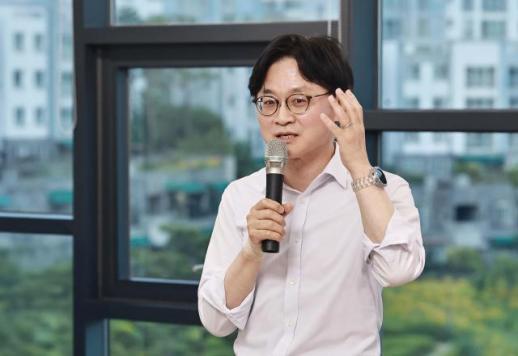 Minister Kim Jung-kwan: Export Potential Exceeds $900 Billion, Achieving 'Top 5' Exporter Status Possible Kim Jung-kwan, the Minister of Trade, Industry and Energy, expressed cautious optimism regarding this year's export outlook, stating, "There is a possibility that we could exceed $900 billion." During a press briefing on May 27 in Sejong, he noted that while semiconductor exports have surged by over 130%, overall exports have still increased by about 15% even when excluding this sector. He believes this positions South Korea favorably to achieve its goal of becoming one of the world's top five exporters. Earlier this year, the government set an annual export target of $740 billion, which is a 4.3% increase from last year's record export figure of $709.3 billion. However, a recent report from the Korea Institute for Industrial Economics and Trade projected that due to rising global demand for artificial intelligence (AI), this year's exports could reach $924.4 billion. Minister Kim highlighted that while exports are often dominated by large corporations, small and medium-sized enterprises (SMEs) have also seen a 10% increase in exports, which he described as very encouraging. He emphasized that there are many markets where SMEs can successfully penetrate with their consumer goods. He added, "We are looking at markets in China and India, and we will adopt the mindset that 'the world is vast and there are many places to export.' I hope for a strong second half of the year." Regarding the submarine bidding competition with Germany for a contract with Canada, he maintained a cautious stance, stating, "We have the tangible Jangbogo-class submarines, while Germany is still in the design phase. Our submarine's price and specifications are ahead of Germany's, and we have a collaborative industrial cooperation package prepared by Hyundai Motor and Hanwha." He acknowledged some concerns, noting, "Canada is a NATO member and an old friend, which brings some uncertainties. I have heard that there are discussions about splitting the construction of 12 submarines equally between South Korea and Germany. However, I would like to align our efforts with the historical context of Admiral Yi Sun-sin's 12 ships." On the recent wage agreement reached between Samsung Electronics and its labor union, he remarked, "I feel this opportunity could be a double-edged sword for Samsung Electronics. I hope the internal stakeholders can make this a stepping stone for future success." Minister Kim refrained from commenting on nuclear power exports and the first U.S. investment project, stating, "We are in contact with several countries regarding nuclear power, but it is still in progress, so it feels premature to discuss it. As for the U.S. investment project, discussions are moving in a constructive direction, but it is difficult to set a timeline as we are analyzing commercial viability." Regarding the manufacturing AI transition initiative (M.AX), which he has prioritized since taking office, he stated, "We have established a 'Best 11' framework based on 11 sectors, including process areas, manufactured goods, and industrial complexes. However, currently, our main focus is on semiconductors, and we aim to develop two or three key players in the second half of the year." He also mentioned his recent visit to Seongshim Bakery, saying, "We need to see more examples like Seongshim Bakery utilizing M.AX. The data generated should expand from points to lines and surfaces. While government support is necessary for the spread of AI factories, voluntary corporate engagement is also essential. Even if it's not a massive model, we can enhance competitiveness in the manufacturing sector." Addressing concerns about potential labor market disruptions due to M.AX, he noted, "We are approaching a situation where demographic changes are preventing us from passing the baton to the next generation. It is crucial to maintain competitiveness without replacing people. The government needs to provide retraining opportunities for the youth so they can transition to different roles."* This article has been translated by AI. 2026-05-28 10:15:00
 -
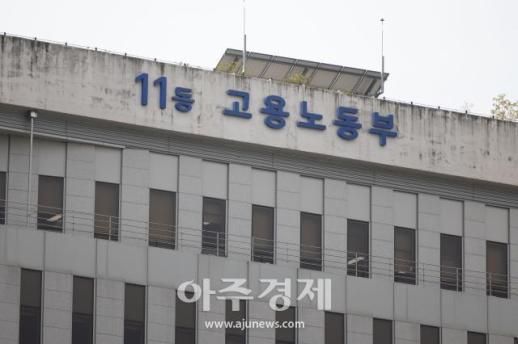 Labor Ministry Opens New Employment Office in Ulsan's Eastern Region 노동 당국이 조선과 자동차 공장이 밀집한 울산 동부권에 신규 고용노동지청을 개청했다. The Ministry of Employment and Labor opened a new employment office in Ulsan's eastern region, which is home to a concentration of shipbuilding and automotive factories. The opening ceremony took place on May 28 at the Ulsan Eastern Office conference room, attended by Minister Kim Young-hoon, lawmakers Kim Tae-sun and Yoon Jong-o, the Ulsan city deputy mayor, and representatives from labor and management organizations. Ulsan is the largest industrial complex in South Korea, with a diverse industrial structure across different regions. The eastern and northeastern districts focus on heavy industries like shipbuilding and automotive, while the southern district and Ulju County have a higher concentration of petrochemical and machinery-electronics industries. This has led to ongoing calls for employment and labor administration tailored to the specific industrial characteristics of each region. In response, the Ministry established the Ulsan Eastern Office, which will focus on supporting negotiations between primary and subcontractors and enhancing industrial safety management, considering the unique characteristics of the shipbuilding and automotive sectors. The office aims to build a support system that encompasses not only large primary contractors but also thousands of subcontractors, while also strengthening collaboration with local governments, labor organizations, and relevant agencies. Additionally, a social dialogue committee aimed at revitalizing the K-shipbuilding industry is set to launch next month. Although the shipbuilding sector has shown signs of recovery due to a global surge in orders, challenges such as labor shortages, disparities between primary and subcontractors, and industrial accidents persist. The industry is also grappling with an aging workforce and limited influx of young talent. The committee will address issues such as the youth labor shortage, improving working conditions, fostering cooperation between primary and subcontractors, and ensuring safety during the introduction of new technologies. Plans are also underway to enhance vocational training and on-site education for young workers entering the shipbuilding industry, as well as to expand asset formation support. Furthermore, initiatives to establish an industrial accident prevention system using AI technology and improve compensation for subcontractor workers will be pursued. With the implementation of the Serious Accident Punishment Act, the importance of safety management in the shipbuilding sector has significantly increased, leading to an expanded role for local labor administration organizations. The government plans to create an industrial accident prevention system utilizing AI technology and ensure that subcontractor workers receive appropriate compensation for their efforts. Minister Kim Young-hoon stated, "The opening of the Ulsan Eastern Office is a manifestation of the government's promise to create a country where all citizens can work happily, particularly in Ulsan, a city of labor. We will swiftly launch the social dialogue committee to support the K-shipbuilding industry's revival."* This article has been translated by AI. 2026-05-28 10:03:27
 -
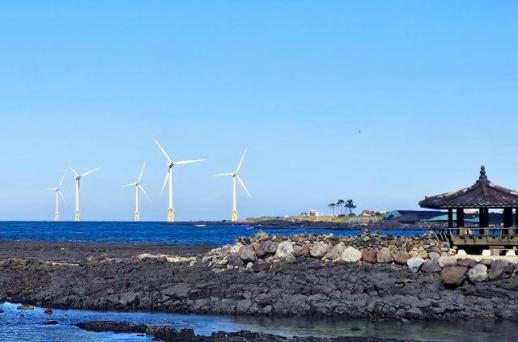 RE100 Energy Demand in South Korea Expected to Reach 160 TWh by 2038 RE100, which stands for 100% renewable energy, has become a benchmark influencing global supply chains and industrial competitiveness, leading to an increase in renewable energy demand among domestic companies. While long-term forecasts suggest sufficient renewable energy supply, concerns remain about grid limitations and other challenges. According to a report by the Korea Energy Economics Institute titled "Insights into the Global Energy Market - Trends in Domestic and International RE100 and Implications for Renewable Energy Policy," the number of companies participating in RE100 has steadily increased since its launch in 2014. Recently, there has been a rise in new memberships from large global companies with significant electricity demands, expanding the volume of renewable energy addressed by RE100. The participation of South Korean companies in RE100 began in earnest in 2020 when six subsidiaries of SK Group joined. Major manufacturing and IT firms such as Samsung Electronics, SK Hynix, Hyundai Motor, LG Energy Solution, Naver, and Kakao have since joined, bringing the total number of participating companies to 36 as of this year. These companies are estimated to consume 66.7 TWh of electricity in 2024. However, the level of renewable energy procurement remains low. By the end of 2024, the procurement rate for renewable energy among domestic RE100 companies is expected to reach only 12%. To fully meet their renewable energy needs, an additional 59.6 TWh will be required. The demand is projected to increase sharply in the coming years. The report estimates that the electricity demand from domestic RE100 companies will reach 160 TWh by 2038. Assuming they meet their renewable energy procurement goals, the achievement rate for RE100 among these companies is expected to reach 83.2% by that year. From a supply perspective, there is expected to be sufficient volume in the medium to long term. Based on the government’s 11th Basic Plan for Power Supply and Demand, the combined supply of renewable energy and clean hydrogen and ammonia is estimated to be about 249.6 TWh by 2038. It is projected that renewable energy and clean hydrogen will account for approximately 35.4% of the central power market in that year. However, there are many variables that could affect the implementation of RE100. Smooth certification processes for hydropower, biomass, and clean hydrogen used domestically are essential. Additionally, various practical constraints such as grid limitations, regional acceptance, and transmission and distribution network shortages could arise simultaneously. The report suggests that policy responses should not only focus on expanding capacity but also on establishing a market, grid, and institutional framework. This means that large-scale renewable energy expansion centered on the central power grid should be complemented by the development of distributed renewable energy based on industrial complexes, urban areas, and localities. Investments to ensure grid stability and flexibility are also identified as key challenges. As inverter-based power sources like solar and wind energy increase, different technical responses will be necessary compared to traditional power grid operations. Expanding transmission and distribution networks, along with energy storage systems (ESS), demand response (DR), and ancillary services, will help alleviate output control and inter-regional grid congestion issues. The report states, "Responding to RE100 has become a new market order that influences global supply chains and industrial competitiveness. Securing renewable energy volumes is linked to industrial and trade policies and can directly impact investment attraction and export competitiveness." It concludes that expanding renewable energy volumes and establishing a stable procurement system will be crucial for maintaining the competitiveness of the manufacturing sector.* This article has been translated by AI. 2026-05-23 19:18:00
 -
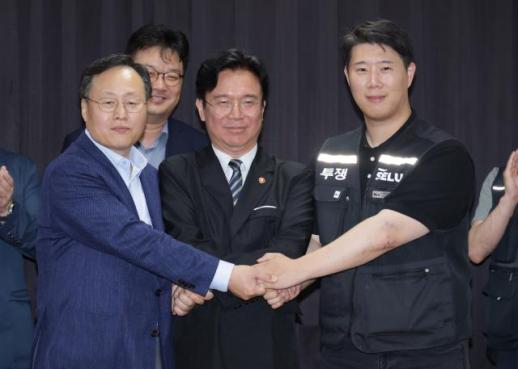 Labor Minister: Emergency Mediation Authority Unthinkable Amid Samsung Electronics Struggles Kim Young-hwan, the Minister of Employment and Labor, stated on May 22, "The thought of using emergency mediation authority is something I could never imagine." He firmly disagreed with claims that the recent strike by the Samsung Electronics union could be attributed to the revised labor union law, known as the Yellow Envelope Law. In an appearance on MBC Radio's "Kim Jong-bae's Focus," Kim commented on the negotiations between Samsung Electronics and its labor union, saying, "Our society has experienced significant growing pains that we all need to address." He added that the discussions surrounding how to socially redistribute the profits generated by rapid productivity increases, particularly those driven by artificial intelligence, have been opened. Regarding the emergency mediation authority, which has been raised by some within the government and business circles, he remarked, "I said that the occurrence of a strike at Samsung Electronics is something I could never imagine. However, it is not entirely impossible for a strike to happen." He emphasized that from his perspective, the idea of employing emergency mediation authority is indeed unthinkable. Previously, Minister of Trade, Industry and Energy Kim Jeong-kwan had stated, "I cannot yet imagine a strike occurring." President Lee Jae-myung also made comments suggesting that basic rights could be limited for the sake of public welfare. In response to Kim Jeong-kwan's remarks, Kim Young-hwan noted, "The Minister of Trade, Industry and Energy has his responsibilities, and I have mine." He speculated that the urgency behind the Minister's comments might stem from a desire to protect the fragile growth momentum that could be jeopardized by a strike at Samsung Electronics. On the topic of limiting public welfare, he clarified, "This is not simply about hindering corporate profits. It is not a matter of whether a company has profits or not. If it exacerbates polarization, is that a risk to the development of the national economy?" He further explained that the President has emphasized the need to increase union organization rates and foster a labor-respecting society. However, he acknowledged concerns that declining public opinion toward unions could hinder economic benefits. In response to inquiries about whether the Yellow Envelope Law has intensified disputes, he countered, "It is quite the opposite. The criticism against the super-large union at Samsung Electronics overlooks subcontractors and appears self-serving. The Yellow Envelope Law is intended to facilitate negotiations between subcontractors and primary contractors to address these issues." He added, "The way to suppress self-serving behavior is through the activation of the Yellow Envelope Law. Ensuring compliance with the Yellow Envelope Law is essential to changing the structure that allows only primary contractors to benefit." He also addressed claims that the law provides immunity for illegal strikes, stating that the super-large union has engaged in lawful disputes.* This article has been translated by AI. 2026-05-23 16:44:05
 -
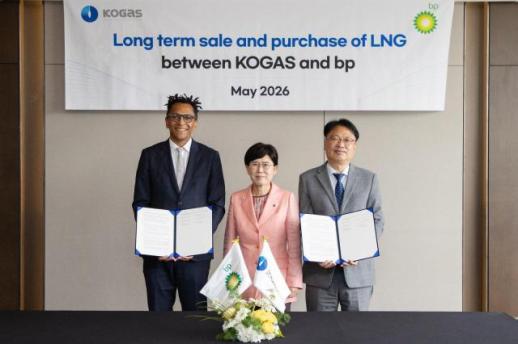 Korea Gas Corporation Signs Long-Term LNG Import Deal with BP Korea Gas Corporation (KOGAS) has signed a long-term agreement with global energy company BP to import an additional 700,000 tons of liquefied natural gas (LNG) annually for ten years starting in 2028. KOGAS announced on May 22 that the contract was finalized on May 21. This follows a previous agreement made in August of last year to import 3.3 million tons of U.S. LNG annually. The new contract is expected to enhance the stability of South Korea's natural gas supply. The agreement aims to diversify supply sources amid increasing instability in the energy market due to conflicts in the Middle East. It is anticipated to bolster supply chain resilience and energy import stability. BP's ability to source LNG from various regions, including the U.S., Australia, Indonesia, Angola, and Oman, will further contribute to supply diversification. This flexibility is expected to be beneficial in maintaining a stable supply. Additionally, as energy prices continue to rise, securing competitively priced LNG in advance may help stabilize domestic natural gas prices. Choi Yeon-hye, President of KOGAS, stated, "In light of the growing importance of energy security, this achievement is the result of our ongoing efforts to enhance the stability of domestic natural gas supply and improve price competitiveness."* This article has been translated by AI. 2026-05-23 16:34:14