


Latest by
-
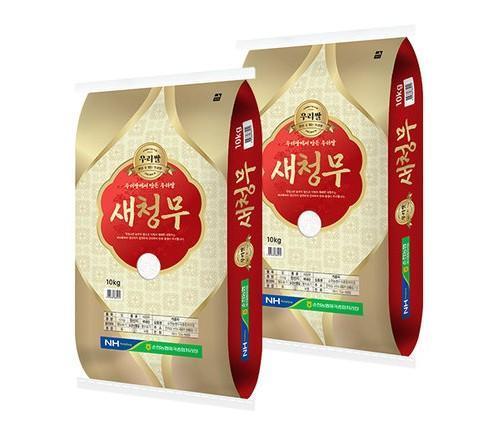 Home & Shopping to Feature Special Broadcast of 'Saechungmu Rice' from Suncheon Home & Shopping will host a special broadcast featuring the premium 'Saechungmu Rice' from the Suncheon Agricultural Cooperative on June 16 at 4 PM. According to Home & Shopping, the broadcast will showcase a set of 20 kilograms of 'Saechungmu Rice' harvested in 2025. This rice variety, developed by the Jeonnam Agricultural Technology Institute after seven years of research, is renowned for its exceptional quality. The broadcast is part of a support initiative by the Korea Small and Medium Business Administration to help small businesses enter the home shopping market. Earlier, Han Yu-won held the '2026 First Home Shopping Consultation Meeting' on June 9 to assist small businesses in this endeavor. A representative from Home & Shopping stated, "We are honored to support small businesses in collaboration with the Korea Small and Medium Business Administration and to introduce the best products that complement warm home-cooked meals. We hope that families can enjoy a warm and happy dining experience with our carefully cultivated and strictly selected premium Saechungmu Rice."* This article has been translated by AI. 2026-06-15 17:30:00
 -
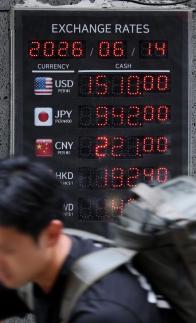
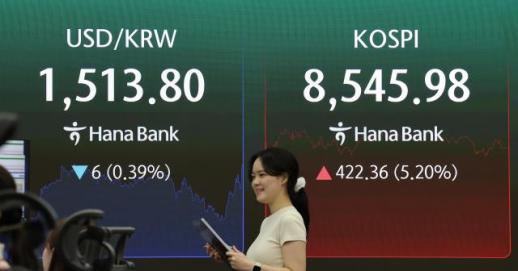 Korean won, bonds rally on U.S.-Iran framework SEOUL, June 15 (AJP) - The South Korean won and government bonds strengthened Monday on signs of foreign return after a de facto resolution to the monthslong Iran crisis. The won closed at 1,511.1 per dollar in the Seoul foreign exchange market, down 8.7 won from the previous session. South Korean government bonds extended last week's rally. The yield on the three-year government bond fell 6.4 basis points to 3.744 percent, while the 10-year yield dropped 7.7 basis points to 4.118 percent. The won and bonds were also supported by a recovery in risk appetite. The benchmark KOSPI jumped 5.2 percent to close at 8,545.98, with foreign investors buying a net 985.8 billion ($652.4 million) won worth of shares on the main bourse. The global market reaction was broad-based. Before regular U.S. stock trading began, Nasdaq-100 futures rose nearly 2 percent and S&P 500 futures gained around 1 percent, while the dollar index fell to its lowest level since June 5 and U.S. Treasury yields declined. The sharpest move came in oil. Brent crude fell more than 4 percent to the low-$83 range per barrel, while West Texas Intermediate (WTI) dropped more than 5 percent, as markets priced in the possible reopening of the Strait of Hormuz and the lifting of a U.S. naval blockade on Iran. The market moves came after Pakistan said the United States and Iran had reached a framework aimed at ending the war. U.S. President Donald Trump said Sunday U.S. time that the deal with Iran was “done,” while Pakistani Prime Minister Shehbaz Sharif said the agreement would be formally signed in Switzerland on Friday. Still, the deal appears closer to a preliminary framework or memorandum of understanding than a final peace agreement. Core issues, including Iran's nuclear program, sanctions relief and frozen assets, are expected to be addressed in follow-up negotiations during a 60-day ceasefire. For Korean markets, the immediate impact came through oil, the dollar and U.S. Treasury yields rather than a direct shift in Federal Reserve expectations. Lower oil prices eased inflation concerns, while weaker U.S. yields helped support domestic bonds and reduced upward pressure on the dollar-won rate. The move also eased some of the market's tightening concerns ahead of this week's Federal Open Market Committee (FOMC) meeting. The framework is not enough on its own to revive expectations for rate cuts this year, but it is helping reduce the perceived risk of a rate hike later in 2026. The Federal Reserve is widely expected to keep the federal funds rate unchanged at the current 3.50 to 3.75 percent range this week, leaving investors focused on its updated economic projections and dot plot. The March dot plot had pointed to one 25-basis-point cut by year-end, but expectations had turned more hawkish before the U.S.-Iran framework was announced, as higher oil prices and strong U.S. employment data raised concerns over renewed inflation pressure. After the strong jobs data released on June 5, futures markets raised the implied probability of a December rate hike to about 68 percent. According to Reuters, markets on Monday put that probability at around 48 to 50 percent, down from the 69 to 70 percent range seen a week earlier. The baseline after the agreement is therefore less a dovish pivot than an easing of hawkish pressure. The median dot in the June projections may still point to rates being held through year-end, but the case for higher dots that imply a rate hike in late 2026 has weakened. Markets are stripping out part of the Middle East inflation premium for now, but the agreement has yet to be formally signed and key issues remain unresolved. If the framework falters, oil prices and inflation risks could quickly return to the center of the FOMC debate, putting renewed pressure on the won and South Korean bonds. 2026-06-15 17:23:17
 -
 Middle East Reconstruction Efforts Gain Momentum Following War Ceasefire Following a ceasefire agreement between the United States and Iran, there is growing optimism in the plant, construction machinery, and defense sectors that the Middle East contracting market will reopen. Domestic heavy industry companies are expected to benefit from the reconstruction demands of Middle Eastern nations severely impacted by the war. The defense industry is also preparing to increase production facilities and hire more staff in anticipation of rising exports to the region. According to industry sources on June 15, the war has devastated key infrastructure in the Middle East, including Iran, Qatar's Ras Laffan LNG facility, the UAE's Ruwais oil refinery, and Bahrain's Al-Mamier refinery. It is estimated that the energy infrastructure reconstruction market could reach approximately $58 billion (about 86 trillion won). The reconstruction market is particularly noteworthy because it coincides with modernization efforts aimed at integrating artificial intelligence (AI) into facilities. With the lifting of long-standing economic sanctions against Iran, there is hope for rebuilding aging energy infrastructure, restoring public infrastructure such as roads, ports, and bridges damaged during the war, and moving beyond simple repairs to develop AI smart cities. The U.S. has proposed a reconstruction fund for Iran amounting to about $300 billion (approximately 455 trillion won) as part of the ceasefire negotiations. Among domestic companies, Samsung E&C is expected to benefit the most from the reconstruction boom, having secured numerous projects in Saudi Arabia and the UAE. The company has successfully completed projects such as the Qatar Ras Laffan petrochemical refining facility, the UAE Ruwais oil refinery, and the Bahrain BAPCO modernization project. The company emphasizes that post-war plant reconstruction signifies the recovery of the economic system, prioritizing rapid restoration over cost to remain competitive for new contracts in the Middle East. The defense industry is also anticipating a resurgence in K-defense exports due to the ceasefire. As neighboring countries in the Middle East reaffirm their need to bolster military capabilities, demand for South Korean weapons is reportedly increasing. Companies like LIG Defense & Aerospace, Hanwha Aerospace, and Hanwha Systems are currently negotiating additional exports of the Cheongung II missile system and new export deals with several Middle Eastern nations, including Saudi Arabia and the UAE. Hanwha Aerospace is in discussions with Saudi Arabia regarding the modernization of armored vehicles and self-propelled artillery systems, while Hyundai Rotem is exploring the export of approximately 250 K2 tanks to Iraq. Korea Aerospace Industries (KAI) is reportedly pushing for KF-21 exports to Saudi Arabia and the UAE. In response to the anticipated increase in exports, expansion efforts are already underway. Hyundai Rotem has recently repurposed part of its railway factory for K2 tank production and has reallocated personnel accordingly. KAI plans to invest 165 billion won this year to expand its facilities in preparation for increased KF-21 exports. LIG D&A also intends to expand its Gimcheon plant with a second factory by the third quarter of this year and plans to establish a new factory in Gumi by 2029. The construction machinery sector, including HD Hyundai Construction Equipment and Doosan Bobcat, is also experiencing a rising trend in exports to the Middle East. HD Hyundai Construction Equipment has recently secured a total of 557 construction equipment units in Saudi Arabia, the UAE, Qatar, and Turkey, which exceeds 40% of the total sales in the region compared to the previous year. Doosan Bobcat is continuously expanding its presence in the Middle East, shifting from its traditional North American focus to include countries like Saudi Arabia and Egypt.* This article has been translated by AI. 2026-06-15 17:21:00
 -
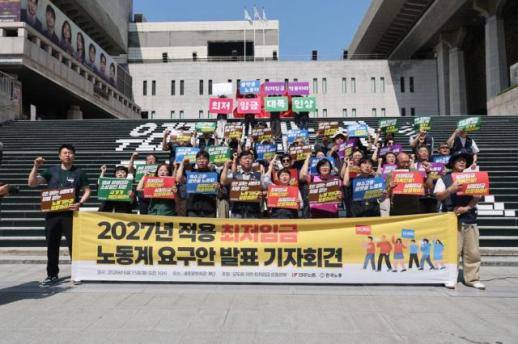 Labor groups demand 12,000 won for next year's minimum wage SEOUL, June 15 (AJP) - Labor groups on Monday demanded that next year's minimum wage be raised to 12,000 won (about US$8), up 13.3 percent or 1,680 won from this year's 10,320 won per hour. In a joint press conference in Seoul, workers from the Federation of Korean Trade Unions (FKTU) and the Korean Confederation of Trade Unions (KCTU) made the demand, arguing that wages have lagged behind inflation over the past three years. They pointed out that the average minimum wage rose just 2.37 percent over the past three years from 2023 to 2025, compared with the average inflation rate of 2.66 percent, resulting in a decline in real wages for low-income workers. They added that the current minimum wage does not adequately reflect the cost of living. Their demand comes after a committee led by the Ministry of Employment and Labor, consisting of labor, employer and government representatives, has been holding talks since April to decide next year's minimum wage. The committee is required to reach a final decision within 90 days of the labor minister's request for a review, which falls on June 29 this year, although the deadline is largely advisory and, in practice, decisions are often delayed until mid-July due to differences between labor and business groups. But tough confrontations are expected, as business groups are likely to push for a freeze or a smaller increase amid a prolonged economic slowdown. 2026-06-15 17:20:47
 -
 KOSPI and Nikkei up 5% as U.S.-Iran deal eases energy fears SEOUL, June 15 (AJP) - South Korean and Japanese markets roared Monday, gaining 5 percent on a preliminary U.S.-Iran peace deal snapped fears of a prolonged energy shock and triggered a broad risk-on rally across the region. The KOSPI jumped 422.36 points to close at 8,545.98. The index rose as high as 8,603.48 during the session after opening sharply higher, while its intraday low was 8,450.24. Foreign and institutional investors led the rally. Foreigners bought a net 985.9 billion won ($651 million) worth of shares on the main bourse, while institutions purchased 539.2 billion won. Retail investors sold a net 1.49 trillion won, locking in gains after the index's steep rebound. A buy-side sidecar was triggered shortly after the opening bell after KOSPI 200 futures surged more than 5 percent, temporarily halting program buy orders for five minutes. The rally followed news that Washington and Tehran had reached a tentative agreement aimed at ending months of conflict and reopening the Strait of Hormuz, a key route for global energy shipments. West Texas Intermediate crude fell 5.9 percent to $79.9 per barrel, while Brent crude dropped 5.2 percent to $82.8. Oil-sensitive sectors were among the biggest beneficiaries. Airlines jumped 10.7 percent, while the broader airline and low-cost carrier theme surged 14.2 percent. Korean Air climbed 12.8 percent to 30,000 won, as investors bet that lower fuel costs would improve earnings conditions for carriers. Large-cap technology and chip-related shares powered the advance. Samsung Electronics rose 4.5 percent to 337,000 won, while SK hynix gained 6.4 percent to 2,288,000 won. Samsung Electro-Mechanics jumped 16.6 percent to 1,999,000 won, and LG Innotek surged 16.7 percent to 1,209,000 won. The rally also spread to electrical equipment and components. LS ELECTRIC advanced 15.7 percent to 257,500 won, while Foosung climbed 17.8 percent to 22,400 won. SK Eternix rose 13.6 percent to 48,850 won. By sector, electronic equipment and devices led the market with a 13.4 percent gain, followed by airlines at 10.7 percent and electrical equipment at 9.4 percent. Not all stocks joined the rally. Hyundai Engineering & Construction fell 7.9 percent to 145,000 won, and Leeno Industrial dropped 7.4 percent to 96,800 won. Mirae Asset Venture Investment plunged 20.8 percent to 30,750 won, pressured by fallout from Mirae Asset Securities' failure to secure client allocations in SpaceX's blockbuster initial public offering. Mirae Asset Securities ended 1.7 percent lower at 51,400 won, underperforming sharply despite the broader market surge. The smaller-cap KOSDAQ gained only 4.98 points, or 0.5 percent, to finish at 1,034.03. Individuals bought a net 616.4 billion won on the KOSDAQ, while foreigners sold 816.6 billion won. On the KOSDAQ, hair-loss treatment shares rallied after the government signaled it may review possible health insurance coverage for the sector. TS Trillion hit the daily upper limit, rising 30 percent to 1,206 won. Withus Pharmaceutical jumped 22.8 percent to 8,180 won, while Innogene rose 9.2 percent to 1,583 won. The won strengthened slightly against the dollar, quoted at 1,514.6 won per dollar, down 0.01 percent from the previous session. Japan's Nikkei 225 surged 5 percent to close at 69,317.5, helped by strong gains in technology and semiconductor-related shares. The Shanghai Composite rose 1.6 percent to 4,096.5, while Hong Kong's Hang Seng Index gained 0.6 percent to 24,858.24. 2026-06-15 17:20:40
 -
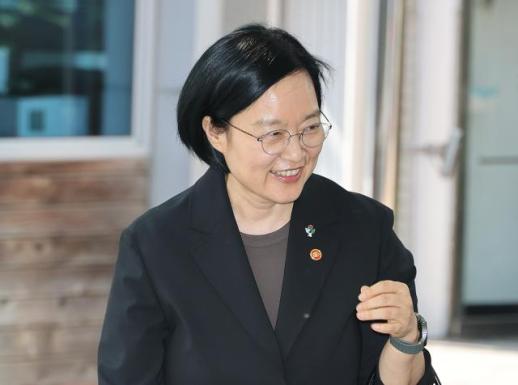 Ruling and Opposition Parties Finalize Committee for Han Seong-sook's Confirmation Hearing On June 15, the ruling People Power Party submitted its list for the confirmation hearing special committee for Prime Minister nominee Han Seong-sook, following the Democratic Party's earlier submission. With 12 of the 13 committee members decided, the formation of the committee is nearing completion. The People Power Party designated lawmaker Kang Seung-kyu as the committee secretary and included lawmakers Kim Hee-jung, Kim Seon-kyo, Jo Jeong-hun, and Yoo Young-ha as committee members. Previously, on June 12, the Democratic Party finalized its committee list, appointing lawmaker Baek Hye-ryun as chair and Kim Han-kyu as secretary. Other members include Lee So-young, Jeon Yong-ki, Song Jae-bong, Kim Dong-a, and Park Gyun-taek. The non-negotiating committee member will be appointed by National Assembly Speaker Jo Jeong-sik. President Lee Jae-myung nominated Han Seong-sook as the successor to Kim Min-seok, who resigned on June 7. The formal review process began when the nomination request was submitted to the National Assembly on June 10. According to current confirmation hearing laws, the hearing must be completed within 15 days of receiving the nomination request. Additionally, the overall review process, including the adoption of the confirmation report, must be concluded within 20 days.* This article has been translated by AI. 2026-06-15 17:18:00
 -
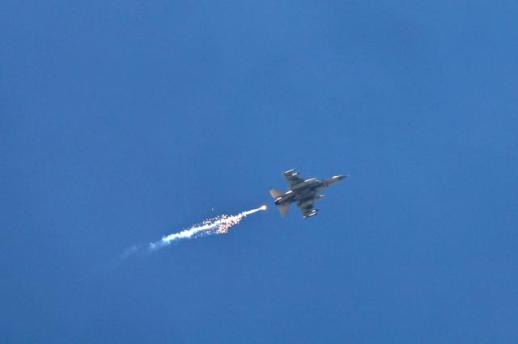 Israeli Defense Minister: No Troop Withdrawal from Lebanon Despite US-Iran Ceasefire Israeli Defense Minister Yoav Katz announced that Israeli troops will not withdraw from southern Lebanon, despite a ceasefire agreement between the United States and Iran. This raises the possibility that Israel could become a complicating factor in the peace negotiations. On June 15, Katz stated in a press release to the Times of Israel, "Prime Minister Benjamin Netanyahu and I are leading a clear policy that allows the Israel Defense Forces to remain indefinitely in the security zones of Lebanon, Syria, and Gaza. This is to protect our borders and communities from jihadist forces." He elaborated that the security zones would see local residents evacuated, and all terrorist infrastructure, including homes in border villages used as bases for attacks, would be destroyed. Katz emphasized that maintaining these security zones is one of the "greatest achievements" of the current conflict, asserting, "Therefore, regardless of current and future pressures, we oppose the withdrawal of Israeli forces from Lebanon." He added, "Prime Minister Netanyahu has clearly communicated this position to President Donald Trump and other senior U.S. officials, and I also made this clear to former U.S. Secretary of War Pete Hegses yesterday." Katz further stated, "We will not compromise on Israel's security interests and the protection of our citizens, and we will not withdraw from the security zones. If Iran attacks Israel due to the situation in Lebanon, we will strike back with full force. Our sole commitment is to the security of our people and the state of Israel." Meanwhile, the U.S. and Iran reached a ceasefire agreement that includes a clause for a "permanent and immediate cessation of hostilities on all fronts, including Lebanon." The Iranian government also announced through state television that a permanent and immediate ceasefire with the U.S. has been declared on all fronts, including Lebanon. However, should Israel resume military actions in Lebanon, it could complicate the final negotiations between the U.S. and Iran.* This article has been translated by AI. 2026-06-15 17:15:00
 -
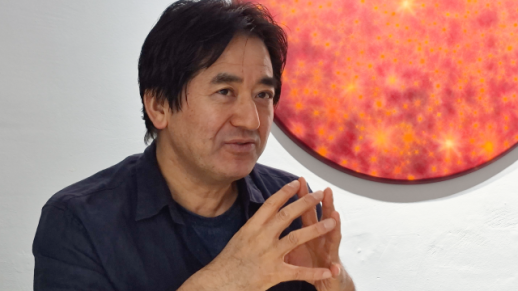 What Should Humanity Achieve After AI? Captain Kang Sang-bo Discusses 'Meaning Civilization' As artificial intelligence (AI) rapidly reshapes production methods and social structures, humanity faces fundamental questions about its role and value. In a recent interview with our agency, Captain Kang Sang-bo, author of The Master Key and a civilization designer, stated, "The key transition in the AI era is not the enhancement of technological capabilities, but rather humanity's shift from 'method' to 'meaning.'" He emphasized the need to build a new form of civilization through this transition.Kang has been researching and creating around the concept of 'meaning civilization' for an extended period, attempting to combine philosophical thought, personal growth, and the content industry. His notable work, The Master Key, systematically presents pathways to personal success and life direction.He identified 'direction setting' as the most lacking capability in humans today. He warned that if people perceive AI merely as a tool, they risk missing structural changes and essence. "In a situation where AI can perform almost all tasks, if humans cannot set their own direction, they may become mere parts of the system," he said, adding that both individuals and societal structures must be able to provide direction.Kang introduced the concept of 'meaning civilization,' distinguishing it from existing information and technological civilizations. While technological civilization focuses on 'what to create,' he argues that the AI era must shift to the question of 'should we create it at all?' He explained that technology should operate in a way that aligns more closely with human essence, moving from a 'technology-human-technology' structure to a 'human-technology-human' cyclical structure.In terms of values, he proposed 'meaning, vivid dreams, responsibility, and LOVE' as core areas unique to humanity. He stated, "AI and robots ultimately exist to help humans get closer to these four values," asserting that these elements will become new criteria for judgment.Kang also suggested an absolute formula for success: 'BTS × LOVE = SUCCESS.' Here, BTS represents Body, Talent, and Spirit, while LOVE signifies connection and empathy among humans. He noted, "In the AI era, traditional success criteria based on speed, efficiency, and results are being rapidly replaced by technology. Future success will depend not on performing tasks faster, but on creating deeper connections and generating meaning within them."From a generational perspective, he defined those aged 10 to 30 as '1030 Young Stars,' labeling them as 'civilization designers.' He emphasized that unlike the older generation, which grew up under efficiency, growth, and capital-centric logic, these young individuals may struggle to gain an advantage if they compete with AI on the same terms. He stressed that the key is not to compete for efficiency but to transition toward creating direction.On an institutional level, he proposed concepts of 'meaning finance' and 'meaning education.' He stated, "In the AI era, economic systems can operate without direct human participation," arguing that finance should shift from a production-centered focus to one centered on human values, meaning, vivid dreams, responsibility, and LOVE. However, he added that such changes would require gradual guidance from media, institutions, and government rather than individual efforts.Regarding education, he criticized the existing system for remaining stuck in 'pre-AI' methods. Kang asserted, "Knowledge acquisition should be left to AI, while humans should focus on exploring meaning and direction." He suggested that history education should shift from rote memorization to experiential understanding, and that teachers should transition from being 'providers of answers' to 'askers of questions.'He also warned of the risk that 'meaning' could be further diminished in a discourse centered on efficiency, growth, and capital. If society prioritizes results alone, individuals may lose their ability to judge 'why they do what they do.'Kang remarked, "Today's younger generation stands at a crucial crossroads," stating that whether they become the architects of civilization or remain consumers within the system is a matter that transcends individual choice and will influence the direction of future society. "In the AI era, the competition is not about speed, but about direction."* This article has been translated by AI. 2026-06-15 17:15:00
 -
 Will Shin Min-a and Kim Nam-hee's Thriller 'Eye' Continue June's Box Office Success? June brings another thriller to theaters. Following the success of films like 'Goonche' and 'Wild Thing,' the spotlight is on the South Korean movie 'Eye,' featuring Shin Min-a in a dual role, as it aims to maintain the momentum at the box office.On June 15, a press screening for 'Eye' was held at the CGV Yongsan I-Park Mall in Yongsan, Seoul. Director Yeom Ji-ho and actors Shin Min-a and Kim Nam-hee attended the event.'Eye' is a suspense thriller about Seo-jin, who is gradually losing her sight due to a genetic disease, as she investigates the mysterious death of her twin sister.Director Yeom Ji-ho stated, "Since 'Eye' is a thriller, I focused on setting it up so that the audience can easily follow the story. I paid a lot of attention to maintaining a balance that is neither excessive nor lacking in its subtlety."He added, "While I see this film as a thriller, I also believe it is about love. I contemplated whether the actions portrayed as love are truly love, and what real love is. I hope the audience reflects on these aspects while watching the film."The film is based on the 2011 Spanish movie 'Julia's Eyes.' Director Yeom noted the emotional differences between Spain and Korea, highlighting how these distinctions influenced the adaptation.Yeom explained, "The emotional nuances between European and Korean audiences are intriguingly different. I considered how the narrative style would resonate with Korean viewers and worked hard to ensure it felt emotionally coherent for them."In the film, Shin Min-a portrays Seo-jin, a photographer losing her sight due to hereditary optic neuropathy, who investigates her twin sister Seo-in's suspicious death. Seo-in, on the other hand, is a successful potter who meets an untimely demise.Shin Min-a shared, "I focused on expressing Seo-jin's emotions and fears as she gradually loses her sight. I aimed to make the complex relationship with Seo-in relatable for the audience."She added, "As the film builds to its climax, I also worked on conveying Seo-jin's fear and curiosity about the identity of the perpetrator."In this project, Shin Min-a took on the challenge of playing two roles. Although the characters share a face, they possess distinct deficiencies and desires, creating suspense throughout the film.Shin Min-a explained, "I viewed them as entirely different characters. While Seo-jin and Seo-in look alike, their personalities and aspirations are different. Seo-jin has her own shortcomings and feels a complex mix of emotions, both protective and envious, towards Seo-in."She continued, "Seo-in is focused on her art but worries about being a burden to her sister. Since the two characters were clearly defined, I approached them as if they were from different works. I was curious about how it would feel to see my face appear twice in one frame, and after watching the film, I found it fascinating that the two characters appeared distinct."Portraying a character losing her sight was also a challenging process. Shin Min-a collaborated closely with Director Yeom to depict Seo-jin's changing vision and sensory perception.She said, "We had many discussions about the points at which she gradually loses her sight. I even experimented with changing the position of my eyes, but I aimed to capture the details of Seo-jin's situation."Shin Min-a recalled a scene in the latter part of the film where Seo-jin, after surgery, is filmed with bandages over her eyes. "Since I couldn't see, my hearing became sensitive to even the smallest sounds. Even though I tried to gauge my position and situation before closing my eyes, my heightened hearing and fear made me feel disoriented. I acted with the thought that Seo-jin must be experiencing immense fear and difficulty. I hope the audience can feel the fear I experienced while portraying her."Shin Min-a described 'Eye' as a film that raises questions about relationships. She reflected, "While playing Seo-jin and Seo-in, I thought about love, obsession, protection, and the dynamics of relationships before and after being together. It seems to be a film that explores love and obsession among Seo-jin, Seo-in, Do-hyeok, and their mother. I believe it encourages viewers to reflect on their relationships with loved ones."Kim Nam-hee plays Do-hyeok, a detective who, while wary of Seo-jin's obsession, becomes her eyes in the pursuit of Seo-in's death. As he gets closer to the truth, he intensifies the audience's doubts and confusion.Kim Nam-hee expressed, "From the moment I read the script to now, I've been contemplating whether my character and the film align with its intended message. I wasn't very confident, so I discussed a lot with the staff while working on the project."He also shared his struggles with acting, saying, "There were times when I felt I couldn't do it. The pressure was significant. However, thanks to the director and the producer's clear explanations, I was able to act with courage. I tried to show the evolution of Do-hyeok's character."Having seen the completed film for the first time in theaters, he remarked, "It didn't feel like my movie; I watched it as an audience member. I was surprised by the performances of my seniors and found the final scene shocking. From an audience perspective, I lost track of time while watching. I thought the performances were excellent, and the film offered a shocking auditory and visual experience."Finally, Director Yeom emphasized, "We put a lot of effort into the sound and visuals of this film. I believe viewers will feel a lot when they watch it in theaters. I hope audiences will come to see it."Shin Min-a added, "Personally, I am very happy that it is being released in theaters. Many people are showing interest in Korean films these days, and I hope 'Eye' will also be loved as a thriller."Meanwhile, 'Eye' is set to be released on June 24.* This article has been translated by AI. 2026-06-15 17:15:00
 -
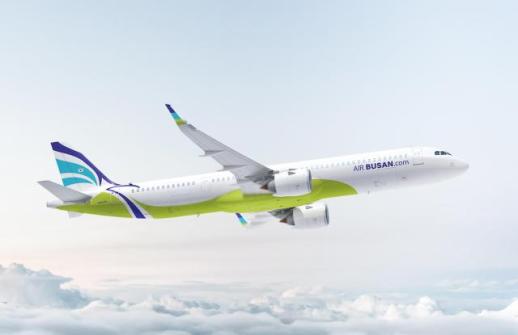 Asiana Airlines Exercises Conversion Rights for 100 Billion Won in Air Busan Bonds Asiana Airlines has exercised its conversion rights for 100 billion won in convertible bonds (CB) issued by its subsidiary, Air Busan, to improve its financial structure and expedite preparations for the launch of a unified low-cost carrier (LCC). On June 15, Asiana Airlines announced its decision to exercise the conversion rights for the sixth series of Air Busan's 100 billion won convertible bonds. This move aims to strengthen Air Busan's financial stability and establish a solid management foundation for the upcoming unified LCC. Air Busan has successfully improved its performance since 2023, achieving higher profitability compared to its competitors, although it remains relatively undervalued compared to other LCCs in the market. The decision is also influenced by the increased operational burdens faced by the low-cost airline sector due to high oil prices and exchange rates stemming from geopolitical instability in the Middle East. By exercising the conversion rights, Air Busan is expected to alleviate approximately 6 billion won in annual interest expenses and mitigate additional burdens from potential future interest rate hikes. Asiana Airlines plans to enhance profitability through purchasing efficiency, resource reallocation, and improved aircraft utilization following the launch of the unified LCC in the first quarter of next year. An Asiana Airlines official stated, "We will work to maintain Air Busan's financial health while enhancing corporate value and strengthening future competitiveness through integration." Meanwhile, Air Busan reported first-quarter revenues of 257.7 billion won, a 3.3% increase from the previous year. However, its operating profit for the same period fell by 24.2% to 30.4 billion won.* This article has been translated by AI. 2026-06-15 17:12:00