

Journalist

Candice Kim, Lim Jaeho
candicekim1121@ajupress.com, ajupresswogh@ajupress.com
-
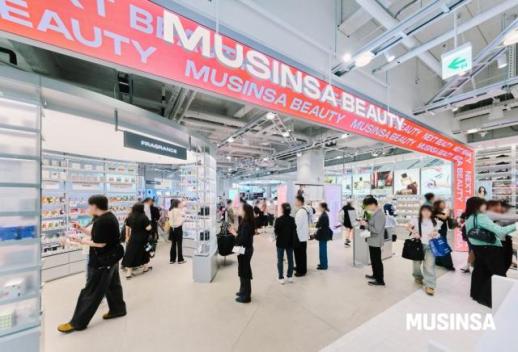 Musinsa's foreign sales hit record high during Northeast Asian 'Golden Holiday' SEOUL, May 09 (AJP) - South Korean fashion platform Musinsa saw its offline sales from foreign tourists reach a record high during the recent "Northeast Asian Golden Holiday," as Japanese and Chinese vacation periods coincided to drive a surge in inbound shopping. According to data released by the company on Friday, sales from foreign customers at 12 of its global-focused stores—including Musinsa Standard and Musinsa Store—rose more than 30 percent between April 29 and May 5 compared to the previous week. The period saw a rare overlap of Japan’s Golden Week (April 29–May 6) and China’s Labor Day holiday (May 1–5). The growth was most pronounced in Seoul’s Seongsu district, a rising shopping hub for international tourists. Combined sales at the Musinsa Standard Seongsu and Musinsa Store Seongsu boutique surged 41 percent week-on-week, fueled by an influx of overseas visitors. For the first time, foreign nationals accounted for more than half of the total revenue at these 12 strategic locations, reaching 53 percent of the total sales mix. The Musinsa Store in Myeongdong recorded the highest international presence, with over 70 percent of its revenue generated by foreign shoppers. Other locations in Hannam, Hongdae, and Seongsu also reported foreign sales shares exceeding 60 percent. Industry analysts attribute the performance to a growing global preference for K-fashion and beauty, coupled with Musinsa's curation of local brands that appeal to independent travelers seeking "hip" South Korean lifestyle experiences. To capitalize on the holiday peak, the platform partnered with Japan’s largest fashion platform, ZOZOTOWN, and China’s WeChat Pay to offer targeted discounts and point-based incentives. “The alignment of major holidays in Korea, China, and Japan drew a concentrated number of global customers to our offline spaces,” a Musinsa official said. “We plan to continue strengthening our online-to-offline marketing and curation to ensure international tourists can experience the latest South Korean fashion trends.” The company is currently running its "On & Off Festival" across all offline locations through May 10, offering exclusive discounts to both domestic and international shoppers. 2026-05-09 15:20:24
 -
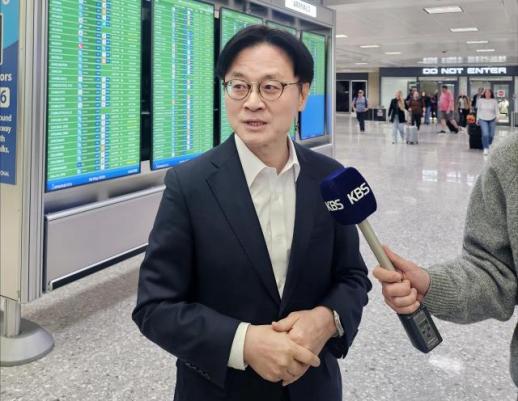 S. Korea, U.S. coordinate investment pipeline ahead of new trade law launch SEOUL, May 09 (AJP) - South Korean Trade Minister Kim Jung-kwan met with U.S. Commerce Secretary Howard Lutnick on Saturday to finalize the details of major investment projects slated for rollout under a landmark bilateral investment framework. The meeting, held in Washington, follows the recent signing of a memorandum of understanding on the "MASGA" shipbuilding initiative. However, the talks between the two chiefs focused more broadly on the implementation of South Korea’s "Special Act on Strategic Investment Management," which is set to take effect on June 18. The legislation serves as the domestic legal foundation for Seoul’s $350 billion U.S. investment pledge, a strategic commitment made last year to secure a 15 percent tariff rate on South Korean exports. Minister Kim’s visit aimed to concretize the first batch of projects to be officially designated under this new law. During his stay in Washington, Kim addressed speculation regarding the first major project under the initiative. While a liquefied natural gas (LNG) export terminal in Louisiana has been cited as a primary candidate, Kim told reporters it was "too early to confirm" whether it would be the official "No. 1" project, though he acknowledged it remains under active consideration. The high-level coordination comes at a critical time as South Korea seeks to navigate Washington’s evolving trade policies. While recent U.S. court rulings have challenged some of President Donald Trump’s tariff mechanisms, Seoul remains focused on industrial partnerships as a hedge against potential Section 301 investigations and broader trade friction. The discussions also touched upon the upcoming establishment of the Korea-U.S. Shipbuilding Partnership Center, which will serve as a hub for the $150 billion maritime portion of the investment package. “The focus of this meeting was to ensure that our investment pipeline is fully operational the moment the special act takes effect next month,” a ministry official said. “We are moving from the stage of high-level agreements to the practical execution of projects that will reinforce the bilateral economic alliance.” Minister Kim is expected to continue consultations with other U.S. trade officials, including the Office of the U.S. Trade Representative (USTR), to discuss ongoing tariff and trade environment issues before returning to Seoul. 2026-05-09 12:54:16
 -
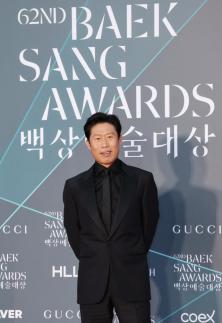 'The King's Warden' dominates 62nd Baeksang Arts Awards with grand prize win SEOUL, May 09 (AJP) - The historical blockbuster "The King's Warden" swept the 62nd Baeksang Arts Awards on Friday, with lead actor Yoo Hae-jin securing the Grand Prize (Daesang) in the film category. The film, which recently became the second highest-grossing South Korean production of all time with 16.8 million admissions, took home four awards at the ceremony held at COEX in Seoul. Beyond the night’s top honor, the production earned the Gucci Impact Award, while co-star Park Ji-hoon won both Best New Actor and the Naver Popularity Award. “I want to thank the nearly 17 million moviegoers who chose to see this film,” Yoo said in his acceptance speech. “It is rewarding to see that the distinct appeal of the theatrical experience remains as strong as ever.” The film’s success was mirrored in the television category by actor Ryu Seung-ryong, who won the Grand Prize for his role in the JTBC drama The Dream Life of Mr. Kim. The simultaneous wins for Yoo and Ryu drew significant attention as the two have remained close friends since their days as struggling theater actors three decades ago. Other top honors included Park Chan-wook’s No Other Choice for Best Film and the Netflix series Eunjung and Sangyeon for Best Drama. Individual acting accolades went to Hyun Bin for his role in Made in Korea and Park Bo-young for Unknown Seoul. Established in 1965, the Baeksang Arts Awards is considered one of South Korea's most prestigious honors in entertainment, recognizing excellence across film, television, and theater. 2026-05-09 11:01:31
 -
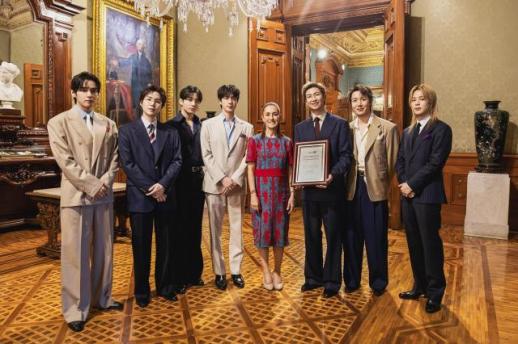 BTS draws 65,000 fans in triumphant Mexico City return after decade-long hiatus SEOUL, May 09 (AJP) - K-pop giant BTS made a long-awaited return to Mexico City on Friday, performing before a sold-out crowd of 65,000 at the Estadio GNP Seguros. The concert marked the group's first appearance in the Mexican capital since 2017, ending a nearly decade-long wait for local fans. The performance opened with "Hooligan," a track from their latest album Arirang, instantly energizing a stadium situated 2,240 meters above sea level. The setlist showcased a deliberate fusion of contemporary pop and traditional Korean heritage, as the audience joined in a massive sing-along of the folk anthem "Arirang" during the performance of "Body to Body." Fans also delivered synchronized chants for the group's global hits, including the 2018 smash "Fake Love" and their recent Billboard-topping single "Swim." The scale of the event extended beyond the stadium walls, with thousands of fans who were unable to secure tickets gathering outside the venue. Within the arena, the atmosphere remained electric as members addressed the crowd in Spanish, expressing their gratitude for the enduring support despite the long absence. Member Suga noted the overwhelming energy of the crowd, apologizing for the ten-year gap between visits and promising a more frequent presence in future tours. The two-hour show concluded with an emotional rendition of "Hold Me Tight," a 2015 track that fans sang in clear Korean while holding placards urging the group to return. The group is scheduled to perform two more sold-out shows at the same venue on May 10 and 11, completing a three-day residency that underscores their significant cultural and commercial footprint in Latin America. “We definitely realized tonight that we must make Mexico a mandatory stop on our next tour,” the members told the crowd before the final curtain. “Te amo, Mexico City.” 2026-05-09 10:17:15
 -
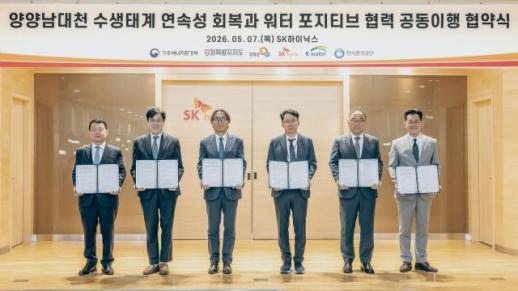 SK hynix pledges 'water positive' future starting with salmon route fix SEOUL, May 08 (AJP) - South Korean chipmaker giant SK hynix inc. has signed a multilateral agreement with the government and local authorities to restore the aquatic ecosystem of Namdaecheon Stream, a move aimed at reviving the country’s largest salmon spawning ground. Under the "Water Positive" initiative, the memory chipmaker will cooperate with the Ministry of Climate, Energy and Environment and the Gangwon provincial government to modernize aging weirs that have long obstructed salmon migration. The strategy focuses on returning more water to natural sources than the company consumes during its industrial operations, reflecting an shift toward corporate water stewardship. The restoration project, scheduled to run from 2026 through 2037, focuses on securing consistent water flow and upgrading deteriorating infrastructure to ensure a clear return path for migratory species. Namdaecheon has faced ecological challenges in recent years as outdated barriers and altered currents prevented salmon from reaching their native spawning sites. Beyond the ecological impact, the partnership is expected to bolster the regional economy by enhancing local tourism and improving the riverside environment for residents. This collaboration marks a shift toward a public-private model where corporate resources are directly integrated into national environmental conservation policies. “This project illustrates how corporate water management can serve as a tool for shared growth with both nature and local communities,” said Lee Byung-ki, Chief Production Officer at SK hynix. “We will continue to pursue sincere activities to protect water resources moving forward.” 2026-05-08 17:15:18
 -
 Samsung Elec management, union to sit down at govt mediation SEOUL, May 08 (AJP) - Samsung Electronics and its union agreed to meet next week to iron out differences and possibly avert a full-scale strike scheduled for May 21, after the South Korean government stepped in amid fears that labor unrest could undermine a key pillar sustaining the economy and the stock market rally. The Samsung Electronics Labor Union (SELU) announced Friday it will enter a formal "post-mediation" process, with intensive negotiations scheduled for May 11 and 12. The breakthrough came after a meeting earlier Friday between union leadership and the head of the Gyeonggi Regional Employment and Labor Office. During the meeting, the government "strongly recommended" mediation and promised full support to facilitate a resolution, the union said in a statement. Despite agreeing to the talks, the union maintained its hardline stance, noting that it will continue preparations for the planned walkout. "If a satisfactory outcome is not reached, we will not hesitate to launch a general strike," SELU Chairman Choi Seung-ho said in the statement. Management welcomed the resumption of talks. When asked earlier if the company would participate in a post-mediation process should the union agree, a Samsung Electronics official indicated readiness to engage. "Reaching a settlement is naturally preferable to a strike for the company, so there would be no reason to refuse," the official said. The intervention follows increasingly pointed remarks from President Lee Jae Myung, a former factory worker who has traditionally maintained labor-friendly credentials but has recently emphasized balancing workers’ rights with economic stability. “If organized workers make excessive or unreasonable demands, they will face public criticism and ultimately harm the broader workforce,” Lee said during a meeting with senior aides on April 30. Although he did not name any company, industry observers widely interpreted the remarks as a warning directed at the Samsung union as labor tensions intensified over bonuses and compensation tied to the semiconductor boom. Labor Minister Kim Young-hoon reinforced the message during a separate meeting with regional labor officials. “The achievements of Samsung Electronics were made possible by the dedication of its workers, but we cannot deny the role of countless suppliers, government support and R&D investment,” Kim said. The government’s unusual intervention reflects the outsized importance of Samsung Electronics to the South Korean economy. Semiconductors account for roughly one-fifth of the country’s exports, while Samsung Electronics and its affiliates make up around 20 percent of the KOSPI’s total market capitalization, effectively anchoring the broader market rally. The SELU, now the company’s largest labor organization with more than 40,000 members, has announced plans for an 18-day general strike beginning May 21 after wage negotiations collapsed. The union is demanding that 15 percent of Samsung Electronics’ operating profit be allocated to employee bonuses, arguing workers have not received a fair share of profits generated during the AI-driven semiconductor supercycle. Management has proposed a 10 percent bonus pool alongside additional one-time incentives. The dispute comes as Samsung Electronics is racing to regain ground in high-bandwidth memory (HBM) chips used in artificial intelligence servers, an area where rival SK hynix has recently outpaced Samsung through early supply deals with AI chip leader NVIDIA. Analysts warn that even limited disruptions inside semiconductor fabrication lines can trigger expensive yield losses because chip plants operate around the clock and require uninterrupted ultra-precise processing conditions. Should disruptions escalate into a full production halt, estimated daily losses could climb to as much as 1 trillion won ($730 million), according to industry estimates. Any deterioration in yields or wafer damage would be especially costly as Samsung pushes to expand next-generation HBM shipments amid exploding global AI demand. The confrontation is also exposing widening divisions inside Samsung itself. Employees in consumer electronics and device divisions have increasingly voiced resentment over compensation disparities favoring semiconductor workers, mirroring broader concerns over South Korea’s growing economic dependence on a narrow group of AI-linked exporters. The labor standoff arrives at a politically delicate moment for the Lee administration, which is trying to preserve both labor support and industrial competitiveness as geopolitical instability and technology fragmentation intensify pressure on the export-driven economy. 2026-05-08 16:21:32
 -
 The higher Samsung Elec goes, the deeper internal collision over rewards SEOUL, May 07 (AJP) - Samsung Electronics has much to celebrate — joining the rare ranks of companies generating more than $40 billion in quarterly profit and surpassing a $1 trillion market capitalization. Yet beneath the triumph, the company faces growing internal strains that mirror the strengths and vulnerabilities of the broader Korean economy, heavily hanging on the semiconductor boom. The founding principle of “One Samsung” is showing visible cracks as divisions drift further apart — financially, culturally and strategically. The gap is most stark between the Device Solutions (DS) division, which oversees semiconductors, and the Device eXperience (DX) division, responsible for mobile devices and home appliances. In the first quarter, DS generated 53.7 trillion won ($39.2 billion) in operating profit, accounting for nearly 94 percent of the company’s earnings. DX contributed a comparatively modest 3 trillion won ($2.2 billion). The widening imbalance has begun spilling into labor relations. According to union sources, more than 2,500 DX employees recently withdrew from the representative labor union, SELU, arguing that they were being sacrificed to bankroll ever-fatter paychecks for semiconductor workers. Unionized employees within the DS division counter that their demands are aimed at ensuring compensation remains competitive with industry rivals. “The friction is less about the absolute amount than about maintaining rewards that remain competitive against our peers,” a union official from the DS division said. The official worried that prolonged disputes over compensation could eventually accelerate an outflow of talent to rival chipmakers, posing a longer-term threat to the company’s competitiveness. Discontent within DX also reflects growing anxiety over the rapid rise of Chinese competitors in consumer electronics and home appliances. Amid deteriorating performance, Samsung has decided to withdraw its money-losing home appliance and television sales operations in China. On Wednesday, the company informed local partners and employees of the decision, citing intensifying competition and a rapidly shifting business environment. While Samsung will retain its NAND flash production facility in Xi’an and its appliance factory in Suzhou, the withdrawal has already triggered demands from local employees for “restructuring incentives.” According to industry trackers, Samsung — which once commanded nearly 20 percent of China’s television market in 2005 — has seen its offline retail market share collapse to just 3.62 percent as of April 2026, far behind local competitors. The picture is even bleaker in white goods, where Samsung’s market share in refrigerators and washing machines has fallen below 0.5 percent this year. China’s consumer electronics market has become brutally competitive, with rapid technological catch-up by domestic firms and growing concerns over technology leakage making profitability increasingly elusive for foreign players. China's ascent is no longer confined to the home turf. According to 2025 data from Counterpoint Research, Chinese manufacturers TCL and Hisense captured a combined 25 percent share of the global TV market by shipment volume, overtaking the combined 24 percent held by Samsung and LG. Samsung accounted for 15 percent and LG 9 percent. Still, "it would be unreasonable to interpret this as Samsung giving up on home appliances altogether, as its premium image remains strong in many global markets,” said Hwang Yong-sik, a business administration professor at Sejong University. “A period of selection and concentration has arrived, and Samsung appears to be reinforcing its portfolio around high-tech AI and semiconductors.” Hwang added that the simultaneous labor strife is also a structural byproduct of managing a sprawling conglomerate. Unlike SK hynix, which effectively operates as a pure semiconductor company, Samsung houses multiple strategic business units under a single corporate structure, making differentiated, performance-based compensation an almost inevitable source of tension. “This labor-versus-labor conflict is an expected outcome stemming from the need to distribute incentives differently across business units, combined with South Korea’s institutional framework allowing multiple unions,” Hwang said. “It is not simply a management failure, but a structural issue inherent to Samsung’s diversified portfolio and Korea’s labor system.” Unionized workers have warned of a potential full-scale strike later this month if negotiations remain deadlocked — a scenario that could inflict serious damage on Samsung’s core semiconductor operations, which run continuously around the clock. “A court will rule on May 20 on the company’s injunction request seeking to block a strike on grounds that semiconductors constitute a strategic national industry.” Although semiconductor fabrication plants are highly automated, industry analysts estimate that even partial disruptions to logistics or manual processes could result in substantial daily losses. Should disruptions escalate into a full production halt, estimated daily losses could climb as high as 1 trillion won ($730 million). Any deterioration in chip yields or wafer damage caused by operational interruptions would be especially costly as Samsung races to meet surging global demand for high-bandwidth memory (HBM) chips. Shares of Samsung Electronics hit new historic high, closing Thursday 2.8 percent up at 273,500 won. 2026-05-07 17:20:28
 -
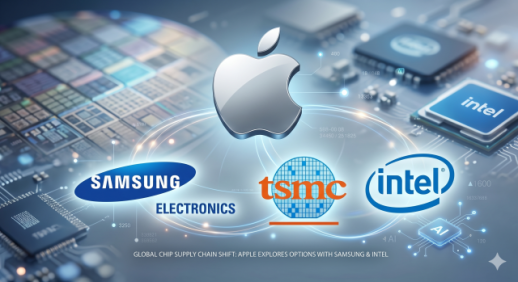 Apple weighs Samsung for chip supply as Samsung joins $1 trillion club SEOUL, May 06 (AJP) - Apple Inc. is reportedly exploring partnerships with Samsung Electronics and Intel to reduce its heavy reliance on Taiwan Semiconductor Manufacturing Co. (TSMC) for processor production, a shift that coincides with Samsung securing a new 4-nanometer artificial intelligence (AI) chip order from a U.S. firm. According to a recent report by Bloomberg, Apple is in early-stage discussions with Samsung and Intel to manufacture its core processors. The move is widely interpreted as an effort to restructure its critical component supply chain as the explosive growth of AI tightens global advanced chip capacity and geopolitical risks surrounding Taiwan persist. When asked about a new order, a Samsung Electronics spokesperson stated, "Nothing has been confirmed yet regarding this matter." Despite the lack of official confirmation, industry observers note that Apple has pressing reasons to seek alternatives. For over a decade, Apple has exclusively contracted TSMC to manufacture its custom-designed System-on-Chips (SoCs) for iPhones and Macs, utilizing TSMC's cutting-edge 3nm process for its latest devices. However, soaring demand for AI data centers and on-device AI has strained the supply of advanced nodes. Apple CEO Tim Cook recently acknowledged during an earnings call that the company's supply chain flexibility has diminished, highlighting chip shortages as a constraint on product growth. While the Apple partnership remains in the exploratory phase, Samsung's foundry division is actively capitalizing on the overflow demand in the AI sector. On Sunday, South Korean semiconductor design house ADTechnology (ADT) announced it had signed a turnkey contract worth approximately 40 billion won ($29.4 million) with a U.S.-based AI fabless company. Under the three-way collaboration model, the U.S. firm will lead the chip design, while ADT will manage development and production utilizing Samsung Foundry’s 4nm process. The project centers on high-performance computing (HPC) system-on-chip (SoC) chiplets for AI data centers. Although the contract size is relatively small, industry experts view it as a crucial testbed for Samsung to prove itself as a viable alternative to TSMC. With Samsung's 4nm production yields reportedly stabilizing near 80 percent, the company is targeting niche markets and fabless firms unable to secure production slots at TSMC. The global foundry market remains fiercely competitive as the AI boom drives an unprecedented need for manufacturing capacity. TSMC, which commands roughly 70 percent of the global market share compared to Samsung's 7 percent to 8 percent, is aggressively expanding its footprint. The Taiwanese giant recently resumed its Longtan Science Park expansion project for next-generation angstrom-level facilities and plans to increase its 2nm and 3nm wafer capacity by 20 percent by the end of the year. Meanwhile, Samsung Electronics indicated during its first-quarter earnings call that its advanced node facilities have reached maximum utilization. The tech giant noted it is in active discussions with multiple large AI and HPC clients regarding 2nm cooperation, signaling a continued push to close the gap with its Taiwanese rival. Shares of Samsung Electronics surged on Wednesday, closing at 267,000 won, up 14.84 percent, sending its market value to $1.075 trillion to make the company second Asian name after TSMC to be worth more than $1 trillion. On Wednesday's closing, Samsung Electronics ranks 11th in market cap. 2026-05-06 16:30:44
 -
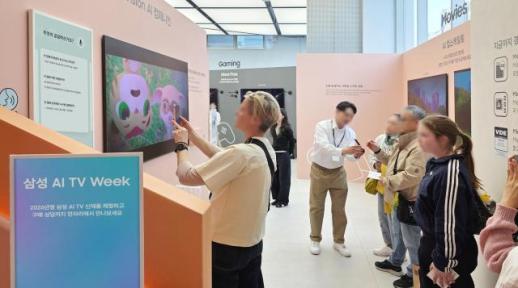 Samsung Elec changes TV chief as Chinese rivals ascend SEOUL, May 04 (AJP) - Samsung Electronics has replaced the head of its television business as South Korean TV brands' long-held dominance over global premium market is being threatened by Chinese rivals whose price appeal has been reinforced with open-source artificial intelligence features. Once-household TV names Samsung and LG Electronics are increasingly being squeezed on global shelves by Chinese competitors repowered with AI specs. According to 2025 data from Counterpoint Research, Chinese manufacturers TCL and Hisense captured a combined 25 percent share of the global TV market by shipment volume, overtaking the combined 24 percent held by Samsung and LG. Samsung accounted for 15 percent and LG 9 percent. The competitive shift became more visible in December 2025, when TCL briefly surpassed Samsung in monthly TV shipments to claim the global top spot. The rise of Chinese manufacturers has coincided with their rapid adoption of low-cost, high-efficiency AI models such as DeepSeek across consumer electronics. Companies including TCL and Haier are integrating open-source large language models into televisions and home appliances to provide advanced voice interaction and smart-home functions once viewed as strengths of Korean premium brands. Against that backdrop, Samsung Electronics on Monday announced a surprise leadership change in its visual display business, appointing President Lee Won-jin, head of the company’s Global Marketing Office and a former Google executive, to replace President Yong Seok-woo as division chief. The reshuffle is widely viewed as a strategic shift toward strengthening Samsung’s AI ecosystem and software capabilities rather than relying solely on hardware competitiveness. “With the integration of on-device AI in home appliances, data security and the ecosystem connecting these devices have become paramount,” said Chae Sang-mi, a professor of business administration at Ewha Womans University. “The appointment of a former Google executive suggests Samsung may be pivoting toward a premium, AI-centric ecosystem that leverages data and device networks to differentiate itself.” Industry observers say Samsung is increasingly attempting to counter Chinese manufacturers not only through premium hardware, but also through platform-based services such as its ad-supported streaming platform Samsung TV Plus and broader connected-device ecosystems. Samsung’s visual display and digital appliance businesses reportedly posted a combined annual operating loss of around 200 billion won ($145 million) last year, reflecting mounting pressure in the mass-market segment. Japanese daily Nikkei reported late last month that Samsung is considering withdrawing its TV and home appliance sales operations from China by the end of this year, although manufacturing operations would remain in place. Asked about the possibility during a public event in Seoul last month, former visual display head Yong acknowledged that the Chinese market remains “challenging” and said the company was “reviewing the business in various ways.” Samsung said Monday that it has “no official position yet” regarding the reported withdrawal. Chae said such a move would reflect broader structural changes in the global electronics market. “As Chinese brands upgrade from budget to premium strategies with AI capabilities, Samsung’s market share in standard segments has inevitably dropped,” she said. “From a business perspective, exiting low-margin areas to focus on high-value premium products is a necessary strategic move.” Despite losing ground in overall shipment volume, Samsung and LG continue to dominate the ultra-premium segment. According to market research firm Omdia, the two South Korean companies accounted for nearly 80 percent of global revenue in televisions priced above $2,500, with Samsung holding 49.6 percent and LG 30.2 percent. TCL and Hisense each accounted for roughly 1 percent in the premium category. Still, analysts say the broader competitive landscape is shifting quickly as AI lowers software barriers and accelerates the rise of Chinese consumer electronics brands beyond low-cost manufacturing. For Samsung, the challenge is no longer simply maintaining leadership in televisions, but defending its ecosystem advantage in an AI-driven consumer market increasingly shaped by Chinese competitors. 2026-05-04 17:36:39
 -
 Samsung Elec flags prolonged AI-driven memory crunch as orders stretch to 2027 SEOUL, April 30 (AJP) - Samsung Electronics said surging artificial intelligence demand is likely to keep memory markets exceptionally tight well into next year, with orders now extending as far as 2027, underscoring the depth of the current supply squeeze. The company, already swamped with orders stretching into next year, said the extraordinary tightness will persist and that production will remain unaffected even if labor action proceeds. “Our capacity far lags behind customer demand amid extremely tight inventory levels. Demand far exceeds our capacity, with coverage at a historic low,” Kim Jae-joon, executive vice president of memory strategy and marketing, said on a conference call Thursday after the company confirmed record quarterly results for the three months ended March. The imbalance has deepened to the point where Samsung is accepting orders for 2027, including long-term agreements (LTAs) with key clients to secure business visibility. Driven by aggressive expansion, Samsung expects its next-generation HBM4 chips to account for more than half of total high bandwidth memory (HBM) sales by the third quarter. The Device Solutions (DS) division posted record earnings, generating 53.7 trillion won ($39.2 billion) in operating profit on revenue of 81.7 trillion won, translating into an operating margin of 65.7 percent — still trailing domestic rival SK hynix’s 71.5 percent. Addressing market views that conventional DRAM is currently more profitable than HBM due to recent price spikes, Samsung said it would not prioritize short-term gains. “A balanced supply of both HBM and conventional DRAM is essential to sustain AI-driven demand,” the company said. “We will maintain a balanced product mix, taking into account mid- to long-term growth and long-term customer relationships.” In a move to enhance shareholder returns, Samsung said it will cancel remaining treasury shares equivalent to 1.2 percent of common stock and 1.7 percent of preferred shares, valued at about 14.6 trillion won ($10.6 billion) based on the board resolution date. Capital expenditure reached 11.2 trillion won in the first quarter, with 10.2 trillion won allocated to expanding semiconductor facilities. Labor tensions, however, remain a key overhang. Management said it is seeking to resolve disputes through dialogue and avert a planned 18-day strike from May 21, while pledging to keep production lines running even if a walkout occurs. Samsung confirmed consolidated operating profit of 57.23 trillion won on revenue of 133.87 trillion won. Beyond the semiconductor business, the Device eXperience (DX) division posted operating profit of 3 trillion won on sales of 52.7 trillion won. 2026-04-30 16:01:17