
Journalist

Lee Jung-woo
cannes2030@ajpress.com
-
 Analysis: Why Greenland became the Arctic's most dangerous geopolitical flashpoint SEOUL, January 23 (AJP) - As Arctic ice retreats, Greenland has emerged as one of the world's most consequential — and misunderstood — geopolitical battlegrounds. The world's largest island, sparsely populated yet strategically irreplaceable, now sits at the intersection of U.S. missile defense, Russian militarization, Chinese resource ambition and Europe's evolving security posture. U.S. President Donald Trump's renewed push to assert U.S. control over Greenland — abruptly dialed back this week after a tense standoff with European allies — did not create this competition. But it exposed how fragile the Arctic balance has become, and how little room remains for 19th-century power politics in a 21st-century alliance system. A strategic island the U.S. never stopped wanting Greenland's importance to Washington is not new. Since the 19th century, U.S. policymakers have viewed the island as a northern shield. After World War II, President Harry Truman offered Denmark $100 million in gold for sovereignty — an offer Copenhagen rejected but which set the template for decades of pragmatic compromise. Under a 1951 defense agreement, updated most recently in 2023, the U.S. has long operated military facilities on Greenland, most notably Pituffik Space Base, which hosts radar systems critical to detecting Russian intercontinental ballistic missiles crossing the Arctic. "The U.S. has long recognized Danish sovereignty over Greenland," said Charles Miller of the Australian National University. "But Denmark, as a founding NATO member, has consistently accepted U.S. military bases there, including nuclear-related capabilities." In purely military terms, Washington already has what it needs. Arctic ice melts — and geopolitics rushes in What has changed is the Arctic itself. As ice cover recedes, the region is no longer a frozen buffer but a navigable frontier. New shipping lanes promise to cut weeks off voyages between Asia, Europe and North America. Russia has responded by expanding Arctic bases and weapons systems, while China — declaring itself a "near-Arctic state" — has sought port access, research footholds and mineral stakes. "Greenland is enormously important strategically for the U.S. given the rapid expansion of Russian bases and armaments in the Arctic, and the deepening Sino-Russian relationship," said Kent Calder of Johns Hopkins University. "Trump's actions, however disruptive, were a wake-up call that will likely produce a stronger NATO response." Yet experts stress that none of this requires American sovereignty. "There is already a defense agreement that allows the U.S. to build and run whatever military bases it wants," said Ole Wæver of the University of Copenhagen. "From a security perspective, the key asset is already there: the radar at Pituffik." The resource myth — and the reality beneath it Beneath Greenland's ice lies another temptation: vast deposits of rare earth elements essential for electric vehicles, wind turbines, semiconductors and defense technologies. Sites such as Kvanefjeld are frequently cited as potential alternatives to China's near-monopoly over global supply. American and European policymakers see opportunity. Greenland’s leaders welcome investment. But the economic story is far less straightforward. Rare earth ores in Greenland are interwoven with uranium and thorium, creating serious environmental and health risks. In 2021, Greenland's electorate voted in a government that promptly banned uranium-linked mining, halting flagship projects. Infrastructure is minimal. Operating costs — the so-called "Arctic cost" — are punishing. "American firms can invest in mining," Wæver noted. "That is very welcome. But sovereignty is not the issue — environmental and social consent is." Even from Washington's perspective, access, not ownership, is the prize. "The U.S. could negotiate rights to critical minerals," said David Smith of the University of Sydney — without redrawing borders. Why Trump's approach alarmed allies Despite these realities, Trump revived his Greenland fixation after returning to office, pairing security rhetoric with tariff threats against Denmark and other European states. At one point, European officials openly discussed the risk — however remote — of U.S. coercion. "The risk of military intervention probably was real," Wæver said. "It was crazy, but it couldn't be ruled out." That prospect collapsed this week at Davos, where Trump announced a vague "framework for a future deal" after meeting NATO Secretary-General Mark Rutte, dropping tariff threats and insisting force would not be used. The episode ended not with conquest, but with deterrence. "There is no public support in the U.S. for such a move," Miller said. "The economic consequences could be catastrophic, and there is strong opposition within the U.S. military." Europe's response — dispatching troops, hardening rhetoric and signaling economic retaliation — mattered. "The Europeans won," Wæver said. "Not militarily, but economically and politically." The sovereignty line that cannot be crossed What Trump's gambit ultimately collided with was not just NATO resistance, but a post-colonial norm: territory is no longer bought, sold or seized without the consent of its people. Greenland, home to just 57,000 residents, has enjoyed home rule since 1979. Denmark cannot sell it — and Greenlanders would not accept it. "There's a reason territorial purchases hardly happen anymore," Smith said. "National self-determination is the norm. Even the Trump administration seems to recognize that Greenlanders must have a say." The likely outcome now is incrementalism: expanded U.S. basing rights, greater NATO presence, limited resource cooperation — possibly modeled on U.S. compacts with Pacific island states. Everything short of sovereignty. The Arctic lesson Greenland's moment reveals a broader truth about the Arctic. The region is not just a security theater or a resource vault. It is an ecosystem, a homeland and a diplomatic stress test. Hard power can seize land. It cannot legitimize it, insure it, or integrate it into global supply chains. As the ice melts, access will matter more than ownership — and trust more than threats. Trump's retreat underscores that reality. The Arctic may be warming rapidly. But the rules governing it have not melted nearly as fast. 2026-01-23 09:22:52
 -
 Seoul weighs weekly half-price movie tickets to lure audiences back to cinemas SEOUL, January 21 (AJP) - South Korea is considering offering half-priced movie tickets and free admission to royal palaces every Wednesday, instead of once a month, as part of a broader effort to revive cultural consumption — though doubts remain over whether the move can rescue a struggling cinema industry. The Ministry of Culture, Sports and Tourism said Tuesday it plans to expand “Culture Day,” currently held on the last Wednesday of each month, to every Wednesday. The timing of the change has not yet been finalized. Since its launch in 2014, Culture Day has allowed the public to visit national heritage sites such as Changgyeong Palace and Deoksu Palace for free and receive discounts at movie theaters and other cultural venues. Under the program, major cinema chains including CGV, Lotte Cinema and Megabox have offered 2D movie tickets priced at 7,000 won — less than half the average ticket price of about 15,000 won — for screenings between 5 p.m. and 9 p.m. While roughly one-third of moviegoers used the discount in 2014, participation surged to 85 percent by 2024, highlighting how deeply audiences have come to rely on price incentives. The proposed expansion comes as alarm grows over the state of South Korea’s film industry, which has been hit hard by the rapid shift toward streaming platforms. “The uncomfortable truth is that the film industry has practically collapsed,” said Kim Han-min, director of The Admiral: Roaring Currents, at a film forum hosted by the Korean Film Council and the National Assembly’s Culture Committee in January 2024. Director Kim Sung-soo echoed that assessment at the 2025 Mise-en-scène Short Film Festival. “If I had to describe it in one word: collapse,” he said. “Korean films simply aren’t being made.” “There used to be 50 to 60 commercial features shooting at any given time,” said one production executive. “Now it feels like barely half that.” Industry observers say the decline in theater attendance reflects deeper structural problems in Korean filmmaking. “When films like Avatar or Zootopia 2 succeed, it’s not a crisis of theaters — it’s a crisis of Korean cinema,” said one film distributor. Domestic audiences have continued to reward strong local titles, including The Roundup series, 12.12: The Day (2023) and Exhuma (2024), during the post-pandemic recovery period. Yet not a single Korean film surpassed 10 million viewers last year, an unprecedented result except for 2021, when theaters were largely shuttered by social distancing rules. Globally, the film market has recovered to roughly 80 percent of pre-pandemic levels, but Korea’s remains “stuck at the bottom,” industry insiders say. The Culture Day expansion has drawn support from lawmakers, though many describe it as only a temporary remedy. Rep. Lee Ki-heon of the ruling Democratic Party said the proposal demonstrates “a strong and proactive will by the government to revive an industry on the verge of collapse by lowering barriers to cultural consumption.” He added that consistent pricing incentives could help “rebuild the habit of moviegoing.” However, Lee cautioned that discounts alone cannot address deeper issues. “The crisis in the film industry stems not only from financial burdens, but also from a shortage of compelling content,” he said. Progressive Party lawmaker Son Sol called the measure “necessary and timely” to expand cultural access, but stressed that participation by private businesses — which operate nearly all theaters — is essential. “Public enthusiasm is high, but the system relies on voluntary participation,” she said. “The government must actively engage theater chains and production companies to sustain it.” Son also warned of a “vicious cycle” in which falling attendance has reduced Film Development Fund revenues, weakening support for emerging directors and film workers. “Korea’s global cinematic standing is at risk,” she said. Rep. Jung Yeon-wook of the opposition People Power Party supported the intent of the policy but criticized its rollout as rushed. “Without financial support, it could place undue burdens on private theaters,” he said. “Without proper consultation, it risks becoming a well-meaning but hollow gesture.” As the government collects public feedback on the proposed decree through Feb. 28, questions remain over whether cheaper tickets can truly reignite a film ecosystem facing structural decline. 2026-01-21 15:58:18
 -
 Park Chan-wook's "No Other Choice" emerges as Korea's biggest U.S. box-office hit SEOUL, January 20 (AJP) - Park Chan-wook’s No Other Choice has become the highest-grossing Korean film ever released in the United States, surpassing the box-office record set by Bong Joon-ho’s Parasite and reinforcing the commercial viability of Korean noir among American audiences. After more than three decades of shaping South Korean cinema for global viewers, Park is registering his first major North American box-office breakthrough. No Other Choice, a dark comedy centered on a laid-off paper factory manager who systematically eliminates his rivals, is not only the director’s most successful release in South Korea but is now posting record results in the U.S. market. The achievement marks a new commercial milestone for the filmmaker best known for Oldboy and The Handmaiden. Distributed by Neon — which also handled Parasite — the film expanded nationwide to 695 U.S. theaters on January 16 following a limited Christmas release in five major cities. According to Box Office Mojo, it earned an estimated $888,000 on its first day of wide release, placing it in the national top ten. It is the first Korean film to do so since Parasite six years ago. In South Korea, No Other Choice has already surpassed all of Park’s previous works, grossing $4.2 million and exceeding Oldboy’s lifetime domestic total. Strong word of mouth among urban audiences and select IMAX screenings suggest the film may represent Park’s first sustained crossover with mainstream viewers. “Every A-list filmmaker I know talks about Director Park as someone who inspired them,” said Neon CEO Tom Quinn. “Oldboy changed my entire career. I’ve been waiting twenty years to work with him again.” “A Parasite for the AI Era” Despite its dark humor and satirical edge, Park has emphasized that the film’s core concern is the erosion of identity in an age of automation and economic displacement. “Everything in this film has to do with the loss of confidence of a man who has been fired,” Park told the Financial Times following the premiere. “This is a person who has maintained his self-worth only as someone who has a job. When such a person loses his profession, it leads to a complete loss of confidence. He feels like he is no longer a man.” The film stars Lee Byung-hun as a middle-aged manager whose position at a Busan paper factory is eliminated by its U.S. owners. In an effort to reclaim dignity and purpose, he redirects his managerial discipline toward murder. “The intensity of Man-su’s confidence, both as a father and a husband, is proportional to the number of successful murders he commits,” Park said. “That progression as a man goes hand in hand with the growth of his talent as a murderer.” Park describes this moral inversion with what he calls “mathematician’s precision,” though the film itself is marked by restraint rather than excess. He has characterized No Other Choice as “brutally, comically straightforward,” a departure from the complex narrative structures of his earlier work. The film is adapted from Donald E. Westlake’s 1997 novel The Ax, a project Park had considered for nearly two decades. Initially developed as a U.S.-based production — at one point for Netflix — the film was relocated to Korea following the success of Decision to Leave. “Because I began writing the script as an American film, much of the preparation focused on that version,” Park said. “But the story proved universal. Whenever I shared it abroad, people responded the same way: ‘This is our story.’” Global Resonance and Industry Reflection Premiering at the Venice Film Festival to a nine-minute standing ovation and later winning the International People’s Choice Award in Toronto, No Other Choice has come to symbolize a tentative revival for Korean cinema amid prolonged domestic uncertainty. “Due to the pandemic, audiences forgot about movie theatres,” Park said. “Korean culture peaked with Parasite and Squid Game, and immediately afterward we saw a steep decline in our industry.” Now shortlisted for the 2026 Academy Award for Best International Feature, the film’s trajectory from Venice to Hollywood challenges prevailing pessimism about Korea’s box-office slump. Actor Park Hee-soon captured the mood bluntly at a press conference, remarking, “Now it seems like if you only do film work, you’ll starve to death.” Park views the film’s success with measured unease. Its final image — a factory operating entirely without workers — points toward a future shaped by automation. He describes it as “a possible artificial intelligence filmmaker directing AI-generated actors.” “At the moment, it’s still abstract,” he said. “But I do believe it will become a danger for filmmakers as well. And I’m quite certain it’s approaching at remarkable speed.” 2026-01-20 16:56:52
 -
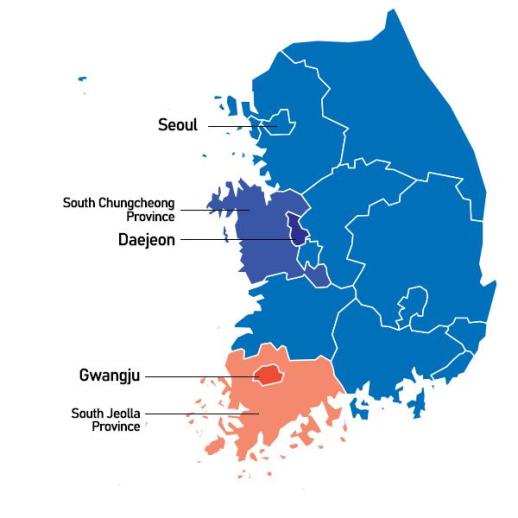 Busan-sized metropolitan hubs envisioned in central and southern western Korea SEOUL, January 20 (AJP) - As Seoul grows ever more crowded, much of the rest of South Korea is quietly emptying out. The imbalance has become one of the country’s defining challenges, straining housing, jobs and infrastructure in the capital while leaving regional cities with shrinking populations, weaker local economies and eroding public services. More than 51 percent of South Korea’s 51.6 million people live in and around Seoul, an area that covers just 12 percent of national land. The concentration is extreme by international standards. Only 7.5 percent of Germany’s population lives around Berlin, 15.9 percent around Rome and 17.4 percent around Madrid. Even in countries known for dominant capitals, the share is far lower: 24.5 percent around Paris, 24.8 percent around London and 34.4 percent around Tokyo. In Korea, this imbalance has reinforced itself as young people leave regional cities for education and work in Seoul, accelerating decline elsewhere. What once fueled growth has now become a structural constraint. South Korea is entering a period of rapid population decline and aging faster than any other major economy. In that context, concentrating people and opportunity in one metropolitan area is no longer efficient. Seoul faces chronic shortages of housing and jobs, while large parts of the country are losing the scale needed to sustain industries, public services and local investment. Policymakers warn that without structural change, the capital will continue to swell even as regional Korea hollows out. Rather than trying to push people out of Seoul, the government is pursuing a different strategy: building regional cities large enough to function as real alternatives. The Lee Jae Myung administration is promoting administrative integration, merging neighboring cities and provinces to create larger metropolitan governments with greater fiscal capacity and policy authority. Prime Minister Kim Min-seok has framed the initiative as a matter of national survival, saying “balanced regional development is not regional favoritism but a survival strategy for a sustainable future.” He added that the government would make the shift from capital-centered growth to region-led growth one of its top policy priorities. The approach is beginning to take shape. In December 2025, Daejeon Metropolitan City and South Chungcheong Province declared their intent to integrate administratively. In January, Gwangju and South Jeolla Province followed, aiming to elect unified leadership in the June local elections. If completed, the new metropolitan governments would have populations of 3.6 million and 3.2 million, respectively — comparable to Busan and Incheon, the country’s second- and third-largest cities. To support the transition, the central government has pledged up to 5 trillion won per year for each integrated region, with total support reaching 20 trillion won over four years. Kim said the government would move quickly to institutionalize support, announcing plans to form a joint task force with relevant ministries to finalize financial and administrative measures and work closely with the National Assembly. A dedicated support committee under the Prime Minister’s Office will also be established to ensure continuity beyond the initial merger phase, officials said. The logic behind the policy is scale. Smaller and shrinking local governments struggle to attract businesses, retain young workers or invest in infrastructure. Larger metropolitan units, officials argue, can pool budgets, coordinate development and create labor markets deep enough to compete with Seoul. The aim is to slow youth migration to the capital, ease pressure on its housing and transport systems, and concentrate remaining growth in a limited number of viable regional hubs as the population shrinks. Experts broadly support the direction but caution that process will determine outcomes. Professor Park Jin-sol of Inha University warned that administrative integration must not be rushed. “If integration proceeds in haste, it may be driven by the central government without sufficient collection of residents’ opinions,” she said, adding that it is more important to ensure resident participation and deliberation than to focus on speed. Past experience underscores the risk. The Cheongju–Cheongwon merger followed more than two decades of consultation and a local referendum and later showed gains in administrative efficiency. By contrast, the Changwon–Masan–Jinhae merger, completed without a referendum, has faced persistent disputes over governance and local marginalization. The difference, Park noted, lay not in policy design but in legitimacy. Lawmakers from both ruling and opposition parties have voiced support for integration while echoing the need for public consent. Democratic Party lawmaker Chae Hyun-il said integration is necessary to strengthen regional competitiveness but stressed that it must “lead to future-oriented development and real improvements in quality of life.” People Power Party lawmaker Koh Dong-jin also backed the policy, emphasizing that “legitimacy must be secured through the collection of residents’ opinions.” At the same time, criticism has emerged over the scale of government funding. Another ruling party lawmaker, Lee Chul-gyu, questioned whether heavy financial incentives risk distorting priorities. “National finances are limited,” he said, arguing that integration should focus on efficiency rather than what he called a “money-driven approach.” Despite debate over funding levels and timing, there is broad agreement across party lines that Seoul’s dominance has become a national constraint rather than a source of strength. As the capital grows ever more crowded and regional Korea continues to hollow out, administrative integration represents a high-stakes attempt to rebalance a shrinking country. 2026-01-20 11:31:08
 -
 Korean legislature passes bipartisan resolution condemning deadly crackdown in Iran SEOUL, January 19 (AJP) - South Korea’s National Assembly has joined an international chorus condemning Iran’s deadly crackdown on anti-government protests, amid widely varying estimates of civilian casualties. A rare bipartisan resolution denouncing the Iranian government’s “indiscriminate and harsh suppression” and calling for “responsible action by the international community” to protect civilian lives was passed Friday. The motion, introduced by Rep. Lee Un-ju, a Supreme Council member of the ruling Democratic Party of Korea, was signed by 77 lawmakers from both sides of the aisle. “As a country that directly experienced the horrific consequences of state violence through events such as the May 18 Democratic Movement, the Republic of Korea cannot turn a blind eye to the current situation in Iran,” Lee said in a statement. She added, “I hope this resolution will serve as a small spark of hope for the people of Iran, who are suffering under economic hardship and the suppression of freedom and democracy.” Rep. Kim Sang-wook, another Democratic Party lawmaker who supported the resolution, stressed the need for international solidarity. “It is time for the international community to stand together,” Kim said, adding that “the universally recognized values across the world are the right to life and the right to self-determination.” Kim argued that Iran’s government “is violating both of these rights” and said the international community must work collectively to protect Iranian civilians. Casualty figures remain disputed. The Sunday Times reported on Saturday, citing accounts from local doctors, that between 16,500 and 18,000 people have been killed and more than 330,000 injured. Other estimates cited by rights groups range from several thousand to significantly higher figures, though independent verification remains difficult. Iranian President Masoud Pezeshkian said Monday that “an attack on our nation’s Supreme Leader is equivalent to a full-scale war against the Iranian state.” He also blamed “longstanding hostility and inhumane sanctions imposed by the U.S. government and its allies” for the country’s economic hardship. U.S. President Donald Trump said in an interview with Politico on Saturday that it was time to find “new leadership” for Iran — remarks widely interpreted as referring to Supreme Leader Ayatollah Ali Khamenei, who has ruled for 37 years. According to the Associated Press, Khamenei said in a speech broadcast by state television on Saturday that “forces linked to Israel and the United States hurt people, killing thousands,” while denying that Iranian authorities were responsible for a violent crackdown. The remarks marked the first time Khamenei directly addressed casualty figures linked to the anti-government protests, which have continued since Dec. 28, 2025. 2026-01-19 12:15:38
 -
 U.S. TSMC deal signals more deal-making for Seoul and pledges from chipmakers SEOUL, January 16 (AJP) - In the tariff deal Seoul and Washington signed last October, South Korea was promised it would not be treated less favorably than Taiwan. But Taiwan’s newly secured tariff exemptions tied to expanded U.S. investment are now forcing Seoul and Korean chipmakers back to the negotiating table with fresh offers. Taiwan’s tariff outcome has been closely watched in Seoul, given the scale of its semiconductor trade with the United States. In last year’s negotiations, South Korea secured a “most-favored treatment” clause, ensuring that any future U.S. semiconductor tariff arrangements with third countries would not place Korea at a disadvantage. That assurance is now being tested. While South Korea and Japan previously agreed to cut reciprocal tariffs from 25 percent to 15 percent in exchange for pledges of $350 billion and $550 billion in U.S.-bound investment, respectively, Taiwan has tied tariff relief more directly to semiconductor capital expenditure. President Donald Trump on Wednesday issued a proclamation imposing additional tariffs of up to 25 percent on certain high-performance artificial intelligence (AI) semiconductors on national security grounds, putting major chip-producing countries, including South Korea, on alert. According to the White House, the measure targets advanced AI chips used across 16 critical infrastructure sectors—such as data centers, defense, communications and energy—but does not apply uniformly. Instead, it is limited to products exceeding specific thresholds for logic operation performance and memory bandwidth, a structure widely interpreted as a “pinpoint tariff” aimed at top-tier accelerators such as Nvidia’s H200 and AMD’s MI325X. The proclamation also carves out broad exemptions for chips used within the United States, including those destined for domestic data centers, research and development, startups, consumer and industrial applications, and the public sector. Analysts say the design effectively shields most U.S.-bound supply while functioning as a de facto export tariff, particularly on shipments to China. Seoul moved swiftly. On Thursday, the government convened emergency meetings with Samsung Electronics and SK hynix, both key suppliers of high-bandwidth memory (HBM) to Nvidia and AMD. Trade Minister Yeo Han-koo extended his stay in Washington to assess the situation, while the Ministry of Trade, Industry and Energy held an emergency task force meeting chaired by Minister Kim Jung-kwan. “We must closely examine our response efforts, continue monitoring the situation, and communicate closely with the industry to thoroughly analyze the potential impacts,” Kim said. The pressure intensified hours later when Washington finalized a trade agreement with Taiwan. Under the deal, mutual tariff rates were lowered from 20 percent to 15 percent. In return, Taiwan pledged up to $500 billion in U.S.-focused support—$250 billion in direct investment by firms such as TSMC and another $250 billion in government-backed credit guarantees. The agreement also grants Taiwanese chipmakers significant tariff exemptions tied to U.S. production. During construction of semiconductor plants, output volumes up to 2.5 times installed capacity will be tariff-free, while after completion, tariff-free treatment continues for volumes equivalent to 1.5 times capacity. South Korea’s earlier agreement with Washington explicitly promised “treatment no less favorable than Taiwan” for its semiconductor sector. Political reactions in Seoul ranged from unease to concern. Song Jae-bong, a lawmaker from the Democratic Party who sits on the National Assembly’s trade committee, said, “We are still trying to grasp the full situation, as the head of the trade negotiation bureau has not yet returned from the U.S.” Kang Seung-kyu of the People Power Party warned that the timing was troubling. “With a $20 billion cash investment in the U.S. already on the table and exchange rate volatility creating turmoil, it’s worrying that the White House has issued another proclamation like this,” he said. Independent lawmaker Kim Jong-min said the intent behind Washington’s move was clear. “The purpose of this proclamation seems to be to push firms to build more factories in the U.S.,” he said, adding that “honoring the promise that Korea will not be treated less favorably than Taiwan is critical.” Experts say the tariffs reflect Washington’s broader industrial strategy. Cho Dong-jun, professor of political science at Seoul National University, said, “The answer is obvious: it means ‘produce in the United States.’” He added that while the policy aims to rebuild U.S. manufacturing, “even if semiconductor factories are built in America, there will be no one to work in them,” warning of inefficiencies driven by domestic politics. Cho Sung-hoon, an economics professor at Yonsei University, said the proclamation serves dual purposes: “populist political motivation and an attempt to increase tariff revenue by exploiting America’s dominant position.” Others emphasized the strategic nature of semiconductors. Heo Jung, professor of economics at Sogang University, said chips are classified in the U.S. as a national security industry and are central to the AI race. “Trump likely targeted them as part of U.S. efforts to control China’s access to advanced technology,” he said. For now, the direct impact on Korean firms may be limited. KIEP researcher Kim Hyuk-jung noted that the proclamation’s annex focuses on logic semiconductors rather than memory. “Korea primarily exports memory modules to the U.S., while Taiwan exports far more logic-based products,” he said. Still, analysts warn the longer-term implications are clear. As Trump expands product-based tariffs and links exemptions to concrete investment pledges, Korea’s export-driven semiconductor industry is likely to face mounting pressure to commit more capital to U.S. production—testing both the limits of alliance politics and the durability of last year’s “most-favored” promise. 2026-01-16 17:56:30
 -
 South Korean defense ETFs surge as geopolitical tensions mount SEOUL, January 15 (AJP) -Growing geopolitical risks from Ukraine to Venezuela and Iran have lifted South Korean defense-related exchange-traded funds (ETFs) to the top of the country’s stock market rankings this year, outpacing even the red-hot semiconductor sector. According to ETFCheck data as of Tuesday, leveraged defense ETFs dominated the performance leaderboard. The PLUS K-Defense Leverage and KODEX K-Defense TOP10 Leverage surged 61.2 percent and 60.9 percent, respectively, far exceeding gains in shipbuilding and semiconductor ETFs. Even the non-leveraged TIGER K-Defense & Space and SOL K-Defense rose around 30 percent, filling most of the top ten spots by return. Korean defense firms are also attracting overseas capital. The PLUS Korea Defense Industry Index ETF (KDEF), listed on the New York Stock Exchange last year in partnership with U.S. asset manager Exchange Traded Concepts, has risen 21.9 percent so far in 2026 — easily outpacing the S&P 500’s 1.4 percent increase. Similarly, the WisdomTree Asia Defense Fund (WDAF) and Global X Defense Tech (SHLD), both heavily weighted toward South Korean companies, are up between 15 percent and 16 percent. The resurgence of defense-themed funds comes as geopolitical risks intensify. U.S. President Donald Trump’s surprise military operation in Venezuela earlier this month — which reportedly resulted in the capture of President Nicolás Maduro — and subsequent comments about acquiring Greenland have added to global instability. Meanwhile, ongoing unrest in Iran and a surge in European rearmament have contributed to investor anxiety. Hanwha Asset Management, one of the biggest beneficiaries of the defense rally, said its Hanwha K-Defense, Shipbuilding & Nuclear Power Fund ranked first among domestic equity funds with a 21.5 percent gain this year, while its PLUS K-Defense Leverage topped all equity ETFs at 61.8 percent. “Defense companies are entering a stage of structural growth, driven not by war but by the global demand for self-sufficient national defense,” said Choi Young-jin, vice president of Hanwha Asset Management. “However, investors should be mindful of the volatility that comes with leveraged products.” The bullish sentiment has also spilled into the broader stock market. On Tuesday, Hanwha Systems jumped 14.2 percent, closing at 88,700 won ($60.3), while Hyundai Rotem, Hanwha Aerospace, and Korea Aerospace Industries each rose between 2 percent and 6 percent. The Korean government has pledged to further strengthen the nation’s defense industry. Defense Minister Ahn Gyu-back said on Tuesday that “Korea’s goal of becoming one of the world’s top four defense exporters requires full-scale diplomatic and institutional support,” emphasizing that robust security capabilities remain the foundation of the industry’s growth. 2026-01-15 17:32:28
 -
 South Korea on alert over safety of about 70 nationals as Iran protests turn deadly SEOUL, January 15 (AJP) - As Iran's ongoing internal protests have reportedly killed thousands, with fears of possible U.S. intervention heightening global concerns, the South Korean government has remained on alert, convening an emergency meeting earlier this week to assess the safety of its citizens there. Chaired by Vice Foreign Minister Kim Jin-a, the meeting was held on Tuesday via Zoom with embassy officials in Tehran to set up contingency plans for South Korean nationals residing there. Stressing the importance of ensuring the safety of South Koreans, Kim urged, "We should thoroughly prepare for possible evacuation and other contingencies if the situation worsens." According to South Korean Ambassador to Tehran Kim Jun-pyo, around 70 South Koreans are in Iran, excluding embassy staff and other officials. He said the embassy has been "closely monitoring developments and taking necessary steps to protect them," adding that it has been checking on their safety daily by phone, while advising them to stay indoors, particularly at night, as protests turn violent." As of Tuesday, there have been no reports of casualties or damage affecting South Koreans. The government maintains its current alert level, the second-highest on its four-tier scale, urging all travelers to avoid Iran. However, the highest alert, which would ban travel entirely, has not yet been issued. But other countries have taken more drastic measures amid escalating unrest in Iran and fears of a possible U.S. strike. The U.K. has temporarily closed its embassy in Tehran, while France has withdrawn non-essential diplomatic staff. Italy and Spain have urged all their citizens to leave Iran immediately. These developments come as Iranian authorities continue a harsh crackdown on anti-government protests, with death toll estimates varying widely. Norway-based non-profit organization Iran Human Rights said at least 3,428 protesters have been killed as of Wednesday, while U.S. media estimated the death toll could be as high as 12,000 to 20,000. Meanwhile, U.S. President Donald Trump took to social media to call on Tehran to halt the killings, saying he had canceled all meetings with Iranian officials "until the killing stops," and added, "Help is on its way," though he did not specify what form that help would take. Iranian Foreign Minister Abbas Araghchi told Fox News that there were "no plans for executions" and that the situation was now "under control." Airspace over Iran has been closed to most flights and several European carriers including Germany's Lufthansa and its affiliated flights said they would avoid Iranian and Iraqi airspace "until further notice." Foreign ministers of G7 countries said they are prepared to impose additional sanctions on Tehran over its violent response to protests and arbitrary detentions. Officials in Seoul have been closely monitoring further developments including not only Iran's domestic unrest but also whether Washington intervenes, a move that could alter the security landscape across the already volatile Middle East. 2026-01-15 15:32:08
 -
 Philosophy and AI mix in Korea? Too early to tell SEOUL, January 14 (AJP) - Peter Thiel and Alex Karp, co-founders of Palantir — one of the world’s most prominent artificial intelligence data analytics companies, now valued at more than $426 billion — share an unusual academic background for Silicon Valley: both studied law and philosophy as undergraduates. Karp went further. He earned a Ph.D. in classical social theory under renowned German philosopher Jürgen Habermas at Goethe University in Frankfurt, grounding his thinking in traditions that probe the nature of reason, power and social systems. The renewed attention to philosophy in tech circles reflects a broader question facing the AI era. Philosophy, long focused on the human mind and modes of reasoning once thought exclusive to humans, is increasingly invoked as AI systems grow capable of mimicking — and sometimes surpassing — human cognitive tasks. As AI spreads rapidly from classrooms to workplaces, concerns over ethics, values and human agency have moved to the foreground. That shift is visible inside AI companies themselves. Amanda Askell, who holds a Ph.D. in philosophy from New York University, works as an in-house philosopher at Anthropic. Appearing recently on CBS’s 60 Minutes, she answered host Anderson Cooper’s question — “What is somebody with a PhD in philosophy doing working at a tech company?” — by saying, “I spend a lot of time trying to teach the models to be good, and trying to teach them ethics, and to have good character.” Philosophy’s surprise resurgence in Korea Against this backdrop, philosophy — long regarded as an impractical or declining field — has seen a surge in popularity at some South Korean universities, where AI adoption is among the fastest in the world. At Seoul National University, the early-admission competition rate for the philosophy department rose from 9.92-to-1 in the 2020 academic year to 15.56-to-1 in 2026. Over the same period, linguistics climbed from 6.9-to-1 to 9-to-1, aesthetics from 7.2-to-1 to 12.56-to-1, and religious studies from 6.7-to-1 to 15.33-to-1. At Korea University, regular-admission competition for philosophy increased from 3.73-to-1 in 2020 to 5.27-to-1 in 2026, while linguistics rose from 4.57-to-1 to 6.5-to-1. At Kyungpook National University in Daegu, the philosophy department recorded a 15.6-to-1 competition rate for regular admissions in 2026 — the highest among all departments. Some analysts attribute the trend partly to tech companies showing greater openness to hiring graduates from disciplines such as philosophy and linguistics, valuing skills related to reasoning, language and abstraction. Baek Do-hyung, a philosophy professor at Soongsil University, said the AI era is reshaping how students view career risk. “Unlike when the internet or smartphones first emerged, students aspiring to become IT developers may now worry about job security,” Baek said. “Education increasingly requires the ability to think beyond memorizing established knowledge, which makes philosophical training more relevant.” He added that the AI transition “could become an opportunity to reverse the neoliberal trend that has marginalized foundational disciplines like philosophy within universities.” Moon Sung-hoon, a philosophy professor at Seoul Women’s University, framed the issue more fundamentally. “With the universal adoption of artificial intelligence, we are entering a society where machines use machines — something unprecedented,” Moon said. “This inevitably raises basic questions: What does it mean to be human? What are the signs of humanity? How should people live, and how should society be organized if AI replaces human activity?” Skepticism remains Still, not everyone agrees that philosophy’s rising admissions numbers reflect a genuine AI-driven revival. Some scholars argue the connection is overstated, noting that philosophy has long been a popular major among students preparing for law school, where logical reasoning and analytical writing are heavily tested. Kim Joon-sung, a professor in the Department of Youth Education and Leadership at Myongji University, called recent media coverage “somewhat exaggerated.” “In reality, philosophy departments have been closing at many universities for a long time,” Kim said. Kim, who taught in Myongji University’s philosophy department until 2024, now works in another department after the university stopped recruiting new philosophy majors in 2025. “Even though the department had high enrollment and solid employment outcomes, it was still abolished,” he said. Other universities have followed similar paths. Wonkwang University closed its philosophy department in 2022. Kyungnam University halted new admissions in 2014 and shut the department entirely after its final students graduated in 2021. Daejin University merged philosophy with history in 2016, while Hannam University replaced its philosophy department with a philosophy counseling program in 2014. Kim argued that the recent surge in applicants at elite institutions such as Seoul National and Korea University “appears to be driven more by law school preparation than by a structural link between philosophy and artificial intelligence.” For now, philosophy’s renewed visibility in the AI era may reflect aspiration as much as reality — a sign of changing anxieties about technology, rather than a clear transformation in how universities or labor markets value the discipline. 2026-01-14 17:46:56
 -
 Drivers left to rely on vigilance as Korea grapples with seasonal black ice hazard SEOUL, January 14 (AJP) - Black ice accompanies icy snow winter in South Korea and is blamed for road accidents and deaths, but the government has run out of ideas as fundamental prevention would require entire hefty replacement roadwork. Seven people were killed and nine others injured Saturday morning in a string of traffic accidents across highways and national roads in North Gyeongsang Province, with police citing black ice as the main cause. The accidents unfolded within a narrow early-morning window, when light precipitation met subzero temperatures — the precise conditions that make black ice most dangerous. Vehicles appeared to lose traction on road surfaces that looked dry, triggering chain collisions and truck rollovers at multiple locations. While investigations are continuing, the incidents have once again exposed the limits of South Korea’s winter road safety measures. Black ice, a thin and nearly invisible layer of ice, forms when moisture freezes on pavement after rain or snow. Because it blends into the road surface, drivers often recognize the danger only after braking or steering fails. The risk is neither new nor rare. According to the Ministry of the Interior and Safety, icy roads caused 4,112 traffic accidents nationwide between 2020 and 2024, killing 83 people and injuring 6,664 others. Nearly 80 percent occurred in December and January. Data from the Korea Road Traffic Authority show that accidents on icy roads are significantly more lethal than on dry pavement. The fatality rate is about 1.5 times higher overall, and more than four times higher on bridges and overpasses — structures that freeze faster due to air circulation above and below. Despite repeated incidents, officials acknowledge that prevention options are limited. De-icing agents such as calcium chloride remain the primary response, but their effectiveness depends on timing, traffic volume and sudden temperature drops. The Ministry of Land, Infrastructure and Transport said it is reviewing whether de-icing materials were sufficiently applied on the highway sections where Saturday’s accidents occurred. Local governments have focused on targeted measures rather than broad fixes. The Seoul Metropolitan Government said it sends early-morning alert messages during freezing conditions and plans to expand road heating systems and brine-spraying devices at high-risk spots such as tunnel entrances and bridges. Structural constraints, however, remain the biggest hurdle. Rep. Son Myung-soo of the Democratic Party, a member of the National Assembly’s Land, Infrastructure and Transport Committee and a former vice minister, said most Korean highways are paved with stone mastic asphalt (SMA), which is durable but drains water poorly. “In Europe and Japan, many highways use porous asphalt that allows water to drain more effectively,” Son said. “Replacing pavement in black ice-prone sections would reduce risks, but it would require large-scale and costly reconstruction.” With infrastructure fixes limited, experts say driver behavior becomes the last line of defense. Professor Choi Jae-won of the Korea Road Traffic Authority said braking distances on icy roads can increase up to sevenfold compared with dry surfaces, based on experimental data. “Black ice accidents occur most frequently at dawn,” Choi said. “Drivers should slow down well in advance, especially near bridges, tunnel entrances and shaded sections.” As winters grow more volatile, officials say managing black ice will continue to rely on a mix of localized engineering, faster alerts and heightened driver awareness — rather than a single, comprehensive solution. 2026-01-14 11:24:16