

Journalist

Jungwoo Lee
cannes2030@ajunews.com
-
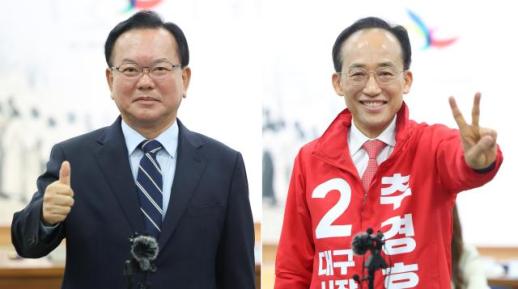 AJP Election Watch: Heavyweight match in Daegu, Kim Boo-kyum vs Choo Kyung-ho SEOUL, May 20 (AJP) -Daegu, a traditional conservative stronghold, remains one of the rare constituencies on South Korea’s electoral map still firmly painted red — the color of the main opposition People Power Party (PPP). In the 2022 presidential election, former President Yoon Suk Yeol captured 75.14 percent of the vote in the southeastern city. A decade earlier, former conservative President Park Geun-hye had also dominated the region. The city did not abandon conservatives even after Yoon’s impeachment following his December 2024 martial law debacle. In last year’s snap presidential election, PPP candidate Kim Moon-soo defeated President Lee Jae Myung by 67.6 percent to 23.2 percent in Daegu. Whether Lee’s approval rating hovering around 60 percent, combined with a divided conservative front, can crack that decades-old political tradition in the June 3 local elections is now one of the country’s most closely watched political questions. The matchup itself is heavyweight politics. Representing the ruling Democratic Party (DP) is former Prime Minister Kim Boo-kyum, a four-term lawmaker under the administration of former liberal President Moon Jae-in. Facing him is PPP Rep. Choo Kyung-ho, a three-term lawmaker who last served as deputy prime minister for economy and finance minister under Yoon. Daegu has never elected a liberal mayor since local elections were institutionalized in 1995. Kim nevertheless has entered the race emboldened by his breakthrough victory in Daegu’s Suseong A district in 2016, when he became the only Democratic Party lawmaker elected from the city. This time, his chances may not be as slim. A Metavoice-Research Lab survey commissioned by JTBC and conducted May 5–6 showed Choo at 41 percent and Kim at 40 percent — a one-point gap within the margin of error. Daegu has effectively become a political testbed for both parties. For the DP, a victory would mark a historic breach into the conservatives’ last fortress. For conservatives, holding the city would reinforce a regional base crucial for any future political revival. At the center of the race is the economy. According to latest government data on Korea’s regional GDP, Daegu posted a 3.9 percent contraction — the steepest decline among all metropolitan cities and provinces nationwide in the first quarter of 2025. Both candidates are framing themselves as crisis managers with the bureaucratic credentials to revive the city’s stagnant economy. Kim is pitching a vision to transform Daegu into “the Pangyo of the South,” referencing the technology hub often dubbed Korea’s Silicon Valley. “To revive Daegu’s economy, we have to change the industrial structure itself,” Kim told AJP in written interview. He argued that Daegu should combine its traditional industrial base — machinery, metals, auto parts and textiles — with artificial intelligence technologies to modernize “design, manufacturing processes, quality control and logistics.” Kim’s blueprint centers on linking Suseong Alpha City, Technopolis, DGIST, local universities, research institutes and private companies into a unified regional innovation ecosystem. “We will create a structure in which young people can learn, find jobs and grow in Daegu,” Kim said. He also pledged to establish an “Asian global youth startup and culture convergence special zone” along with a 100 billion won ($66.3 million) youth startup fund aimed at helping young entrepreneurs commercialize ideas and expand globally. Choo is also pitching economic restructuring — but from the perspective of a veteran economic technocrat. “The biggest reason Daegu’s economy is struggling is that it has not sufficiently responded to changes in the industrial structure,” Choo told AJP separately in his election office in Daegu. “Daegu once led Korea’s industrialization with textiles and manufacturing, but it failed to secure enough growth engines as the industrial paradigm shifted toward AI, semiconductors and digital industries.” Choo proposes fostering five future industries — AI, robotics, future mobility, bio and semiconductors — while simultaneously upgrading traditional sectors such as machinery and textiles. He is also emphasizing service industries favored by younger workers, including medical services, culture, tourism, gaming and digital content. A defining feature of Choo’s campaign is his focus on execution. Rather than offering “mere slogans,” he says he is proposing “actual implementation structures,” including emergency economic task force meetings, a supplementary livelihood budget, a foreign investment attraction team, an AI transformation committee, a startup growth fund and “Daegu-style” university-industry contract departments. The political logic behind Kim’s campaign is straightforward: leverage the power of the ruling party. The next four-year mayoral term will overlap almost entirely with the remaining four years of Lee’s presidency and the DP-controlled National Assembly. “At this time, the success or failure of key issues such as the TK new airport depends on who can better draw support and cooperation from the central government and the ruling party, which holds a majority in the National Assembly,” Kim said. “My strength is the political power and execution ability to turn Daegu’s demands into reality.” Kim also directly challenged Choo’s claim to economic expertise. He pointed out that Daegu’s national budget allocations increased by 10.94 percent in 2021 and 15.47 percent in 2022 during his premiership, while increases slowed sharply to just 0.59 percent in 2023 and 0.94 percent in 2024 when Choo served as finance minister. “‘Finance minister’ is a title, not performance itself,” Kim said. “What Daegu needs now is not a mayor who talks, but a mayor who produces results.” Choo rejects the notion that a PPP mayor would be disadvantaged under a Democratic administration. “The Daegu mayor is an administrator responsible for citizens’ lives,” Choo said. “I have no intention of becoming a mayor who clashes with the central government just because our parties are different.” He argued that his 35 years as an economic bureaucrat, along with his experience as deputy prime minister and finance minister, provide practical leverage. “I know very well how budgets are made,” Choo said. “I have networks across all areas of government ministries. I can communicate directly with working-level officials who design policies and managers who make decisions.” On youth policy, both candidates agree the city’s core problem is not simply population decline, but the lack of quality jobs and competitive wages. Kim said many young residents have told him: “Starting salaries in Daegu’s IT industry are about 70 percent of those in Pangyo,” and “I don’t want to leave my family, but I have no choice.” “This problem cannot be solved with short-term support alone,” Kim said. “Through industrial transformation, major company attraction and future industry development, we will create a structure in which good jobs and better wages are possible within the region.” He is also proposing a “Youth Dandi Chaeum” savings program that would help young workers accumulate up to 30 million won in assets over five years. Choo’s youth strategy focuses on attracting young people back through industrial growth, startup support and stronger university-industry ties. He has proposed “youth reshoring,” Daegu-style contract departments and a 1 trillion won startup fund to cultivate unicorn companies. “We will make Daegu a city where young people return,” Choo said, arguing that future industries and high-value service sectors can reverse the city’s demographic decline. The next mayor will also inherit several major regional development projects, most notably the relocation of Daegu’s military airport and construction of the new TK airport. The project is viewed not merely as an aviation issue, but as a broader test of Daegu’s ability to integrate economically with North Gyeongsang Province, expand logistics networks and attract new industries. Kim frames the airport initiative as an issue requiring political leverage at the national level. Choo frames it as an administrative and fiscal challenge demanding deep experience within the central government bureaucracy. “Cooperation is not achieved through vague requests or begging,” Choo said. “I have learned over decades how work actually gets done.” He added that projects such as the TK new airport and Daegu–North Gyeongsang administrative integration “must be pursued beyond party lines.” Kim, meanwhile, insists Daegu needs a mayor capable of extracting concrete support from the current national power structure. “The new mayor will work on the same timetable as the remaining four years of the president’s term,” Kim said. “Who can better bring in support from the central government and the ruling party will decide the fate of key pending issues.” For decades, Daegu mayoral elections were viewed as predictable contests in conservative territory. This year, however, the race has evolved into a direct showdown between two nationally recognized political heavyweights who agree Daegu must reinvent itself, but disagree sharply on who is best equipped to deliver that transformation. Kim is asking voters to break with Daegu’s political history and use the ruling party’s national power to bring investment, budgets and jobs into the city. Choo is asking voters to trust a veteran conservative economic bureaucrat who says he can rebuild Daegu’s economy “from day one.” “This election is ultimately about who can revive Daegu’s economy,” Choo said. “Choo Kyung-ho will become a professional economic mayor who works skillfully from the first day.” Kim’s closing message is equally blunt. “Daegu now needs a mayor who can produce results, not just words,” he said. 2026-05-20 15:52:57
 -
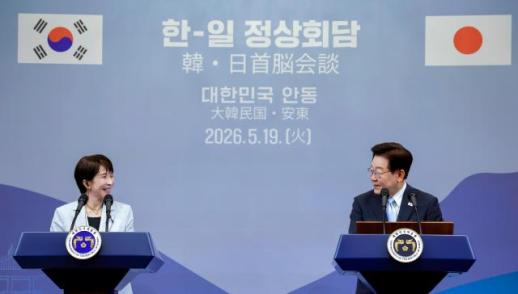 Lee, Takaichi agree to deepen energy, supply chain cooperation SEOUL, May 19 (AJP) - South Korean President Lee Jae Myung and Japanese Prime Minister Sanae Takaichi agreed on Tuesday to expand cooperation on energy security and supply chains amid the prolonged conflict in the Middle East. After a summit at Lee's hometown of Andong, a historic city in southern South Korea, the two leaders shared the view that Seoul and Tokyo need to work more closely together as global supply chains and energy markets face growing uncertainty. "We agreed to further expand cooperation on supply chains," Lee said at a joint press conference following the summit. Lee said Takaichi also proposed cooperation with other Asian countries facing supply disruptions. Japan has announced plans to push for "Power Asia," a program designed to provide about US$10 billion in financial support to Southeast Asian countries and others struggling to secure crude oil and petroleum products. Lee said South Korea and Japan also agreed to strengthen cooperation in liquefied natural gas and crude oil, calling them key energy sources for both countries. "We agreed to further strengthen cooperation in LNG and crude oil," Lee said. "We also agreed to deepen information sharing and communication channels regarding crude oil supply, demand and reserves." Both sides did not clearly say in their joint press remarks whether they would lend each other surplus crude oil in the event of a supply shortage. Tuesday's summit came as Seoul and Tokyo have been trying to maintain momentum in improving relations through the so-called shuttle diplomacy between the neighboring countries. Calling it his fourth summit with Takaichi since she took office in October, Lee said, "This truly shows the essence of shuttle diplomacy between South Korea and Japan." The meeting was especially symbolic, coming just months after Lee visited Takaichi’s hometown of Nara in January. "After visiting your hometown of Nara in January and receiving such warm hospitality, I am deeply honored and pleased to welcome you today here in Andong, where I was born and raised," Lee told Takaichi at the start of the talks. Lee said the two countries have continued to expand cooperation in recent months, citing a bilateral supply chain partnership signed in March and a memorandum of cooperation between the two countries' police agencies aimed at strengthening joint responses to scam crimes. "Our relations are moving forward toward the future without a day's pause," Lee said. He also pointed to working-level talks on DNA testing related to victims of the Chosei coal mine and a consultative body on shared social issues as examples of new areas of cooperation. Lee said the worsening international environment has made cooperation among friendly countries more urgent. "The international situation is now in the midst of a storm," Lee said. "Cooperation and communication among friendly countries are needed more than ever." He said South Korea and Japan had both joined international efforts related to the Strait of Hormuz including initiatives led by France and the U.K., to help ensure maritime safety and freedom of navigation. He also said the two countries helped each other secure seats on flights for citizens stranded in the Middle East. On regional security, Lee said he and Takaichi reaffirmed the importance of South Korea-U.S. cooperation and trilateral cooperation among South Korea, the U.S. and Japan. Lee also said he emphasized the need for South Korea, Japan and China to respect one another, cooperate and seek common interests to promote regional peace and stability. On North Korea, Lee said he explained his government's goal of building "a peaceful Korean Peninsula where there is no need to fight," allowing the two Koreas to coexist peacefully and grow together. The wording contrasted with Lee's remarks after his January summit with Takaichi in Nara, when he said the two sides reaffirmed their commitment to the complete denuclearization of the Korean Peninsula and lasting peace. Lee's statement Tuesday did not include the phrase "denuclearization of the Korean Peninsula." Takaichi thanked Lee and South Korea for the welcome and said she was pleased to continue shuttle diplomacy in Andong. "I am very pleased that we are able to practice shuttle diplomacy here in Andong, President Lee's hometown," Takaichi said. She said the international community is facing "an extremely difficult time" including the situation in the Middle East, and called for South Korea and Japan to play a greater role in regional stability. "Through the leadership of President Lee and myself, it is very important to steadily develop the positive momentum in Japan-South Korea relations," Takaichi said. "It is also important for our two countries to play a central role in stabilizing the Indo-Pacific region." Takaichi said she hoped to have a candid exchange of views "for the interests of both sides and for peace and stability in the region and the international community." South Korean officials attending the talks included Foreign Minister Cho Hyun, national security adviser Wi Sung-lac, policy chief Kim Yong-beom and presidential chief of staff Kang Hoon-sik. The Japanese side included Chief Cabinet Secretary Masanao Ozaki, National Security Secretariat Secretary General Keiichi Ichikawa and Japanese Ambassador to South Korea Koichi Mizushima. 2026-05-19 18:00:58
 -
 Korea, Japan leaders to talk serious at Andong summit amid Gulf risks SEOUL, May 19 (AJP) - South Korean President Lee Jae Myung and Japanese Prime Minister Sanae Takaichi are expected to move quickly beyond ceremonial diplomacy when they meet Tuesday in Andong, focusing instead on a growing list of shared strategic anxieties ranging from Middle East energy disruptions to regional security and AI-driven industrial competition. The summit, held in Lee’s hometown in North Gyeongsang Province, marks the leaders’ third bilateral meeting in just seven months — an unusually rapid pace for Seoul-Tokyo diplomacy given the historical baggage that has long complicated ties between the two U.S. allies. Takaichi departed Tokyo’s Haneda Airport earlier Tuesday for the two-day visit, which is expected to center heavily on energy security as instability in the Middle East threatens oil shipping lanes and adds fresh pressure to Asian economies heavily dependent on imported crude. At the top of the agenda is a proposed “industrial and trade policy dialogue,” which Japanese media reported the two governments are expected to formally launch after the summit. The framework would aim to coordinate responses to disruptions in crude oil and refined petroleum supplies, including possible emergency lending of fuel such as jet oil during shortages. The two countries are also expected to discuss joint crude procurement, transport coordination and ways to avoid export restrictions during supply crises — a sign that Seoul and Tokyo increasingly view energy security as a shared strategic vulnerability rather than a purely commercial issue. The urgency has intensified as the prolonged Middle East conflict threatens one of Northeast Asia’s most critical economic chokepoints. Both South Korea and Japan remain overwhelmingly dependent on imported energy transported through the Strait of Hormuz. The leaders are also expected to expand discussions into broader economic security issues tied to artificial intelligence, semiconductors and supply chains, areas both governments have increasingly framed as part of national security policy. Lee and Takaichi first met on the sidelines of the APEC summit in Gyeongju in October last year shortly after Takaichi took office as Japan’s first female prime minister. They met again in January in Nara, Takaichi’s political hometown, where discussions focused on AI, economic resilience, defense and transnational crime. Tuesday’s talks are expected to build on that momentum, with Southeast Asia emerging as another key area of cooperation. Seoul is reportedly considering participation in Japan’s Asia Zero Emission Community (AZEC) initiative, while both countries may discuss joint financial and technical support for Southeast Asian states seeking to strengthen petroleum stockpiling and procurement systems. Defense cooperation is also expected to re-emerge as a major theme. Lee and Takaichi are likely to agree on resuming humanitarian search-and-rescue exercises between the South Korean Navy and Japan’s Maritime Self-Defense Force next month. The drills, known as SAREX, were conducted regularly between 1999 and 2017 before being suspended following a diplomatic dispute in 2018 involving a Japanese patrol aircraft and a South Korean naval vessel. If the exercises resume, they would mark the first bilateral naval drills between the two countries in nearly a decade and underscore the broader thaw in practical security cooperation as North Korea accelerates its weapons programs and China expands its regional military influence. The two leaders are also expected to exchange views on the recent U.S.-China summit after U.S. President Donald Trump reportedly briefed both governments following his May 14-15 talks with Chinese President Xi Jinping. The Andong meeting also carries symbolic weight. Takaichi hosted Lee in Nara earlier this year, and Lee is now returning the gesture in his own hometown — a deliberate effort to normalize leader-level exchanges after years of diplomatic volatility. Despite unresolved historical disputes rooted in Japan’s 1910-45 colonial rule of the Korean Peninsula, both governments have increasingly prioritized pragmatic cooperation as geopolitical and economic risks intensify across the region. 2026-05-19 13:14:36
 -
 Andong flavors to headline Lee-Takaichi summit dinner SEOUL, May 18 (AJP) - Traditional cuisine and symbolic Korean-Japanese pairings will take center stage Tuesday when South Korean President Lee Jae Myung hosts Japanese Prime Minister Takaichi Sanae for a summit dinner in Andong, the country's iconic southeastern city of loyalty and tradition. According to the presidential Blue House on Sunday, the dinner will feature fusion Korean dishes inspired by “Suunjapbang,” a treasured ancient cookbook from an Andong head family. The menu will include Andong-style braised chicken, known as Andong Jjimdak, as well as “Jeongyea,” a chicken dish regarded as the origin of Andong Jjimdak. Japanese travel information site Konest describes Andong Jjimdak as “gaining recognition in Japan,” while Japanese restaurant review platform Tabelog lists around 40 restaurants nationwide that appear in searches for “chimutaku,” the Japanese rendering of Jjimdak. Jeongyea, which appears in Suunjapbang, is made by pan-frying chicken in sesame oil and braising it with soy sauce, Korean rice wine (Cheongju), and honey. It was traditionally served to welcome honored guests. Other dishes include grilled Hanwoo (Korean beef) ribs, rice, and Sinseollo, a royal-style hot pot. Andong is famous for its vast fields, which produce the country's top-class rice, as well as its Hanwoo. For the dinner drinks, traditional liquors Taesaju and Andong Soju will be served alongside Japanese Sake from Nara Prefecture, Takaichi’s hometown, in a gesture symbolizing friendship and harmony between the two countries. Dessert will combine Jeonyak, a traditional Korean seasonal dessert, and Mochi, a type of chewy Japanese rice cake, on a single plate. The summit, scheduled for Tuesday, will mark the sixth summit of the Lee administration and the second round of shuttle diplomacy between Lee and Takaichi this year. It comes about four months after the two leaders met in Nara Prefecture in January. Takaichi is expected to arrive at Daegu International Airport on Tuesday afternoon before traveling to a hotel in Andong. Lee plans to greet the Japanese prime minister in person at the hotel entrance. A traditional honor guard of 43 members and a 29-member military band will escort Takaichi’s vehicle, while 12 flag bearers will be stationed on both sides of the hotel entrance to stage a formal welcome ceremony. After the summit, the two leaders are scheduled to issue a joint press statement, followed by the dinner and other events aimed at strengthening personal ties. Following the dinner, Lee and Takaichi are scheduled to watch the Hahoe Seonyu Julbul Nori, a traditional fireworks event in Hahoe Village. The performance combines “Julbul,” in which bags containing burning embers are hung on handwoven ropes and lit so sparks fall toward the river, with “Seonyu,” a boat ride traditionally enjoyed by aristocrats. At Takaichi’s accommodation, welcome gifts will be prepared, including Wolyeong Yakgwa, a traditional sweet and chewy snack, as well as Taesaju. 2026-05-18 17:48:28
 -
 France honors South Korean director Park Chan-wook with top cultural order SEOUL, May 18 (AJP) - France has awarded South Korean film director Park Chan-wook the Commandeur in the Order of Arts and Letters, the highest rank of its cultural merit. French Culture Minister Catherine Pégard presented the medal Sunday in Cannes. The ceremony took place during the 79th Cannes Film Festival, where the 62-year-old is currently serving as the first South Korean filmmaker to preside over the festival jury. Established in 1957 by the French Ministry of Culture, the order recognizes significant contributions to the arts and literature. The Commandeur grade is the highest of its three ranks, positioned above the Officier and Chevalier grades. Park has previously won three major awards at Cannes. He received the Grand Prix in 2004 for "Oldboy," the Jury Prize in 2009 for "Thirst," and the directing prize in 2022 for "Decision to Leave." He is the fourth South Korean to receive the Commandeur rank. Previous recipients include former Korean Culture and Arts Foundation president Kim Jung-ok in 2002, conductor Chung Myung-whun in 2011, and soprano Jo Su-mi in May of last year. The French government has decorated several other South Korean film industry figures with lower grades of the order. Directors Bong Joon-ho and Kim Jee-woon received the Officier grade in 2016 and 2018, respectively. Late actress Yoon Jeong-hee received the Officier honor in 2011, while her husband, pianist Paik Kun-woo, received the Chevalier in 2001, making them the first South Korean couple decorated by the order. Actress Jeon Do-yeon, who won best actress at Cannes in 2007, was awarded the Chevalier rank in 2009. 2026-05-18 15:36:19
 -
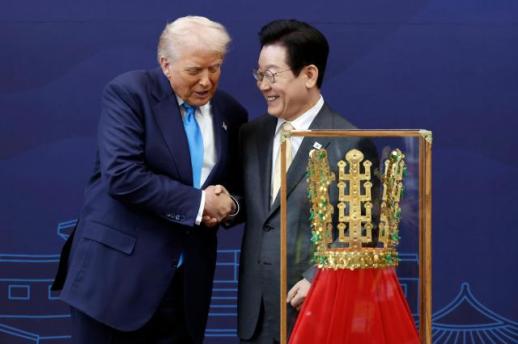 Lee scores high on US ties in first-year diplomacy review SEOUL, May 15 (AJP) - South Korean President Lee Jae Myung may appear domestically focused — his cabinet meetings are live-streamed and his social-media presence is constant — but his first year was defined by foreign affairs. He traveled to 15 countries and held 45 summit meetings, according to his vice foreign minister, a pace that far outstrips his recent predecessors: both Moon Jae-in and Yoon Suk Yeol visited nine countries in their respective first years. Much of that effort went toward restoring national dignity after Yoon Suk Yeol's brief martial-law declaration and subsequent impeachment, said Second Vice Foreign Minister Kim Jina at a Sejong Institute forum Thursday. "Over the past year, we have managed crises and expanded opportunities amid an unstable international environment," Kim said. The sixth Sejong Special Policy Forum, held Thursday afternoon at the institute's conference room, brought together specialists on the United States, Japan, China and North Korea to assess the first year of President Lee's diplomacy and security policy ahead of the administration's first anniversary next month. Panelists broadly agreed that Lee's "pragmatic diplomacy" had stabilized South Korea's external relations after a turbulent period, but warned that Seoul must now move from crisis management to a more durable strategy. Lee Chan-song, a research fellow at the Sejong Institute, gave the administration a favorable evaluation on relations with Washington, citing progress on the transfer of wartime operational control (OPCON) as one of the clearest achievements in alliance management. Crisis management also held up surprisingly well under Donald Trump's second presidency, which unleashed a barrage of tariffs on allies and adversaries alike on Liberation Day in April 2025. During his campaign, Lee had pledged a diplomacy "grounded in national interests," describing the alliance with Washington as the foundation of his foreign policy and calling for trilateral cooperation with the United States and Japan. Lee Seung-joo, a professor of political science and international relations at Chung-Ang University, described Lee's first year as dominated by tariff negotiations and argued that Seoul had developed what could be called a "Korean model" of tariff bargaining. The Trump administration's strategy of pressing multiple trading partners simultaneously created a dynamic in which early deals became benchmarks for later negotiations. Seoul, which entered talks later than some competitors due to a domestic leadership vacuum, had to move quickly while managing uncertainty, he pointed out. South Korea also leveraged its role as host of the Asia-Pacific Economic Cooperation summit in Gyeongju, where Lee chaired the leaders' meeting and presided over a session on artificial intelligence and demographic change. The two sides reached a trade deal in late July that lowered U.S. duties on Korean goods from 25 percent to 15 percent in exchange for a US$350 billion investment package and US$100 billion in U.S. energy purchases, centered on shipbuilding, semiconductors, batteries and other strategic industries. Still, Lee Chan-song warned that alliance modernization is beginning to expose differences. He urged the government to choose its language carefully in Washington, saying terms such as "strategic coordination" or "strategic alignment" would be preferable to "strategic autonomy." He also called on Seoul to prepare for the post-Trump era. His remarks came after Gen. Xavier Brunson, commander of U.S. Forces Korea, told a U.S. House Armed Services Committee hearing that Seoul and Washington aim to meet the conditions for OPCON transfer no later than the first quarter of 2029. South Korea handed wartime operational control to the U.S.-led U.N. Command during the 1950–53 Korean War, retook peacetime OPCON in 1994 and has since pursued a conditions-based transfer of wartime command. Japan Lee Ki-tae, a research fellow at the Sejong Institute, said the administration had chosen a careful but effective path — managing historical disputes without allowing them to block cooperation on security, supply chains and advanced technologies. "The Lee Jae Myung government is doing well in South Korea-Japan relations," Lee Ki-tae said, though he cautioned that "the current South Korea-Japan relationship is closer to a conditional expansion of cooperation than to full reconciliation." He described the relationship as a "managed" phase: Seoul remains mindful of domestic sentiment on history-related issues, while Tokyo has adopted a practical approach that emphasizes trust-building over quick symbolic breakthroughs. A January summit between Lee and Japanese Prime Minister Sanae Takaichi in Nara was a key milestone. Takaichi, just three months in office, performed "Golden" and "Dynamite" at the gathering. A few months later, she is due to visit Lee's hometown of Andong — also an ancient city, coincidentally — next week, continuing the shuttle diplomacy. Both summits face shared challenges, including energy security risks from Strait of Hormuz tensions and U.S. pressure to join operations against an Iranian blockade of the corridor, alongside shared opportunities in AI. Lee Ki-tae said the future of South Korea-Japan ties will depend less on dramatic gestures and more on policy continuity and crisis management. He identified intelligence sharing, supply chain resilience, technology security, disaster relief and nontraditional security as areas where both sides can produce results without excessive political risk. He also warned that the two countries do not fully share the same priorities on North Korea. Seoul's preferred approach combines exchanges, normalization and denuclearization, while Japan places stronger emphasis on denuclearization and the abduction issue. Any restart of diplomacy involving Pyongyang, he said, would require close advance coordination between Seoul and Tokyo. China Kang Jun-young, a professor at Hankuk University of Foreign Studies, said Beijing had expected a liberal South Korean government to tilt toward China after years of stronger Seoul-Washington alignment under the previous conservative administration. That it has not, he argued, should itself be read as a mark of success. "If Beijing thinks the Lee Jae Myung government did not come as close to China as it expected, that means the Lee government did well," Kang said. Lee's first summit with Chinese President Xi Jinping, on the sidelines of the APEC summit in Gyeongju in November, set a constructive tone as the two leaders agreed on the need to cooperate for peace on the Korean Peninsula. Xi's visit was his first to South Korea in 11 years. The two met again in Beijing in January, with denuclearization, economic ties and cultural exchanges on the agenda. Lee later said the summits helped put bilateral relations "back on track." Kang stressed that the economic relationship between South Korea and China is shifting from complementarity to competition. China's technological advancement and growing self-sufficiency are eroding the foundation of South Korea's exports, while Seoul remains heavily dependent on Beijing for key minerals, processed raw materials and advanced materials. He called for a model of economic-security cooperation that balances engagement with risk reduction. Kang also flagged growing Chinese naval activity in the Yellow Sea as a serious security concern given its proximity to South Korea's capital region, calling for clearer red lines on high-risk security issues and more active cooperation in lower-risk areas such as culture, tourism, climate, local government exchanges and academic cooperation. North Korea Little progress has been made on the North Korean front. Park Won Gon, a professor of North Korean studies at Ewha Womans University, said North Korea's shift is not merely rhetorical but constitutional, military and nuclear in nature. "The Lee Jae Myung government's North Korea policy must go beyond the short-term goal of resuming dialogue and expand into a long-term national strategy responding to North Korea's structural strategic shift," Park said. In the first half of 2026, North Korea institutionalized its hostile state-to-state relationship with the South. A revised constitution added a territorial clause and dropped all references to unification, reinforcing Pyongyang's break from the idea of inter-Korean relations as a temporary division within one nation. In March, state media reported that Kim Jong-un formally designated South Korea the "most hostile state" and reaffirmed the North's nuclear status. Park said the implications are profound. By redefining the South as an enemy state rather than a partner in national reconciliation, Pyongyang is constructing political and ideological justification for the potential use of nuclear weapons. The North's doctrine now combines conventional military modernization, nuclear force development and a legal framework that has discarded the old language of peaceful unification. Seoul's response, Park argued, should begin with a strategic redefinition of inter-Korean relations. South Korea may continue to uphold unification as a constitutional and national goal, but daily policy management must treat North Korea as a de facto hostile state for the purposes of crisis prevention and deterrence. That would require stronger extended deterrence with the United States, improved operational capability in South Korea's three-axis defense system and new mechanisms to prevent accidental clashes. With past inter-Korean military agreements effectively rendered void, Park said Seoul should explore indirect communication channels through the U.N. Command or third-party intermediaries — not as political concessions, but as minimum safety devices against escalation. The Lee government has nonetheless kept the door to dialogue open. National Security Adviser Wi Sung-lac has described Lee's "END" initiative — exchange, normalization and denuclearization — as a mutually reinforcing structure in which progress in one area helps advance the others, with the overarching goal of ending confrontation and hostility on the Korean Peninsula through an integrated approach. 2026-05-15 16:49:18
 -
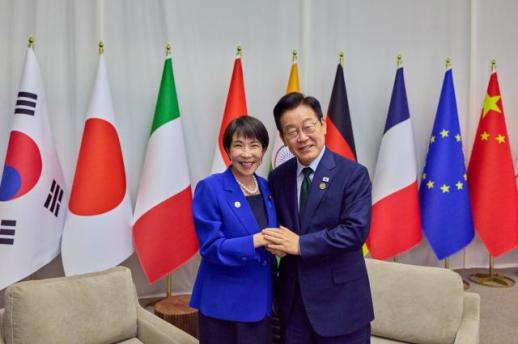 Japanese Prime Minister Takaichi to visit President Lee's hometown of Andong SEOUL, May 15 (AJP) - Japanese Prime Minister Sanae Takaichi will visit Andong, North Gyeongsang Province, the hometown of President Lee Jae Myung, for a summit with the South Korean leader on May 19, the presidential office said Friday. Presidential spokesperson Kang Yu-jung said Takaichi will make a two-day visit to Andong from May 19 to 20 to meet Lee. The two leaders are scheduled to hold both a small-group summit and an expanded summit, followed by a joint press announcement, a dinner and other informal events aimed at strengthening personal ties. The visit is seen as a reciprocal gesture after Lee traveled to Nara Prefecture, Takaichi’s hometown, in January. That meeting marked the first summit between the two leaders earlier this year. Lee was born in Andong in 1964. He graduated from elementary school there in 1976 before moving to Seongnam, Gyeonggi Province. The upcoming summit will bring the two leaders together about four months after Lee’s January visit to Nara. Nara is where Takaichi was born and raised, and it is also her current constituency in Japan’s House of Representatives. Takaichi first won a seat there as an independent candidate in the 1993 general election and has since been elected 10 times. Holding a summit in a leader’s political or personal hometown, rather than in the capital, is not without precedent in international diplomacy. Ten years ago, in 2016, then-Japanese Prime Minister Shinzo Abe hosted Russian President Vladimir Putin for a summit in Nagato, Yamaguchi Prefecture, Abe’s electoral district. Chinese President Xi Jinping also invited Indian Prime Minister Narendra Modi to Xi’an, his political base, instead of Beijing in 2015. In his memoir published in 2023, Abe wrote that inviting a counterpart to one’s home rather than to a restaurant can make the other side feel that they have “won your heart.” He said this was why he invited Putin to Nagato, his family’s registered domicile and the place where his father’s grave is located. U.S. President Donald Trump was also known for holding meetings with foreign leaders, including Abe, Xi and Israeli Prime Minister Benjamin Netanyahu, at his Mar-a-Lago resort in Florida instead of the White House. The Andong meeting will be the third summit between Lee and Takaichi, following their first encounter at the APEC summit in Gyeongju last October and Lee’s visit to Nara in January. 2026-05-15 16:30:38
 -
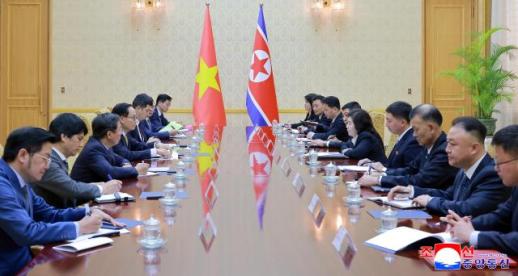 N. Korea, Viet Nam agree to deepen exchanges, strategic communication at foreign ministers' talks SEOUL, May 14 (AJP) - North Korea and Vietnam have agreed to deepen bilateral exchanges and cooperation across various fields during talks between their foreign ministers in Pyongyang, the North's state media reported Thursday. According to the Korean Central News Agency (KCNA), the country's Foreign Minister Choe Son-hui held talks Wednesday at the Mansudae Assembly Hall with Vietnamese Foreign Minister Lê Hoài Trung, who visited Pyongyang as a special envoy of Tô Lâm, general secretary of the Communist Party of Vietnam and the country's president. During the meeting, Choe recalled the summit held in Pyongyang in October last year and reaffirmed Pyongyang's commitment to "developing the traditional -Vietnam friendship and cooperative relations in line with the aspirations and wishes of the peoples of the two countries," KCNA said. Trung responded that Vietnam has consistently attached importance to strengthening friendly and cooperative ties with North Korea and has paid "deep attention" to advancing bilateral relations. The two sides agreed to further expand exchanges and cooperation in multiple sectors and strengthen strategic communication and mutual support between their foreign policy institutions, the report said. They also exchanged views on regional and international issues. Kim Song-nam, director of the international department of the ruling Workers' Party of Korea, also met with Trung the same day to discuss ways to strengthen party-to-party ties. Kim said the Workers' Party would further enhance exchanges and cooperation with the Communist Party of Vietnam, while Trung reaffirmed Hanoi's "steadfast position" to elevate the firmly established Vietnam-North Korea friendship. The two sides discussed strengthening political ties between the two ruling parties and reached a consensus on issues of mutual concern, KCNA said. North Korea's foreign ministry hosted a reception banquet for the Vietnamese delegation later in the evening. The visit by the Vietnamese envoy comes as bilateral relations have gained momentum since Lâm visited Pyongyang in October last year and held talks with North Korean leader Kim Jong-un, marking the first visit to the North by a Vietnamese top leader in 18 years. The trip also comes after South Korean President Lee Jae Myung paid a state visit to Vietnam from April 21-24, raising attention over the possibility that Viet Nam could play a mediating role between the two Koreas. Lâm visited South Korea in August last year as the first state guest of the Lee administration, while Lee became the first foreign leader to make a state visit to Viet Nam following his inauguration in June last year. 2026-05-14 11:32:51
 -
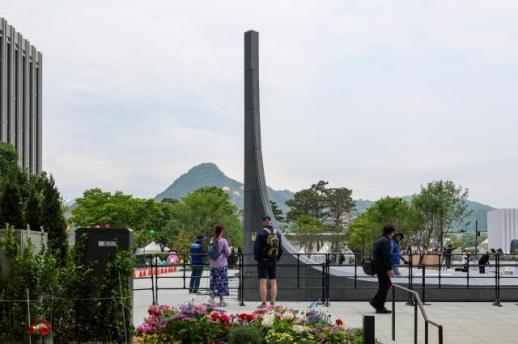 'Garden of Gratitude' memorial sparks political sparring ahead of Seoul elections SEOUL, May 14 (AJP) - Gwanghwamun Square, which gained international attention after hosting a Netflix-streamed BTS concert in March, has now added a new multinational landmark to its symbolic landscape. The Seoul Metropolitan Government on Tuesday officially opened the “Garden of Gratitude” at Gwanghwamun Square, a memorial space dedicated to the 22 United Nations member states that fought alongside South Korea during the 1950-53 Korean War, unveiling a politically charged landmark that has already sparked debate over symbolism, history and the use of public space. What city officials had hoped would become a signature international memorial tied to Seoul Mayor Oh Se-hoon’s reelection campaign ahead of next month’s local elections has instead evolved into another political flashpoint, with ruling party lawmakers accusing the conservative mayor of distorting the historical identity of Gwanghwamun Square amid lingering political tensions following former President Yoon Suk Yeol’s impeachment. Located west of the King Sejong statue in central Seoul, the memorial consists of 23 stone pillars — representing South Korea and the 22 nations that participated in the U.N. Command during the war — arranged from north to south in the order each country arrived on the Korean Peninsula. The United States, the first nation to deploy troops, stands at the southernmost end. Each pillar rises 6.25 meters high, symbolizing June 25, the date the Korean War began in 1950. National flags are attached to the structures, while lighting installations atop the pillars illuminate the night sky after dark. The memorial complex also includes an underground exhibition space called “Freedom Hall,” featuring multimedia displays on the Korean War, the sacrifices of foreign veterans and South Korea’s postwar transformation. Around 170 people attended Tuesday’s completion ceremony, including ambassadors from participating nations, Korean War veterans and veterans’ organization officials. Acting Seoul Mayor Kim Sung-bo presided over the event alongside representatives from the allied countries. The project has been one of Oh’s signature initiatives since 2024, when he first proposed installing a national symbolic structure at Gwanghwamun Square. Oh initially sought to erect a 100-meter national flagpole, but the proposal faced heavy public criticism and was later revised through citizen consultations and design competitions into the current memorial garden. Several pillars were produced using stones donated by participating nations including the Netherlands, Greece, Belgium and Germany. Seoul officials said additional donated stones from countries such as Australia and Türkiye will be incorporated later this year. QR codes attached to each pillar provide visitors with information about each country’s wartime contribution. Beginning at 8 p.m. each evening, beams of light projected from the top of the structures illuminate the sky for 10 minutes every half hour until 11 p.m. Inside Freedom Hall, visitors can explore AI-restored wartime photographs, interactive exhibits and a live video connection to Times Square. Yet despite the city’s emphasis on remembrance and international solidarity, the project has become entangled in political controversy, particularly over the design and symbolism of the above-ground pillars. Critics argue the structures resemble rifles used during military honor guard ceremonies, making them incompatible with Gwanghwamun Square’s long-standing identity as a site associated with democratic protests and civic movements. Oh strongly rejected the criticism. “It is not a sculpture symbolizing guns,” he told AJP. “It represents an honor guard ceremony commemorating the memory and sacrifice of 22 countries that voluntarily came to defend South Korea and liberal democracy at a time when the country’s per capita income was below $100,” he said. The mayor also denied accusations that the opening timing was politically motivated ahead of the June 3 local elections. “The completion schedule had already been set months ago,” Oh said, explaining that construction had briefly paused after additional government review requests before ultimately being completed on May 12. Oh expressed confidence the site would evolve into both a memorial space and a tourist destination for visitors from allied nations. “Many citizens will visit this place and remember the Korean War,” Oh said. “Tourists from the United States, Australia, Britain, Germany and other participating countries will also come to the Garden of Gratitude.” Rep. Koh Dong-jin of the People Power Party also dismissed accusations that the opening was politically motivated. “It does not make sense to conclude this was an election-driven move when an incumbent mayor would have little reason to deliberately invite unnecessary controversy just before an election,” Koh said. “This has become a largely unproductive political dispute,” he added. Opposition politicians, however, voiced far harsher criticism. Rep. Kim Won-i of the ruling Democratic Party of Korea (DPK), who previously served as Seoul’s vice mayor for political affairs, argued the installation fundamentally misunderstands the historical identity of Gwanghwamun Square. “This is something that should never have been done,” Kim said. “The current Seoul Metropolitan Council building served as the National Assembly during the April 19 Revolution, and this entire area is historically associated with democracy and civic resistance.” “Gwanghwamun Square symbolizes freedom, democracy and peace,” he continued. Rep. Park Joo-min of the DPK also attacked the project, calling it an example of what he described as Mayor Oh’s disregard for public opinion. “Despite public opposition, he pushed the project forward. There is already a similar monument with a comparable purpose at the War Memorial of Korea in Yongsan.” 2026-05-14 09:20:51
 -
 Complaints involving online platforms surge, with Coupang most frequent SEOUL, May 13 (AJP) - A record number of disputes and similar cases were handled last year, driven largely by a sharp increase in online platform-related complaints, with Coupang accounting for the largest among platform operators, the Korea Fair Trade Mediation Agency (KFTMA) said on Wednesday. According to the agency, the number of such cases stood at 4,726 in 2024, up 17 percent from 4,041 a year earlier, the highest level since relevant statistics began being compiled in 2008. Among them, some 1,709 cases, or about 39 percent, were resolved successfully, up 18 percent from the previous year. The total amount of direct and indirect financial relief provided through mediation reached 122 billion won ($818.3 million). Fair trade-related disputes accounted for the largest proportion at 2,424 cases, seeing the sharpest increase of 35 percent from a year earlier, followed by those involving subcontractors with 1,040, franchise businesses with 691, and contract terms and conditions with 451. Notably, disputes involving online platforms rose 32 percent to 440 cases during the same period. The number has continued to grow steadily, quadrupling from 111 cases in 2022. Among online platform operators, Coupang-related disputes were the most frequent, with 203 cases. Franchise business disputes also rose 18 percent to 584 cases. Disputes between convenience store franchisees and franchisors accounted for the largest share at 242 cases. By contrast, cases involving subcontractors fell 6 percent from 1,105 cases. The decline was largely attributed to a drop in construction-sector disputes, which decreased 10 percent from 660 to 593 cases. The agency said the overall slowdown in the housing construction sector appeared to have reduced related disputes. Complaints involving contract terms remained largely unchanged, edging down from 457 to 451. Among them, disputes over penalties for early termination of rental contracts were the most common at 124 cases. The KFTMA is a state-run agency that helps resolve business disputes involving unfair trade practices through deliberations by a group of experts. Any complaints or cases can be brought directly by businesses and individuals or referred by the Fair Trade Commission (FTC). 2026-05-13 16:35:48