
Journalist

Lee Jung-woo, Kim Yeon-jae
cannes2030@ajupress.com, duswogmlwo77@ajupress.com,
-
 Africa's moment, however fragile, opens opportunities for Korea SEOUL, April 08 (AJP) - Asia has long dominated as the global economy’s growth engine, but Africa may be emerging as a formidable contender. Sub-Saharan Africa is projected to outpace Asia this year. According to the International Monetary Fund, the region’s real GDP is expected to grow 4.5 percent in 2026, compared with Asia’s 4.1 percent. Some economies are expanding rapidly: Guinea is forecast to grow 10.5 percent, Uganda 7.6 percent and Ethiopia 7.1 percent. Capital is also taking notice. Flows jumped 75 percent in 2024 to a record $97 billion, with North African economies drawing particularly strong inflows. By contrast, foreign direct investment into Asia has stagnated, falling from $662 billion in 2022 to $605 billion in 2024. The overall picture points to a continent on the rise — increasingly central to the global economy amid shifting geopolitics and supply chains. Yet beneath the headline growth lies a more complex and uncertain reality. Africa’s recent momentum cannot be explained by a single factor. It reflects a mix of demographic change, policy experimentation, commodity cycles and technological adaptation. “Current fast growth in several African economies reflects a combination of structural and cyclical factors rather than a single model,” said Anthony Butler, a professor at the University of Cape Town. At a basic level, many African economies are benefiting from “catch-up growth,” starting from a low base and achieving rapid gains through capital accumulation, labor shifts and the adoption of existing technologies. Urbanization is also playing a key role. Rapidly expanding cities are driving demand for housing, transport, finance and retail, with growth increasingly supported by domestic consumption rather than exports alone. At the same time, technological “leapfrogging” is reshaping development. Mobile money, digital platforms and off-grid solar systems have expanded access to finance and electricity, often more efficiently than traditional infrastructure. These gains, however, are uneven. While some countries have diversified their growth engines, others remain heavily dependent on natural resources. In Guinea, bauxite exports are driving expansion. In Uganda, oil development is attracting investment. In Ethiopia, a state-led, infrastructure-focused model has delivered strong short- to medium-term growth. Historically, Butler noted, African growth has been tied to “oil, gas and mineral resources, together with agricultural commodities” — a pattern that remains volatile. Shifting external finance One of the most notable recent changes is in the composition of external finance. Foreign aid to sub-Saharan Africa has declined sharply, following sharp cuts by the United States. According to the OECD, assistance from advanced economies fell by as much as a quarter last year. China — once a major lender — has shifted from issuing new loans to recovering existing ones. Private investment has stepped into the gap. The surge in foreign direct investment reflects growing confidence in Africa’s long-term prospects, particularly in energy, infrastructure and manufacturing. North African economies such as Morocco and Tunisia have attracted significant inflows tied to industrial development and export-oriented production. Africa has also emerged as a “tariff refuge” in global manufacturing. Some Chinese firms have relocated production to African countries to benefit from trade preferences when exporting to the United States and Europe. But that advantage is already under pressure. Recent U.S. tariff policies, including a broad 10 percent baseline tariff, are eroding the competitiveness of such arrangements. The result is a shifting external environment where opportunities are expanding — but so are uncertainties. Structural constraints persist Despite visible dynamism, the underlying structure of many African economies has changed less than growth figures suggest. More than 90 percent of exports from sub-Saharan Africa remain unprocessed raw materials, according to Howard Stein, a professor at the University of Michigan. This reflects a deeply entrenched position at the lower end of the global value chain. “The continent…has found itself as the exporter of raw materials at the bottom of the international value chain,” Stein said. But commodity-driven growth generates limited employment and is highly sensitive to global price swings. When prices rise, economies expand; when they fall, growth slows or reverses, often triggering fiscal stress. These cycles are compounded by Africa’s position in the global financial system. African economies typically operate with “weak” or “junk” currencies, in Stein’s words, and must rely on hard currencies such as the U.S. dollar to finance imports and stabilize their economies. This creates structural dependence on external capital and limits policy autonomy. “The key characteristic of the global financial architecture is the hierarchy of currencies,” Stein said, noting that the dollar’s dominance confers advantages on the United States while constraining others. When external shocks hit, countries often face balance-of-payments crises, forcing them to seek IMF support — often tied to austerity measures that can undermine long-term growth. The result is a “vicious cycle” in which commodity dependence reinforces itself. Growth amid global uncertainty Even current growth projections come with caveats. Stein noted that IMF forecasts were made before escalating geopolitical tensions in the Middle East, including conflict involving Iran — developments that could disrupt oil markets and global stability. “Forecasts are even more problematic when you are in the middle of a war…with unknown implications,” he said. At the same time, shifting U.S. trade policy and broader geopolitical fragmentation are introducing new uncertainties that disproportionately affect regions like Africa, which remain closely tied to external markets and financial systems. In this context, short-term growth figures may obscure deeper vulnerabilities. Demographics: opportunity and risk If Africa’s present is shaped by structural constraints, its future may be defined by demographics. The continent’s population — currently about 20 percent of the global total — is expected to reach nearly 28 percent by 2050. “A young and rapidly growing population is expanding both the labor force and consumer markets,” said Edwin Muchapondwa, an economics professor at the University of Cape Town. In theory, this “demographic dividend” could support sustained growth. In practice, it depends on job creation — which has often lagged population growth. Urbanization is already transforming economies, fueling demand for services such as retail, transport and telecommunications. But without sufficient industrialization and employment, rapid population growth risks deepening inequality and social tension. Africa is set to become the world’s fastest-urbanizing region. According to the Economist Intelligence Unit, six cities — Cairo, Kinshasa, Lagos, Greater Johannesburg, Luanda and Dar es Salaam — are projected to exceed 10 million people by 2035. These urban centers are hubs of innovation, but also flashpoints for protests linked to corruption, taxation, unemployment and dissatisfaction with political leadership. By 2035, more than half of Africa’s population will live in cities, with the urban population approaching 1 billion, up from around 650 million in 2023. The continent is also expected to have 17 cities with populations above 5 million and around 100 exceeding 1 million. Addis Ababa is projected to grow fastest, followed by Kampala, Dar es Salaam and Abidjan. The EIU also highlights emerging “megalopolises,” including a 600km corridor along the West African coast from Abidjan to Lagos that could house more than 50 million people by 2035, alongside clusters in Egypt, South Africa, East Africa and North Africa. At the core of Africa’s economic debate is a central question: how to move from extraction to value creation. Governments are increasingly seeking to develop downstream industries — processing raw materials domestically rather than exporting them unrefined, and this is where Korea can define its role in the continent, according to experts. Africa holds significant reserves of minerals essential for electric vehicles, renewable energy and digital technologies – all crucial to power Korean Inc. Tanzania’s Kabanga nickel deposit, for example, is among the world’s largest undeveloped reserves. Experts advise South Korea to capitalize on this momentum, leveraging its experience in industrial transformation. The challenge is not simply extraction, but capturing value. “A major drive on the continent is to move beyond extraction,” Butler said, warning that without such efforts, Africa risks repeating patterns where external actors capture disproportionate gains. Achieving this shift will require improvements in infrastructure, governance and institutional capacity — areas where progress remains uneven. Unlike China, South Korea is often seen as a more adaptable model. Its rapid development was driven by export-led industrialization, strong state capacity, investment in education and close government-industry coordination. “The key lessons may be to build capable institutions, focus on exports, invest in skills, and pursue gradual industrial upgrading,” Butler said. However, he cautioned that African countries often lack the political cohesion and institutional depth that underpinned Korea’s experience. Simply replicating its model without adaptation could be counterproductive. “The most effective approach would be one that supports local capacity-building…engages African states as strategic partners,” said Bulelani Jili of Georgetown University. Geopolitical tensions are also opening space for new alliances. “There is the possibility for independently minded nations to generate new alliances,” Stein said, pointing to opportunities for cooperation that could help diversify and strengthen Africa’s industrial base. Africa’s growth story has long been cyclical — marked by optimism followed by setbacks driven by external shocks or internal constraints. Whether this time is different depends on whether growth can translate into structural transformation: moving up the value chain, building resilient institutions and creating inclusive systems. As Jili put it, the key question is not whether Africa will grow — but “what kind of growth is being produced, and who benefits from it.” 2026-04-08 16:48:20
 -
 North's Kim makes a rare approving remark on South's Lee SEOUL, April 07 (AJP) - North Korean leader Kim Jong-un on Monday made a rare approving remark about his South Korean counterpart, according to his sister Kim Yo-jong, who serves as vice department director of the Workers’ Party of Korea. Earlier in the day, South Korean President Lee Jae Myung expressed regret during a Cabinet meeting over a cross-border drone incident. Hours later, Kim Yo-jong said “our leader” viewed Lee’s response as stemming from an “honest and broad-minded” character. In a statement carried by the Korean Central News Agency (KCNA), Kim Yo-jong said Pyongyang regarded Lee as “wise” for directly expressing regret and pledging steps to prevent a recurrence. She added that Kim Jong-un had taken note of Lee’s response in a positive light. Pyongyang nevertheless warned against any provocative acts and ruled out any immediate effort to resume inter-Korean contact. 2026-04-07 15:24:06
 -
 Trump sets Hormuz deadline, singles out South Korea over Iran war support SEOUL, April 07 (AJP)-U.S. President Donald Trump on Monday reiterated a deadline for Iran to reopen the Strait of Hormuz by 8 p.m. Tuesday, warning of military action while again singling out South Korea, saying Washington had received little help from its allies. “The entire country can be taken out in one night, and that night might be tomorrow night,” Trump said at a White House press briefing, as he pressed Tehran to accept a deal to restore oil transit. Iran, however, rejected a temporary cease-fire proposal tied to reopening the Strait of Hormuz, with state media saying Tehran would not trade access to the waterway for a short-term truce and instead demanded a permanent end to the war and broader concessions. At the same briefing, he broadened his criticism beyond Iran to U.S. allies. “It’s not just NATO… Do you know who else didn’t help us? South Korea,” he said. Trump tied the complaint directly to U.S. troop deployments on the Korean Peninsula. “We have 45,000 soldiers in South Korea… right next to Kim Jong Un, who has a lot of nuclear weapons,” he said, again overstating the American presence. U.S. Forces Korea stands at roughly 28,500 personnel. The remarks come as Seoul has yet to respond to Washington’s earlier request to dispatch naval assets to help secure the Strait of Hormuz, a key global energy chokepoint. Trump reiterated that reopening the strait is central to any agreement. “We have to have a deal that’s acceptable to me… and part of the deal’s going to be we want free traffic of oil, and everything else,” he said. He warned that failure to meet the deadline would trigger strikes on Iran’s infrastructure. “We have a plan… where every bridge in Iran will be decimated… where every power plant in Iran will be out of business,” he said. Trump extended similar criticism to Japan and Australia, while reiterating his dissatisfaction with NATO, which he described as ineffective, adding that Russian President Vladimir Putin “is not afraid of NATO, but he is afraid of the United States.” In contrast, he praised Gulf partners including Saudi Arabia, Qatar, the United Arab Emirates, Bahrain and Kuwait, calling their stance “excellent.” Trump also reiterated his personal rapport with North Korean leader Kim Jong Un, saying the two “get along very well” and that Kim “likes me.” 2026-04-07 09:02:17
 -
 Seoul in a bind as Tehran imposes selective screening for Hormuz access SEOUL, April 06 (AJP) - Iran is allowing a trickle of vessels through the Strait of Hormuz under a selective access regime, with ships linked to "friendly" nations securing passage while South Korean tankers remain stranded, exposing Seoul's limited leverage in the deepening energy crisis. At least 15 ships transited the chokepoint over the past 24 hours with prior authorization from Tehran, a fraction of normal traffic, underscoring tight controls imposed after the outbreak of war. Recent crossings have included vessels tied to Japan, France and Oman, as well as Malaysia-linked tankers carrying Iraqi crude, suggesting nationality, ownership structure and diplomatic ties are increasingly determining access. By contrast, 26 South Korean vessels carrying 173 crew members remain stuck in the Gulf, with operators opting to wait rather than risk passage without clear security guarantees. Iran has framed the restrictions as targeted, saying the waterway is "closed only to enemies," while continuing to permit limited transit for countries maintaining workable ties with Tehran. The result is a de facto tiered system in one of the world's most critical energy corridors, which normally handles about one-fifth of global oil and LNG flows. The disparity has fueled criticism in Seoul that rivals are moving faster — and more flexibly — to secure passage. Japanese-linked vessels that cleared the strait were tied to entities in Oman and India, while a French container ship also transited, highlighting how indirect affiliations may be key to navigating Iran's rules. Seoul, however, has largely stuck to a multilateral approach, emphasizing coordination with allies and adherence to international norms rather than bilateral engagement with Tehran. "Conditions differ by ship and country," the foreign ministry said, adding that safety remains the top priority. "We maintain that freedom of navigation and safety for all vessels, including ours, must be promptly guaranteed in accordance with international norms, and we are communicating and cooperating with relevant countries to that end." That caution is now colliding with mounting political pressure, with lawmakers calling for more proactive diplomacy — including identifying vessels with potential ties to neutral or Iran-friendly countries to secure exemptions. The partial blockade — triggered by U.S.-Israeli strikes in late February — has at times slashed traffic through Hormuz by more than 90 percent, sending shockwaves through global energy markets and raising the risk of prolonged disruption. For South Korea, which relies heavily on Middle Eastern energy imports, the immediate question is no longer whether the strait will reopen — but how, and through whom, its supplies will get through. "The situation in the Middle East is extremely volatile, changing day by day. Neither Korea nor Japan can ignore the United States' position," said Rep. Kim Young-bae of the ruling Democratic Party. Another DP lawmaker, Yoon Hu-deok, defended the government's approach. "Even Japan has not achieved results through direct government negotiations with Iran… We must protect the lives of our citizens, the crew, and their property." The opposition took a sharper tone. "Our government has not been proactive enough on the issue of Hormuz transit," said Rep. Kim Gunn of the opposition People Power Party. "When the UK, France, and Japan issued a joint statement, we did not join promptly. Korea should be leading, not following." He added that Seoul should identify vessels with ties to countries such as Oman or Iran and pursue joint negotiations, noting that "so far, we have not seen concrete, proactive efforts from the government." The coming days may prove decisive, as the reopening of the Strait of Hormuz is critical for the Korean economy. With the National Assembly's Foreign Affairs and Unification Committee expected to convene next week, pressure is building for Seoul to craft a clearer strategy — one that can navigate Iran's selective access regime and the broader geopolitical fault lines shaping one of the world's most vital shipping lanes if tensions persist. 2026-04-06 17:02:35
 -
 Seoul eyes alternative routes, envoys to Gulf as Hormuz disruption persists SEOUL, April 06 (AJP) - South Korea is exploring alternative shipping routes — including the Houthi-risk Red Sea — and preparing diplomatic outreach to major oil producers, as officials brace for prolonged supply disruptions from the Middle East conflict likely to extend through April. The shift reflects growing concern that instability in the Strait of Hormuz — a chokepoint handling roughly one-fifth of global oil and LNG trade — will not ease quickly, forcing Seoul to secure supplies through risk-managed detours while broadening external partnerships. Industry Minister Kim Jung-kwan on Monday briefed the government will support private-sector efforts to secure additional crude volumes, including permitting qualified tankers to transit the Red Sea. “We will back efforts to secure extra volumes, including allowing oil tankers that meet certain conditions to pass through the Red Sea in coordination with the Oceans Ministry,” Kim said at a Cabinet meeting chaired by President Lee Jae Myung. Oceans Minister Hwang Jong-woo said authorities have already cleared eligible vessels after confirming shipment contracts and will continue approvals as additional cargoes are secured. The Red Sea route bypasses Hormuz via Saudi Arabia’s Yanbu port, supplied through a 1,200-kilometer east-west pipeline from the kingdom’s eastern oil fields. But the workaround comes with limits: Yanbu can process about 5 million barrels per day, far below volumes typically flowing through Hormuz. The corridor itself remains exposed. The Bab el-Mandeb Strait — a narrow passage linking the Red Sea to the Gulf of Aden — carries about 15 percent of global seaborne oil trade and remains vulnerable to disruption by Yemen’s Iran-backed Houthi forces. Foreign Minister Cho Hyun said a full blockade appears unlikely, but warned of persistent risks. “The Houthis appear to lack the capability to fully shut down the strait. However, sporadic attacks intended to intimidate are entirely possible,” he said. President Lee framed the situation as a necessary trade-off. “There are not many alternative import routes, and if we completely block them due to some level of risk, it could seriously affect the country’s overall oil supply,” Lee said. “We have no choice but to accept a certain degree of risk.” Beyond energy flows, the risks are spilling into global trade. The Red Sea and Suez Canal together account for roughly 15 percent of global maritime trade and nearly 30 percent of container traffic, making disruptions a direct threat to Asia–Europe shipping. Shipping has already been strained since late 2023, with vessels rerouting around the Cape of Good Hope, adding up to two weeks to transit times and sharply increasing costs. War-risk insurance premiums have surged from around 0.1 percent to as high as 1 percent. Analysts warn that renewed hostilities could delay normalization of shipping routes. Ruling Democratic Party of Korea and the government on Monday separately agreed begin diplomatic efforts to secure alternative crude oil supply routes in response to a potential closure of the Strait of Hormuz. At a meeting of the party’s special committee on Gulf crisis attended by relevant ministries, the government shared its plan to dispatch special envoys to major oil-producing countries with alternative routes, including Saudi Arabia, Oman and Algeria. The move is aimed at ensuring stable crude oil supplies amid rising geopolitical risks. Officials also indicated that South Korean-flagged vessels may be deployed along alternative routes, with a plan under consideration to send five such vessels to the Red Sea region, including Saudi Arabia's port of Yanbu. In addition, authorities are closely monitoring supply chains in 50 key industries on a daily basis amid concerns over disruptions in naphtha and plastic supplies. Officials said efforts are underway to ensure sufficient availability of essential items, including medical products such as IV fluid bags. They added that petrochemical exports are being carefully managed in consideration of external market conditions and potential ripple effects. Regarding the supplementary budget, officials noted that 470 billion won ($312 million) has been allocated to support export companies affected by higher costs of alternative naphtha imports, covering 50 percent of the price difference. They added that a proposal from the industry to raise the support level to 80 percent is under active review. Separately, South Korea’s National Intelligence Service reported to the National Assembly that the ongoing conflict between the United States and Iran could enter a lull by the end of this month, depending on the scale of U.S. airstrikes. During a closed-door session of the parliamentary intelligence committee, lawmakers were told that Washington is facing difficulties in translating tactical military gains into political outcomes, while Tehran is attempting to leverage energy supply disruptions as a bargaining tool. The intelligence agency also assessed that Iran remains in a strategic dilemma over how to respond to U.S. demands to abandon its nuclear program, with limited progress seen in negotiations involving Pakistan. 2026-04-06 14:39:11
 -
 The mix of populist element in Korea's "war" budget raises eyebrows SEOUL, April 01 (AJP) - President Lee Jae Myung is set to pitch for a 26.2 trillion won ($17.4 billion) "war" extra budget Thursday before the ruling-dominant National Assembly as a "preemptive" defense against fallouts on the energy-dependent economy as the conflicts in the Middle East enters a second month. Determined to fend off bigger damage, Lee indicated during a cabinet meeting on Tuesday approving a supplementary budget — just the third month into the year — that he could bypass legislative approval, if necessary, by invoking rarely used emergency executive fiscal powers to press ahead with proactive budgeting. The emergency fiscal authority, stipulated under Article 76 of the Constitution, allows the president to issue measures with the force of law in times of severe economic or national crisis when legislative delays are untenable. It has been used only once in modern history — in 1993, when then-president Kim Young-sam enforced the financial real-name system. According to the National Assembly Budget Office (NABO), total expenditure in the 2026 budget stands at 727.9 trillion won. If the supplementary budget bill is passed, this year’s total government spending is expected to rise to 754.1 trillion won. The government maintains it can keep the managed fiscal deficit at 3.8 percent of GDP, as the extra budget could be financed through excess tax revenue from strong chip sales in the first quarter rather than additional debt issuance. The urgency reflects the scale of the shock. Oil prices have surged amid tensions around the Strait of Hormuz — a chokepoint for roughly one-fifth of global oil and LNG trade — exposing South Korea’s deep reliance on imported energy. The economic toll is already feeding through. The OECD has cut Korea’s growth outlook to 1.7 percent, while oil at around $100 per barrel could shave about 0.5 percentage point off annual growth, economists estimate. With the risk of the economy falling into a technical recession after contracting in the fourth quarter, international economists broadly see proactive fiscal policy as the right direction. “This is not just an energy problem; it is an inflation, exchange-rate, and confidence problem at the same time,” said Sumit Agarwal, a professor of finance and economics at the National University of Singapore (NUS). While fiscal intervention is justified, he advised it be “temporary, targeted, and explicitly linked to the shock.” Donghai Zhang, an economist at NUS, described the oil shock as effectively a “negative income shock” for an importing country like South Korea. “Temporary and targeted support can help cushion this,” he said, noting that lower- and middle-income households are more likely to spend additional income quickly, stabilizing demand in the short term. But Zhang also warned of a more insidious risk: inflation expectations. “Higher energy costs raise firms’ production costs and can spread beyond fuel and transportation. If expectations become unanchored, inflation becomes more persistent and more costly to reverse.” Under the “war” label, the budget package is explicitly designed to counter the energy shock. Of the total package, 10.1 trillion won is allocated to offset high oil prices, including compensation for refiners under a fuel price cap system and expanded public transport subsidies. Another 5 trillion won has been earmarked to cap fuel costs and ease transport expenses, including support for a temporary oil price ceiling and expanded public transport rebates. Additional measures target energy-vulnerable households and fuel-intensive sectors such as agriculture and fisheries. More controversial is the 4.8 trillion won set aside for direct cash transfers to roughly 35.8 million people — about 70 percent of the population — ranging from 100,000 to 600,000 won per person. The populist element ahead of the June 4 local elections has ignited heated debate even before reaching parliament. Rep. Kim Sang-wook, a lawmaker from the ruling Democratic Party of Korea and its candidate for mayor of Ulsan, framed the package as an urgent social safety measure. “High oil prices inevitably lead to high inflation, and that hits ordinary people hardest,” he said. “This is a ‘social disaster.’ The most vulnerable — low-income households and small businesses — must be protected, and speed is critical.” The opposition, however, sees something more cynical. Rep. Park Soo-young, the People Power Party’s ranking member on the National Assembly’s Strategy and Finance Committee, criticized the cash transfers as both inefficient and politically motivated. “If you subsidize fuel for 70 percent of the population, other prices — rice, meat, vegetables — will rise,” he argued. “Why not simply cut fuel taxes? Instead, this looks like vote-buying ahead of local elections.” The fiscal easing could also complicate monetary policy, as the inflationary effects of high oil prices are expected to seep through the economy in the coming months. David E. Cook of Hong Kong University of Science and Technology warned that broad price controls can backfire. “Capping consumer energy prices prevents efficient adjustment and makes the transition more costly overall,” he said. Massimo Filippini, professor of public and energy economics at ETH Zurich, urged a more forward-looking approach. “High energy prices, while painful, encourage households and firms to reduce consumption, improve efficiency, and adjust behavior,” he said, adding that such dynamics can ultimately support investment in cleaner and more efficient technologies. Korea’s vulnerability underscores its structural dependence on imported fossil fuels and reinforces the need to view the energy transition not only as a climate objective, but also as a strategy for economic resilience and security. “Overall, the most economically sound approach is a balanced mix: targeted support for households, conditional aid for firms, and policies that preserve incentives to reduce energy use,” he said. He added that the current crisis could serve as a turning point in how the energy transition is framed — less as an environmental imperative alone, and more as an issue of security, independence and quality of life. Agarwal suggested policymakers think in three layers: stabilize the short run, protect financial and external systems, and use the crisis to accelerate structural change. “The right policy is to protect households from an oil shock without pretending that the state can permanently shield the economy from global prices,” he said. Temporary measures — cash transfers, transport subsidies and targeted industry support — are relatively easy to enact. Rolling them back once the crisis subsides, however, will be far more difficult, he warned. 2026-04-01 16:18:22
 -
 Hot Stock: Debt overhang drags Hanwha Solutions in recovery bourse SEOUL, April 01 (AJP) -Shares of Hanwha Solutions Co. were largely grounded and sidelined from a KOSPI rebound of more than 7 percent from expectations of a Gulf war exit Wednesday, weighed down by debt overhang and dilution concerns. In its disclosure of 2025 annual report, the company classified a €215 million ($249 million) foreign-currency loan held by its European subsidiary, Q Energy Solutions SE, as a current liability despite its maturity dated February 2028. The loan, issued in December 2021, was reclassified after Hanwha Solutions failed to meet a covenant requiring its net debt-to-EBITDA ratio to remain below five times. As of end-2025, the company’s net debt stood at 12.2 trillion won ($8.1 billion), equivalent to 29.1 times EBITDA of 419.5 billion won. The breach triggered an event of default (EOD), giving lenders the right to demand early repayment—effectively accelerating the liability profile and increasing financial risk. The spike in the debt ratio has also raised scrutiny — 29.1 times last year and 25.4 times in 2024, compared with 5.9 times in 2023, 3.1 times in 2022, and 3.3 times in 2021. Hanwha Solutions announced a 2.4 trillion won rights offering on March 26, issuing 72 million new shares. Of the proceeds, 1.5 trillion won, or 62.6 percent, will go toward debt repayment, with the remaining 900 billion won earmarked for strengthening its solar business. The new funding is unlikely to materially improve leverage metrics. NICE Investors Service estimates that even if the entire proceeds were used to reduce debt, the net debt-to-EBITDA ratio would still hover at 23.4 times, as earnings remain subdued. Shares of Hanwha Solutions plunged 18.2 percent on March 26 following the announcement and fell an additional 3.13 percent the next day. Hanwha Solutions’ shares rose 0.67 percent to 37,400 won as of 1:37 p.m. Wednesday. 2026-04-01 13:47:06
 -
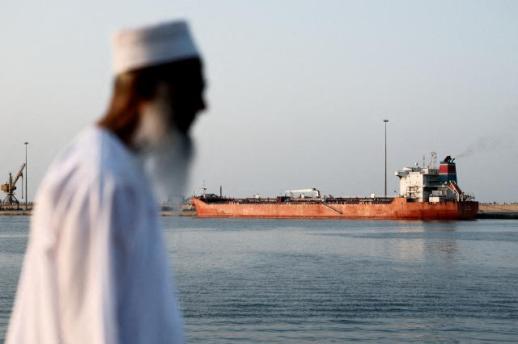 Iran's Hormuz toll push risks turning global chokepoint into a priced corridor SEOUL, March 31 (AJP) - Iran is moving to monetize control of the Strait of Hormuz, threatening to impose transit fees on one of the world’s most critical energy arteries — a step that could recast the waterway from a global commons into a contested, pay-to-pass corridor. The proposal, approved by Iran’s parliament, comes as Tehran tightens its grip on the chokepoint, through which roughly 20 percent of global oil supply normally flows. Since the outbreak of conflict, vessel traffic has plunged by as much as 90 percent, while access for Western-linked ships has been selectively restricted. Ships are increasingly required to submit detailed cargo and ownership data to intermediaries linked to the Islamic Revolutionary Guard Corps before being allowed safe passage, with some reportedly paying fees in Chinese yuan — underscoring how control is already being exercised in practice. The impact is rippling far beyond the Gulf. Oil prices have surged, while energy-importing economies in Asia — including South Korea and Japan — face renewed supply risks as one of their most vital maritime lifelines comes under strain. From legal norms to leverage Legal scholars say Iran’s proposed toll regime collides directly with established international law governing maritime passage. “Under current international law, a coastal state may not lawfully impose a general toll simply for ships’ passage through an international strait used for international navigation,” said Shahla Ali, a law professor at the University of Hong Kong. She noted that the United Nations Convention on the Law of the Sea guarantees “transit passage” — the right of continuous and unimpeded movement — and that any charges must be tied to specific services and must not “effectively deny or unreasonably burden” passage. Similarly, James D. Fry, also a law professor at the University of Hong Kong, said imposing unilateral transit fees would “go against freedom of navigation” protected under customary international law. “There is no precedent that might allow for an interpretation of UNCLOS to permit such a transit fee,” Fry said. But the issue is quickly moving beyond legal doctrine. Iran’s growing “de facto control” over the strait — screening vessels, dictating passage conditions and shaping traffic flows — is raising a more fundamental question: whether physical dominance over a chokepoint can begin to override long-standing legal norms. “If, in fact, Iran can exercise control over the Strait of Hormuz to the point that all others are excluded, it might be difficult to say that Iran lacks sovereignty,” Fry said, while cautioning that any such shift would depend on how the international community responds. War backdrop deepens uncertainty The toll push is unfolding against a backdrop of escalating military tensions involving Iran, the United States and Israel, further complicating the legal and strategic landscape. Washington has defended its strikes as necessary to counter threats from Iran’s missile and nuclear programs, while Tehran has accused the U.S. and Israel of committing “internationally wrongful acts,” including what it described as state-sponsored assassination attempts. The competing claims underscore a broader erosion of international norms, with legal arguments increasingly shaped by geopolitical leverage. For now, legal experts remain skeptical that Iran’s toll plan can be justified under existing frameworks. But they also acknowledge that international law is not static. “The law is not static,” Fry said. “But any evolution will depend on state practice — and on whether the international community accepts or resists what Iran is doing.” That leaves Hormuz emerging as more than a regional flashpoint. It is becoming a test case for whether global trade routes remain governed by law — or by control. If economic leverage and military presence can redefine access to strategic waterways, the implications will extend far beyond the Gulf, potentially reshaping the rules that underpin global commerce. For Asia’s energy-dependent economies, the stakes are immediate. What happens in Hormuz may determine not only the flow of oil, but whether the architecture of international maritime order can withstand an era increasingly defined by power over principle. 2026-03-31 16:27:39
 -
 Korea's Feb factory output gain strongest in 6 yrs, record construction recovery *Updated with additional information and market response SEOUL, March 31 (AJP) -Before the sudden war in the Middle East, South Korea’s industrial front had shown a sanguine face, with manufacturing posting its strongest growth in nearly six years, facility investment surging to a more than decade high and construction activity hitting a record, data showed Tuesday. Mining and manufacturing output rose 5.4 percent from a month earlier, sharply reversing a 2.4 percent drop in January, as chip production surged 28.2 percent, according to the Ministry of Data and Statistics. It marked the strongest increase since a 6.6 percent gain in June 2020. Domestic demand, however, remained subdued. Retail sales were flat from the previous month, while services output edged up just 0.5 percent, highlighting still-weak private consumption. Overall industrial output, which includes services, rose 2.5 percent in February, rebounding from a 0.9 percent contraction in January. Investment was a key pillar of the rebound. Facility investment jumped 13.5 percent on-month, the fastest increase since November 2014, driven by strong demand in semiconductors and automobiles. Transport equipment, particularly autos, surged 40.4 percent, while machinery including electrical equipment rose 3.8 percent. The data provided little relief to the market since the upbeat numbers come before the war hit the economy heavily reliant on the Gulf Strait shipping route for energy and raw material imports for manufacturing from petrochemicals to chips. The main KOSPI lost 1.3 percent, while the dollar added 7.60 won to 1,525.10 won as of 11:00 a.m. The three-year government bond yields at 3.54 percent. Construction activity delivered an even stronger boost. Construction completed, measured in constant prices, soared 19.5 percent from the previous month — the largest increase since records began in July 1997 — rebounding sharply from a 7.8 percent fall in January. Both building construction and civil engineering expanded, rising 17.1 percent and 25.7 percent, respectively. Forward-looking indicators also pointed to sustained momentum. Construction orders rose 6.7 percent from a year earlier, extending gains to a fourth consecutive month, led by a 24.2 percent jump in building construction, including housing. Consumption indicators showed a mixed picture. While service output inched up 0.5 percent, the retail sales index was unchanged. Semi-durable goods such as clothing fell 5.4 percent and durable goods including communication devices and computers declined 1.5 percent, while non-durable goods such as food and beverages rose 2.6 percent. Broader indicators suggested improving economic conditions. The cyclical component of the coincident composite index rose 0.8 point, the biggest gain in more than 15 years, while the leading composite index, which signals future activity, increased by 0.6 point. Still, the data do not reflect the impact of the Middle East crisis that erupted on Feb. 28, casting uncertainty over the durability of the recovery. The output scorecard on first-month war impact will be released on April 30. 2026-03-31 08:18:21
 -
 Gulf Crisis, One Month On: From Gulf battleground to shockwaves across Asia Editor's Note: One month into the Iran war, a conflict that began in the Middle East is rapidly evolving into a broader economic and strategic shock for Asia, and in this special series, AJP examines those spillovers in full — from a comprehensive overview of Asia-wide shocks to industrial realignments, the mounting risk of a third oil shock, and rising security tensions — as the central question shifts from how the war unfolds in the Middle East to how deeply its consequences will be embedded across Asia. SEOUL, March 27 (AJP) - The immediate battlefields may be in the Gulf, but the war’s toll has landed heavily on Asia, as regional economies scramble to survive without Middle Eastern fuel while the critical chokepoint of the Strait of Hormuz remains effectively closed for a month. The shock in South Korea has spilled beyond capital markets. Gas stations saw lines stretch until midnight ahead of the lifting of a temporary price cap on Friday, even as the government rolled out sweeping “wartime” measures — from extended fuel tax cuts and sovereign bond buybacks to a ban on naphtha exports and emergency supplementary budgeting. Consumers are hoarding trash bags and delivery containers amid fears of a plastic shortage after a domestic cracking facility halted operations due to naphtha supply disruptions. More than 70 percent of South Korea’s energy imports come from the Middle East, and over 90 percent of that oil passes through the Strait of Hormuz — a route now at the center of geopolitical risk. While Seoul holds one of the world’s largest strategic reserves — enough for more than 200 days when combined with private stockpiles — the immediate economic shock has proven difficult to contain. The impact is more pronounced in emerging Asian economies with far thinner buffers. The war, triggered by U.S. and Israeli airstrikes on Iran on Feb. 28, has effectively choked off one of the world’s most vital energy arteries. Roughly a fifth of global oil consumption and a similar share of LNG trade typically pass through the Strait of Hormuz. The disruption has been compounded by direct damage to supply. Qatar, the world’s second-largest LNG exporter, has lost 17 percent of its export capacity following Iranian attacks, with recovery expected to take up to five years, according to QatarEnergy CEO Saad al-Kaabi. Asia buys about four-fifths of Qatar’s LNG — a share that has increased further since sanctions on Russia following its invasion of Ukraine. In Southeast and South Asia, the crisis has rapidly escalated from an energy shock into a broader economic emergency. The Philippines has declared a “national energy emergency,” warning of imminent fuel shortages as gasoline and diesel prices surge. The country relies on the Middle East for over 90 percent of its crude imports, while its reserves cover just 45 days of demand. Pakistan faces even deeper vulnerabilities. With 99 percent of its gas imports sourced from Qatar, authorities have warned that shortages could disrupt electricity supply within weeks, threatening its export-critical textile sector. In Laos, more than 40 percent of gas stations have shut down, prompting school closures and remote work policies. Cambodia has seen a third of its stations suspend operations, while Thailand is grappling with fuel shortages severe enough to disrupt farming and even halt cremations at temples. Cremation is the standard funeral practice in the country, and the abbot of Wat Saman Rattanaram temple said in an interview, “In my 50 years, I have never seen anything like this.” In India, shortages of cooking gas have reportedly triggered street clashes, while restaurants and hotels are closing temporarily. Thailand is no different. The Bangkok Post reported on March 22 that despite the rice harvest season, farmers are struggling due to a lack of fuel for harvesting machinery and transport trucks. Panic buying has spread at gas stations, and rising fuel prices have sharply increased the cost of essential goods such as palm oil and bottled water. In Myanmar, the impact has been even more severe. Authorities have implemented an odd-even vehicle rationing system, while the military government has introduced fuel rationing as gasoline prices have doubled. While South Korea and Japan hold strategic reserves well above the International Energy Agency’s recommended 90 days, countries such as Indonesia and Vietnam have stockpiles lasting just 20 to 23 days. Unlike crude oil, LNG lacks a global reserve system due to the high cost of storage, leaving many Asian economies reliant on just-in-time imports. Shipping costs for LNG carriers have more than doubled since the war began, forcing countries such as Vietnam and the Philippines to suspend purchases altogether. "On the one-month anniversary of the war in Iran, its impact on the global economy has been severe, with developing countries suffering the most,” said John Kirton, Professor Emeritus at the University of Toronto. “Almost all countries around the world have suffered in many ways, starting with rising prices and dwindling supplies of Middle Eastern oil, natural gas, helium, sulphur, and chemicals,” he said, noting the spillover into food, medical supplies, and critical minerals. Kirton warned that the crisis is evolving into a macroeconomic threat. “We are looking at a potential 1% reduction in global growth, inflation rising toward 5%, and the growing risk of stagflation,” he said. The burden, however, is not evenly shared. “These countries are being hit hardest due to high debt burdens, limited fiscal capacity, and reduced international aid,” Kirton added, pointing to rising food prices, weakening currencies, and growing political instability. Andreas Rasche of Copenhagen Business School framed the divide as structural. “Many of them are highly dependent on imported energy and food, so price increases hit faster and harder,” he said. “At the same time, they have far less fiscal and monetary space to respond.” Richer economies like South Korea retain greater policy flexibility, stronger institutions, and in some cases strategic reserves that cushion the immediate blow. Yet even for them, the crisis is exposing a deeper vulnerability. For decades, the global economy has depended on a narrow waterway that carries nearly every barrel exported from Saudi Arabia, Kuwait, Iraq, Qatar and the United Arab Emirates. As long as that dependency persists, the shockwaves now rippling across Asia may not be a one-off crisis — but a recurring fault line in the global energy system. 2026-03-27 14:39:54