
Journalist

Lee Jung-woo
cannes2030@ajupress.com
-
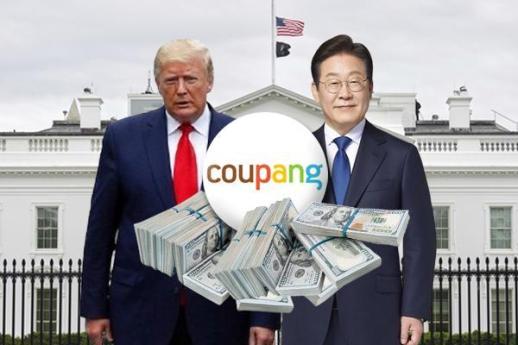 Coupang overstretches into security front, stirring Korea-U.S. friction SEOUL, April 24 (AJP) - In a rare and uneasy convergence, a retail dispute has spilled into the security domain between Seoul and Washington, underscoring the growing political reach of Coupang, a New York-listed retailer whose business is almost entirely rooted in South Korea. According to lobbying disclosure reports filed with the U.S. Congress, Coupang spent a combined $1.785 million in the first quarter of 2026 – nearly doubled from $895,000 in the previous quarter - as political and legal scrutiny mounted for a massive data leak in Korea last November. The filings show that Coupang not only boosted its in-house lobbying to $1.09 million, but also expanded its roster of external firms, adding Ballard Partners, Crossroads Strategies and Williams & Jensen to existing partners including Miller Strategies, Continental Strategy and Monument Advocacy. While the disclosed amount reflects only direct lobbying activities required under U.S. law, it excludes broader advisory and strategic consulting fees, suggesting total spending may be significantly higher. The scope of engagement has also widened. In late 2025, Coupang’s lobbying focused largely on trade-related agencies such as the Commerce Department, the Office of the U.S. Trade Representative and the State Department. By early 2026, outreach had expanded to include the White House, the Office of the Vice President and even the National Security Council, indicating that discussions may have entered security-sensitive territory. The involvement of high-profile lobbyists with deep ties to U.S. policymakers — including figures connected to Secretary of State Marco Rubio and former White House advisory teams — underscores the strategic nature of the campaign. Its efforts appear to have paid off. U.S. Vice President J.D. Vance reportedly raised concerns about Coupang during a January meeting with South Korean Prime Minister Kim Min-seok, while Rubio has also referenced the company in discussions with Korean officials. The issue further blew over this week when 54 Republican lawmakers affiliated with the Republican Study Committee sent a letter to South Korea’s ambassador in Washington, urging Seoul to halt what they described as “discriminatory regulations” against U.S. firms — explicitly naming Coupang alongside Apple Inc., Alphabet Inc.’s Google and Meta Platforms Inc.. According to people familiar with the matter, U.S. officials have also conveyed concerns through diplomatic channels about potential legal actions against Coupang Chairman Bom Kim, warning such moves could complicate high-level security consultations between the allies. Underscoring the elevation of the agenda, South Korea’s National Security Adviser Wi Sung-lac acknowledged the spillover effect during an overseas briefing while accompanying the president in Vietnam. “This is fundamentally a corporate issue, but it is true that it is influencing security consultations between South Korea and the United States,” Wi said. “We do not believe it is desirable for corporate matters and security negotiations to become linked.” He added that delays in security talks are already occurring and warned that prolonged disruptions could harm the alliance. At home, the response has been more forceful. National Assembly Speaker Woo Won-shik described the U.S. lawmakers’ letter as “a clear interference in domestic affairs,” stressing that companies operating in Korea must comply with Korean law. “There have been large-scale personal data leaks and allegations of algorithm manipulation. These are clear violations of current law,” Woo said. The company denied any wrongdoing and dismissed claims that its lobbying extends into security issues as “categorically false,” stating its activities focus on economic cooperation, trade expansion and technology partnerships, including artificial intelligence initiatives. It also emphasized that its lobbying expenditures remain modest compared with other major U.S. and Korean corporations. Founded in 2010 by Bom Kim, Coupang has grown into South Korea’s largest e-commerce platform, often compared to Amazon for its logistics-driven model and rapid delivery services. Headquartered in Seattle, incorporated in Delaware and listed on the New York Stock Exchange, it occupies an ambiguous identity — structurally American, operationally Korean. Its rapid growth has been accompanied by controversy. The company has faced criticism over industrial safety conditions in its logistics network, with several worker deaths linked by labor groups to harsh working conditions. It has also been embroiled in a major personal data breach that intensified regulatory scrutiny, alongside allegations of algorithm manipulation to favor its own products — claims the company denies. The dispute may ultimately move into the courts, with lawmakers exploring legal options including class action mechanisms. “We are reviewing class action legislation,” said Kim Yong-min of the Democratic Party of Korea, noting that such systems are already well established in the United States. Meanwhile, Lee Un-ju, a member of the party’s Supreme Council, pointed to a fundamental perception gap in Washington. “In the United States, people tend to think of Coupang simply as an American company,” she said. “They don’t realize that most of its revenue is generated in Korea, and that the majority of victims in the personal data breach are also in Korea.” Lee said she conveyed this view directly to U.S. policymakers during a recent visit, emphasizing that understanding Coupang’s operational reality is key to evaluating the dispute. “It is very important to recognize that Coupang is, in effect, a Korean company,” she said. 2026-04-24 16:37:51
 -
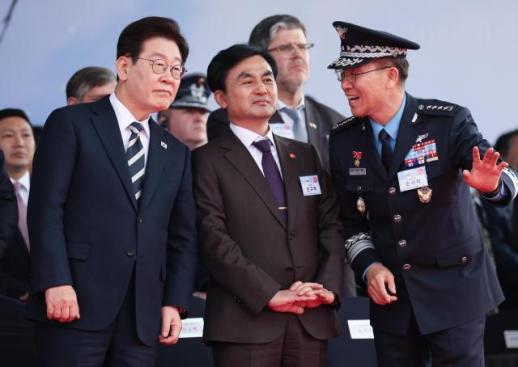 Seoul pushes for wartime command transfer as U.S. urges caution on timeline SEOUL, April 23 (AJP) - A long-simmering question at the heart of the U.S.–South Korea alliance is once again coming into sharper focus: when — and under what conditions — should Seoul take full wartime command of its own and U.S. military forces on the peninsula? Behind the scenes, officials in Seoul and Washington are quietly diverging over the timeline for transferring wartime operational control, or OPCON, with South Korea favoring an earlier date and U.S. military leaders urging a slower, conditions-based approach. Timeline divides the allies South Korean officials have been working toward completing the transition before 2028, aligning with President Lee Jae Myung’s term in office. But recent comments by Gen. Xavier Brunson, commander of U.S. Forces Korea, suggest Washington may be working on a different timeline. “Political expediency must not outpace the conditions,” Gen. Brunson said in congressional testimony on Tuesday (local time), cautioning against setting deadlines that could compromise readiness. According to defense officials familiar with the discussions, the U.S. military has been working internally toward a target closer to early 2029 — a timeline not fully coordinated with Seoul. A South Korean government official, speaking on condition of anonymity, acknowledged the gap. “We are not fundamentally apart on the goal,” the official said. “But there is clearly a difference in how fast we believe we can get there.” Political pressure vs. military conditions Operational control of South Korean troops was handed over to the U.S.-led U.N. Command during the 1950–53 Korean War and later transferred to the Combined Forces Command in 1978. Peacetime operational control reverted to Seoul in 1994. The OPCON transition would place combined Korea–U.S. forces under the command of a four-star South Korean general in wartime, with a four-star U.S. general serving in a supporting role. At the center of the timing debate is a tension between political preference and military preparedness. Rep. Yoo Yong-won, a senior opposition People Power Party lawmaker on the National Assembly’s Defense Committee, criticized what he described as the prioritization of political considerations. “The government is pushing this too hard because it wants to achieve it within its term,” he said. “That is not desirable. The conditions must come first.” Experts with military and intelligence backgrounds also stressed that the OPCON transfer is fundamentally a structural security issue. Chae Sung-jun, a former National Intelligence Service (NIS) official and now head of the Department of Military Studies at Seokyeong University, said the transition must be approached with caution. “This is not simply about reclaiming authority,” he said. “It is about maintaining deterrence under a new command structure — and that is far more complex.” He added that the issue should be understood in its historical and strategic context. “The debate is not about whether to regain control, but how to integrate wartime command into an alliance structure without weakening deterrence,” he said. Lingering dependence Despite improvements in South Korea’s military capabilities, reliance on U.S. assets remains significant. Yoon Sang-yong, a military studies professor at Seokyeong University, pointed to persistent gaps in intelligence and operational integration. “We are still heavily dependent on U.S. intelligence, surveillance and reconnaissance assets,” he said. “These are not capabilities that can be replaced quickly.” He also raised concerns about alliance dynamics after the transfer. “If the command structure changes, there is a legitimate question as to whether the United States will respond with the same level of immediacy and scale in a crisis,” he said. Alliance in transition For Washington, the issue is shaped by long-standing institutional norms. The U.S. military has historically been reluctant to place its personnel under full foreign command — a practice sometimes referred to as the “Pershing Principle.” However, it has granted operational control to foreign commanders in joint-force arrangements during combat. At the same time, American strategy is shifting toward encouraging allies to assume greater responsibility for regional security. This creates a delicate balance: supporting South Korea’s autonomy while ensuring that the alliance’s deterrence posture remains intact. The risk of miscalculation Security experts warn that how the transition is handled could influence North Korea’s strategic calculations. “Command structures send signals,” Chae said. “If the transition is not backed by sufficient capability, it could invite miscalculation.” Others argue that further delays could undermine South Korea’s credibility as a self-reliant military power. A narrow window The coming months will be critical, with working-level consultations expected to intensify ahead of the annual Security Consultative Meeting in Washington later this year. A senior South Korean defense official, speaking anonymously, emphasized the stakes. “This is ultimately both a military and political decision,” the official said. “But if the balance is wrong, the consequences will be strategic.” 2026-04-23 18:00:39
 -
 Unregulated Fight Videos Spread Online in South Korea, Reaching Teens In the 1999 U.S. film “Fight Club,” the first rule is not to talk about it. In today’s South Korean version, that taboo has collapsed. Violence is no longer confined to the shadows; it is filmed, distributed and monetized as content. Fight videos are spreading quickly on social media and streaming platforms such as YouTube and Telegram. Blurring the line between sport and violence, the genre draws millions of views and has become a form of mass entertainment — echoing the voyeuristic consumption of violence depicted in Netflix’s “Squid Game.” At the center is so-called “yacha rule,” an informal fighting format presented as consensual. Promoted as a “raw, real fight,” it has spread rapidly. One video titled “Real fight between construction workers in their 20s #yacharule” has surpassed 12 million views. The footage shows two shirtless men trading punches as a crowd watches, evoking a modern-day coliseum. The name is believed to come from “yacha,” a predatory being in Buddhist folklore. Unlike mixed martial arts or boxing, there is little protective gear and few rules; the main restriction is a ban on eye-gouging. Viewers cite that unfiltered “realism” as the appeal. The market is sizable. Related YouTube channels have logged more than 180 million cumulative views, and individual videos often reach the millions. Given the advertising model, violence itself functions as a revenue stream. The concern is how far it is spilling into everyday life. Some creators, claiming “teaching a lesson,” seek out specific people, fight them and livestream it. More alarming is the spread into teen spaces. One Telegram channel was reported to buy and distribute real assault videos involving minors, paying providers from 5,000 won to 50,000 won. Many clips show victims bleeding or losing consciousness. Viewers are not just observers. Through comments, donations and sharing, they participate, and some videos are paired with gambling ads. A violence-centered “ecosystem” is taking shape. Experts link the trend to human instincts. Rosie Dirt, a professor of psychology at the University of North Carolina, said people are naturally drawn to threat and conflict, and violent stimuli grab attention quickly and hold it. As that “safe danger” experience is reinforced online, she said, people’s sensitivity to violence can dull over time. Social learning also plays a role. Under psychologist Albert Bandura’s theory, if repeated behavior is shown being rewarded, it can come to be seen as normal. The more fights are packaged as happening under “agreed rules,” the more likely viewers are to justify violence, experts say. Dirt said sustained exposure to violent media can lead to desensitization, reduced emotional response and gradual shifts in what people see as socially acceptable aggression. When such content is rewarded with visibility and attention online, she said, imitation or performative violence can increase. The University of North Carolina’s Rosa Lee introduced “socialization effects” — the tendency to become more like one’s group, environment and consumed content — and “selection effects,” in which people with violent tendencies consume more violent content or choose like-minded friends. Lee said when those psychological tendencies combine with social media algorithms, a nontraditional form of socialization can occur, allowing violent content to shape thinking and behavior. She said the interview request reminded her of decadeslong debates over the effects of violent TV shows, films and video games. In 2021, 13-year-old Olly Stephens in the United Kingdom was stabbed to death by peers. He went to a park after being lured by a girl he knew and was ambushed by two boys. The attack was later found to have been planned amid conflict and message exchanges on social media. The British daily The Times said the case was not only a personal tragedy but also an example of rising teen knife crime and the influence of the online environment. It said teen knife-related deaths in the U.K. have risen sharply in recent years, driven in part by social media. The victim’s parents have since campaigned for stronger social media regulation and youth protections, and experts have said online conditions and access to weapons must be addressed together. The Washington Post also analyzed the impact of graphic video on young people after the killing of Charlie Kirk in Utah in September 2025, when footage of his death spread rapidly on social media and reached children and teens. The video circulated quickly on major platforms including TikTok, Instagram and YouTube, and some students shared or watched it at school. Parents said they were shocked their children saw the images without warning. Some teens responded that it was “shocking but important” or “just weird,” raising concerns about desensitization. The Post said the spread was tied to algorithmic systems that prioritize sensational, attention-grabbing content. Platforms tried to remove the video or apply age limits, but altered versions kept appearing, making control difficult. Parental controls also failed to work effectively. Experts called for stronger regulation and urged parents to talk with children and respond actively. Legal judgment is clear, experts say. Seong Jung-tak, a professor at Kyungpook National University Law School, said yacha rule is unlikely to receive a legal pass even if there was “consent.” Assault causing injury is not a crime that can be dropped solely at the victim’s request, he said, meaning investigations and punishment can proceed even if the victim signs an agreement saying they do not want the attacker punished. Seong cited a Supreme Court ruling that when a victim’s consent violates social norms, illegality is not removed. Legal responsibility may extend beyond the fighters. Watching or distributing yacha rule content can also be punished under the Criminal Act, the Information and Communications Network Act and the Juvenile Protection Act. As Rome’s Colosseum showed, violence has long been part of entertainment. But the current shift is different in kind: the boundary between reality and performance is fading, and audiences are moving from passive consumers to active participants. As violence-as-content spreads, calls are growing for debate over how to regulate it — and how to build stronger protections for minors. 2026-04-23 10:52:19
 -
 How a single remark exposed deeper fault lines in U.S.–South Korea relation SEOUL, April 22 (AJP) - When South Korean Unification Minister Chung Dong-young told lawmakers in March that North Korea was operating uranium enrichment facilities in Yongbyon, Kangson and Kusong, he intended to highlight the growing sophistication of its nuclear program. Instead, his remarks triggered an intelligence dispute with Washington and a controversy within the highly divisive Korean society. At the heart of the dispute is Kusong, a location that Washington claims had never been officially acknowledged at such a high level. That is not to say it had not appeared in open-source analyses, according to Chung's defense. "This statement was based on publicly available sources, including reports by the Institute for Science and International Security and media reports," the minister said in a recent interview. "Framing this as a leak of classified information is deeply regrettable and raises questions about the motive." A ministry spokesperson followed up by stating that "no such information was provided by any foreign government." Despite these denials, U.S. concerns appear to center on perception rather than strict classification boundaries as intelligence-sharing relationships depend not only on what is disclosed, but also on how it is publicly framed. Victor Cha, Korea chair at the Center for Strategic and International Studies (CSIS), pushed back directly against Chung’s justification. "We did not report on enrichment activities, which is the claim by the minister. We reported on high-explosive test triggers. Big difference," Cha wrote on X on Tuesday. "CSIS has never done a report on nuclear facilities at Kusong. Just setting the record straight." This distinction is significant. While earlier research pointed to possible high-explosives testing in Kusong — relevant to nuclear detonation mechanisms — it did not confirm uranium enrichment activities. For U.S. officials, conflating the two could imply a higher level of certainty than the intelligence supports. Analysts suggest that Washington's response reflects accumulated frustration over a range of issues rather than a single incident. "It is possible that accumulated dissatisfaction between South Korea and the United States over North Korea and foreign policy has surfaced through the minister's remarks," said Hwang Jin-tae, a professor of North Korean studies at Dongguk University. "The United States may suspect that sensitive information it collected was used as the basis for the statement." Recent flashpoints include South Korea's push for greater control over the Demilitarized Zone (DMZ), debates over joint military exercises, and disagreements over communication regarding U.S. Forces Korea operations. The reported restriction of intelligence sharing underscores how sensitive the issue has become. "Reports say the United States has withheld 50 to 100 pages of North Korea-related intelligence per day for a week," People Power Party lawmaker Kim Gunn wrote on Facebook on Tuesday. "This is a serious issue that must be resolved quickly." "In foreign and security affairs, remarks by senior officials are not personal opinions," Kim said. "They are strategic messages. Especially on sensitive issues like North Korea's nuclear program, government messaging must be precise and fact-based." However, not everyone agrees with Washington's response. "There is no doubt that the existence of nuclear-related facilities in Kusong had already been widely known through academic papers and media reports," President Lee Jae Myung wrote on X on Monday in defense of his minister. The controversy has quickly become politicized in Seoul. Conservative lawmakers have accused Chung of undermining trust, while progressives argue he has been unfairly targeted. "Restricting information unilaterally when it is not classified violates the spirit of the alliance," said Yang Moo-jin, a professor at the University of North Korean Studies. "The Kusong uranium enrichment issue has already been disclosed publicly, so it is clearly not subject to protection." "Amplifying this issue domestically does not help the U.S.–South Korea alliance," he added. Beyond the political fallout lies the core concern that Pyongyang's nuclear program is expanding beyond known facilities. Historically, Kusong has been associated with high-explosives testing. Identifying it as a uranium enrichment site marks a significant escalation in official rhetoric — one that carries strategic implications for both intelligence assessment and diplomacy. Ultimately, the Kusong controversy is less about whether the information was technically classified and more about the fragile trust underpinning intelligence cooperation. Whether the two sides can manage these tensions without undermining cooperation remains an open question. 2026-04-22 17:46:55
 -
 S. Korea resumes public repatriation of Chinese war dead in sign of thaw SEOUL, April 22 (AJP) - South Korea on Tuesday repatriated the remains of Chinese soldiers killed in the 1950–53 Korean War, resuming a public handover ceremony for the first time in three years in a move seen as signaling a modest thaw in ties with Beijing. The Defense Ministry said the 13th transfer ceremony was held at Incheon International Airport, attended by Vice Defense Minister Lee Doo-hee and Xu Yao, vice minister of China’s Ministry of Veterans Affairs. The remains of 12 Chinese soldiers were returned, bringing the total repatriated since 2014 to 1,023. The ceremony included the signing of transfer documents, a Chinese memorial rite and the loading of the remains onto a military aircraft. China's state broadcaster CCTV said a delegation arrived in South Korea on April 19 and departed the same day with the remains aboard a Y-20B strategic transport aircraft. Seoul had conducted the past two handovers without public ceremonies. The restoration of a formal, vice-ministerial event under the administration of President Lee Jae Myung was viewed as a gesture of goodwill. "This handover ceremony has resumed as a public event for the first time in three years, reflecting the restoration of South Korea-China relations and the spirit of good-neighborly friendship," Lee Kwang-seok, director-general for international policy at the ministry, said. "We will continue to repatriate the remains of Chinese soldiers discovered in the future." The Korean War, which began on June 25, 1950, and ended with an armistice on July 27, 1953, drew in a U.S.-led United Nations Command supporting South Korea and Chinese forces backing North Korea, turning the peninsula into a major Cold War battleground. Sixteen countries sent combat troops under the UN flag. The United States deployed about 1.79 million personnel, the largest contingent, followed by the United Kingdom, Canada, Turkey, Australia and the Philippines. Others — including Thailand, the Netherlands, Colombia, Greece, New Zealand, Ethiopia, France, Belgium, South Africa and Luxembourg — also contributed forces, while several countries provided medical and humanitarian support. China entered the war in October 1950 through the People's Volunteer Army. Chinese military deaths are estimated at between 180,000 and 400,000, though figures vary. The conflict remains one of the deadliest since World War II, with total casualties — including civilians — estimated at up to 4 million, about 70 percent of them civilians. Seoul said it will continue to return the remains of Chinese soldiers found on its soil in line with humanitarian principles and international law. 2026-04-22 14:32:02
 -
 Korea's pump prices rise faster than Japan and US SEOUL, April 22 (AJP) - Kuwait’s declaration of force majeure on crude exports is adding to supply concerns at a time when South Korea’s fuel prices are already rising sharply, amplifying the impact of the prolonged Middle East conflict. State-run Kuwait Petroleum Corp. last Friday notified buyers that it would maintain contractual force majeure for an extended period, citing damage to infrastructure and the time needed to restore full operations. South Korea relied on Kuwait for 8.7 percent of its crude imports last year. With the Strait of Hormuz effectively closed for nearly two months, Seoul has been forced to turn to longer shipping routes to secure additional volumes from other Gulf producers such as Saudi Arabia and the United Arab Emirates. Unlike the two, Kuwait relies entirely on the crippled waterway to ship out its energy. The strain is already visible at the pump. Gasoline prices have climbed above 2,000 won per liter, with the national average reaching 2,003.17 won as of Tuesday, while diesel stood at 1,996.76 won, rising 18.4 percent and 25.0 percent, respectively, from Feb. 27, before the conflict escalated, according to the Ministry of Trade, Industry, and Resources Wednesday. Neighboring Japan has kept gasoline prices in the 1,500 won range — 1,527 won as of April 19 — through sustained government subsidies, limiting increases to single digits over the same period. Korea’s prices are 23.8 percent higher than Japan’s for gasoline and 28.3 percent higher for diesel. “While Korea has implemented a price ceiling, our rate of increase is more than double that of Japan,” Yang Ki-wook, deputy minister for industrial resource security, admitted at a briefing of the government’s Middle East response task force. “Japan appears to be continuing to inject substantial subsidies.” The United States presents a more mixed pattern. Gasoline prices stood at 1,586 won per liter as of April 20, about 20.8 percent below Korea’s level, while diesel was higher at 2,170 won, reflecting stronger freight demand and refining margins. The comparison comes as Seoul faces mounting calls to more aggressively curb prices through fiscal measures. Officials maintain that Korea is focused on managing the pace of increases — through a combination of price ceilings and fuel tax adjustments — rather than directly subsidizing retail prices. "With wide variations in price levels and increases across countries, whether Korea is excessively suppressing prices should be assessed in comparison with other cases,” Yang said. Korean refiners have been diversifying import sources to secure replacement volumes, but dependence on the Middle East continues to constrain flexibility. Four of Korea’s top five crude suppliers — excluding the United States — are located in the region, leaving supply exposed if disruptions persist. The pressure is also spilling into industrial supply chains. Concerns over ethylene gas — a key input derived from naphtha and used in shipbuilding — have prompted emergency coordination between the government and industry. HD Hyundai has begun producing and supplying ethylene through its affiliate HD Hyundai Chemical, shipping around 2,000 tons from the Daesan petrochemical complex to shipyards near Ulsan. About 200 tons will be allocated to smaller shipbuilders. “We will continue to expand public-private cooperation to prevent production disruptions amid supply chain instability,” Yang said. 2026-04-22 11:30:14
 -
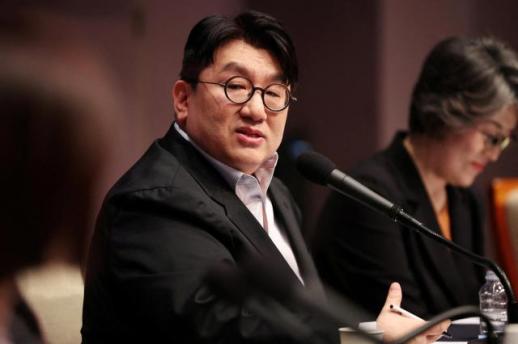 Police seek arrest warrant for HYBE Chairman Bang Si-hyuk over alleged IPO fraud SEOUL, April 21 (AJP) - South Korean police have applied for an arrest warrant for Bang Si-hyuk, chairman of BTS agency HYBE, on allegations that he misled investors ahead of the company’s initial public offering (IPO), authorities said Tuesday. The Seoul Metropolitan Police Agency’s Financial Crimes Investigation Unit said it requested the warrant from the Seoul Southern District Prosecutors’ Office on charges under the Capital Markets Act. The move comes about 16 months after police launched their investigation. Police allege that in 2019, Bang Si-hyuk falsely told investors there were no plans to list HYBE, then known as Big Hit Entertainment, encouraging them to sell their shares to a private equity fund linked to him. The company later went public, with Bang reportedly securing 190 billion won ($130 million) through a prior agreement to receive 30 percent of the fund’s post-listing profits. Under South Korea’s Capital Markets Act, obtaining financial gains through deceptive practices related to financial investment products is prohibited. Violations involving profits exceeding 5 billion won can result in life imprisonment or a minimum of five years in prison. Police began an internal probe in late 2024 before expanding it into a formal investigation in mid-2025, which included raids on the Korea Exchange and HYBE headquarters. Bang was questioned five times between September and November last year, and authorities also froze 156.8 billion won worth of his shares. The investigation drew criticism for its pace after police took no apparent action for more than five months, citing legal reviews. The case also sparked controversy when the U.S. Embassy in Seoul reportedly sent a letter requesting that a travel ban be lifted to allow Bang to attend BTS-related events abroad. Bang has denied any wrongdoing, maintaining that all legal and regulatory requirements were followed during HYBE’s listing. In a statement released through his legal team Tuesday, he said it was “regrettable” that an arrest warrant had been sought despite his cooperation and pledged to “faithfully explain his position in future legal proceedings.” Prosecutors will now decide whether to formally request the warrant from the court. If they do, a hearing to review the warrant typically takes place within two to three days. The development places Bang, HYBE’s largest shareholder and key decision-maker, at a critical juncture as the company closely monitors the outcome. HYBE shares fell 2.35 percent to close at 249,000 won on Tuesday following news of the warrant request. 2026-04-21 16:31:59
 -
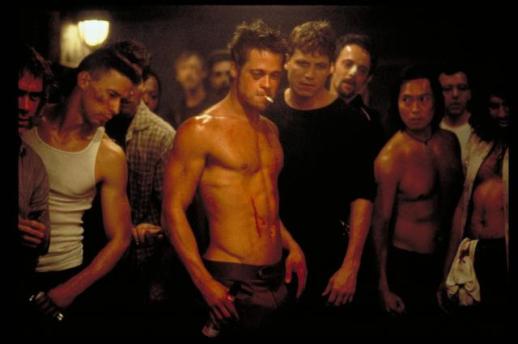 "Fight Club" goes digital in Korea, dragging teenage violence into the spotlight SEOUL, April 21 (AJP) - In the 1999 American cult classic Fight Club, members of an underground brawling group follow one defining rule: never talk about it. In today’s viral digital landscape in South Korea, violence is no longer hidden — it is performed, filmed and monetized in plain sight. Across YouTube, Telegram and livestreaming platforms, a burgeoning genre of “fight content” is blurring the line between sport and exploitation, drawing millions of viewers and echoing the voyeuristic brutality of the Netflix hit Squid Game. A video titled “Real Fight Among Guys in Their 20s Working Construction #Yacharule,” which has racked up over 12 million views, shows two shirtless men trading punches, surrounded by roughly ten onlookers. Someone films the scene. At the call of “Fight!”, the two exchange punches before quickly grappling on the ground. One man, pinned underneath, takes a direct blow to the nose. Blood pours over his face and chest. He loses. The winner beams at the camera: “I’m not trying to brag, but I’ve never even trained at a gym.” Channels like this follow the so-called “Yacha Rule,” a format of semi-staged or raw combat named after the Yaksha — a predatory spirit in Buddhist mythology. Unlike regulated MMA or boxing, Yacha fights operate in a legal and safety vacuum. With minimal protection and few rules beyond banning eye-gouging, their appeal lies in a curated sense of visceral “authenticity.” The scale is already significant. One YouTube channel dedicated to such content has amassed more than 180 million cumulative views, while short clips routinely draw millions. A single one-minute video recently surpassed 4.4 million views, translating into substantial advertising revenue under standard monetization models. What began with trained or semi-trained participants is now spilling into everyday life. Some creators stage retaliatory fights under the banner of “teaching a lesson,” livestreaming confrontations against perceived wrongdoers. More troubling is its seepage into youth culture. A Telegram channel reportedly purchased and distributed footage of real assaults involving minors, paying informants between 5,000 and 50,000 won ($3.4 to $34) depending on severity. With roughly 1,000 uploaded clips and thousands of subscribers, many videos show victims bleeding or losing consciousness — erasing any meaningful line between documentation and exploitation. Viewers are not passive. They comment, cheer and engage, while advertisements — including gambling — appear alongside the clips, pointing to a broader monetization ecosystem built on violence. “Humans are neurologically attuned to threat and conflict,” said Rosie Dutt, a professor of psychology and neuroscience at the University of North Carolina at Chapel Hill. “Violent or high-stakes stimuli capture attention more quickly and hold it longer than neutral content,” activating both fear-processing systems and reward pathways. This creates what researchers describe as a “safe danger” experience — intense yet detached. Social learning compounds the effect. Drawing on Albert Bandura’s theory, observing behavior that appears structured or rewarded can normalize it. When fights are framed as consensual or rule-based, viewers may disengage morally, perceiving the violence as legitimate rather than harmful. Over time, repeated exposure may not directly increase violent behavior, but it can dull emotional responses and normalize aggression. The digital environment amplifies this dynamic. Online anonymity reduces accountability, encouraging engagement with extreme content — a phenomenon widely known as the online disinhibition effect. Yet the legal reality is far less ambiguous. “The presence of consent does not automatically eliminate criminal liability,” said Sung Joong Tak, a law professor at Kyungpook National University. Courts have consistently held that consent is invalid when it violates social norms, particularly in unregulated and high-risk physical confrontations. Under South Korean law, causing bodily harm is punishable by imprisonment or fines, and prosecution does not hinge on whether the victim presses charges. Even if participants agree beforehand — or reconcile afterward — legal responsibility remains. The implications extend beyond participants. Organizers, promoters and those filming or distributing the content may face charges for aiding and abetting violence. If betting is involved, gambling laws apply; if minors are exposed, youth protection statutes come into force. What appears to be a consensual “sport” can quickly trigger a cascade of criminal violations. The broader shift is cultural. Violence has long been part of entertainment — from ancient gladiator arenas to modern action films. But the Yacha Rule signals something different: the erosion of distance between performer and audience, fiction and reality. In Squid Game, participants enter deadly contests while unseen spectators consume their suffering as spectacle. In today’s digital ecosystem, the audience is no longer unseen — it is active, engaged and central to the system. For regulators, the challenge is acute: balancing freedom of expression with the need to curb harmful content. Enforcement is equally complex, particularly when distribution spans encrypted platforms and decentralized networks. 2026-04-21 15:26:05
 -
 Asian stocks close higher amid cautious optimism over possible fresh US-Iran talks SEOUL, April 20 (AJP) - Asian stock markets closed higher on Monday as investors bet on optimism ahead of another round of ceasefire negotiations between the U.S. and Iran, lifting overall market sentiment despite lingering tensions in the Middle East. Despite conflicting reports of impending talks in Islamabad, Pakistan, with Iran denying any plans to negotiate, the benchmark KOSPI in Seoul gained 0.44 percent to close at 6,219.09, while the tech-heavy KOSDAQ rose 0.41 percent to finish at 1,174.85. Samsung Electronics fell 0.69 percent to close at 214,500 won, while SK Hynix jumped 3.37 percent to 1,166,000 won. LG Energy Solution climbed 2.63 percent to 429,000 won, and Doosan Enerbility rose 2.30 percent to 111,000 won. HD Hyundai Heavy Industries added 1.95 percent to 524,000 won. Samsung SDI surged 4.87 percent to 538,000 won after signing a multi-year agreement with Mercedes-Benz to supply batteries for next-generation electric vehicles. But auto-related shares declined, with Hyundai Motor falling 2.04 percent to 527,000 won and Kia dropping 1.13 percent to 157,400 won. Entertainment stocks all moved lower. HYBE fell 2.86 percent to 255,000 won, JYP Entertainment declined 1.42 percent to 62,300 won, SM Entertainment slipped 1.80 percent to 93,000 won, and YG Entertainment dropped 2.68 percent to 54,400 won. In Tokyo, the Nikkei 225 rose 0.60 percent to close at 58,824.89, while China's Shanghai Composite gained 0.76 percent to end at 4,082.13. 2026-04-20 17:26:34
 -
 S. Korea hits the accelerator on nuclear pivot after Hormuz lesson SEOUL, April 20 (AJP) - Nuclear energy has become hot. It already was due to the exponential demand for electricity to power hyperscalers to train and deploy artificial intelligence. But it has got even hotter due to the Gulf war crisis. South Korea is the world’s fifth-largest energy importer by value and one of the four largest importers of LNG globally, regularly purchasing around 40 million tonnes per year. With virtually no domestic fossil fuel reserves, the country imports nearly 95% of its primary energy needs — a structural vulnerability that has driven decades of debate about energy security. Electricity demand has grown relentlessly to around 600 terawatt-hours annually, powered by energy-intensive industries from semiconductors to shipbuilding, making decarbonization both urgent and structurally difficult. Fuel self-sufficiency has become national priority after the Gulf war that disrupted the core waterway along the Iran coast responsible for one fifth of the world's oil and gas shipments, accelerating U-turn in states that chose phase-out over safety issue since the Fukushima meltdown from Germany to South Korea and Japan. For South Korea, heavily exposed to Gulf supply routes and entirely dependent on energy imports, the takeaway has been immediate: energy security cannot be left to geography. Under President Lee Jae Myung, that realization is translating into policy. The administration is moving toward renewed nuclear expansion as the phase-out trajectory of the Moon Jae-in era is effectively being overruled by necessity. “Nuclear, SMRs, and next-generation technologies must be accelerated alongside energy diversification and industrial transformation,” Lee said in an April 7 senior secretariat meeting, signaling that nuclear is no longer a transitional option but a core pillar of future growth. Nuclear currently supplies roughly one-third of South Korea’s electricity, anchoring an economy built on semiconductors, petrochemicals and advanced manufacturing, while demand is accelerating beyond legacy assumptions, powered by AI infrastructure and electrification. Renewables, contributing just over 10 percent, remain constrained by intermittency and land use, while LNG — accounting for roughly a quarter of supply — is increasingly vulnerable to shipping disruptions. In that equation, nuclear stands out as the only large-scale, low-carbon baseload energy source that can be generated domestically. In March 2026, Korea Hydro & Nuclear Power confirmed that four local governments — Ulju, Yeongdeok, Gyeongju and Gijang — submitted bids to host new nuclear facilities, including both large-scale reactors and the country’s first small modular reactor (SMR), with timelines extending into the late 2030s. A global reversal, not a local exception South Korea’s pivot is part of a broader, if understated, global reversal. In the aftermath of Fukushima, countries across Europe and Asia embraced nuclear phase-out policies. Today, many are retracing their steps. In Germany, debate has reopened over restarting recently shuttered reactors as energy costs rise. Italy is preparing for reintroduction after decades without nuclear power, while Switzerland has moved to lift restrictions on new construction. In Asia, Taiwan—once committed to a nuclear-free future—has begun steps toward restarting reactors to support its semiconductor-driven economy. Even the European Commission has acknowledged that sidelining nuclear may have been a strategic miscalculation, reflecting a broader recognition that decarbonization without baseload stability is incomplete. The driver is no longer just climate policy. It is geopolitics. The Gulf crisis has underscored how concentrated global energy risk has become. A handful of chokepoints — led by the Strait of Hormuz — can disrupt supply chains on which entire economies depend. Nuclear power offers insulation from that volatility. Once fueled, reactors can operate for extended periods without continuous imports. But that insulation comes with a paradox. South Korea imports 100 percent of its uranium and remains constrained under its nuclear cooperation framework with the United States, limiting enrichment and reprocessing. This creates a new layer of dependency—less visible than oil tankers, but equally strategic. As next-generation reactors such as SMRs move toward commercialization, that constraint is becoming more binding. Advanced designs increasingly rely on fuels such as high-assay low-enriched uranium (HALEU), requiring more complex enrichment capabilities and tighter supply chains. Seoul is now pushing to expand its role within that fuel cycle, with Washington signaling conditional openness under the existing bilateral framework, often referred to as the “123 Agreement.” What is emerging is not just a reactor buildout, but a negotiation over nuclear sovereignty. A key feature of South Korea’s strategy is its emphasis on SMRs. Smaller, modular and faster to deploy, they offer flexibility in siting and scalability for a grid increasingly shaped by decentralized, high-density demand such as data centers. More importantly, they represent an industrial opportunity. The United States, the United Kingdom, Canada and Japan are all investing heavily in next-generation reactors. South Korea, with its established reactor fleet and export track record, is positioning itself not only to deploy but to compete. Nuclear, in this sense, is becoming industrial policy. 2026-04-20 16:48:06