
Journalist

Choi Yeon-jae
ch0221@ajunews.com
-
 Coupang's data breach far worse than initially reported, probe finds SEOUL, February 10 (AJP) - About 33.67 million users were affected by e-commerce giant Coupang's massive data leak late last year, a joint probe revealed on Tuesday. The probe, led by the Ministry of Science and ICT along with private agencies, found that about 33.67 million users' names, phone numbers, e-mail addresses and other details were exposed. Since users could save other people's information such as family members' details on their accounts for orders, the ministry said the number of people affected could exceed the number of accounts. The probe also found that customers' personal information and their delivery addresses were accessed about 148 million times, while their ordering details were viewed more than 100,000 times. The ministry described the incident as a large-scale breach involving long-term access to sensitive personal information. It said its former employee, suspected of being behind the breach, used 2,313 IP addresses over roughly seven months to access Coupang's servers. The suspect appeared to bypass normal login procedures by abusing Coupang's vulnerable user authentication system to repeatedly access accounts and collect personal data using automated web tools. The breach occurred from April to November last year, with evidence of initial testing in January. The ministry blamed Coupang's poor management of employee log-in procedures for the massive leak, saying the suspect was able to continue accessing its servers even after quitting the company. It also criticized Coupang's delayed response, saying the company failed to report the incident within 24 hours of detecting it, which constitutes a legal violation. The ministry said it will require Coupang to submit a plan for preventive measures by the end of this month and will monitor compliance from March to May, with follow-up inspections planned for June and July. Tuesday's revelations come after Coupang initially said in November last year that the incident affected about 3,000 users, before admitting last week it had discovered an additional data leak affecting over 165,000 customers, far fewer than the findings of the latest probe. 2026-02-10 17:20:18
 -
 South Korea unveils quantum roadmap, aims to become top 4 powers by 2035 SEOUL, January 29 (AJP) - South Korea has designated quantum technology as a next-generation national strategic sector and unveiled a broad roadmap to develop technology, infrastructure and talent in parallel. The country aims to become one of the world’s four leading quantum powers by 2035, leveraging strengths in semiconductors and information and communications technology (ICT) infrastructure. The Ministry of Science and ICT announced the country’s first comprehensive plan on Thursday to foster quantum science, technology and industry, along with an initial master plan to establish a national quantum cluster. “Quantum technology can break through existing limits across a wide range of fields,” Shim Ju-seop, a ministry official, said at a briefing, adding that the government will pursue becoming an “AI powerhouse and a top-five science and technology power” through the development of quantum AI. The plan comes as the United States, China, the European Union and Japan treat quantum technology as a core national strategy, with competition accelerating amid tighter export controls and the emergence of technology blocs. Under the roadmap, the government set near-term technical targets. By 2028, it aims to develop a fully domestically produced quantum computer and expand demonstrations of quantum-secure communications for defense and public-sector use. By 2030, it plans to build a navigation system that can operate independently of the global positioning system (GPS). To achieve those goals, the ministry said it will support development of a full-stack quantum system, from quantum processing unit (QPU) semiconductors to software, while focusing on identifying practical applications of quantum AI alongside hardware development. As a focal point for growth, the government proposed creating a quantum cluster, dubbed a Korean-style "Quantum Valley,” to consolidate research and industrial capabilities that are currently dispersed nationwide. The ministry said it will draft guidelines in February, conduct planning and a public call for proposals from March through June, and select a final site in July. In the selected region, the government plans to build dedicated infrastructure, including a quantum foundry and testbeds, and make them available for open use by companies and research institutions. It also aims to spur industrial transformation and startup growth by combining quantum technology with key local industries through demonstration projects. On governance, the ministry proposed a new model in the form of a virtual organization — tentatively named the National Quantum Research Institute — rather than a single physical facility, to flexibly link capabilities across universities, research institutes and companies. The plan also places heavy emphasis on workforce development. The government said it will establish quantum-related graduate and undergraduate programs and, in cooperation with the education and labor ministries, retrain existing ICT workers for quantum-related roles. The goal is to build a comprehensive talent pipeline spanning research-focused master’s and doctoral programs, industry-ready bachelor’s graduates and reskilling opportunities for current workers, Shim said. The government said it aims to reach its 2035 target of becoming one of the world’s four leading quantum powers and to foster 2,000 companies using quantum technology. While acknowledging the country entered the field later than rivals, Shim said South Korea would pursue both technological catch-up and early market positioning by drawing on its semiconductor manufacturing capabilities and “world-class” ICT infrastructure, while building an integrated quantum ecosystem of infrastructure, institutions and talent. * This article, published by Aju Business Daily, was translated by AI and edited by AJP. 2026-01-29 13:40:45
 -
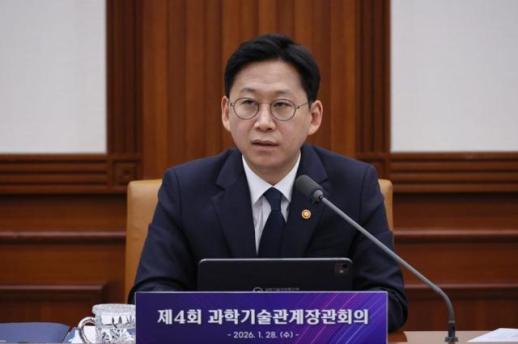 Trump' tariff threat has nothing to do with Coupang, Science and ICT minister says SEOUL, January 28 (AJP) - U.S. President Donald Trump's post on social media earlier this week about raising tariffs on South Korea has nothing to do with regulating big-tech companies including disputes over e-commerce giant Coupang, Science and ICT Minister Bae Kyung-hoon said on Wednesday. Shortly after Trump's abrupt threat on Monday, it was revealed that Seoul had received a letter from the U.S. about two weeks ago raising concerns over South Korea's push to regulate digital platforms. When asked by reporters about the letter he received from acting U.S. Ambassador to Seoul James Heller on Jan. 13, Bae dismissed any link to tariffs. "The letter simply requested that South Korea approach the matter of regulating digital platforms in a more reciprocal way," he said. Trump threatened to raise reciprocal tariffs on Seoul from 15 percent back to 25 percent, citing delays in the implementation of a bilateral agreement reached by the two countries in late October last year, only to soften his stance a day later, saying he would "work something out with South Korea." Some have speculated that disputes over Coupang prompted Trump's tariff threat, after several U.S. lawmakers raised concerns over "discriminatory measures" against Coupang in South Korea's investigation into a massive data leak detected late last year. In a related development, the Wall Street Journal reported on Tuesday that U.S. Vice President JD Vance, during his meeting with South Korean Prime Minister Kim Min-seok in Washington, D.C., warned South Korea "not to target tech companies with discriminatory regulations and investigations, in the latest U.S. effort to protect American internet platforms as it threatens higher tariffs on the country." But Bae said the matter is "completely unrelated" to the tariff issue. He said South Korea has been in discussions with the U.S. through multiple channels on issues related to online platforms and artificial intelligence-related laws and regulations. Deputy Prime Minister and Minister of Economy and Finance Koo Yun-cheol also said, "The government is looking into Trump's latest threat through various channels to figure out the intentions behind it." 2026-01-28 15:59:29
 -
 KT taps Taiwan's cable leader to expand AI media footprint SEOUL, January 16 (AJP) - South Korea’s KT said Friday it has partnered with Taiwan’s largest cable television operator, KBRO, to enter the Taiwanese market with artificial intelligence–based digital media and smart home services. Under a strategic memorandum of understanding with KBRO, signed on Jan. 15 in Taipei, KT will supply AI-driven media and device technologies, including smart home services, interactive voice recognition, AI-optimized user interfaces and intelligent content recommendation systems, the company said. The two firms will also jointly develop technology and service models for smart home upgrades, leveraging KT’s expertise in AI agents and AI-based media services. The partnership includes plans to introduce an all-in-one soundbar set-top box in Taiwan featuring Harman Kardon speakers and Dolby Atmos, with support for global over-the-top streaming platforms such as Netflix, Disney+ and YouTube. KT also plans to distribute its original content through Taiwanese platforms, including myVideo, while pursuing locally tailored content development and joint marketing initiatives. * This article, published by Aju Business Daily, was translated by AI and edited by AJP. 2026-01-16 14:51:32
 -
 Korea's nominee to head media regulator approves of Australia-like SNS ban for minors SEOUL, December 16 (AJP) -South Korea’s nominee to head the new government authority responsible for policy and oversight of legacy and online contents providers said Tuesday the regulator would consider Australia-style protections for minors on social media and take action against illegal practices by Coupang and other platform operators following fact-finding investigations. Kim Jong-cheol, a constitutional law professor at Yonsei University, made the remarks during his confirmation hearing before the National Assembly’s Science, ICT, Broadcasting and Communications Committee, outlining his priorities as the inaugural chair of the Korea Media Communications Commission (KMCC). Kim was nominated in early December to lead the KMCC, which was launched in October as part of a sweeping overhaul of South Korea’s media governance framework. The new commission replaces the Korea Communications Commission and absorbs select oversight functions from the Ministry of Science and ICT, including supervision of online platforms, subscription-based services and emerging digital media. Protecting young users would be a central focus of the commission’s work, Kim said, stressing the need to ensure a safe digital environment within a fair communications order. He said the KMCC would look into the Australia-style measures aimed at limiting harmful social media exposure for minors. In his opening statement, Kim said he would transform the KMCC into a “national communications commission” that promotes both safe and free communication, as the broadcasting, media and telecommunications industries face growing pressure from global competition, artificial intelligence and rising consumer harm. Kim pledged a zero-tolerance stance toward illegal online content with serious social consequences, including disinformation, drug-related material and sexual exploitation content, while emphasizing the importance of raising transparency across internet services so users can better understand how platforms operate. Addressing platform regulation, Kim said the commission is conducting fact-finding investigations into Coupang and other platform operators over subscription cancellation practices that lawmakers have criticized as excessively complicated compared with sign-up processes. “Businesses are free to operate,” Kim said, “but when withdrawal procedures are overly complex, it becomes a matter of user protection.” He added that the KMCC would take action within the limits of the law if illegal conduct is confirmed. Lawmakers also raised concerns over in-app payment systems, noting that South Korea has lagged behind the United States in imposing penalties on dominant platform operators. Kim attributed the delay to the prolonged formation of the commission and said corrective measures would be pursued once the KMCC is fully staffed. On industry policy, Kim said outdated and unnecessary regulations would be actively revised, underscoring the need to balance regulation with promotion to stimulate innovation in the broadcasting and media sector. He also pledged to expand the use of AI and digital technologies across the media value chain and to support overseas expansion by Korean content companies. Kim highlighted the sector’s low AI adoption, estimating utilization at around 10 percent, compared with roughly 30 percent across the broader industrial ecosystem, and said targeted investment would be necessary for South Korea to strengthen its position as a global AI leader. Despite the global spread of K-content and the Korean Wave, Kim said government support for the broadcasting and media sector has been insufficient, pointing to recent budget cuts as a missed opportunity. He also pledged to review the public broadcasting system, expand infrastructure to enhance universal access to media, strengthen dispute-resolution mechanisms in the media and communications sector, and respond firmly to unfair practices by digital platform operators. “As a constitutional scholar,” Kim said, “I will stabilize the KMCC as quickly as possible and resolve the many pending issues step by step, listening carefully to commissioners and communicating with an open mind.” * This article, published by Aju Business Daily, was translated by AI and edited by AJP. 2025-12-16 13:57:57
 -
 Amazon executive, South Korea's AI officials explore cooperation SEOUL, December 05 (AJP) - South Korea’s AI Strategy Committee said Friday that David Zapolsky, Amazon’s senior vice president for global public policy and legal affairs, has visited the committee's vice chairman, Lim Moon-young, to discuss cooperation on artificial intelligence and cloud infrastructure. During the meeting, Amazon outlined its ongoing investments in AI and cloud services in South Korea and discussed potential collaboration on the government’s “AI highway” project and building data infrastructure. The company also highlighted its commitment to supporting local businesses with advanced computing capacity and cloud-based AI development. The two sides also reviewed plans Amazon announced at the APEC CEO Summit in October to invest 7 trillion won ($5.3 billion) in AI data centers and cloud infrastructure between 2025 and 2031, with a focus on deepening ties with South Korea’s AI ecosystem. “Building an AI highway is essential to fostering an innovation ecosystem,” Lim said, stressing that Amazon’s large-scale investment could help position South Korea as a global hub for AI infrastructure. * This article, published by Aju Business Daily, was translated by AI and edited by AJP. 2025-12-05 14:51:08
 -
 OpenAI Korea targets enterprise market as ChatGPT usage soars SEOUL, December 04 (AJP) - OpenAI Korea CEO Kim Kyung-hoon said the company aims to become the best partner for South Korean businesses transitioning to artificial intelligence, highlighting the rapid expansion of ChatGPT’s global footprint. Kim made the remarks Thursday at his first press conference since taking office in September. Kim said that daily message volume has jumped from 450 million in June last year to 2.63 billion this June, making AI “a part of everyday life.” “AI adoption will become increasingly important for businesses,” Kim said. “Given South Korea’s exceptionally high use of AI in daily life, building AI-integrated work environments is essential for corporate competitiveness.” Globally, 29 percent of users turn to ChatGPT for practical advice and 24 percent for information searches. In South Korea, usage skews more toward professional tasks: 29 percent of users rely on the tool for document translation and drafting, while 21 percent use it to obtain task-specific guidance. He said that broad consumer familiarity with AI is helping accelerate enterprise-level transitions. According to OpenAI, more than 800 million people now use ChatGPT weekly, enabling companies to run rapid pilot programs and scale AI projects more quickly. Representatives from GS Engineering & Construction and LG Uplus shared case studies at the event. GS E&C has deployed ChatGPT Enterprise to employees to improve workflow efficiency, while LG Uplus will unveil its “Agentic Callbot Standard” on Dec. 16 and a more advanced “Agentic Callbot Pro” next year to enhance customer-service automation. “AI transitions often start from the bottom up,” Kim said. “ChatGPT Enterprise is the first step, as we’ve seen in the productivity gains at GS Engineering & Construction.” OpenAI technologies are now being used by more than one million companies worldwide, Kim said. * This article, published by Aju Business Daily, was translated by AI and edited by AJP. 2025-12-04 14:07:52
 -
 Coupang censured by Korean president as founder-chair stays silent SEOUL, December 02 (AJP) - Coupang’s management came under heavy fire from lawmakers and direct censure from the Korean president on Tuesday, after the country’s largest-ever data breach — affecting virtually all of its 33.7 million customers — went undetected for nearly five months. Shares in Coupang, listed on the Nasdaq, slid more than 5 percent on the first trading day after the disclosure, paring part of the 28 percent gain built earlier this year. JPMorgan warned that fines, voluntary compensation programs and litigation could weigh on near-term sentiment, although customer churn may prove limited given Coupang’s dominant market position. The company has confirmed that unauthorized access began on June 24 via overseas servers. While initial reports suggested that only 4,500 accounts were compromised, the tally soared to 33.7 million after an internal review. At a parliamentary inquiry, CISO Brett Mathis said the intruder had used a stolen private signing key to forge authentication tokens and impersonate legitimate users. He stressed that access was restricted to specific APIs and that there was no evidence of password changes, payment-system infiltration or deeper server compromise. Investigators believe the suspect to be a former employee of Chinese nationality — a detail that has intensified scrutiny of Coupang’s internal privilege controls, monitoring systems and employee off-boarding procedures. President Lee Jae Myung condemned the breach at a cabinet meeting, urging authorities to use “all possible tools” to prevent secondary damage and to establish accountability quickly. “It is shocking that such a massive leak remained undetected for five months,” he said, calling for stronger punitive-damage rules and a broad “paradigm shift” in digital-security standards across both public and private sectors. Public anger has mounted sharply. Online class-action communities have surged, with one forum attracting more than 70,000 members within a day of the disclosure. The scale of the breach — equivalent to roughly 65 percent of the Korean population — has sharpened the backlash. The incident has also reignited long-standing criticism of Coupang’s governance structure. Founder and chairman Bom Kim, who retains more than 70 percent of voting power through dual-class shares, has remained silent amid the controversy. Kim has long cited overseas residence to avoid parliamentary summons, fueling criticism that the company reaps near-total domestic revenues while sheltering behind U.S. legal structures — even as it faces recurring disputes over warehouse-worker deaths, platform-fee practices and regulatory probes. Recent revelations that Kim converted dual-class shares and cashed out about ₩5 trillion last year have intensified debate over responsibility versus reward. In Korea, Coupang could face fines of up to 3 percent of revenue — potentially around $1 billion — under the revised Personal Information Protection Act if government investigations conclude that lax oversight enabled the breach. In the United States, the company may also face scrutiny over whether it failed to comply with the SEC’s new rule requiring disclosure of “material cybersecurity incidents” within four business days. As of Monday, no such filing had been made, raising the prospect of further regulatory exposure. * This article, published by Aju Business Daily, was translated by AI and edited by AJP. 2025-12-02 14:34:32
 -
 SK Telecom teams up with Samsung for commercialization of 6G network SEOUL, November 26 (AJP) - South Korea’s SK Telecom said on Wednesday it has signed a memorandum of understanding with Samsung Electronics to jointly develop next-generation mobile technology, focusing on AI-based radio access networks (AI RAN) to support the eventual commercialization of 6G. Under the partnership, research will be jointly carried out by SK Telecom’s network technology division and Samsung Research. SK Telecom will contribute data and infrastructure from its nationwide mobile network, while Samsung will lead work on AI channel estimation models and distributed multi-antenna algorithms. The joint research will cover core network technologies. The two companies have been working together as members of the AI RAN Alliance since last year. In June, they jointly proposed an AI-based channel estimation technique at a conference in Espoo, Finland. They also presented research findings at a conference in Boston in November. SK Telecom released South Korea’s first 6G white paper in 2023 and showcased AI RAN-enabled base stations at MWC 2025. In October, the operator signed a separate agreement with Nvidia to deepen cooperation on AI RAN development. Ryu Tak-ki of SK Telecom said integrating AI with wireless technology will be essential for global competitiveness in 6G, adding that the company aims to achieve “world-class AI RAN-based 6G capabilities” through its collaboration with Samsung. Jung Jin-kook of Samsung Research said early, field-oriented cooperation would be critical to securing core AI RAN technologies and laying the groundwork for commercial 6G deployment. * This article, published by Aju Business Daily, was translated by AI and edited by AJP. 2025-11-26 10:40:30
 -
 South Korea's mobile download speeds triple global peers, report shows SEOUL, November 24 (AJP) - South Korea’s telecommunications operators delivered mobile download speeds more than three times faster than those in other major countries last year, according to a report released Monday by the Korea Telecommunications Operators Association (KTOA). Average download speeds across South Korea reached 1,025.52 Mbps in 2024, roughly 3.8 times higher than the 268.01 Mbps average recorded across seven benchmarked countries, the association said. The performance further cemented South Korea’s position as a global leader in mobile network quality. Even compared with the fastest overseas city surveyed — San Francisco, at 501.05 Mbps — South Korea’s download speeds were more than double. Upload speeds in South Korea averaged 90.12 Mbps, about 1.6 times higher than the 53.88 Mbps average overseas. Latency stood at 20.01 milliseconds, less than half the 53.64 milliseconds recorded in the comparison markets, indicating significantly more stable and responsive connections. The report noted that while 5G network quality continues to improve globally, many foreign cities still face coverage limitations, including inconsistent service on subway systems. South Korea also topped international rankings for public Wi-Fi performance. Public hotspots provided an average download speed of 463.55 Mbps, nearly 10 times the 48.26 Mbps average measured abroad. * This article, published by Aju Business Daily, was translated by AI and edited by AJP. 2025-11-24 15:52:25