
Journalist

Kim Dong-young, Im Yoon-seo
davekim0807@ajupress.com
-
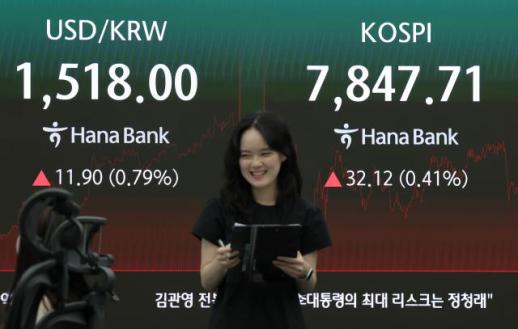 Korea's red-hot rally demands a cooler head SEOUL, May 24 (AJP) - South Korea's stock market has moved to the center of the global financial conversation. The country once defined by the "Korea discount" — that catch-all phrase for chronic undervaluation — is now one of the hottest markets that international investment banks and the financial press are watching. The Financial Times noted recently that the speed of Korea's rally has outpaced even the U.S. Nasdaq's climb during the late-1990s dotcom boom. The benchmark KOSPI has tripled in roughly 18 months, breaking through 7,200 after starting last year near 2,400. That ascent is steeper, by the FT's measure, than the comparable stretch of Nasdaq's bubble-era run. At the heart of the rally sit Samsung Electronics and SK hynix. The artificial intelligence build-out, surging global data center CAPEX, and a step-change in demand for high-bandwidth memory (HBM) have driven both companies to record earnings. Samsung Electronics has gained about 130 percent this year. SK hynix is up close to 170 percent. Their combined market capitalization now exceeds South Korea's gross domestic product — a milestone with few, if any, precedents in the country's economic history. But the hotter the market, the more valuable a cool head becomes. As the FT pointed out, this rally differs from the dotcom episode in one important respect. Nasdaq in 1999 was driven by expectations and multiple expansion, not earnings. Korea's chip rally, by contrast, is being delivered alongside real profit growth. Analysts argue that the global AI infrastructure build is restructuring the memory industry itself. That is why Goldman Sachs, JPMorgan and Citigroup have kept raising their KOSPI targets. Memory, long treated as a textbook cyclical, is increasingly being repriced as a structural growth industry inside the larger AI shift. The problem is balance. Korea's rally is dangerously concentrated. Strip out Samsung and SK hynix and a large share of the market remains in the doldrums. Small- and mid-cap value names are being passed over by liquidity, and the real economy bears little resemblance to the euphoria on the tape. In other words, what we are watching is not a broad-based rise in Korea Inc. so much as a hyper-concentrated rally in AI-linked semiconductors. History rewards remembering. Markets overheat in optimism and then forget risk inside that overheating. Korea is also structurally retail-heavy: the so-called "ant army" of individual investors has been a defining force in this rally, with money once parked in U.S. equities flowing back into Samsung and SK hynix. The worry is that margin debt — "bittu," money borrowed to chase the trade — is growing fast. During Korea's housing mania, people said "this time is different." The conviction that Seoul apartment prices could only rise pulled households into ever-larger loans, and ended in extreme volatility. Stocks are no different. Share prices reflect future cash flows, but markets never move in straight lines. The AI revolution is real; the corrections and drawdowns inside that revolution will be just as real. Foreign flows deserve particular attention. The Korean market is structurally dependent on foreign capital, which provides powerful thrust on the way up but is also the first to leave when risk appetite turns. U.S. interest rate policy, a global growth slowdown, U.S.-China tensions, Taiwan Strait risk and the Middle East — any of these external variables can amplify Korean volatility at short notice. In a market this concentrated in one sector and a handful of names, even a small shock can land outsized. The deeper concern is that the psychology of the market is drifting from investing toward chasing. Once "if I don't buy now I'll be left behind" replaces cold analysis of earnings and industry change, the warning lights come on. The risk is sharpest when retail investors lever up to crowd into a narrow group of stocks. And yet this rally cannot be dismissed as a simple bubble. Korean equities still trade cheaply against U.S. peers. Bloomberg data cited by the FT put the KOSPI's forward price-to-earnings ratio in the 8x range — less than half that of the S&P 500. Nearly half of listed Korean companies still trade below a price-to-book ratio of one. The country has not, in other words, fully escaped its structural discount. What matters from here is direction. For Korea to graduate into a genuinely mature capital market, it cannot ride on two stocks alone. Small- and mid-caps, value names, biotech, robotics, defense, shipbuilding, content and software all need to participate. The market's overall fitness has to improve. That is also why the government's corporate governance reforms and its low-PBR value-up program matter. Done well, they should raise trust in the capital market and strengthen the system as a whole. Above all, what Korea needs now is a sense of balance. The AI revolution is opening a genuine era of industrial transformation, and Korea's semiconductor industry sits at its center. But every market mania casts a shadow. Investors must price risk even when feeling optimistic. Government must stress-test the system even in a bull market. Companies must build long-term competitiveness rather than get drunk on their share price. The world is watching Korea's market. Whether this surge becomes the opening chapter of the country's industrial renaissance — or simply another entry in the ledger of extreme volatility — depends on the choices made from here. 2026-05-24 16:44:42
 -
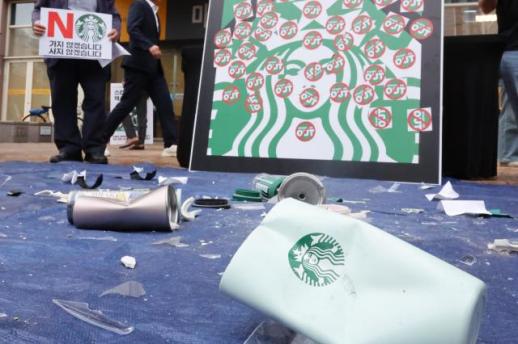 Consumer group urges Starbucks to fully refund prepaid balances SEOUL, May 22 (AJP) - The Korea National Council of Consumer Organizations urged Starbucks Korea to refund prepaid card balances in full and without conditions to customers who no longer wish to use the chain, as a consumer boycott over a controversial marketing campaign deepens. The civic group on Friday also called on regulators and lawmakers to overhaul what it described as an unreasonable refund regime for prepaid stored-value cards. Under Starbucks' current terms, customers must spend at least 60 percent of a charged balance before the remainder can be refunded. That threshold is rooted in the Fair Trade Commission (FTC)'s standard terms for new-type gift certificates and the Electronic Financial Transactions Act, which require users of fixed-amount vouchers to spend at least 60 percent — or 80 percent for vouchers worth 10,000 won ($6.59) or less — before reclaiming the balance. "Starbucks must improve its system so that refunds can be processed without visiting a store, easing the burden on store staff," the council said in a statement, adding that the FTC and the National Assembly should swiftly amend the relevant rules. The backlash erupted after Starbucks Korea launched its "Tank Day" promotion on May 18, the 46th anniversary of the Gwangju Democratization Movement, using slogans including "tap on the desk" — phrases critics say evoked the 1980 military crackdown in Gwangju and the 1987 torture death of student activist Park Jong-chul. The boycott has since spread to other Shinsegae affiliates and prompted a surge in app deletions and prepaid card refunds. Starbucks Korea's cash and cash equivalents stand at about 137.4 billion won, equivalent to roughly 32 percent of its prepaid liabilities — meaning available cash could be exhausted if just one in three customers demanded refunds simultaneously. 2026-05-22 17:22:38
 -
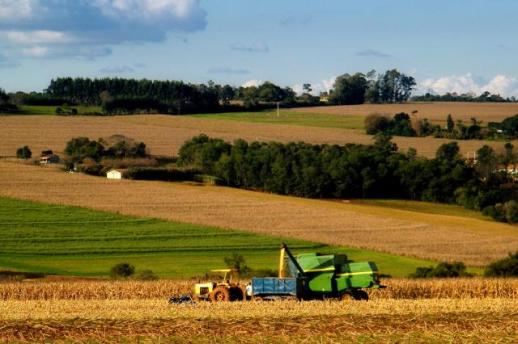 Korean farm income hits record on livestock rebound SEOUL, May 22 (AJP) - South Korean farm households earned an average of 54.67 million won ($36,017) in 2025, a record high driven by a sharp recovery in livestock and crop prices, while fishery households saw their incomes slide on weaker seaweed and abalone markets. According data of last year's farm and fishery household economy released by the Ministry of Data and Statistics on Friday, average annual farm income climbed 8.0 percent from a year earlier to 54.67 million won — the highest level since the ministry began compiling the data. Agricultural income alone surged 22.3 percent to 11.71 million won, powered by an 8.3 percent jump in gross farm receipts that outpaced a 3.4 percent rise in operating costs. Livestock revenue soared 28.5 percent, while crop revenue edged up 1.1 percent. "Farm receipts had temporarily contracted in 2024 due to falling rice and livestock prices, but prices rebounded last year and pushed receipts back into growth," said the Ministry of Agriculture, Food and Rural Affairs, adding that firmer prices for certain fruit crops also lifted the headline figure. Transfer income, which includes government subsidies, rose 9.1 percent to a record 19.89 million won on the back of higher direct payments to farmers and an increase in the maximum monthly basic pension to 342,510 won. By farming type, livestock households led the gains with income jumping 64.0 percent to 88.39 million won, followed by fruit growers and rice farmers, while vegetable producers saw a 3.2 percent decline. Fishery households, by contrast, posted average income of 58.98 million won, down 7.3 percent from a year earlier as what the ministry explained as base effect from 2024's record seaweed prices unwound and abalone prices weakened. Fishery income tumbled 31.6 percent to 19.06 million won, with aquaculture revenue plunging 26.3 percent even as catch-based revenue rose 9.0 percent. Average farm household assets reached 662.85 million won at the end of 2025, up 7.6 percent, while debt rose 6.0 percent to 47.71 million won, reflecting increased borrowing tied to smart farm investments and policy-loan deferrals for disaster-hit producers. 2026-05-22 15:54:16
 -
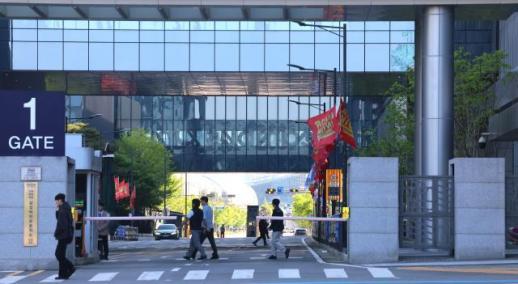 Samsung Biologics wins court penalty against union strike SEOUL, May 22 (AJP) - A South Korean court has ordered Samsung Biologics' labor union to pay 20 million won ($13,196) every time it violates an injunction restricting strike action at sensitive bioreactor lines, escalating a legal standoff at the world's largest contract drugmaker. Reports on Friday said the Incheon District Court granted Samsung Biologics' application for indirect compulsion against the union. The ruling reinforces an earlier injunction that bars union leaders from directing members on certain essential production lines to stop work or from circulating related instructions. The court had initially declined to attach financial penalties to the March injunction after the union pledged to abide by it. That pledge unraveled on April 27, when union leadership distributed a "strike guidance procedure" to members and roughly 300 employees assigned to court-restricted processes joined the subsequent walkout, prompting the company to refile. Samsung Biologics had sought 100 million won per violation, but the court awarded a fifth of that amount. "The union must not, during the period of industrial action based on the March 29, 2026 strike vote, instruct members to halt court-designated processes or distribute related guidelines," the bench said in its order. Industry observers said the decision underscores the unique vulnerability of biologic drug manufacturing, where even brief stoppages at fermentation or purification stages can spoil raw materials and finished products worth hundreds of millions of dollars. The company is separately appealing to expand the injunction's scope to cover its entire production footprint. The Samsung Biologics dispute stands apart from the wage standoff at affiliate Samsung Electronics, where its union on Wednesday suspended an 18-day general strike that had been scheduled to begin Thursday and run through June 7. Union members at Samsung Electronics will vote on the tentative wage agreement from Friday through May 27, while Samsung Biologics remains locked in litigation over the scope and enforcement of its own injunction. 2026-05-22 14:17:07
 -
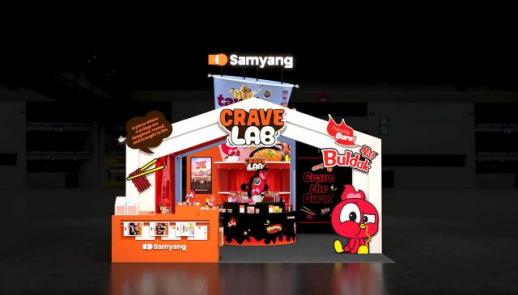 Samyang to court Southeast Asia at Bangkok food fair SEOUL, May 22 (AJP) - Samyang Foods will showcase its spicy noodle lineup at THAIFEX-Anuga Asia 2026, Asia's largest food and beverage trade fair, as the Korean instant ramen maker pushes deeper into Southeast Asia's fast-growing snack market. The five-day exhibition runs from May 26 to 30 at IMPACT Muang Thong Thani in Bangkok. Now in its 21st year, the fair last year drew about 88,000 visitors from 143 countries and 3,231 exhibitors from 57 nations, according to organizers. Samyang announced Friday that it will operate an experiential booth themed "Samyang Crave Lab," staging its flagship Buldak alongside newer brands MEP and Tangle in separate "brand labs" designed to walk visitors through each line's identity and flavor profile. Sampling sessions throughout the day will feature staples such as the original Buldak, Buldak Carbonara and the newly launched Buldak Swicy, and localized offerings including a chili-chicken-cilantro ramen and grilled garlic shrimp ramen tailored to Southeast Asian palates. Canapés made with Buldak sauce will also be served. "We focused on designing a space where visitors can taste, enjoy and immerse themselves in Samyang's brands rather than simply view products on display," said a Samyang Foods spokesperson, adding that the company will keep widening its Southeast Asian footprint through differentiated brands including MEP and Tangle on top of Buldak. 2026-05-22 10:54:30
 -
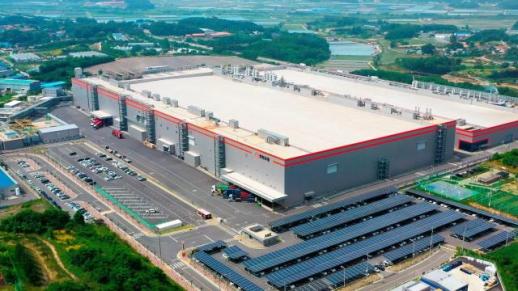 Hanwha Qcells to supply modules for South Korea's largest solar project SEOUL, May 21 (AJP) - Hanwha Solutions' Qcells division announced it will supply high-efficiency solar cells and modules for a 400-megawatt solar power project being developed by Korea South-East Power (KOSEP), the largest solar installation ever built on a single site in South Korea. The plant, set to rise across about 4.63 square kilometers of land in Haenam County, South Jeolla Province, is scheduled for completion in June 2028. KOSEP selected a preferred EPC (engineering, procurement and construction) contractor for the project on Tuesday, one day before the announcement. The chosen EPC firm will install about 640,000 solar modules incorporating cells manufactured exclusively at Hanwha Qcells' production facility in Jincheon, North Chungcheong Province — the company's largest domestic manufacturing base. "This project offered an opportunity to demonstrate the competitiveness of Korean-made solar technology on a large scale," said Yu Jae-yeol, head of Hanwha Qcells' Korea business division, adding that sustained policy support for domestic renewable energy and locally produced components could help restore the country's solar supply chain and drive further investment. The project arrives as South Korea pushes to expand its renewable energy capacity, with domestic manufacturers seeking to reclaim ground in a market long pressured by low-cost overseas competition. 2026-05-21 16:58:15
 -
 South Korea happy to stay the laggard in self-driving race in Asia SEOUL, May 21 (AJP) - The self-driving race on Asian roads is heating up, but South Korea is in no hurry as it bets safety-first approach will take it farther at the end of the day. China is rapidly scaling up commercial robotaxi fleets while Japan has unlocked Level 4 services on public roads. Modest in comparison, Hyundai Motor Group is launching a citywide testbed in Gwangju to close the gap with overseas rivals. Speaking to reporters last week at the group’s headquarters in southern Seoul, Hyundai Motor Group Chairman Chung Eui-sun openly acknowledged the gap but signaled that Hyundai would not chase speed at any cost. "Autonomous driving is being pushed very quickly by China and Tesla," Chung said, admitting "Waymo is also doing well." "Technology can make up for what is lacking, but the most important thing is safety," he added, suggesting Hyundai would not be matching rivals in speed. In any fledgling market, moving first has its advantages. The global autonomous driving market is projected to grow from $286.45 billion in 2026 to about $3.03 trillion by 2033, according to Coherent Market Insights. Goldman Sachs Research separately estimates the broader autonomous vehicle sector could generate roughly $2 trillion in annual revenue by 2035, with the global commercial robotaxi fleet expanding from around 7,000 vehicles in 2025 to some 6 million by 2035. China leads the Asian pack. Baidu’s Apollo Go now operates in 27 cities globally, with weekly rides peaking at more than 350,000 in March, and is expected to begin testing robotaxis in London alongside Uber and Lyft. Pony.ai, partnered with Toyota Motor China and GAC Toyota, said in February it had begun mass production of its seventh-generation bZ4X robotaxi and is targeting a fleet of more than 3,000 vehicles by year-end. WeRide has expanded into Singapore and the Middle East, while Mercedes-Benz-backed Momenta is rolling out robotaxis on Uber’s network in German cities. Japan is moving less aggressively, but visibly nonetheless. The country revised its Road Traffic Act in April 2023 to permit Level 4 driving on public roads under prefectural public safety commission oversight, paving the way for pilot services by Honda Motor, Nissan, Toyota Motor and open-source platform developer Tier IV. Eiheiji Town in Fukui Prefecture launched the country’s first Level 4 public-road service in May 2023, and Tier IV completed robotaxi pilot tests in Tokyo’s Odaiba and Nishi-Shinjuku districts in late 2024. Korea, despite its technology and manufacturing capacity, is still taking its time. The Gwangju pilot is Seoul’s most ambitious response to date, with the southwestern city last month becoming the first major Korean municipality to designate its entire road network as a Level 4 testbed. Hyundai plans to deploy 200 self-driving vehicles equipped with eight cameras and one radar in the second half of this year. The Gwangju fleet will run on Atria AI, an in-house autonomous driving stack developed by Hyundai subsidiary 42dot. Hyundai is also weighing adoption of Alpamayo, the open-source reasoning vision-language-action model unveiled by Nvidia at CES 2026, although no formal partnership has been announced. In January, the group named Park Min-woo — a self-driving specialist who previously worked at Tesla and Nvidia — as chief executive of 42dot and head of its Advanced Vehicle Platform division. Structural hurdles remain. The Board of Audit and Inspection, in a 2024 review of Korea’s response to the Fourth Industrial Revolution, said inter-ministerial disputes had delayed government decisions on autonomous driving for an extended period, widening the technology gap with overseas rivals. Yet Hyundai’s safety-first posture, echoed by domestic researchers, points to what some experts see as Korea’s potential differentiator. While the country may trail Tesla’s accumulated driving data and the centralized push of China’s state-backed champions, Korean academics argue the local industry is steering its AI training toward courtesy, caution and respect on the road — a "warmer" model of autonomy that could carve out a distinct niche. "Aggressive driving is something an autonomous AI can also learn," said Lim Yong-seob, professor of robotics and mechatronics engineering at the Daegu Gyeongbuk Institute of Science and Technology. "AI prioritizes goal completion above all, so it may follow user commands absolutely and even adopt dangerous driving methods to save time, sidelining humans and triggering collisions as vehicles compete for resources with other autonomous cars," Lim said. "Research actually shows that cooperative autonomous driving with frequent yielding can sharply cut collision rates, even at the cost of slightly slower travel. A conservative, human-protecting style of autonomy — one that errs on caution in rain or unusual conditions — will become increasingly important." For Seoul, the next 18 months in Gwangju may determine whether South Korea can claw back lost ground — or watch the next great mobility platform be built largely in Beijing, Tokyo and Silicon Valley. 2026-05-21 15:11:28
 -
 Subnautica 2 sells 4 million copies in five days after early access launch SEOUL, May 21 (AJP) - Subnautica 2, the underwater survival sequel developed by Krafton's creative studio Unknown Worlds Entertainment, has sold about 4 million copies worldwide within five days of its early access release on May 15. The title, built on Unreal Engine 5 and set on a new alien ocean planet, logged 1 million sales at launch before surging past 2 million within the first 12 hours. Peak concurrent players on Steam reached about 467,000, while average daily active users stood at 1.3 million. Cumulative playtime has exceeded 28.57 million hours since launch. The game currently holds a "Very Positive" rating on Steam, with more than 73,000 user reviews and an approval rate of 91 percent. Subnautica 2 is available on Steam, the Epic Games Store, and Xbox Series X|S. "We’re incredibly grateful for the response from players around the world," said Fernando Melo, the game's executive producer. "Community feedback continues to help shape the future of Subnautica 2, and we’re excited to keep building the experience together with our players." Unknown Worlds Entertainment is the studio behind the original Subnautica, a title widely credited with defining the marine survival genre. The sequel introduces series-first cooperative multiplayer for up to four players, allowing teams to coordinate survival strategies and share discoveries across its vast alien seascape. The developer has outlined upcoming patches to adjust creature aggression and detection range, and to enhance the utility of survival tools, as it works toward a full release in response to player feedback gathered during early access. 2026-05-21 10:27:50
 -
 CJ Group seeks police probe over leak of female employees' personal data SEOUL, May 20 (AJP) - CJ Group filed a complaint with the Seoul Metropolitan Police Agency over the leak of personal information belonging to about 330 female employees via a Telegram channel, in the latest in a string of data security breaches rattling corporate Korea. The disclosed material the group revealed on Wednesday included mobile phone numbers, internal extensions, job titles and profile photographs, all of which matched current and former staff records, the company said. The Telegram channel, opened in 2023 and followed by about 2,800 users, surfaced over the weekend and prompted an internal probe pointing to a likely insider leak rather than an external hack, given that some of the exposed fields could only be retrieved through CJ's intranet. "We will cooperate fully with the police investigation," a CJ Group spokesperson said, adding that affected employees had been notified individually and that the company was taking steps to prevent secondary harm. The breach does not meet the threshold for mandatory reporting to the Personal Information Protection Commission, the company said, as it involves fewer than 1,000 people and does not include resident registration numbers or other sensitive identifiers. Even so, the incident has drawn fresh scrutiny because the leaked photographs and contact details target female staff exclusively, raising the prospect of stalking, harassment and other downstream abuse. The CJ leak lands amid a punishing run of cyber and data incidents at South Korean conglomerates. Shinsegae Group's IT affiliate disclosed in late December that malware had compromised the records of about 80,000 employees, including staff numbers and, for some, names, departments and IP addresses, through the group's intranet. Days later, Korean Air said about 30,000 employee records, including names and bank account numbers, were exposed when Korean Air C&D Services, a catering supplier spun off from the airline in 2020, was breached by an external hacker group. Mobile carriers SK Telecom and KT also came under government investigation last year, with the SK Telecom breach exposing internal data tied to roughly 27 million users. 2026-05-20 17:19:55
 -
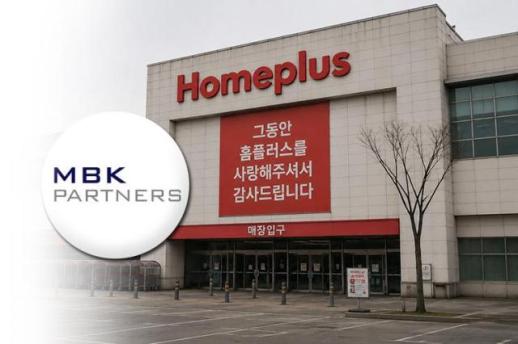 Homeplus stores fade as Korea's offline retail hunts for a lifeline SEOUL, May 20 (AJP) - Finding a grocery item for an impromptu home dinner has become something of a luxury, said Michelle, an expatriate homemaker in her 40s living in Seorae Village, a quiet enclave in southern Seoul that is home to much of Korea’s French community due to its proximity to the country’s only French international school. Apart from a handful of convenience stores, butcher shops and fruit vendors, the neighborhood’s only meaningful grocery option is a Homeplus supermarket whose shelves are increasingly dominated by tissues, detergents and whatever inventory remains. "I walked around the neighborhood for more than half an hour to buy a carton of eggs," she said. "I gave up on finding spaghetti sauce." The affluent Seocho district neighborhood has seen more than three grocery stores shut down in recent years, leaving Homeplus as the area’s last sizable brick-and-mortar supermarket. Weekend checkout lines regularly stretch across the store, while delivery orders can take hours. But even there, signs of retreat are becoming difficult to ignore. Cashiers have been reduced to a single counter, and delivery staff have all but disappeared. At the retailer's branch in Hwaseong, Gyeonggi Province, the basement floor once occupied by cosmetics chains Olive Young and Nature Republic now sits vacant after both tenants pulled out. The pork counter labeled "Handon" — domestic pork — displays wooden cutting boards instead of meat. Ceramic bowls sweat with condensation beside packs of marinated bulgogi, while kitchen scissors rest awkwardly among refrigerated chicken trays. Frying pans are stacked in the eggs-and-tofu aisle. In the liquor section, beer has vanished entirely. Only zero-alcohol versions of Hite and Terra beer remain alongside slow-moving whisky and traditional liquors. Soju is nowhere to be found. The scene tells a sharper story than any balance sheet. Homeplus, South Korea's second-largest hypermarket operator, is bleeding cash under court-led rehabilitation proceedings even after agreeing to sell its supermarket arm, Homeplus Express, to NS Shopping, an affiliate of Harim Group, for around 120 billion won ($79 million). The proceeds from the sale are not expected to arrive until late June, and the company said earlier this week that 37 of its 104 hypermarkets have suspended operations since May 10. Only 67 stores remain open. Local reports say April salaries went unpaid, while payroll due Thursday for May is also unlikely to be met. Homeplus has requested a short-term bridge loan from its largest creditor, Meritz Financial Group, using the proceeds from the Express sale as collateral. But negotiations have reportedly stalled as Meritz demands joint guarantees from owner MBK Partners and company management, citing potential breach-of-trust risks should the rehabilitation collapse. "Without resolving wage arrears and unpaid supplier bills, it is extremely difficult to sustain the rehabilitation process," Homeplus said in a statement. "If the remaining 67 stores are also forced to close, continuing rehabilitation proceedings will no longer be feasible." The picture beyond Homeplus is hardly any brighter. Data from South Korea's Ministry of Trade, Industry and Energy show sales at large discount chains plunged 15.2 percent in March from a year earlier, marking the sector’s eighth consecutive quarter of decline since the second quarter of 2024. Smaller-format supermarket chains, known locally as SSMs, saw sales fall 8.6 percent. Online retail, by contrast, expanded 8.1 percent and now accounts for 60.6 percent of all major retail sales. The hypermarket sector's share has shrunk to just 8.1 percent, down sharply from 15.1 percent in 2021. The collapse in consumer trust toward Coupang following last year's data breach briefly dented e-commerce momentum, but analysts say the damage inflicted on offline retail after years of online migration has become structural rather than cyclical. Single- and two-person households — once the core customer base for chains like Homeplus — increasingly prefer smaller, faster and app-based purchases over large weekly shopping trips. Rivals that recognized the shift early are beginning to pull away. Emart, South Korea's largest discount chain, posted a first-quarter operating profit of 178.3 billion won, its strongest first-quarter performance in 14 years after converting major stores into experience-focused "Starfield Market" complexes. Lotte Mart, benefiting in part from Homeplus’ troubles, lifted domestic operating profit by 30.9 percent through tighter promotions and a heavier grocery focus. Convenience-store chains are pushing in the opposite direction — outward. GS25 and CU launched 24-hour delivery services through Coupang Eats this week, filling the final overnight gap in their nationwide quick-commerce networks. Meanwhile, Daiso expanded same-day delivery coverage to all 25 districts of Seoul on May 14, effectively transforming its 1,600 stores into urban micro-fulfillment hubs. Even Lotte Mart is accelerating investment in logistics infrastructure through its Zetta grocery app and an automated fulfillment center in Busan developed with Britain's Ocado, scheduled to begin operations later this year. The common thread is increasingly clear: offline space alone no longer pays the rent. The survivors are reinventing stores as experience venues, logistics hubs or rapid-delivery nodes — anything that offers a function a smartphone screen cannot. Homeplus, by contrast, is running out of time to decide what it wants to become. Supplier arrears alone are estimated at around 200 billion won, exceeding the cash expected from the sale of Homeplus Express. Even if Meritz ultimately agrees to extend emergency funding, industry observers say the money would buy only weeks, not a turnaround. For now, the empty shelves in Hwaseong stand as a reminder of what happens when a retail giant stops being a destination and becomes, briefly, a showroom for whatever stock remains. 2026-05-20 15:11:06