
Journalist

Sohn Jie-ae
ellenshs@ajunews.com
-
 Seoul remains cautious while more foreign vessels slip through the Strati of Hormuz SEOUL, April 05 (AJP) -A number of foreign-flagged vessels have begun slipping through the heavily militarized Strait of Hormuz, offering tentative signs of movement in a waterway that remains effectively under Iran’s control — but for South Korea, the path out is still far from clear. The latest breakthroughs have come from Europe and Japan. A French-owned container ship operated by CMA CGM successfully transited the strait this week, becoming one of the first Western-linked vessels to do so since Iran imposed its de facto blockade. The ship reportedly signaled its nationality to Iranian authorities before entering, underscoring how passage is now contingent on political signaling as much as maritime protocol. Japan has also managed limited progress. A liquefied natural gas carrier linked to Mitsui O.S.K. Lines exited the Gulf — the first Japan-related vessel to pass since the conflict began — followed by an LPG tanker that navigated through Iranian territorial waters. Tokyo has stressed that these passages were not the result of direct government negotiations, suggesting that shipping firms are cautiously testing routes under evolving Iranian conditions. These isolated crossings align with Iran’s increasingly explicit policy of selective access. Tehran has moved beyond vague assurances and begun naming “friendly nations” eligible for passage. In a televised statement, a senior Iranian military spokesperson described Iraq as a “brother country” exempt from restrictions. Iran has also indicated it will allow vessels carrying humanitarian goods — including food and livestock feed — to pass, while continuing to restrict ships linked to what it considers hostile states. Still, the practical application of these rules remains opaque. Questions persist over whether exemptions apply based on a vessel’s flag, ownership, cargo, or destination — leaving shipping companies to weigh the risks of entering one of the world’s most volatile chokepoints. Seoul is watching the situation with caution. South Korea’s Foreign Ministry said Sunday that the differing outcomes reflect a complex mix of variables, including a vessel’s nationality, ownership structure, cargo type, destination and even crew composition. “Conditions vary by ship and by country,” the ministry said, adding that the government’s priority remains the safety of vessels and crew. It emphasized that Seoul is working with international partners to ensure freedom of navigation in line with global maritime norms, rather than pursuing bilateral negotiations with Tehran. For now, Korean shipping firms appear unwilling to act unilaterally. A total of 26 South Korean vessels, carrying 173 crew members, remain stranded inside the Gulf, with operators opting to wait for clearer security guarantees rather than attempt piecemeal exits. Meanwhile, the Korean finance ministry said Sunday that ambassadors from the six Gulf Cooperation Council (GCC) countries — Saudi Arabia, the United Arab Emirates, Qatar, Kuwait, Oman and Bahrain — have pledged to prioritize energy shipments to Korea. The envoys told Deputy Prime Minister and Finance Minister Koo Yun-cheol in a meeting on April 3 that Korea remains a “top-tier partner,” vowing close coordination to ensure stable supply of crude and other key resources. The pledge came after Seoul requested uninterrupted access to critical inputs including crude oil, naphtha and urea, warning that a prolonged Middle East conflict could weigh heavily on the Korean economy. Korea sourced 69.1 percent of its crude imports from the Middle East last year, with Saudi Arabia as its largest supplier and Qatar a key LNG provider. At the same time, Korea’s advanced refining capacity — designed to process heavy, sulfur-rich Middle Eastern crude into high-value products — has made it an indispensable node in the global energy supply chain. Korean refiners supply a quarter of Australia’s imported petroleum products and nearly 70 percent of U.S. jet fuel imports. That interdependence helps explain why Korea is important to Gulf producers in fear of the country preferring alternative crude such as Brent or WTI. 2026-04-05 17:25:26
 -
 OPINION: April remains the cruelest month T.S. Eliot once called April the cruelest month, for it forces life out of dead land. There is something unsettling about renewal. Beauty, when it returns too quickly, exposes what has been lost. This April, the world stands once again before that line. War is no longer a distant headline. In Iran and across the Middle East, conflict spills beyond borders, touching countries that once stood at the periphery. In Ukraine, now in the fourth year of war, cities, power grids, hospitals and homes remain targets. War is not simply about territory. It is about the quiet dismantling of ordinary life — losing a home, losing a family member, wondering whether there will be electricity tonight or fuel to cook tomorrow. The numbers tell the story with cold precision. According to the United Nations Human Rights Monitoring Mission in Ukraine, 2,514 civilians were killed and 12,142 injured in 2025 alone — a 31 percent increase from the previous year. Long-range weapons and drone strikes have expanded the battlefield into entire cities. Civilian infrastructure is no longer collateral damage; it is the target. On April 3, another wave of Russian strikes killed civilians and destroyed residential and administrative buildings. Even a veterinary hospital near Kyiv was hit, killing dozens of animals. War does not stop at human life; it erodes the entire fabric of living systems. In the Middle East, even the numbers resist clarity. That, too, is part of the story. Reuters’ March 31 compilation shows at least 1,368 deaths in Lebanon and 19 in Israel, with additional casualties reported across Iraq, Kuwait, Bahrain, Oman, Saudi Arabia and the United Arab Emirates. Iran’s toll is more uncertain. The International Federation of Red Cross and Red Crescent Societies estimates over 1,900 dead and around 20,000 injured. A U.S.-based rights group, HRANA, places the figure closer to 3,500. When numbers diverge this widely, it does not suggest fewer deaths — it suggests a war that cannot be fully counted. South Korea, for now, remains outside the direct line of fire. There are discussions of emergency fiscal spending, vehicle rationing and energy contingency measures. Northeast Asia is not under bombardment. But distance does not equal detachment. The shock travels through other channels — oil prices, exchange rates, inflation and supply chains. The Middle East crisis is, in many ways, an Asian crisis. According to the U.S. Energy Information Administration, 84 percent of crude oil and condensate and 83 percent of liquefied natural gas passing through the Strait of Hormuz in 2024 were bound for Asia. Roughly one-fifth of global LNG trade flows through that narrow passage. When Hormuz falters, the effects do not remain at sea. They ripple outward — into fuel prices in Seoul, fertilizer costs in Southeast Asia and power shortages in South Asia. The strait is not just a geographic chokepoint. It is a lifeline. This is not merely an oil price spike. Across Southeast Asia, governments are already deploying familiar emergency measures — expanding fuel subsidies, cutting budgets, adjusting fuel standards, shifting energy sources. The sequence is recognizable. First comes the energy shock. Then inflation spreads through transportation, electricity and agriculture. Governments intervene to cushion the blow, straining public finances. Eventually, the pressure reaches food systems and social stability. This pattern has repeated itself before — in the oil shocks of the 1970s, the Asian financial crisis of 1997, the food crisis of 2007–08. There is little reason to assume this time will be different. When fuel becomes scarce, what breaks first is not strategy but routine. Bus schedules falter. Fishing boats stay docked. Refrigerated logistics grow more expensive. Fertilizer prices rise, pushing up the cost of food. What appears in headlines as an “energy crisis” manifests in daily life as skipped meals, lost wages and mounting uncertainty. War travels. It does not respect distance. And yet, in the midst of this brutal spring, there is another image. On April 3, astronauts aboard NASA’s Artemis II mission released the first images of Earth taken from beyond its orbit. The photographs show a blue sphere edged with auroras, with faint zodiacal light glowing as the Earth eclipses the Sun. Commander Reid Wiseman described seeing the planet from pole to pole. Astronaut Victor Glover offered a simple message: “You are beautiful.” From that vantage point, humanity appears as a single presence — without borders, without divisions, without the language of conflict. Seen from space, the Earth is whole. Seen from the ground, the sky is beautiful too. This weekend, cherry blossoms scatter in the spring wind, falling like pale snow. This year they bloomed early and faded quickly, not lasting even a full week at their peak. We often say that flowers are beautiful because they are fleeting. But there is something uneasy about how quickly they vanish. The brevity of the bloom mirrors a deeper fragility — of peace, of stability, of the ordinary rhythms we assume will endure. So April must be seen through two lenses. One is the distant view, from above, where humanity appears unified, where the lines we draw seem temporary and small. The other is the grounded view, from beneath the blossoms, where life is lived day by day — where a meal, a home, a night’s sleep are not abstractions but necessities. War, in the end, is not geopolitics. It is the erosion of these small certainties. April is cruel. In Iran, in Ukraine, and across parts of Asia absorbing the shock of energy and food disruption, people lose homes, families and the ability to sustain daily life. South Korea is not at the center of this destruction. But it is not outside it either. We inhabit the same planet. What this moment demands is not only awareness of beauty, nor only attention to statistics, but the capacity to hold both at once — to recognize the elegance of the Earth from afar while refusing to ignore the devastation unfolding upon it. The Earth, seen from space, is beautiful. The sky, seen beneath the blossoms, is beautiful. And still, April remains the cruelest month. *The author is the managing editor of AJP 2026-04-04 15:47:58
 -
 S. Korea to join UK-led virtual meeting on Hormuz as US shift burden on allies SEOUL, April 02 (AJP) -South Korea will join a U.K.-hosted virtual foreign ministerial meeting Thursday aimed at coordinating international efforts to secure the Strait of Hormuz, as Washington signals that responsibility for safeguarding the core oil route should fall on its primary dependents. Chung Eui-hae, deputy foreign minister for political affairs, will participate via video link in the meeting involving 35 countries that have backed a joint statement condemning attempts to block the vital shipping lane. The talks, scheduled for 8 p.m. Seoul time, come amid growing pressure on energy-importing nations after U.S. President Donald Trump urged them to take the lead despite the conflict being triggered by U.S.-Israeli military action. “Build up some delayed courage,” Trump said Wednesday, addressing countries dependent on Gulf oil. “They should have done it before, should have done it with us, as we asked. Go to the strait and just take it, protect it.” His remarks — coupled with earlier comments that securing the waterway is “not America’s job” — underscore a shift toward burden-sharing that has unsettled markets and allies alike. British Prime Minister Keir Starmer said the meeting, hosted by Foreign Secretary Yvette Cooper, will assess “all viable diplomatic and political measures” to restore freedom of navigation, ensure the safety of trapped vessels and seafarers, and resume the flow of critical commodities. “We expect there will be broad discussions regarding the current situation and the need to secure the safety of vessels and crew stranded in the strait, and freedom of navigation,” Foreign Ministry spokesperson Park Il said at a regular briefing on Thursday. Park stressed that ensuring maritime security aligns with the interests of all nations and expressed hope for a swift normalization of global logistics networks based on international law. "Safety of international sea lanes and freedom of navigation serve the interests of all countries and are protected under international law. We hope global maritime logistics will be normalized as soon as possible,” he said. The Strait of Hormuz — a chokepoint for roughly a fifth of global oil and LNG trade — remains effectively paralyzed amid more than a month of conflict involving Iran, raising concerns over prolonged supply disruptions and price volatility. Park described the situation as “extremely grave” and “highly fluid,” saying Seoul would avoid premature judgments while closely monitoring developments. “The government will continue to closely monitor developments in the Middle East and explore various measures to protect our citizens and ensure the safety of energy transport routes,” he said. Seoul has already participated in prior international efforts, including a joint statement on the Strait and a recent meeting of military chiefs hosted by France, and will continue engaging in coordinated discussions. “By taking part in today’s meeting and other international discussions, we will carefully review global trends and consider how we can contribute,” Park added. 2026-04-02 17:37:59
 -
 ANALYSIS: Korea inflation enters war-driven upcycle SEOUL, April 02 (AJP) - South Korea’s inflation is beginning to turn upward, but March’s data likely understates the scale of price pressure building beneath the surface as the Middle East war feeds through oil, exchange rates and expectations. Consumer prices rose 2.2 percent in March from a year earlier, accelerating from 2.0 percent in the previous two months, according to data released Thursday. On the surface, the increase appears modest — still within the Bank of Korea’s comfort range. But the composition tells a different story. Energy has re-emerged as the dominant driver, now compounded by a structurally weakening won, and the pressure is only just starting. The Korean currency has extended its slide from last year, losing an additional 6 percent amid capital outflows. The dollar is hovering above 1,520 won — its highest level since March 2009 during the global financial crisis — amplifying imported price pressures. Petroleum product prices surged 9.9 percent, contributing 0.39 percentage point to headline inflation. Diesel jumped 17 percent and gasoline 8 percent, marking the sharpest energy-driven impulse since the early phase of the Ukraine war. Without fuel price caps and tax measures, the headline figure would have printed significantly higher. March captures only the initial shock. The war entered its first full month, but the key macro channels — oil, the dollar and the exchange rate — have yet to fully transmit into domestic prices. That pass-through is now beginning. U.S. President Donald Trump’s prime-time address on Wednesday sharpened that trajectory. While projecting the war could end within “two to three weeks,” he simultaneously reframed the Strait of Hormuz as a responsibility for energy -dependent countries and openly promoted U.S. oil as the alternative. Markets read through the optimism. Oil prices firmed, the dollar strengthened and the won weakened — a combination that mechanically raises Korea’s import costs. For an economy that imports the bulk of its energy, this is the classic setup for imported inflation. President Lee Jae Myung on Thursday called for “emergency measures,” urging bipartisan support to fast-track a 26.2 trillion won supplementary budget framed as a wartime response. But fiscal expansion at a time of rising price pressure risks offsetting monetary tightening and entrenching inflation expectations. The bond market is already adjusting. The 10-year government bond yield, after briefly easing on expectations of index inflows tied to Korea’s inclusion in the World Government Bond Index (WGBI), has resumed its climb, reflecting rising inflation and supply concerns. The government’s supply-side response remains tactical. Officials say roughly 50 million barrels of alternative crude have been secured for April, compared with a typical monthly intake of 80 million barrels. The shortfall is being managed through demand restraint, lower refinery utilization and strategic stockpile swaps. This may stabilize flows. It does not stabilize prices. What matters for inflation is not physical availability, but the marginal cost of replacement supply — and that cost is rising structurally. Even in a best-case scenario, the Korea Institute for International Economic Policy estimates oil will settle around $90 per barrel, 43 percent above prewar levels, as damage to energy infrastructure delays normalization. A prolonged disruption of the Strait of Hormuz could push prices to $117 as global supply falls by around 10 percent. In a broader escalation, prices could reach $174 — a level consistent with a full-scale external shock. The transmission mechanism is already visible. Higher oil prices feed into producer prices, which pass through with a lag into transportation, food and services. Authorities have warned that restaurant and processed food prices will reflect the shock in the coming months, particularly as the weaker won amplifies import costs. History suggests the first-round impact is only the beginning. KIEP estimates supply-related oil shocks lift inflation by about 0.12 percentage point immediately, with larger cumulative effects as second-round pressures take hold. Policy buffers are limited. Administrative controls can delay adjustments but cannot suppress them indefinitely without distortion. Fiscal measures can cushion households but erode policy space. Monetary policy faces a dilemma: tightening into an external supply shock risks further weakening domestic demand. The Bank of Korea is widely expected to hold the base rate at 2.5 percent at its April 10 meeting — the final one under Governor Rhee Chang-yong — stretching a near year-long pause, with incoming governor Shin Hyun-song set to inherit dwindling policy firepower to rein in dollar demand and inflationary pressures. 2026-04-02 15:04:21
 -
 Korea inflation hits 3-month high March on oil shock from Middle East conflict SEOUL, April 2 (AJP) — South Korea's consumer prices accelerated at their fastest pace in three months in March on surging oil prices in the first month of the Middle East conflict, as the crippling of a key shipping waterway for energy supplies followed U.S.-Israeli attacks on Iran in late February, government data showed Thursday. The consumer price index for March rose 2.2 percent from a year earlier, the fastest since a 2.3 percent increase in December, driven by higher transportation and utility costs linked to a spike in fuel imports, according to the Ministry of Data and Statistics. Oil prices have surged amid tensions around the Strait of Hormuz — a chokepoint for roughly one-fifth of global oil and LNG trade — exposing South Korea’s deep reliance on imported energy. The Strait of Hormuz, through which a significant share of Middle East energy supplies passes, has remained effectively constrained since the outbreak of the conflict. South Korea relies on the Gulf for about 71 percent of its crude imports, 20 percent of LNG and around 77 percent of naphtha used in a wide range of industrial production, from plastics to paints. The Korean won has visited the lows of 2009 crisis period against the U.S. dollar, adding to import price pressure. Petroleum prices jumped 10.4 percent from February and 9.9 percent from a year earlier, the primary driver behind a 1.5 percent on-month and 2.7 percent on-year rise in industrial goods prices, contributing 0.9 percentage point to the headline inflation increase. Transportation costs rose 4.3 percent from a year earlier, while utility charges, including electricity, gas and water, climbed 3.1 percent, reflecting the pass-through of higher global energy prices. Among key items, gasoline prices surged 8 percent on year and diesel rose 17 percent. The government has imposed a temporary cap on gas-pump prices, helping to contain further rise. Service prices rose 2.4 percent on year, with dining-out costs up 2.8 percent and personal services gaining 3.2 percent. Agricultural, livestock and fishery products eased 1.9 percent on month and 0.6 percent from a year earlier, with fresh food prices falling 2.7 percent on month and 6.6 percent on year to cap broader inflation. Core inflation, which excludes food and energy, rose 2.1 percent on-year, remaining relatively stable and suggesting limited demand-driven pressure. The livelihood price index rose 2.3 percent, accelerated from 1.8 percent. 2026-04-02 09:07:16
 -
 Seoul signals use of rarely-used emergency order to fast-track "war" budget SEOUL, March 31 (AJP) -South Korea is pushing ahead with an aggressive fiscal response to cushion the economic shock from the Middle East war, unveiling a 26.2 trillion won ($19.4 billion) supplementary budget aimed at stabilizing energy prices, supporting households and shielding key industries — despite the risk of stoking inflationary pressure with the won hovering at 2009 crisis-era lows. The emergency package, approved at a Cabinet meeting chaired by President Lee Jae Myung, is framed as a “war-time” budget to counter a triple shock of surging oil prices, a weakening currency and rising inflation. Lee is set to seek bipartisan backing for the plan through a National Assembly address on Thursday, while signaling a willingness to invoke emergency fiscal powers under the Constitution for a “preemptive and proactive” response to the deepening energy crisis stemming from the widening Gulf conflict. The emergency fiscal authority, stipulated under Article 76 of the Constitution, allows the president to issue measures with the force of law in times of severe economic or national crisis when legislative delays are untenable. It has been used only once in modern history — in 1993, when then-president Kim Young-sam enforced the financial real-name system. At the core of the package is direct cash support and energy subsidies designed to sustain consumption and prevent a sharper downturn. About 4.8 trillion won will be distributed to roughly 35.8 million people — around 70 percent of the population — with payments ranging from 100,000 to 600,000 won depending on income and region. The funds will be issued in spending-linked forms such as local currency or card credits. Another 5 trillion won has been earmarked to cap fuel costs and ease transport expenses, including support for a temporary oil price ceiling and expanded public transport rebates. Additional measures target energy-vulnerable households and fuel-intensive sectors such as agriculture and fisheries. The government said the budget is structured around three pillars — responding to high energy costs, stabilizing livelihoods and minimizing industrial damage while securing supply chains. Targeted programs include 1.9 trillion won for youth employment and startups, alongside funding for renewable energy transition, export financing and critical raw material imports. Unlike past stimulus efforts, the package will not rely on additional debt issuance but instead be financed by stronger-than-expected tax revenues, buoyed by semiconductor exports and stock market gains. Fiscal indicators are expected to remain broadly stable, with the managed fiscal deficit projected at 3.8 percent of GDP, slightly lower than the original budget. The backdrop remains increasingly fragile. Escalating conflict involving Iran and disruptions to Gulf shipping routes have pushed global oil prices above $100 per barrel, amplifying input costs for an economy heavily dependent on imported energy. The government estimates the supplementary budget will lift growth by about 0.2 percentage point this year — a modest buffer as global institutions including the OECD have already downgraded Korea’s outlook amid weakening external demand and mounting geopolitical risks. Still, the policy comes with trade-offs. While authorities argue the stimulus will not significantly fuel inflation given subdued domestic demand and the absence of new bond issuance, some economists warn that injecting liquidity amid energy-driven price pressures could complicate inflation management. Political friction is also building. The opposition is widely expected to protest to the broad cash payouts as a pre-election measure ahead of local polls scheduled for June 4, arguing the package leans too heavily on short-term consumption support. For now, the administration is signaling urgency over orthodoxy since Lee has indicated he may resort to emergency fiscal authority if political gridlock delays implementation — underscoring the government’s determination to act swiftly as external shocks threaten to spill deeper into growth, prices and financial markets. 2026-03-31 20:11:37
 -
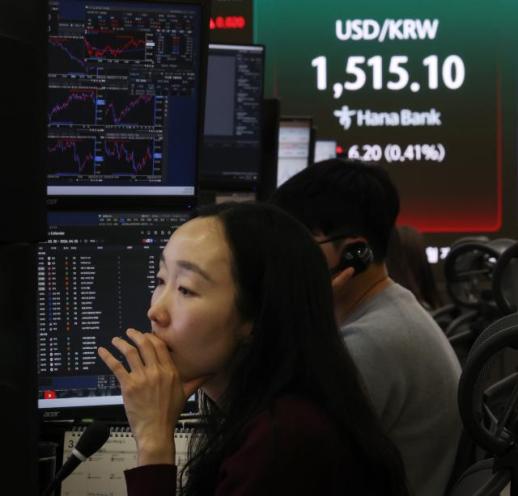 Korea's postwar securities issues rise modestly on frontload demand amid rising yields SEOUL, March 31 (AJP) -South Korea’s corporate direct financing rose in February, with stock and bond issuance climbing 8.5 percent from a month earlier, buoyed by a pre-war equity rally and a rush to secure funding ahead of further rate increases, data showed Tuesday. Total public offerings of stocks and corporate bonds reached 19.25 trillion won ($14.2 billion), up 1.5 trillion won from January, according to the Financial Supervisory Service. Equity financing led the increase, surging 215.6 percent on-month to 341.5 billion won, driven by a rebound in initial public offerings and rights issues. IPOs totaled three deals, with proceeds jumping 265.8 percent to 290.8 billion won, while rights offerings rose 76.7 percent to 50.7 billion won. Debt issuance remained robust, rising 7.2 percent to 18.9 trillion won. The increase was led by financial bonds, which jumped 37.6 percent, signaling a flurry of preemptive borrowing as issuers moved to lock in funding before yields climb further. By contrast, general corporate bonds and asset-backed securities declined 28.7 percent and 42.6 percent, respectively, pointing to a more selective risk appetite. Issuance was heavily skewed toward high-grade borrowers. Investment-grade bonds accounted for 65.6 percent of total issuance, while lower-rated bonds below BBB made up just 3.6 percent, underscoring a clear market bias toward safer credits. Refinancing dominated funding activity. About 76 percent of bond issuance was used to roll over existing debt, reflecting expectations that borrowing conditions will tighten further. Short-term funding markets showed mixed trends. Combined issuance of commercial paper and short-term bonds rose 3.1 percent to 159.6 trillion won. Commercial paper issuance fell 19.3 percent to 37.9 trillion won, while short-term bonds rose 12.9 percent to 121.7 trillion won, suggesting a shift toward more structured and flexible instruments. Outstanding corporate bonds stood at 748.4 trillion won at end-February, down 0.6 percent from the previous month, as net redemptions extended for a second straight month. The cautious funding stance is likely to harden further, with the Middle East conflict in March jolting markets and pushing yields back toward levels seen during the post-pandemic tightening cycle. 2026-03-31 07:47:07
 -
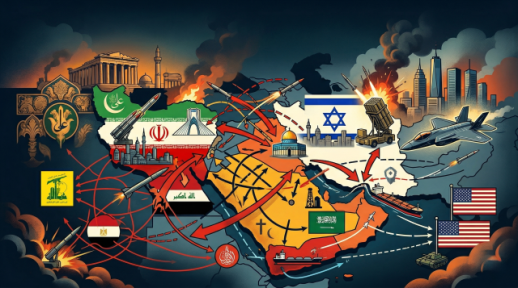 OPINION: The essence of the Iran war — beyond the wounds of religion and ethnicity, toward an order of coexistence SEOUL, March 29 (AJP) - When examining the war in the Middle East, the first instinct to resist is oversimplification. The ongoing Iran conflict may appear on the surface as a clash between Israel and Iran, but in reality it is a multi-layered war entangling U.S. military and diplomatic intervention, the strategic interests of Gulf states, the involvement of pro-Iranian proxies such as the Houthis and Hezbollah, and the mounting pressure surrounding the Strait of Hormuz and the global energy order. Recent developments alone paint a vivid picture. Gulf states have conveyed to Washington that a ceasefire is insufficient, demanding instead the degradation of Iran's military capabilities. Yemen's Houthis have formalized their offensive against Israel within the broader war effort. This is no longer a bilateral conflict. It is a simultaneous eruption of fissures that have long fractured the Middle East. Yet to view this war solely through the prism of missiles, airstrikes, crude oil and exchange rates is to see only half the picture. Beneath the surface lie deep geological strata of history and religion, ethnicity and collective memory. Iran, which claims the mantle of Shia leadership, has long competed with the Sunni-dominated regional order. Israel's security doctrine clashes with the broader Islamic world's grievances. Western historical intervention and the lingering memory of empire have together fueled today's volatility. The Sunni-Shia divide transcends doctrinal differences. It functions as a political axis along which Iran and Saudi Arabia contest leadership of the Muslim world. Religion serves as a banner, but what moves that banner is power, fear, memory, and mobilization. The medieval Crusades cast a historical shadow that persists to this day. They were military expeditions launched by Western Christendom under the banner of reclaiming the Holy Land and containing Islamic power. It would be reductive to frame today's Middle Eastern conflict as a mere repetition of the Crusades — nation-states have since emerged, oil and nuclear weapons have entered the equation, and international law and global finance now shape the landscape. Yet the ancient template of "politics waged in God's name" remains very much alive. Faith does not inherently breed violence. But when political power absolutizes faith, religion becomes the most potent language of mobilization. The tragedy of the Middle East has been repeated at precisely that juncture. To understand this war, one must confront a fundamental truth: Judaism, Christianity, and Islam all revere Abraham as a common ancestor of faith. They are Abrahamic religions. In other words, the faiths now training their weapons on one another are, at their core, siblings born from a single root. That they share the same origin yet exclude and deny one another represents, from the standpoint of universal human values, a painful paradox. The moment belief ceases to be a path for saving human lives and becomes an instrument of division, faith loses its original meaning and degenerates into the language of power. This paradox manifests with particular intensity in the Middle East, and nowhere more acutely than in Iran. Today's Iran is known as a Shia Islamic state, but its historical roots run far deeper. The ancient land of Persia was the heartland of Zoroastrianism — a faith widely assessed as having influenced the later development of Judaism, Christianity, and Islam. Moreover, Iran is a nation uniquely situated within the Middle East, using Persian rather than Arabic as its official language. Within this complex entanglement of religion, ethnicity, and language, conflict transcends territorial disputes and resource competition, escalating into a collision of identities. The Iran war is simultaneously a contest of "who is stronger" and a clash over "who we are." The Sunni-Shia rift is not, at its core, merely a theological matter. The schism that began with the seventh-century succession dispute within the Islamic community has solidified over the centuries into a foundation for state alliances, military networks, and identity politics. Iran has expanded its influence through Shia networks stretching across Lebanon, Iraq, and Yemen. Sunni-majority states have perceived this as a challenge to their own security and regional hegemony. This is why Gulf nations, even while not fully aligning with Israel, quietly hope for the diminishment of Iran's capabilities — revealing an ambivalence that lays bare a critical truth: though this war wears the garb of religion, its actual operating mechanism is the politics of the balance of power. Yet religion should not be dismissed lightly. The ambitions and prejudices of political leaders invariably exploit a people's collective memory and wounds. Religion ought to restrain the human impulse, but when fused with power, it readily becomes a tool of absolutism. Phrases such as "God's will," "the mission of a chosen people," and "the revenge of history" are among the most potent rallying cries for mobilizing the masses. In that moment, the adversary ceases to be a negotiating partner and becomes a target for elimination. War is no longer a border dispute but an existential struggle. This is precisely why the Middle East stands at such a dangerous precipice today. When one side defines the other not as an agent of flawed policy but as the very embodiment of evil, peace is no longer a strategic question — it becomes an act of betrayal. Ending the Iran war, therefore, cannot be achieved through military ceasefire alone. A ceasefire silences the guns but does not silence the narrative of enmity. Genuine resolution requires a simultaneous approach across three dimensions. The first is national security. Tangible safeguards must be established to halt strait blockades, missile strikes, and the deployment of proxy forces. The second is politics. The multilateral negotiating framework — entangling Iran, the Gulf states, Israel, its neighbors, the United States, and Europe — must be restructured. The third is the dimension of civilization and religion. Unless the mentality that views the adversary as a target for annihilation is dismantled, war will return in altered form. The Middle East's true affliction is that memories outlast weapons. Thus, the philosophical and religious language that addresses memory must re-enter the discourse. It is here that South Korea's experience offers food for thought. The Republic of Korea is among the rare nations where Buddhism, Protestantism, Catholicism, Won Buddhism, Confucian traditions, and folk beliefs have coexisted within a single society. The Korean Constitution guarantees freedom of religion and prohibits discrimination on religious grounds. Relevant studies have noted that Korean society exhibits comparatively high support for religious freedom and interfaith coexistence. This is not to suggest an absence of conflict. But the fact that the state has not absolutized any single religion, and that multiple faiths have accumulated an experience of competing yet coexisting within institutional frameworks, constitutes a tangible asset. At the deeper root of this Korean asset, the spirit of Hongik Ingan — "to broadly benefit humanity" — and the ideal of Jaesaei-hwa — "to harmoniously govern the world" — are frequently invoked. These ancient principles do not proclaim the supremacy of any single religion. They are closer to ethical maxims for sustaining both the individual and the community. To revere the heavens without harming nature, to value the community without abandoning human dignity — this is the soil in which religious coexistence can take root. Translated into today's language, it amounts to this: no one may trample another in the name of God, and neither state nor civilization may stand above human dignity. This is not a technique of interfaith compromise. It is the final principle that civilization must uphold. In this context, the thought of Daseok Ryu Young-mo also merits renewed attention. Rather than insisting on the absolutism of any single religion, Daseok sought conscience, life, and the will of heaven within the diverse traditions of human spirituality. What the Middle East has lost today is precisely this: the recognition that though beliefs may differ, human suffering is the same; that though the names of God may differ, the lives that must be saved are the same. The force that ends conflict does not lie in making the other entirely the same. It lies in recovering a shared humanity while acknowledging difference. Finally, it is worth recalling the words of the Bible, the Quran, and the Jewish scriptures together. The Bible says, "Blessed are the peacemakers" — that the practice of peace is the true mark of faith. The Quran says God created diverse peoples "so that you may know one another" — that difference is not a pretext for domination and extermination but a starting point for mutual recognition and respect. The Psalms sing, "How good and pleasant it is when brothers dwell in unity." These brief passages from different scriptures converge upon a single truth: God did not command humanity to sanctify hatred. He asked us to know one another, to live together, and to build peace. The essence of the Iran war can therefore be distilled into a single proposition. This is a war of guns and missiles, and simultaneously a war of memory and faith, ethnicity and power. That is why it is harder, and why it endures longer. But precisely because of this, the solution must also be multi-layered. Military deterrence and diplomatic compromise, economic interests and religious reflection, national security and human dignity — all must advance in concert. Elevating any single dimension collapses the rest. The Middle East's history has for too long attempted "the peace of the victor." The time has come to pivot toward "the peace of those who must live together." The question South Korea must ask itself while witnessing this tragedy is clear. Do we truly possess the wisdom befitting a nation where religions coexist? Are we prepared to present Hongik Ingan not as a textbook phrase but as a universal ethic for the world? Do we possess the spiritual depth to find a single truth within different faiths, as Daseok once sought? And can we look upon the world anew through the ancient intuition that heaven, earth, and humanity must walk together — Injungcheonji-il, the recognition that the will of heaven and nature dwells within the human being? The conclusion is at once simple and difficult. To end the era in which Abraham's descendants train their weapons upon one another, humanity must now move beyond "the politics of difference" and recover "the ethics of sameness." Ethnicities differ, but suffering is the same. Religions differ, but life is the same. Nations differ, yet human dignity cannot be divided. When we believe that the will of heaven and nature lives within the human being — when we awaken to the truth that humanity is not a separate master standing over nature but an existence bridging heaven and earth — only then do restraint, coexistence, and peace become possible. War is not ultimately won by those who seize the land, but ended by those who sever the inheritance of hatred. Truth, justice, and freedom are not the banner of any single camp. They are the last fence that keeps human beings human. Our gaze upon the Iran war must begin there. To ensure that politics which discards humanity — under the pretext of religion, ethnicity, or the state — can no longer prevail: that is the task of 21st-century civilization, and the path that the Republic of Korea can quietly yet decisively present to the world. *The author is a columnist of AJP. 2026-03-29 10:36:00
 -
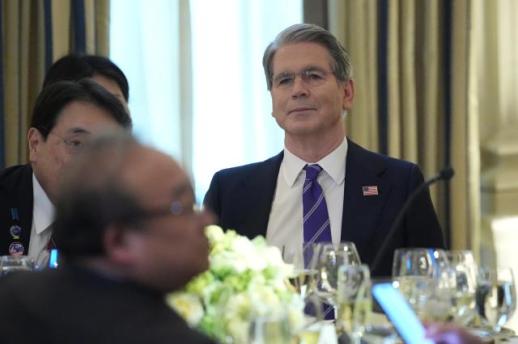 U.S. Iran oil waiver offers limited relief for Korea, little help for petrochemicals SEOUL, March 23 (AJP) - A temporary U.S. decision to allow the sale of Iranian oil already at sea is expected to ease near-term supply pressures, but offers limited relief for South Korea’s petrochemical sector struggling with naphtha naphtha shortages from Strait of Hormuz disruption. The U.S. Treasury Department has authorized a 30-day waiver covering Iranian crude loaded before March 20, a move aimed at injecting additional supply into global markets and stabilizing prices. Treasury Secretary Scott Bessent on Sunday defended the decision, arguing that it would not materially strengthen Tehran while benefiting U.S. allies. “Iran already gets a huge amount of the money, because Iran is the largest sponsor of state terrorism, and China has been funding them,” Bessent said. “This sale…would help the United States’ Asian allies, like Japan, Korea, Indonesia and Malaysia.” For South Korea, the additional supply—estimated at around 140 million barrels globally—could help ease price volatility and improve access to crude suited for domestic refineries. Iranian crude, typically medium-sour, aligns well with Korea’s refining system, allowing efficient processing without major adjustments. The government has yet to issue an official response. The measure is unlikely to significantly ease pressure on Korea’s petrochemical industry, which depends heavily on condensate, a key feedstock for naphtha production. Before U.S.-led sanctions, Iran was a critical supplier. According to the Korea Petroleum Association, Iranian crude accounted for 14 percent of Korea’s total imports in March 2018 before dropping sharply as sanctions tightened. More importantly, Iran supplied about half of Korea’s condensate imports in 2017. Iranian condensate is prized for its high naphtha yield—the base material for petrochemical products—and is typically sold at a discount compared with alternatives, making it both efficient and cost-competitive. The current waiver does not restore direct imports from Iran, nor does it signal a broader shift in sanctions policy. It is restricted to stranded oil—much of it already purchased, often by China—to re-enter the market. 2026-03-23 09:38:31
 -
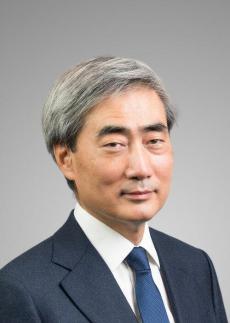 Shin nomination signals BOK shift toward financial stability, external shock shield SEOUL, March 22 (AJP) - President Lee Jae Myung on Sunday nominated Shin Hyun-song, economic adviser and head of the Monetary and Economic Department at the Bank for International Settlements (BIS), as the next governor of the Bank of Korea, tasked with navigating monetary policy amid the economic fallout from the Gulf war crisis. The presidential office said Shin’s combination of academic depth and policy experience makes him well suited to manage rising uncertainty linked to geopolitical tensions and inflation risks, while balancing price stability and growth. Shin, a former Princeton University professor and senior adviser to former conservative President Lee Myung-bak in 2010, has spent the past decade at the Bank for International Settlements, where his work has centered on global liquidity, financial cycles and systemic risk. Shin’s research indicates a policy approach that places financial stability at the core of monetary decision-making. In “Global Banking Glut and Loan Risk Premium” (IMF Working Paper, 2011), Shin argues that financial conditions are driven by the balance sheet expansion of global banks and leverage cycles, rather than policy rates alone. In a related line of work, “Global Liquidity and Procyclicality” (BIS/NBER), he elaborates that credit supply expands and contracts with global banking conditions, amplifying boom-bust cycles across economies. These findings suggest that central banks need to monitor credit growth, leverage and asset prices alongside inflation. His arguments point to the need for close attention to household debt management and macroprudential policy tools. A central theme in Shin’s work is the dominant role of the U.S. dollar in the global financial system. In BIS Quarterly Review articles, including “The Dollar, Bank Leverage and the Deviation from Covered Interest Parity” (BIS, 2018), Shin documents how dollar-denominated credit outside the United States exposes borrowers to funding risks when the dollar strengthens. His research shows that tighter global dollar liquidity can lead to capital outflows, currency depreciation and tighter financial conditions, regardless of domestic policy settings. Shin’s appointment comes as the won is at its weakest level against the U.S. dollar since the global financial crisis, ending last week at around 1,500 per dollar. Shin has also emphasized that inflation dynamics are increasingly influenced by external forces. In a BIS speech, “Inflation: Drivers and Dynamics” (2022), he highlights the role of commodity prices, exchange rates and global financial conditions in shaping inflation, especially in open economies. This suggests that monetary policy decisions will need to account for imported inflation and exchange rate pass-through, particularly as oil prices and energy supply disruptions weigh on import-dependent Korea. Under his watch, the Bank of Korea may prioritize financial stability and systemic risk monitoring, global liquidity and capital flow conditions, and exercise caution on rate cuts amid U.S. dollar strength. Following a parliamentary confirmation hearing, Shin is expected to succeed current Bank of Korea Governor Rhee Chang-yong, whose four-year term ends on April 20. 2026-03-22 17:27:40