
Journalist

Oh Jooseok
farbrother@ajunews.com
-
 BMW 520i M Sport Review: Smooth Turbo-Hybrid Power, Stable Ride and More Space BMW’s 520i, a core model in the 5 Series lineup, aims to balance two traditional sedan priorities: driving enjoyment and comfort. A recent test drive showed how closely it can hold that line. On March 14, the BMW 520i M Sport was driven about 200 kilometers (124 miles) round trip from Seoul to Yeoncheon in Gyeonggi province and Cheorwon in Gangwon province. The exterior matched expectations for a premium sedan, and on the road it delivered performance that went beyond first impressions. At highway speeds, the car’s character became clear. Pressing the accelerator brought a smoother-than-expected surge forward, with power building steadily rather than abruptly. The 520i M Sport pairs a 2.0-liter, four-cylinder turbo gasoline engine with a 48-volt mild-hybrid system. Output is rated at 190 horsepower and 31.6 kg·m of torque, with 0-100 kph acceleration in 8.1 seconds. Stability stood out on highway ramps and during quick lane changes, with little sense of body roll or shake. Ride comfort remained steady enough for passengers to notice. On regular roads, the auto start-stop system operated smoothly during stop-and-go driving, helping preserve the quiet feel expected of a sedan. Fuel economy also held up: the official combined rating is 12.1 km per liter, while the test drive recorded 13.7 km per liter. Design cues stayed true to BMW’s identity, including twin headlights and the kidney grille up front. A rising character line along the side emphasized a sportier profile, and the Hofmeister kink at the C-pillar incorporated a stylized “5.” The body is larger than before without feeling sluggish. Compared with the previous seventh-generation facelift model, overall length is up 95 millimeters, width 30 millimeters and height 35 millimeters, while the wheelbase grows by 20 millimeters. The added size translates into a roomier cabin, especially in the second row, with ample legroom and headroom. Trunk capacity is 530 liters, enough for golf bags or travel luggage. Long-distance driving fatigue was limited, helped by Driving Assistant Professional, which managed following distance and lane assistance and reduced workload in congestion. Over the drive, the 520i M Sport made a clear case for its popularity, combining the fundamentals of a German sedan with a satisfying feel behind the wheel. It is positioned for buyers seeking a balance between sedan comfort and sport-oriented driving.* This article has been translated by AI. 2026-03-21 09:03:12
 -
 Kia CEO Song Ho-sung: EV2 to Debut This Year; 13 EV Models Planned by 2030 Kia said it will step up its push into the global auto market this year with a strategy aimed at making electric vehicles more widely adopted. The automaker made the remarks at its 82nd annual shareholders meeting held Friday morning at its headquarters in Seocho-gu, Seoul. In opening comments, Kia President Song Ho-sung said, "We will strengthen our leadership in the EV market by launching the EV2 this year." The EV2, unveiled in January at the Brussels Motor Show, is Kia’s compact electrified model designed for city driving, with interior space and convenience features that exceed expectations for its class. Kia said it is expanding its EV lineup by adding the EV2 this year, following the launch of the EV3 in 2024 and the EV4 and EV5 last year. The company plans to roll out a total of 13 EV models by 2030 to broaden consumer choice, while moving step by step to improve products, boost accessibility and strengthen its supply chain. Kia’s purpose-built vehicle (PBV) program calls for the PV7 next year and the PV9 in 2029. Song said Kia will optimize its EV supply chain by diversifying production bases by region, centered on domestic plants and expanding across Europe, the United States and emerging markets. Kia said it completed the Hwaseong EVO Plant EAST last year and plans to complete the WEST facility by next year to produce the PV7. By 2027, the company plans to introduce a next-generation software-defined vehicle (SDV) combining AI-based user experience and connectivity. It said it will secure autonomous driving technology in stages through cooperation with Motional and 42dot. In the U.S. market, Kia said it will strengthen a strategy centered on hybrids and sport utility vehicles. It plans to expand sales by launching new versions of the Telluride and Seltos and adding to its hybrid lineup. Song said cost burdens are rising due to the impact of U.S. tariffs and intensifying global competition. Still, he said Kia will bolster product competitiveness with hybrids in the United States and EVs in Europe, while expanding its portfolio for broader EV adoption. At the meeting, Kia put forward proposed amendments to its articles of incorporation, including adopting electronic shareholders meetings, introducing cumulative voting, expanding directors’ duty of loyalty, strengthening the audit committee’s composition and renaming outside directors as independent directors. The company also reappointed Chief Financial Officer Kim Seung-jun as an inside director. It reappointed Jun Chan-hyuk, chairman of Cesco, as an outside director, and reappointed Shin Jae-yong, a professor of business administration at Seoul National University, as an outside director serving on the audit committee. 2026-03-20 10:45:21
 -
 Hyundai Motor Group Showcases Hydrogen Mobility at Tokyo Hydrogen and Fuel Cell Expo 2026 Hyundai Motor Group said it took part in the International Hydrogen & Fuel Cell Expo 2026, held March 17-19 at Tokyo Big Sight, where it showcased hydrogen mobility. The expo is a major trade show for the hydrogen and fuel-cell industries, featuring the latest technologies and business trends. About 330 companies participated this year, and about 70,000 people visited, the company said. Hyundai Motor Group built its booth around HTWO, its hydrogen brand and business platform. It presented technologies and capabilities across the hydrogen value chain — including hydrogen mobility, fueling and storage, and industrial applications — along with real-world use cases. The group displayed the all-new Nexo, a next-generation passenger hydrogen electric vehicle model scheduled for launch in Japan in the first half of the year. It also ran a fueling demonstration using an automated charging robot and offered test drives. During the event, Lee Hyok, South Korea's ambassador to Japan, visited the booth, toured key exhibits and exchanged views with Hyundai Motor Group Vice Chairman Jang Jae-hoon on the direction of hydrogen business development in Japan. Hyundai Motor Group also joined a Hydrogen Council networking session held as part of the expo, where it discussed cooperation to expand the hydrogen ecosystem with Japanese member companies and officials from global hydrogen organizations. Jang, a co-chair of the Hydrogen Council, said the group is building a virtuous cycle by using a hydrogen model that links production and demand to reduce market uncertainty. "We will work with Hydrogen Council member companies to help accelerate the global hydrogen ecosystem," he said.* This article has been translated by AI. 2026-03-20 09:33:17
 -
 Hanwha Aerospace’s Arion-SMET Unmanned Vehicle Passes South Korean Defense Performance Test Hanwha Aerospace said on the 19th that its multipurpose unmanned vehicle, the Arion-SMET, has completed a Defense Acquisition Program Administration performance verification test as the sole participant. The vehicle is a key asset in the South Korean Army’s future force concept known as “Army Tiger 4.0.” The evaluation, conducted with full-scale equipment from the 3rd for about three weeks, assessed six items including top speed and operating range. The test was designed to compare the performance claims submitted by defense companies. Additional checks were reported to include the military’s view that remote-control distance exceeding the required performance should be compared, and whether any updates had been made to equipment entered in the verification test. Hyundai Rotem, which competed with Hanwha Aerospace for the program, did not take part after raising concerns about the fairness of the evaluation. The Army test and evaluation team previously conducted a five-month purchase trial from September 2024 to February 2025, and all companies’ equipment was judged suitable for combat use. A Hanwha Aerospace official said the company is “faithfully carrying out the project in line with all conditions required by the government,” adding that it will deliver the Arion-SMET, which it said has strong performance, in time to meet the military’s needs.* This article has been translated by AI. 2026-03-19 17:24:07
 -
 Porsche to Expand EV Push in South Korea With Cayenne Electric, Korean Battery Cells Porsche, the sports-car maker, is strengthening its electrified lineup in South Korea, led by the Cayenne Electric, which is set for an official local launch in the second half of this year. The company also plans to increase EV investment in the market. Starting this year, Porsche’s all-electric models sold in South Korea will use Korean battery cells, a move aimed at reinforcing its lead in the premium EV segment priced above 100 million won. Matthias Busse, CEO of Porsche Korea, announced the plan on the 19th at a 2026 New Year media briefing in Seoul’s Gwangjin District, calling South Korea “a market where the shift to electrification is moving quickly.” Porsche Korea delivered 10,746 vehicles last year, up 30% from a year earlier, topping 10,000 units for the second time since its establishment despite what it described as a difficult external environment. Electrified models drove the gains. Last year’s sales mix was 38% internal-combustion vehicles, 34% all-electric vehicles and 28% plug-in hybrids. Electrified models accounted for 62%, or 6,630 vehicles. That contrasts with Porsche’s global sales structure, which the company said is centered on internal-combustion models at 66%. Porsche said it will broaden its electrification push in South Korea. Christiane Zorn, head of overseas and emerging markets at Porsche AG, presented the company’s cooperation strategy for the Korean EV market and said the Cayenne Electric, due in the second half, will use battery cells from LG Energy Solution. Porsche previously used battery packs from LG Energy Solution and Samsung SDI in the Taycan and Macan Electric, respectively. The Macan used batteries from China’s CATL through 2024, but switched to Samsung SDI batteries starting this year. “Electrification is not simply a change in powertrain; it is a process of combining new technology with our high-performance DNA,” Zorn said. She added that Porsche plans to apply Korean battery cells to major models sold in South Korea starting this year. Porsche’s overseas and emerging markets region consists of eight countries, including South Korea. South Korea’s share rose to 19% in 2025 from 14% in 2018, the company said. Last year, South Korea became Porsche’s fifth-largest market globally, ranking second in Taycan sales, third in Panamera sales and fourth in Cayenne sales. It also ranked sixth worldwide in all-electric vehicle sales. The Cayenne Electric made its first appearance in South Korea at the event. Porsche said it will launch the new 911 Turbo S and the Macan GTS in the first half of this year. In the second half, it plans to introduce the Panamera Red Exclusive and the Cayenne Electric. The Cayenne Electric is a battery-electric vehicle developed from the heritage of Porsche’s Cayenne sport utility vehicle line. It uses a Formula E-based regenerative braking system to boost performance. The Cayenne Turbo Electric produces 1,156 horsepower and 153.0 kg·m of maximum torque under launch control. It accelerates from 0 to 100 kph in 2.5 seconds and has a top speed of 260 kph. It supports charging up to 400 kW. Porsche said it also considered long-distance driving and off-road capability. The exterior keeps the existing design identity while adding more forward-looking elements. Inside, Porsche applied its “Porsche Driver Experience,” featuring what it called the widest flow display in the brand’s history to strengthen an intuitive interface and personalization features. Personalization options include 13 exterior colors, nine wheel designs and 12 interior combinations, along with up to five interior packages and accent packages. Porsche also unveiled the Panamera Red Exclusive in South Korea. The model is limited to 100 units for the Korean market. Based on the Panamera 4, it includes a sport design package, 21-inch wheels and exclusive taillights. Porsche paired Guard Red and Bordeaux Red to emphasize a sporty look and added red lettering on the exterior for differentiation. Busse said Porsche will pursue “value-focused growth” this year based on its electrification leadership, and will make qualitative growth a core goal by expanding its electrified lineup, strengthening brand experiences and expanding its network. 2026-03-19 16:21:15
 -
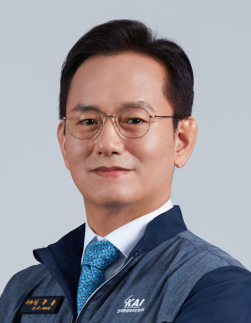 KAI Names Defense Expert Kim Jong-chul CEO, Pledges 'One Team' Push Korea Aerospace Industries, or KAI, said it held an inauguration ceremony Thursday at its headquarters in Sacheon, South Gyeongsang province, formally appointing Kim Jong-chul as its ninth CEO. His official term is three years. KAI described Kim, a 31st class graduate of the Air Force Academy, as a defense industry expert who has held key posts in the Air Force and the Defense Acquisition Program Administration. While working at the Defense Ministry, Kim conducted cost analyses for the KT-1 and T-50 programs. At the Office for Government Policy Coordination, he led the creation of the defense sector’s first dedicated organization for arms exports, the company said. As head of DAPA’s command and reconnaissance programs division, Kim planned a range of strategic weapons projects, including reconnaissance satellites, and is seen as having a strong grasp of future aerospace and defense industries, KAI said. In his inaugural address, Kim said he would seek growth opportunities despite an uncertain external environment. He called rapid technological advances and ongoing wars a rare “golden time,” and pledged relentless innovation and challenge. He outlined four management priorities for KAI’s renewed growth: continuous innovation and challenge; developing cash-cow businesses and expanding the future business portfolio; building a win-win cooperation ecosystem; and creating “One Team KAI.” Kim said KAI will expand existing revenue-generating businesses across fixed-wing and rotary-wing aircraft, unmanned systems, satellites, software and avionics components, including the KF-21 Boramae, which is to be delivered to the Air Force in the second half of this year. He said the company will also pursue portfolio expansion to secure future growth engines in areas such as software represented by AI pilots, avionics, manned-unmanned teaming systems, unmanned aircraft and drones, guided weapons systems and space projects. To support that effort, Kim pledged to reorganize the company and establish a performance-based personnel system to foster a research and development environment that does not fear failure. Kim also emphasized expanding strategic cooperation with domestic defense companies in line with the government’s “Team Korea” policy. He said KAI will build a horizontal communication system so all employees, including those at subsidiaries, work toward shared goals under a “One Team KAI” approach. After the ceremony, Kim inspected the production site for a mass-produced KF-21 aircraft scheduled to roll out at the end of March. He also visited major production lines and offices, including the fixed-wing and rotary-wing divisions, the space center and the development center, to review on-site conditions.* This article has been translated by AI. 2026-03-19 15:57:22
 -
 Audi Group Operating Profit Falls 13.6% as U.S. Tariffs Weigh on Results 아우디 그룹은 전기차 판매 확대에도 불구하고 영업 이익이 13.6% 하락했다. 미국 관세가 실적에 반영된 영향이다. 19일 아우디코리아에 따르면 아우디그룹은 2025년 회계연도 매출이 655억 유로로, 전년 645억3200만 유로보다 1.5% 증가했다. 영업이익은 33억7100만 유로로 전년 39억300만 유로 대비 13.6% 감소했다. 아우디그룹은 미국 관세 등의 여파로 12억 유로 손실이 발생했다고 밝혔다. 영업이익률은 5.1%로 전년 6.0%보다 0.9%포인트 하락했다. 아우디는 지난해 총 162만3551대를 판매했으며, 순수 전기차 인도량은 22만3032대로 전년 대비 36% 증가해 역대 최대를 기록했다. Q6 e-트론(약 8만4000대)과 A6 e-트론(3만7000대)이 증가세를 이끌었다. 다만 아우디, 벤틀리, 람보르기니, 두카티로 구성된 그룹 전체 자동차 인도량은 164만4429대로 전년 169만2548대보다 2.8% 감소했다. 오토바이는 5만895대가 인도됐다. 게르놋 될너 아우디 AG CEO는 "지정학적 불확실성과 글로벌 경쟁 심화로 자동차 산업은 여전히 도전적인 환경에 놓여 있다"며 "아우디는 이러한 상황에 대응하기 위해 과감한 결정을 내리고 있으며, 2026년에는 핵심 신차 출시와 전략적 파트너십, F1 진출을 통해 경쟁력을 더욱 강화할 것"이라고 말했다. 아우디는 올해 주요 신차 출시를 이어갈 예정이다. 새로운 엔트리 전기차 패밀리인 '아우디 A2 e-트론'과 플래그십 SUV '아우디 Q9'을 선보이며, 글로벌 고객 수요에 맞춘 제품 전략을 강화한다. 또한 포뮬러 1(F1) 진출을 통해 브랜드 경쟁력을 강화할 계획이다.* This article has been translated by AI. 2026-03-19 09:18:18
 -
 Innocean Expands Digital Out-of-Home Ads Using Building Facades and Urban Spaces Innocean said Thursday it is expanding operations of an “integrated digital out-of-home advertising business” that uses building exteriors and urban spaces. The company’s DOOH business converts building facades and unused space into digital media platforms that carry advertising as well as cultural content and brand communications. The company said the approach is designed to create new revenue opportunities for building owners and real estate developers while offering city residents new things to see and do in public spaces. Innocean said it is pursuing tailored media strategies that go beyond operating ad inventory, factoring in location, foot traffic and the context of each site. It cited media projects at Shinsegae Square in Myeongdong, Shinsegae Central City in Banpo and the Gangnam Montessori Building as examples that helped raise awareness of the buildings themselves. “Timeless Moment,” shown at Shinsegae Square in Myeongdong, won a Red Dot main prize, the company said. “The world’s biggest lifeguard,” carried out with Shinsegae Property and the Grand Josun Busan media, received the top prize in the outdoor advertising category at the Korea Advertising Awards and an iF Design Award main prize, it said. Innocean said it plans to broaden its outdoor advertising business step by step, expanding from existing sites to include more unused building space. Kim Jae-pil, executive director and head of Innocean’s media division, said the company will continue to expand a DOOH ecosystem that increases the value of urban spaces through integrated solutions combining creative and media operations.* This article has been translated by AI. 2026-03-19 09:03:23
 -
 Hyundai Motor Group Chairman Chung Euisun’s 2025 Pay Totaled 17.46 Billion Won, Up 51.6% Hyundai Motor Group Chairman Chung Euisun received total compensation of 17.461 billion won last year, the company disclosed. According to Hyundai Motor’s annual business report filed on Tuesday, Chung received 9.001 billion won from Hyundai Motor, including 4.5 billion won in salary and 4.501 billion won in bonuses and other income. That was up 1.914 billion won, or 27.0%, from 7.087 billion won a year earlier. Chung also received 5.4 billion won from affiliate Kia and 3.06 billion won from Hyundai Mobis. It was the first time he received compensation from Kia, the filing said. With Kia’s pay included, Chung’s total rose 5.943 billion won, or 51.6%, from 11.518 billion won the previous year. Hyundai Motor said the compensation reflected its executive pay table and factors including duties and rank, tenure, leadership, expertise and contribution to the company. Hyundai Motor Vice Chairman Jang Jaehoon received 5.416 billion won in total compensation last year, up 59.3% from the year before. Jose Munoz, who has served as Hyundai Motor’s first foreign CEO since last year, received 9.729 billion won, up 242.7% from 2.839 billion won in 2024. Based on Hyundai Motor compensation alone, Munoz received more than Chung. 2026-03-18 17:57:30
 -
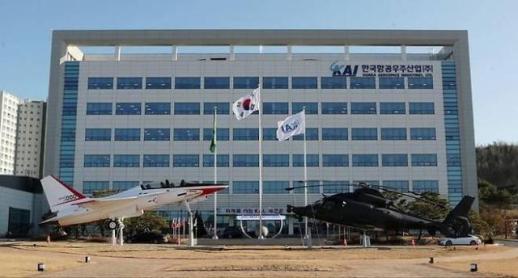 KAI Names Kim Jong-chul CEO as Export Push and Leadership Scrutiny Grow Kim Jong-chul, former head of the Defense Technology Protection Bureau at South Korea’s Defense Acquisition Program Administration, has been confirmed as the new CEO of Korea Aerospace Industries. Attention is focused on whether he can overcome recurring criticism over military-linked appointments and deliver on urgent tasks, including expanding exports of key weapons systems such as the domestically developed KF-21 supersonic fighter. KAI said it held an extraordinary shareholders meeting and a board meeting on Tuesday and approved Kim’s appointment. The decision moves the company toward ending an eight-month leadership vacuum following the departure of Kang Goo-young. KAI’s CEO nomination committee had recommended Kim on Feb. 27 as an inside director candidate, calling him “a suitable leader with outstanding expertise across the defense industry and insight into future businesses.” Kim is a graduate of the 31st class of the Air Force Academy. He served about 23 years as an Air Force officer before joining DAPA in 2006 through a special recruitment program at the Grade 4 level. Inside KAI, views on his background are divided, with some describing him as a political appointment and others as a hands-on defense procurement specialist. Kim previously served as vice chair of the Smart Strong Military Committee in Lee Jae-myung’s presidential campaign, prompting claims that his appointment is a reward for political service. Concerns have also been raised as KAI has repeatedly named leaders with military backgrounds, including Kang, who previously served as Air Force vice chief of staff and head of the Joint Chiefs of Staff’ Military Support Headquarters. Others point to Kim’s more than 20 years at DAPA after retiring as an Air Force lieutenant colonel. As a founding member of the agency, he served in roles including head of the defense export support team and director of offset trade, and was credited with helping open export channels for South Korea’s defense industry. Kim is expected to begin his public schedule by attending the rollout ceremony for the first mass-produced KF-21 aircraft, set for March 25. With global competition intensifying, KAI faces pressure to secure leadership stability and profitability. Expanding exports of the KF-21 and the FA-50 light attack aircraft is seen as the company’s top task. KAI has set targets this year of 5.7306 trillion won in revenue and 10.4383 trillion won in orders. Last year, on a consolidated basis, it posted 3.6964 trillion won in revenue and 6.3946 trillion won in orders, meaning the new goals are roughly double. Kim met with the labor union on March 13 and pledged to stabilize management and streamline what he called unnecessary task force teams. The move was seen as an effort to simplify the organization and focus on competitiveness in winning contracts. How KAI manages cooperation with Hanwha Group, which recently acquired a 4.99% stake, has also become a key issue. The purchase drew attention because it came as calls for privatization have persisted, putting KAI’s response under industry scrutiny. A KAI official said Kim faces the dual challenge of expanding exports while stabilizing the organization, adding that “early leadership will determine success or failure.” 2026-03-18 16:57:21