
Journalist

Oh Jooseok
farbrother@ajunews.com
-
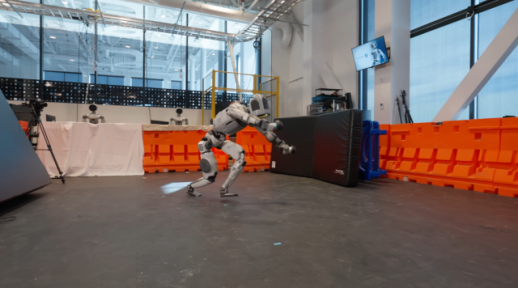 Humanoid Robot Boom Lifts South Korea Auto Parts Makers, Boosting Sales and Jobs As the humanoid robot market shows signs of taking off, South Korea’s auto parts industry is also seeing a lift. Expanding investment by major automakers, including Hyundai Motor, is creating spillover benefits for suppliers. The shift from internal-combustion vehicles to EVs had raised concerns about job losses, but the industry is now also looking at potential net hiring tied to new businesses. Industry officials said Monday that Hyundai Mobis surpassed 60 trillion won in annual revenue for the first time last year, helped by the start of operations at its North American electrification plant and rising output of higher value-added parts such as automotive electronics. Hyundai Motor’s push beyond electrification into new areas such as robotics is also expected to benefit Hyundai Mobis. Hyundai Motor Group said it will allocate 71.1% of its planned 125.2 trillion won in domestic investment from this year through 2030 to future businesses including robots and EVs. In the U.S., it plans to invest $26 billion (about 37.7 trillion won) through 2028. Boston Dynamics is set to begin mass production of the humanoid Atlas in 2028. Hyundai Mobis set up a robotics business unit last year and has begun hiring development and manufacturing-technology staff. A Hyundai Mobis official said the company is recruiting talent to develop actuators, a core component for robots, adding that large-scale investment across the industry could make robotics a key source of income. Other suppliers are also seeking entry into robotics and other new businesses by building on their existing strengths. SL, an auto parts company based in Daegu, is expected to see revenue growth as it takes charge of assembling Hyundai Motor’s mobile logistics robot, MobED. MobED is set to begin mass production and sales starting in the first quarter of this year, with a sales target of 10,000 to 15,000 units by 2029. Annual revenue is estimated at about 150 billion to 200 billion won, with part of that expected to be reflected in SL’s results as a contract manufacturer. An SL official said robot parts are not far removed from the company’s electrification-related auto parts technology, adding that SL plans to expand the business based on its long-standing relationship with Hyundai Motor. SL’s consensus operating profit estimate for this year is 418.5 billion won, up 2.8% from last year’s 407.1 billion won. The industry’s restructuring is also showing up in employment data. According to the Korea Employment Information Service report, “Industry and Job Transition Map for Auto Parts Manufacturing,” the number of workers in domestic auto parts manufacturing stood at 250,700 as of June last year, up 4,100 from a year earlier. The number of businesses was 8,668, an increase of 334 from 2020. Industry officials said automakers’ investment in future businesses is feeding through to job creation among suppliers. As demand for internal-combustion parts shrinks and the sector shifts toward electronics and software, hiring is also moving toward technology-focused roles. Moon Hak-hoon, a professor in the Department of Future Automobiles at Osan University, said employment gains may have been driven by new-business demand from global automakers, adding that hiring for research and development to expand into areas such as robotics is likely to continue for some time.* This article has been translated by AI. 2026-02-24 05:04:47
 -
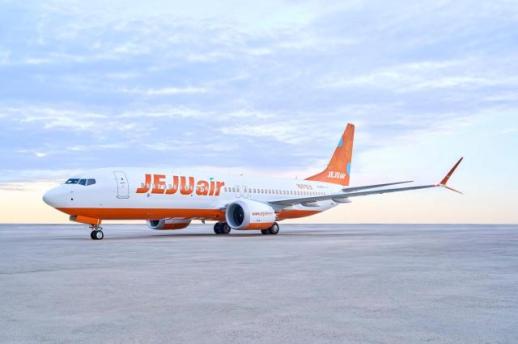 Jeju Air to Launch Incheon-Yichang and Daegu-Guilin Flights Twice Weekly Jeju Air said Sunday it will begin twice-weekly service in April on the Incheon-Yichang route and the Daegu-Guilin route. The Incheon-Yichang route will operate twice a week, on Tuesdays and Saturdays, from April 4 to May 30. The Daegu-Guilin route will run as a twice-weekly charter service, on Thursdays and Sundays, from April 30 to May 28. Yichang, a city associated with the historical novel "Romance of the Three Kingdoms," is known for major temples and the Three Gorges Dam, and is a popular gateway for Yangtze River Three Gorges cruises. Guilin, a major tourist destination in southern China, is known for its scenery, including the Li River, as well as attractions such as Guanyan, where visitors explore caves by monorail, and the Longji rice terraces. Jeju Air also said it will resume service during the summer schedule period starting next month on the Incheon-Shijiazhuang route (twice weekly, Mondays and Fridays), the Busan-Shijiazhuang route (twice weekly, Tuesdays and Saturdays) and the Jeju-Beijing Capital route (three times weekly, Mondays, Wednesdays and Fridays). It will double Incheon-Weihai service to 14 flights a week from seven. The airline plans to start Busan-Zhangjiajie flights twice weekly, on Tuesdays and Saturdays, from next month 3, and to resume Incheon-Guilin service four times weekly, on Wednesdays, Thursdays, Saturdays and Sundays, from March 11. Incheon-Yanji service was increased last month to six flights a week, on Mondays, Wednesdays, Thursdays, Fridays, Saturdays and Sundays, as the carrier continues to expand its China network. Jeju Air’s China-route passenger numbers have continued to rise, from about 305,000 in 2023 to about 493,000 in 2024 and about 573,000 last year. A Jeju Air official said travel demand is expected to keep growing as travel becomes more convenient, including through visa-waiver policies by the South Korean and Chinese governments. The official said the airline will work to expand China routes to improve travel options for passengers in both countries. * This article has been translated by AI. 2026-02-23 09:46:10
 -
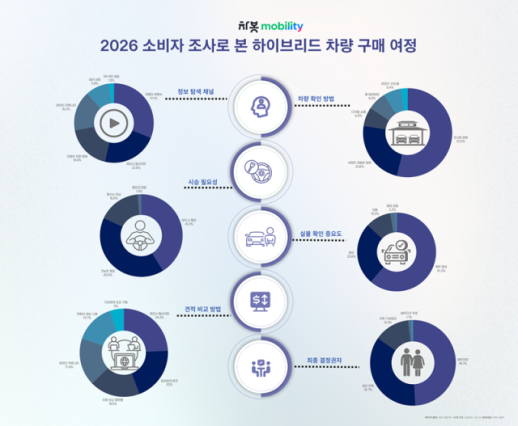 Survey: New-Car Shoppers Rely on YouTube, Then Verify in Showrooms Before Buying New-car buying is increasingly following a “hybrid” path: shoppers research digitally, then confirm key details offline before deciding. Chabot Mobility said on the 23rd that it analyzed each stage of the car-buying journey for 450 people planning to purchase a new vehicle this year. More than half of respondents, 58.1%, said they got new-car information from YouTube auto reviews. Manufacturer websites followed at 42.2%, then automotive news outlets at 34.3% and online communities and cafes at 30.3%. Traditional channels lagged, with dealer consultations at 18.4% and visits to offline showrooms at 14%. The results suggest shoppers are narrowing candidates through digital channels first, then using consultations to make a final choice. By gender, men reported higher use of YouTube (59.9%) and online communities (32.6%). Women more often cited recommendations from acquaintances (30%), social media (22%) and dealer consultations (22%). By age, YouTube use was most active among people in their 30s to 50s, at about 57% to 62%. For comparing vehicles and checking quotes, the most common method was visiting manufacturer websites directly (48.7%). But asking dealers directly (40.1%) and using integrated comparison platforms (37.2%) were close behind. Next were online community information (35.0%), YouTube comparison videos (29.6%) and automotive media (23.1%). On the importance of seeing a vehicle in person, 61.4% said it is “absolutely necessary,” and 25.6% said they would “check if possible,” meaning 87% viewed an in-person look as a core step. Only 2.2% said online information is enough, and 0.4% said it is not important at all. The share calling it “absolutely necessary” rose with age: 68.6% among people in their 50s and 71.0% among those 60 and older. Offline channels dominated how shoppers check vehicles. Visits to traditional dealership showrooms ranked first at 79.4%, while visits to premium showrooms and brand experience centers were also high at 34.7%. On test drives, 41.2% said they are “absolutely necessary,” and 40.8% said they would “like to if possible,” for a combined 82% treating a test drive as essential or near-essential. Among respondents with monthly income of 10 million won or more, the “absolutely necessary” share was 48.7%, above the overall average. For final purchase decisions, 49.1% said they decide jointly with a spouse, the largest share. Another 35.7% said they decide alone, and 13.4% said they decide jointly with other family members. A Chabot Mobility official said the survey clearly shows a hybrid buying journey in which consumers gather information through digital channels and then make a final decision after offline verification such as test drives.* This article has been translated by AI. 2026-02-23 09:33:18
 -
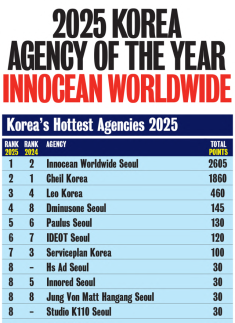 Innocean Tops South Korea in Campaign Brief Asia 2025 Creative Rankings, No. 6 in Asia Hyundai Motor Group affiliate Innocean said it has again demonstrated top-tier advertising production capabilities on the global stage. Innocean said Monday it was ranked No. 1 in South Korea and No. 6 in Asia in Campaign Brief Asia’s “2025 Creative Rankings.” The rankings compile major international advertising award results earned by agencies across Asia over the past two years, covering the period from Jan. 1, 2024, through Dec. 31, 2025. Campaign Brief Asia weighted wins across 12 major global awards, including Cannes Lions, the New York Festivals and the Clio Awards, based on each competition’s standing. Innocean placed first among South Korean agencies and finished sixth overall in Asia. Campaign Brief Asia said Innocean posted the strongest award performance over the two-year period, citing a run of top prizes at leading global competitions. In individual rankings, Innocean CEO and chief creative officer Kim Jeong-a ranked first among South Korean creative directors based on award results. Copywriter Yang Do-yu, art director Oh Eun-ha and creative director Moon Na-ri tied for first in South Korea in the creative category for the most awards won. Kim also ranked sixth across Asia. The individual creative rankings covered 2,885 people, including copywriters, art directors and creative directors. The “Night Fishing” campaign with Hyundai Motor Co. was among works that received high marks, Innocean said. Innocean previously ranked first in the “Indonesia Creative Rankings,” giving the company top spots in both its South Korean headquarters and an overseas unit. In Indonesia, it held the No. 1 position for a second straight year, it said. “From late last year to early this year, we were named ‘Agency of the Year’ three times in a row by leading overseas organizations, which is very meaningful and gratifying,” Kim said. “This achievement goes beyond awards, serving as an important opportunity to raise the standing of Korean creativity in the global market while also helping drive client growth,” she said. * This article has been translated by AI. 2026-02-23 09:04:04
 -
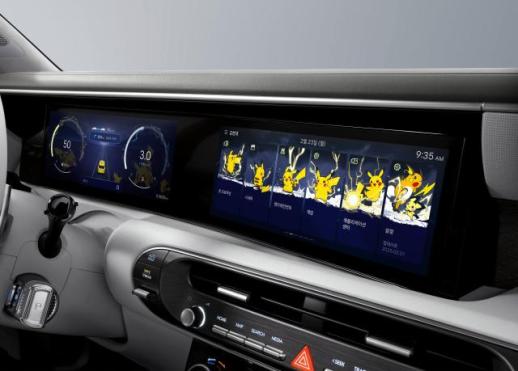 Hyundai Launches Pokemon Display Themes for In-Car Screens Hyundai Motor is bringing Pokemon characters to in-car displays, offering drivers a new way to personalize the cabin experience. The automaker said Sunday it is releasing two new display themes developed with Pokemon Korea: the “Pokemon Pikachu Thunderbolt Theme” and the “Pokemon Ditto World Theme.” Drivers can apply Pokemon-inspired colors and graphics to the infotainment and cluster displays, along with navigation driving information and startup and shutdown animations. Hyundai said the Pokemon-themed displays are expected to create an emotional connection and shared interest between parents and children. The themes can be purchased through Hyundai’s Bluelink Store after registering a primary vehicle in the MyHyundai app. Eligible models are the All-New Palisade, Ioniq 9, All-New Nexo, The New Ioniq 6, 2026 Sonata The Edge and The New Staria. Hyundai said it plans to expand compatibility through OTA (over-the-air) software updates. “This collaboration with Pokemon Korea reflects customer demand to decorate and express their own style through their vehicle,” a Hyundai official said. “In step with the connected-car era, we will continue to raise the value of the experience customers can have in their vehicles.” 2026-02-23 08:57:19
 -
 Milan-Cortina Winter Olympics Close; South Korea Finishes 13th, Seoul Court Sets Up Insurrection Appeals Panels First Olympics with 'two flames' heads into history The 2026 Milan-Cortina d'Ampezzo Winter Olympics, staged for the first time with “two flames,” will close with a ceremony starting at 4:30 a.m. Korean time on the 23rd at the Verona Arena in Italy. It was the first Olympics in 20 years to be held in Italy, and the first to include two place names in a single official Games title. The opening ceremony featured athlete entries and torch events in both Milan and Cortina d'Ampezzo, with the cauldron lit simultaneously in two locations for the first time. With events spread out and some venues not completed until just before the opening, the Games began under concern. Once competition started, attention shifted to the athletes. Cross-country star Johannes Klaebo of Norway won six gold medals and collected his 11th career Winter Olympic gold, a record total, among other highlights. Verona, the site of the closing ceremony, is about 160 kilometers from Milan, which hosted the opening ceremony as well as skating and ice hockey events. The 80,000-seat Verona Arena is an amphitheater completed in A.D. 30 during the Roman Empire and once used for gladiator contests and hunts with wild animals. South Korea will have short track skaters Choi Min-jeong of Seongnam City Hall and Hwang Dae-heon of Gangwon Provincial Office serve as flag bearers. Choi won one gold and one silver at these Games, setting a South Korean Olympic record with seven career medals. Hwang won two silver medals, the best result among South Korea’s male athletes at the Games. South Korea ends 2026 Winter Olympics with 3 gold, 4 silver, 3 bronze; 13th overall South Korea, which set a top-10 finish as its medal-table goal, ended the 2026 Milan-Cortina d'Ampezzo Winter Olympics with what it called a partial success. As of the 22nd, South Korea had won three gold, four silver and three bronze medals to place 13th overall. Short track, expected to deliver at least two gold medals, met its target with two gold, three silver and two bronze. Snow events exceeded expectations with one gold, one silver and one bronze, after aiming for at least one medal. South Korea improved on its 2022 Beijing results of two gold, five silver and two bronze medals, when it finished 14th, but it did not reach the top 10. The team also earned its first Olympic medal in ski and snowboard events. Choi Ga-on of Sehwa Girls’ High School scored 90.25 points in the women’s snowboard halfpipe final, beating Chloe Kim of the United States, who scored 88.00 points while seeking a third straight title. Choi’s victory delivered South Korea’s first gold medal of the Games. In men’s snowboard alpine, Kim Sang-gyeom of High1 won silver, and Yoo Seung-eun of Seongbok High School took bronze in women’s snowboard big air, helping drive South Korea’s early medal push. The short track team outperformed a bleak outlook and piled up medals. Kim Gil-li, the youngest member of the women’s team and born in 2004, won two gold medals and one bronze, becoming South Korea’s only double gold medalist at these Games. South Korea gained momentum with a bronze by Lim Jong-eon of Goyang City Hall in the men’s 1,000 meters, a silver by Hwang in the men’s 1,500, and a bronze by Kim Gil-li in the women’s 1,000. The women’s 3,000 relay produced a dramatic comeback to win gold. On the final day of the sport, South Korea won silver in the men’s 5,000 relay, and Kim Gil-li and Choi Min-jeong took gold and silver in the women’s 1,500. Speed skating, which had been South Korea’s next-most successful Winter Olympic sport after short track, ended these Games without a medal. Vice minister Kim Dae-hyun vows push for snow-sport training facilities, new military winter team Kim Dae-hyun, second vice minister at the Ministry of Culture, Sports and Tourism, visited the 2026 Milan-Cortina d'Ampezzo Winter Olympics and pledged to work to improve conditions for South Korea’s athletes. Speaking on the 22nd at a South Korean team disbandment ceremony at Korea House set up at Villa Necchi Campiglio in Milan, Kim said, “As the vice minister in charge of sports, I have two policy takeaways.” He said he was grateful to athletes for strong performances in events such as snowboard halfpipe and big air, where there had been doubts about South Korea’s medal chances. But he added that he felt sorry after hearing athletes had trained abroad because there were no domestic facilities. “Once we return, I will consult with the Korean Sport & Olympic Committee, including President Yoo Seung-min, and also coordinate within the government to do our utmost to ensure training venues can be 마련ed,” he said. Kim also said discussions are underway to expand opportunities for winter-sport athletes to join the Korea Armed Forces Athletic Corps, known as Sangmu. “There are many summer sports in Sangmu, but for winter there is only biathlon. We are consulting with the Ministry of National Defense, and I am also requesting support from the minister and working hard,” he said. “I hope we can join forces so a winter team can be newly established in Sangmu.” Seoul High Court’s insurrection appeals panels to begin work on Yoon case Specialized panels at the Seoul High Court assigned to handle appeals for key figures involved in the Dec. 3 martial law incident will begin full operations, including the case of former President Yoon Suk Yeol, who was sentenced to life imprisonment on charges of leading an insurrection, according to legal officials. According to the legal community on the 22nd, the Seoul High Court’s Criminal Division 1 (Presiding Judge Yoon Seong-sik, with Judges Min Seong-cheol and Lee Dong-hyeon) and Criminal Division 12 (Judges Lee Seung-cheol, Jo Jin-gu and Kim Min-a) were designated as the specialized insurrection panels and will start related work from the 23rd. The panels were established under the “Special Act on Criminal Procedures for Crimes Such as Insurrection, Foreign Aggression and Rebellion” (the law creating the specialized insurrection panels). They will handle Yoon’s case as well as appeals for major Cabinet members whose first-trial verdicts have been issued, including former Prime Minister Han Duck-soo, former Defense Minister Kim Yong-hyun and former Interior and Safety Minister Lee Sang-min, who face charges such as participating in important duties. On the same day, two new panels will also be created at the Seoul Central District Court to exclusively handle first trials in insurrection cases. One panel will be led by Presiding Judges Jang Seong-hoon (Judicial Research and Training Institute class 30), Oh Chang-seop (class 32) and Ryu Chang-seong (class 33). The other will be led by Presiding Judges Jang Seong-jin (class 31), Jung Su-young (class 32) and Choi Young-gak (class 34). * This article has been translated by AI. 2026-02-22 22:03:00
 -
 Vice Culture Minister Kim Dae-hyeon Pledges Better Winter Training Facilities, New Military Sports Teams Kim Dae-hyeon, second vice minister of culture, sports and tourism, visited the 2026 Milan-Cortina d'Ampezzo Winter Olympics and promised to work to improve conditions for South Korea’s athletes. Speaking at the South Korean team’s disbandment ceremony on Feb. 22 at Korea House at Villa Necchi Campiglio in Milan, Kim said he had “two policy takeaways” as the vice minister in charge of sports. He said he was grateful to athletes for strong performances in events such as snowboard halfpipe and big air, where South Korea had long questioned whether it could win gold. But he said he felt sorry after hearing athletes had to move from country to country to train because they lacked facilities at home. “When I return, I will consult with the Korean Sport & Olympic Committee, including President Yoo Seung-min, and work within the government to do everything possible to ensure training venues can be provided,” Kim said. Kim also said the government is discussing ways to expand access for winter sports athletes to the Armed Forces Athletic Corps, known as Sangmu. “There are many summer sports teams in Sangmu, but for winter sports there is only biathlon,” he said, adding that he is consulting with the Defense Ministry and has also asked the minister for support. “I hope we can join forces so winter teams can be newly established in Sangmu,” he said. Kim, who has been in Italy since Feb. 19 to support the team during the final stretch of the Games, will also attend the closing ceremony at Verona Arena. He said he has attended the Olympics multiple times as an administrator, including working to win hosting rights for the 2018 Pyeongchang Winter Olympics and serving on the organizing committee. “Each time I come, I think the Olympics are more dramatic and moving than any drama,” he said. Kim thanked athletes for fighting to the end “on foreign ice and snow,” and also expressed gratitude to coaches, the Korean Sport & Olympic Committee and officials from each sport. He pledged to back athletes so they can train more safely and compete under better conditions. 2026-02-22 20:24:00
 -
 Milan-Cortina Winter Olympics to close Feb. 23 after first Games with two flames The 2026 Milan-Cortina d’Ampezzo Winter Olympics, staged for the first time with “two flames,” will end on Feb. 23. The closing ceremony is scheduled to begin at 4:30 a.m. Feb. 23 in South Korea at the Verona Arena in Italy. The Games marked the Olympics’ return to Italy for the first time in 20 years and were the first to include two place names in a single official title. The opening ceremony featured athlete entries and torch events in both Milan and Cortina d’Ampezzo, with the flame lit simultaneously in two locations for the first time. With events spread across venues and some facilities not completed until just before the opening, the Games began amid concerns. Once competition started, attention shifted to athletes’ performances, including Norwegian cross-country star Johannes Klaebo winning six gold medals and claiming his 11th career Winter Olympic gold, a record total. South Korea, which sent a delegation of 130 including 71 athletes, had won three gold, four silver and three bronze medals as of local time Feb. 21. That surpassed its Beijing 2022 totals of two gold, five silver and two bronze medals in both golds and overall medals. A top-10 finish appears out of reach, but South Korea stood 13th overall, up one place from 14th in Beijing. Verona, where the closing ceremony will be held, is about 160 kilometers from Milan, which hosted the opening ceremony as well as skating and ice hockey. No competitions will be held in Verona, which will host only the closing ceremony. The 80,000-seat Verona Arena is an amphitheater completed in A.D. 30 during the Roman Empire and once used for gladiator contests and hunts involving wild animals. South Korea will be led in the closing ceremony by short track skaters Choi Min-jeong (Seongnam City Hall) and Hwang Dae-heon (Gangwon Provincial Office) as flag bearers. Choi won one gold and one silver at these Games, setting a South Korean record with seven career Olympic medals. Hwang won two silver medals, the best result among South Korea’s male athletes. 2026-02-22 20:21:00
 -
 South Korea finishes 13th at 2026 Winter Olympics with 3 gold, 10 total medals South Korea’s delegation ended the 2026 Milano-Cortina Winter Olympics outside its stated goal of a top-10 finish, closing a 17-day run with 3 gold, 4 silver and 3 bronze medals for 13th place overall. Short track, where the team had hoped for at least two gold medals, delivered 2 gold, 3 silver and 2 bronze. Snow events exceeded expectations with 1 gold, 1 silver and 1 bronze after the team had targeted at least one medal. South Korea improved on its 2022 Beijing results (2 gold, 5 silver, 2 bronze; 14th) but did not crack the top 10. The team was led largely by teenagers and athletes in their early 20s. In a breakthrough for Korean skiing and snowboarding, Choi Ga-on of Sehwa High School won the women’s snowboard halfpipe with 90.25 points, beating American Chloe Kim (88.00), who was seeking a third straight Olympic title. It was South Korea’s first gold medal of the Games and its first Olympic medal in a ski-snowboard event. Choi, 17 years and 3 months old, also lowered the event’s youngest Olympic gold-medalist mark set by Kim at the 2018 Pyeongchang Games (17 years, 10 months). Kim Sang-gyeom of High1 took silver in men’s snowboard alpine, and Yoo Seung-eun of Seongbok High School won bronze in women’s snowboard big air. It marked the first time South Korea’s ski and snowboard team won two or more medals at a single Olympics. The short track team rebounded after a shaky start. In the mixed 2,000-meter relay semifinal — the first medal event for the team — Kim Gil-li of Seongnam City Hall fell after being tripped by American Corinne Stoddard, and South Korea missed the podium. South Korea then turned momentum with a bronze by Lim Jong-eon of Goyang City Hall in the men’s 1,000 meters, a silver by Hwang Dae-heon of Gangwon Provincial Office in the men’s 1,500, and a bronze by Kim Gil-li in the women’s 1,000. The team later won gold in the women’s 3,000-meter relay after a dramatic comeback. On the final day of short track, South Korea won silver in the men’s 5,000-meter relay, and Kim Gil-li and Choi Min-jeong took gold and silver, respectively, in the women’s 1,500. Kim Gil-li, born in 2004, finished with two gold medals and one bronze, becoming the only South Korean athlete to win two golds at these Games. Choi, who had won three golds and two silvers across the previous two Olympics, added one gold and one silver to bring her career total to seven Olympic medals. That set a South Korean record across the Summer and Winter Games, surpassing Jin Jong-oh (shooting), Kim Soo-nyung (archery) and Lee Seung-hoon (speed skating), who each had six. Choi also tied short track skater Jeon I-kyung’s national record of four Winter Olympic gold medals. After the race, Choi announced her retirement from the Olympics. Speed skating, long a major medal source for South Korea after short track, ended the Games without a medal. In curling, the women’s team missed the semifinals by one spot, finishing fifth in the 10-team round-robin after losing to Canada in its final preliminary game.* This article has been translated by AI. 2026-02-22 19:39:00
 -
 KAI, Hanwha System Vie for South Korea’s Microsatellite SAR Program South Korea’s major defense companies are increasingly targeting space as a new growth area, and competition is intensifying for government contracts. Korea Aerospace Industries (KAI) and Hanwha Systems are set to face off over a government microsatellite program. Industry officials said the government plans to select a prime contractor this year for a dual-use, civil-military microsatellite system development project. Budgeted at about 1.4 trillion won, the program aims to build a cluster-based surveillance system operating 40 microsatellite synthetic aperture radar (SAR) satellites simultaneously by 2030. A detailed request for proposals is expected around August. SAR, the program’s core technology, uses radar signals and processes tiny differences in return time to map terrain and observe the Earth’s surface. Because it relies on radar, it can operate day or night and in bad weather. The government plans to expand its SAR satellite fleet from the current five to more than eight times that number for direct use in civilian and military operations. With the prime contractor decision approaching, both companies are stepping up their bids. KAI is highlighting decades of space-industry experience dating to the 1990s and its track record building satellite platforms, and it has begun producing a prototype. Hanwha Systems, a later entrant, is betting on its SAR capabilities and says it is confident about winning the project. Both companies operate space centers capable of manufacturing, assembly and testing. A Hanwha Systems official said the Jeju Space Center is designed so work can be carried out in a single workflow from start to finish, enabling production of more than 100 small satellites a year along with rapid response and stable operations. Companies are moving into small satellites because of their growth potential. Unlike large satellites, which typically operate for more than 10 years, microsatellites have a shorter lifespan of two to three years, leading to faster replacement cycles that the industry views as more profitable. Efforts to build global competitiveness for exports are also continuing. KAI recently discussed cooperation with Saudi Arabia’s Ministry of Investment in space, satellites, communications and aviation at the 2026 World Defense Show. A KAI official said the company plans to advance satellite technology based on three decades of experience and to secure a “second growth engine” for defense exports by linking it with aircraft exports. The official added that KAI will pursue development of low-cost, multipurpose microsatellites and reusable launch vehicles to lead South Korea’s space industry.* This article has been translated by AI. 2026-02-20 05:03:50