

Journalist

Han Ji-hyun
hanji@ajunews.com
-
 Hyundai Motor Group Weighs Multitrillion-Won Investment in Saemangeum for AI, Robotics and Hydrogen Hyundai Motor Group is pushing a multitrillion-won investment in Saemangeum, North Jeolla Province, to expand its artificial intelligence, hydrogen and robotics businesses. Government and business officials said Monday the group is preparing to sign a memorandum of understanding with the Ministry of Trade, Industry and Energy, the Ministry of Climate, Energy and Environment, North Jeolla Special Self-Governing Province and the Saemangeum Development and Investment Agency on investing several trillion won in the area to foster future businesses. The likely focus is AI, hydrogen and robotics, which Hyundai Motor Group has identified as key growth areas. The exact amount has not been set, but officials expect it to reach several trillion won. The group has previously announced plans to invest a total of 125.2 trillion won in South Korea through 2030 over five years. Saemangeum is seen as a strong candidate for building hubs tied to the group’s priority growth engines, including AI, software-defined vehicles, electrification, robotics and hydrogen. Of the 125.2 trillion won plan, Hyundai Motor Group has pledged to spend 50.5 trillion won in those fields. When it announced the investment plan, the group said it would consult with the government and local authorities and consider investments to help create a “hydrogen AI new city” that applies its core technologies, including AI, hydrogen and V2X. The Saemangeum area is expected to attract facilities such as an AI data center, a physical AI application center, a robot factory and a water electrolysis plant. Saemangeum, with land about 140 times the size of Seoul’s Yeouido and ample sunlight, is considered favorable for building power-hungry AI data centers. Plans for robot manufacturing and foundry plants have also been discussed as part of a push to become a physical AI company. A Hyundai Motor Group official said the company is reviewing investment plans in various ways to help boost regional economies, adding that no specific plan related to Saemangeum has been confirmed. * This article has been translated by AI. 2026-02-23 14:30:15
 -
 Air Premia Marks Washington, D.C., Launch With Up to 30% Fare Discounts Air Premia said Sunday it will run a promotion offering up to 30% off to mark its planned launch of service to Washington, D.C., in April. From Sunday through Feb. 26, the airline will release a first-come, first-served discount code each day for 30% off fares on its Washington route. The 30% code will be posted daily at 10 a.m. and will end once the allotment is gone. Customers can find the code on the event page of the airline’s website and mobile app, and the code will change each day. Customers who miss the 30% offer can still get 20% off fares by entering the code “IADNEW20” from Feb. 27 through March 2. Air Premia will begin scheduled service between Incheon and Washington Dulles International Airport (IAD) on April 24, operating four times a week. The airline said the launch is a strategic move to diversify its U.S. route portfolio and expand its demand base. Washington, D.C., is an administrative and diplomatic hub where demand for business travel remains steady, including visits to public agencies, defense-related organizations and research institutions. Northern Virginia nearby is home to clusters of defense and technology industries and research facilities, which the airline said supports stable corporate and institutional demand. The airline also cited Washington’s cultural and historical attractions — including the Smithsonian museums, the National Mall and the Lincoln Memorial — as drivers of steady leisure travel demand, noting that free admission at major museums can help keep travel costs relatively low. Dulles is a key gateway for the Washington metropolitan area, with strong access to government agencies and a transfer network to major U.S. cities, the airline said, adding that it expects convenient connections within the Eastern U.S. “Washington is a market shaped by both demand for visits to public, diplomatic and research institutions and demand for cultural tourism,” an Air Premia official said. “As this launch is a strategic expansion to diversify our U.S. route portfolio and stabilize our revenue base, we will focus on securing early demand and establishing the route in the market.”* This article has been translated by AI. 2026-02-23 09:03:16
 -
 Nexen Tire Opens Winter Tire Test Center in Finland to Boost R&D Nexen Tire said it has begun full operations of its new winter and all-weather tire test center in Ivalo, Finland, after holding an opening ceremony for the “Purple Snow Ivalo Center.” The event was attended by Kim Jong-myeong, head of Nexen Tire’s research institute, and representatives of European automotive media outlets. To strengthen winter performance development, the company built its own research facilities, including a lab focused on winter road-surface characteristics. It also secured a newly designed proving ground through a long-term lease, featuring a snow handling track with varied slopes and curves and a large snow flat track. The center was established within a UTAC (Union Technique de l'Automobile, du moto cycle et du Cycle) driving test site in Ivalo, near the Arctic Circle in northern Finland. UTAC is Europe’s largest automotive testing specialist and has indoor and outdoor infrastructure capable of reproducing extreme winter road conditions. Nexen Tire said the Finland center is expected to strengthen competitiveness in Europe, a key market that accounts for more than 40% of its revenue. The company cited requirements in major countries such as Germany that mandate the use of 3PMSF-certified products in winter, increasing the importance of technical readiness for winter tires. Nexen Tire also said it has secured a durability evaluation track for studded winter tires designed for icy roads in extremely cold regions such as Northern Europe, aiming to respond strategically to rising local demand for winter tires. The company said the center will also link virtual development with real-vehicle testing. It will allow immediate cross-checking of performance predicted by a high dynamic driving simulator introduced last year — the first in the domestic industry — through on-snow driving tests. Nexen Tire said it plans to use AI-linked virtual development to expand opportunities to participate in original equipment tire projects and strengthen its foundation for high-performance tire development. Alongside the new center, Nexen Tire said it is pursuing the winter tire market on multiple fronts. It launched the winter tire “WINGUARD Sport 3” in Europe last year and is continuing to expand available sizes for the all-weather “N'BLUE 4Season 2,” which meets winter tire standards while supporting year-round driving. The company said it is also strengthening its sales infrastructure by expanding shop-branded stores through local distributors in key markets including Germany, Italy, France and the U.K., and by establishing a new branch in Romania. It said it is also pursuing strategic expansion into major non-European markets such as Australia and Japan. A Nexen Tire official said the center will serve as a key base to elevate R&D for winter and all-weather tires by combining a far-northern location with Europe’s longest winter season and the operating know-how of a top specialist. The official said the company will continue to strengthen testing and research capabilities to meet demand in Europe and global markets and improve competitiveness. * This article has been translated by AI. 2026-02-23 08:51:43
 -
 Hyundai Motor Group Invests Millions in U.S. Robotics Software Startup FieldAI Hyundai Motor Group has invested millions of dollars in a U.S. robotics startup, industry sources said. According to the robotics industry on Feb. 22, Hyundai Motor Group recently made a multimillion-dollar investment in FieldAI, a U.S. robotics software startup. FieldAI develops AI software for robot control, with strengths in physical AI that helps robots move autonomously and carry out tasks. Its “Field Foundation Model” (FFM) is designed to help robots detect and assess risks in real time and complete autonomous missions in complex, unpredictable environments. FieldAI drew attention last year after raising more than $400 million from investors including Bezos Expeditions, Intel Capital and Nventures. Hyundai Motor Group has a broad robotics lineup, including the Atlas humanoid, the four-legged robot Spot and the mobility platform MobED. Analysts say combining Hyundai’s hardware with FieldAI’s software could create significant synergy. FieldAI has also maintained a partnership with Hyundai Motor Group robotics affiliate Boston Dynamics. FieldAI’s FFM has been installed on Boston Dynamics’ robot dog Spot and is being used at construction sites across Asia, Europe and North America. Hyundai Motor Group plans to deploy Atlas at its HMGMA plant in Georgia around 2028 and expand its duties to parts assembly starting in 2030.* This article has been translated by AI. 2026-02-22 21:45:15
 -
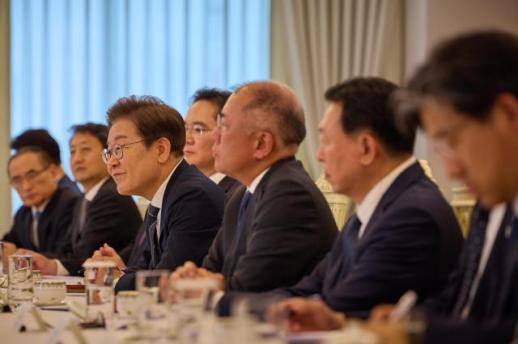 Korea’s Top Business Groups Head Into Annual Meetings With Focus on Stability Major South Korean business groups will hold annual general meetings late this month to set business plans and discuss key issues. Attention is on whether Sohn Kyung-shik, chairman of the Korea Employers Federation (KEF), will win a fifth term, and whether the heads of the country’s four largest conglomerates will return to the leadership council of the Federation of Korean Industries (FKI). Also in focus is whether the Korea Chamber of Commerce and Industry (KCCI) will reshuffle executives after a controversy over what it called false information about inheritance tax. According to the business community on Thursday, FKI, KEF, KCCI and the Korea International Trade Association (KITA) will hold annual meetings from Feb. 24 to 27 to approve business plans and budgets and review last year’s results. KEF will meet Feb. 24 to decide whether Sohn will serve a fifth term. Sohn, who took office in 2018, has led the group for eight years through four renewals. If approved again, he would lead KEF for 10 years and become its longest-serving chairman. KEF has no separate rule limiting renewals, meaning another term is possible if Sohn agrees. Sohn, born in 1939, is said to have decided after lengthy deliberation given his age. With major business issues pending — including a revised labor union law set to take effect in March and proposed revisions to the Commercial Act — business leaders have argued he is best positioned to convey management’s views to the government. He has been credited with actively delivering the business community’s positions and concerns about what the article describes as anti-business legislation since the Lee Jae-myung government took office. A business community official said Sohn has built extensive networks over about 65 years of work and is widely seen as having elevated KEF from a labor-management specialist group to a broader economic organization. The official said Sohn is among the few who can communicate candidly with the government on difficult issues such as labor regulation and Commercial Act revisions, adding that many inside and outside the business community view his working relationship with the Lee government, launched last year, as solid. FKI will hold a board meeting and annual general meeting Feb. 27. With Chairman Ryu Jin having won another term last year, the meeting is expected to focus on last year’s performance, this year’s plans, and budget and settlement items. Interest has centered on whether the owners of the four largest conglomerates — Samsung, SK, Hyundai Motor and LG — will return to FKI’s leadership council, though that is seen as unlikely. The four groups rejoined FKI as member companies in 2024, but their owners have not returned to the council. The leadership council is FKI’s top decision-making body, where major business leaders discuss economic issues and policy direction. Under FKI’s predecessor, the Federation of Korean Industries, about 20 conglomerate chiefs — including Samsung’s Lee Kun-hee, SK’s Chey Tae-won, Hyundai Motor’s Chung Mong-koo and LG’s Koo Bon-moo — met regularly, but the council was dismantled after the 2017 political scandal involving state affairs. A business community official said Ryu was reported to have tried to persuade the four group owners, but they declined. The official cited heavy corporate agendas and lingering public skepticism about such a top decision-making body as reasons for their reluctance. KITA will hold its annual meeting Feb. 25 at COEX in Seoul’s Samseong-dong to report 2025 results and approve its 2026 plan and budget, as well as vote on additional appointments of non-standing vice chairmen and directors. Chairman Yoon Jin-sik, who took the post in 2024 under the Yoon Suk Yeol administration, is serving a term through February next year, and there is little discussion of selecting a new chairman. KCCI will also hold its regular general meeting late this month to report major plans and strategy and last year’s results. After the meeting, discussions are expected to begin in earnest on an executive reshuffle that Chairman Chey Tae-won has signaled. Chey previously announced five reform steps tied to the inheritance-tax false-information controversy, including a review of whether to reappoint executives and a halt to events hosted by the chamber. A business community official said leaders of major business groups were often replaced when administrations changed, drawing criticism as “parachute appointments,” but this year there are few signs of leadership changes even as terms near expiration. The official said the government and business community appear aligned in wanting practical, working-level leaders amid high uncertainty at home and abroad. * This article has been translated by AI. 2026-02-20 18:04:15
 -
 Eastar Jet to Launch Daily Incheon-Hong Kong Flights Starting March 31 Eastar Jet said Thursday it will launch an Incheon-Hong Kong route on March 31, expanding its Greater China network. The route will operate daily. Flights will depart Incheon International Airport at 8:10 p.m. and arrive at Hong Kong International Airport at 10:45 p.m. local time. Return flights will leave at 12:05 a.m. the next day and arrive at Incheon at 5:10 a.m. Eastar Jet said the schedule allows passengers to reach Hong Kong before the subway stops running and to use public transportation after returning to South Korea. To mark the launch, the airline will run a promotional fare sale starting at 10 a.m. on Feb. 23 through its website and mobile app. The lowest one-way total fare, including airport fees and fuel surcharges, is 76,600 won. The travel period runs from March 31 to Oct. 24. "The Hong Kong route is a key route with steady demand for leisure and business travel, as well as connecting passengers," an Eastar Jet official said. "With a schedule that allows customers to depart after work, it will be an attractive option for office workers planning efficient trips." The Incheon-Hong Kong route will be Eastar Jet's 14th Greater China route, following Taipei and Shanghai. The airline said it plans to keep expanding its Greater China network as demand for its China routes remains strong. Last year, Eastar Jet's passenger numbers on China routes rose more than 128% from a year earlier, and the average load factor per flight increased by more than 28%, it said.* This article has been translated by AI. 2026-02-20 14:39:18
 -
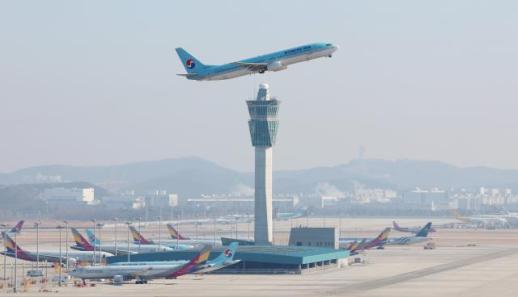 All 11 South Korean Airlines Ban In-Flight Use of Portable Battery Packs All South Korean airlines will ban the use of portable battery packs on board all flights starting this month. According to the aviation industry on the 20th, T’way Air notified passengers that beginning on the 23rd it will prohibit charging portable battery packs on board, as well as using them to charge other electronic devices such as mobile phones. Passengers may still bring portable battery packs into the cabin, but they must take steps to prevent short circuits — such as covering the terminals with insulating tape or storing each pack separately in a plastic bag or individual pouch — and keep them in a visible place. With T’way’s move, all 11 domestic airlines will prohibit in-flight use of portable battery packs. Five Hanjin Group airlines — Korean Air, Asiana Airlines, Jin Air, Air Busan and Air Seoul — have banned their use on board since January. Jeju Air also began the same measure that month. Eastar Jet ran a three-month pilot ban starting in October last year and has formally adopted the policy this year. Air Premia and Aero K also banned in-flight use starting this month. Parata Air has kept the ban in place since it began operations in September last year. Airlines have tightened carry-on rules after a January last year incident in which a portable battery pack caught fire on an Air Busan passenger plane preparing for takeoff at Gimhae International Airport, destroying the aircraft, followed by similar incidents.* This article has been translated by AI. 2026-02-20 14:36:16
 -
 Volkswagen Korea Launches ‘Feel & Drive’ Test-Drive Campaign for Atlas SUV Volkswagen Korea said Feb. 20 it selected the Atlas large SUV as its February featured vehicle for its customer-participation social test-drive campaign, “Feel & Drive.” Feel & Drive is a recurring program that lets customers take an in-depth drive of Volkswagen’s core models each month, including the Golf, Atlas and Touareg, tailored to individual lifestyles. The program offers a 3-night, 4-day test drive, including a weekend, aimed at highlighting the vehicles’ detailed strengths and the finish of German engineering, the company said. The February model, the Atlas, is positioned as a large SUV with one of the biggest body sizes in its class and a roomy cabin, along with powerful driving performance and a broad set of advanced convenience and safety features. Built on German engineering and space efficiency proven in the U.S. market, the Atlas was also named the “2026 Internal Combustion SUV of the Year” by the Korea Automobile Writers Association (AWAK). Winners of the test-drive campaign will be able to drive the Atlas from March 6 to 9. Applications are open through Feb. 22 by leaving a comment matching the theme on the event post on Volkswagen’s official Instagram channel. Winners will be announced Feb. 23. “Atlas is a versatile family SUV with strong driving performance and solid stability, and customers will be able to experience its true value through a deep, 3-night, 4-day test,” said Shin Dong-hyeop, executive director of marketing communications at Volkswagen Korea. “This year as well, we will provide Volkswagen’s differentiated customer experience through the Feel & Drive campaign across our lineup.”* This article has been translated by AI. 2026-02-20 13:03:18
 -
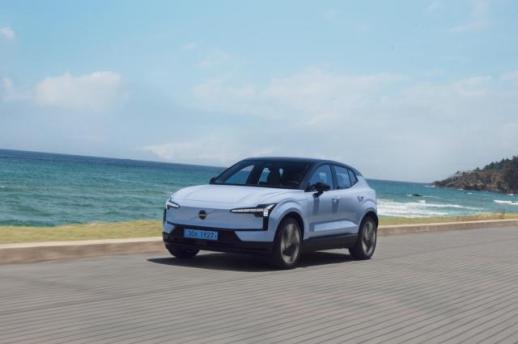 Volvo Korea Cuts EX30, EX30 Cross Country Prices by Up to 7.61 Million Won Volvo Car Korea said Feb. 20 it will cut the list prices of its premium all-electric SUVs, the EX30 and the EX30 Cross Country (EX30CC), effective March 1. The company said the decision followed close talks with its headquarters and is aimed at broadening the EV market and giving more customers access to Volvo’s sustainable mobility. With the change, the entry-level EX30 Core will be priced in the 30 million won range, lowering the barrier to the premium imported EV segment, the company said. The EX30 Core will drop by 7.61 million won, from 47.52 million won to 39.91 million won. The EX30 Ultra and EX30CC Ultra will each be cut by 7 million won, to 44.79 million won and 48.12 million won, respectively. Government EV subsidies can further reduce purchase prices. Using Seoul’s subsidy as an example, the EX30 Core and Ultra would each receive 3.21 million won, bringing their prices to 36.70 million won and 41.58 million won. The EX30CC Ultra would receive 2.88 million won, for an effective price of 45.24 million won. Volvo Car Korea said the move is not a temporary discount tied to option changes, but a reduction in official list prices while keeping the highest-level options intact. Lee Yoon-mo, CEO of Volvo Car Korea, said the company decided on the cuts after “intense discussions” with headquarters that reflected the importance of the Korean market. He said Volvo aims to lead the mainstreaming of premium EVs through the EX30 and EX30CC and help customers experience Volvo’s value “without 부담,” or undue burden. The EX30 and EX30CC are all-electric SUVs that Volvo says offer flagship-level safety technology and convenience features despite their compact size. The EX30 uses a 66kWh NCM battery and a rear-wheel-based single-motor extended powertrain, producing 272 horsepower and 35.0 kg.m of maximum torque. It accelerates from 0 to 100 kph in 5.3 seconds and has a combined driving range of 351 km per charge. The EX30CC uses a 66kWh NCM battery and an all-wheel-drive twin-motor performance powertrain, producing 428 horsepower and 55.4 kg.m of maximum torque. It goes from 0 to 100 kph in 3.7 seconds and has a combined driving range of 329 km per charge. Volvo Car Korea said it will continue to offer what it called industry-leading coverage: a free warranty and consumables replacement service for five years or 100,000 km, and a high-voltage battery warranty for eight years or 160,000 km. It also includes 15 years of free over-the-air (OTA) updates and a free 5G digital package for five years. * This article has been translated by AI. 2026-02-20 09:27:00
 -
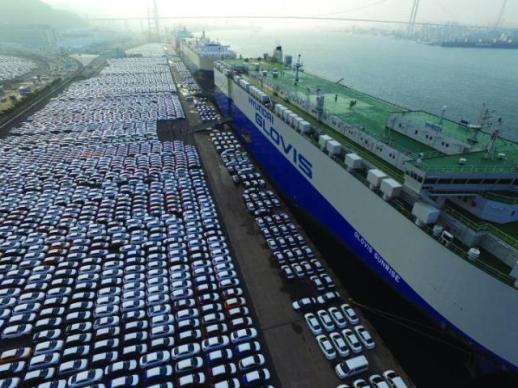 Hyundai Glovis Hits 7% Operating Margin Goal Early, Eyes Global Logistics Growth Hyundai Glovis is accelerating its push to become a global logistics company after reaching its 2030 target of a 7% operating profit margin ahead of schedule. The company is expanding vehicle shipments beyond Hyundai Motor and is also moving cargo tied to advanced industries such as defense, energy storage systems (ESS) and hydrogen. According to industry officials on Feb. 19, Hyundai Glovis posted 29.567 trillion won ($) in sales last year and 2.073 trillion won in operating profit, up 4.1% and 18.3% from a year earlier. Its operating margin came to about 7.1%, achieving a goal CEO Lee Kyoo-bok had set five years early. At a "CEO Investor Day" in June 2024, Lee outlined a plan to invest 9 trillion won by 2030 to reach 40 trillion won in sales and a 7% operating margin. All business lines grew: integrated logistics handling domestic and overseas transport (35%), the distribution unit covering CKD parts and used-car exports (47%), and ocean shipping (18%). A company official said Hyundai Glovis has helped clients cut logistics costs by leveraging routes built through Hyundai vehicle exports and by shortening lead times for auto-parts transport. The official added that proactive responses to free trade agreement risks and efforts to reduce costs at overseas plants helped win global customers. Hyundai Glovis has signed long-term ocean shipping contracts with automakers including Volkswagen, BMW, Ford and GM, and it also transports vehicles from Tesla and China’s BYD across Europe. It recently shipped defense products to Poland and other parts of Europe, including 124 K2 tanks and 60 K9 self-propelled howitzers. The company is also expanding into heavy and oversized breakbulk cargo that cannot be loaded into containers, such as power-generation equipment, trains, aircraft and mining machinery. It aims to lift non-affiliate revenue to 50% within four years. As of last year, cargo from affiliates accounted for 60.7% of volume, down 4.8 percentage points from the previous year. Hyundai Glovis plans to deploy four LNG carriers by 2027 to transport cargo for Middle Eastern shippers and to begin ocean-shipping projects involving high-speed trains, petrochemical plant equipment and ESS batteries. It also plans to start transporting ammonia and liquefied hydrogen around 2031. A company official said Hyundai Glovis aims to increase finished-vehicle ocean shipments from about 3.4 million units to 5 million and become the No. 1 car-carrier shipping company by 2030. The official said the company will build on its 147 logistics networks across 27 countries, freight-rate competitiveness and supply-chain flexibility to become a top-tier global player linking logistics, shipping and distribution. * This article has been translated by AI. 2026-02-20 05:03:00