
Journalist

Han Jiyeon
hanji@ajunews.com
-
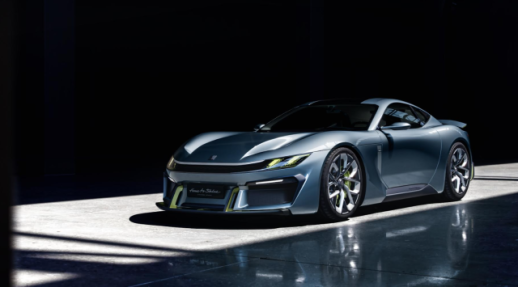 Hyundai’s Ioniq V Takes on China’s EV Battery and Energy-Tech Surge "When AI is combined with electric vehicles, the car chooses and manages energy on its own, so cost-effectiveness (efficiency) improves beyond imagination. That aligns with the Chinese government’s push for extreme energy efficiency. The era of a 4-minute full charge and 2,500 kilometers (1,553 miles) per charge has already arrived. There is no inconvenience that overwhelming value can’t solve," said an official at a Chinese company identified only as Company A. This year’s Beijing motor show looked less like a traditional auto exhibition and more like a massive energy expo. Among about 1,400 vehicles spread across an area the size of 53 soccer fields, crowds did not linger at supercars. They gathered instead at battery demonstrations: BYD showing a charge to 70% in five minutes inside a minus-35 Celsius (minus-31 Fahrenheit) icebox, and CATL promoting its third-generation battery technology with full charging in the six-minute range. China’s auto industry, once dismissed as a copycat, has become a center of innovation that global automakers study as it tightens its grip on energy-related competitiveness, the article said. Behind the rapid shift is China’s detailed strategy to foster so-called new energy vehicles. In the past, Beijing pushed electrification with subsidies, tax benefits and infrastructure support, along with strict license-plate rules. More recently, the government has shifted from acting as a market “guardian” to a tougher manager encouraging survival of the fittest. China is now cutting EV subsidies that helped fuel growth and is moving to weed out weaker players. Automakers, fighting to survive, are releasing new models every six months, cutting prices and pushing technology to the limit. Last year, the average operating profit margin for China’s auto industry fell to a record low of 4%. Still, companies that endured the pressure, including BYD and Geely Automobile Group, have emerged as “star” firms able to compete in any environment, the article said. For South Korea’s auto industry, China has become a harsh lesson. Hyundai Motor and Kia’s market share, once above 10%, has plunged, the article said, arguing the setback should now be used to find a new path. Hyundai’s Ioniq V, unveiled at the show, was described as a product of that reassessment. Hyundai dropped its insistence on using only its own platform and adopted one jointly developed with Beijing Automotive Group. It also integrated technology from CATL for batteries, Momenta for autonomous driving and ByteDance for infotainment. The localization approach was summed up as: borrow technology, but not brand value. The article said Hyundai will need a fundamentally different strategy in China than in South Korea. Chinese consumers increasingly view cars less as durable goods to keep for more than a decade and more like software devices updated every six months. Without sharply shortening development cycles and accelerating the shift to software-defined vehicles, the article warned, a reputation for hardware could erode quickly. It also urged Korean automakers to move beyond a closed ecosystem centered on domestic suppliers and strengthen open innovation by partnering flexibly with advanced global IT and battery companies, similar to how Mercedes-Benz, BMW and Volkswagen have worked with Chinese startups under an “In China, For China” approach. Hyundai Motor Group Vice Chairman Jang Jae-hoon said the company would “learn a lot and grow” in China. The article said technology proven in China — the world’s largest market and one of its most competitive — has become a strong credential for global success, and expressed hope that the Ioniq V can break through in China and expand beyond it. 2026-04-27 17:52:51
 -
 BYD Korea Opens Pohang Service Center to Expand Access on South Korea’s East Coast BYD Korea said Sunday it has officially opened the “BYD Auto Pohang Service Center” in Pohang, North Gyeongsang Province. The Pohang facility is BYD Korea’s 18th service center for its passenger-car business and will operate as an integrated hub combined with the BYD Auto Pohang showroom that opened late last year. The center offers one-stop service covering vehicle consultation and test experiences, contracts, maintenance and accident repairs. It includes service lines that can handle up to two vehicles at the same time, parking for six vehicles and a customer waiting area, the company said. Located in a central part of Pohang, the service center has convenient access to major arterial roads and the East Coast transportation network, and is expected to be easily reachable from nearby areas including Gyeongju, Yeongcheon and Yeongdeok. BYD Korea said it expects the site to serve as a key base for strengthening service for customers along the East Coast by meeting demand from both nearby industrial complexes and local residents. GNB Mobility, BYD Korea’s official dealer, said the opening is part of a plan to improve both product and service access across the East Coast region. Lee Min-uk, CEO of GNB Mobility, said, “Following the Pohang showroom in one of Korea’s leading industrial cities, we have now built a service center as well, improving the BYD electric-vehicle ownership environment that customers along the East Coast can feel.” He added, “We will continue strengthening our capabilities so customers can drive BYD vehicles with confidence by offering good products and good service in good locations.” BYD Korea said it aims to expand its service network from 18 locations to 26 by the end of the year. A BYD Korea official said the company will work to ensure customers can receive a high level of service nationwide, adding that it plans to focus not only on expanding the number of sites but also on quality improvements, including strengthening the development of technicians who have completed BYD technical training. * This article has been translated by AI. 2026-04-27 15:42:48
 -
 China’s Beijing Auto Show spotlights AI-powered new energy vehicles amid weak domestic demand “We’re the ‘king of the alleyways.’ Our next throne will be in humanoid robots and flying cars,” said He Xiaopeng, chairman of XPeng Motors. At the 2026 Beijing International Motor Show (Auto China 2026) on April 24 at the Capital International Exhibition Center in Beijing’s Shunyi district, crowds of more than 200 reporters packed the booth of XPeng, often called China’s Tesla, to see the world debut of its new SUV, the GX. XPeng said the GX uses four in-house AI chips and a second-generation VLA (Vision-Language-Action) system to deliver Level 4 autonomous driving that can recognize and judge situations on its own. “Autonomous driving is no longer just for early adopters,” He said. “We’re moving into everyday life, from apartment underground parking lots to crowded shopping centers.” When He played video of the second-generation VLA system, the audience reacted loudly as the vehicle navigated a chaotic night market and narrow alleys clogged with illegally parked cars. The video also showed the car reading building signs and “entrance/exit” markings to make decisions. In one scene, a kitten lay in the road; the vehicle hesitated, then edged into the next lane to avoid it. He said advanced autonomous driving is becoming a must-have feature that drives purchases. He said XPeng aims to create new demand and “break through” weak domestic consumption by emphasizing safety, including for mothers in their 60s and older. He added that a second version of the second-generation VLA system, which learns by recognizing voice across the full driving route rather than relying on memory-based approaches, will be unveiled in May, opening an era of “mass-market autonomous driving.” At Auto China 2026, which runs through May 3, Chinese automakers rolled out a wave of AI-enabled new energy vehicles, presenting them as a way to counter a sharp domestic slowdown. The show, themed “Future of Intelligence,” drew global brands including Hyundai Motor as well as Mercedes-Benz, BMW and Volkswagen Group, alongside local players such as BYD Group, Geely Auto Group, Chery Automobile Group, Xiaomi, XPeng and Nio. Organizers said more than 100 automakers and more than 1,000 parts suppliers took part. A representative of Li Auto said China’s NEV strategy is shifting from rapid expansion to higher-quality growth, intensifying competition among local companies. With AI integrated into vehicles, the person said, autonomous driving and infotainment are improving, along with charging and operating systems. The representative said a 1,500-kilometer driving range has become standard and that a 2,500-kilometer era is approaching. According to the China Association of Automobile Manufacturers, China’s auto sales in the first quarter totaled 6.3 million vehicles, down 6% from a year earlier. Exports rose 50%, but domestic sales fell 16%, after China ended NEV tax incentives late last year. As a result, local brands are rapidly shifting from a low-priced, domestic-focused EV market to an export-driven NEV market, a trend also reflected in their more aggressive push into South Korea. Geely Auto Group, which plans to enter the South Korean market in the first half of this year, built one of the show’s largest booths. Under the concept of “embodied intelligence,” it presented NEV strategy models from Zeekr, Lynk & Co and Galaxy, along with a bipedal robot called “Eva,” smart city initiatives and a methanol ecosystem strategy. A key attraction was the “EVA Cab,” described as China’s first robotaxi-only prototype. Geely said the vehicle applies a “quantum-level” AI architecture and is the industry’s first Level 4 robotaxi prototype to complete mass-production preparation. After a year of pilot operations in cities including Hangzhou and Suzhou, it is set for a full launch starting in 2027. On the show floor, the EVA Cab featured a wide-opening sliding door and a cabin layout with facing seats. Zeekr and Lynk & Co also introduced models they said use AI to improve range, charging time, fuel efficiency and driver safety. Zeekr strengthened its luxury lineup with the new 009, 8X and 9X. The 8X uses a 900-volt high-voltage system and a three-motor electric drivetrain, delivering a peak output of 1,030 kW and a 0-100 kph time in the 2.96-second range, which the company billed as the world’s fastest hybrid SUV. Lynk & Co’s electric sport sedans 10+ and 10, set for release in May, use a 900-volt system and a 95 kWh “golden battery,” which the company said enables ultra-fast charging equivalent to 2 kilometers of driving per second. A Geely Auto Group official said the AI ecosystem technologies unveiled at the show will help the company evolve from an automaker into a global intelligent mobility company. BYD, along with its sub-brands and Denza, Yangwang and Formula Bao, highlighted its ambition to lead China’s NEV strategy. BYD drew attention with a display that placed the Denza Z9 GT and Formula Bao’s Tai 3 inside a freezer so visitors could gauge charging performance in extreme cold. The freezer dropped to minus 35 degrees Celsius, leaving frost on the vehicles, but BYD said its second-generation Blade Battery still charged from 10% to 70% in under five minutes, underscoring its focus on energy efficiency as well as high specifications and stronger autonomous-driving features. Amid the surge by Chinese brands, Hyundai Motor showcased its electric vehicle, the Ioniq V. The Ioniq V is the production model of the previously unveiled concept car “Venus” and the first China-focused model under Hyundai’s Ioniq brand. Hyundai said it will add an SUV model around the first half of next year and introduce 20 new models by 2030. Jang Jae-hoon, vice chairman of Hyundai Motor Group, told reporters at the company’s booth, “We will learn and grow a lot in China,” adding, “It is the toughest market, but we will rise again in China and create success.” 2026-04-26 11:45:24
 -
 Hyundai’s Jose Munoz Targets 500,000 Annual Sales in China by 2030 "At Beijing Hyundai, we will sell 500,000 vehicles a year by 2030, including domestic sales and exports." Hyundai Motor President Jose Munoz said at a meeting with reporters on April 24 at the China International Exhibition Center Convention Center in Beijing that the company will make this year the starting point for accelerating a turnaround in China. He said Hyundai plans to launch 20 new energy vehicles, or NEVs, by 2030 and show annual growth of 9%. Hyundai on Thursday opened the 2026 Beijing Motor Show (Auto China 2026) by unveiling the China mass-production model Ioniq V for the first time in the world. The Ioniq V features a localized interior and exterior design, a naming strategy based on planet names, a battery from China’s CATL, and Momenta’s Level 2+ driver-assistance technology, including highway driving assistance and memory parking. "China is the most important EV market, and Hyundai is one of the best-performing companies in EVs globally," Munoz said. He said Hyundai will strengthen its positioning in China by combining products, features, design, service and pricing proven in global markets with thorough localization. China is often called a tough market for foreign brands because consumers strongly prefer domestic vehicles. With the economy weakening, global automakers including Mercedes-Benz, Volkswagen Group and BMW have also stepped up moves to reduce their exposure to China. Munoz said Hyundai’s Ioniq brand has been central to the company’s push to become a technology company, not just an automaker. He said Hyundai will combine Ioniq technology with localization efforts and the founder chairman’s “challenge DNA” to sustain Hyundai’s momentum in China. Munoz also pledged to deepen partnerships in China. He said that with China’s NEV tax incentives being reduced, companies cannot build fundamental competitiveness simply by importing functions and technology, and that Hyundai will work with local partners to strengthen its core capabilities. He also offered a blunt assessment of Hyundai’s struggles in China over the past decade. "We became overconfident and settled for the status quo," Munoz said, adding that the company learned humility in China and analyzed the causes of its failures through dialogue with partners and customers. He said China’s market and technology are changing faster than in the past, and that Hyundai will execute its strategy step by step with a learning mindset not only in autos but also in hydrogen and physical artificial intelligence. The Ioniq V shown Thursday includes smart AI features, distinctive exterior and interior design, and advanced electronics aimed at Chinese consumers. Heo Jae-ho, Hyundai’s chief technology officer in China, said the vehicle will include a digital ecosystem centered on a smart cabin and autonomous driving, as well as LLM-based voice recognition and personalized services from Doubao, a ByteDance subsidiary. He said Hyundai will also reflect local preferences with Chinese apps such as Baidu, Amap and WeChat, along with Dolby sound and karaoke features. Hyundai plans to build out the Ioniq V lineup to six models by 2028, using two platforms for compact and mid-to-large vehicles and offering both EV and extended-range electric vehicle, or EREV, variants. It will then expand sequentially to 20 models by 2030, depending on market conditions and China’s policies. Munoz said Hyundai’s ability to survive amid variables such as tariffs, the repeal of the Inflation Reduction Act and war in the Middle East has been driven by offering customers a wide range of choices. He said Hyundai will provide Chinese customers with flexible options including the Ioniq V, Ioniq E, a future D-segment SUV, a multipurpose vehicle and EREV models. Munoz said Hyundai can apply its global playbook in China, citing the company’s position as No. 3 in global vehicle volume and No. 2 in profitability. He said growth in China is an important opportunity, including as a hedge against risks in other regions.* This article has been translated by AI. 2026-04-26 09:03:20
 -
 Hyundai Motor Group vice chairman calls China toughest must-win market as CATL backs Ioniq V Hyundai Motor Group Vice Chairman Jang Jae-hoon met with CATL Chairman Zeng Yuqun in Beijing and reaffirmed their commitment to work together as Hyundai steps up its China strategy. Jang and Zeng met at the 2026 Beijing Auto China show, where Hyundai unveiled the China-focused electric vehicle Ioniq V. Jang made an unannounced visit to the show floor to view the Ioniq V, which Hyundai said it revealed for the first time in the world. Zeng also visited Hyundai’s booth to congratulate the company on the launch. The Ioniq V uses a battery developed in cooperation with CATL, and Hyundai expects a driving range of more than 600 kilometers on a single charge under China’s CLTC standard. “China is the most difficult market, but it is also a market where we must succeed,” Jang told reporters. “We will learn a lot and take a lot away.” He said electrification and smart technologies are already widespread in China, and Hyundai will focus on how it can differentiate itself with specific technical strengths. He added he hopes the newly launched Ioniq will receive a strong response. Zeng was also reported to have applauded the Ioniq V and expressed support for its success. Hyundai executives attending included Munoz; Park Min-woo, head of Hyundai’s Advanced Vehicle Platform (AVP) division; and Zhang Jianyong, vice president of BAIC Group, Hyundai’s joint-venture partner in China. “China is the market with the most advanced ecosystem in electric vehicles and software-defined vehicles,” Munoz said. “To secure global competitiveness, we must prove real competitiveness in China, so we will build a new future in China through a pipeline of 20 new-vehicle developments over the next five years.” After viewing the Ioniq V, Park said the design was “bold and beautiful,” adding he hopes the results for the newly launched Ioniq in China will be strong. On Momenta, the Chinese autonomous-driving company whose technology is applied to the Ioniq V, Park said he had been familiar with Chinese technologies since his time at Nvidia and had driven them. He said Hyundai will proceed without setbacks in preparing to internalize autonomous-driving technology. Hyundai said the Ioniq V incorporates a CATL battery, Momenta autonomous-driving technology and platform technology co-developed with BAIC. The company’s strategy is to deepen its integration into China’s electrification ecosystem by strengthening development partnerships with local firms. Hyundai’s goal is to build an annual sales base of 500,000 vehicles through 20 electrified new models aimed at the China market over the next five years. 2026-04-24 14:37:00
 -
 Hyundai Unveils China-Only Ioniq V, Plans 20 New Models by 2030 Hyundai Motor is ramping up its electrification push in China with a China-focused model under its dedicated EV brand, Ioniq. The automaker said it will deepen strategic cooperation with local companies — including battery maker CATL and autonomous-driving firm Momenta — and plans an aggressive rollout of 20 new models over the next five years. Hyundai on April 24 unveiled the Ioniq V (IONIQ V) for the first time worldwide at the 2026 Beijing International Motor Show (Auto China 2026) at the China International Exhibition Center in Shunyi. The Ioniq V is the production version of the “Venus Concept” revealed April 10. Hyundai described it as the Ioniq brand’s first China-strategy model, tailored to Chinese customers’ lifestyles. The company said the vehicle reflects its electrification know-how, including a locally optimized platform and battery developed through technology cooperation with Chinese partners, and a quieter ride. Hyundai said it will add another electrified SUV by the first half of 2027 and, by 2030, introduce 20 new models — including extended-range electric vehicles, or EREVs — to build a midsize-to-large electrified lineup. It also said it will revamp the full ownership process, from purchase through use, to deliver an electrification experience tailored to China. ◆“20 new models by 2030 ... China is a core market” Hyundai also outlined its China strategy, centered on expanded investment, tailored product development and closer partner cooperation. The company said it and joint-venture partner Beijing Automotive Group last year jointly invested 8 billion yuan (about 1.73 trillion won) in Beijing Hyundai, aiming to build a system that can better tap China’s innovation-driven industrial ecosystem. Hyundai said it aims for annual sales of 500,000 vehicles at Beijing Hyundai and will broaden its lineup by launching 20 new models in China over the next five years. It also pledged to make China a core sales market and a long-term hub for strengthening global competitiveness by innovating EV sales and service and expanding cooperation with local technology partners. Jose Munoz, Hyundai Motor’s CEO, said China combines the fastest development pace, a strong battery supply chain, demanding EV consumers and an advanced innovation ecosystem. “China is an essential and core market,” he said. Munoz said Hyundai will “write the strongest, most ambitious and most anticipated new chapter” in China, citing large-scale investment in Beijing Hyundai, the 20-model rollout over five years, the official launch of the Ioniq brand in China and the unveiling of the Ioniq V. He said the company will work to define the future of mobility in China under its “In China, For China, To Global” strategy. ◆Sleeker, roomier Ioniq V adds advanced features Hyundai said the Ioniq V follows its new design language, “The Origin,” with a focus on delivering a strong first impression. It features a sporty hood line and edge lighting up front, a curved side silhouette with frameless doors and diamond-cut detailing, and thin rear lamps stretched horizontally to the far left and right edges. Hyundai said the cabin is larger, with overall dimensions of 4,900 mm in length, 1,890 mm in width and 1,470 mm in height, and a 2,900 mm wheelbase. It listed legroom of 1,078 mm in the front and 1,019 mm in the rear, and shoulder room of 1,502 mm in the front and 1,473 mm in the rear, calling it best-in-class interior space. Features include a Horizon head-up display (H-HUD), a Qualcomm Snapdragon 8295 chipset and a 27-inch 4K display. Hyundai said Dolby Atmos is standard, delivering spatial audio through eight speakers. ◆Co-developed with CATL, Momenta and other local partners Hyundai said the Ioniq V incorporates technologies developed with Chinese partners to better fit the local market and strengthen global competitiveness. It uses a platform co-developed with joint-venture partner Beijing Automotive, and a battery developed in cooperation with CATL. Hyundai said it expects more than 600 kilometers of range per charge under China’s CLTC standard. It also includes ADAS functions developed with Momenta. Hyundai said it will build standalone brand hubs in major cities and dedicated brand spaces inside dealerships, and introduce Ioniq specialists and an expanded service program to support customers from purchase through maintenance. It said it will adopt a “one price” policy across all sales channels to bolster trust, and accelerate expansion of charging infrastructure and its battery service network. Li Penggang, general manager of Beijing Hyundai, said unveiling the Ioniq V in China goes beyond introducing a new vehicle and reflects respect for the market and a firm commitment to the future. He said the Ioniq V and the new China strategy show Hyundai’s intent to set a new global mobility benchmark based on China’s innovation capabilities. Hyundai said it is operating a 1,816-square-meter (about 549-pyeong) booth at the Beijing motor show through May 3, displaying nine vehicles — the Ioniq V, the Venus concept, the Earth concept, the Elexio, the Palisade Hybrid, cutaway models of the Ioniq 9 and Ioniq 5 N — along with two Mobed models. 2026-04-24 12:05:17
 -
 Hyundai Motor to Shift China Strategy to NEVs, Launch Ioniq Brand "In China, For China, To Global." (Jose Munoz, president of Hyundai Motor) Hyundai Motor Group is launching what it calls a second push in China, 24 years after entering the market, aiming to move beyond its image for value-priced gasoline cars and reposition itself around electric vehicles and other eco-friendly models. The group set a goal of building a China-tailored lineup of six new EV models by 2030 and reaching annual sales of 500,000 vehicles in the country. Hyundai Motor Group said Thursday it will formally declare a shift to a new-energy vehicle (NEV) brand at the 2026 Beijing International Motor Show, known as Auto China 2026, which opens April 24 local time. It will also unveil the first China mass-production model under its Ioniq brand. The move marks the group’s biggest local change since Hyundai Motor and Beijing Automotive established the 50-50 joint venture Beijing Hyundai in October 2002. The group is seeking to regain ground after its China business shrank sharply following the THAAD dispute. Up to 2016, Hyundai brands posted double-digit combined market share, with Beijing Hyundai at 6.5% and Dongfeng Yueda Kia at 3.7%, and were considered part of the market’s “big three” alongside Volkswagen and General Motors. The downturn was compounded by a boycott of South Korean products and by Hyundai’s slower response to rapid advances in China’s EV and autonomous-driving sectors. Over the past decade, China’s auto market has shifted from internal-combustion vehicles to NEVs. EV makers such as BYD and Geely have moved into the leading group, and technology companies including Huawei and Xiaomi have entered the auto industry through electronics and semiconductors. According to a survey by the China Automotive Research Institute, NEVs account for 54% of new-vehicle sales in China. Hyundai said localization is its top priority, beyond simply introducing new EVs. It has applied autonomous-driving technology developed by Chinese IT company Momenta to new models and plans to build an “Ioniq ecosystem” combining services reflecting local preferences and charging infrastructure. Hyundai also plans to launch an extended-range electric vehicle, or EREV, in 2027, citing China’s vast geography and charging conditions. The company described the EREV as running on battery power in normal use, while using fuel to generate electricity for the motor on long-distance drives. The group also sees opportunity in China’s oversupply and shifting government policies. Under China’s 15th five-year plan for 2026-2030, the government narrowed support by classifying only “intelligent connected NEVs” as an emerging industry. A subsidy program that pays consumers to replace older vehicles with NEVs, known as “yigu huanxin,” was also changed from a fixed-amount payment to a percentage-based system, raising the likelihood that buyers will shift toward AI-enabled smart NEVs or premium brands. With local brands strong in mass-market EVs, Hyundai said it aims to build an image as a premium AI smart-car brand. Kia is also accelerating its electrification push in China. Kia is mass-producing the EV5 at its Yancheng plant and exporting it not only within China but also to Central and South America and Australia, after unveiling the model at the Chengdu Motor Show in August 2023. Hyundai Motor Group is also expanding cooperation with Chinese companies in future industries. In January, group executives discussed broad cooperation with major firms in batteries, energy and autos, including CATL, Sinopec and Yueda Group, to review technology trends in China and refine mid- to long-term strategy. With CATL, the group exchanged views on next-generation battery technologies such as cell-to-pack (CTP) and ways to build a stable supply chain. With Sinopec, it agreed to cooperate on building a hydrogen ecosystem centered on its hydrogen fuel-cell system unit in Guangzhou, HTWO Guangzhou. With Kia’s local joint-venture partner Yueda Group, it agreed to pursue a sustainable business structure spanning batteries, hydrogen and future mobility beyond finished-vehicle sales. 2026-04-23 08:33:59
 -
 Hyundai Motor union seeks 30% of net profit as bonus, raises AI robot job concerns in wage talks Hyundai Motor Co. and Kia are expected to face a difficult round of annual wage and labor talks, with unions pressing demands that management is unlikely to accept, including bonuses equal to 30% of net profit, opposition to deploying the humanoid robot Atlas, a 100 million won childbirth incentive and an extension of the retirement age. According to the auto industry on the 22nd, Hyundai Motor management and the union will meet for the first time early next month at the company’s Ulsan plant to begin full-scale negotiations for this year’s wage and labor agreement. The Hyundai Motor union has finalized a proposal calling for a 149,600 won increase in monthly base pay (excluding step increases), a bonus equal to 30% of last year’s net profit, adoption of a fixed monthly salary system, an increase in bonuses to 800% from 750%, guarantees on working conditions as artificial intelligence is introduced, and an extension of the retirement age linked to the timing of National Pension eligibility. Expanded use of AI is also expected to become a key issue, as rapid automation and the shift to smart factories reduce the role of existing workers. The union has objected to placing the humanoid robot Atlas on production lines and to any reduction in domestic output tied to increased production at overseas plants. The union’s push for a “complete monthly salary system,” under which pay is fixed once certain working hours are met, is also aimed at protecting members if workloads fall as AI robots are introduced. The union says the change would raise the share of fixed pay workers receive each month. Kia’s union is also seeking a 149,600 won base-pay increase, a bonus equal to 30% of last year’s operating profit, a 100 million won childbirth incentive and a guarantee of total employment. The childbirth incentive was reportedly added with reference to a case involving Booyoung Group. Industry attention is focused on this year’s Hyundai Motor Group talks because they are seen as the first major venue for negotiating job security measures tied to new technologies. Critics say the union demands are unrealistic given heavy research and development spending and weaker profitability amid a tougher external environment. Hyundai Motor’s net profit last year was 10.36 trillion won; paying 30% as a bonus would amount to 42.59 million won per employee, according to the report. With sharp differences expected on the main issues, many in the industry say a final deal will be hard to reach. Last year, the Hyundai Motor union entered a partial strike after failing to narrow differences with management, ending a seven-year streak without work stoppages. A Hyundai Motor official said the company would “avoid unnecessary attrition” and “do its best” to reach a reasonable outcome that allows labor and management to coexist."* This article has been translated by AI. 2026-04-22 18:48:20
 -
 Questions Raised Over Hankook & Company Shareholder Group’s Motives Questions are growing over the "Hankook & Company Shareholders Alliance," which some critics say was used as a public-relations tool by the company’s second-largest shareholder at the firm’s annual meeting. The group, formed in the name of protecting minority shareholders, is now facing allegations that it has been used to advance a legal network tied to the owner family. Industry watchers warn that if a voluntary minority-shareholder group is diverted to serve a particular faction’s interests, it could lead to unintended harm for ordinary investors. According to the industry on April 22, attorney Kim Hak-yu, who led the alliance’s activities, was recently listed as legal counsel in a Supreme Court appeal in an ongoing lawsuit between Honorary Chairman Cho Yang-rae and his second daughter, Cho Hee-won, over the return of unjust enrichment. The case is being handled by Shinwon Law Firm, where Kim works, with the firm serving as counsel and Kim participating on the legal team. The appeal stems from events that began in 2019, when Cho gifted Hankook Tire shares to Cho Hee-won and paid the gift tax on her behalf. After a tax tribunal canceled the gift-tax assessment, the tax authority refunded 33.3 billion won in gift tax to Cho Hee-won rather than to Cho, who had paid it. Cho then filed a lawsuit seeking the return of unjust enrichment, won in the first and second trials, and the case is now in the Supreme Court. Kim is also the legal representative for the Hankook & Company minority-shareholder alliance. In 2025, he recruited shareholders through an open KakaoTalk chat room, saying he would "improve Hankook & Company’s outdated governance structure and maximize shareholder value." Critics, however, have described the group’s activities as one-sided. They say the alliance focused less on proposing broader governance reforms and more on repeatedly attacking Chairman Cho Hyun-beom, the controlling shareholder, over his high compensation and calls for him to step down. Separately, it later became known that Cho Hyun-sik, a former Hankook & Company adviser who previously fought a stake battle, was involved in the alliance, prompting claims that the group has shifted into a tool to pressure management. An industry official said minority and majority shareholders have "completely different" interests, and doubts grew after the name of a major shareholder — Cho Hyun-sik, who holds an 18.93% stake — appeared on a list of minority shareholders. The official said investors should cross-check not slogans about "protecting minority shareholders" but who is acting, what interests they have, and where the effort is headed. 2026-04-22 18:06:35
 -
 EVs Emerge as Grid Assets as Global Race to Commercialize V2G Accelerates As interest in electric vehicles rises again amid the war involving the United States and Israel and Iran, major countries are moving faster to use EVs as core infrastructure in domestic energy systems, industry officials said. Automakers and other sources said efforts are expanding in South Korea, the United Kingdom, the United States, Japan and the Netherlands to treat EVs as power assets, not just transportation. The push centers on vehicle-to-grid, or V2G, technology, which links EV batteries with the power grid so electricity can flow both ways. V2G can be implemented in EVs equipped for bidirectional charging and discharging, along with power control and communications functions. Under the model, vehicles charge during low-demand periods such as late at night and supply electricity back to the grid during peak demand. The approach can improve supply-demand balancing and energy efficiency, while owners receive incentives such as discounted charging fees and opportunities to earn revenue. V2G is drawing particular attention in places with a high share of renewable power, including parts of Europe and South Korea’s Jeju Island, where solar and wind output can swing sharply by weather and time of day. In those regions, EVs using V2G are seen as a way to improve the economics of renewables and stabilize the grid. ◆ Global V2G race intensifies as countries build access and rules The U.K. is widely viewed as among the most advanced in commercializing V2G services, lowering barriers for EV owners through simplified procedures such as dedicated service offerings. Last year, British energy company Octopus Energy launched what it described as its first commercial V2G package, bundling an EV lease, installation of a V2G charger and an electricity plan. Owners can participate by simply plugging in, without going through separate and complex power-selling transactions. The package also offers incentives tailored to Britain’s high electricity prices, including fully waiving charging fees if the EV remains connected to a V2G charger for a set minimum time, drawing a strong response from local owners. The Netherlands is running what it calls Europe’s first large-scale, city-level V2G demonstration model, the Utrecht Energized project, linking EVs, V2G charging stations and local solar systems. Utrecht, the country’s fourth-largest city, has solar panels on 35% of its buildings, which can lead to frequent daytime overproduction. EVs using V2G store surplus electricity in their batteries and supply it to the grid when needed. The system automatically decides and manages charging and discharging based on real-time supply and demand. In the United States and Japan, where disasters often damage power grids, efforts are also growing to position EVs as key energy infrastructure. California is a leading example, with wildfire, extreme heat and aging infrastructure making blackout risks persistent. The state’s Public Utilities Commission is testing how quickly power can be restored by linking EVs to local grids. Research has also found that if all EVs projected to be on the road by 2035 — about 14 million — were used, they could supply uninterrupted electricity to all households in the region for three days. Japan is likewise promoting EVs as a central element of disaster-response power infrastructure, a need that gained urgency after the 2011 Great East Japan Earthquake caused about 160 trillion won in damage. During the 2024 Noto earthquake in Ishikawa Prefecture, EVs were deployed to provide emergency power to homes as well as evacuation shelters and hospitals. Japan’s government has also included, in its purchase-subsidy evaluation criteria, measures such as signing disaster cooperation agreements with local governments to maximize EV use. ◆ Hyundai Motor Group leads Korea pilot as public-private council launches In South Korea, moves to commercialize V2G using EVs are gaining momentum. Hyundai Motor Group stands out, running pilot services to build a V2G ecosystem and verify technology based on dedicated EV models and bidirectional charging. Since December, Hyundai Motor Group has been testing 55 EVs, including the Ioniq 9 and EV9, on Jeju Island to verify the stability of links between charging infrastructure and the power grid. With a high share of renewable generation such as solar and wind, Jeju is seen as well suited for V2G, including storing and supplying surplus electricity using EV batteries. Work is also underway to prepare rules for commercialization. A V2G public-private consultative body launched under the Ministry of Climate, Energy and Environment brings together central and local governments, power-sector institutions, automotive and ICT companies, and academia. The group is discussing a mid- to long-term roadmap covering electricity pricing plans, settlement and compensation methods, legal revisions and technical standards. Under current rules, EVs are not clearly defined as participants in the power market or as “distributed energy resources,” leaving limited legal basis to formally recognize electricity supplied to the grid. Standards also remain to be set on who can participate in power transactions and how compensation for supplied electricity should be calculated. Last month, Climate Minister Kim Sung-hwan cited “expanding V2G” as one of seven innovation projects at a presidential town hall meeting on Jeju. He described energy storage systems, including EV batteries, as a key energy source to complement renewables and pledged bold and swift change. An industry official said Korea needs to speed up detailed institutional design alongside pilot services for V2G commercialization to gain traction. The official added that commercialization could accelerate the shift to EVs and help expand strategic energy assets at the national level. * This article has been translated by AI. 2026-04-22 16:54:43