


Latest by
-
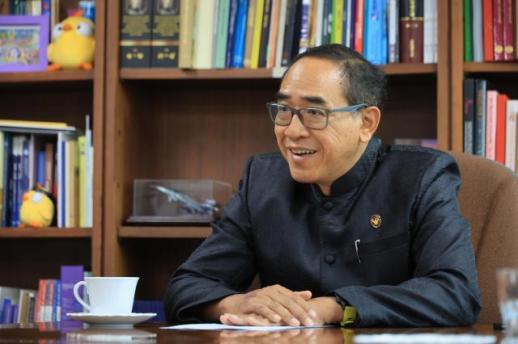 Thailand Seeks Broader Partnership with South Korea Beyond Tourism As the Comprehensive Economic Partnership Agreement (CEPA) between South Korea and Thailand approaches completion, Thailand is looking to expand its collaboration with South Korea beyond tourism and trade into advanced industries, healthcare, defense, and supply chains. The goal is to elevate cooperation in future industries such as investment, digital technology, and defense. In an interview on June 24 at the Thai Embassy in Yongsan, Seoul, Thai Ambassador Tanee Sangrat expressed his hope that South Korea would view Thailand not just as a tourist destination but as a strategic partner in innovation and advanced manufacturing. He stated, "Our cooperation must evolve beyond tourism and trade to focus on future industries." Ambassador Sangrat emphasized that Thailand is accelerating the development of advanced manufacturing and digital industries to overcome its current low growth phase, with South Korea's technology, capital, and industrial experience playing a crucial role. He noted, "South Korea is not only an important market for Thailand but also possesses global competitiveness in various fields, including semiconductors and advanced manufacturing. There is significant potential for collaboration in producing products aimed at the global market with Thai companies." The ambassador highlighted the long-standing historical trust between the two nations, recalling that Thailand contributed 11,786 troops as part of the United Nations forces during the Korean War. He believes this shared history forms a solid foundation for current cooperation. In light of the ongoing global supply chain restructuring due to U.S.-China tensions and instability in the Middle East, he stressed that Thailand could serve as a new production and investment hub for South Korean companies. He pointed out, "There are substantial opportunities for collaboration in industries that require stable supply chains, such as automotive, computer parts, data centers, robotics, and defense." He identified the CEPA as a key task for economic cooperation and expressed optimism about finalizing the agreement within the year. "While there are a few issues remaining, both leaders share the same goal of concluding the agreement this year," he said. Currently, trade between the two countries stands at approximately $15 billion. The ambassador projected that the CEPA could increase trade by $2 billion to $3 billion, with a long-term goal of expanding it to $30 billion. South Korea ranks as Thailand's 13th largest trading partner, while Thailand is South Korea's 16th largest. He anticipates that the agreement will facilitate cooperation beyond trade into investment, digital industries, and supply chains. Additionally, he expects enhanced collaboration in logistics, industrial policy, and infrastructure based on memoranda of understanding (MOUs) for the development of smart industrial complexes and transportation. Thailand is pursuing a transformation of its industrial structure centered on advanced manufacturing and digital innovation, guided by its national strategy, Thailand 4.0. From 2022 to 2027, the country is also implementing a national AI strategy and action plan to accelerate the development of the digital economy and future industries such as artificial intelligence (AI). Ambassador Sangrat identified promising areas for cooperation, including the digital economy, semiconductors, AI, defense, biohealth, medical technology, wellness, and future foods. He stated, "South Korea's advanced manufacturing competitiveness will significantly aid Thailand's industrial advancement." He also highlighted defense cooperation as a new avenue for collaboration, mentioning that the Defense Technology Institute of Thailand is developing a defense industrial complex in Kanchanaburi. He encouraged South Korean defense companies to consider investment opportunities in this area. The Thai government is strengthening its defense manufacturing capabilities based on this industrial foundation. The ambassador expressed hope for participation from South Korean defense firms in the developing defense industrial complex in Thailand and indicated a commitment to actively attract investment in the Thai defense industry. In addition to defense, he identified cybersecurity, disaster response, and humanitarian assistance as new fields for collaboration between the two nations. He remarked, "Cybersecurity is one of the most critical issues we face, and we must collaborate with South Korea and ASEAN countries to address it." The silver economy was also highlighted as a promising area for cooperation. The ambassador noted, "Aging can present new opportunities, providing investment prospects for South Korean companies, Thai businesses, and foreign investors alike." He pointed out that Thailand has already established itself as a medical hub attracting patients from the Middle East, Europe, Africa, and Asia. He anticipates that this will lead to expanded collaboration with South Korea across the entire senior-friendly industry, including medical devices, hospital infrastructure, senior housing, and elder care services. Cooperation centered on startups is also on the rise. The Thai Embassy recently launched the Seoul-Thailand Startup Innovation Space (STSiS). Ambassador Sangrat explained, "This will support Thai startups entering the Korean market while also serving as a platform for Korean companies to expand into Thailand and the ASEAN market." According to the Thai Ministry of Tourism and Sports, 1.55 million South Koreans visited Thailand last year, a 16.8% decrease from the record 1.87 million in the previous year. From January to May this year, the number was 539,848, down 7.6% from the same period last year. Despite this trend, Ambassador Sangrat expressed his hope that "Korean friends will not view Thailand solely as a tourist destination," adding, "Thailand is also a country of innovation and technology." He further emphasized, "Thailand is not just a labor-supplying country but a modern economy equipped with innovation and technology," positioning it as a strategic partner for deeper cooperation with South Korea. * This article has been translated by AI. 2026-06-25 17:36:00
 -
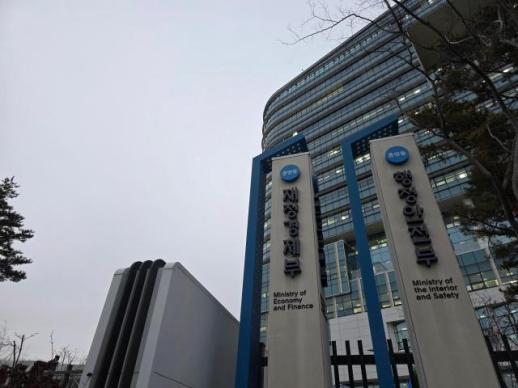 July Government Bond Issuance to Reach 16 Trillion Won; No Treasury Securities Released The Ministry of Finance plans to issue a total of 16 trillion won in government bonds next month through a competitive bidding process involving primary dealers (PDs). According to the ministry on June 25, the competitive bidding size for July has increased by 2 trillion won from the previous month. The breakdown by maturity is as follows: 2-year bonds at 2.8 trillion won, 3-year bonds at 3.3 trillion won, 5-year bonds at 2.8 trillion won, 10-year bonds at 2.8 trillion won, 20-year bonds at 400 billion won, 30-year bonds at 3.1 trillion won, and 50-year bonds at 800 billion won. Both PDs and the general public will have the opportunity to purchase a certain amount of bonds at the competitive bidding rate through non-competitive bids. The ministry plans to announce whether non-competitive bids will be conducted based on market conditions. Additionally, the government will exchange 2 billion won between 10-year, 20-year, and 30-year bonds and 1 billion won between inflation-linked bonds and 10-year nominal bonds to enhance liquidity in the government bond market. For government bonds maturing next year and the following year, the ministry will implement a buyback of approximately 2 trillion won before maturity. The total issuance of government bonds in the first half of this year stands at 124.1 trillion won, accounting for 55% of the total, with final issuance figures subject to change based on the results of the non-competitive bidding for 20-year bonds, which will be announced on June 26. Furthermore, no treasury securities will be issued next month. As of today, the outstanding amount of treasury securities is 16.5 trillion won, while the Bank of Korea's temporary borrowing stands at 13.3 trillion won. Next month, the issuance of won-denominated foreign bonds will amount to 1 trillion won, conducted through a competitive bidding process with participation from 31 institutions.* This article has been translated by AI. 2026-06-25 17:36:00
 -
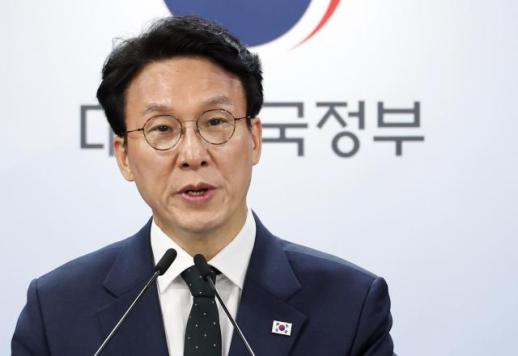 Korean PM reaffirms limiting prosecutors to indictment SEOUL, June 25 (AJP) -The South Korean government remains firm to its reform outline to keep prosecutorial role strictly to indictment, said Prime Minister Kim Min-seok said Thursday. Speaking at a policy briefing at the Government Complex Seoul, Kim said the Lee Jae Myung administration’s core principle for prosecution reform is the separation of investigation and indictment functions. “The basic principle of prosecution reform pursued by the Lee Jae Myung government is the separation of investigation and prosecution,” Kim said. “In line with that principle, I have consistently maintained that prosecutors’ authority should not have the authority for an additional investigation (after a case is transferred by the police)." Kim said the government had reviewed various opinions on the issue and finalized the abolition of supplementary investigation powers as its basic position. He added that the government would convey that position to the ruling Democratic Party (DP) and would refrain from submitting a separate legislative proposal, leaving further debate and decisions to the National Assembly. He said lawmakers should determine the details of the system and related legislation through sufficient discussion and deliberation. The government would implement follow-up measures once legislation is passed, he added. His briefing came amid growing political attention to prosecution reform within the ruling camp. Kim, who is widely expected to return to politics in Seoul’s Yeouido district and formally declare a bid in the DP’s August leadership election, held a standalone briefing to underscore the government’s position on one of the most contentious issues in the reform debate. His potential rival for the party leadership, former Democratic Party leader Jung Chung-rae, reiterated his support for a tougher reform line earlier Thursday, writing on Facebook: “Complete abolition of supplementary investigation authority. Right now.” The issue has also drawn attention from some of President Lee’s more progressive supporters. Recent appointments of former prosecutors to senior presidential offices, including positions overseeing civil affairs and judicial affairs, have prompted questions among some ruling party supporters about the administration’s commitment to prosecution reform. Under Korea’s criminal justice system, supplementary investigation authority allows prosecutors to conduct additional investigative work after receiving cases from police. Whether prosecutors should retain the authority has emerged as a key issue in ongoing efforts to redefine the roles of prosecutors and police. Rep. Min Hong-chul of the DP, a four-term lawmaker, said the National Assembly should respect the government's position and that its role going forward is to ensure that "even if supplementary investigation authority is completely abolished, there are checks and balances in place so that the police do not abuse their power or cause harm to the public, because the issue is directly related to the rights of citizens and the interests of victims." Rep. Yoo Sang-bum of the People Power Party, a former chief prosecutor, criticized the move, saying that abolishing supplementary investigation authority would “completely eliminate judicial oversight of police investigations and undermine the judicial system, which is the foundation of state governance.” Yoo argued that “police investigations cannot be perfect” and that abolishing supplementary investigation authority would increase the likelihood that guilty people could go free or innocent people could be wrongly accused. He added that “the only reason DP lawmakers are trying to completely abolish supplementary investigation authority is to carry out what hard-line supporters want in order to win the party leadership election.” 2026-06-25 17:31:45
 -
 Europe Struggles with Low Air Conditioning Adoption Amid Rising Heat Waves As climate change causes summers in Europe to become increasingly hotter, the adoption rate of air conditioning remains low. With heat waves becoming more common, the demand for cooling solutions is rising rapidly. However, concerns over high energy consumption, greenhouse gas emissions, and urban heat island effects have put Europe in a dilemma between expanding cooling options and addressing climate change, CNN reported on June 24. According to CNN, Europe is experiencing record heat waves earlier and lasting longer than in previous years. Yet, most households still rely on fans, ice packs, and cold showers instead of air conditioning. While about 90% of American households have air conditioning, the rate in Europe is around 20%. The slow spread of cooling systems in Europe, even as heat-related deaths rise, is attributed to a combination of historical, economic, and policy factors. An official from the International Energy Agency (IEA) explained in an interview with CNN that "Europe has not been a region where air conditioning was urgently needed until relatively recently, so a cooling culture has not developed." Historically, extreme heat waves were rare in Northern Europe, leading to the perception of air conditioning as a luxury rather than a necessity. The costs associated with installation and maintenance have also hindered its adoption. European electricity prices are generally higher than in the U.S., while many countries have lower average incomes, increasing the financial burden of cooling. Building designs have also played a role. Traditional structures in Southern Europe feature thick walls and small windows, designed for natural ventilation, reducing the need for artificial cooling. In contrast, homes in regions like the UK are often built to withstand cold rather than heat, and many older buildings make it difficult to install cooling systems. Approximately one in six homes in the UK was built before 1900. Regulations further complicate the situation. In the UK, outdoor unit installations are often denied in conservation areas or historic buildings due to concerns about altering the building's appearance, CNN reported. Climate policies also restrict the spread of air conditioning. The European Union aims for carbon neutrality by 2050, but air conditioning consumes significant electricity and releases heat outdoors, raising surrounding temperatures. A study focused on Paris found that air conditioning could increase external temperatures by about 2 to 4 degrees Celsius. This effect is particularly pronounced in densely populated European cities. In fact, Spain introduced energy-saving regulations in 2022 that prevent public facilities from setting air conditioning below 27 degrees Celsius. However, as climate change causes Europe to warm at nearly twice the global average rate, perceptions about cooling are changing rapidly. The IEA projects that the number of air conditioning units in the EU will more than double from 2019 levels, reaching 275 million by 2050. A representative from a UK cooling company noted, "Inquiries for residential air conditioning have tripled in the past five years," adding, "The recent heat wave has led to explosive demand. Many people are struggling to sleep due to the heat, even at 3 a.m." Experts warn that while air conditioning is the most immediate solution to escape the heat, reliance on fossil fuel-based electricity could create a vicious cycle that exacerbates climate change. Radika Kosla, a professor at the University of Oxford, told CNN, "Air conditioning powered by fossil fuels increases greenhouse gas emissions, which accelerates global warming and leads to more severe heat waves." CNN concluded that Europe's challenge moving forward will be to enhance the energy efficiency of cooling devices and strengthen related regulations to minimize the climate crisis.* This article has been translated by AI. 2026-06-25 17:20:00
 -
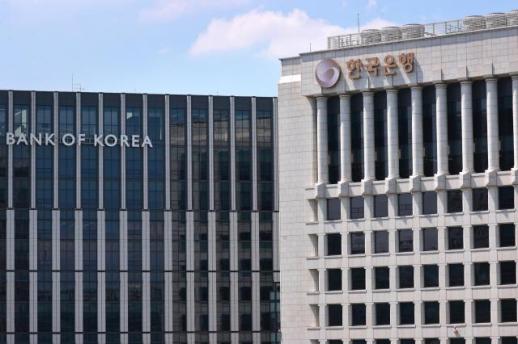 Bank of Korea Plans to Issue Up to 7 Trillion Won in Monetary Stabilization Bonds The Bank of Korea announced plans on June 25 to issue up to 7 trillion won in monetary stabilization bonds next month. The issuance will include 6.4 trillion won through competitive bidding and an additional 500 billion to 600 billion won through a subscription method. Competitive bidding will begin on July 1 with 2.2 trillion won in two-year bonds, followed by 500 billion won in 91-day bonds on July 6, 500 billion won in one-year bonds on July 8, 500 billion won in 91-day bonds on July 13, 1 trillion won in three-year bonds on July 15, 500 billion won in 91-day bonds on July 20, and 500 billion won in 91-day bonds on July 27. The subscription auction is set for July 22, targeting 500 billion to 600 billion won in one-, two-, and three-year bonds. The final amounts and allocations will be confirmed on July 21, the business day before the auction. The Bank of Korea cautioned that the issuance plan may change depending on market conditions and urged participants to verify the final auction details. Additionally, the Bank of Korea will conduct early redemptions of monetary stabilization bonds next month, offering 500 billion won on July 3 and 1.5 trillion won on July 14.* This article has been translated by AI. 2026-06-25 17:20:00
 -
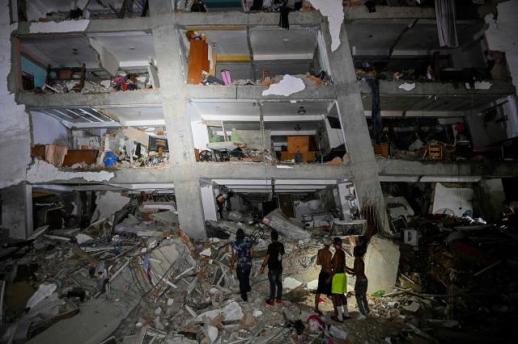 Maduro Appeals for Unity from U.S. Prison Amid Venezuelan Earthquake Nicolas Maduro, the former president of Venezuela currently imprisoned in the United States, has called for unity and solidarity in response to a devastating earthquake that struck his home country. President Donald Trump has also promised swift assistance, drawing attention to the U.S. response amid ongoing efforts to stabilize Venezuela following Maduro's ousting. On June 24, CNN reported that Maduro, who is incarcerated in a New York jail, and his wife, Cilia Flores, issued a statement via their official Telegram channel, saying, "Today, there is only one message: maximum unity, maximum solidarity, maximum action." Maduro urged that no one should be left alone and that communities must care for their children, the elderly, and sick neighbors, calling for support for rescue teams and medical personnel. He emphasized, "Venezuela has faced many trials and will overcome this one with faith, discipline, and solidarity." The couple was captured in January during a U.S. special operation in Caracas and transported to New York. Maduro faces charges including drug trafficking conspiracy in a federal court. On the same day, two earthquakes measuring 7.2 and 7.5 struck Venezuela, resulting in at least 32 fatalities and over 700 injuries. Reports indicated building collapses, power outages, and communication disruptions in several areas, including the capital, Caracas. Interim President Delcy Rodríguez declared a national emergency. Maduro's message from prison comes as the earthquake poses a significant challenge to the U.S., which has been advocating for Venezuela's stabilization since Maduro's removal. CNN noted that this disaster could serve as a test of how far the U.S. is willing to go in supporting Venezuela. Since Maduro's ousting, Trump has claimed that U.S. intervention in Venezuela has been successful. Secretary of State Marco Rubio previously stated that the White House has a three-phase plan for stabilization, recovery, and transition in Venezuela. Just a day before the earthquakes, Trump remarked at a rally in Pennsylvania that Venezuela is "doing very well," asserting, "The people running it are our people, and the citizens are happy." However, CNN pointed out that approximately 28 million Venezuelans continue to suffer from high inflation, low wages, censorship, and a severe humanitarian crisis, suggesting that Trump's optimistic assessment is disconnected from the reality on the ground. The recent earthquakes could exacerbate Venezuela's ongoing economic and political turmoil. In a post on Truth Social following the earthquakes, Trump stated, "The United States is ready to help Venezuela, willing to help, and has the capability to do so." He added, "I have instructed all agencies of our government to be prepared to move quickly, and we will stand together for our new and great friends." The U.S. State Department has confirmed that it is sending search and rescue teams, medical resources, and humanitarian aid to Venezuela. However, CNN reported that the extent of U.S. support and its potential impact on Venezuela's stability and economic recovery remains uncertain.* This article has been translated by AI. 2026-06-25 17:16:00
 -
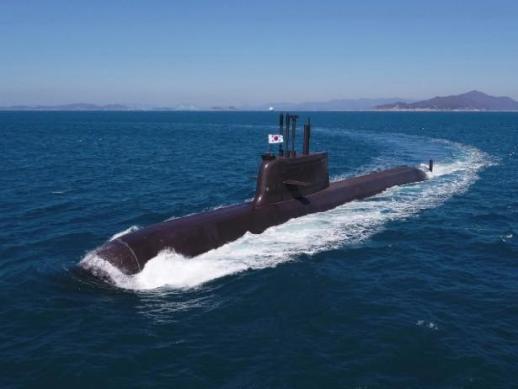 Canada's $60 Billion Submarine Project: Will South Korea Be a Key Player? As Canada prepares to announce the preferred bidder for its next-generation submarine project (CPSP), expected by the end of this month, the final outcome remains uncertain. South Korea is emphasizing its competitive edge through rapid delivery and a robust industrial cooperation package, while Germany is leveraging its security network based on NATO and the European Union. Experts believe that both sides have distinct strengths and weaknesses, making it difficult to predict the outcome until the last moment. According to industry sources on June 25, the preferred bidder for the CPSP is likely to be decided soon. The CPSP involves the construction of up to 12 diesel submarines, each weighing 3,000 tons, and includes maintenance, repair, and operations (MRO) for the next 30 years. The total project value is estimated to approach 60 trillion won. Currently, 'Team Korea,' led by Hanwha Ocean, and Germany's Thyssenkrupp Marine Systems (TKMS) are the final contenders. Initially, there was high anticipation for South Korea's bid based on its price competitiveness and delivery advantages. However, as the deadline approaches, factors such as industrial cooperation and security alliances have emerged as complex variables, making it harder to predict the outcome. South Korea's strengths lie in its shipbuilding capabilities and extensive industrial cooperation package. Hanwha Ocean has proposed the 3,600-ton Jang Young-sil-class (KSS-III Batch-II) submarine, promising to deliver the first submarine by 2032 and four submarines by 2035, aligning with the Canadian Navy's demand for early operational capability. In terms of industrial cooperation, South Korea has presented attractive proposals that could generate approximately 144 trillion won in domestic GDP impact. This includes initiatives like 'Project Beaver,' aimed at establishing hydrogen freight truck production infrastructure, and the transfer of lithium-ion battery technology for submarines. Hanwha Ocean also envisions creating over 22,500 jobs annually and generating around $94 billion in GDP impact if selected as the CPSP contractor, leveraging its existing industrial cooperation network. Germany is emphasizing its security and alliance values. The 212CD submarine proposed by Germany is a next-generation submarine jointly developed with Norway. If Canada adopts this, it would use the same platform as Germany and Norway, facilitating joint training, maintenance, and supply chain sharing. Additionally, Germany has reportedly suggested prioritizing some production slots of the 212CD submarines already ordered by the Norwegian Navy for Canada to address delivery issues. Experts predict that the outcome may hinge on whether the Canadian government prioritizes economic benefits or security alliances. Choi Ji-il, a professor at Sangji University and a researcher at the Korea Defense Industry Research Institute, stated, "Since this is a public competitive bid, we won't know the result until it's revealed," but emphasized that Germany's status as a NATO member within the same security alliance as Canada is a significant variable. In light of rising military tensions with Russia over the Arctic, it may be challenging for Canada to choose South Korea over Germany, with which it has an established security partnership. Professor Choi also noted that South Korea's aggressive industrial cooperation proposal might only serve as a 'pace-maker' for Germany to introduce additional conditions. He remarked, "While South Korea's industrial cooperation proposal is quite bold, Canada must also consider not just Germany but the vast security network of the EU and NATO. In the event of a security crisis in the Arctic, which country can provide closer security support will also be a crucial factor in the decision-making process." Nam Sung-wook, a professor at Korea University, added, "Germany is a core NATO country and shares a sense of solidarity with Canada within the Western security community. There may also be unseen constraints regarding the expansion of South Korean weapons into the European and NATO markets." However, experts also expressed optimism that if South Korea succeeds in securing the contract, it could symbolize a breakthrough for K-defense in entering the NATO member market, which has high entry barriers. Professor Nam stated, "This project is a pivotal moment for K-defense to reach a higher class. If we can penetrate the submarine market beyond the export of the K9 self-propelled howitzer to Poland, South Korea's standing in the global defense market will be completely transformed." 2026-06-25 17:16:00
 -
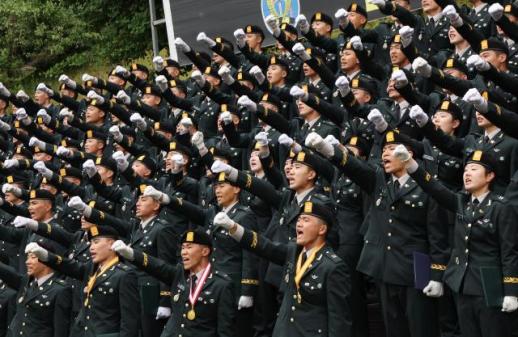 S. Korea to retain conscription while expanding tech-focused NCO track SEOUL, June 25 (AJP) - A stable career in high-tech military service is the incentive South Korea is dangling to attract young people as it grapples with a shrinking pool of military recruits while facing a persistently hostile North Korea. The outline is to retain the country's decades-old mandatory military service system while giving military-age men greater choice between serving as enlisted conscripts and pursuing a longer-term, technology-focused noncommissioned officer (NCO) track, the Defense Ministry said Thursday. The ministry's clarification came a day after President Lee Jae Myung renewed his call for a "selective volunteer service" system aimed at reducing reliance on short-term conscripts and increasing the number of professional personnel. In response to a question from AJP at a regular briefing, a ministry spokesperson said the proposal would not amount to a full transition to an all-volunteer force. "While maintaining the current conscription system, we are reviewing ways to expand the choice between serving as an enlisted soldier and serving as an NCO," the spokesperson said. "That is the basic concept of the selective volunteer service system." South Korea requires most able-bodied men to complete military service, reflecting a security environment in which the 1950-53 Korean War ended in an armistice rather than a peace treaty. Active-duty conscripts currently serve 18 months in the Army or Marine Corps, 20 months in the Navy and 21 months in the Air Force. The conscription system has long supplied the bulk of South Korea's rank-and-file troops. But the pool of eligible recruits is shrinking because of the country's low birth rate, prompting debate over how the military can maintain its strength while relying more heavily on career personnel and advanced technology. Under the proposed system, men subject to mandatory service would still be required to join the military but could choose between regular enlisted service and a longer-term track as specialized NCOs. The ministry plans to gradually expand what it calls "technology-intensive NCO" positions as the military restructures around artificial intelligence and other advanced technologies. The positions are expected to cover areas such as manned-unmanned combat systems, cyber operations and artificial intelligence, where personnel require more extensive training and longer service than ordinary conscripts. The ministry is also designing programs to help personnel translate the technical skills acquired during military service into civilian careers after discharge. South Korea imposes compulsory military service only on men, unlike a handful of countries, including Norway, Sweden and Denmark, that operate gender-neutral conscription systems. The unequal burden has long fueled frustration among some young men, who often describe military service as time taken away from university, job preparation or the early stages of their careers. Economic incentives are also under consideration to encourage more eligible recruits to choose the specialized NCO track, the spokesperson said. Lee outlined the broader concept Wednesday during a visit to a Marine Corps unit on Yeonpyeong Island near the western maritime border with North Korea. The proposal forms part of Seoul's broader effort to respond to the shrinking pool of military-age men while transforming the armed forces into a smaller, more technology-driven military. The demographic pressure is already becoming evident. According to population projections by Statistics Korea, the number of 20-year-old men is expected to fall from 334,000 in 2020 to 236,000 in 2025, a decline of nearly 30 percent in five years. The longer-term outlook remains challenging despite a recent rebound in births. South Korea's total fertility rate rose to 0.80 in 2025 from 0.75 a year earlier, while the number of births increased 6.8 percent to 254,500. Of those born last year, 130,800 were boys, accounting for about 51.4 percent of all births. That cohort will reach the typical age for military service in the mid-2040s, and the number ultimately available for active duty will be smaller after health classifications and alternative forms of service are taken into account. South Korea's active-duty force stood at about 450,000 personnel as of July 2025. Enlisted soldiers account for about 60 percent of the force, putting their number at roughly 270,000. A 2025 study by the Korea Institute for Defense Analyses projected that, if current service periods and personnel policies remain unchanged, the military would be able to maintain only about 160,000 to 170,000 enlisted personnel by 2040. Compared with the current level, that would represent a decline of roughly 100,000 to 110,000 troops, or about 40 percent. Still, the plan faces significant hurdles. Its success will depend on whether the military can attract and retain enough qualified NCOs at a time when applications for junior leadership positions are already declining, as well as whether the government can sustain the higher pay, training and benefits needed to make longer service attractive. A poorly managed transition could leave units short of experienced personnel before professional troops and new technologies are ready to compensate for fewer conscripts. Key details of the selective volunteer service system remain under review. 2026-06-25 17:13:40
 -
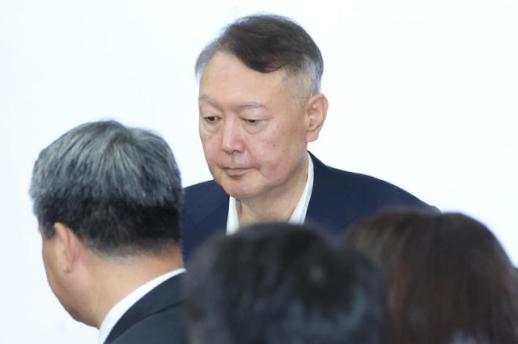 Yoon Suk Yeol's Appeal Hearing Resumes as Special Prosecutor Seeks Death Penalty The appeal hearing for former President Yoon Suk Yeol and former Defense Minister Kim Yong-hyun on charges of leading a rebellion resumed after a month, with both the special prosecutor's team and the defense presenting their arguments. On June 25, the Seoul High Court's Criminal Division 12-1, presided over by judges Lee Seung-cheol, Jo Jin-goo, and Kim Min-ah, held the appeal hearing, attended by key defendants including Yoon, Kim, former Army Intelligence Command Chief Noh Sang-won, and former Military Police Chief Kim Yong-gun. During the hearing, the special prosecutor's team presented their reasons for the appeal, while the defense team read their summary of the appeal. The special prosecutor's team criticized the lower court's ruling, requesting the court to impose the same death penalty on Yoon as was sought in the first trial, while seeking life imprisonment for Kim and 30 years for Noh. In the initial ruling, Yoon received a life sentence, while Kim and Noh were sentenced to 30 years and 18 years, respectively. The special prosecutor's team stated, "The first trial court made an error by excessively dismissing key evidence, such as Noh Sang-won's memo, which clearly outlines the timing of the martial law preparations and the purpose of the coup attempt." They specifically pointed out the lower court's conclusion that the declaration of martial law, lacking legal requirements, could not be directly equated with the crime of rebellion. The special prosecutor's team emphasized, "This is a misinterpretation of existing Supreme Court precedents and a flawed application of legal principles. The essence of using the military to undermine the National Assembly for the purpose of consolidating presidential power and establishing a long-term dictatorship is a clear coup and rebellion." After the special prosecutor's presentation, Yoon and Kim's defense team requested an opportunity to rebut, arguing that the appeal included points not mentioned in the appeal brief. The court then allowed the defense to present their summary of the appeal. Yoon's defense team, using PowerPoint materials, reiterated their argument that the martial law was justified, similar to their stance in the first trial. A defense attorney stated, "To suppress national resistance and opposition from state agencies during a prolonged martial law, it would require meticulous planning and overwhelming force, such as deploying tanks and armored vehicles, imposing school closures nationwide, and creating an atmosphere of fear to prevent lawmakers from gathering in the National Assembly. However, the defendant never planned or considered large troop deployments or political agendas." They also presented evidence that the military and police personnel deployed during the martial law were minimal, with troop deployment lasting only about an hour, and that live ammunition was strictly prohibited, resulting in no casualties. The defense further argued that the case stemmed from the indiscriminate abuse of impeachment rights by the opposition party, the rapid introduction of special prosecutor laws, and budgetary excesses that paralyzed the executive branch, asserting that the president acted within constitutional authority to inform the public of the crisis. Another defense attorney claimed that witness testimonies accepted as evidence in the first trial were contaminated, specifically alleging that former Police Chief Jo Ji-ho's statements were part of a planned effort to evade legal consequences. The defense contended that Jo's testimony about instructing to detain lawmakers attempting to breach the National Assembly was false, arguing that the president had never received reports regarding the blockade or breach attempts. They also claimed that the testimony from former Defense Security Command Chief Lee Jin-woo, which formed the basis of the special prosecutor's indictment, was tainted by malicious and false testimony from a subordinate who was not a direct participant in the conversations. The defense team pointed out procedural violations during the investigation, arguing for the reversal of the lower court's decision. They asserted that, according to constitutional provisions, a sitting president cannot be criminally prosecuted, and thus the investigation by the prosecution and the Corruption Investigation Office for High-ranking Officials into allegations of abuse of presidential authority constituted a violation of the president's immunity and was illegal. The court scheduled the next hearing for July 2 before concluding the session. 2026-06-25 17:12:00
 -
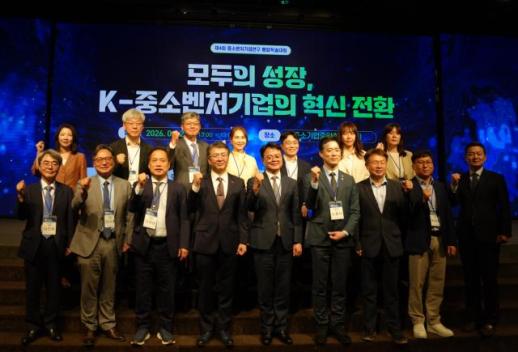 Building an AI Collaborative Innovation Ecosystem: 4th Integrated Conference Held The Small and Medium Enterprises Research Institute hosted the 4th Integrated Conference on June 25 at the KBIZ Hall in Yeouido, Seoul, to assess the changes in the industrial environment faced by small and medium enterprises (SMEs) and discuss future growth strategies and policy agendas. The conference, themed "Growth for All: Innovation Transition for K-SMEs," was co-hosted by eight organizations, including the Entrepreneurship Society, the Small and Medium Enterprise Policy Society, the Korean Economic Law Society, the Korean Regulatory Society, the Korean Distribution Society, the Korean Policy Society, the Korean Small Business Society, and the Korean Startup Society. The event featured three main topics: strategies for global growth and scaling up, collaboration ecosystems and co-innovation strategies for SMEs in the era of artificial intelligence (AI), AI transformation (AX), and digital transformation (DX), as well as the digital economy and fair ecosystems. Sessions focused on the innovation of the SME distribution ecosystem in the DX era, regional and global growth strategies, cooperative models based on DX and AX innovations in Northern Italy, AI regulatory innovations, and building a reliable AX ecosystem for K-SMEs. A keynote speech was delivered by Park Jeong-yun, CEO of Interex, who introduced core technologies for autonomous manufacturing factories and domestic cases of autonomous manufacturing. He emphasized the need for organic cooperation between the government and industry to promote the spread of autonomous manufacturing and create an innovation ecosystem. Jo Joo-hyun, director of the Small and Medium Enterprises Research Institute, stated, "This conference was organized to broadly discuss the challenges necessary for the innovation transition of SMEs in a rapidly changing industrial structure and corporate growth methods due to AI and digital technologies." He added, "Through discussions on AI innovation, collaborative innovation ecosystems, and global growth, we hope to uncover new business opportunities and enhance the capabilities and competitiveness of SMEs through cooperation among companies and connections across industries and regions."* This article has been translated by AI. 2026-06-25 17:08:00