
Journalist

Na Seon-hye
hisunny20@ajunews.com
-
 Chinese Diplomats Visit North Korea’s Border Region Near Planned Russia Bridge As North Korea and Russia push ahead with construction of a road bridge over the Tumen River, Chinese diplomats stationed in North Korea visited the North Korea-China-Russia border area to review local conditions. Yonhap News Agency and the Chinese Embassy in North Korea said Wang Chongling, a minister-counselor, led a delegation that visited North Hamgyong province and the city of Rason from April 25 to 30, inspecting five factories and exhibition facilities. The embassy said Wang’s group also visited the Wonjong-ri trading port in Rason for “survey, research and inspection” activities. Wonjong-ri is a key hub for North Korea-China trade and links to the Quanhe trading port in Hunchun, China’s Jilin province. Yonhap reported the trip included Jin Yanguang, China’s consul general in Chongjin, along with Jang Gwang-nam and Rim Gwang-ho, researchers at North Korea’s Foreign Ministry Asia 1 Bureau; Ri Jun-pil, head of Rason’s external affairs bureau; and Kim Song-chol, deputy head of North Hamgyong’s external affairs bureau. The visit came shortly after North Korea and Russia officially set out a completion schedule for the Tumen River road bridge. On April 21, the two countries held a ceremony in the border area to mark the bridge connection and accelerate the project. The bridge project was agreed at a June 2024 summit in Pyongyang between North Korean leader Kim Jong Un and Russian President Vladimir Putin. The two signed a “comprehensive strategic partnership treaty,” which took effect in December that year. The new bridge is designed as a two-lane, two-way structure about 800 to 850 meters long and 10 meters wide. It will be built about 400 to 415 meters downstream from the existing Tumen River rail bridge, built in 1951 and known as the Korea-Russia Friendship Bridge. The project is expected to strengthen overland links between the two countries and improve logistics efficiency.* This article has been translated by AI. 2026-05-02 13:54:17
 -
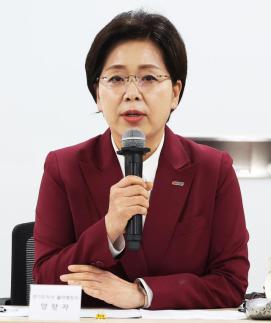 Yang Hyang-ja Picked as People Power Party’s Gyeonggi Governor Candidate Yang Hyang-ja, a top official of the People Power Party, has been selected as the party’s candidate for Gyeonggi governor in the June 3 local elections. According to Yonhap News Agency and the party’s central nomination committee on Friday, Yang secured the nomination based on a combined tally of a two-day vote by party members (50%) and a public opinion poll of the general electorate (50%). In a news conference immediately after the primary result was announced, Yang said she would “end the era of outdated ideology and open an era of future high-tech industries,” adding that she would take on a “bold challenge” toward “a new conservative party and a future Gyeonggi.” She said she would focus “only on the economy and people’s livelihoods, beyond ideology and camps,” and pledged to work with “reasonable residents” rather than “extreme supporters” of the two major parties to turn the race into an “economic election,” shifting it from “an election that asks about the past” to one that “discusses the future.” Yang emphasized that she would run on boosting income for Gyeonggi’s 14 million residents, fostering advanced industries tailored to each of the province’s 31 cities and counties, and expanding high-paying youth jobs with annual salaries of 100 million won. Yang will face Democratic Party candidate Choo Mi-ae in the election. Yang entered politics in 2016 after being recruited as outside talent when Moon Jae-in was serving as leader of the Democratic Party. She drew attention for her background as a high school graduate who became a managing director at Samsung Electronics. That year, she became an ex officio member of the party’s top leadership after defeating Yoo Eun-hye in a race for chair of the party’s national women’s committee. From 2018 to July 2019, she served as head of the National Human Resources Development Institute, a government official post. At Samsung Electronics, she joined in 1985 as a research assistant in a semiconductor memory design lab and was promoted to managing director in 2014, setting a record as the first female executive from a high school graduate background. In politics, she has been active as a semiconductor industry expert. With Yang’s nomination in Gyeonggi, the People Power Party has completed nominations for the 16 provincial and metropolitan governor races, the party said.* This article has been translated by AI. 2026-05-02 11:18:17
 -
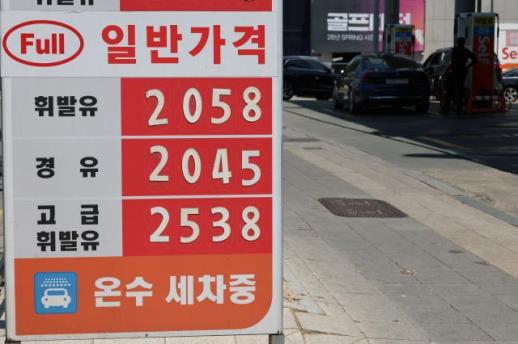 South Korea Gasoline, Diesel Prices Stay Above 2,000 Won a Liter; Seoul at 2,048 South Korean gasoline and diesel prices at gas stations continued to hover in the 2,000-won range on a weekly basis. Data from Yonhap News Agency and the Korea National Oil Corp.’s Opinet system showed that in the fifth week of April (April 26-30), the nationwide average retail price of gasoline rose 4.8 won from the previous week to 2,008.6 won per liter. By region, Seoul posted the highest price at 2,048 won per liter, up 8.7 won from a week earlier. Daegu was the lowest at 1,993.6 won, up 4.7 won. The recent rise in international oil prices was attributed to stalled ceasefire talks between the U.S. Donald Trump administration and Iran. A persistently weak won has added to upward pressure on domestic fuel prices. Domestic fuel prices are influenced not only by global crude prices but also by the exchange rate. In March, Dubai crude jumped 87.9% from the previous month, while the won-dollar exchange rate rose 2.6%, pushing import prices up 16.1% from a month earlier — the highest level in about 28 years since January 1998. A higher exchange rate raises the won-denominated cost of crude, which is traded in dollars. Over the same period, the won-based crude price hit a record since data collection began, while jet fuel and naphtha prices rose 67.1% and 46.1%, respectively. Analysts have warned that the combined rise in oil prices and the exchange rate could spread across broader inflation. With the consumer inflation rate in April 2026 in the mid-to-high 2% range, some forecasts say it could climb to around 3% in May if the high exchange-rate trend persists, potentially weakening households’ real purchasing power and adding to living-cost burdens. 2026-05-02 10:27:16
 -
 South Korea’s Next-Gen Medium Satellite 2 to Launch on SpaceX Falcon 9 After War Delay South Korea’s Next-Generation Medium Satellite 2 is set to head to space from Vandenberg Space Force Base in California aboard SpaceX’s Falcon 9 on May 2 local time. The Korea Aerospace Administration said the satellite is scheduled for launch at 3:59 p.m. May 3 in South Korea (tentative). According to the launch sequence, the Falcon 9 will shut down its first-stage engine 135 seconds after liftoff and ignite the second-stage engine 146 seconds after liftoff. The payload fairing is to separate at 182 seconds. Final separation of the satellite is planned at 3,625 seconds after launch, about 60 minutes 25 seconds. After launch, the satellite is expected to settle into an orbit of about 498 kilometers (309 miles). It will undergo about four months of initial operations before beginning full mission work in the second half of 2026. The Korea Aerospace Research Institute (KARI) will conduct initial after-launch checks (IAC) and in-orbit tests (IOT). Ground stations for early operations will include King Sejong Station in Antarctica, Troll Station, Svalbard in Norway and a station in Daejeon. Next-Generation Medium Satellite 2 is the first mid-size satellite independently developed under the lead of a South Korean industrial company. Korea Aerospace Industries (KAI) joined the design team for Next-Generation Medium Satellite 1 starting in 2015 and received transfers of key technologies, then led development of the second satellite. The project began in January 2018 and proceeded in stages. It passed a system assembly test readiness review meeting (IRR) in June 2020 and completed a pre-shipment review (PSR) in December 2021. The satellite was originally to be launched from Russia, but the launch was halted after the Russia-Ukraine war began in February 2022. In November 2023, South Korea ended the launch contract with the Russian side and selected SpaceX as the replacement provider, signing a new contract. With the schedule delayed, the satellite underwent state-of-health (SOH) tests every six months while stored on the ground. It completed a final integration test in December and finished a second PSR in March. In April, it was transported to the launch site for final preparations. The aerospace administration said the project is significant because the satellite bus and some core payloads were developed with domestic technology. “It verified Korea’s independent space development capabilities and laid the groundwork for follow-on satellites and international competitiveness,” the agency said. The satellite’s mission is to support public needs such as land and resource management and disaster response. It will provide high-resolution imagery used for ground observation, change detection, mapmaking and urban planning, and can support damage assessment and response during disasters such as typhoons, floods and wildfires. Separately, Next-Generation Medium Satellite 3 was launched on Nov. 27 from the Naro Space Center in Goheung, South Jeolla Province, on the fourth flight of South Korea’s Nuri rocket. That launch was the first produced under private-sector leadership and the first nighttime launch, successfully separating one primary payload and 12 secondary satellites. Next-Generation Medium Satellite 3 observes auroras and airglow in high-latitude regions and precisely measures the space magnetic field and plasma environment. Full mission operations began in February. 2026-05-02 10:12:19
 -
 Pentagon Orders Withdrawal of About 5,000 U.S. Troops From Germany Within a Year The United States has decided to withdraw about 5,000 U.S. troops stationed in Germany, a move expected to be carried out over the next year as part of a broader review of force posture in Europe. According to Yonhap News Agency and other reports on May 2, the Donald Trump administration made the decision on May 1 local time to pull 5,000 troops from Germany. Sean Parnell, the Pentagon’s chief spokesperson, told Yonhap that Defense Secretary Pete Hegseth ordered the withdrawal of about 5,000 troops from Germany. Parnell said the decision followed a review of overall U.S. force posture in Europe and took into account theater requirements and local conditions. The withdrawal is expected to be completed within six to 12 months. About 36,436 U.S. troops are currently stationed in Germany; if the plan proceeds, the total would fall to about 31,000, a reduction of roughly 14%. Germany is the second-largest host of U.S. forces overseas after Japan. Yonhap reported that Germany is a key hub that hosts the headquarters of U.S. European Command and U.S. Africa Command and has played a central role in European security since World War II. About 28,500 U.S. troops are stationed in South Korea, the third-largest overseas presence after Germany and Japan. They are deployed around Camp Humphreys in Pyeongtaek and in Daegu, Gunsan and Osan. The U.S. Forces Korea presence is assessed as a core capability for deterring North Korea and as part of an Indo-Pacific strategy that includes countering China and Russia. The Pentagon told Yonhap it could not comment on any impact the Germany drawdown might have on U.S. forces in South Korea, citing potential posture adjustments. It added that U.S. Forces Korea remains focused on deterrence and readiness and that the U.S. commitment to South Korea’s defense is unchanged. * This article has been translated by AI. 2026-05-02 08:45:17
 -
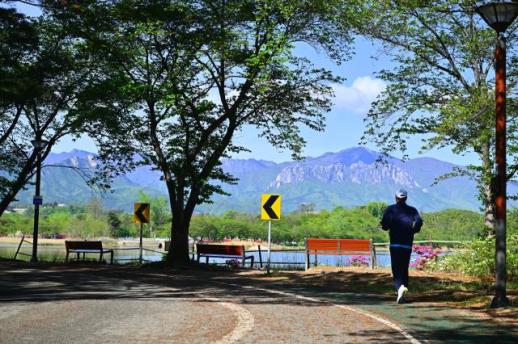 Holiday Weekend Day 2: Mostly Cloudy Nationwide; Rain Overnight in Seoul Area Saturday the nation was expected to be mostly cloudy, with rain starting overnight mainly in the Seoul metropolitan area and inland Gangwon Province. The Korea Meteorological Administration said very dry conditions would persist around Seoul as well as inland parts of the Chungcheong and North Gyeongsang regions. Rain was forecast to begin in some areas overnight Saturday and spread nationwide between daytime Sunday and Monday. Forecast rainfall totals were 5-30 millimeters for Seoul, Incheon and Gyeonggi; 10-40 mm for Gangwon; 10-40 mm for North Chungcheong; 5-30 mm for Daejeon, Sejong and South Chungcheong; and 10-40 mm for Gwangju, South Jeolla and North Jeolla. The South Jeolla coast and the Busan and South Gyeongsang south coast were expected to get 20-60 mm, while Ulsan and inland South Gyeongsang were forecast at 10-40 mm. Daegu, North Gyeongsang, Ulleungdo and Dokdo were forecast at 5-30 mm. Jeju Island was expected to see 30-80 mm of rain in all areas except the north. Morning lows were forecast at 8.4-13.3 C, with daytime highs of 19.7-24.8 C. Forecast highs included 22 C in Seoul, 20 C in Incheon, 22 C in Suwon, 23 C in Chuncheon, 23 C in Wonju, 22 C in Gangneung, 24 C in Cheongju, 23 C in Daejeon, 23 C in Jeonju, 23 C in Gwangju, 26 C in Daegu, 22 C in Busan, 26 C in Ulsan and 21 C in Jeju. Seas were forecast at 0.5-2.5 meters. In the Yellow Sea, waves were expected at 0.5-1.0 meters in nearshore and inner offshore waters and 0.5-1.5 meters farther offshore. The South Sea was forecast at 0.5-1.5 meters. In the East Sea, waves were expected at 0.5-1.5 meters nearshore, 0.5-2.0 meters in inner offshore waters and up to 2.5 meters farther offshore. Fine dust levels were forecast to be moderate nationwide.* This article has been translated by AI. 2026-05-02 08:21:18
 -
 LG Uplus to Retire 5.4 Million Treasury Shares in 80 Billion Won Cancellation LG Uplus said Wednesday it will cancel all about 5.4 million treasury shares it bought last year, as it moves to accelerate its “value-up plan” aimed at boosting shareholder value. In a regulatory filing, the company said it will cancel treasury stock worth about 80 billion won in book value on May 15. The cancellation covers all roughly 5.4 million shares acquired since last year, equal to 1.26% of total shares outstanding. LG Uplus previously canceled about 6.78 million shares, worth about 100 billion won in book value, on Aug. 5 last year. The company announced its value-up plan in November 2024, outlining mid- to long-term financial targets, steps to reach them and shareholder return policies. “This treasury share cancellation is part of our value-up plan to enhance shareholder value and strengthen investor trust,” a company official said. “Following last year, we are canceling previously acquired treasury shares again this year and carrying out our shareholder return policy without disruption.” * This article has been translated by AI. 2026-04-30 16:06:22
 -
 South Korea to Overhaul 2027 R&D Budget, Shift Funds to Strategic Technologies The government is moving to restructure funding for 2027 research and development, concentrating investment on national strategic technologies such as semiconductors, artificial intelligence, advanced bio and quantum technology. It also plans to streamline R&D spending across ministries by cutting discretionary outlays by about 15% and mandatory spending by about 10%. The Ministry of Science and ICT and the Office of Budget Planning said they held a budget strategy meeting on the afternoon of April 30 to discuss the “2027 R&D investment strategy.” The meeting was chaired by Park In-gyu, head of the Science and Technology Innovation Office at the ministry, and attended by more than 30 ministries and agencies that run R&D programs. Under the Framework Act on Science and Technology, the ministry’s Science and Technology Innovation Office draws up a plan each year to allocate and adjust the next year’s national R&D budget, after deliberation and approval by the National Science and Technology Advisory Council by the end of June. The budget office then compiles and considers the plan in drafting the final government budget proposal. The government said the 2027 allocation and adjustment plan will focus on: strengthening strategy through cross-government “one-team” cooperation; restructuring government R&D and reinvesting in priority areas; overhauling programs through broad evaluation and feedback; and introducing an equity-investment approach to R&D support to build a virtuous investment cycle. To improve efficiency and consistency, the government said it will reduce barriers between ministries and allocate R&D budgets from an integrated national perspective. It will also set shared goals and expand cooperation, including strengthening “inter-ministerial collaborative R&D.” It will also pursue spending restructuring for government R&D. More than 30 ministries and agencies will work on budget efficiency and spending adjustments, using benchmarks of 15% for discretionary spending and 10% for mandatory spending across fiscal programs. With resources secured through the restructuring, the government said it will reinvest in national strategic technologies in line with its “direction for advancing the national strategic technology system.” It previously selected 12 strategic technologies, including manufacturing and energy areas such as semiconductors, secondary batteries and hydrogen; mobility, aerospace and communications; and AI, bio and quantum. It also said it would foster the areas systematically by designating 50 detailed priority technologies. The government also plans to hold a “National Strategic Technology Leading Next Project Promotion Conference” (tentative name) in May to select target projects. It will also move to fix inefficient R&D programs. The innovation office said it will strengthen evaluation and inspections and reorganize programs around areas with higher potential to produce results. In addition, the government said it will newly pursue an equity-investment model for R&D support, shifting away from a grant-centered structure to one that can recover investments. Park said the 2027 R&D budget would be a “golden-time budget” to meet goals over the next four years. “We will thoroughly block waste factors and prepare a performance-centered budget that boldly invests in areas that are truly necessary,” he said, adding that the government would work as “one team” to drive technology-led growth. 2026-04-30 15:33:19
 -
 OneStore Unveils 'All-in-One' Platform Plan, Targets 2 Trillion Won in Transactions by 2030 South Korean app marketplace OneStore on April 30 laid out an “All in ONE Store” vision that combines downloading, payments and play on a single platform, as it moves to expand beyond a traditional app store. The company said it aims to reach 2 trillion won in transaction volume by 2030. OneStore unveiled its growth strategy for the next decade at a 10th anniversary press briefing at SKT’s T Tower in Seoul. CEO Park Tae-young said the past decade was about becoming a leading domestic app marketplace by cutting commissions, and the next phase will be about expanding the app store’s role. “We will open an era where downloading, payment and play happen on one platform,” he said. The company also introduced OneWebShop, a web-based direct-to-consumer (D2C) payment platform, and OnePlay Games, a service that lets users launch games instantly without installing them. OneStore said the additions are meant to offer developers and users more options and strengthen platform competitiveness. OneWebShop is a web-based D2C payment infrastructure offered directly by an app marketplace operator, reflecting OneStore’s experience in payments, settlement and customer support. OneStore said developers can adopt it without separate build development by using existing in-app payment integration standards. Fees, including payment gateway costs, are about 8%. About 40 products are preparing to join, and the service is scheduled for an official launch in late May. OnePlay Games allows users to run games immediately within the OneStore app without installing them. OneStore said it is working with Tencent to provide mini-game content, linking gameplay and item purchases through its login and payment infrastructure. The service is set for an official launch in May after a pilot period. OneStore said it will pursue a mid- to long-term growth strategy built around three pillars: its existing app marketplace, OneWebShop and OnePlay Games. The company said it aims to expand transaction volume and increase time spent on the platform while diversifying its growth model. It also set goals of reaching 2 trillion won in transaction volume by 2030 and providing developers with cumulative benefits of more than 1 trillion won. Park declined to commit to a renewed push for an initial public offering. “More important than when we do an IPO is how we are evaluated as a company,” he said. “An IPO is not the goal but one step in the growth process. For now, we will focus on growing the business based on OneWebShop and OnePlay.” * This article has been translated by AI. 2026-04-30 13:33:17
 -
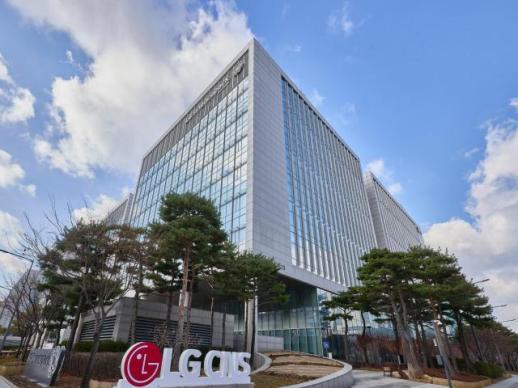 LG CNS Warns Data Center Supply Crunch Will Persist, Expands AI-Focused Business LG CNS said it is accelerating an AI-centered transformation across its businesses — including data centers, finance, manufacturing and digital assets — as it steps up efforts to expand in South Korea and overseas. On its first-quarter conference call on Wednesday, the company said the data center market will remain undersupplied as demand for AI and cloud services grows. It cited constraints on power supply and permitting, saying demand is likely to continue to outstrip supply. In finance, LG CNS said the cycle of rebuilding core systems is resuming and that customers increasingly view AI adoption as essential. It said it plans to strengthen its “AX” competitiveness by using AI technology as legacy systems are converted to Java-based platforms. For overseas growth, LG CNS said it is expanding around U.S. factory automation and the secondary battery sector, and will broaden its footprint through local partnerships and a global delivery system. According to South Korea’s Financial Supervisory Service electronic disclosure system, LG CNS posted first-quarter revenue of 1.315 trillion won and operating profit of 94.2 billion won. Revenue rose 8.6% from a year earlier and operating profit increased 19.4%. Q&A from the conference call What is the outlook for LG CNS’ data center business? -LG CNS said new investment is moving quickly in South Korea, mainly around sites with secured power infrastructure, but supply shortages persist as AI and cloud demand rises. It said power procurement and permitting limits are expected to keep the market in a demand-heavy structure for the time being. In overseas markets, especially Asia-Pacific, major cloud service providers are aggressively expanding data center investment to secure leadership in AI, it said. As GPU upgrade cycles shorten, the ability to rapidly build hyperscale data centers of more than 200 megawatts has emerged as a key competitive edge. It added that container-based modular data centers are spreading for high-density operations and AI optimization, with build times trending about 12 months shorter. What is the strategy for winning next-generation financial projects? -LG CNS said it is maintaining a leading market share by securing major references across finance, including commercial banks and internet-only banks, and has recently begun NH NongHyup Bank’s next-generation project. With core-system rebuilds resuming, it said customers are treating AI adoption as a must-have strategy, and the company is applying solutions co-developed with global advanced firms across project phases. It said it plans to use its AI technology to raise productivity and quality as C-language legacy systems are converted to Java, strengthening competitiveness in the AX market. What is the overseas market plan? -LG CNS said it expects to begin a food factory automation project in Texas in the second quarter and is expanding business with the group’s secondary battery manufacturers. It said it aims to secure price and quality competitiveness with its in-house “mobile shuttle” solution, build references among Korean companies expanding overseas, and then broaden to local customers. The company said it is hiring overseas staff and dispatching headquarters experts, while building cooperation with North American and Chinese systems integration firms. In finance, it said it is shifting from simple SI work to a solutions-centered model and is developing global delivery hubs such as Vietnam and Indonesia into centers of excellence. It also said it is expanding partnerships, including recruiting local experts in places such as Singapore and establishing a joint venture with Indonesia’s Sinar Mas Group. What is the outlook for manufacturing AX and data center profitability? -LG CNS said the manufacturing AX market is showing structural growth regardless of the business cycle, driven by global reshoring, an expansion of high-mix, low-volume production, and responses to ESG and carbon regulations. It said the market is evolving beyond basic automation toward AX·RX·VX models that combine AI, robotics and digital twins, with applications expanding to AI-based quality inspection, predictive maintenance and humanoids. For data center colocation, it said there is a “ramp-up” period between contract signing and customer equipment move-in, but surging AI demand has pushed utilization and ramp-up speed above initial expectations. What is the digital asset outlook and the Palantir cooperation plan? -LG CNS said a significant share of digital asset revenue in 2025–2026 is expected to come from bank-led CBDC projects. It added that starting in the second quarter, revenue tied to a national treasury subsidy project based on the “Project Hangang” platform will be reflected in earnest. It said stablecoins are still in a legal and institutional preparation phase, with consulting-focused work under way, and that it expects follow-on orders for build projects. It added that global research institutions forecast the related market will grow more than 30% annually on average. LG CNS said cooperation with Palantir is meaningful for expanding the domestic market and training talent. It said some LG Group affiliates have completed proofs of concept and moved to actual adoption, with further expansion under discussion. What is the strategy for physical AI and robotics? -LG CNS said it is pursuing physical AI-based robotics projects with group affiliates to drive innovation across the value chain, from production to R&D and logistics. It said North American plants are applying the mobile shuttle, and it is reviewing the use of humanoids for hazardous-material handling processes. It added that demonstrations are under way for logistics transport and dismantling work using autonomous mobile robots, as well as autonomous driving technology for tight spaces. The company said it is combining the group’s foundation model development capabilities with on-site operational know-how to build an industry-specific robot foundation model and advance robot-based automation.* This article has been translated by AI. 2026-04-30 11:43:56