

Journalist

Hwang Jin-hyun
jinhyun97@ajunews.com
-
 Trump: Agreement with Iran Possible This Weekend Amid Lebanon Ceasefire President Donald Trump stated that an agreement with Iran could be reached as early as this weekend amid ongoing ceasefire negotiations between Israel and Lebanon. While the potential for a deal has increased, Iran's continued airstrikes in the region leave the final outcome uncertain. On June 3, following the signing of an executive order at the White House, Trump responded to a question about Iran's attack on Kuwait, saying, "I have heard that the negotiations are going very well." He added, "It may not happen, but if it does, it could happen over the weekend." He noted that they are "theoretically quite close" to signing a document. Trump also addressed the issue of Iran's handling of highly enriched uranium (HEU), stating, "We will secure it in the very near future," and confirmed that an agreement to secure and destroy it has been reached with Iran. He indicated that the Strait of Hormuz would be opened immediately upon signing a memorandum of understanding (MOU) with Iran. U.S. Secretary of State Marco Rubio emphasized that the handling of Iran's HEU stockpile is central to the ceasefire negotiations, noting that final discussions are underway. He stated, "This issue is clearly addressed in the exchanged documents," but added that as of that morning, final approval had not been received from their command structure. Rubio stressed that the ceasefire negotiations should involve a reciprocal arrangement: the opening of the Strait of Hormuz, the lifting of U.S. maritime sanctions against Iran, the disposal of Iran's HEU, and limitations on its enrichment program. Israel and Lebanon Agree to Ceasefire with U.S. Mediation In the meantime, Israel and Lebanon reached a ceasefire agreement with U.S. mediation, signaling a potential breakthrough in U.S.-Iran negotiations. The U.S. State Department announced that Israel and Lebanon agreed to implement the ceasefire. According to Reuters and the Associated Press, both sides issued a joint statement following the fourth round of high-level trilateral talks held in Washington, D.C., on June 2-3. The joint statement outlined that the agreement hinges on a complete cessation of attacks by Hezbollah, the Iran-aligned armed group in Lebanon, and the withdrawal of all Hezbollah personnel from southern Lebanon's Litani region. Both sides also agreed to expedite the establishment of a demonstration area under the exclusive control of the Lebanese military, guided by the U.S. Additionally, Israel and Lebanon plan to resume political and security negotiations in the week of June 22, aiming for a comprehensive agreement. The U.S. intends to continue facilitating communication between the two parties during this period. If tensions on the Lebanon front ease, it could bolster the U.S.-Iran ceasefire negotiations. Iran has previously linked the ceasefire in Lebanon to its negotiation terms, making this agreement a potential factor for improving the U.S.-Iran negotiation environment. Iran Continues Airstrikes on Regional Nations However, Iran's ongoing airstrikes against U.S. military bases and regional nations such as Kuwait and Bahrain indicate a hardline stance, leaving the final agreement uncertain. Earlier that morning, the Islamic Revolutionary Guard Corps (IRGC) announced that it had attacked U.S. military bases in Kuwait and Bahrain in retaliation for strikes on an Iranian oil tanker and a communications tower on Qeshm Island. The Kuwaiti Defense Ministry reported that it intercepted 13 ballistic missiles and 17 drones launched by Iran that morning. Significant damage occurred to civilian infrastructure, including Kuwait International Airport, resulting in one Indian resident's death and several injuries. In response, Mohsen Rezaei, a military advisor to Iran's Supreme Leader Ayatollah Seyyed Ali Khamenei, stated on social media platform X (formerly Twitter), "History cannot be reversed, and the aggressors will soon be punished," adding that all attacks would be met with missile and drone retaliation. Iranian Foreign Minister Abbas Araghchi also justified the airstrikes on X, stating, "Our military is conducting defensive strikes against areas permitted for U.S. attacks on civilian vessels and violations of the ceasefire." As a result, attention is focused on whether Iran's stance will change following the ceasefire between Israel and Lebanon. Meanwhile, President Trump reportedly intends to avoid full-scale war with Iran unless U.S. military casualties occur. According to the Wall Street Journal, Trump recently told aides that he would consider ending the ceasefire if U.S. troops were killed in an Iranian attack. This suggests he is willing to tolerate minor conflicts for weeks or months to avoid a larger confrontation in the Middle East. In the U.S., there is increasing movement to check the president's war powers. According to reports from the Associated Press, the House of Representatives voted 215-208 in favor of a Democratic-led resolution aimed at limiting Trump's authority to engage in military actions against Iran without congressional approval, except in cases of defending the U.S. and its allies from imminent attacks.* This article has been translated by AI. 2026-06-04 15:51:00
 -
 Goldman Sachs: U.S. Big Tech AI Spending to Exceed Japan's GDP by 2030 Goldman Sachs has projected that capital expenditures related to artificial intelligence (AI) by the four major U.S. tech companies—Meta, Microsoft, Amazon, and Alphabet—will surpass Japan's gross domestic product (GDP) by 2030. According to Business Insider on June 3, Goldman Sachs recently updated its forecasts for capital expenditures by AI hyperscalers, estimating that the cumulative spending by these four companies will reach $5.3 trillion (approximately 8,100 trillion won) from 2025 to 2030. Citing data from the International Monetary Fund (IMF), Business Insider reported that this amount exceeds Japan's GDP of $4.38 trillion and surpasses the economic sizes of over 200 countries, including the United Kingdom, India, and France. If viewed as a single national economy, the scale of AI investment could rank as the world's fourth-largest economy. Goldman Sachs anticipates that funding for AI infrastructure will be sourced through various means, with the private market expected to play a larger role in the future. Overall, the industry is projected to spend a total of $7.6 trillion on data centers, power, and computing over the next five years. Goldman Sachs noted that "private construction of data centers has accelerated significantly in recent years," predicting that data center development will become a "multi-year investment cycle." Investors are increasingly concerned about the massive funds that tech companies are pouring into AI infrastructure, given the uncertainty about whether these investments will yield sufficient returns in the long term. However, the major tech companies show no signs of slowing down their AI spending in the near term. According to Goldman Sachs, the four companies plan to invest up to $725 billion in capital expenditures this year, more than double the $360 billion they spent in 2025.* This article has been translated by AI. 2026-06-04 14:36:00
 -
 TSMC Chairman Hints at Potential Semiconductor Price Increases Amid AI Demand The chairman and CEO of TSMC, the world's largest semiconductor foundry, expressed confidence in future growth driven by increasing demand for artificial intelligence (AI) and hinted at the possibility of raising semiconductor prices. During TSMC's annual shareholder meeting held at its headquarters in Hsinchu, Taiwan, on June 4, Chairman Wei Zhejia noted that customers remain optimistic about AI prospects, stating, "I am confident in our growth over the next few years." He highlighted the rising adoption rates of AI models across consumer, enterprise, and sovereign applications, saying, "This trend is driving demand for stronger computing capabilities and supporting robust demand for advanced semiconductor chips." Wei projected that AI will expand beyond data centers into personal computers, smartphones, automobiles, and Internet of Things (IoT) devices. He emphasized that TSMC's leading technology and exceptional manufacturing capabilities will continue to grow in value as a result. Regarding the potential for price increases, Wei responded to a question about whether TSMC would ask customers for higher prices, saying, "I really want to do that; we also need to make a profit in the end." However, he drew a line at abrupt price hikes, stating, "We do not want to raise prices suddenly like memory companies; that is not sustainable. TSMC focuses on long-term and sustainable operations. We are not that kind of company." Wei indicated that significant capital investments to meet rising AI demand would continue for the foreseeable future. When asked during the Q&A session about when TSMC's capital expenditures might peak and when they could be reduced, he candidly replied, "Honestly, I don't know." He added that he does not currently see any signals indicating a need to cut capital expenditures. TSMC expects its capital expenditures for the year to range between $52 billion and $56 billion, which he explained reflects the company's strong confidence in future growth. The company is also accelerating its production expansion in the United States. Wei stated that while TSMC is doing everything possible to meet customer demand, it will take a "considerably long time" to fully satisfy U.S. customer needs solely through domestic production, without providing a specific timeline. Wei expressed gratitude for shareholder support, noting that TSMC's stock price has risen from NT$950 (approximately $31) at last year's shareholder meeting to NT$2,425 (approximately $80) as of the previous day, marking an impressive increase of over 150% in the past year. He shared that the company plans to increase this year's dividend to at least NT$24, a rise of over 30% compared to the previous year, asserting, "I am confident that TSMC's performance will continue to outperform the industry." Additionally, he projected that TSMC's revenue for 2025 would reach NT$3.8 trillion, a 31.8% increase from the previous year, and that the company expects to maintain over 30% revenue growth in dollar terms this year. Wei also expressed a commitment to enhancing employee compensation. In response to a shareholder's request for increased performance bonuses, he stated, "TSMC will definitely strive to improve employee welfare," noting that the average annual increase in employee bonuses over the past three years has exceeded 30% and expressing hope that this trend will continue. He concluded by stating, "We are continuously expanding our production capacity to support customer growth while ensuring that shareholders receive stable and sustainable investment returns," and emphasized the company's commitment to sustainable corporate responsibility and sound governance.* This article has been translated by AI. 2026-06-04 14:21:00
 -
 TSMC Chairman Confident in AI Demand Driving Growth, Forecasts Over 30% Revenue Increase World's largest semiconductor foundry, TSMC, expressed confidence in future growth driven by increasing demand for artificial intelligence (AI). According to the Taiwan Economic Daily, TSMC Chairman and CEO Weijia Zhang thanked shareholders for their unwavering support during the company's annual shareholders meeting on June 4. He highlighted the recent rise in stock prices, plans for increased dividends, and growth projections due to AI demand. Zhang noted that TSMC's stock price surged from NT$950 (approximately $31) at last year's shareholders meeting to NT$2,425 (about $80) the day before the meeting, stating, "The stock performance over the past year has been remarkable, increasing by more than 1.5 times." He shared that the dividend for this year is expected to be at least NT$24, representing an increase of over 30% from the previous year. He expressed confidence that TSMC's performance will continue to surpass industry standards. Additionally, he projected that TSMC's revenue for 2025 would reach NT$3.8 trillion, a 31.8% increase from the previous year, and that the company would maintain over 30% revenue growth this year in dollar terms. Zhang emphasized that AI demand is a key driver of long-term growth in the semiconductor industry. He stated, "We are entering a world empowered by artificial intelligence," predicting that AI will be applied not only in data centers but also in personal computers, smartphones, automobiles, and Internet of Things (IoT) devices. He added that TSMC's leading technology and exceptional manufacturing capabilities will continue to grow in value as a result. He explained that the current trend in AI development is shifting from generative AI to agentic AI. In response to increasing AI demand, he anticipates continued large-scale capital investments for the foreseeable future. When asked during the Q&A session about when TSMC's capital expenditures might peak and when they could be reduced, he candidly replied, "Honestly, I don't know." He also stated, "I do not see any indicators suggesting that we need to reduce capital expenditures at this time." However, based on forecasts from clients and their customers, he expressed optimism, saying, "The next few years will be good for everyone," indicating that TSMC's growth trajectory will continue. Zhang projected that TSMC's capital expenditures for this year would range from $52 billion to $56 billion, underscoring the company's strong confidence in future growth. He stated, "We are continuously expanding our production capacity to support our customers' growth," while also ensuring that shareholders receive stable and sustainable investment returns. He concluded by expressing deep confidence in TSMC's growth over the coming years and reaffirmed the company's commitment to sustainable responsibility and sound corporate governance.* This article has been translated by AI. 2026-06-04 11:39:00
 -
 U.S. Treasury Secretary: Inflation is a Temporary Phenomenon Scott Vessen, the U.S. Treasury Secretary, reaffirmed his stance that the inflationary pressures triggered by the conflict in Iran are a "temporary phenomenon." On June 3, Vessen stated during a Senate Finance Committee hearing that "inflation is expected to be a short-term issue, but other economic indicators are very robust." He added, "We believe we have all the conditions in place for a very strong economy," and expressed confidence that temporarily elevated prices would decline again. Vessen's comments come amid growing concerns about the impact of the Iran conflict on the U.S. economy and consumer prices. The blockade of the Strait of Hormuz by Iran has led to a more than 40% increase in gasoline and diesel prices. According to an analysis by Brown University, U.S. consumers have incurred an additional burden of $53 billion (approximately 81 trillion won) in fuel costs since the outbreak of the war, averaging over $400 (about 610,000 won) per household. Rising energy prices are also contributing to overall inflation. The Consumer Price Index (CPI) for April showed a 3.8% increase compared to the same month last year, marking the highest level in nearly three years since May 2023. The Personal Consumption Expenditures (PCE) price index also rose by 3.8% year-over-year, the highest since May 2023 (4.0%). The Federal Reserve's June Beige Book report indicated that rising energy costs linked to the Middle East conflict are a major driver of inflationary pressures, affecting shipping, packaging, food, and fertilizer sectors. The Fed also noted reports of increased credit card usage, decreased visits to retail stores, and heightened demand for essentials, suggesting that consumers are cutting back on spending and focusing on necessary purchases due to rising price pressures. However, Vessen argued that inflationary pressures are more limited compared to those during the administration of former President Joe Biden. He stated, "Since President Trump took office, food prices, what many people refer to as groceries, have only risen by 2.5%, which is half the annual increase seen during the Biden administration." Nonetheless, recent trends show that food prices are again on the rise. In April, grocery store food prices increased by 2.9% compared to the previous year, the highest rate of increase since 2023, with prices for fruits and vegetables rising by 6.1%.* This article has been translated by AI. 2026-06-04 10:51:00
 -
 Japan Confirms No Additional Tariffs Beyond Existing U.S.-Japan Agreement The Japanese government has confirmed that the United States will not impose additional tariffs beyond the existing U.S.-Japan agreement, despite the Trump administration's warning of potential tariffs on 60 economies due to forced labor concerns. Ryosei Akazawa, Japan's Minister of Economy, Trade and Industry, stated on social media on the night of June 3 that he had an online meeting with U.S. Secretary of Commerce Howard Rutnik. "We reaffirmed that our agreement remains solid and effective," he said. He added, "The agreement from last year is unchanged, and both countries share the understanding that we are committed to its implementation. We confirmed with the U.S. that no additional tariffs beyond last year's agreement will be imposed on Japan." Akazawa urged those following the news to "rest assured." This announcement follows the Trump administration's declaration the previous day that it would impose additional tariffs of 10% or 12.5% on imports from 60 economies that have failed to effectively block the trade of products made with forced labor. Like South Korea, Japan has been categorized as failing to implement and enforce measures to ban imports of products made with forced labor, placing it among the 54 economies subject to the 12.5% additional tariff. The U.S. and Japan reached a trade agreement last year that limited the tariff rate, including existing tariffs, to 15%. Under this agreement, the U.S. applies a 15% tariff only to Japanese products with a tariff rate below 15%, while no additional tariffs are imposed on products already exceeding 15%.* This article has been translated by AI. 2026-06-04 10:09:00
 -
 U.S. Officially Reduces NATO Military Assets, Urges Europe and Canada to Expand Forces The United States has demanded that NATO allies fill the gap left by the reduction of U.S. military assets in Europe. On June 3, U.S. European Command and NATO Supreme Allied Commander Alexis Greenkwich stated that he expects European nations and Canada to quickly increase the number of manned and unmanned military aircraft and naval vessels necessary for NATO defense plans. Greenkwich explained that there has been an unhealthy dependence on U.S. military forces within the NATO Force Model. He added, "President Trump and Secretary of Defense Pete Hegseth have made it clear that change is necessary and will indeed happen," noting that the potential reality of simultaneous conflicts in multiple theaters necessitates this shift. Trump has criticized NATO for its excessive reliance on U.S. military power, urging European member states to take greater responsibility for conventional defense on the continent. In line with this stance, the U.S. informed allies last month that it would reduce its contributions to the NATO Force Model, which allocates troops and equipment for crisis situations. While specific details regarding the scale and timing of the reductions were not disclosed, military sources indicated that the cuts would affect a wide range of military assets, including aerial refueling tankers, fighter jets, drones, and naval vessels. Greenkwich specifically mentioned manned and unmanned aircraft and naval vessels, marking the first public confirmation of the areas where the U.S. intends to reduce its forces. He stated, "As the U.S. reduces its assigned forces in Europe to redeploy them elsewhere, European and Canadian allies can expand their roles immediately and in the near future in the areas of manned and unmanned aircraft and naval vessels." According to Reuters, military sources indicated that under the U.S. plan, the number of F-15 and F-15E fighter jets provided to NATO would be reduced by one-third to 99, while the number of MQ-4 and MQ-9 Reaper drones would be halved to 12. Sources noted that the reduction of MQ-9 drones could impact NATO's surveillance capabilities, stating, "This will be detrimental." In response, Colonel Martin O'Donnell, a spokesperson for NATO's military headquarters, explained that the areas mentioned by Greenkwich are ones where allies already possess sufficient capabilities or can acquire them soon. O'Donnell asserted, "There will be no reduction in defense capabilities; countries (NATO allies) just need to allocate their existing capabilities to NATO." Security experts warn that this decision could send the wrong political signals to both allies and Russia, regardless of whether a real capability gap exists. Jim Townsend, a senior fellow at the Center for a New American Security (CNAS), emphasized, "Now is not the time for the U.S. to reduce its military presence in Europe and cut the promised military capabilities to NATO, especially when Europe is being harassed by Russia."* This article has been translated by AI. 2026-06-04 09:54:00
 -
 House Passes Resolution to Limit Trump's Authority for Military Action Against Iran A resolution led by Democrats to limit President Donald Trump’s authority to conduct military operations against Iran without congressional approval has passed the U.S. House of Representatives, aided by defections from four Republicans. On June 3, the House voted 215 to 208 in favor of the resolution, according to reports from the Associated Press and others. The resolution requires the withdrawal of U.S. troops engaged in hostilities against Iran unless Trump can demonstrate they are defending the U.S. and its allies from an imminent attack. The House, like the Senate, has a narrow Republican majority. However, four Republican lawmakers joined Democrats in supporting the resolution, allowing it to pass. Among the Republicans who voted in favor were Thomas Massie of Kentucky, a known critic of Trump, as well as Tom Barrett of Michigan, Brian Fitzpatrick of Pennsylvania, and Warren Davidson of Ohio. This marks the first time a resolution aimed at limiting Trump’s war powers regarding Iran has passed, despite three previous attempts failing since the onset of hostilities. A similar resolution is currently pending in the Senate after eight attempts to bring it to a vote. The Republican leadership sensed dissent within their ranks and postponed the vote on the resolution on May 21, but they were unable to sway any votes back to opposition. The resolution is expected to be voted on in the Senate soon. However, its actual legal effect remains uncertain even if it passes there. Reuters described the vote as another political setback for Trump, despite the Republican majority in Congress. It noted that for the resolution to have any effect, it must clear the Senate and navigate potential legal challenges, making its current significance largely symbolic. There is also expected to be legal disputes over whether Congress can compel the president to withdraw troops. The Trump administration has maintained that attempts by Congress to limit the president's war powers are unconstitutional. The support from some Republicans for the resolution alongside Democrats indicates a fracture in party support for the Iran conflict, which could pose a political burden for Trump. The New York Times characterized the vote as a reflection of discord between Trump and Republican lawmakers. Recently, Trump faced internal pushback over a proposed $1.8 billion fund for judicial victims and a plan to allocate $1 billion for immigration enforcement under the guise of enhancing White House security.* This article has been translated by AI. 2026-06-04 09:15:00
 -
 China Opposes U.S. Tariffs on Imports Linked to Forced Labor The Chinese government has expressed strong opposition to the United States' plan to impose additional tariffs on imports from 60 economic regions, including China and South Korea, citing concerns over forced labor. During a regular briefing on June 3, Chinese Foreign Ministry spokesperson Mao Ning responded to questions regarding the Trump administration's proposed tariffs, stating, "There is no so-called 'forced labor' in China," and added, "We oppose using this as a pretext for political manipulation." Mao emphasized that China consistently opposes all forms of unilateral tariff measures, asserting that "tariff wars and trade wars do not benefit either side." She further stated that economic and trade issues should be resolved through dialogue and negotiation based on equality, respect, and mutual benefit. Previously, the Office of the United States Trade Representative (USTR) proposed imposing additional tariffs of 10% or 12.5% on 60 economic regions that fail to prevent the trade of products produced through forced labor. Among these, 54 economic regions, including South Korea, China, Japan, the United Kingdom, Australia, Brazil, and Vietnam, would face a 12.5% tariff, while six regions, including the European Union, Canada, and Mexico, would be subject to a 10% tariff.* This article has been translated by AI. 2026-06-03 17:33:00
 -
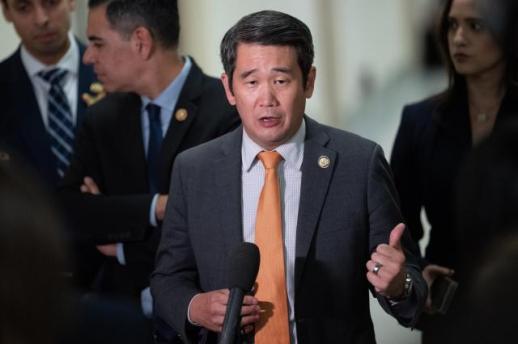 Korean American Congress Members Face Mixed Results in California Primary Korean American members of Congress received mixed results in California's primary elections. On June 2, Dave Min (Democrat) secured his place in the general election for California's 47th District with 44.7% of the vote based on 50% of ballots counted. Min's closest competitor, Republican Jenny Rae Le Roux, and other Republican candidates collectively garnered less than 40% of the vote, suggesting a strong likelihood of Min's victory in the general election. In contrast, Young Kim (Republican), who goes by the Korean name Kim Young-ok, faced a tough battle in California's 40th District. After redistricting, she was defeated by fellow Republican Ken Calvert, who received 36% of the votes, while Kim managed only 21.6%. Esther Kim-Barrett (Democrat), also of Korean descent, placed third with 15.7%. This primary election also highlighted the impact of Proposition 50, a redistricting measure passed by Democrats last November aimed at increasing their seats in the House of Representatives. In San Diego's 48th District, where incumbent Darrell Issa (Republican) announced he would not seek re-election, nine Democratic candidates competed, raising concerns about vote splitting. However, a Democratic candidate advanced to the general election. In the 22nd District, incumbent David Valadao (Republican) confirmed his place in the general election, while Democratic candidates collectively surpassed 50% of the vote. However, an unexpected twist occurred in the 6th District, where Kevin Kiley, who left the Republican Party to run as an independent in protest of redistricting, led with 26.9% of the votes based on 47% counted. Republican Michael Stansfield and Democrat Richard Pan were in a close race for second and third place, with 22.1% and 21.2%, respectively, raising the possibility that Democrats might not field a candidate in the general election. In the gubernatorial race, Republican Steve Hilton led with 27.6% of the votes based on 55% counted, narrowly ahead of Democrat Javier Becerra at 25.5%. Neither candidate has yet secured a spot in the general election. If Hilton wins, he would become California's first Republican governor since Arnold Schwarzenegger's re-election in 2006. Conversely, if Becerra is elected, he would be the first Latino governor in nearly 150 years. In the Los Angeles mayoral race, incumbent Karen Bass secured her place in the runoff with 36.5% of the vote. Reality TV star Spencer Pratt, backed by former President Donald Trump, was in second place with 29.2%, while Nitya Raman, known as the "Mom-Dani of the West," followed closely with 21.4%. The California primary allows all candidates to run regardless of party affiliation, with the top two advancing to the general election on November 3. However, as ballots are still being counted and many mail-in votes remain, final results in some competitive districts may take longer to determine.* This article has been translated by AI. 2026-06-03 17:15:00