
Journalist

AJP
swatchsjp@ajunews.com
-
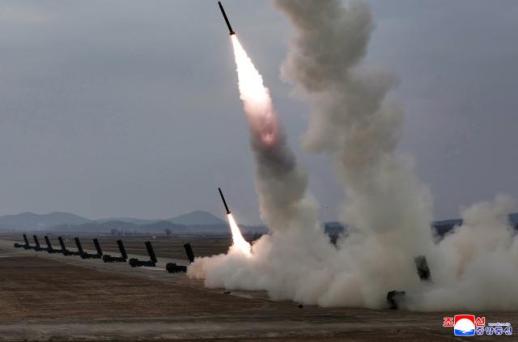 North Korea warns of 'destruction' as Japan moves to lift lethal arms export ban SEOUL, March 20 (AJP) - North Korea's state news agency, the Korean Central News Agency, denounced a legislative push in Tokyo to dismantle decades of restrictions on the export of lethal weaponry through a formal commentary on Friday. The media outlet characterized the move by the Liberal Democratic Party and Japan Innovation Party as a final abandonment of the "exclusively defense-oriented" posture Japan adopted following its defeat in World War II. The proposal recently submitted to Prime Minister Takaichi Sanae seeks to abolish the "five categories" principle that currently limits exports to non-combat equipment such as rescue, transport, and surveillance gear. If enacted, the revised policy would authorize the transfer of fighter jets, destroyers, and submarines to 17 nations with which Tokyo maintains defense technology agreements. Pyongyang alleged that the shift is a calculated effort to transform the Japanese economy into one centered on a "gigantic military-industrial complex." The restrictions under challenge are rooted in Japan’s post-war identity and the 1947 Constitution, which renounces war and prohibits the maintenance of "war potential." In 1967, the Three Principles on Arms Exports were established to prevent the nation from fueling international conflicts, effectively resulting in a total ban by 1976. This pacifist stance was first significantly altered in 2014 under the administration of Abe Shinzo, and further relaxed by the current government to allow for the transfer of finished defense products to Washington. KCNA argued that Tokyo is maneuvering to secure "re-invasion" capabilities by testing its weapon systems in global "hot spots" to verify their killing efficiency. The commentary warned that such a massive export of offensive weapons constitutes a grave challenge to global peace and will inevitably trigger an intense arms race among neighboring countries. The report stated that the path toward new weapon markets is a road to "irretrievable destruction" for the island nation. The pursuit of these exports is seen by regional observers as a move to bolster the domestic defense industry while deepening security ties between Tokyo, Washington, and the administration of President Lee Jae Myung in Seoul. However, the commentary emphasized that any shift toward a military-led economy would only serve to destabilize the geopolitical balance in East Asia. The report concluded that the current trajectory of the Takaichi government marks a dangerous escalation in the militarization of the region. 2026-03-20 08:27:35
 -
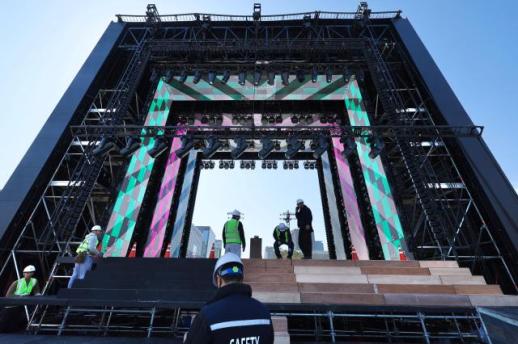 BTS Live D-2 : RM and Jin urge fans safety for landmark Gwanghwamun return SEOUL, March 19 (AJP) - Members of K-pop legend band BTS -- RM and Jin -- shared Thursday their anticipation for a long-awaited comeback while placing public safety at the center of their preparations for a massive performance in South Korea. Writing on the fan platform Weverse, the artists addressed the upcoming March 21 concert at Gwanghwamun Square, which follows the release of their fifth full-length album, "Arirang," on Friday. The messages align with the stringent security directives issued by the government. This event marks the first time the seven-member band has performed together in nearly four years. RM, the group's leader, focused on the necessity of maintaining order to ensure the event remains a positive experience for all attendees. "To our Army! We are also truly excited to meet you all at Gwanghwamun. Since it is a gathering for many people, we ask that everyone ensure they enjoy the performance safely and joyfully," he wrote. The 31-year-old explicitly requested that the audience follow the guidance of the thousands of security personnel stationed throughout central Seoul. "Please follow the instructions of the on-site staff and safety personnel on the day, and we look forward to seeing your orderly behavior," he added. The rapper further noted that the success of the performance depends on the individual conduct of each person in the crowd. "I believe a better performance is completed only when there is order and consideration created by each and every one of you, Army," he shared. RM also expressed appreciation for the government and municipal bodies coordinating the logistics of the square. According to Seoul City, 14,700 police officers and firefighters have been mobilized to manage the influx of people. "I also want to say a sincere thank you to the police officers, as well as those in the fire department, government, and local municipalities, who are working hard for our safety," the artist concluded. Jin reinforced the sentiment of gratitude while acknowledging the honor of performing at such a culturally significant site in South Korea. "Hello, this is Jin. Somehow, only one day remains until our comeback. Thanks to the help and support of many people, we are able to hold our comeback show at Gwanghwamun," the 33-year-old wrote. The vocalist highlighted the collective effort required to organize a show of this magnitude in a public space. He urged those planning to attend to remain vigilant and prioritize their own safety throughout the day. The singer emphasized the group's dedication to the performance while maintaining a focus on the well-being of the public. "It is an honor to be able to greet you all together after a long time in such a meaningful place, and I want to express my deep gratitude to those who helped and everyone who understood," he stated. He closed his remarks by reminding fans of the importance of safety during the live event. "We will also do our best to show you a great stage! For those watching on-site, please be sure to pay attention to safety!" he added. A total of 22,000 people were selected to watch the concert in Gwanghwamun Square on Saturday. However, authorities estimated that some 260,000 people will visit the area to feel and enjoy the vibe of BTS' comeback stage. Currently, the square is locked tight for specialist personnel preparing the stage, lighting and audio systems. To prevent accidents such as stampedes, the authorities have established a stadium-style crowd management system featuring 31 controlled entry points around the square. Mandatory subway bypasses have been scheduled for Gwanghwamun, City Hall, and Gyeongbokgung stations to prevent dangerous overcrowding during the event. Traffic congestion in the surrounding district is expected to reach one hundred percent during peak performance hours. Security operations will remain in effect until the conclusion of the concert on the evening of March 21. 2026-03-19 16:45:39
 -
 Uzbekistan and Tajikistan trade potential estimated at forty percent growth SEOUL, March 19 (AJP) - The Center for Economic Research and Reforms has determined Thursday that mutual trade between Uzbekistan and Tajikistan possesses the potential to increase by 30 to 40 percent. This assessment was presented today in Tashkent during an international conference regarding new prospects for a regional alliance. The center, an analytical body under the Administration of the President of Uzbekistan, indicates that bilateral engagement remains only partially realized despite recent growth. Asadov Khurshed, the deputy director of the organization, stated that the relationship between the two nations has reached a qualitatively new level. From 2017 to 2025, trade volume between the neighboring states expanded 3.8 times, rising from 238 million dollars to 912 million dollars. During this period, exports from Tashkent grew 3.7 times while imports from Tajikistan increased more than fourfold. The country now ranks ninth among the leading importers of Uzbek products. This growth is supported by a foundational institutional framework established through the 2024 Treaty on Allied Relations (Source: Ministry of Foreign Affairs of Uzbekistan). The potential for a 30 to 40 percent increase is linked to the substitution of Tajik imports from third countries with goods manufactured by Uzbek producers. Geographical proximity and shared transport infrastructure provide an advantage for the delivery of automobiles, household appliances, textiles, and chemicals. The deputy director emphasized that the most promising model for cooperation involves the establishment of joint processing facilities in border regions. These centers would prioritize the handling of agricultural raw materials and the development of new agrologistics networks. The ongoing development of transport infrastructure and transit opportunities is expected to serve as a primary driver for further economic integration. This shift toward a deeper investment model is a factor in strengthening connectivity across the region. The current level of allied relations provides the necessary foundation for transitioning toward shared regional infrastructure projects. The international scientific and practical conference brought together experts from government institutions and the academic community to discuss these prospects. 2026-03-19 15:26:52
 -
 KAIST researchers identify new mechanism for forming magnetic skyrmions SEOUL, March 19 (AJP) - Researchers at the Korea Advanced Institute of Science and Technology (KAIST) have discovered a new physical principle that allows for the formation of skyrmions, tiny magnetic vortices, without the specialized conditions previously thought necessary. This finding opens new pathways for developing next-generation, ultra-low-power information storage devices that could address the rising energy demands of artificial intelligence. KAIST said Thursday that a research team led by Professor Kim Se-kwon from the Department of Physics has theoretically demonstrated that swirling magnetic structures can form naturally through the interaction between magnetism and atomic lattices. This interaction, known as magnetoelastic coupling, suggests that skyrmions can be implemented in a much wider range of magnetic materials than once believed. Skyrmions are microscopic swirls of magnetic spin that are highly stable and significantly smaller than the magnetic domains used in current hard drives. Because of these properties, they are considered a primary candidate for spintronic devices, which could offer information storage densities hundreds of times higher than existing technology while consuming minimal power. Until now, scientists believed that forming skyrmions required specific, complex environments, such as structural asymmetry in the crystal or strong spin-orbit coupling. However, the KAIST team proved that the universal phenomenon of magnetoelastic coupling—where the magnetic state and the arrangement of atoms influence each other—is sufficient to create these structures. The team's research shows that when this coupling becomes strong enough, the naturally aligned state of a magnet becomes unstable and transitions into a new ordered pattern. This process results in a "chiral spin texture" where skyrmions and antiskyrmions are arranged in a repeating array, accompanied by simultaneous lattice distortion. "This study demonstrates that magnetic structures like skyrmions can form even without specific, specialized interactions," Professor Kim Se-kwon explained. "It is particularly significant as it suggests the possibility of implementing these structures in two-dimensional magnetic materials, which are currently a major focus of global research." The study, featuring Dr. Go Kyoung-chun as the lead author, was published in the prestigious physics journal Physical Review Letters on February 11, 2026. (Reference Information) Journal/Source: Physical Review Letters Title: Magnetoelastic Coupling-Driven Chiral Spin Textures: A Skyrmion-Antiskyrmion-like Array Link/DOI: https://doi.org/10.1103/5csz-pw7x 2026-03-19 15:03:10
 -
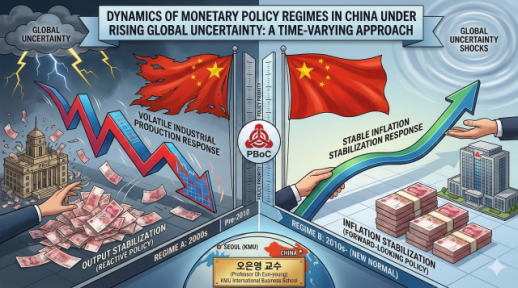 Kookmin University study explores shifts in Chinese monetary policy amid global uncertainty SEOUL, March 19 (AJP) - A research team led by Kookmin University Professor Oh Eun-young has published a study analyzing the evolution of China's monetary policy regimes, the university said Wednesday. The research specifically examines how the country has adapted its financial strategies in response to increasing global policy uncertainty. The paper, titled "Dynamics of monetary policy regimes in China under rising global uncertainty: A time-varying approach," was featured in the international journal Finance Research Letters. The publication is highly regarded in the financial field, ranking within the top 5% of journals with an impact factor of 6.9. Professor Oh Eun-young, the lead and corresponding author from the KMU International Business School (KIBS), conducted the research alongside Professor Georgios Magkonis of the University of Portsmouth and Professor Shuonan Zhang of the University of Southampton. The team utilized a specialized statistical model to track how global economic shocks influenced China’s production, prices, and central bank decisions over time. The findings reveal a distinct shift in how the People's Bank of China (PBoC) responds to international instability. During the 2000s, global uncertainty often led to sharp drops in production and prices, which the PBoC countered with aggressive interest rate cuts and stimulus measures. In contrast, the researchers found that policy responses have become more stable and moderate since the 2010s, a period often referred to as the "New Normal." The study confirms that China has shifted its primary focus toward maintaining price stability rather than simply reacting to fluctuations in industrial production. This transition indicates that China is moving toward a more forward-looking policy framework. By prioritizing long-term inflation control, the Chinese economy has demonstrated increased resilience and an improved ability to absorb external economic shocks. "This study empirically demonstrates that the responses of the Chinese economy and monetary policy to global policy uncertainty vary depending on policy regime changes," said Professor Oh Eun-young. "It shows that as China's monetary policy has developed into a forward-looking policy framework centered on price stability, the stability and resilience of the economy against external shocks have increased." The research is considered significant for its analysis of how emerging economies adapt their monetary strategies to survive a volatile global environment. It provides a new academic and practical perspective on how central banks can refine their responses to international economic shifts. 2026-03-19 09:30:27
 -
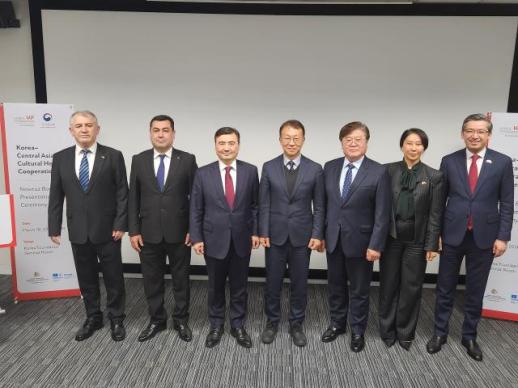 S. Korea-Central Asia cultural heritage cooperation marked by Nowruz book presentation in Seoul SEOUL, March 18 (AJP) - Diplomatic representatives and cultural officials gathered Wednesday at the Korea Foundation Seminar Room to inaugurate the Nowruz Book. The ceremony celebrated the shared heritage of Eurasia and brought together the Kazakhstan, Kyrgyzstan, Tajikistan, Turkmenistan, and Uzbekistan embassies. The International Information and Networking Centre for Intangible Cultural Heritage in the Asia-Pacific Region and the Central Asia-Korea Cooperation Forum Secretariat supported the initiative. This effort aims to strengthen ties between South Korea and the five regional partners. This gathering serves as a critical precursor to the high-level South Korea-Central Asia Summit scheduled for September under the administration of Lee Jae Myung. Nowruz represents a millennia-old tradition of renewal and community observed throughout the Silk Road. The newly presented publication explores the meaning of the festival as a symbol of friendship and shared identity between the peninsula and Central Asia. International Information and Networking Centre for Intangible Cultural Heritage in the Asia-Pacific Region Strategic Development Office Director Kim Deok-soon noted that the holiday reflects a 6,000-year history of the "New Day" that transcends modern borders. The holiday remains a vital cultural bridge, particularly for diaspora communities residing throughout the region. Korea Heritage Service Vice Administrator Choi Bo-geun highlighted historical ties by referencing the Afrosiyab murals in Samarkand. He noted that the depiction of Goguryeo envoys in these ancient works provides definitive evidence of early civilizational dialogue. The vice administrator emphasized that these historic connections form the basis for modern diplomatic and cultural partnerships. The official characterized the research as a bridge between the ancient past and the upcoming strategic summit in September. This historical anchor supports current efforts to deepen regional collaboration across multiple sectors. Central Asia-Korea Cooperation Forum Secretariat Executive Director Rhee Jong Kook described the institution as a unique framework for regional engagement. He stated that "the Secretariat is the first of its kind established to foster multidimensional cooperation in six priority areas". The executive director explained that cultural initiatives like the Nowruz Book presentation provide the essential people-to-people foundation for diplomatic progress. Seoul will further this mission during the Central Asia Spring Festival at Seoul Plaza in May. Kazakhstan Ambassador Nurgali Arystanov linked the celebration to the "Just Kazakhstan" and "New Kazakhstan" initiatives. He noted that these reforms focus on political modernization and social justice, gaining overwhelming support in the recent March 15 constitutional referendum. The ambassador stated that "Celebrating Nowruz in Seoul is a testament to our blossoming partnership and shared vision for a prosperous Eurasia". He emphasized that cultural diplomacy remains a core pillar of the strategy employed by his nation. Kyrgyzstan Ambassador Aida Ismailova defined the event as a period of "resurgence" for nature and the birth of new life. Tajikistan Ambassador Kirom Salohiddin Amriddinzoda highlighted the humanitarian aspects of the tradition, including the custom of visiting orphans and the elderly. These remarks emphasized the alignment between regional values and the strategic partnership with Seoul. The ambassadors collectively positioned the publication as a spiritual bridge connecting the two regions. Turkmenistan Ambassador Begench Durdyyev framed the event within the "Year of Independent Permanently Neutral Turkmenistan" while noting the significance of Akhal-Teke horse culture. Uzbekistan Ambassador Alisher Abdusalomov quoted the thinker Alisher Navoi, stating, "The one who sows seeds opens the path to sustenance". The ambassador characterized the book as a significant milestone leading toward deeper regional integration ahead of the planned diplomatic engagements. Kim Deok-soon added that Central Asia and Eurasia account for more than 50 percent of all UNESCO joint intangible heritage inscriptions. The Nowruz Book will be distributed to academic and cultural institutions to facilitate further research into shared Eurasian history. 2026-03-18 17:41:52
 -
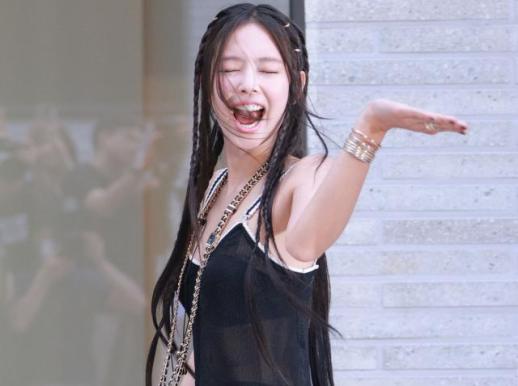 BLACKPINK's Jennie to headline Lollapalooza Chicago as K-pop presence expands SEOUL, March 18 (AJP) - The organizers of Lollapalooza Chicago announced the 2026 festival lineup on Tuesday (local time), confirming that South Korean soloist Jennie will headline the four-day event at Grant Park. Scheduled to run from July 30 to August 2, the festival marks a significant milestone for the singer as she transitions from group performances to a solo mainstay on the global circuit. She joins a premier roster of headliners for the summer season including Lorde, Charlie XCX, and The Smashing Pumpkins. The announcement follows her successful appearances at previous international festivals where she garnered critical acclaim for her stage presence and vocal range. This appearance in Chicago is part of a broader summer tour for the performer, who is also slated to headline the Governors Ball in New York this June. Following her engagement in the United States, she will travel to Spain to lead the Mad Cool Festival in Madrid before concluding her summer schedule at Summer Sonic in Japan. These bookings solidify her standing as a primary draw for major Western music events, reflecting a strategic shift toward individual global branding. Her previous experience at the Coachella Valley Music and Arts Festival in California served as a precursor to this expansive 2026 festival run. The 2026 iteration of the Chicago festival continues a trend of heavy investment in South Korean talent, with several other prominent acts confirmed for the lineup. The girl groups aespa and (G)I-DLE are scheduled to perform, alongside the rising male quintet Cortis. This collective presence underscores the sustained demand for Seoul-based artists within the American live music market. Each group brings a distinct choreographed style and discography that has already seen substantial commercial success on domestic and international streaming charts. Jennie follows a lineage of South Korean artists who have broken through at the historic Chicago venue since 1991. The trail was blazed by J-Hope in 2022, who became the first Korean headliner at the event, followed by Tomorrow X Together in 2023. Subsequent years saw Stray Kids and Twice take top billing, demonstrating a growing institutional comfort with K-pop as a headline attraction. More than 400,000 attendees are expected to gather in the Illinois city this year to witness the 170 scheduled acts. 2026-03-18 14:47:00
 -
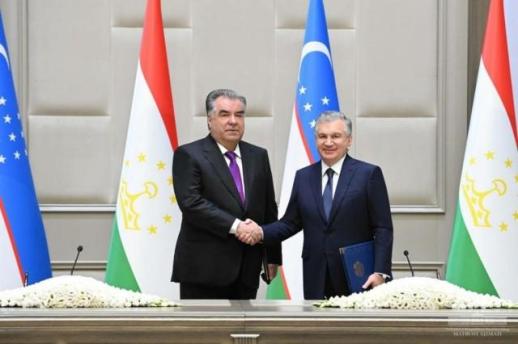 Uzbekistan and Tajikistan expand cultural ties through new diplomatic initiatives SEOUL, March 18 (AJP) - Uzbekistan and Tajikistan have entered a more active phase of cultural cooperation, the Uzbekistan Embassy in South Korea announced on Wednesday, March 18, 2026. This partnership is driven by a surge in festivals, film screenings, and theater tours designed to bring the two nations closer together. The relationship between the leaders of the two states has been a primary catalyst for this growth. Mutual visits and joint participation in cultural events have deepened friendship and mutual respect, providing fresh momentum to long-standing ties between the neighboring countries. A solid legal foundation supports these efforts, starting with an agreement signed on January 16, 1994, between the Republic of Uzbekistan and the Republic of Tajikistan. This has been followed by the Cultural Cooperation Programme for 2024–2026 adopted by the ministries of culture of both countries to implement joint projects. Direct communication between high-level officials has become frequent over the last four years. Uzbekistan Minister of Culture and his deputies have visited Tajikistan 11 times, while Tajikistan Minister of Culture and her deputies have made eight visits to Uzbekistan. Flagship events such as the Days of Uzbek Culture in Dushanbe and the Days of Tajik Culture in Tashkent are now held regularly. Tajik performers have also found success at international festivals in Uzbekistan, including the Lola dance ensemble, which recently won an award at the International Dance Festival "Lazgi." Cooperation has also expanded into the film industry through a memorandum between the Cinematography Agency of the Republic of Uzbekistan (CA) and the state institution Tojikfilm. The two organizations are currently finalizing the feature film "Starry Sky: Jami and Navoi," which is in the editing phase. In 2025, the city of Khujand hosted a major Navruz celebration attended by the leaders of Uzbekistan, Tajikistan, and Kyrgyzstan. The event featured a joint concert with artists from all three countries, showcasing regional unity through music and performance. Future plans include signing a new cultural cooperation program for 2026–2027. Upcoming initiatives involve theater tours and a gathering for multiple generations titled "Navro'zi olam," ensuring the steady development of cultural relations between the two peoples. 2026-03-18 14:31:09
 -
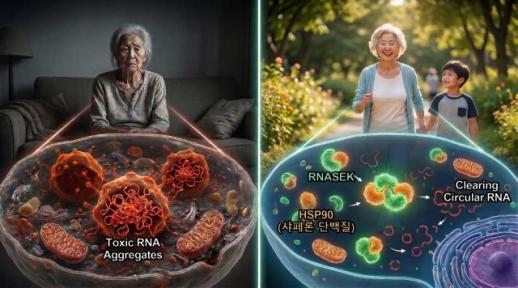 S. Korean researchers find cellular waste clearing process capable of lifespan expansion SEOUL, March 18 (AJP) - South Korean scientists have discovered that clearing molecular debris from cells can significantly slow the aging process and extend lifespan. Researchers at the Korea Advanced Institute of Science and Technology (KAIST) announced on March 18, 2026, that they identified a specific protein responsible for removing genetic waste that typically builds up as organisms get older. The study focuses on circular RNA, a type of molecule that essentially acts as cellular trash. Unlike other genetic materials that the body recycles easily, these circular strands are highly resistant to being broken down. As a result, they clutter the cell over time and interfere with normal biological functions. The research team found that a protein called RNASEK serves as a primary cleaning crew for this waste. By studying roundworms, mice, and human cells, the scientists observed that levels of this protein naturally drop with age. This decline allows circular RNA to pile up and form toxic clumps known as stress granules. When the researchers artificially increased RNASEK levels, the test subjects lived significantly longer and remained in a healthier state. The protein works alongside other helper molecules to prevent genetic waste from sticking together and damaging the cell. These results remained consistent across different species, including mammals. "Until now, circular RNA was largely seen as just a byproduct or an indicator of getting older," said Professor Lee Seung-jae. "This research proves that the accumulation of circular RNA actually drives the aging process, and that the RNASEK protein is a vital regulator that can slow this down to promote a healthy lifespan." The project was a collaborative effort involving Professor Lee Seung-jae, Professor Kim Yun-ki, and Professor Lee Kwang-rok. The study included contributions from lead researchers Kim Si-eun, Ham Seok-jin, Bu Seong-ho, and Lee Dong-hun. The findings were published in the scientific journal Molecular Cell on February 24, 2026. (Reference Information) Journal/Source: Molecular Cell Title: Ribonuclease κ promotes longevity by preventing age-associated accumulation of circular RNA in stress granules Link/DOI: https://doi.org/10.1016/j.molcel.2026.01.031 2026-03-18 10:06:36
 -
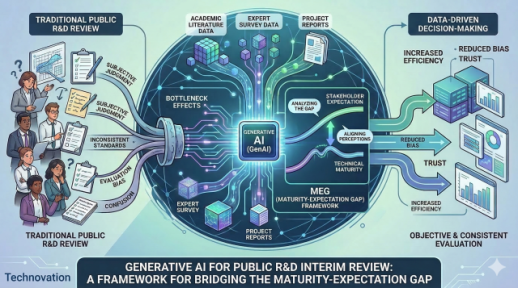 Kookmin University professor develops AI framework for public R&D evaluation SEOUL, March 18 (AJP) - A research team led by Professor Kim Do-hyung of the KMU International Business School (KIBS) at Kookmin University (KMU) has developed a generative artificial intelligence framework to enhance decision-making in public research and development (R&D) evaluations, the university said Tuesday. The study introduces a systematic approach to bridging the gap between technical capabilities and stakeholder expectations. The research paper, titled "Bridging the maturity-expectation gap: Generative AI in strategic decision-making for public R&D interim review," was published in the international journal Technovation. It addresses the limitations of current public R&D interim reviews, which often depend on the subjective judgment of experts. These traditional methods frequently face criticism for lacking consistency and being prone to evaluation bias. To resolve these issues, the team proposed the Maturity-Expectation Gap (MEG) framework. This model analyzes the difference between the actual maturity of generative AI technology and the performance levels expected by stakeholders. By combining survey data from experts with machine learning-based literature analysis, the researchers quantified how perceptions of AI vary across different groups. The findings revealed that significant discrepancies between expectations and technical maturity can reduce trust and the willingness to adopt AI tools. The study also categorized evaluation areas where generative AI could be easily integrated, as well as those that require additional preparation. This provides a clear roadmap for public sectors to build data-driven decision-making systems. "Generative AI has the potential to increase efficiency and consistency in the public R&D evaluation process," said Professor Kim Do-hyung. "However, if the gap between expectations and actual technical maturity is not managed, it can lead to distrust and resistance during implementation. The MEG framework proposed in this study can be used to diagnose these gaps and establish phased introduction strategies." The project was a collaboration between lead author Professor Kim Do-hyung, co-author Professor Kang Song-hee of the Tech University of Korea, and corresponding author Professor Hong Ah-reum of Kyung Hee University. The researchers expect the framework to contribute to more consistent and objective R&D management in the future. (Reference Information) Journal/Source: Technovation Title: Bridging the maturity-expectation gap: Generative AI in strategic decision-making for public R&D interim review Link/DOI: https://doi.org/10.1016/j.technovation.2024.103110 2026-03-18 08:43:19