
Journalist

Kim Dong-woo, Han Jun-gu
swatchsjp@ajunews.com
-
 Police intensify search as escaped wolf remains at large for fourth day SEOUL, April 11 (AJP) - Authorities in the central city of Daejeon have deployed drones and specialized tracking teams on Saturday to locate an escaped wolf that fled a zoo safari as the search enters its fourth day without a confirmed sighting. The two-year-old male wolf was last detected by a thermal imaging camera at 1:30 a.m. on Thursday, but it has since vanished into the rugged terrain surrounding the facility. Recent heavy rainfall and deteriorating weather conditions hindered initial aerial efforts, leading officials to believe the wolf may be taking cover in burrows or dense brush that obscured its heat signature from recovery teams. The search operation involves approximately 90 personnel and 10 drones focused on the mountainous areas of the Jung District. To prevent the animal from fleeing further into inhabited zones, ground teams have been minimized in favor of high-altitude surveillance. Officials expect that as temperatures drop after sunset, the wolf’s body heat will provide a sharper contrast against the cooling ground, allowing thermal sensors to pinpoint its exact location. Once spotted, the strategy will shift from observation to containment, with experts planning to herd the animal toward a designated capture zone without causing undue stress that could provoke a flight response. The prolonged disappearance has placed local authorities on high alert, as the window for a controlled recovery narrows. City officials emphasized that night operations remain the most viable path to a resolution, given the increased visibility of moving targets under infrared light. A spokesperson for the city of Daejeon stated, "It is much easier to find moving individuals by checking with drones equipped with thermal imaging cameras at night than during the day. It is important to find the wolf quickly by focusing on night searches from tonight until dawn." 2026-04-11 17:54:19
 -
 Police launch manhunt as burglar flees with BTS entry bracelets SEOUL, April 11 (AJP) - Law enforcers in Goyang, northwest of Seoul, have launched an intensive manhunt on Saturday for a burglar who snatched 500 BTS concert entry bracelets from a ticket booth, police said. The robbery could spark a massive security disruption involving scalpers and ordinary fans. The suspect reportedly seized the cache of credentials at approximately 3:20 p.m. (0620 GMT) before escaping the scene, prompting the police to secure surveillance footage and monitor major exit routes. The theft represents a sophisticated threat to the event’s perimeter, as the stolen items serve as the primary physical authorization for fans to enter the concert grounds. The loss of 500 bracelets creates a significant security vacuum that could allow unauthorized individuals to bypass rigorous digital checkpoints. While organizers typically cross-reference tickets with government identification to issue the bands, those wearing the bracelets are regarded as having passed all security checkpoints, including bag-checks and ID-checks. If the stolen credentials enter the illicit secondary market, they risk triggering a wave of illegal entries that could overwhelm the venue’s designated capacity and compromise the safety of the people. Organizers now face the daunting task of invalidating the serial numbers associated with the stolen batch or implementing an entirely new identification system hours before the gates open. Any lack of synchronization between legitimate ticket holders and those possessing the stolen wristbands is expected to cause substantial delays and friction at the entrance. In Seoul and its surrounding districts, where crowd management is a matter of heightened administrative concern, this breach exposes a critical vulnerability in the logistical chain of international touring. Police investigators are currently analyzing forensic evidence and witness testimony to narrow the search for the suspect. A police official told reporters: "We are mobilizing available personnel to swiftly apprehend the suspect and are cooperating with the organizers to ensure the stolen bracelets are not used illegally." 2026-04-11 17:38:14
 -
 South Korea defends president as historical parallel triggers diplomatic crisis SEOUL, April 11 (AJP) - South Korea defended its president on Saturday after his explicit comparison between Israeli military operations and 20th-century historical atrocities ignited a diplomatic quarrel with Tel Aviv. The rupture started on Friday when President Lee Jae Myung shared a video on the social media platform X, formerly known as Twitter. The footage, posted by a user named Jvnior and captioned with claims that Israeli soldiers were torturing a Palestinian child, was from September 2024. Bridging the current conflict with East Asian historical trauma, Lee wrote, "Wartime homicide is no different from matters that we take issue with, such as the forced (enslavement of) comfort women, and the massacre of Jewish people." The Israeli Foreign Ministry issued a swift condemnation, accusing Lee of relying on a fake account to spread anti-Israeli disinformation. Arguing that the South Korean leader trivialized the mass murder of Jews right before Holocaust Remembrance Day, the ministry stated, "The remarks by the President of Korea, Lee Jae Myung … are unacceptable and warrant strong condemnation." It further noted, "Yet we have not heard a single word from the President about the terrorists who were at the center of this event. Nor have we heard a word from the President regarding the recent Iranian and Hezbollah terror attacks against Israeli citizens." Lee refused to retract the statement. Shifting the argument to international law, he posted an update expressing frustration with Israel's reaction. "It is disappointing that the Israeli Foreign Ministry has not once reflected on the global community's criticism of its relentless inhumane and internationally unlawful actions, which have caused immense suffering," he wrote. He added, "For the sake of universal human rights and the national interests of the Republic of Korea, I must work harder to find things I can do." By Saturday morning, the escalating friction forced the South Korean foreign ministry to intervene. Attempting to manage the fallout, the ministry posted on its official X account that Israel had misunderstood the president's intent. The government expressed regret that Tel Aviv interpreted a statement of belief in universal human rights as an attack on a specific geopolitical issue. This explicit departure from Seoul's usual quiet alignment with Washington stems from a mix of personal ideology and acute economic pressure. The president's political lens was shaped by his childhood as an underage factory laborer and his career as a human rights lawyer. His reference to comfort women points to the unresolved trauma of Korean women sexually enslaved by imperial Japanese forces during World War II, a history that deeply influences his view on state violence. At the same time, the expanding Middle East conflict is creating immediate problems for South Korea. With Israel conducting strikes in Iran and Lebanon, and civilian casualties mounting, the resulting disruption to the global economy is hitting South Korea hard. The country relies heavily on exports and imported energy, making the regional instability a direct threat to its national interests. The foreign ministry concluded its intervention by balancing its defense of the president with reassurances to Israel. "The Government of the Republic of Korea remains steadfast in its opposition to all forms of violence and anti-humanitarian acts, including the acts of terrorism pointed out by Israel," the ministry stated, adding: "Furthermore, we continue to empathize deeply with the unspeakable suffering endured by Israel due to the Holocaust, and we once again express our profound condolences to the victims of the Holocaust.." 2026-04-11 14:38:29
 -
 S. Korea clears 26.2 trillion won relief as war risks mount SEOUL, April 11 (AJP) - South Korea has approved a 26.2 trillion won supplementary budget on Saturday, authorizing a massive injection of liquidity to shield households and industry from the volatility of a prolonged Middle East war. Prime Minister Kim Min-seok presided over an extraordinary cabinet meeting at the Government Complex Seoul to finalize the spending package, which cleared the National Assembly late Friday night. The legislative consensus marks a rare moment of bipartisan cooperation as the administration of Lee Jae Myung moves to counter mounting inflationary pressures. This second supplementary budget of the current administration signals a shift toward aggressive fiscal interventionism. By targeting the bottom 70 percent of earners with direct cash transfers and instituting caps on energy prices, the government is attempting to construct a firewall between the domestic economy and global geopolitical instability. The measure arrives as surging oil prices threaten to derail a fragile recovery and erode the purchasing power of low-income families. Under the approved plan, 32.56 million citizens will receive high-oil-price relief payments ranging from 100,000 won to 600,000 won. The government has allocated 4.8 trillion won for these specific grants. Recipients of basic livelihood benefits and near-poverty households are slated to receive their first disbursements within the month, while the remaining eligible population will be processed following a review by a specialized inter-departmental task force. To stabilize a market rattled by supply chain disruptions, Seoul has set aside 4.2 trillion won to support a maximum price system for petroleum. This industrial shield is bolstered by subsidies designed to cover the price differential for imported naphtha, a critical feedstock for the petrochemical sector. Public infrastructure also receives a temporary boost; the K-Pass public transportation discount will be doubled to 50 percent to lower commuting costs for the working class. The budget further extends a lifeline to the primary sector, providing fuel-linked subsidies to farmers and fishers who have seen their margins vanish under the weight of rising diesel costs. Additional funds are dedicated to easing the fuel burden for coastal passenger vessels, ensuring that essential transit links to island communities remain viable. The supplementary budget was submitted to the legislature on March 31 as regional tensions in the Middle East escalated. Following intense negotiations, the ruling and opposition parties reached a final agreement during the plenary session on April 10. 2026-04-11 10:58:43
 -
 US and Iran arrive in Islamabad as Hormuz deadlock threatens global energy supply SEOUL, April 11 (AJP) - Iranian and American delegations arrived in the Pakistani capital on Saturday for a summit intended to end their six-week war, though the specific timing of the first session remains unannounced as mediators attempt to resolve a last-minute impasse over Iranian preconditions. While both teams have checked into the Serena Hotel, the high-security venue where the negotiations are set to occur, officials from the Pakistani Ministry of Foreign Affairs confirmed that a formal plenary session has not yet commenced. The meeting occurs under a proximity format, a diplomatic arrangement where mediators shuttle between separate rooms to avoid direct confrontation before a baseline agreement is reached. This distance reflects the fragility of the peace process, which began following the death of Iranian Supreme Leader Ali Khamenei on February 28 and the subsequent closure of the Strait of Hormuz. For Washington, the priority is the immediate and unconditional opening of that waterway, which handles 20 percent of global petroleum transit, while Tehran views its control of the strait as a primary bargaining chip to secure the lifting of economic sanctions. The lead negotiator for the United States is Vice President JD Vance, a former senator who has become the administration's chief diplomatic envoy for the conflict. He is joined by special envoys Steve Witkoff and Jared Kushner, representing the White House’s attempt to bypass traditional State Department channels in favor of a personalist approach. Upon his departure for Pakistan, Vance warned that the American team would not be "receptive" to delays or tactical maneuvers by the Iranian side. Representing the Islamic Republic is Mohammad Baqer Qalibaf, the speaker of the Iranian parliament and a veteran of the Revolutionary Guard who has assumed a central role in the nation’s wartime leadership. Before arriving in Islamabad, Qalibaf stated that negotiations would not begin in earnest unless Washington accepted certain "preconditions," including a ceasefire in Lebanon and the immediate release of frozen Iranian assets. Iranian state media has emphasized that their 70-member delegation includes technical experts in banking and energy, signaling a focus on concrete economic concessions. The conflict, which the Trump administration dubbed Operation Epic Fury, has severely disrupted global supply chains and sent oil prices to their highest levels in four years. In the weeks of active combat, American and Israeli airstrikes targeted Iranian nuclear sites and military infrastructure, prompting Tehran to mine the Strait of Hormuz. The current two-week ceasefire, brokered by Islamabad, has provided a temporary reprieve, but the threat of a return to hostilities persists if the current summit fails to produce a breakthrough. A central point of contention remains the status of Iran’s nuclear program. Washington is demanding a "total blockade" of Iran’s path to a nuclear weapon, seeking terms that go beyond the 2015 Joint Comprehensive Plan of Action (JCPOA) which the first Trump administration exited in 2018. Tehran, meanwhile, has proposed a 10-point plan that calls for the recognition of its right to enrich uranium and the payment of "war reparations" through an international investment fund. Pakistani security forces have placed the capital on strict lockdown, with thousands of police and paramilitary personnel guarding the "Red Zone" surrounding the hotel. While the Iranian delegation arrived on Friday evening and Vance’s team landed early Saturday, the "proximity" of the negotiators has yet to translate into a face-to-face meeting. Technical teams from both sides are currently reviewing the logistical details of the maritime ceasefire and the verification protocols required to ensure the safe passage of merchant vessels. The current truce is scheduled to expire in twelve days. 2026-04-11 09:56:05
 -
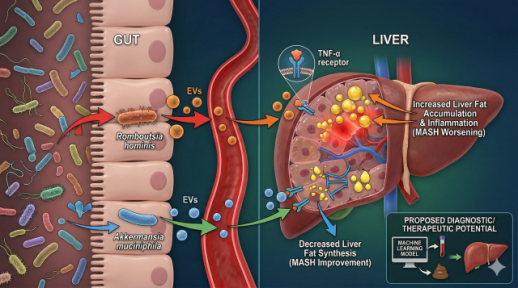 KMU professor identifies gut-liver mechanism for diagnosing and treating fatty liver disease SEOUL, April 09 (AJP) - Professor Kwak Min-jin at Kookmin University's Department of Forest Biomaterials Engineering has identified how gut microbes and their secretions affect metabolic dysfunction-associated steatohepatitis (MASH), the prominent university in Seoul said Thursday. The study, which introduces a high-precision diagnostic technology using extracellular vesicles (EVs), was published in the international journal Pharmacological Research. Fatty liver disease caused by metabolic imbalance is a growing concern in South Korea and across the globe. MASH is a critical stage of the condition that requires active management before it can progress to more severe issues like liver cirrhosis or liver cancer. Because current diagnostic methods often rely on invasive procedures like liver biopsies, there has been a steady demand for non-invasive strategies based on the interaction between the gut microbiome and the liver. Using animal models for longitudinal analysis, the researchers tracked the changing roles of specific gut microbes as MASH develops. The study found that the bacterium Romboutsia hominis increases as the disease progresses, worsening fat accumulation and inflammation in the liver through the tumor necrosis factor-alpha (TNF-alpha) signaling pathway. In contrast, the bacterium Akkermansia muciniphila and its derived EVs were found to reduce liver fat accumulation. This effect is achieved by suppressing the expression of genes associated with fat synthesis. The research is significant for demonstrating that EVs released by bacteria can cross the intestinal barrier to directly regulate liver metabolism. The team also developed a machine-learning diagnostic model that combines gut microbial data with blood information. This model demonstrated the potential to screen for MASH non-invasively with an accuracy rate exceeding 90 percent. Such technology could eventually be expanded into next-generation diagnostic services that manage liver health using stool or blood samples. The findings offer a new approach that targets both the diagnosis and treatment of liver disease by precisely interpreting the link between the gut ecosystem and liver health. KMU researchers are expected to continue their work in the bio-health sector to further refine these diagnostic and treatment technologies. 2026-04-09 16:21:39
 -
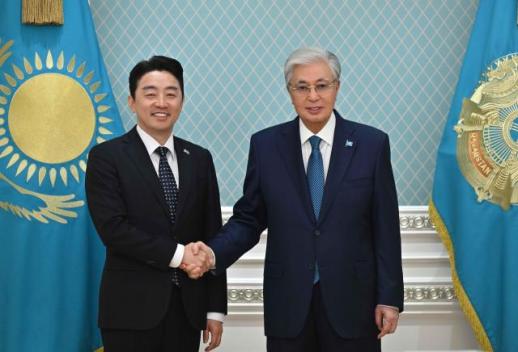 South Korea dispatches chief of staff as Astana readies for regional summit SEOUL, April 09 (AJP) - South Korea sent its presidential chief of staff to Central Asia on Wednesday to secure attendance for an inaugural regional summit, moving to lock in vital energy and logistics access. The diplomatic push bypasses traditional military and economic alliances. Instead, the strategy builds directly on an ideological framework established seven months ago during a global interfaith congress, illustrating how modern statecraft increasingly relies on spiritual backchannels to navigate gridlocked global markets. According to a readout from Akorda, the official website of the President of Kazakhstan, President Kassym-Jomart Tokayev accepted a formal invitation from Kang Hoon-shik, the special representative for South Korean President Lee Jae Myung, to attend the first Central Asia-South Korea summit in Seoul this September. Securing the inaugural summit The bilateral dialogue highlights a shift in how industrialized economies secure their supply chains. Kang conveyed congratulations regarding a recent constitutional referendum before the discussion pivoted to expanding contacts in the energy and transport sectors. "Your visit is of great importance for the further strengthening of Kazakh-Korean interaction," the Kazakh president told the envoy, adding: "I am confident that through joint efforts, cooperation between our countries will continue to develop steadily." The spiritual groundwork The foundation for Wednesday's agreements was laid last September when delegations from 60 countries gathered for the VIII Congress of Leaders of World and Traditional Religions. Facing an era defined by hybrid warfare, Astana used the summit to produce the Astana Peace Declaration 2025. The Jogye Order of Korean Buddhism operated as a crucial diplomatic vanguard for South Korea. Venerable Jeong-beom, acting on behalf of the order's president, Venerable Jin-woo, offered Seon meditation as a practical foundation for international peace. Venerable Mun-jeong participated in a specialized youth forum. The monastic delegation established the baseline bilateral trust required for subsequent negotiations over hard economic assets. Navigating global markets The September congress deliberately sidestepped theological debates to address the ethical management of artificial intelligence and the moral imperative of combating climate change. The host nation proposed establishing an Interreligious Commission on the Ethics of Artificial Intelligence. This created a shared humanistic framework that now supports ongoing technological and academic exchanges between the two governments. Embedding these shared values into the broader regional format ensures South Korea's Central Asian strategy is fortified by more than just transactional resource extraction. The synthesis of technological responsibility and cultural dialogue shields the strategic partnership from the volatility of conventional geopolitical rivalries. The IX Congress is scheduled to be held in Astana in 2028. 2026-04-09 10:08:28
 -
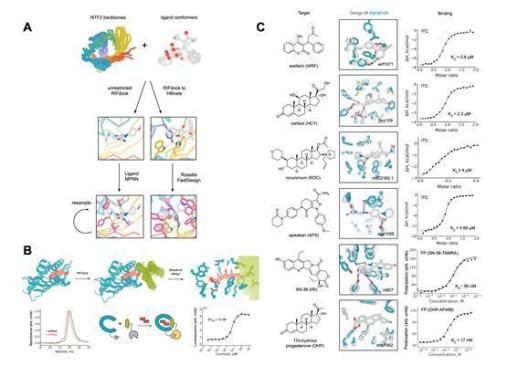 KAIST researchers and Nobel winner David Baker develop AI protein sensors for cortisol SEOUL, April 09 (AJP) - Researchers in South Korea have successfully used artificial intelligence to design proteins that can detect specific chemicals, including stress hormones, through a collaboration project between the Korea Advanced Institute of Science and Technology and 2024 Nobel laureate David Baker from the University of Washington, the prominent South Korean science institute said Thursday. The study demonstrates a way to create functional biosensors from scratch, a process known as de novo design. Unlike previous methods that relied on modifying proteins already found in nature, this artificial intelligence-driven approach allows scientists to build custom proteins for specific tasks, such as medical testing or environmental monitoring. Specifically, the Korea Advanced Institute of Science and Technology (KAIST) team created a protein that selectively identifies cortisol, a hormone closely linked to stress levels. By turning this protein into a working sensor, the researchers addressed a long-standing technical hurdle: designing proteins that can recognize small, complex molecules with atomic-level accuracy. The technology could eventually lead to new tools for early disease diagnosis by spotting biomarkers in blood samples. It also has potential applications in the real-time monitoring of air and water quality or the development of more targeted medical treatments. To design the proteins, the team developed an AI model that accounts for how amino acids interact with different chemicals. They tested the model by designing six different types of proteins for various drugs and metabolites, verifying the results through laboratory experiments and crystal structure analysis. Lead researcher Lee Kyu-ri joined the KAIST Department of Biological Sciences in February 2025 after working as a staff scientist in the Baker laboratory in the United States. She now leads her own protein design lab, focusing on creating artificial enzymes, sensors, and RNA-recognition proteins. The research was highlighted during a visit by David Baker to the KAIST campus on Thursday. "This research experimentally proves that we can use AI to design proteins that precisely recognize specific compounds," Lee said. "We plan to expand this technology to various fields such as disease diagnosis and the development of new drugs." The project was supported by the Ministry of Science and ICT (MSIT) through the InnoCORE program. This initiative is designed to help South Korean researchers collaborate with global experts on advanced AI technologies. KAIST President Lee Kwang-hyung noted that the collaboration with David Baker resulted in a significant achievement for AI-based protein design. The university currently manages several research units focused on aerospace, manufacturing, and drug discovery under the InnoCORE program. (Reference Information) Journal/Source: Nature Communications Title: Small-molecule binding and sensing with a designed protein family Link/DOI: https://bit.ly/4srcGAi 2026-04-09 09:42:50
 -
 Viet Nam readies financial hub pivot as Hanoi targets high-income status SEOUL, April 08 (AJP) - Viet Nam has secured 10 billion dollars in initial investment commitments as it formally launched a dual-hub international finance center, marking a decisive shift from its decades-long reliance on low-cost manufacturing. The project, which anchors operations in Ho Chi Minh City and Da Nang, signals the most significant economic restructuring since the Doi Moi reforms of the 1980s. This pivot toward the Viet Nam International Finance Center (VIFC) represents a strategic gambit to escape the middle-income trap that has historically stifled developing economies. By establishing specialized zones, Hanoi aims to modernize its economic architecture and position itself as a sophisticated, technology-driven alternative to established regional nodes. The strategy operates on a one-center, two-hub model designed to leverage the distinct geographic and economic strengths of the nation. Ho Chi Minh City, the commercial engine of the south, is designated as the primary gateway for international capital. Development is concentrated in the Thu Thiem district, which will house investment banks, private equity firms, and venture capital outfits to facilitate cross-border transactions and initial public offerings. In contrast, Da Nang is positioned as a center for green finance and technological innovation. The coastal city will host regulatory sandboxes for fintech, blockchain, and financial artificial intelligence. This division of labor allows Hanoi to target emerging sectors such as renewable energy projects and environmental, social, and governance funds, carving out a niche in the global market. Rather than attempting to replicate the traditional models of Singapore or Hong Kong, officials are pursuing a leapfrog strategy centered on digital assets and the data economy. To attract global institutional players, the government has introduced Decree 323 and Decree 324, which grant the VIFC unprecedented levels of autonomy. These frameworks mandate the adoption of International Financial Reporting Standards and Basel-compliant risk supervision to ensure institutional stability and transparency. Fiscal incentives for the project are among the most aggressive in Southeast Asia. Priority ventures in fintech, semiconductor technology, and green finance are eligible for a 10 percent corporate income tax rate for 30 years. Other qualifying projects will receive a 15 percent rate for 15 years. To address the need for specialized labor, the state has introduced a golden visa program providing up to 10 years of residency and personal income tax exemptions for international experts. The initiative arrives as global investors seek to diversify portfolios amid shifting supply chains in Asia. South Korean conglomerates and financial institutions in Seoul, which have historically treated the country as a manufacturing base, are now evaluating expanded roles in the burgeoning services sector. The 10 billion dollars in early investment pledges are primarily directed toward aviation finance and digital data infrastructure. The Ministry of Planning and Investment continues to finalize the technical implementation of the regulatory sandbox for digital asset trading. For global investors, participating in the VIFC represents more than just simple market expansion; it signifies entering the early stages of a mid-to-long-term growth cycle. At this current juncture, as the institutional framework, infrastructure, and financial ecosystem are taking shape in earnest, institutions that establish a preemptive presence will secure a strategic advantage. This early entry will allow them not only to secure prime locations and forge key partnerships but also to lead in establishing market standards. The core message from Viet Nam's senior leadership is clear. Rather than relying on the outdated approach of competing directly with established, traditional financial hubs, the goal is to build a "smart, digital, and green" financial center rooted in Vietnam's unique strengths. This mindset demonstrates both confidence and a pragmatic perspective. Instead of simply replicating the models of Singapore or Hong Kong, Viet Nam has chosen a strategy that integrates digital technology, green finance, fintech, artificial intelligence (AI), and the data economy right from the initial stages. This is a highly differentiated approach, characteristic of a "next-generation financial hub" that responds flexibly, openly, and swiftly to global shifts. 2026-04-08 15:17:10
 -
 Pyongyang launches ballistic missile as military posture persists despite diplomatic opening SEOUL, April 08 (AJP) - North Korea fired a ballistic missile into the East Sea on Wednesday, marking the second consecutive day of weapons testing and signaling that military provocations remain a cornerstone of its regional strategy. The launch follows a reported failure on Tuesday and comes at a volatile moment in inter-Korean relations, effectively dampening hopes for a de-escalation after a rare moment of rhetorical civility between the two capitals. The back-to-back launches disrupt a brief window of diplomatic curiosity that emerged after South Korean President Lee Jae Myung expressed regret over the infiltration of drones into northern airspace. Kim Yo Jong, the influential sister of the North Korean leader Kim Jong Un, responded to the gesture by quoting her brother’s description of the president as a bold and honest man. However, the kinetic reality on the peninsula suggests that while Pyongyang may appreciate a change in tone from Seoul, it has no intention of pausing its march toward advanced strike capabilities or altering its official designation of the South as a primary hostile state. The Joint Chiefs of Staff confirmed the Wednesday morning launch but provided few immediate details as intelligence officials in Seoul and Washington began analyzing the flight data. The move appears to be a direct follow-up to an attempted launch from the Pyongyang area on Tuesday, which South Korean authorities believe ended in failure shortly after liftoff. Such rapid-fire testing is often utilized by the North to verify technical corrections after a setback, ensuring that its missile programs maintain a credible threat profile regardless of the political climate. This cycle of weaponry follows a period of heightened friction. The drone incident, which Pyongyang claimed was a violation of its sovereignty, had initially brought the two nations to the brink of a tactical exchange. The subsequent apology from Lee Jae Myung was seen by international observers as a pragmatic attempt to lower the temperature, a move that Kim Yo-jong’s statement appeared to validate. Yet, the presence of projectiles in the sky less than twenty-four hours after that statement suggests a calculated duality in northern policy. The persistent testing underscores the geopolitical reality that the North has largely abandoned the pursuit of reunification in favor of a two-state doctrine. By continuing its weapons program even after a diplomatic olive branch, the regime demonstrates that its military objectives are decoupled from the fluctuating moods of the Blue House. For Washington, the launches serve as a reminder that the peninsula remains a primary flashpoint, regardless of the domestic political shifts within Seoul. The South Korean military has maintained a heightened state of readiness since the first launch on Tuesday. Officials in Seoul indicated that they are closely monitoring further movements in the North, particularly as the regime often uses these windows of tension to test the resolve of the alliance between the United States and South Korea. The Joint Chiefs of Staff stated that the military is maintaining a full readiness posture while sharing information related to the North Korean launches with American authorities. 2026-04-08 11:12:26