

Journalist

Park Sae-jin, Han Jun-gu
swatchsjp@ajunews.com
-
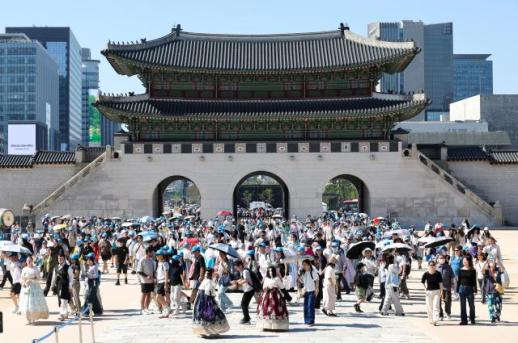 Thousands explore South Korean palaces during central Seoul walking event SEOUL, May 31 (AJP) - More than 2,000 people walked through the historic royal palaces of central Seoul on Sunday to experience South Korean traditional culture. The event aimed to showcase the harmony between the capital city's modern landscape and its historical sites. The 2026 Seoul Foreigner Palace Walking Contest, hosted by Aju News Corporation, brought together about 1,200 foreign nationals and 800 local citizens. The seven-kilometer circular route started at Gwanghwamun Plaza and guided participants through Gyeongbokgung, Changdeokgung and Changgyeonggung palaces before passing Jogyesa temple. Organizers expanded the event this year to include K-culture photo zones and cultural performances. Participants tried on traditional royal garments and interacted with setups replicating a royal clinic and historical palace guards. Lim Kwu-jin, president of Aju News Corporation, said the event serves as a meaningful time for people from various countries to naturally mingle with the history and culture of Seoul. "The palaces are Seoul's most precious cultural heritage and symbolic spaces that show the history and dignity of South Korea," Lim said. The event drew attendees from countries including China, Japan, the United States, France, India, Vietnam and Mexico. Several foreign diplomats participated in the trek and noted the visual impact of the preserved architecture. Jacques Flies, the Ambassador of Luxembourg to South Korea, said the curated walk gave him a deeper connection to the country's history. "I especially liked seeing the old palaces surrounded by the modern city," Flies said. "It creates a very nice bridge between the past and the present, and actually between the history of South Korea and the current state and future of South Korea." Wray Mulendema Hamweene, minister counsellor at the Embassy of Zambia in South Korea, highlighted the structural longevity of the traditional buildings. "Today, I had the opportunity to appreciate South Korea's rich culture," Hamweene said. "The many people wearing hanbok in the palace were very impressive." "Where else in the world can you find palaces like these? They are truly unique," Hamweene said. "Although these palaces were built hundreds of years ago, they look as if they were built only yesterday. The architectural technology of the past is truly astonishing." 2026-05-31 13:57:43
 -
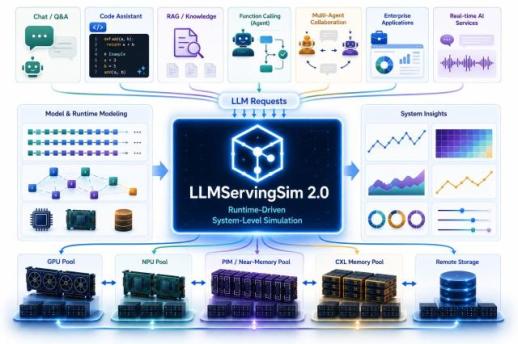 South Korean researchers develop virtual simulator for AI servers SEOUL, May 29 (AJP) - Researchers at the Korea Advanced Institute of Science and Technology in South Korea have developed a virtual platform to test the performance of large artificial intelligence server setups without building physical systems, the prominent research institute said Friday. Created by a team led by Professor Park Jong-se at the Korea Advanced Institute of Science and Technology (KAIST) School of Computing, the software is called LLMServingSim 2.0. It models the complex hardware and software interactions needed to run large language models. The tool allows developers to experiment with different designs and verify performance before buying expensive server equipment. Running large artificial intelligence models usually requires thousands of servers. Testing new chips or system layouts in the real world takes a lot of time and money. The new simulator solves this by copying tasks like data processing, request sorting, and memory use on a regular computer. The technology goes beyond traditional graphics processing units to support newer chips. Users can test neural processing units and memory chips that handle calculations directly within a virtual data center. This helps researchers see if a certain chip will speed up processing, use less power, and stay stable across huge server networks. It can also analyze setups where different server resources are physically separated but connected over a network. The research was led by master's students Cho Jae-hong and Choi Hyun-min. It won the best paper award at the IEEE International Symposium on Performance Analysis of Systems and Software (ISPASS) 2026. The simulation tool has been released to the public as open-source software so businesses and schools can use it freely. "AI service competitiveness is determined not only by the model itself but also by the infrastructure technology that operates it stably and efficiently," Park said. "I hope this simulator will serve as an important foundation for researchers and the industry to develop next-generation AI infrastructure more quickly and efficiently." (Reference Information) Journal/Source: IEEE International Symposium on Performance Analysis of Systems and Software (ISPASS) 2026 Title: LLMServingSim 2.0: A Unified Simulator for Heterogeneous and Disaggregated LLM Serving Infrastructure Link/DOI: 10.1109/ISPASS69572.2026.00012 2026-05-29 15:54:20
 -
 Kookmin University selected to lead state-funded artificial intelligence material research hub SEOUL, May 29 (AJP) - A research team from South Korea's Kookmin University has been selected to lead a state-funded research hub focused on developing artificial intelligence-based materials for next-generation displays, the prominent University said Thursday. The initiative is part of the 2026 Nano and Material Development Project Material HUB, organized by the Ministry of Science and ICT (MSIT) and supported by the National Research Foundation of Korea (NRF). Under the direction of principal investigator Professor Kim Young-hoon, the university will collaborate with the Korea Institute of Industrial Technology (KITECH), Daegu Gyeongbuk Institute of Science and Technology (DGIST), Chungbuk National University (CBNU), Sungkyunkwan University (SKKU) and the Korea Photonics Technology Institute (KOPTI). The project focuses on building a metal-halide color conversion material data hub and developing intelligent design technologies for materials and manufacturing processes. The research team will use an artificial intelligence closed-loop system and a high-throughput screening platform to reverse-engineer ultra-thin perovskite materials for augmented and virtual reality metaverse displays. By establishing a data-driven integration system, the researchers aim to optimize the synthesis of luminescent materials for high brightness and color purity while shortening the development time for new materials. The government-led Material HUB initiative uses data and artificial intelligence across the entire material research cycle, from exploratory design to performance implementation, to secure essential new materials early. The Kookmin University team, which includes professors Do Young-rag, Jung Jun-young, Jeon Ho-je and Cho Ki-sub, previously developed reverse-engineering technologies for high-efficiency perovskite materials and is currently expanding its focus to eco-friendly, lead-free alternatives. The team recently published related findings on chemical reaction predictions and next-generation displays in academic journals, including Nature, Advanced Materials and Nature Communications. 2026-05-29 14:48:31
 -
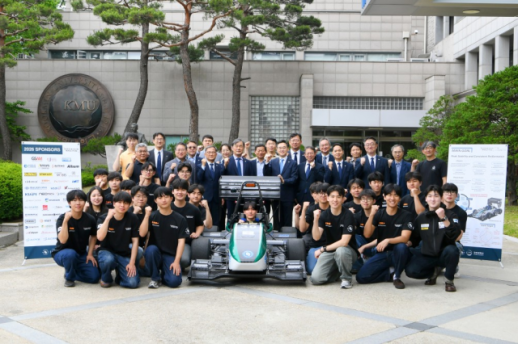 Kookmin University student racing team KORA unveils EV ahead of international competition SEOUL, May 28 (AJP) - Kookmin University student racing team Kookmin Racing (KORA) unveiled its new electric formula vehicle, F-26, during a launch ceremony on campus in Seoul, South Korea, ahead of an international engineering competition, Kookmin University said Thursday. KORA will participate in the 2026 Formula SAE Electric, an international student vehicle design competition hosted by SAE International (SAE). The event will take place from June 16 to June 20, 2026, at the Michigan International Speedway in the United States. KORA previously achieved a global fourth-place and Asia first-place finish at the 2015 event. During the ceremony held on May 27, 2026, the team conducted a test drive of the F-26, demonstrating its cornering performance and overall engineering to attending university officials, faculty and students. "The F-26 vehicle is an electric formula car developed with the goal of optimal stability and consistent performance based on our past experience participating in the competition," Cho Hyun-sung, project manager for KORA, said. "We will prove our preparation and efforts on the world stage with results." "KORA is a team with sufficient skills, so if they succeed in finishing the race based on the vehicle's stability, we can expect top-tier results," Shin Sung-hwan, dean of the College of Automobile and Mobility, said. "I hope the vehicle the students created with their best efforts completes the race stably on the international stage and leads to good results," Na Chang-soon, vice president of academic affairs, said. "Above all, I hope the entire process of participating in the competition concludes safely." 2026-05-28 16:15:01
 -
 S. Korean researchers resolve clogging in water electrolysis to improve green hydrogen production SEOUL, May 28 (AJP) - A team of researchers in South Korea has developed a new structural design for water electrolysis systems that prevents gas bubbles from obstructing energy flow, the Korea Advanced Institute of Science and Technology said Thursday. The research team, which includes scientists from Korea Advanced Institute of Science and Technology (KAIST), the Korea Research Institute of Chemical Technology (KRICT), and Konkuk University, redesigned the internal pathways of the catalyst layer. Using two-dimensional mesoporous carbon nanosheets, they created straight channels that allow water and gases to pass through rapidly. This prevents the traditional problem of bubbles accumulating inside the device and obstructing the chemical reaction. The researchers attached ultrafine ruthenium nanoclusters to the carbon surface to accelerate the hydrogen generation rate and protect the catalyst from damage over time. Testing showed the system reached a current density of 17.1 amperes per square centimeter at 80 degrees Celsius, exceeding the 2026 targets established by the United States Department of Energy. The device maintained stable operation for more than 1,000 hours using 0.09 milligrams of ruthenium per square centimeter, demonstrating high performance with a significantly reduced amount of the expensive noble metal. Water electrolysis is widely considered an essential technology for the transition to carbon neutrality, but high production costs and system inefficiencies have slowed its commercial adoption. By modifying how materials flow through the system rather than just changing the active catalyst material, the new design offers a method to make large-scale green hydrogen production more economically viable. The study, led by first authors Byun Jae-ho and Ban Min-kyung, was published online in the journal Joule on May 22, 2026. "This research is a technology that increases water electrolysis efficiency by designing not only the catalyst itself but also the path through which energy flows," Professor Lee Jin-woo of KAIST said. "We expect it to advance the commercialization of eco-friendly hydrogen production in the future as high-efficiency green hydrogen production is possible with only a small amount of noble metals." (Reference Information) Journal/Source: Joule Title: Outperforming water electrolysis through catalyst layer structuring with defective 2D mesoporous carbon Link/DOI: 10.1016/j.joule.2026.102478 2026-05-28 13:56:05
 -
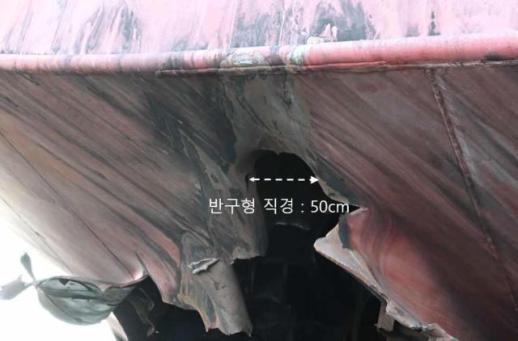 South Korea links Iranian missile to cargo ship attack SEOUL, May 27 (AJP) - The South Korean Ministry of Foreign Affairs announced Wednesday that an older Iranian anti-ship missile is highly likely to have struck the cargo ship HMM Namu earlier this month, signaling a sharp escalation in diplomatic tensions. The conclusion marks a decisive shift from the stance of strategic caution maintained by South Korea since the May 4 attack in the Strait of Hormuz. According to earlier government briefings and maritime records, the HMM Namu, a 38,000-ton multipurpose heavy-lift cargo ship delivered to the South Korean shipping firm HMM in early 2026, was anchored near the United Arab Emirates when two unidentified flying objects struck its stern, triggering an engine room explosion and fire that disabled the ship without causing a catastrophic hull breach. Foreign ministry investigators determined that the weapon used in the incident was likely an Iranian Noor anti-ship missile. Officials noted that an engine component recovered from the explosion site is highly similar to Iranian-made turbojet engines. Government officials stated that multiple pieces of physical evidence are now pointing toward Iran as the entity behind the attack. In response to the forensic findings, South Korea plans to summon the Iranian ambassador to lodge a strong protest and demand formal guarantees against any recurrence. The ministry did not disclose the specific timing for the official diplomatic summons. Officials also noted that the intentionality of the attack remains difficult to confirm unless the governing authority or group responsible explicitly admits to the action, while Iran has vehemently denied any involvement in the maritime incident. 2026-05-27 17:22:58
 -
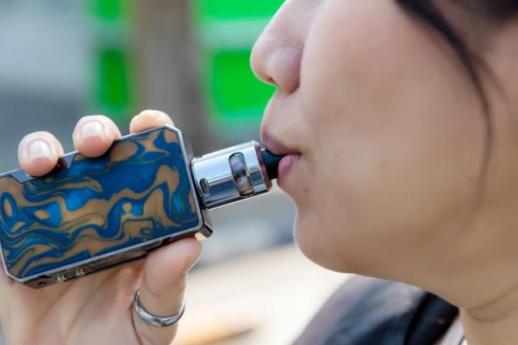 Survey shows South Korean smokers harbor misconceptions about electronic cigarettes SEOUL, May 27 (AJP) - Nearly half of South Korean smokers trying to quit believe electronic cigarettes help them stop smoking, despite strong warnings from medical experts that the devices hinder cessation efforts. The findings were released Wednesday at a forum in Seoul organized by the Korean Society for Research on Nicotine and Tobacco and the Korea Medical Broadcast Journalists Association. Researchers polled 500 smokers aged 25 to 59 who had attempted to quit in the past year or plan to do so within the next six months. The survey showed 43 percent of respondents view electronic cigarettes as a useful tool for quitting, while 23.5 percent intend to use them for this purpose in the future. Another 20 percent have already tried using them to quit, primarily hoping to reduce withdrawal symptoms and manage their daily cravings. Medical experts at the forum dismissed these beliefs as widespread misunderstandings. Cho Hong-jun, a professor emeritus at the University of Ulsan College of Medicine, noted that about 70 percent of smokers who use electronic cigarettes to quit fail to do so, continuing to use the devices for over six months. He added that people who use both conventional and electronic cigarettes have only a 5 percent chance of transitioning entirely to electronic versions after two years. Instead, up to 80 percent of these dual users simply revert to smoking regular cigarettes. "Long-term studies show electronic cigarette users are highly likely to become dual users, and the quitting effects remain uncertain," Cho said. "Because the evidence that electronic cigarettes are less harmful than conventional ones is unclear, it is desirable to regulate all tobacco products equally." The survey also highlighted that many smokers switch to electronic devices because they smell less and seem less harmful to the body. However, Lee Sung-kyu, head of the Korea Center for Tobacco Control Research and Education, warned that using heated tobacco products indoors can spike nicotine concentrations up to 86 times the acceptable health limit. Lee noted that public perception is significantly detached from scientific reality. "Just because it lacks a smell or has a sweet scent does not mean it is safe," Lee said. The forum also addressed public confusion surrounding nicotine replacement therapies, which are legally classified as over-the-counter drugs rather than tobacco products in South Korea. The survey found 48 percent of respondents who knew about the therapies did not understand how they helped, while 46 percent mistakenly believed the nicotine in these medical treatments is identical to the nicotine in cigarettes. Choi Su-jeong, a family medicine professor at Gachon University Gil Medical Center, stressed that equating the two products is a clear error. "Following the correct usage of different formulations like patches, gum, and candy, and utilizing combination therapy as needed, can further increase the success rate of quitting smoking," Choi said. 2026-05-27 15:43:51
 -
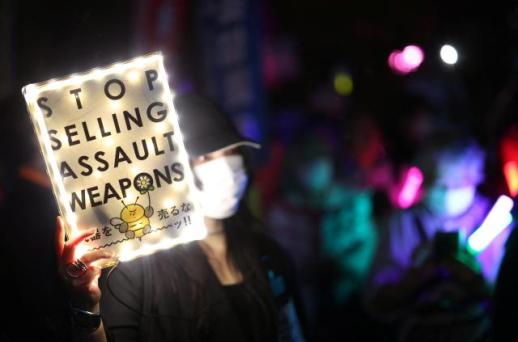 ASIA INSIGHT: Hidden danger behind Japan's new defense plan By mixing business supply lines and robot drones into its military strategy, Japan is turning factories into front lines. SEOUL, May 27 (AJP) - When Chinese officials stopped shipping rare minerals to Japan last year, nobody saw a military attack. There were no warplanes in the sky and no warships at sea. Instead, the blow hit Japan right on its factory floors and technology labs. It was a silent punishment. Japan's Prime Minister, Takaichi Sanae, had just warned China about Taiwan, so China hit back where it hurt. For decades, Japan thought national security was just about soldiers and guns, while business was separate and peaceful. That dream ended the moment China cut off the minerals. Japan learned that if you cannot get the parts you need to build things, you cannot defend your country. The answer to this problem came this week from Japan's ruling political party. Leaders revealed a new plan to change the country's defense strategy by the end of the year. They call this new idea collective autonomy. The name sounds boring on purpose so it does not scare voters. But it marks a massive shift in how a peaceful country prepares for war. It means Japan realizes it cannot protect its borders without protecting its trade. They are turning normal trade deals into tools for global competition. This shift is not just an emergency reaction to China. It is a complete blending of business and war. By putting trade security directly into military rules, Japan is giving up on its long history of peace. They are building a high-tech fortress. The goal is to partner closely with Western allies for safety, while Japanese factories switch to building smart weapons and computer chips. In doing so, Japan is erasing the line between everyday business and actual combat. The name collective autonomy actually has a funny contradiction. Autonomy means standing on your own feet. But Japan's plan admits that it cannot secure its factories alone. To survive China's trade threats, Japan is rushing to make friends. The Prime Minister went to Vietnam, expanded trade deals, and worked out a mineral agreement with Washington. They are building a shield. Together with Europe, Japan is setting up new rules to block cheap goods from China. It is a group of countries working together to isolate a rival before any real weapons are fired. The real change shows up in how Japan plans to fight. The ruling party wants the military to learn from the wars in Ukraine and the Middle East. The old idea of brave pilots and big navy ships is being replaced by computers. The new plan calls for putting artificial intelligence into the military immediately. This will make decisions happen much faster. Satellites will send pictures to computers, and AI will choose the targets before a human can even think about it. This means Japan will soon use huge swarms of robot drones. Lawmakers want to build these unmanned planes, boats, and vehicles at home within five years. This is a massive change for Japanese factories. By building their own long-range drones, Japan gets a powerful weapon without looking like an aggressive invader. These cheap, robot swarms can defend islands easily. The factory line has become the front line, and businesses are shifting to make weapons at a massive scale. To pay for all this, Japan is throwing away its old budget rules. For a long time, Japan spent only about one percent of its money on the military. Now, they want to match neighbors like South Korea and Australia, or Western countries in NATO, which spend two or three percent. Japan is spending big to become one of the top military powers in Asia. But mixing business, trade, and war is a dangerous game. When giant electronics and car companies start making their money from military contracts, the country suddenly needs tension to keep those factories running. Normal citizens lose their voice because these big choices are made by a few leaders behind closed doors. Japan thinks this new plan is a shield to protect its factories. But as computers take over and factories churn out robot weapons, Japan might be building a war machine it can no longer control. 2026-05-27 14:45:31
 -
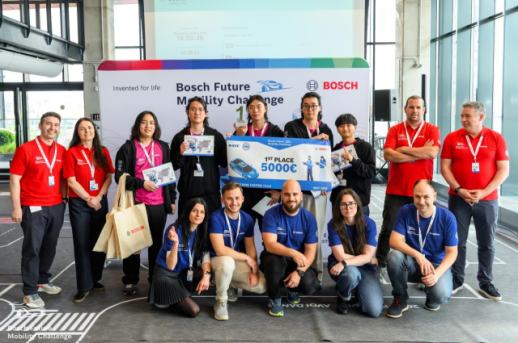 South Korean joint university team wins Bosch Future Mobility Challenge 2026 SEOUL, May 27 (AJP) - A joint student team from Kookmin University and other prominent institutes won the top prize at the Bosch Future Mobility Challenge 2026, an international autonomous driving competition held in Cluj-Napoca, Romania. The team outperformed dozens of international competitors during the five-day event, the university said Wednesday. The competition, which ran from May 16 to May 20, 2026, invited undergraduate and master's degree students to develop autonomous driving algorithms for 1:10-scale model cars. The vehicles were tested for their ability to navigate real-world traffic scenarios on a miniature smart-city track. A total of 57 teams from around the world participated in the event. The winning team comprised students participating in the fourth cohort of SEA:ME, a mobility software training program jointly operated by KMU and the Volkswagen Group Woori Foundation (VGWF). The roster included Kim Ki-hoon and Oh Young-kyo from KMU, Jang Dong-min and Choi Min-hyuk from Inha University (IU), and Kang Ju-heon from Ajou University (AU), under the guidance of Professor Kim Jong-chan. The team earned high marks for developing a custom localization algorithm that maintained precise and stable driving performance even when local network and GPS signals became unstable. The SEA:ME program operates under the Convergence and Open Sharing System (COSS) future automobile consortium to provide selected students with specialized mobility software education and training opportunities in Germany. The victory builds on previous achievements by earlier cohorts, which included a third-place finish in 2024 and the Best Newcomers Award in 2025. "We have gained the confidence and conviction that future talents who will take responsibility for South Korea's autonomous driving technology can lead the world," said Professor Shin Sung-hwan, the director of the COSS Future Automobile Consortium. KMU students Kim and Oh noted that collaboration was key to their performance. "The effort and cooperation of team members who challenged themselves to the end amidst fierce competition became the driving force of our victory," the students said. "We were able to learn and grow a lot through the competition." 2026-05-27 14:22:10
 -
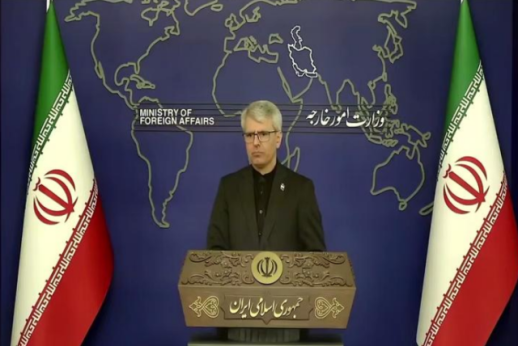 Iran denies seeking transit tolls in Strait of Hormuz SEOUL, May 27 (AJP) - The Iranian government rejected allegations that it plans to impose transit tolls on commercial vessels navigating the Strait of Hormuz, announcing a joint maritime security mechanism with Oman, the Embassy of Iran in Seoul said Monday. Any financial or logistical shifts in the strait directly impact South Korea, which faces a deepening energy security crisis. Thanks to the country's effort to diversify its sources for crude oil, South Korea's reliance on Middle Eastern crude oil recently fell below 50 percent for the first time, dropping from 69.1 percent last year to 48.5 percent, as the ongoing blockade and military risks force importers to seek alternative routes. The Embassy of Iran in the Republic of Korea said in a statement that the Iranian Ministry of Foreign Affairs spokesperson Esmaeel Baghaei explained that potential charges would only cover operational costs for services related to maritime navigation, environmental protection, and shipping safety, stressing that these measures should not be interpreted as passage fees or restrictions on international shipping. Baghaei rejected recent claims by United States officials accusing Iran of attempting to nationalize the critical energy corridor, describing the accusations as misleading and inconsistent with international law. The diplomatic exchange occurred during an ongoing war between the U.S. and Iran, which officially began on February 28. The conflict has severely restricted navigation in the region, culminating in a May 4 attack on the South Korean-operated bulk carrier HMM NAMU. The newly built 38,314-ton vessel was struck by unidentified airborne objects while anchored near the United Arab Emirates, rendering the ship inoperable but resulting in no casualties among the 24 crew members. Following the attack, U.S. President Donald Trump accused Iran of executing the strike, an allegation Tehran formally denied. In response to the incident, the South Korean government dispatched a special investigation team to Dubai, where the disabled vessel was towed for inspection. The proposed security mechanism being developed by Iran and Oman aims to preserve freedom of international trade and prevent military misuse of the waterway. "Iran is not seeking to impose transit tolls in the Strait of Hormuz," Baghaei said. 2026-05-27 13:41:49