


Latest by
-
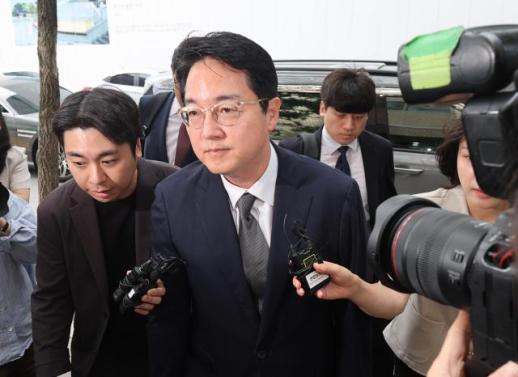 Former Prosecutor General Shim Woo-jung Appears for Special Investigation Shim Woo-jung, the former Prosecutor General, appeared for questioning on June 24 as part of a special investigation team probing allegations of involvement in a rebellion during the martial law declared on December 3, 2024. Shim arrived at the special investigation office in Gwacheon with a stern expression. He did not respond to reporters' questions about whether he directed prosecutors to be dispatched to the martial law command or what instructions he received from former Justice Minister Park Sung-jae as he entered the office. The special investigation team is currently questioning Shim as a suspect regarding serious charges related to rebellion. Shim is accused of considering the dispatch of prosecutors to the joint investigation headquarters following instructions from Park on the day martial law was declared. Before the declaration of martial law, Park visited the presidential office in Yongsan and returned to the Ministry of Justice after a Cabinet meeting to convene a meeting with senior officials. According to the investigation, Park instructed ten officials, including the heads of various departments at the Ministry of Justice, to consider dispatching prosecutors to the joint investigation headquarters and also called for a travel ban team. After the meeting, it was revealed that Park spoke with Shim three times between 11 p.m. on the day of the martial law declaration and the early hours of the following day. The court that previously handled Park's trial also indicated during the proceedings that there were suspicions regarding Shim's involvement in the rebellion. On June 22, the 33rd Criminal Division of the Seoul Central District Court, presided over by Judge Lee Jin-gwan, sentenced Park to 25 years in prison for charges including rebellion-related duties, stating that Park had instructed Shim to dispatch personnel, and Shim ensured compliance from the relevant departments. According to the Prosecutors' Office Act, the Minister of Justice must consult with the Prosecutor General before dispatching prosecutors to external agencies. The court determined that there was sufficient likelihood that Park directed Shim to assist with personnel dispatch. Previously, the special investigation team led by Jo Eun-seok dismissed allegations against Shim regarding his involvement in the martial law, but the new special investigation team believes there is enough evidence to warrant further investigation. Given the various allegations, the special investigation team is expected to conduct a comprehensive inquiry into the issues raised against Shim. Additionally, Shim faces charges of abuse of power related to the alleged cover-up of stock manipulation involving Deutsche Motors and the Dior bag scandal linked to Kim Geon-hee. The special investigation team is also investigating former senior prosecutors, including Lee Chang-soo, the former head of the Seoul Central District Prosecutors' Office, Jo Sang-won, the former deputy chief prosecutor, and Choi Jae-hoon, the former head of the anti-corruption investigation division, for their involvement in the dismissals of cases under Shim's direction.* This article has been translated by AI. 2026-06-24 11:20:00
 -
 Samsung and SK Hynix Face Bubble Concerns Amid AI Semiconductor Boom The KOSPI index has been experiencing significant fluctuations, heightening market anxiety. In particular, the surge in stock prices for Samsung Electronics and SK Hynix, fueled by the AI semiconductor boom, has raised concerns about a potential bubble. The market has seen daily shifts in market capitalization amounting to tens of trillions of won, prompting questions about whether prices have risen too high and if it might be time to realize profits.While it is easy to overlook certain aspects when focusing solely on stock price movements, it is essential to remember that stock prices ultimately reflect corporate value. To determine whether a bubble exists, one must first assess the companies' ability to generate profits rather than just their stock prices. A frequently cited reason for bubble concerns is the overwhelming market capitalization of Samsung Electronics and SK Hynix, which recently surpassed 50% of the total KOSPI market capitalization, effectively controlling the domestic stock market.Other figures must also be considered. According to projections from the securities industry, the combined operating profit of Samsung Electronics and SK Hynix is estimated to be between 600 trillion and 630 trillion won this year. As of the first quarter, these two companies accounted for 76% of the total operating profit of all KOSPI-listed companies. This indicates that it is not unusual for their market capitalization share to increase based on performance. The rise in stock prices reflects actual profit-generating capabilities rather than mere investor expectations.Traditionally, memory semiconductors have been classified as a typical cyclical industry, responding to demand from smartphones and PCs. Investors have made decisions based on the cycles of boom and bust.However, with the intensification of competition in generative AI and data centers, High Bandwidth Memory (HBM) has become an essential infrastructure for the AI industry. Global tech giants, including NVIDIA, are pouring substantial funds into expanding AI server capacity. As AI models grow larger, the demand for high-performance memory also increases. This is not merely a recovery in market conditions; a new demand market is forming. This is why securities firms are continuously raising their performance forecasts for Samsung Electronics and SK Hynix, with KB Securities predicting that Samsung Electronics will achieve an operating profit of 1,471 trillion won from 2026 to 2028.However, not all perspectives are optimistic. U.S. semiconductor regulations, China's technological advancements, and the potential for a global economic slowdown could all serve as variables. If competition in the HBM market intensifies, the profitability may fall short of expectations. Stock prices could also experience significant corrections at times.Nonetheless, the possibility of corrections and bubble concerns are different issues. A bubble refers to a situation where prices rise abnormally, regardless of performance. Many analysts believe that the growth in performance of Samsung Electronics and SK Hynix is outpacing the speed of their stock price increases. Compared to global AI companies like NVIDIA, their price-to-earnings ratios (PER) remain relatively low, which is why there are analyses suggesting they are still undervalued among domestic and international institutional investors.It is difficult to discuss bubbles solely based on market capitalization share. Rather, it is a natural outcome that the semiconductor industry, a key beneficiary in the AI era, drives the stock market due to its performance. It is essential to examine whether Samsung Electronics and SK Hynix, which account for 60-70% of the total operating profit of the KOSPI, are receiving a fair evaluation.If there are concerns about excessive dependence on these two companies, the solution is clear: new industries and companies must be developed that can generate similar profits and value. The market moves based on profits, not expectations. 2026-06-24 11:16:00
 -
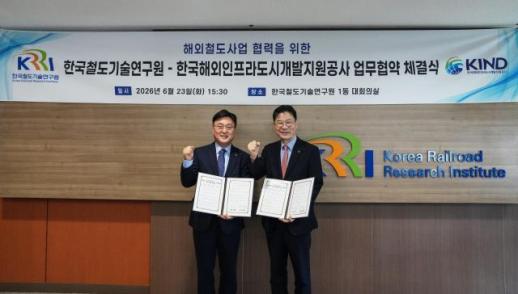 KIND and Korea Railroad Research Institute Collaborate on International Rail Projects Korea Overseas Infrastructure and Urban Development Corporation (KIND) and the Korea Railroad Research Institute have established a cooperative framework to expand their presence in the international rail market. On June 23, KIND announced that it signed a memorandum of understanding (MOU) with the Korea Railroad Research Institute at the Korea Railroad Research Institute's conference room in Uiwang, Gyeonggi Province, to collaborate on international rail projects. The agreement aims to enhance the contract competitiveness of domestic companies and support their overseas expansion amid the growing public-private partnership (PPP) projects in the international rail market. Under the MOU, the two organizations plan to collaborate in various areas, including sharing information on international rail project markets, building a collaborative network, providing consulting related to overseas rail projects, and conducting joint research. Prior to the signing, a business exchange meeting was held where both organizations shared updates on their international project initiatives and discussed future strategic cooperation plans. Kim Bok-hwan, President of KIND, stated, "Combining KIND's experience in overseas investment and development with the Korea Railroad Research Institute's advanced rail technology will significantly enhance our companies' competitiveness in the fierce international rail market. We will continue to work closely to ensure this MOU leads to tangible outcomes in discovering international rail projects and visible achievements for domestic companies abroad." Additionally, KIND participated in the 'Global Contract Plus Meeting' held by the Ministry of Economy and Finance's Export Plus Support Team on June 22 at the Korea Export-Import Bank in Yeouido, Seoul. The meeting addressed strategies for expanding overseas contracts in promising sectors such as eco-friendly and digital technologies in response to geopolitical uncertainties in the Middle East.* This article has been translated by AI. 2026-06-24 11:12:00
 -
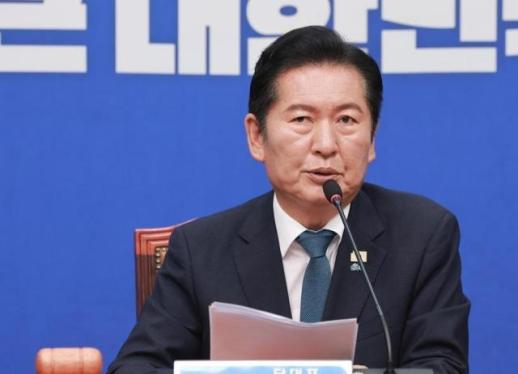 Factional Tensions Emerge as Jeong Cheong-rae Resigns as Party Leader Jeong Cheong-rae, a member of the Democratic Party, resigned from his leadership position on June 24, amid rising factional tensions during his final Supreme Council meeting. The pro-Myeong faction pressured for non-candidacy, while the pro-Cheong faction urged respect for the party leader. During the Supreme Council meeting held at the National Assembly, Jeong announced his resignation. His decision is interpreted as a hint at a potential re-election bid ahead of the party convention scheduled for August 17. Candidates are expected to resign to participate in the election preparation committee and election management committee, making his resignation anticipated. The Democratic Party plans to hold a party affairs committee meeting on June 26 to discuss related matters. Supreme Council member Kang Deuk-gu remarked during the meeting, "The party leader has faced a challenging year," but expressed disappointment over the lack of discussion with council members regarding the merger issue and by-election strategies. He stated, "The sovereignty of party members should not be concentrated in the hands of a few," and announced he would not run for the Supreme Council election, taking responsibility for the local election results. Previously, Supreme Council member Hwang Myeong-seon had also indicated his intention not to run, putting pressure on Jeong. Kang added, "The public did not vote for the Democratic Party in this local election; they voted for President Lee. The ruling party's leadership should focus on successful governance rather than competing with the president." In response, pro-Cheong faction member Moon Jeong-bok countered, stating, "President Lee is the captain of South Korea, and Jeong Cheong-rae is the captain of the Democratic Party." After the council members concluded their remarks, Jeong expressed his resignation, stating, "Jeong Cheong-rae and President Lee are eternal political partners. I, Jeong Cheong-rae, will be the one to protect President Lee until the end." This statement is seen as an effort to resolve factional conflicts and rally support ahead of the party convention. Meanwhile, with Jeong's resignation, Han Byeong-do has assumed the role of acting floor leader.* This article has been translated by AI. 2026-06-24 11:12:00
 -
 Croatia Secures First Win at 2026 North American World Cup with Victory Over Panama Croatia, which finished third in the 2022 FIFA World Cup in Qatar, secured its first victory in the group stage of the 2026 North American World Cup. On June 24, Croatia defeated Panama 1-0 in their second match of Group L at Toronto Stadium in Canada. After losing 4-2 to England in their opening match, Croatia improved to 1 win and 1 loss (3 points), moving up to third place in the group. Croatia will face Ghana in their final group match on June 28, which will determine their advancement to the knockout stage. In contrast, Panama, which lost 1-0 to Ghana in their first match, was eliminated from the group stage after their defeat to Croatia, finishing at the bottom of the group with two losses. Even if they win their final match against England, they cannot surpass Ghana in second place or Croatia in third due to the head-to-head rule. Croatia struggled to break through Panama's packed defense in the first half, failing to record a single shot on target. Croatian coach Zlatko Dalic made a tactical change at the start of the second half, bringing in forwards Ante Budimir and Andrej Kramaric to boost the attack. The substitution paid off in the 54th minute. Josip Stanisic delivered a precise cross from the right side of the penalty area, and Budimir, making a run, scored with a left-footed shot just nine minutes after coming on. Following the goal, Croatia's goalkeeper Dominik Livakovic made several crucial saves to keep Panama at bay. Thanks to Livakovic's outstanding performance, Croatia held on to their lead and secured a valuable three points. Meanwhile, Croatia's veteran midfielder Luka Modric marked his 200th international match during this game. After the match, he celebrated the milestone with his teammates.* This article has been translated by AI. 2026-06-24 11:12:00
 -
 GenAI phones to take 45% of global market in 2026 SEOUL, June 24 (AJP) - Smartphones equipped with generative artificial intelligence (GenAI) will account for nearly half of global shipments next year, even as a deepening memory shortage drives the broader market to its sharpest annual contraction in more than a decade. According to market researcher Counterpoint Research, GenAI-capable handsets are forecast to make up 45 percent of global smartphone shipments in 2026, up from 36 percent from a year earlier. The share is expected to climb to 52 percent in 2027, cementing the technology as a standard fixture across the market. The momentum, however, is unfolding against a bleak backdrop. Counterpoint expects total shipments to tumble 13.9 percent from a year earlier to 1.08 billion units in 2026, the lowest annual volume since 2013, as surging memory prices squeeze the supply of budget devices and stunt growth across the board. Mounting component costs are hollowing out the entry-level tier, the firm said, while premium GenAI models — better able to absorb the increases — tighten their grip. For the first time in years, buyers are likely to pay more for less. "GenAI capability has become standard in high-end smartphones priced above $400 wholesale, but it has yet to give consumers a compelling reason to upgrade," said Tarun Pathak, research director at Counterpoint. A persistent gap remains between phones that can run GenAI and users who actively tap those features, Pathak added, arguing that closing it will require practical, everyday use cases that deliver lasting value. 2026-06-24 11:11:46
 -
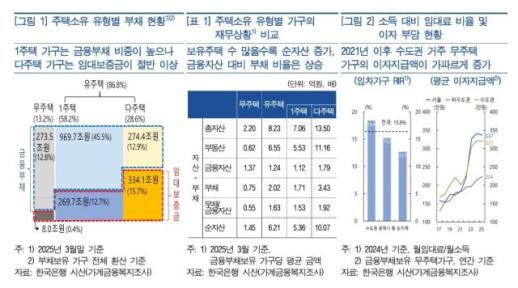 Households with Multiple Properties Hold Seven Times More Assets than Renters The Bank of Korea reported on June 24 that households with multiple properties possess significantly more assets than those without homes, yet their income-based debt repayment capacity is comparatively weaker. According to the Financial Stability Report released by the Bank of Korea, as of March last year, the net assets of multiple property households stood at 1.07 billion won, seven times that of non-homeowners, who had 145 million won. This disparity is attributed to the greater increase in the value of real estate assets compared to liabilities as the number of properties increases. However, the liquidity situation presents a different picture. The debt-to-financial asset ratio for homeowners is 1.63, significantly higher than the 0.55 ratio for non-homeowners. This indicates that while they hold substantial assets, their ability to manage debt with financial assets alone is relatively limited. The structure of debt also varies. Single-property homeowners tend to have a higher proportion of financial liabilities related to mortgage loans for home purchases, while multiple property owners rely more on rental deposits than on loans from financial institutions. Non-homeowners, on the other hand, have a larger share of loans for securing rental deposits and living expenses. Debt repayment capacity also differs based on property ownership. Multiple property households have a relatively favorable debt-to-asset ratio (DTA), but their debt service ratio (DSR) is higher than that of non-homeowners and single-property households. This suggests that despite their larger asset base, their ability to repay debt based on income is weaker. The vulnerability of low-income multiple property households is particularly concerning. As of March this year, the DSR for low-income multiple property households was 72.9%, more than double that of high-income multiple property households at 31.4%, and significantly above the financial authorities' management threshold of 40%. Delinquency rates also tend to rise with the number of properties owned. As of the end of the first quarter of this year, the average delinquency rate for multiple property owners was slightly higher than that of single-property owners, with borrowers owning three or more properties recording a delinquency rate of 1.35%, a relatively high level. In contrast, non-homeowners generally face lower overall debt repayment burdens, but the cost of living, particularly in the metropolitan area, is increasing. Recent rises in rental prices in the metropolitan area have led to a higher rental income ratio (RIR) for renting households compared to those in non-metropolitan areas, and the average interest payment amount is also rising rapidly. The Bank of Korea emphasized the need for policy responses that consider the characteristics of borrowers, as financial soundness varies based on housing ownership. It suggested that support should continue for vulnerable groups among non-homeowners, while maintaining loan accessibility for single-property households within their repayment capacity. Furthermore, it noted that multiple property households are significantly affected by fluctuations in market interest rates and housing prices, highlighting the need for proactive soundness management and orderly housing sales.* This article has been translated by AI. 2026-06-24 11:08:00
 -
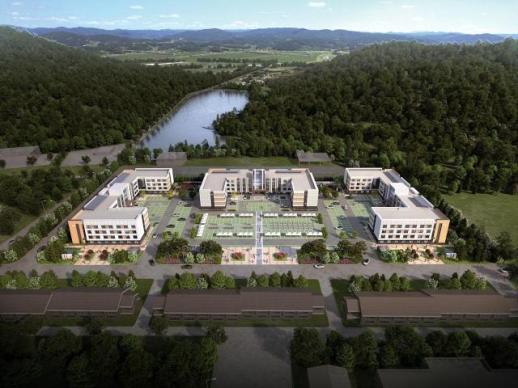 Dongbu Construction Wins 86.7 Billion Won Army Training Facility Project Dongbu Construction has expanded its competitiveness in the non-residential construction sector by securing a Build-Transfer-Lease (BTL) project for an Army training facility in Jangseong County, South Jeolla Province, commissioned by the Ministry of National Defense. On June 24, Dongbu Construction announced that it has been selected as the contractor for the "Army General Training Facility (Phase 2) BTL Project". The BTL model involves private entities constructing facilities, transferring ownership to the state, and then operating them while receiving long-term rental payments. This project aims to improve outdated military training facilities and enhance the living conditions and educational environment for trainees. The site is located in Hakseong-ri, Samsan-myeon, Jangseong County, where Dongbu Construction will build three trainee dormitories (one basement level and four above ground) and a mess hall (one ground level) with a total floor area of 24,602 square meters. The total project cost is approximately 86.7 billion won, with Dongbu Construction serving as the lead contractor. The construction period is expected to last about 31 months from the start date. Dongbu Construction emphasized that this contract signifies recognition of its project management capabilities and expertise beyond mere construction. Military training facilities are unique structures that require comprehensive consideration of living convenience, communal living flow, operational efficiency, security, and safety. The company believes that its proposed design for the efficient operation of the trainee dormitories and mess hall, along with its extensive experience in constructing public and military facilities, contributed to its successful bid. Recently, Dongbu Construction has been expanding its contracts in the non-residential construction sector, including military, education, and healthcare facilities. It currently holds a backlog of approximately 1.5 trillion won in this sector. Notable projects include the construction of the Defense Acquisition Program Administration headquarters and the BTL project for the Army Donghwa-cheon officer accommodations, as well as educational and research facilities at Seoul National University, Dongguk University, Jeonbuk National University, and the Institute for Basic Science, and healthcare facilities such as the National Cancer Center and National Fire Hospital. A representative from Dongbu Construction stated, "This contract reflects recognition of our capabilities in the specialized field of military training facilities. We will ensure quality and safety management to contribute to improving the living environment and educational conditions for trainees." Additionally, Dongbu Construction announced on June 18 that it has secured a contract for the construction of a new 6.3-kilometer, four-lane expressway from Geumsung-myeon, Jecheon City, to Dongmak-ri as part of the Jecheon-Yongwol Expressway construction project.* This article has been translated by AI. 2026-06-24 11:08:00
 -
 Early Heat and Recovery in Consumer Spending Boosts Convenience Store and Department Store Sales The early onset of heat and a recovery in consumer sentiment have led to increased sales at convenience stores and department stores, while online retailers also reported growth. However, large supermarkets continue to face declining sales, particularly in the food sector. According to the Ministry of Trade, Industry and Energy, the total sales of major retailers in May 2026 rose by 9.0% compared to the same month last year. Offline sales increased by 9.3%, while online sales grew by 8.8%. By sector, convenience stores and department stores drove the growth, while large supermarkets and super supermarkets (SSM) continued to struggle. Convenience store sales rose by 5.9%, and department store sales surged by 24.5%, marking 11 consecutive months of growth since July of last year. The increase in convenience store sales is largely attributed to the early heat. With temperatures rising faster than usual in May, demand for cold beverages, ice cream, and ready-to-eat meals expanded earlier than in previous years. In fact, sales of processed foods, including beverages, increased by 9.0% year-on-year in May, while ready-to-eat meals saw an 8.3% rise. The number of purchases and average purchase price also grew by 2.8% and 3.1%, respectively. Department stores experienced significant growth across all sectors, driven by an influx of foreign tourists and a recovery in consumer sentiment. Sales of international brands increased by 37.3%, with women's casual wear and home goods also seeing gains of 25.7% and 17.3%, respectively. In contrast, large supermarket sales fell by 5.1%. This marks three consecutive months of decline, following decreases of 15.2% in March and 6.6% in April. While sales of home appliances saw a slight increase during the family month, the ongoing struggles in the food sector have significantly impacted overall performance. SSMs also reported an 8.0% decline compared to last year, continuing a six-month streak of negative growth. The simultaneous decline of large supermarkets and SSMs reflects a structural shift in shopping habits, with demand dispersing towards online, proximity channels, and specialty stores. The persistent weakness in food sales, which is a core revenue source for these retailers, could lead to broader concerns about the competitiveness of offline grocery shopping channels. Online retail, focusing on electronics, children’s products, food, and services, grew by 8.8%. Electronics recorded the highest growth rate at 11%, followed by food at 10.1% and services at 10.0%. The growth trend in food and cosmetics continues, with cosmetics sales rising by 15.4%, marking the highest growth rate. Food sales increased by 9.7%, and home and living products grew by 8.1%, indicating stable growth. The trend towards online consumption is becoming more entrenched, with online sales accounting for 56.8% of total retail sales, significantly surpassing offline sales at 41.4%. The share of large supermarkets has dropped to 8.1%, while convenience stores accounted for 16.7%.* This article has been translated by AI. 2026-06-24 11:08:00
 -
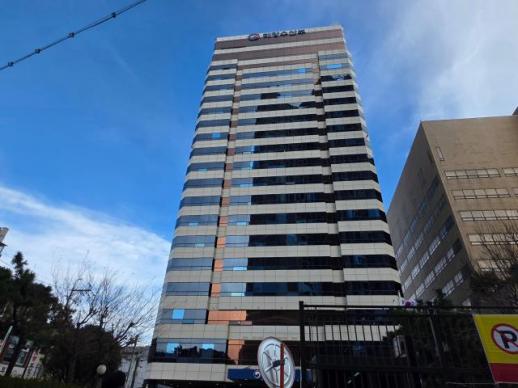 Ministry of Oceans and Fisheries Begins Site Selection for New Headquarters The Ministry of Oceans and Fisheries is moving forward with plans to establish a new headquarters by 2030 to support the development of the southern marine capital. On June 24, the ministry announced the launch of a site selection process for the new headquarters, targeting local governments in Busan. Last December, the ministry relocated to Busan by leasing two private buildings. The new headquarters aims to enhance the ministry's role in fostering the southern marine capital region. The ministry notified local governments in Busan about the site selection plan. Applications for potential sites will be accepted from July 29 to 31, with a decision expected in August. The goal is to complete the new headquarters by 2030. Eligible sites must be at least 10,000 square meters in area and capable of supporting a building with a total floor area of over 50,000 square meters. The ministry plans to form a site selection committee composed of experts from various fields to evaluate criteria such as land availability, utilization conditions, and the site's connection to the marine capital initiative. The final site will be selected by early August. After the site selection, the ministry will finalize the scale of the new headquarters and secure design funding within this year, aiming for completion in 2030. Hwang Seong-o, head of the ministry's operational support division, stated, "The establishment of the new headquarters is significant as it will serve as a key hub for leading the era of the Arctic Route. Once the site is selected, we will proceed with the construction without delay."* This article has been translated by AI. 2026-06-24 11:08:00