

Journalist

박선태
-
 LG HelloVision Subscribers to Lose SPOTV Channels Amid Fee Dispute Starting July 1, subscribers of LG HelloVision, a cable TV provider, will no longer have access to SPOTV channels. This decision follows LG HelloVision's rejection of SPOTV's demand for an increase in programming fees, prompting SPOTV to cut off supply entirely. Viewers are left bewildered, unable to watch baseball, soccer, or golf. LG HelloVision now faces the risk of subscriber loss, while SPOTV stands to lose significant revenue from a key platform. The ongoing blackout situation is detrimental to both parties. Despite the clear losses, this decision stems from more than just a failed fee negotiation; it reflects a long-standing structural issue within the industry. This conflict is not limited to just these two companies. Cable operators and content providers have consistently clashed over fee negotiations. Platform operators argue that, with the rise of over-the-top (OTT) services leading to a decline in cable subscriptions and a significant drop in basic channel revenue, the fees demanded by content providers are unsustainable. They highlight that cable TV operators are paying nearly 90% of their revenue to content providers, leaving them with little room to maneuver. On the other hand, content providers contend that rising production costs make it difficult to sustain their businesses solely on the fees received from platforms. The advertising market has also cooled, and the compensation from cable and IPTV services is insufficient. Many are now forced to sell programs to platforms like Netflix or Disney to recoup production costs. Finding common ground amid these conflicting interests has proven challenging. Both platforms and content providers have long called for the government to take a central role in mediating the dispute. For years, they have requested that the government establish fair and objective pricing standards to prevent market chaos and encourage both sides to compromise. However, these requests have often been sidelined. Since the division of regulatory authority between the Korea Communications Commission and the Ministry of Science and ICT, the government has formed research teams and produced several drafts without reaching a consensus. The final proposal has been repeatedly delayed, with the rationale being the inability to reconcile differences between operators. Additionally, the inter-departmental focus on 'market autonomy' has resulted in a prolonged policy vacuum rather than resolving conflicts. Ultimately, it is the viewers who suffer the consequences of these decisions. This situation raises concerns that similar disputes could lead to a series of broadcast interruptions between other content providers and platforms struggling with fee negotiations. All parties are apprehensive about this potential outcome, and the government must not remain passive. According to the Korea Policy Briefing, the total number of subscribers to paid broadcasting services in South Korea is approximately 36.15 million. Although the number of subscribers has decreased, it still exceeds the number of households. Among them, cable TV accounts for 11.94 million subscribers, with LG HelloVision having around 3.39 million subscribers. A brief period of inaction could adversely affect millions, potentially reaching tens of millions of citizens. Last October, the Broadcasting Media Communications Commission was established to consolidate fragmented paid broadcasting policies and licensing authority, aiming to create a fair and efficient media environment. However, in its first six months, it became a tool for political strife and has only recently returned to normal operations. There is much work to be done. Temporary fixes are no longer viable. A precise model for evaluating content value that reflects the changing revenue structures of platforms and the production cost realities of content providers must be developed urgently. 2026-06-04 13:33:00
 -
 Korea's National Soccer Team Prepares for World Cup with Key Players The South Korean national soccer team is set to conduct its final preparations for the World Cup today. This friendly match will feature key players, including Lee Kang-in and Oh Hyun-kyu, who are currently excelling in major European leagues, drawing significant attention both domestically and internationally. Given the imminent start of the tournament, today's game is crucial for solidifying the team's organization and tactical effectiveness. The experience and skills of the young players accumulated on international stages are undoubtedly assets that enhance the team's structural capabilities. However, soccer is a sport that relies heavily on a cohesive system. Even with talented individuals, if they fail to fully integrate into the coach's tactical framework and establish organic relationships with their teammates, their potential will be as fragile as a sandcastle. Coach Hong Myung-bo has faced challenges in defining the team's identity due to short training periods and the adjustment of overseas players to time differences. The evaluation criteria for today's match should not focus solely on the individual skills of star players. Instead, it should assess whether the team functions as a cohesive unit, including the speed of transition between defense and offense, the timing of pressing, and the ability to manage defensive risks during counterattacks. The essential task of this friendly match is to see how the technical sharpness of overseas players combines with the organizational solidity of domestic players to create tactical synergy. Moreover, the behavior of the South Korean soccer community in recent years has been disappointing, bordering on tragic. The problematic appointment process for coaches, administrative incompetence within the Korea Football Association, and a lack of communication have led to severe criticism and internal strife. Trust among soccer fans has plummeted, and the prevailing sentiment towards the national team has been one of cynicism and concern, closely tied to these administrative failures. In this rigid environment, the only way for Coach Hong's team to regain public trust is to prove its worth through performance on the field. The value of sports is manifested in its fundamental performance. While the numerical outcomes of wins and losses are important, maintaining structural focus and crisis management throughout the game is crucial for winning back the hearts of fans. Today's friendly match should serve as a turning point to dilute the accumulated administrative noise and rebuild the national team's public credibility. Furthermore, rather than being consumed by immediate World Cup results, this should be an opportunity to pursue long-term systemic innovation and a paradigm shift in South Korean soccer. With the emergence of next-generation stars like Lee Kang-in and Oh Hyun-kyu as central figures, now is the optimal time to fundamentally improve the structure of South Korean soccer. Relying on outdated methods that depend solely on individual players' determination and mental strength will not keep pace with the highly organized trends of global soccer. Instead of hastily repeating temporary fixes in pursuit of short-term results, this should be a chance to establish a clear technical philosophy and a robust administrative system. A consistent tactical approach must be shared from youth development through to the senior national team, supported by advanced, data-driven infrastructure, to enable a leap towards becoming a structurally strong soccer nation. Today's match serves as a test for this long-term vision and sustainability. What is required of Coach Hong's team now is to present practical tactical alternatives that can succeed on the world stage. Soccer fans are watching not just the numbers on the scoreboard but also the coherent tactical execution and the forward-looking potential of South Korean soccer. Tonight, we hope that Coach Hong's team can harness the capabilities of its elite members to open a stable and convincing chapter toward the World Cup finals.* This article has been translated by AI. 2026-06-04 13:30:00
 -
 K-Bio at a Turning Point: From Manufacturing Powerhouse to Innovative Drug Leader South Korea's biotechnology industry stands at another critical turning point. Recently, global financial institution ING Research identified South Korea as Asia's "second innovation engine" following China. This recognition signifies that the biotechnology sector, alongside semiconductors and automobiles, is acknowledged as a key driver of South Korea's future growth in the international community. In fact, South Korea has established global competitiveness in the biosimilar and contract development and manufacturing organization (CDMO) sectors, drawing attention from the global market. Last year, pharmaceutical and biotechnology exports reached $10.4 billion (16 trillion won), surpassing the $10 billion mark for the first time, while the industry's technology export volume also hit a record high of approximately $13.7 billion (20.7 trillion won). However, behind these impressive achievements, there are warning signs. The growth rate of clinical trials is slowing, and the number of new drug approvals is decreasing. In a world where competition for biopharmaceutical dominance is intensifying, this stagnation could pose a threat to the future of South Korea's biotechnology industry. The South Korean biotechnology sector has grown based on its manufacturing competitiveness. Companies like Celltrion and Samsung Bioepis have pioneered the biosimilar market, while Samsung Biologics has become the world's largest CDMO. These are certainly commendable achievements. However, relying solely on biosimilars and contract manufacturing will make it difficult to maintain a leading position in the global market over the long term. Ultimately, true competitiveness arises from the development of innovative drugs. The reason major pharmaceutical companies leading the global market, such as Pfizer, Merck, and Johnson & Johnson in the U.S., and Roche and Novartis in Europe, generate substantial profits lies in their innovative drugs. A single blockbuster drug can create market value in the tens of trillions of won. This is why South Korea must leap from being a manufacturing powerhouse to an innovative drug leader. The challenge is that the pace of innovation in the industry is outstripped by regulatory frameworks. Domestic biotech companies cite lengthy approval processes, complex reimbursement evaluations, and unpredictable drug pricing policies as significant obstacles. New drug development is a high-risk industry with extremely low success rates. It is not uncommon to invest hundreds of billions of won in research and development only to face failure. In such circumstances, the added uncertainty of regulations makes it difficult for companies to take bold risks. Particularly concerning is China's rapid advancement. With comprehensive national support, China is quickly expanding its capabilities in clinical trials and new drug development. Its share of global clinical trials is also increasing rapidly. Areas where South Korea once held a relative advantage in the biotechnology sector are now being swiftly encroached upon by China. If the current regulatory environment persists, South Korea's competitive edge cannot be taken for granted. Of course, regulatory innovation does not mean an unconditional easing of regulations. The principles of public health and safety must be upheld. However, it is entirely possible to shorten review periods while maintaining safety, make approval and reimbursement processes more predictable, and establish a reasonable compensation system for innovative technologies. Fortunately, South Korea boasts world-class medical infrastructure, excellent research personnel, and global-level production capabilities. Recent increases in technology exports and investments from foreign pharmaceutical companies further validate the potential of South Korea's biotechnology sector. What is now needed is a collaborative effort between industry challenges and government regulatory innovation. South Korea is already recognized as a "biotechnology manufacturing powerhouse." However, the true goal should not end there. The country must become one where innovative technologies born in laboratories transition to clinical applications and result in new drugs that change the lives of patients worldwide. The next leap for K-Bio will not be achieved solely through the research and development efforts of companies. Only when regulatory innovation and policy support align with the changing times can South Korea rise above being a manufacturing powerhouse to become a leader in innovative drugs. 2026-06-04 13:30:00
 -
 Lotte Chilsung Beverage Reduces Greenhouse Gas Emissions by 6,400 Tons in 2025 Lotte Chilsung Beverage announced on June 4 that it reduced its greenhouse gas emissions by approximately 6,400 tons last year through the expansion of renewable energy and improvements in facilities. To achieve its declared goal of carbon neutrality by 2040, Lotte Chilsung Beverage has been implementing various eco-friendly initiatives, including the expansion of renewable energy, fuel conversion, and the introduction of electric vehicles. As a result, the company successfully decreased its greenhouse gas emissions by about 7% compared to the previous year and by approximately 17% compared to 2018. The largest contributor to the reduction in greenhouse gas emissions was the expansion of renewable energy projects. Lotte Chilsung Beverage operates a biogas power generation facility that utilizes byproducts from the production of ethanol, a key ingredient in its beverages, to generate electricity and steam. This facility, located at the Gunsan plant, helped reduce greenhouse gas emissions by around 5,000 tons last year. The biogas power generation at the Gunsan plant produced approximately 9 GWh (gigawatt-hours) of energy, which accounts for about half of the plant's total electricity consumption. This amount is equivalent to the annual electricity usage of about 2,500 households in Seoul. Solar power generation facilities also contributed to the reduction of greenhouse gases. Since 2018, Lotte Chilsung Beverage has installed solar energy systems at five major sites, including the Chungju 2 Plant, Anseong Plant, Yangsan Plant, and Gangneung logistics center (RDC), resulting in a reduction of about 460 tons of greenhouse gases last year. In terms of fuel conversion, the company is collaborating with Daejeon City and CNCITY Energy to replace existing LNG fuel with landfill gas (LFG). This initiative led to a reduction of approximately 380 tons of greenhouse gas emissions last year. LFG is a renewable energy source captured from waste landfills, which Lotte Chilsung Beverage uses as boiler fuel to produce steam necessary for its manufacturing processes. The transition to eco-friendly vehicles has also yielded positive results. By the end of last year, Lotte Chilsung Beverage had introduced a total of 630 electric vehicles, resulting in a reduction of about 550 tons of greenhouse gases. The company aims to cut greenhouse gas emissions by over 10,000 tons this year. A representative from Lotte Chilsung Beverage stated, "As a comprehensive beverage company in Korea, we are committed to fulfilling our social responsibility by continuing to invest in and innovate for carbon neutrality. We will strengthen our environmental, social, and governance (ESG) management to set an example in the industry and leave a better environment for future generations." Meanwhile, reducing greenhouse gas emissions has become a key challenge for corporate management. According to the Intergovernmental Panel on Climate Change (IPCC), the global average temperature has risen by about 1.09°C due to increased greenhouse gas emissions since industrialization, leading to more frequent extreme weather events such as heatwaves. In response, South Korea has declared its goal of achieving carbon neutrality by 2050 and aims to reduce greenhouse gas emissions by 40% by 2030 compared to 2018 levels.* This article has been translated by AI. 2026-06-04 13:27:00
 -
 SpaceX IPO Approaches as JP Morgan Engages Wealthy Clients Jamie Dimon, CEO of JPMorgan Chase, is personally engaging high-net-worth clients ahead of SpaceX's initial public offering (IPO). As SpaceX plans to go public later this month, demand is expanding from institutional investors to individual wealthy clients on Wall Street. According to Bloomberg on June 4, Dimon will host a presentation this week for JPMorgan's affluent clients to discuss the SpaceX IPO. The event will take place at JPMorgan's headquarters and will feature live discussions with Mary Callahan Erdoes, CEO of Asset & Wealth Management at JPMorgan, Gwynne Shotwell, president of SpaceX, and Brett Johnson, CFO of SpaceX. The event will be broadcast simultaneously to approximately 90 JPMorgan branches across 26 states, with expected attendance exceeding 2,500 clients. While investor presentations before an IPO are standard practice, this event's scale, connecting branches nationwide for high-net-worth clients, is unusual. SpaceX, led by Elon Musk, is a company focused on rockets, satellites, and artificial intelligence (AI). Bloomberg previously reported that SpaceX aims to go public by the end of this month, with a projected valuation of around $1.8 trillion. If successful, it could mark the largest stock market debut in history. The underwriting team is composed mainly of major investment banks. Goldman Sachs was selected as the lead underwriter for the SpaceX IPO alongside Morgan Stanley last month. JPMorgan, Bank of America, and Citigroup are also part of the underwriting group, which includes 23 banks. JPMorgan's involvement reflects a shift in its relationship with Musk. The bank previously sued Tesla over stock warrant transactions related to Tesla's attempted delisting in 2021. Both parties withdrew their lawsuits in November 2024. Since then, Dimon has indicated that he has repaired his relationship with Musk and expressed a willingness to support Musk and his companies.* This article has been translated by AI. 2026-06-04 13:24:00
 -
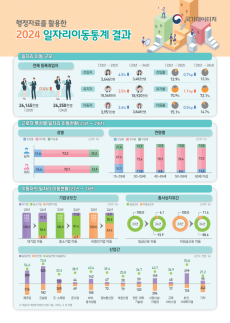 Job Market Sees Two Consecutive Weeks of Decline in New Entrants and Job Changers The number of registered job seekers entering the labor market or changing jobs has declined for two consecutive years. Additionally, the number of young people aged 15 to 29 entering the job market has also decreased. According to the "2024 Job Mobility Statistics" released by the National Data Agency on June 4, the total number of registered job seekers increased by 105,000 (0.4%) from the previous year to 26.25 million. Registered job seekers are defined as wage and non-wage workers reported to public institutions based on administrative data related to the four major social insurances. While the number of workers maintaining their jobs has increased, the population entering the job market or changing jobs has decreased. In 2024, the number of new entrants was 3.482 million, down 164,000 (-4.5%) from the previous year, with an entry rate of 13.3%, a drop of 0.7 percentage points. During the same period, the number of job changers decreased by 103,000 (-2.6%) to 3.838 million, resulting in a mobility rate of only 14.7%, down 0.5 percentage points. The number of non-registered workers was 3.377 million, a decrease of 181,000 (-5.1%) from the previous year. Conversely, the number of workers who maintained their jobs increased by 373,000 (2.0%) to 18.9 million, with a retention rate rising by 1.1 percentage points to 72.1%. By age group, the entry and mobility rates were highest among those under 29, but the number of young entrants has been declining each year. The number of new entrants aged 15 to 29 fell from 1.309 million in 2022 to 1.203 million in 2023, and further to 1.13 million in 2024. The proportion of this age group also decreased from 33.2% in 2022 to 31.6% in 2023, and 31.1% in 2024. When analyzing the retention rates by age group for 2023, those in their 40s had the highest rate at 78.9%, followed by those in their 50s at 78.4%, 30s at 73.4%, and those aged 60 and over at 73.0%. In contrast, the retention rate for young workers was only 47.6%. Examining mobility rates by company size, small businesses had a mobility rate of 16.8% and an entry rate of 14.9%, surpassing large enterprises. The proportion of workers moving from large to large enterprises was 37.0%, while 56.6% of workers transitioned from large to small businesses. Conversely, only 11.8% moved from small businesses to large enterprises. By organizational type, the entry rate was highest for individual enterprises, recorded at 16.0%. The retention rate for jobs that continued a year later was 80.7% for government and non-profit organizations, meaning eight out of ten workers remained in the same job. The mobility rate was highest for corporate entities at 18.8%. Additionally, 57.8% of workers who changed jobs did so for positions with increased wages, while 41.3% moved to jobs with decreased wages. Over the past five years since 2019, while the number of job holders and retention rates have gradually decreased, the number of job changers and new entrants has shown an upward trend.* This article has been translated by AI. 2026-06-04 13:18:00
 -
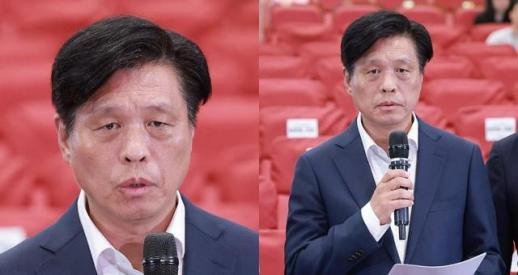 Ruling Party Dismisses Opposition's Call for Re-vote After Election Issues Jung Seung-rae, the Secretary-General of the Democratic Party, dismissed calls from the People Power Party for a re-vote following a ballot shortage during the June 3 local elections, stating, "There is no value in responding to that." After a press conference with party leader Jeong Cheong-rae on June 4, Jung told reporters, "Someone must take responsibility for this, and I will hold them accountable," adding that the future of the Election Commission's Secretary-General should also be reconsidered. He emphasized that the matter would not be swept under the rug just because the election is over, insisting on accountability from the Election Commission. However, he drew a line regarding the People Power Party's claims of halting the vote count and demanding a re-vote. "There is no value in responding to the People Power Party's demands for a halt to the counting and a re-vote," he explained. "Many citizens in Seoul have already cast their votes, and the counting is proceeding normally." He further criticized the People Power Party, saying, "They initially called for a halt to the counting and a re-vote, but now that the election results are favorable for them, I believe they will stop making those claims. I hope they refrain from such low-level politics that obscure the issue as the counting progresses in their favor." Online, netizens reacted to Jung's comments with a variety of opinions. Some expressed that if there are citizens who could not exercise their voting rights, a re-examination is necessary regardless of the results. Others questioned the inconsistency of holding the Election Commission accountable while dismissing discussions of a re-vote, stating, "Isn't this a serious violation of voting rights?" and "Even if the election results do not change, principles must be upheld." On the day of the local elections, a significant incident occurred in areas like Songpa District in Seoul, where a shortage of ballots led to a temporary halt in voting. In response, the People Power Party strongly opposed the situation, demanding a nationwide halt to the counting and a re-vote. Jang Dong-hyuk, the leader of the People Power Party, stated during a protest visit to the Election Commission, "Voting continued after the deadline due to a shortage of ballots in Seoul. Since the election itself is invalid, a re-vote must be conducted." However, in the Seoul mayoral election, Oh Se-hoon of the People Power Party overcame Jung Won-oh of the Democratic Party in the final stages of the counting, securing victory and setting a record as the first mayor of Seoul to be elected for a fifth term. 2026-06-04 13:09:00
 -
 Can AI Films Find a Place in Established Film Festivals? Artificial intelligence (AI) is no longer a distant concept in the film industry. With feature films created using generative AI now screening in theaters and discussions about the ethics of AI in filmmaking gaining traction at international film festivals and film markets, the industry is facing new standards.The Bucheon International Fantastic Film Festival (BIFAN) is a key example of this shift, having established a new section called 'Bucheon Choice: AI Films' last year, officially recognizing AI films as part of its screenings and competitions. This marks a significant step in questioning how AI films can be introduced and evaluated within existing international film festivals.BIFAN's initiative continued at this year's Cannes Film Market. Shin Chul, the executive director of BIFAN, was invited to present on 'BIFAN's AI Leadership Strategy' during the 'Cannes Next' program, which took place during the 79th Cannes Film Festival.This program brought together media, technology, investment, and policy stakeholders to discuss Asia's AI-driven cultural ecosystem. BIFAN shared its experiences and insights on operating an AI film section with international film industry representatives. Shin also participated in the 'AI for Talent Summit,' a key event at the Cannes Film Market, contributing to discussions on the evolving role of AI in the film industry.Cannes is approaching the topic cautiously. There remains a careful atmosphere regarding how to handle works where AI takes the lead in creation within major competition categories. However, discussions around AI production, investment, copyright, and creative ethics are expanding at the film market. The industry is navigating a path between using AI as a production tool and recognizing AI as a creative entity.As AI films begin to enter traditional film festivals, the next question is about evaluation criteria. The mere technical novelty of being created by AI is insufficient for acceptance within the language of film festivals. It is essential to assess the possibilities and limitations demonstrated by AI feature films that have been screened in theaters, as well as how they can navigate issues of creative ethics and rights.In South Korea, AI feature films have already begun to screen in theaters. In May, two films, 'I Am Popo' and 'The Man in Hanbok,' both created entirely with generative AI, premiered simultaneously. 'I Am Popo' tells the story of an AI robot born to serve humans who kills a potentially criminal human, while 'The Man in Hanbok' depicts a fictional historical drama where the Joseon scientist Jang Yeong-sil meets Leonardo da Vinci in Renaissance Florence. These films illustrate that AI filmmaking is no longer limited to short experiments but has entered the realm of feature narratives and theatrical releases.However, alongside their potential, limitations have also emerged. Both films attracted only a few hundred viewers, indicating limited commercial impact. Beyond technical experimentation, the challenge remains of how convincingly these films can engage audiences. Generative AI struggles to maintain consistent facial expressions and backgrounds over extended periods, and producing feature films requires numerous repetitive tasks and scene-by-scene adjustments.'Intermediate Realm,' directed by Kang Yoon-sung and noted as South Korea's first feature film utilizing AI, also showcases both potential and limitations. Kang revisited a screenplay he had prepared 25 years ago, modifying it with AI technology in mind, and visualized characters like the Twelve Zodiac Gods and Yeomra, the King of the Underworld, which were challenging to realize with existing budgets and technology. In an interview, he stated, "A screenwriter always thinks about the budget first. Using AI breaks that constraint. The moment you think, 'Is this possible?' you can envision a new world."However, for AI films to be accepted into established film festivals, technical feasibility alone is insufficient. Creative ethics and rights issues must be addressed first. The controversy surrounding the short film 'Meter Reader,' which used AI to replicate the face and voice of actress Yeom Hye-ran, directly highlighted this issue in the South Korean film industry. While the production team claimed they had obtained permission for the use of her likeness, her agency stated there had been no prior consultation or approval, leading to the video's removal from public view.Similar controversies are occurring internationally. In Hollywood, the emergence of the AI actor 'Tilly Norwood' has sparked backlash from industry professionals, including actors and directors, who fear that human performances and images could be replaced by cheap data. The American actors' and broadcasters' union is advocating for the introduction of a so-called 'Tilly Fee,' which would require AI actors to be compensated at rates comparable to human actors.Despite these challenges, creators are not entirely rejecting the use of AI. If proper consent, compensation, and rights protection are ensured, AI can enhance production efficiency and broaden creative expression. The issue lies in the fact that sufficient standards to support these possibilities have yet to be established. For AI to become a collaborator with creators, the sources of training data, rights compensation, and the scope of consent from actors and performers must be clarified.Film critic Yoon Seong noted, "Relying solely on the technical marvel of AI films looking 'just like real people' may be a one-dimensional approach. Ultimately, storytelling is what matters in film. The advantage of AI lies in its ability to attempt scenes that are physically difficult to realize without significant budgets, so how that technology is utilized to create unique characteristics in a work is crucial."He added, "For now, I believe it is appropriate to evaluate AI films in a separate section. The technology is not perfect, and there are points where immersion is broken compared to live-action films. However, we must now view the issue as how to utilize and tool AI within the films we know, rather than whether to recognize AI films as films at all."AI films are no longer confined to the realm of 'possibility.' They are already being created, screened, and becoming topics of discussion at film festivals and markets. What is now needed is to move beyond mere admiration for technological novelty to examine the completeness of these films as works, the involvement of creators, and issues of copyright, likeness rights, and industrial responsibility. As AI films begin to find their place within established film festivals, these festivals are becoming arenas to test both the potential and standards of this new medium.* This article has been translated by AI. 2026-06-04 13:00:00
 -
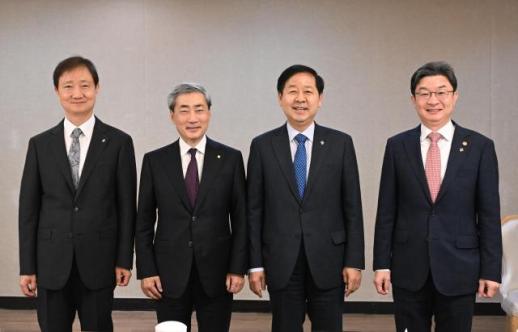 Financial chiefs vow to tighten scrutiny on stock leverage amid overheated rally SEOUL, June 4 (AJP) - South Korea's top economic and financial policymakers on Thursday pledged to strengthen preemptive risk checks on borrowing-backed stock trading, as a rapid market rally fuels concerns that excessive leverage could amplify losses for retail investors and destabilize broader financial markets. Deputy Prime Minister and Finance Minister Koo Yun-cheol chaired a joint market monitoring meeting at the government complex in Seoul, attended by Bank of Korea governor Shin Hyun-song, Financial Services Commission chairman Lee Eok-won and Financial Supervisory Service governor Lee Chan-jin. Participants expressed concern over the rapid increase in borrowing-backed stock purchases, particularly margin loans, and agreed to strengthen regular monitoring through market review meetings while enhancing preemptive risk management and investor protection measures. The warning comes as margin lending has climbed to record levels. Outstanding margin loans rose from 27.3 trillion won at the end of last year to 38.0 trillion won as of June 1, an increase of more than 10 trillion won in five months. Signs of mounting stress have also emerged in forced liquidations of leveraged positions. Data from the Korea Financial Investment Association showed that forced sales totaled 707.7 billion won during May, while the ratio of forced liquidations to unpaid trading balances averaged 2.63 percent during the month and surged to 7.6 percent on May 20. On June 1 alone, forced liquidations reached 33.2 billion won, more than double the previous trading day's 15.4 billion won, with the ratio jumping to 2.5 percent from 1.2 percent. The concerns echoed Shin's warning last week that excessive leverage could turn market corrections into self-reinforcing selloffs through forced liquidations, distorting the normal relationship between prices and demand. Participants said favorable economic conditions, including a 53.2 percent year-on-year jump in May exports, have helped sustain the stock market rally. They also noted that Korea's stock market capitalization has overtaken India to become the world's sixth largest. According to Bloomberg data, the U.S. ranked first with a market capitalization of US$79.5 trillion, followed by China with $15.1 trillion, Japan with $8.6 trillion, Hong Kong with $7.2 trillion, Taiwan with $5.2 trillion and Korea with $5.0 trillion. India ranked seventh with $4.8 trillion. Officials also discussed recent volatility in the foreign-exchange market. Despite a record current-account surplus, they said the won has remained vulnerable to the Middle East conflict and continued foreign selling of domestic equities. They noted that the sharp rise in local share prices has prompted foreign investors to rebalance portfolios and lock in profits, adding to exchange-rate volatility. Foreign investors' holdings of Korean stocks have risen to 2,991 trillion won, accounting for 38.3 percent of total market capitalization, up from 1,312 trillion won and 32.9 percent at the end of last year. Net foreign selling of local equities has reached 127 trillion won so far this year, including 66 trillion won over the past 18 consecutive trading sessions. Koo said authorities are closely watching markets with a high level of vigilance to prevent anxiety from spreading amid elevated external uncertainty. He also stressed that the government would take immediate action if excessive one-sided movements emerge. Officials also agreed to closely monitor the bond market, where government bond yields have become more volatile amid global rate movements, inflation concerns and stronger expectations for domestic rate hikes. They said authorities would coordinate responses in a timely manner if excessive volatility emerges. 2026-06-04 12:48:40
 -
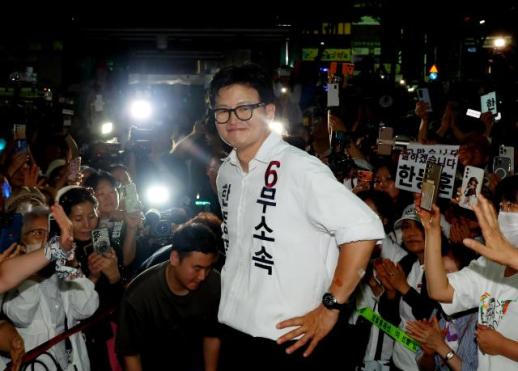 Two ex-justice ministers see contrasting fortunes in local elections' key battlegrounds SEOUL, June 4 (AJP) - Two former justice ministers, both once seen as potential presidential contenders in the liberal and conservative camps, saw sharply contrasting fortunes in Wednesday's local elections. Former leader of the main opposition People Power Party (PPP) and independent candidate Han Dong-hoon won a parliamentary by-election and is headed to the National Assembly, while Cho Kuk of the minor Rebuilding Korea Party (RKP) lost, casting doubt over his political future. Han won in the Buk district of the country's southern port city of Busan with 42.96 percent of the vote, narrowly beating Democratic Party (DP) candidate Ha Jung-woo, who received 41.26 percent, in a neck-and-neck race. PPP candidate Park Min-sik, who was expected to split the conservative vote and boost Ha's chances, trailed with a mere 15.76 percent. Han, once a close aide to disgraced former President Yoon Suk Yeol, served as justice minister under the Yoon administration before becoming PPP leader in July 2024. But he was later expelled from the conservative party late last year over dubious allegations that included hundreds of defamatory comments about Yoon and his wife posted on the party's online bulletin board. Han's overnight election victory has sparked speculation about a conservative realignment, with the PPP's internal rift over distancing itself from Yoon likely to intensify further. Han was among those who voted to lift Yoon's abrupt Dec. 3 declaration of martial law in 2024. Lawmakers aligned with Han within the PPP could push for his return to the party. The possibility of Han launching a new conservative party has also been raised. His victory is seen as laying the groundwork for him to emerge as a leading conservative contender in the next presidential election. PPP lawmakers told AJP that Han would return to the PPP and would not launch a new party. "His return to the party is a matter of timing, and there does not seem to be any discussion about launching a new party yet," PPP lawmaker Kim So-hee said. "Launching a new party would be difficult," she added. PPP four-term lawmaker Han Ki-ho said Han was unlikely to forcefully seek a return to the party and that the PPP would instead encourage him to rejoin. Dismissing speculation about a new party, he said, "Launching a new party is out of the question." "Once he enters the National Assembly, he will receive intense media attention, and if Han reflects the will of the people, the party will have no choice but to encourage him to join," Han added. "If Han maintains his soft, inclusive image, he will win public support." With 99.88 percent of the vote counted as of Thursday morning, Cho, the former fly-by-night justice minister who was released from prison after being convicted on charges of shoddy financial dealings and document forgery related to his children's school admissions, failed to secure a seat in Pyeongtaek, Gyeonggi Province, finishing third with 27.24 percent in a tight three-way race. PPP candidate Yoo Eui-dong led with 34.83 percent and was on course for victory, while Kim Yong-nam of the DP came in second with 28.77 percent. Analysts say Cho, who had been considered a potential presidential contender, suffered a major blow to his leadership after failing to enter the National Assembly, and that the result could deal a fatal hit to his political career. Cho's defeat is expected to affect not only his personal political standing but also the future of his party. With his defeat, a possible merger between the DP and the RKP is now expected to be put on hold for the time being. During the campaign, Cho launched fierce attacks against the DP candidate while also stepping up criticism of the DP leadership, further deepening the rift between the two parties. With the DP soon set to begin preparations for a national convention to elect a new party leader and Supreme Council members, discussions on a merger between the two parties are likely to be left to the next leadership. Kim Joon-hyung, a lawmaker from the RKP, said there are currently no discussions within the party about a merger with the DP. Kim said no one was talking about a merger even in the RKP lawmakers' group chat on Telegram. He expressed disappointment over the DP's attitude toward the RKP. "DP leader Jung Chung-rae also talked about 'solidarity,' but the 'solidarity' the DP referred to was violent and one-sided," he said. "Now that Cho has lost, we no longer have the leverage we once had, so the DP would become even more aggressive toward the RKP," he predicted. "Kim Boo-kyum, the party's candidate for Daegu mayor, and Kim Kyoung-soo, the party's candidate for South Gyeongsang governor, were defeated, while Seoul Mayor Oh Se-hoon and Han strengthened their standing as presidential contenders with their victories," he also said. 2026-06-04 12:40:15