

Journalist

박선태
-
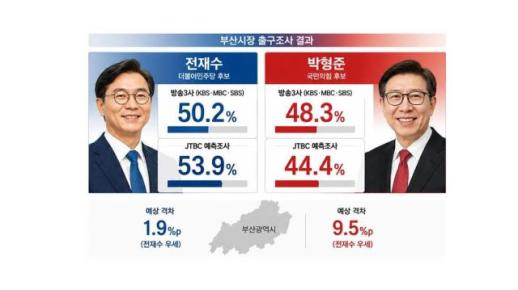 Jeon Jae-soo Leads in Busan Mayor Race, Exit Polls Show Mixed Results In one of the most competitive races of the local elections, Jeon Jae-soo of the Democratic Party appears to have a lead in the Busan mayoral election. However, there is a significant discrepancy between the exit polls conducted by three major broadcasters and the predictions from JTBC, leading to heightened interest in the actual vote count. According to the joint exit poll by KBS, MBC, and SBS, Jeon is projected to receive 50.2% of the vote, slightly ahead of Park Hyung-jun of the People Power Party, who is forecasted to get 48.3%. This indicates a very close race, essentially within the margin of error. In contrast, JTBC's prediction shows Jeon with 53.9% and Park at 44.4%, a difference of 9.5 percentage points, suggesting a much larger lead for Jeon compared to the broadcasters' poll. Both polls predict a victory for Jeon, but their interpretations of the election dynamics differ significantly. If the broadcasters' results hold true, the race could remain too close to call until the end of the counting process. Conversely, if JTBC's figures are accurate, it would indicate a relatively stable win for the Democratic Party in Busan. The Busan mayoral election is considered one of the most symbolic contests in this local election cycle. Traditionally, Busan has been classified as a conservative stronghold, but recent shifts in the political landscape have been notable. In the 2018 local elections, the Democratic Party won the mayoral seat, but the People Power Party regained control in subsequent by-elections and local elections. Initially, Park, leveraging the advantages of incumbency and organizational strength, seemed to have the upper hand. However, as the campaign progressed, Jeon gained momentum, narrowing the gap significantly. The competition over local issues such as the redevelopment of Busan North Port, the relocation of the Industrial Bank, the construction of Gadeokdo New Airport, and urban regeneration has intensified, leading to fluctuating voter sentiments right up to the election. Busan is also seen as a barometer for the overall political landscape in this local election. If Jeon secures a victory, it could signal that the Democratic Party has expanded its influence beyond the capital region into the PK area. Notably, Democratic candidates have also performed well in Ulsan and South Gyeongsang Province, raising the possibility of renewed discussions about shifts in the political dynamics of the Yeongnam region. On the other hand, if Park manages to turn the tide, it would represent a significant victory for the People Power Party, reinforcing its foothold in Busan and countering the narrative of a nationwide Democratic Party landslide. With the exit polls showing conflicting results, political circles are exercising caution. The Democratic Party is noting that both polls predict a lead for Jeon, while the People Power Party emphasizes the narrow 1.9 percentage point margin in the broadcasters' poll, suggesting that the outcome could still be reversed during the counting process. Throughout the campaign, the Busan mayoral race has been characterized by shifting poll results, making it a challenging contest to predict. Some surveys indicated Park was ahead, while others showed Jeon in the lead. In the final stretch, several polls reported a close contest within the margin of error.* This article has been translated by AI. 2026-06-03 19:36:00
 -
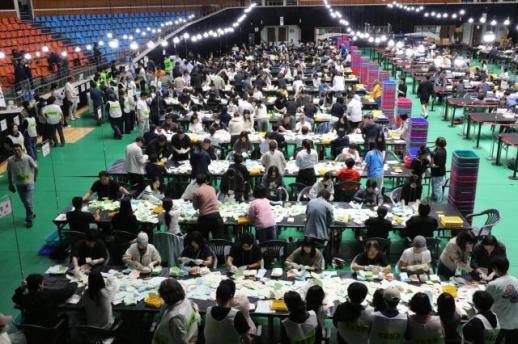 'I only made phone calls all day': Candidates share final hours before results SEOUL, June 03 (AJP) - What are candidates doing in the final hours before the results of South Korea’s June 3 local elections come in? AJP asked candidates across the country how they were spending election day as they waited for exit polls and vote counting to begin. For some, the day was spent making last-minute calls to encourage voter turnout. Others said they were thanking supporters, reflecting on the grueling campaign trail or quietly preparing for whatever political future awaits after the ballots are counted. “I desperately want to work alongside the residents of our region,” said Kim Young-bin, the Democratic Party (DP) candidate in the by-election for a parliamentary seat representing Gongju, Buyeo and Cheongyang in South Chungcheong Province. “Right now, I am calling voters one by one to encourage them to cast their ballots.” Yang Hyang-ja, the People Power Party (PPP) candidate for governor of Gyeonggi Province, said she had spent the entire day on the phone. “Today, I calmly spent the day making calls to encourage voting and to thank supporters,” she said. “I only made phone calls all day. I’m nervous. Regardless of the election result, I think of this as a new beginning for myself.” Lee Myung-soo, a candidate for South Chungcheong superintendent of education, said he would watch the exit polls and vote count “with the mindset of ‘Jininsa daechunmyeong,’” referring to the Korean expression meaning that one should do one’s best and then leave the outcome to heaven. Shim Wang-seop, the PPP candidate in the Incheon Gyeyang-gu by-election, said he was watching election coverage while reflecting on frustrations from the campaign. “I’m watching the election broadcasts and talking about what happened during the campaign period,” he said. “We should have been fighting against the Democratic Party, but instead we were competing against an independent candidate, which was utterly pathetic. Jeon Han-gil and his group were truly terrible people. They were devils wearing the mask of conservatives. I even felt sorry for the naive Kim Hyun-tae.” Park Il-ha, a former Dongjak District mayor now running for the Reform Party in the Dongjak mayoral race, said he was responding to messages from voters while waiting for results. “Residents did not turn away from the district mayor in this election,” he said. “Many people have been cheering me on and sending encouraging calls and text messages, and I’ve been responding to them while waiting for the results.” Lee Jung-hyun, the PPP candidate for mayor of Gwangju, said he spent part of the day climbing Mount Mudeung, a symbol of the southwestern city. “I encouraged election staff and then climbed Mount Mudeung in Gwangju,” he said. “Afterward, I’m having tea at the Uijae Museum of Korean Art while thinking about the direction the People Power Party should take in the future. I’m considering what the party can proactively do regarding the integration of Gwangju and South Jeolla Province, and how the party should change after the local elections.” Choi Hyun-deok, the DP candidate for mayor of Namyangju, said he was calmly awaiting the outcome. “I’ve spent the afternoon encouraging people to vote and making thank-you calls to supporters who have backed me throughout the campaign,” he said. “I’m calmly waiting for the results.” Yoo Ho-joon, the DP candidate for the Gyeonggi Provincial Council, said exhaustion from the campaign had taken a physical toll. “I’m calling people who helped with the election campaign to thank them,” he said. “I’m nervous, but at the same time excited because it feels like the end of a long campaign schedule is finally in sight. Physically, it was so demanding that I lost 10 kilograms during the campaign.” Lee Jin-hwan, the DP candidate for the Namyangju City Council, said he was already thinking about what comes next after the election. “I’m at the Namyangju campaign office waiting for the exit polls,” he said. “Starting tomorrow, after the vote count ends, I’m thinking about how we can change the region for the better.” 2026-06-03 19:35:53
 -
 Democratic Party Claims Exit Polls Reflect Support for Lee Jae-myung's Government The Democratic Party reported that exit polls from the June 3 local elections indicated strong support in 11 out of 16 metropolitan areas, stating, "This reflects the public's expectation for local governments to work towards the success of the Lee Jae-myung administration." After the exit poll results were released, Han Byeong-do, the party's floor leader, appeared on Yonhap News TV and said, "I urged the creation of effective local governments to ensure the success of the Lee Jae-myung administration. I believe these expectations have been significantly reflected in the results." Regarding competitive regions, he added, "It is difficult to predict the outcomes, but the overall trend shows support for this government and reflects the expectation for capable local administrations. We are hopeful for victories." Lee Yeon-hee, who served as the chair of the strategic planning committee for the local elections, spoke to reporters after the exit poll announcement, stating, "I believe this predictive survey confirms public sentiment supporting President Lee's national stability. We have verified the public's desire for stability in governance, particularly in the competitive Yeongnam region, and we anticipate positive results." The exit poll results, released around 6 p.m. on the same day by three major broadcasters (KBS, MBC, SBS), indicated that the Democratic Party is leading in 11 regions (Seoul, Gyeonggi, Incheon, Chungbuk, Chungnam, Daejeon, Sejong, Jeonnam, Gwangju, Jeju, Gyeongnam, Ulsan), while the People Power Party is leading in one region (Gyeongbuk), with four regions (Busan, Daegu, Gangwon, Jeonbuk) considered competitive.* This article has been translated by AI. 2026-06-03 19:33:00
 -
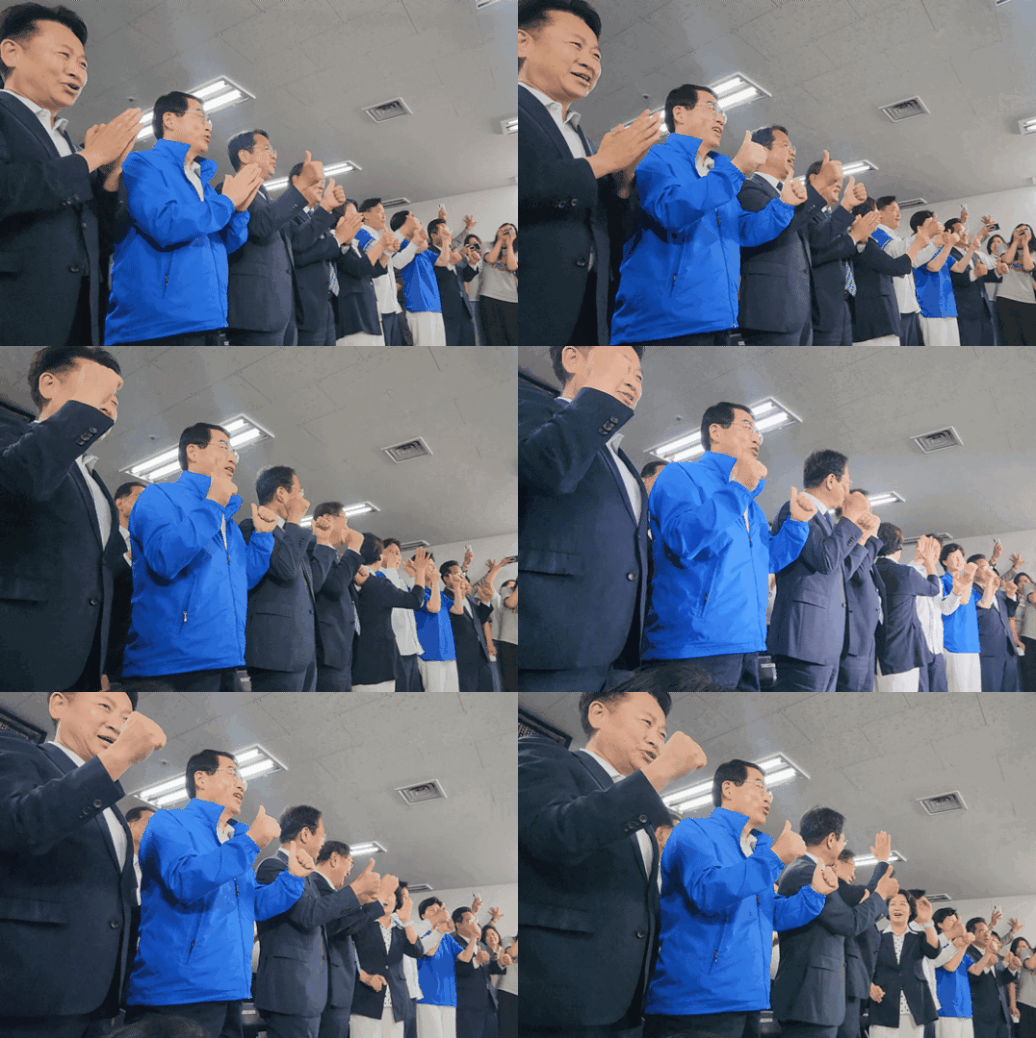 Choo Mi-ae Leads in Gyeonggi Governor Race, Supporters Celebrate Choo Mi-ae, the Democratic Party candidate for Gyeonggi Governor, celebrated on June 3 after exit polls indicated she was leading her opponent, Yang Hyang-ja of the People Power Party, by a significant margin. In contrast, Yang's campaign office was enveloped in heavy silence. Choo arrived at the election headquarters in Suwon around 5:55 p.m. to monitor the exit poll results alongside members of her campaign team. Among those present were Kim Tae-nyeon, the head of her campaign committee, as well as lawmakers Kim Seung-won, Park Sang-hyuk, Kim Young-jin, Baek Hye-ryun, Yeom Tae-young, and Choi Min-hee, along with former lawmakers Yang Gi-dae and Ko Young-in. As the exit poll results were about to be announced by MBC, KBS, SBS, and JTBC, Choo and her supporters joined in a countdown of "5, 4, 3, 2, 1." When the overwhelming results were revealed, they erupted in cheers and applause, exclaiming "Wow!" The exit polls from the three major broadcasters showed Choo with 60.4% of the vote compared to Yang's 34.1%. JTBC's prediction was slightly lower for Choo at 56.4% and higher for Yang at 37.2%, indicating a significant lead of 19.2 to 26.3 percentage points beyond the margin of error. All attendees stood up, raising their thumbs and chanting "Choo Mi-ae" multiple times. Choo beamed with joy, celebrating her apparent victory and exchanging high-fives with key supporters, including Kim Tae-nyeon. After monitoring the exit poll results from other regions, Choo and her supporters chanted "A confident Gyeonggi" and "A strong Choo Mi-ae" around 6:20 p.m. before she left the headquarters without making a formal statement. Choo plans to return to the headquarters to announce her position once her victory is confirmed. In contrast, the campaign office for Yang Hyang-ja on the fifth floor of the People Power Party's Gyeonggi headquarters in Suwon fell into a heavy silence immediately after the exit poll results were announced. Attendees wore solemn expressions, and deep sighs were heard. Yang, who was monitoring the results from another location, will decide whether to visit the headquarters after observing the vote count. 2026-06-03 19:33:00
 -
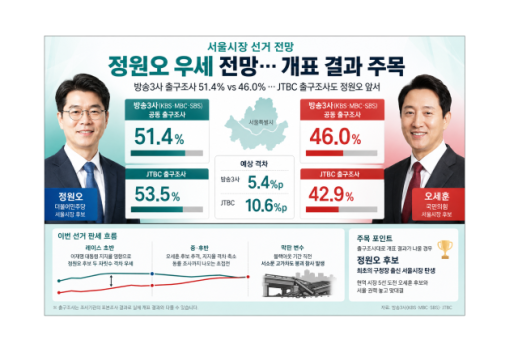 Jung Won-oh Leads in Seoul Mayor Race Amid Uncertainty In the Seoul mayoral election, a key battleground in the local elections, Jung Won-oh of the Democratic Party is projected to be leading. However, with a tight race continuing until the end and differing exit poll results, analysts caution against making premature conclusions about the final outcome. According to a joint exit poll released on June 3 by three major broadcasters (KBS, MBC, SBS), Jung is expected to receive 51.4% of the vote, leading Oh Se-hoon of the People Power Party by 5.4 percentage points, who is projected to receive 46.0%. A separate prediction by JTBC shows Jung at 53.5% and Oh at 42.9%, indicating a stronger lead for Jung, although the gap of 10.6 percentage points is significantly larger than that reported by the three broadcasters. While both polls agree on Jung's advantage, they show substantial differences in the margin. Political analysts note, "While there is a common trend favoring Jung, the actual gap will need to be confirmed through the vote count." The atmosphere surrounding this mayoral election has shifted significantly from the beginning to the end of the campaign. In the early stages, the effects of President Lee Jae-myung's inauguration and initial expectations for the administration contributed to Jung showing a double-digit lead in various polls. The Democratic Party, promoting stability and change for Seoul, expressed relative confidence as it campaigned across the city's 25 districts. However, as the election progressed, Oh began to close the gap. Emphasizing his experience as a former mayor and continuity in administration, Oh rallied his supporters, and in some polls, the margin between the two candidates narrowed to within the margin of error. By the end of the campaign, some surveys indicated a near tie, elevating the Seoul mayoral race to the nation's most competitive contest. Notably, the collapse of the Seosomun Overpass, which occurred just before the blackout period when polls are prohibited, emerged as a significant last-minute variable. Questions regarding the city's safety management and crisis response have been raised, potentially impacting the election's dynamics. Due to these developments, political circles are adopting a cautious stance regarding the exit poll results. Lee In-young, the head of Jung's campaign, stated immediately after the exit poll announcement, "We view this positively, but since the counting has not yet begun, we will wait for the results. Jung has sincerely engaged with citizens during the campaign and presented a new vision for Seoul. We hope the public's desire for change is reflected in their votes." The People Power Party also maintains that it cannot declare a winner or loser until the final vote count is completed. Historical precedents show that significant discrepancies often arise between exit polls and actual results, especially in large voter regions like Seoul, where trends can shift during the counting process. If the results from the three broadcasters and JTBC are reflected in the final count, Jung would prevent incumbent Oh's bid for a fifth term and return the mayoralty to the Democratic Party. He would also make history as the first mayor from a district council background. Conversely, if Oh manages a last-minute comeback, it would signify a symbolic victory for the conservative camp, reinforcing continuity in Seoul's administration. Ultimately, the Seoul mayoral election will be decided not by exit polls but by the actual vote count, as the nation watches to see whether the Democratic Party's return to power in Seoul becomes a reality or if Oh Se-hoon's resilience is confirmed once again.* This article has been translated by AI. 2026-06-03 19:30:00
 -
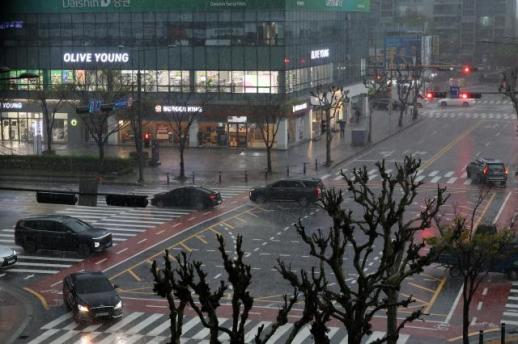 Weather Forecast: Cloudy Nationwide with Showers and Possible Hail On Thursday, June 4, the weather across the country is expected to be mostly cloudy, with showers likely in many areas from the afternoon to the evening. According to the Korea Meteorological Administration, morning low temperatures will range from 17 to 21 degrees Celsius, while daytime highs are forecasted to reach between 22 and 30 degrees Celsius, indicating temperatures similar to or higher than the seasonal average. In Gangwon Province, northern Chungcheongbuk-do, northern inland Gyeongsangbuk-do, and the northeastern mountainous regions of Gyeongsangbuk-do, showers may continue until late at night. Expected rainfall amounts are between 5 and 60 mm in eastern Gyeonggi Province, inland and mountainous areas of Gangwon, northern Chungcheongbuk-do, and northern inland and northeastern mountainous areas of Gyeongsangbuk-do. In Seoul, Incheon, western Gyeonggi Province, Daejeon, Sejong, and inland Chungcheongnam-do, showers of 5 to 40 mm are anticipated. Further inland areas of Jeollabuk-do, Gwangju, Jeollanam-do, central and southwestern inland Daegu and Gyeongsangbuk-do, and northwestern inland Gyeongsangnam-do are expected to receive 5 to 30 mm of rain, while the eastern coast of Gangwon and Jeju Island may see 5 to 20 mm. In regions experiencing showers, gusty winds, thunder, lightning, and hail may occur, so special attention should be paid to managing facilities and crops, as well as preventing safety accidents. Sea waves are expected to reach 0.5 to 1.0 meters in the East and South Seas, and 0.5 meters in the West Sea. In the offshore waters (about 200 km from the coastline), wave heights are forecasted to be between 0.5 and 2.0 meters in the East, West, and South Seas. Looking at the expected temperatures in major regions, morning lows are predicted to be: △Seoul 21°C △Incheon 19°C △Suwon 20°C △Chuncheon 19°C △Gangneung 19°C △Cheongju 21°C △Daejeon 19°C △Sejong 19°C △Jeonju 20°C △Gwangju 19°C △Daegu 19°C △Busan 20°C △Ulsan 19°C △Changwon 19°C △Jeju 20°C. Daytime highs are expected to be: △Seoul 27°C △Incheon 26°C △Suwon 28°C △Chuncheon 27°C △Gangneung 25°C △Cheongju 30°C △Daejeon 29°C △Sejong 29°C △Jeonju 30°C △Gwangju 27°C △Daegu 29°C △Busan 24°C △Ulsan 25°C △Changwon 25°C △Jeju 25°C.* This article has been translated by AI. 2026-06-03 19:27:00
 -
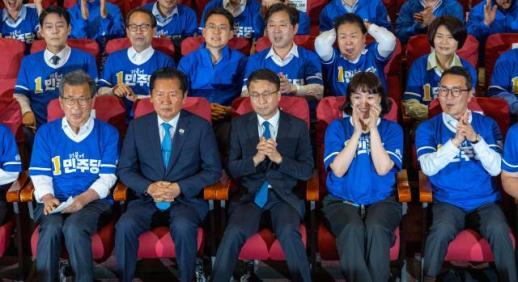
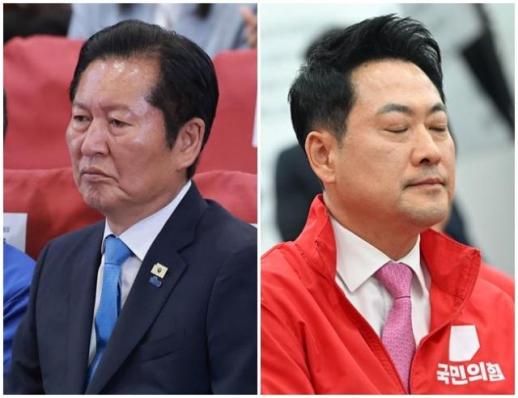 Election Exit Polls Show Divergent Reactions from Parties As exit poll results for the June 3 local elections and National Assembly by-elections were released, South Korea's major political parties exhibited contrasting reactions. The Democratic Party celebrated what they perceived as victory, while the People Power Party expressed dismay over anticipated losses. The exit polls conducted by KBS, MBC, and SBS, released at 6 p.m., indicated that the Democratic Party was leading in 11 regions, including Seoul, Gyeonggi, Incheon, Ulsan, Gyeongnam, Daejeon, Sejong, Chungnam, Chungbuk, Jeonnam, Gwangju, and Jeju. In contrast, the People Power Party was projected to win only one area, Gyeongbuk. Four other regions—Busan, Daegu, Jeonbuk, and Gangwon—were expected to be closely contested. According to JTBC's exit poll, the Democratic Party was ahead in 10 areas, while the People Power Party was leading in just one, Gyeongbuk. Five regions—Daegu, Gyeongnam, Jeonbuk, Chungnam, and Chungbuk—were identified as competitive. The results for Busan Buk-gap and Gyeonggi Pyeongtaek differed from the earlier polls, with independent candidate Han Dong-hoon showing a significant lead in Busan Buk-gap, while Democratic Party candidate Kim Yong-nam was projected to be in a close race for first in Pyeongtaek. In the counting room at the National Assembly, Democratic Party lawmakers and officials erupted in cheers and applause as the results were announced. Notably, candidates Jung Won-o for Seoul mayor and Choo Mi-ae for Gyeonggi governor received enthusiastic support as their victories were anticipated. However, Democratic Party leader Jung Cheong-rae maintained a composed demeanor, watching the broadcast with hands clasped before leaving the venue. Following the announcement, National Assembly floor leader Han Byeong-do expressed to KBS that the party viewed the results as "positive and encouraging." Additionally, Lee Yeon-hee, the strategic planning committee chair, told reporters that the public sentiment confirmed a desire to support President Lee Jae-myung's stable governance. In contrast, a somber atmosphere enveloped the People Power Party's counting room in Yeouido. Party leaders arrived later due to a shortage of ballots reported in areas like Songpa. Floor leader Song Eon-seok strongly suggested that the exit poll announcement should have been delayed due to the circumstances. The People Power Party remained largely silent in response to the exit poll results, with little reaction as regional announcements were made. Leader Jang Dong-hyuk stared at the monitor displaying the results without comment, and some members sighed in disappointment. Even 15 minutes after the results were released, Jang sat in silence, declining to answer questions from reporters before leaving the venue. In an interview with KBS, Song noted that among the 14 by-elections, only one was previously held by their party. He acknowledged that the electoral landscape was unfavorable, stating that if they could secure even two seats, it would result in an increase in their representation. The Justice Reform Party celebrated as their candidate, Jo Guk, was projected to lead in the Pyeongtaek by-election. Floor leader Seo Wang-jin and Secretary General Lee Hae-min were seen in tears of joy. Seo remarked in an interview with KBS that Jo had faced tough competition amid the dominance of the two major parties and believed they had successfully built momentum in the final stretch. 2026-06-03 19:27:00
 -
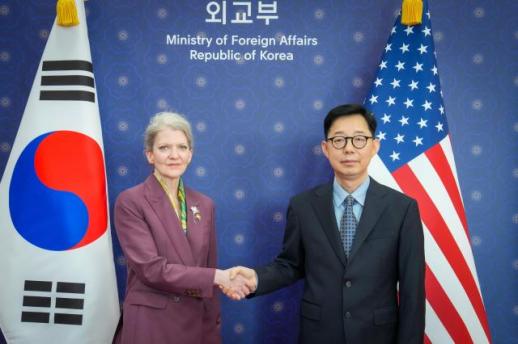 U.S.-South Korea Talks on Nuclear Submarines and Energy Cooperation Gain Momentum Discussions between the United States and South Korea regarding the acquisition of fuel for nuclear-powered submarines and uranium enrichment and reprocessing rights for civilian nuclear power plants are gaining significant momentum. The U.S. side has expressed agreement on the need for prompt results, marking a shift in the follow-up talks that had been delayed for several months since the leaders' agreement last October. However, domestic political conditions in the U.S. and trade issues are expected to be key variables in future negotiations. On June 3, delegations from both countries continued discussions at the Foreign Ministry headquarters on security cooperation issues, including the construction of nuclear-powered submarines and the acquisition of uranium enrichment and reprocessing rights. The Foreign Ministry stated, "Both sides have agreed to establish a performance review system throughout the year to achieve substantial results quickly and to accelerate future discussions." They discussed a general timeline for these talks, with plans for a second meeting as early as next month in Washington, D.C. The focus of these discussions appears to be on amending the existing South Korea-U.S. Nuclear Cooperation Agreement to grant South Korea enrichment and reprocessing rights. Currently, South Korea can only enrich and reprocess uranium below 20% with written consent from the U.S. In contrast, Japan requires U.S. consent only when enriching above 20%. The government is reportedly exploring ways to secure broader rights without repeating the lengthy five-year process of comprehensive amendments that occurred from 2010 to 2015, considering partial amendments or separate agreements to expedite the process. Additionally, they are advocating that establishing a trans-Pacific nuclear fuel supply chain would benefit U.S. energy security. Regarding nuclear submarines, key cooperation issues related to nuclear fuel supply were discussed. The government plans to develop its own reactor and propulsion system while sourcing low-enriched uranium fuel exclusively from the U.S. To receive military-grade nuclear submarine fuel, a separate agreement beyond the existing civilian nuclear cooperation agreement will be necessary. Experts view the AUKUS agreement, established between Australia, the U.S., and the U.K. in 2024, as a relevant reference point. Currently, the government is acutely aware of the importance of time. There is a sense of urgency to advance the agreement to a point of no return while Donald Trump maintains control over domestic policy. Since this agreement stems from Trump's personal decision, it could lose momentum if the Republican Party loses congressional power in the November midterm elections or if his term ends. Future negotiations are likely to be influenced by trade issues and concerns about non-proliferation. The postponement of security discussions this month was partly due to South Korea's investment pace in the U.S. and American dissatisfaction with the Coupang data breach incident. Additionally, due to U.S. concerns that South Korea could develop nuclear weapons, strong demands for stringent nuclear material controls and information security measures, similar to those in the AUKUS agreement, are expected to follow.* This article has been translated by AI. 2026-06-03 19:24:00
 -
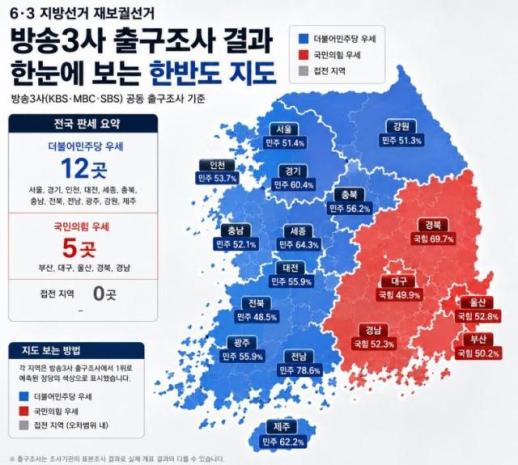 Conflicting Exit Polls Create Uncertainty in Local Elections The release of exit polls for the June 3 local elections has left both lawmakers and voters in confusion. The joint exit poll conducted by three major broadcasters—KBS, MBC, and SBS—presented a significantly different picture compared to predictions from JTBC. In some regions, the discrepancies were substantial, leading to mixed forecasts about the outcomes. Even before the counting began, many were questioning, "Which poll should we trust?" According to the exit polls from the three broadcasters, the Democratic Party appears to be on track for a decisive victory. In the Seoul mayoral race, candidate Jeong Won-o garnered 51.4%, leading Oh Se-hoon, who received 46.0%, by 5.4 percentage points. In the Gyeonggi gubernatorial election, candidate Choo Mi-ae achieved 60.4%, significantly outpacing Yang Hyang-ja, who received 34.1%. The Incheon mayoral election also showed Park Chan-dae leading with 53.7% over Yoo Jeong-bok, who received 45.5%. In Busan, candidate Jeon Jae-soo was projected to win with 50.2% against Park Hyung-jun's 48.3%, indicating a Democratic advantage. Similar forecasts for the Ulsan mayoral and Gyeongnam gubernatorial elections predicted victories for candidates Kim Sang-wook and Kim Kyung-soo, respectively. Based solely on the three broadcasters' exit polls, the Democratic Party is interpreted as having a strong hold on the capital region, as well as making significant gains in the so-called PK region of Busan, Ulsan, and Gyeongnam. Some analysts even suggest that the party has seized the momentum in this nationwide election. However, JTBC's predictions tell a different story. While the Democratic Party maintained a lead in the Seoul, Busan, Incheon, and Gyeonggi races, JTBC classified five regions—Chungbuk, Chungnam, Gyeongnam, Jeonbuk, and Daegu—as competitive. Areas where the three broadcasters indicated a clear advantage for the Democratic Party were still considered toss-ups by JTBC. For instance, in the Chungbuk gubernatorial race, the three broadcasters reported Shin Yong-han leading Kim Young-hwan by 12.4 percentage points, while JTBC viewed it as a competitive race with only a 4.4-point margin. Similarly, in the Gyeongnam gubernatorial election, the three broadcasters predicted Kim Kyung-soo leading by 8.6 points, while JTBC assessed it as a close contest with just a 4.6-point difference. The discrepancies were also notable in the Gangwon gubernatorial race, where the three broadcasters projected a 2.6-point gap between Woo Sang-ho and Kim Jin-tae, while JTBC estimated a 13.8-point difference. The Seoul mayoral race also showed a divergence of over 5 percentage points between the two sources. The most striking contrast emerged in the by-election for the Busan North Gap district. The three broadcasters reported Ha Jung-woo at 42.6% and Han Dong-hoon at 41.6%, indicating a narrow lead for Ha. However, JTBC predicted Han would secure 48.1% to Ha's 37.6%, flipping the expected outcome beyond mere statistical margins. In the Gyeonggi Pyeongtaek election, the three broadcasters indicated a tight race among candidates Jo Guk, Yoo Yi-dong, and Kim Yong-nam, all around 30%, while JTBC forecasted Kim Yong-nam in the lead. As a result, the political atmosphere remains cautious, with neither party eager to declare victory or concede defeat immediately following the exit poll announcements. The Democratic Party may interpret the results from the three broadcasters as evidence of expanded influence in the capital region, Chungcheong, and parts of the PK region. Conversely, the People Power Party is focusing on the fact that many areas remain competitive according to JTBC, raising hopes for a potential turnaround. Regions like Daegu, Chungbuk, Chungnam, Gyeongnam, and Jeonbuk are seen as critical battlegrounds for assessing future electoral dynamics. While the three broadcasters show a strong Democratic trend, JTBC suggests that the final results remain uncertain until the counting concludes. This divergence in interpretations of the same election underscores the complexity of the current political landscape. Ultimately, the final answers will come from the counting results. Exit polls are important indicators of public sentiment, but instances of conflicting predictions from major broadcasters are rare. This local election is poised to be remembered not only for the outcomes for candidates but also for the accuracy of the exit polling organizations' forecasts. 2026-06-03 19:24:00
 -
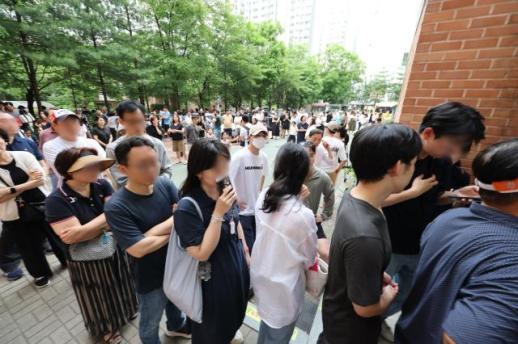 Voting Paper Shortage in Seoul's Gangnam, Songpa, and Gwangjin Districts During the local elections on June 3, some voters were turned away due to a shortage of ballots at polling stations. The National Election Commission responded by sending additional ballots and allowing voters waiting in line to cast their votes after the official closing time. However, the People Power Party expressed strong opposition to the situation. On June 3, Jeong Hee-yong, the party's secretary-general, stated at the party headquarters in Yeongdeungpo, Seoul, "The occurrence of voters being unable to vote due to a shortage of ballots goes beyond mere preparation issues; it is a dereliction of election management duties. We cannot contain our dismay." He further emphasized, "The cause of this incident must be clearly explained to the public. The People Power Party will not overlook the previous controversy over ballot transparency and the current shortage of ballots." The People Power Party's Seoul chapter confirmed that there was a shortage of ballots at several polling stations in Gangnam, Songpa, and Gwangjin districts. While the Election Commission hurriedly dispatched additional ballots, some voters chose to leave without voting. Bae Hyun-jin, chair of the Seoul chapter, criticized the situation, stating, "This is not just a simple mistake; it demonstrates a complete breakdown of the basic election management system and undermines the foundations of democracy." Given that the ballot shortage occurred in areas traditionally supportive of the People Power Party, the implications of this incident are expected to be significant. In response, Shin Dong-wook, chair of the Fair Election Assurance Committee, visited the National Election Commission in the evening to lodge a protest.* This article has been translated by AI. 2026-06-03 19:15:00