
Journalist

오오타니 사토시 기자/ [번역] 이경
-
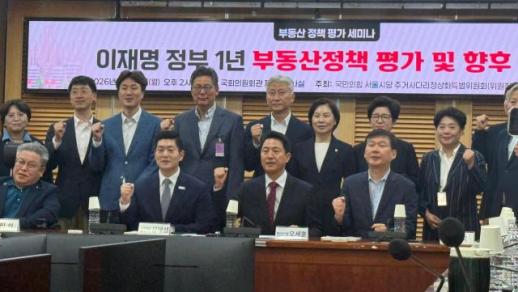 Oh Se-hoon Calls for Supply-Centric Real Estate Policy Amid Criticism Oh Se-hoon, the candidate for mayor of Seoul from the People Power Party, criticized the real estate policies of the Lee Jae-myung administration, emphasizing the need for a supply-centered approach. He dismissed allegations regarding construction errors in the GTX (Great Train Express) A line as politically motivated attacks. Speaking at a seminar on the evaluation of the Lee Jae-myung government's real estate policy and future tasks, held at the National Assembly, Oh stated, "The solution to real estate policy is not complicated. First, supply; second, supply; the key is simply to increase supply." He added that only sustainable and rapid supply, rather than excessive regulations that stifle the market, can provide a solution. Oh criticized the current state of the real estate market, describing it as "very dire." He pointed out that excessive lending regulations have dismantled the housing mobility ladder for citizens and that recent proposals to alter long-term holding tax exemptions have further confused the market. He noted that spontaneous market intervention comments from President Lee on social media have led to increased uncertainty and anxiety among the public. He also highlighted Seoul's commitment to a supply-centered policy, asserting, "While the government has shaken the market with regulations, Seoul has consistently pursued supply policies. I, Oh Se-hoon, will ensure housing stability for Seoul citizens through planning and execution." Regarding the GTX allegations, Oh referred to them as a "farce," suggesting that the Democratic Party is feeling threatened by fluctuating support for their candidate. He criticized the campaign atmosphere of Democratic candidate Jeong Won-o, indicating a willingness to use the rebar incident as a campaign issue. He remarked, "As revealed in the morning committee meeting, this is truly absurd. The situation was handled according to manuals and principles, but it turned into a farce as they tried to force it into a cover-up allegation." Oh intensified his criticism of the Democratic Party, stating, "They cannot erase the suspicions surrounding this critical election. We are currently discussing safety measures after discovering construction errors during the project. Their efforts to manipulate the election in their favor are truly petty and unbecoming of the ruling party." Meanwhile, Jeong continues to press the issue of construction errors, including missing rebar, on the GTX-A line. The Democratic Party claimed during a meeting of the Administrative Safety Committee that the Seoul city government failed to report these issues to the Ministry of Land, Infrastructure and Transport immediately, attributing responsibility to Oh.* This article has been translated by AI. 2026-05-18 17:57:44
 -
 Financial authorities to tighten liquidity rules for securities firms SEOUL, May 18 (AJP) - Financial regulators are going to tighten the rules for their assessment for how securities firms can raise cash quickly during a financial crisis, the Financial Services Commission (FSC) and the Financial Supervisory Service (FSS) said on Monday. The stricter rules, which used to apply only to big brokerages, will now cover all firms. They will also value assets such as stocks and funds at less than their full market value, since these can be difficult to sell quickly during a financial crisis. Under the proposed amendments, the measures are intended to address vulnerabilities exposed during the 2022 crisis involving amusement park Legoland, when brokerages faced severe liquidity shortages and required emergency government support despite reporting liquidity ratios above 100 percent. The most significant shift is the expansion of the regulatory scope. Only comprehensive financial investment business entities - large investment banks - and brokerages issuing derivative products were required to maintain liquidity ratios above a certain level. But this requirement will become mandatory for all 49 securities firms. The aim is to bring small and medium-sized brokerages, which possess relatively weaker capital-raising capabilities into the risk management perimeter. About a dozen branches of foreign firms will be excluded from the new measures as they primarily engage in brokerage and advisory services that have a minimal impact on liquidity risk, according to the FSS. Previously, brokerages could count their stock and bond holdings at full value when calculating liquidity. But those assets will be discounted to account for the losses that can occur when firms are forced to sell quickly in a stressed market. For example, government and municipal bonds will continue to be counted at full value (100 percent). However, assets that are more vulnerable to panic selling during a crisis - such as listed equities, foreign securities, and open-ended funds — will be discounted by 15 percent, meaning only 85 percent of their value will be recognized as usable liquidity. Conversely, when calculating liabilities, "potential debt" (contingent liabilities) such as loan commitments and debt guarantees must be strictly included in current liabilities. Money that a brokerage must pay or repay on behalf of clients during a crisis will be preemptively categorized as debt to evaluate practical risk exposures. Non-liquid assets such as closed-ended real estate funds will have their liquidity timelines tied strictly to their remaining maturity rather than arbitrary liquidation estimates. Regulators will also differentiate regulatory burdens for repurchase agreement (RP) sales and securities lending transactions, which are frequently used for short-term cash generation, based on the creditworthiness of the underlying collateral. Financial authorities are simultaneously moving to strengthen the risk weights for real estate Net Capital Ratios (NCR) and establish aggregate investment caps to manage exposures in real estate financing. For major comprehensive financial investment entities, a separate, differentiated capital regulation framework will be prepared within this year. The proposed amendments will be subject to a regulatory change notice later this week to gather industry feedback before taking effect on Jan. 1 next year. 2026-05-18 17:56:34
 -
 First Unification White Paper Released by Lee Jae-myung Administration, Emphasizing Peaceful Coexistence The Lee Jae-myung administration has released its first "Unification White Paper," reflecting its commitment to peaceful coexistence on the Korean Peninsula.On May 18, the Ministry of Unification published the "2026 Unification White Paper: Records of Peaceful Coexistence on the Korean Peninsula in 2025" to help the public understand the government's overall policy efforts during the year 2025.This white paper is the first issued by the Lee Jae-myung administration and includes the subtitle "Records of Peaceful Coexistence on the Korean Peninsula in 2025" for the first time since the inception of the white paper. The Ministry explained, "Since the Lee Jae-myung administration took office in June 2025, it has continuously worked to overcome the complete severance of inter-Korean relations and to shift from hostility and confrontation to peaceful coexistence. The new subtitle reflects the significance of this policy direction change." The white paper details the administration's efforts to promote and expand its "Peaceful Coexistence Policy on the Korean Peninsula." It includes proactive measures taken to ease tensions, such as halting leaflet distribution and stopping loudspeaker broadcasts, which have contributed to restoring peace in border areas. It also reflects efforts to establish a foundation for the "Peaceful Coexistence Policy on the Korean Peninsula." This includes restoring inter-Korean dialogue and cooperation functions through organizational restructuring within the Ministry of Unification and improving the reporting system for contact with North Korean residents to align with its original intent.To create a "people's sovereignty" policy on the Korean Peninsula, the Ministry established the "Korean Peninsula Peace Listening Group" under the direct supervision of the Minister of Unification to hear the voices of the public. Additionally, it has changed the designation of North Korean defectors to "North Korean residents" to move closer to unification and has shifted the paradigm of unification education to focus on peace, unification, and democratic citizenship.The white paper states that the Lee Jae-myung administration has established a policy of peaceful coexistence on the Korean Peninsula, declaring three principles: respect for North Korea's regime, no pursuit of absorption unification, and no hostile actions. It emphasizes the need to transition from the current "hostile two-state relations" to "peaceful two-state relations aiming for unification."Meanwhile, key statistics related to inter-Korean relations indicate that humanitarian aid to North Korea has been nonexistent for two consecutive years since 2024. Trade between the two Koreas has also been absent for three years since 2023.The number of people crossing the border has remained at zero for both entering and leaving North Korea since 2021, and inter-Korean communication channels have been severed since April 7, 2023. Jeong Dong-young, Minister of Unification, stated in the preface, "In 2025, we began to move the clock of peace on the Korean Peninsula, which had long been stalled. In 2026, we will continue to move steadily toward the goal of peaceful coexistence, practicing peace through actions rather than words, and hope to sit down again as neighbors coexisting peacefully." * This article has been translated by AI. 2026-05-18 17:54:33
 -
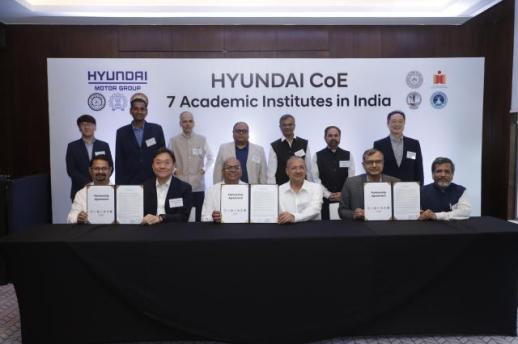 Hyundai Motor, Kia expand EV research network with Indian universities SEOUL, May 18 (AJP) - South Korean automakers Hyundai Motor and Kia have expanded their joint research network with leading Indian universities to strengthen core technologies in electric vehicle batteries and electrification, the companies said Monday. Four universities — IIT Hyderabad, IIT Kanpur, Visvesvaraya National Institute of Technology Nagpur and Tezpur University — signed agreements to participate in the network under the Hyundai Center of Excellence for future mobility technology. Hyundai Motor and Kia launched the center on April 23, 2025, with IIT Madras, IIT Delhi and IIT Bombay as part of efforts to strengthen industry-academia research cooperation in India. With the latest additions, the network now includes seven universities across India. They will work on 39 joint research projects covering batteries, electrification, advanced materials and AI-based vehicle-to-grid platforms. Hyundai Motor and Kia said the expanded network will focus on battery designs tailored to local market conditions, electrification performance technologies and talent development in future mobility. Kim Chang-hwan, executive vice president in charge of electrification energy solutions at Hyundai Motor and Kia, said the agreement represents “a shared promise for the future,” adding that Hyundai Motor Group and Indian academia will continue cooperation in future mobility technologies. The expansion comes as Hyundai Motor and Kia strengthen their presence in India, where the companies posted record first-quarter sales and recently signed an agreement with TVS Motor Company to develop India-focused electric three-wheelers. 2026-05-18 17:53:50
 -
 Netflix, AEG Presents announce plans for 'K-Pop Demon Hunters' concert tour SEOUL, May 18 (AJP) - Streaming giant Netflix and live entertainment company AEG Presents announced on May 15 that they plan to develop a global concert tour based on the animated film "KPop Demon Hunters," though no performers, tour dates or cities have been announced. The two companies said the project would draw on the film's music and fictional K-pop universe to create a live stage experience for audiences worldwide. Neither company disclosed the format of the performances — whether concerts, a theatrical production or a hybrid live production — nor a projected launch timeline. "KPop Demon Hunters," directed by Maggie Kang and Chris Appelhans and produced by Sony Pictures Animation in partnership with Netflix, follows HUNTR/X, a fictional K-pop girl group whose members secretly battle supernatural forces while maintaining their image as stadium-filling pop stars. The film and its soundtrack have also gained attention during the awards season. Its song "Golden" won Best Song Written for Visual Media at the Grammy Awards, Best Original Song at both the Golden Globes and the Academy Awards, while the film took Best Animated Feature at both ceremonies. AEG Presents, one of the world's largest live entertainment companies, has previously promoted tours for major K-pop acts including BLACKPINK, ATEEZ, LE SSERAFIM and TOMORROW X TOGETHER, among others. The announcement comes as the film's soundtrack has become one of the year's biggest music releases, expanding the property's reach beyond streaming. 2026-05-18 17:53:06
 -
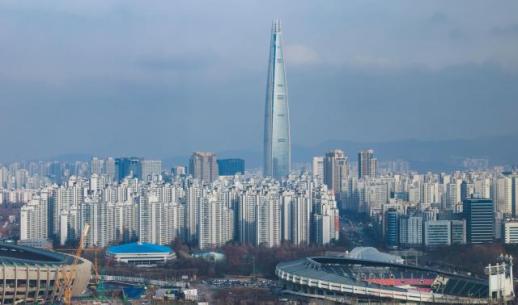 Rising Jeonse Prices in Seoul's Northeast Region Amid Regulatory Challenges The jeonse market in Seoul's northeast region is becoming increasingly inaccessible. With loan regulations and the designation of land transaction permission zones closing off gap investment opportunities, the reintroduction of heavy capital gains taxes has further restricted landlords from converting to monthly rentals. This has exacerbated the shortage of jeonse listings in the area.According to the real estate big data platform 'Asil,' the total number of jeonse listings for apartments in Seoul increased by 4.2% compared to ten days ago. However, the northeast region is experiencing a rapid contraction in its jeonse market. Dobong District saw the largest decline in listings, plummeting by 15.8% during the same period, while Seongbuk District followed with an 8.4% decrease. In contrast, areas under pressure from high jeonse loan regulations, such as Seocho and Mapo districts, saw increases of 14.1% and 14.2%, respectively, highlighting a significant mismatch in inventory.As the supply-demand imbalance intensifies, price statistics and market sentiment are reaching critical levels. The Korea Real Estate Agency reported a 0.28% increase in the weekly jeonse price index for Seoul as of the second week of May, up from 0.23% the previous week. Notably, Seongbuk District recorded the highest increase at 0.54%, with Gangbuk and Dongdaemun districts also showing strong performance at 0.33% each.KB Real Estate's jeonse outlook index for Seoul stood at 132.4, significantly above the baseline of 100, while the jeonse supply-demand index soared to 113.7, indicating the most severe 'jeonse drought' since 2021. Actual transactions are also setting new records, with the 'Dream Forest I-Park' in Jangwi New Town recently signing a jeonse contract for an 84 square meter unit at 890 million won, marking an increase of over 150 million won since the beginning of the year.With gap investment demand blocked by loan regulations and land transaction permissions, the deposit gap between new and renewal contracts for Seoul apartments widened to 55 million won from January to April. Existing tenants are utilizing their rights to renew contracts, further reducing the number of available listings.Additionally, the reintroduction of heavy capital gains taxes has left landlords with multiple properties unable to sell, leading them to shift existing jeonse listings to monthly or semi-monthly rentals to pass the tax burden onto tenants, further depleting pure jeonse inventory.Recent concentrated demand from relocation due to redevelopment projects is also putting additional pressure on the northeast jeonse market. The Mia 3 District in Gangbuk, with 1,037 units, has seen relocation demand since the second half of last year, drawing residents from nearby Seongbuk and Gangbuk districts. The Jangwi 14 District within Jangwi New Town, comprising over 2,500 units, has recently entered the appraisal and relocation planning stages.On the ground, the sense of a jeonse crisis is becoming more palpable. A representative from a real estate agency in Jangwi-dong, Seongbuk District, stated, "In Seongbuk, jeonse prices are now determined by what the market will bear. Large complex jeonse listings attract immediate interest as soon as they are posted online." They added, "The remaining relocation inventory from Imun and Hwikyung New Towns, combined with demand from Sanggye New Town, is likely to further exacerbate the shortage of jeonse listings and drive prices higher across the northeast region."* This article has been translated by AI. 2026-05-18 17:48:31
 -
 Andong flavors to headline Lee-Takaichi summit dinner SEOUL, May 18 (AJP) - Traditional cuisine and symbolic Korean-Japanese pairings will take center stage Tuesday when South Korean President Lee Jae Myung hosts Japanese Prime Minister Takaichi Sanae for a summit dinner in Andong, the country's iconic southeastern city of loyalty and tradition. According to the presidential Blue House on Sunday, the dinner will feature fusion Korean dishes inspired by “Suunjapbang,” a treasured ancient cookbook from an Andong head family. The menu will include Andong-style braised chicken, known as Andong Jjimdak, as well as “Jeongyea,” a chicken dish regarded as the origin of Andong Jjimdak. Japanese travel information site Konest describes Andong Jjimdak as “gaining recognition in Japan,” while Japanese restaurant review platform Tabelog lists around 40 restaurants nationwide that appear in searches for “chimutaku,” the Japanese rendering of Jjimdak. Jeongyea, which appears in Suunjapbang, is made by pan-frying chicken in sesame oil and braising it with soy sauce, Korean rice wine (Cheongju), and honey. It was traditionally served to welcome honored guests. Other dishes include grilled Hanwoo (Korean beef) ribs, rice, and Sinseollo, a royal-style hot pot. Andong is famous for its vast fields, which produce the country's top-class rice, as well as its Hanwoo. For the dinner drinks, traditional liquors Taesaju and Andong Soju will be served alongside Japanese Sake from Nara Prefecture, Takaichi’s hometown, in a gesture symbolizing friendship and harmony between the two countries. Dessert will combine Jeonyak, a traditional Korean seasonal dessert, and Mochi, a type of chewy Japanese rice cake, on a single plate. The summit, scheduled for Tuesday, will mark the sixth summit of the Lee administration and the second round of shuttle diplomacy between Lee and Takaichi this year. It comes about four months after the two leaders met in Nara Prefecture in January. Takaichi is expected to arrive at Daegu International Airport on Tuesday afternoon before traveling to a hotel in Andong. Lee plans to greet the Japanese prime minister in person at the hotel entrance. A traditional honor guard of 43 members and a 29-member military band will escort Takaichi’s vehicle, while 12 flag bearers will be stationed on both sides of the hotel entrance to stage a formal welcome ceremony. After the summit, the two leaders are scheduled to issue a joint press statement, followed by the dinner and other events aimed at strengthening personal ties. Following the dinner, Lee and Takaichi are scheduled to watch the Hahoe Seonyu Julbul Nori, a traditional fireworks event in Hahoe Village. The performance combines “Julbul,” in which bags containing burning embers are hung on handwoven ropes and lit so sparks fall toward the river, with “Seonyu,” a boat ride traditionally enjoyed by aristocrats. At Takaichi’s accommodation, welcome gifts will be prepared, including Wolyeong Yakgwa, a traditional sweet and chewy snack, as well as Taesaju. 2026-05-18 17:48:28
 -
 Special Prosecutors Investigate Former NIS Officials for Insurrection Charges The Special Prosecutors' Office, led by Kwon Chang-young, is investigating former National Intelligence Service (NIS) Director Cho Tae-yong and former Deputy Director Hong Jang-won, along with four other former NIS officials, on charges related to insurrection. The investigation focuses on allegations that former President Yoon Suk-yeol attempted to justify the declaration of emergency martial law through diplomatic and security channels shortly after it was imposed on December 3. During a regular briefing on May 18 at the Special Prosecutors' Office in Gwacheon, Special Prosecutor Kim Ji-mi stated, "We have designated Cho, Hong, and four other former NIS officials as suspects in connection with their involvement in insurrection-related duties and are currently investigating them." Previously, the Special Prosecutors' Office executed a search warrant on the NIS's computer servers and questioned over 40 individuals. They have confirmed that Cho met with former President Yoon after the declaration of martial law and subsequently held meetings with NIS officials and department heads. The Special Prosecutors' Office issued a summons for Cho to appear on May 19, but he has refused to comply. A summons for Hong has been scheduled for May 22. Additionally, the investigation is looking into whether the NIS was involved in communicating messages that supported the martial law to U.S. intelligence agencies. However, during the briefing, the Special Prosecutors' Office refrained from providing specific details regarding the charges or the nature of the communications. The Special Prosecutors' Office has also charged Shin Won-sik, former head of the National Security Office, and Kim Tae-hyo, former Deputy Director, with insurrection-related duties. Kim has been questioned as a suspect both on May 15 and again on this day. The investigation appears to be examining the possibility that former President Yoon sought to justify the martial law through channels including the Foreign Ministry, National Security Office, and NIS. Investigations into former Prosecutor General Shim Woo-jung are ongoing. The Special Prosecutors' Office has executed a search warrant on the Gwangju Center, where the internal server of the Supreme Prosecutors' Office, known as "Epros," is located, and has begun forensic analysis of the first batch of seized materials. In addition, the Special Prosecutors' Office is investigating allegations related to the Yangpyeong Expressway route change, the relocation of the presidential residence, the Deutsche Motors stock manipulation case, and issues related to the Unification Church's gambling investigations. Last week, they questioned nine suspects and 42 witnesses. Meanwhile, the Special Prosecutors' Office plans to submit a report to the President and the National Assembly this week regarding an extension of the investigation period, which is set to expire on May 24 after 90 days. Under the Special Prosecutors' Act, the investigation period can be extended twice for 30 days each.* This article has been translated by AI. 2026-05-18 17:44:11
 -
 Samsung takes aim at OLED dominance with ultra-bright micro RGB TV SEOUL, May 18 (AJP) - Samsung Electronics is intensifying its assault on the ultra-premium television market, leveraging next-generation display technology and generative artificial intelligence to challenge the dominance of OLED panels. The South Korean tech giant's 2026 Micro RGB TV (Model: R95H) is garnering strong endorsements from major tech reviewers in the U.S. and U.K., signaling a potential shift in the high-end display landscape. The strategy heavily targets the traditional weakness of OLED TVs—peak brightness. According to U.S.-based tech outlet Tech Aeris, the new Micro RGB lineup presents a compelling alternative for consumers demanding "OLED-level colors with higher brightness," naming it a 2026 Editor's Choice. At the core of Samsung's push is the "Micro RGB AI Pro" processor , which not only handles real-time scene analysis and color tuning but also marks a significant step in transforming the TV into a comprehensive AI hub. Moving beyond mere picture optimization, Samsung has integrated broad AI services, including Copilot and Perplexity, directly into the viewing experience. The technical specifications also underscore Samsung's aggressive market positioning. The new model has secured the 'Micro RGB Precision Color 100' certification from the German testing institute VDE, achieving 100 percent of the BT.2020 color gamut standard established by the International Telecommunication Union (ITU). By combining uncompromising brightness with deep AI integration, Samsung aims to set a new standard for home theaters, actively courting tech-savvy consumers who prioritize both color accuracy and high-performance gaming capabilities. 2026-05-18 17:40:12
 -
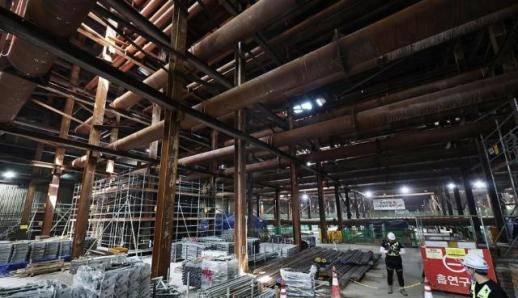 Concerns Grow Over Delays in GTX-A Line Due to Steel Rebar Shortage at Samsung Station The fallout from a significant steel rebar shortage at the Samsung Station transfer center, a key hub for the GTX-A line, is intensifying. To prevent self-verification by the construction company and the project owner, the government plans to engage an external professional organization to reassess the reinforcement methods from scratch. This comes amid escalating blame between the Ministry of Land, Infrastructure and Transport, the Seoul Metropolitan Government, and Hyundai Engineering & Construction over a five-month delay in reporting the construction error, raising concerns about the planned full opening of the GTX-A line (non-stop passage through Samsung Station) later this year.According to the construction and railway industries on May 18, the Ministry of Land is considering appointing external organizations, including professional societies, to verify the reinforcement methods for the Samsung Station transfer center's columns, aiming to eliminate any potential influence from the project owner and construction company and ensure the objectivity of structural safety verification.A ministry official stated, "We plan to review not only the steel plate reinforcement method proposed by Hyundai Engineering & Construction but also alternative methods."Currently, Hyundai Engineering & Construction is proposing a method that involves attaching and welding steel plates to the outer walls of the columns as the most viable reinforcement approach. They argue this method is efficient, allowing for early structural stability while minimizing construction time.Hyundai Engineering & Construction explained, "We proactively identified the steel rebar shortage in the columns of the underground fifth floor during our quality screening process last November and immediately notified the Seoul Metropolitan Government. Since then, we have been collaborating with the city to develop a reinforcement method and have been waiting for the city’s decision regarding the implementation of this method."On the same day, the Ministry of Land deployed a special inspection team consisting of 12 external experts from organizations such as the Korea Safety Management Agency and the Korea Railroad Research Institute to the site. Under the Construction Technology Promotion Act, they plan to conduct a thorough investigation of all aspects of construction, safety, and quality management for the underground complex development project on Yeongdong-daero over the next month. If any illegal activities are confirmed, measures such as penalties against Hyundai Engineering & Construction are being considered.There are interpretations within and outside the government that the Ministry of Land views this incident not merely as a construction error but as a failure in project management, given that it delayed official reporting for about five months after identifying the steel rebar shortage last November. The ministry has initiated an audit concerning the circumstances surrounding this delay, targeting the Seoul Metropolitan Government and the Korea Railroad Corporation.In response, the Seoul Metropolitan Government has denied allegations of concealment, asserting that there were no procedural issues. They stated in a briefing that they submitted construction management reports, which included the relevant issues, to the Korea Railroad Corporation three times between November of last year and January of this year, following the procedures outlined in the construction management agreement.The Seoul government also noted, "The structural engineer's review confirmed that there are currently no issues with the load capacity," adding that they shared the final reinforcement plan with the Ministry of Land at the end of April after confirming safety and construction feasibility.As the government has decided not to accept Hyundai Engineering & Construction's reinforcement method outright and will instead reassess alternative methods through a professional society, the company's internal schedule for a '10-week steel plate reinforcement project' is likely to be significantly altered.The additional time required for appointing external professional societies and the verification service overlaps with the Ministry of Land's special inspection period, increasing the likelihood of delays in the start of the reinforcement work itself. If subsequent facility verification tests and operational trials are also delayed, the Ministry's target for non-stop passage through Samsung Station later this year may be pushed back to after the end of the year.A construction industry insider remarked, "This is not simply a 10-week reinforcement project; the government is calling for a complete reassessment of the method itself, which could impact the scheduled official opening of Samsung Station set for the end of 2028."* This article has been translated by AI. 2026-05-18 17:39:00