
Journalist

AJP
-
 National Museum of Korean Literature Unveils Original 'Paris Petition' for March 1 Anniversary The National Museum of Korean Literature on Monday released the original manuscript of the “Paris Petition” to mark the March 1 Independence Movement anniversary. The document is the original letter sent to the Paris Peace Conference shortly after the March 1 Movement, drafted by a nationwide coalition of Confucian scholars. The museum said it was prepared in consultation by organizers Kim Chang-sook and Kwak Jong-seok, written in Kwak’s own hand, and later supplemented with notes by classical scholars Lee Ga-won and Jeong Mu-yeon, giving it high historical value. The “Paris Petition incident” began after Confucian scholars across the country, disappointed at not being included among the national representatives on the March 1 Declaration of Independence, decided to send an independence appeal to the Paris Peace Conference. Kim served as the representative, gathering support by dispatching envoys to scholars in each region and meeting scholars in North Gyeongsang Province. He asked Kwak, his teacher and academic ally in Geochang, to draft the text, and the two finalized the wording together. To help Kim, who was expected to travel to Paris via Shanghai, Kwak introduced people in Shanghai who could assist him. To evade police, the original text was torn into thin strips, line by line, and woven into straw sandals, the museum said. While Kim was preparing the original in North Gyeongsang, scholars in the Chungcheong region, led by Kim Bok-han, separately drafted an independence appeal. After discussions, they adopted Kwak’s original, revised it, and produced a final version signed by 137 scholars. The petition was mailed to Kim Kyu-sik, who was in Paris as a Korean representative, and Chinese-language and translated versions were distributed to media outlets, consulates and local Confucian schools in Korea. Japanese police investigating the March 1 Movement later uncovered the effort, and more than 20 people, including Kwak and Kim Bok-han, were imprisoned. Although the petition’s contents have been cited in multiple sources, the original manuscript has not previously been made public, the museum said, adding that the release allows the document to be verified in full. The museum said the handwritten original also calls for renewed attention to the petition’s present-day meaning. Along with the release, the museum selected Kwak and Kim as its “featured literary figures of the month” and said it will hold an academic event on March 26 at Sungkyunkwan University highlighting the Paris Petition. The “featured literary figures of the month” is a new museum initiative that will name notable writers each month, with related website columns and events aimed at revisiting figures who left a major mark on Korea’s literary history. * This article has been translated by AI. 2026-02-24 16:03:29
 -
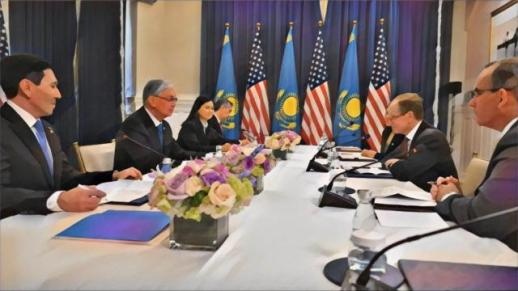 President Tokayev visits US to secure investment and aviation deals SEOUL, February 24 (AJP) - Kazakhstan's President Kassym-Jomart Tokayev recently wrapped up a trip to the United States, focusing on high-level negotiations with global corporations and financial institutions, the Embassy of Kazakhstan in the Republic of Korea said Tuesday. The visit was designed to bring in long-term investment and move Kazakhstan further into international production chains. A major result of the trip was a 180 million dollar investment deal signed between Kazakhstan's Ministry of Agriculture and Mars, Incorporated. The company intends to build a pet food manufacturing plant in Alatau. Mars CEO Poul Weihrauch noted that the new facility will serve as a hub for the company's growth across Central Asia and nearby regions. In the healthcare sector, the President held talks with Ashmore Group regarding a plan to build an international clinic. This project is a joint effort between Ashmore Healthcare International and Samruk-Kazyna Invest, with the U.S.-based Mount Sinai Health System expected to manage the facility. This move is part of a larger plan to boost Kazakhstan's medical infrastructure and attract medical tourism. Aviation also took center stage during the visit. President Tokayev met with Boeing executives to discuss expanding the fleets of Air Astana, SCAT Airlines, and VietJet Qazaqstan. Air Astana is on track to receive Boeing 787 Dreamliner aircraft in the second half of 2026, which would make direct flights between Kazakhstan and the U.S. possible. Meanwhile, SCAT is looking into opening a maintenance and repair center at Shymkent Airport with help from an American partner. The President also met with Ben Black, CEO of the U.S. International Development Finance Corporation (DFC), who described Kazakhstan as a critical partner in Eurasia. Their talks focused on mining projects and improving the transit infrastructure used for regional trade. According to the World Investment Report 2025 by UNCTAD, Kazakhstan currently leads Central Asia in attracting foreign direct investment. In 2024, the country's total inward investment reached 151 billion dollars, far ahead of neighbors like Turkmenistan at 45 billion dollars and Uzbekistan at 17 billion dollars. President Tokayev also attended the first meeting of the Board of Peace in Washington. During the event, he indicated that Kazakhstan is ready to assist with reconstruction and stabilization in Gaza, potentially through financial support or participation in peacekeeping missions. 2026-02-24 15:54:52
 -
 YG Plus to open BLACKPINK 'Deadline' pop-up in Seoul SEOUL, February 24 (AJP) - YG Plus announced that it will operate pop-up stores themed around BLACKPINK’s upcoming release “Deadline” from Feb. 28 to March 8 at Musinsa Store Myeongdong and Musinsa Standard Seongsu. The pop-up will unveil a range of official merchandises commemorating the new album. Items include apparel and lifestyle products reflecting the album’s concept, as well as limited-edition exclusive goods will be available at the pop-up. Following the kick off in Seoul, the “Deadline” pop-up is scheduled to expand sequentially to major global cities, including Hong Kong and Macau. YG Plus said “It is a pop-up designed to allow fans to experience BLACKPINK’s global influence in an offline space." adding "It will provide a special opportunity for fans around the world to directly experience the message and mood of ‘Deadline.’” The four-member K-pop heavyweight girl group BLACKPINK — Rosé, Jisoo, Jennie and Lisa — recently surpassed 100 million subscribers on its official YouTube channel, becoming the first artist in YouTube history to reach the milestone with an official artist channel. 2026-02-24 15:49:46
 -
 Michelle Wie West to Return in Virtual Reality Golf League WTGL After 2023 Retirement Michelle Wie West, the Korean American golfer who retired in 2023, is returning to competition through WTGL, a virtual reality golf league. TMRW Sports, which runs the league, announced on the 24th that Wie West will join WTGL, set to launch in the 2026-2027 season. TMRW Sports, led by Tiger Woods and Rory McIlroy, has operated TGL since last season, a virtual reality golf competition featuring PGA Tour players. TGL matches combine screen-based simulator play with a purpose-built venue featuring a “Green Zone” designed to resemble a real putting surface. WTGL, a women’s league, is scheduled to begin in the 2026-2027 season. Players committed so far, in addition to Wie West, include world No. 1 Jeeno Thitikul of Thailand, Charley Hull and Lottie Woad of England, Lydia Ko of New Zealand, Brooke Henderson of Canada, and Rose Zhang and Lexi Thompson of the United States. In a statement, Wie West said, “As a TGL fan, I’m very excited to have the chance to compete again through WTGL. WTGL will be a powerful platform for women’s golf.” Wie West rose to prominence as a teenager and became one of the sport’s biggest stars, winning five LPGA Tour titles, including the 2014 U.S. Women’s Open. She retired after the 2023 U.S. Women’s Open.* This article has been translated by AI. 2026-02-24 15:49:27
 -
 Lee-Lula summit: a warm embrace and strategic partnership SEOUL, February 24 (AJP) -Cordiality defined the meeting between South Korean President Lee Jae Myung and Brazilian President Luiz Inácio Lula da Silva during Lula’s three-day state visit to Seoul — his first in 21 years since 2005. Lula was the first state guest welcomed by Lee since the presidential office returned to Cheong Wa Dae in December last year, adding symbolic weight to the visit. The two leaders held formal talks at Cheong Wa Dae on Feb. 23, followed by a memorandum of understanding (MOU) signing ceremony and a joint press conference. But beyond the official program, it was their personal chemistry that stood out. Both leaders, who rose from working-class backgrounds to their nations’ highest offices, shared a warm embrace — a gesture that underscored both political alignment and personal affinity. Seoul and Brasília agreed to elevate bilateral relations to a “strategic partnership,” signaling a deeper institutional framework for cooperation. Brazil — Latin America’s largest economy with a population exceeding 200 million — is a major agricultural and resource powerhouse and an influential voice of the Global South. The country maintains active engagement with China, India and Japan, positioning itself as a pivotal partner in emerging-market diplomacy. Lula departed on Tuesday after concluding his three-day state visit. 2026-02-24 15:49:22
 -
 Presidential chief of staff leaves for UAE to discuss AI and defense cooperation SEOUL, February 24 (AJP) - Presidential chief of staff Kang Hoon-sik left for the United Arab Emirates (UAE) on Tuesday to discuss cooperation in economic and defense sectors, artificial intelligence (AI) and other areas with the Middle Eastern country. In a Facebook post, Kang said he was embarking on a three-day trip for working-level consultations to discuss follow-up measures after President Lee Jae Myung's state visit to the UAE in November last year. Kang also said the trip serves as a return visit following Khaldoon Khalifa Al Mubarak, managing director of Abu Dhabi's Executive Affairs Authority, traveled to South Korea last month. Kang's trip also comes just months after his previous visit to the UAE, during which he met with Al Mubarak and prepared for Lee's summit with UAE President Mohammed bin Zayed Al Nahyan. At the time, the two leaders discussed opening a high-level dialogue channel and expanding cooperation on AI, while also exploring ways to jointly enter the global nuclear power market by leveraging experience gained from the construction of a nuclear power plant in Barakah, the Arab world's first commercial facility of its kind. 2026-02-24 15:38:56
 -
 Rising Delinquencies and Bigger Provisions Cloud South Korean Banks’ Profits Rising loan delinquencies and heavy provisioning are weighing on South Korea’s banks, even as they step up efforts to sell off bad loans. Analysts say asset-quality management is being tested because new delinquencies are increasing faster than banks can dispose of nonperforming loans. According to the financial sector on Monday, banks sold 8.1 trillion won ($8.1 trillion) worth of NPLs last year. Banks typically classify loans delinquent for more than three months as NPLs and, when recovery looks unlikely, sell them to securitization firms to manage delinquency ratios. But delinquency rates have been slow to fall despite aggressive NPL cleanups, as newly delinquent loans are growing faster. Data from the Financial Supervisory Service showed the delinquency rate on won-denominated bank loans stood at 0.50% at the end of last year, the highest since the end of 2015 (0.58%). The corporate-loan delinquency rate rose to 0.59%, up 0.09 percentage points from a year earlier. With banks expected to expand corporate lending this year under a “productive finance” policy push, they are likely to build additional provisions. NPL sales aimed at maintaining asset quality could also increase. NPL sales in the first half are estimated at 4 trillion won, and the annual total is expected to exceed last year’s level. A larger volume of NPL sales can also cut net profit. When bad loans are sold below book value, banks record losses equal to the discount. Some in the industry warn that a full-scale push into corporate lending starting this year could lead to a stronger profit hit in coming years as NPLs rise. “NPL volumes won’t surge immediately, but they could gradually increase in a few years due to factors such as a prolonged economic slowdown,” a financial industry official said. “If net profit falls as a result, it could disrupt value-up plans and business strategy.” Other pressures on earnings are also growing, including fines tied to equity-linked securities and contributions to the Korea Inclusive Finance Agency. Fines for five banks that sold ELS — KB Kookmin, Shinhan, Hana, NH NongHyup and SC First Bank — are expected to be finalized at about 1.4 trillion won on Tuesday. As of the end of last year, KB Kookmin Bank had booked 263.3 billion won in provisions for the ELS fines but will need to add more than 500 billion won. Shinhan Bank and Hana Bank set aside 152.7 billion won and 92.0 billion won, respectively. The provisions are expected to be recorded as nonoperating expenses, weighing on net profit. From the second half of next year, banks will no longer be allowed to include statutory costs — such as reserve requirements, deposit insurance premiums and contributions to the Korea Inclusive Finance Agency — in the add-on spread used to calculate lending rates, adding to pressure on earnings. “If additional real estate rules are introduced, such as banning loan extensions for owners of multiple homes, borrowers could leave and banks could lose growth opportunities,” another financial industry official said. “Capabilities such as corporate analysis systems and long-term delinquency management will determine survival.” 2026-02-24 15:33:00
 -
 Hanwha Aerospace Launches Consortium to Localize Aircraft Engine Materials and Parts Hanwha Aerospace said it is moving to build a cooperative ecosystem to localize key aircraft engine materials and components. The company said it held an “Aircraft Engine Materials and Parts Localization and Shared-Growth Cooperation Agreement Ceremony” on the 24th at its Changwon Plant 1 in Changwon, South Gyeongsang Province. A total of 39 partner companies, including Korea Carbon, KPCM, Korea Lost Wax (KLW) and Tesco, jointly signed a memorandum of understanding with the Korea Testing Laboratory, the Korea Testing & Research Institute and Korea University of Technology and Education. Officials from the Korea Institute of Materials Science, the Air Force Aircraft Resource Management Group, the Agency for Defense Development and Gyeongsang National University also attended. Hanwha Aerospace said the signatories will form a consortium to pursue localization in a more systematic way and conduct joint R&D for development, testing, evaluation and certification. The company said it also plans to establish and carry out a global supply-chain strategy to help partners enter overseas markets, and later expand cooperation to other areas of aircraft engine development, including design and machining. Hanwha Aerospace said it has worked with partners to develop core technologies in aircraft engines. Working with domestic precision casting firms including Korea Lost Wax, Seongil Turbine and Cheonji Industry, it said it has developed and mass-produced turbine blades and high-temperature parts using second- and third-generation single-crystal materials over the past 20 years and obtained international certifications including NADCAP and KOLAS. It said it supplies coating materials to original equipment manufacturers with its joint venture, ThermTech Korea. It also said SeAH Changwon Special Steel, a specialty steel maker, has worked with Hanwha Aerospace to develop Waspaloy material for Pratt & Whitney’s GTF engine, meeting quality requirements and nearing entry into the global supply chain. In October last year, Hanwha Aerospace said it established and is operating the Hanwha Materials Joint Research Center at the Korea Institute of Materials Science to develop key aircraft engine materials. Cho Moon-soo, chairman of Korea Carbon, said, “At a time when securing export competitiveness is more important than ever, I expect this newly launched consortium will lead to tangible growth in partners’ capabilities and export results.” Son Jae-il, CEO of Hanwha Aerospace, said, “Without shared growth with our partners, we cannot achieve localization of aircraft engines,” adding, “We will secure technological sovereignty through mutual growth.” * This article has been translated by AI. 2026-02-24 15:30:19
 -
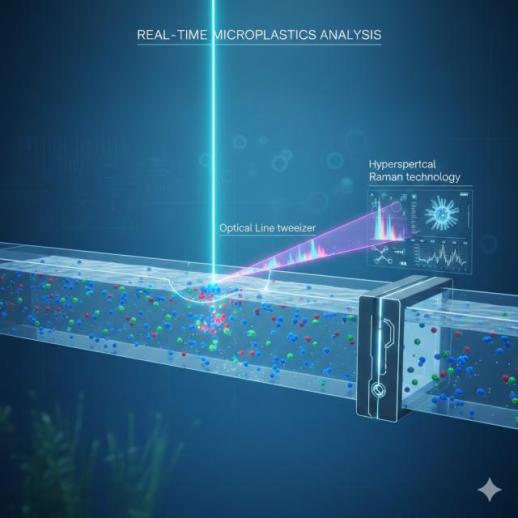 Kookmin University researchers develop real-time capture and analysis technique for aquatic microplastics SEOUL, February 24 (AJP) - A research team led by Professor Kim Hyung-min at Kookmin University has developed an innovative technology capable of capturing and analyzing micro- and nano-sized plastics in water in real time. The breakthrough addresses a major technical challenge in environmental science by allowing for the continuous monitoring of tiny plastic particles that are otherwise difficult to isolate from their surroundings. Microplastics, defined as particles smaller than 5 millimeters, originate from industrial processes and daily consumer activities. These particles eventually accumulate in marine ecosystems, where they pose significant risks to both the environment and human health. Despite these dangers, accurately mapping the distribution and weathering process of these particles in vast water bodies has remained difficult for the scientific community. To overcome these limitations, the researchers created a specialized inspection device that combines optical line tweezer technology with hyperspectral Raman spectroscopy. The system uses a laser to trap flowing microplastic particles along a linear path. By doing so, the device can effectively filter out interference signals from the surrounding water to precisely identify the size, shape, and specific type of each plastic particle. The equipment is sensitive enough to measure ultrafast, nano-sized particles continuously. This capability significantly improves the accuracy of underwater plastic analysis compared to existing methods, which often struggle to distinguish between organic matter and synthetic pollutants in moving water. Professor Kim Hyung-min stated that the significance of this technology lies in providing a foundation for the full-scale analysis and real-time monitoring of various chemical and biological substances beyond just aquatic microplastics. The study was conducted as a joint project with a research team led by Dr. Kim Jae-hun from the Nanophotonics Research Center at the Korea Institute of Science and Technology (KIST). The project received support from the National Research Foundation of Korea through its Nano and Materials Technology Development Program and Mid-career Researcher Support Program. The findings were published as a cover article in ACS Sensors, a leading journal in the field of analytical science, which ranks in the top 3.6 percent of the Journal Citation Reports (JCR). Lee Ji-yeon, currently a researcher at Dongwoo Fine-Chem, and Dr. Park Su-bin, a postdoctoral researcher at KIST, served as the lead authors. 2026-02-24 15:28:32
 -
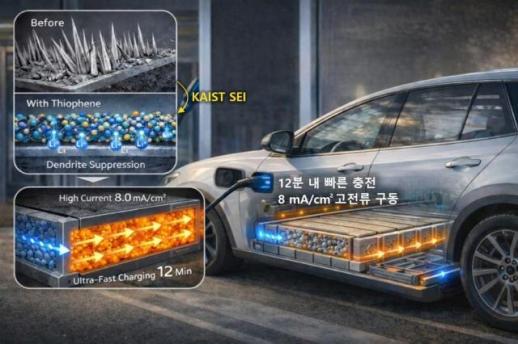 S. Korean researchers develop protective layer to enable fast charging for lithium batteries SEOUL, February 24 (AJP) - A joint research team from the Korea Advanced Institute of Science and Technology and Korea University has developed a technology to overcome stability issues that have hindered the commercialization of lithium metal batteries. The team created an intelligent protective layer that allows for rapid charging within 12 minutes while preventing the internal damage that typically shortens battery life. Lithium metal batteries are considered the next generation of energy storage because they can hold much more energy than current lithium-ion batteries. This could allow electric vehicles to travel much further on a single charge. However, during charging, lithium often forms needle-like structures called dendrites. These structures can pierce internal components, causing the battery to fail or catch fire. To solve this, the researchers added a substance called thiophene to the battery electrolyte. This additive creates a smart protective film on the electrode surface that acts like a flexible traffic management system for ions. Using a chemical structure known as a pi-conjugated system, the film rearranges its internal electrical charge in real time to create the easiest path for lithium ions to move through. By guiding the ions smoothly, the technology ensures that lithium builds up evenly on the surface rather than forming dangerous needles. The researchers confirmed this process at the molecular level using specialized microscopes that allowed them to watch the battery charging in real time. The study demonstrated that the battery could operate at high currents exceeding 8 milliamperes per square centimeter, which is double the level usually considered high in battery research. This performance level is close to what is required for the rapid acceleration and fast charging of real-world electric vehicles in South Korea and abroad. Professor Choi Nam-soon of the Korea Advanced Institute of Science and Technology (KAIST) Department of Chemical and Biomolecular Engineering stated that the research solves fundamental battery problems by designing the electronic structure of the materials. He noted that the technology could become a core foundation for next-generation electric vehicle batteries that require both fast charging and long lifespans. The technology is compatible with various existing battery materials, including lithium iron phosphate and nickel-cobalt-manganese oxides. This versatility suggests it could be applied to a wide range of future industries, including long-range electric vehicles and urban air mobility such as flying taxis. The research involved Professor Choi Nam-soon and Professor Hong Seung-bum from KAIST, alongside Professor Kwak Sang-kyu from Korea University. The findings were published in the academic journal InfoMat on February 2. (Paper information) Journal: InfoMat Title: Conjugation-mediated and polarity-switchable interfacial layers for fast cycling of lithium-metal batteries DOI: http://doi.org/10.1002/inf2.70126 2026-02-24 15:22:55