
Journalist

AJP
-
 OPINION: Bringing markets and capital together -- The Uzbekistan–Türkiye Economic Union SEOUL, January 29 (AJP) - Over the past eight years, relations between Uzbekistan and Türkiye have undergone a profound qualitative transformation, evolving from traditionally friendly ties into a full-fledged strategic partnership with a strong economic, investment, and industrial dimension. While the period prior to 2017 was largely characterized by inertia, the launch of large-scale reforms in Uzbekistan marked a decisive shift in bilateral relations toward practical cooperation focused on trade, investment, and joint manufacturing. A key role in this transformation has been played by the political will and personal engagement of the leaders of both countries - President of the Republic of Uzbekistan Shavkat Mirziyoyev and President of the Republic of Türkiye Recep Tayyip Erdoğan. Regular high-level dialogue has provided Uzbek-Turkish relations with stability, strategic coherence, and a long-term economic horizon. Political Foundations as a Driver of Economic Convergence Diplomatic relations between the two countries were established in 1992; however, a turning point came in October 2017 with the signing of the Joint Declaration on Strategic Partnership in Ankara. This step laid a solid institutional foundation for the rapid expansion of trade, economic, and investment cooperation. In 2018, the High-Level Strategic Cooperation Council was established in Tashkent under the co-chairmanship of the two presidents. Its meetings in 2020, 2022, and 2024 became key platforms for aligning priorities in trade, investment, industry, transport, and interregional cooperation. Over time, political dialogue has evolved from declarative engagement into a practical instrument supporting concrete economic initiatives and project-based decisions. Trade: Scale, Structure and Institutional Incentives Türkiye is firmly among Uzbekistan’s largest trading partners. In 2020, bilateral trade turnover amounted to USD 2.1 billion, reaching USD 3.02 billion by the end of 2025. Uzbekistan’s exports to Türkiye are predominantly industrial in nature, comprising non-ferrous metals and metal products, textiles, services, plastics, and food products. Imports from Türkiye consist mainly of mechanical and electrical equipment, chemical products, textiles, pharmaceuticals, and metal structures, reflecting Türkiye’s role as a key source of industrial technologies and equipment. A significant qualitative step forward was the signing of the Preferential Trade Agreement in 2022, which entered into force in 2023. In 2025, the parties began expanding the list of goods covered by preferential treatment, creating additional incentives for trade diversification and deeper industrial cooperation. Investment Cooperation: From Presence to Systemic Engagement Investment cooperation is one of the most dynamically developing areas of bilateral relations. In 2024, the volume of Turkish investments utilized in Uzbekistan reached USD 2.2 billion, while in January-November 2025 it increased to USD 3.2 billion. A total of 2,137 enterprises with Turkish capital operate in Uzbekistan, including 496 joint ventures and 1,641 wholly Turkish-owned companies. These enterprises are active in textiles and furniture manufacturing, construction, trade, transport, logistics, and services. Importantly, a substantial share of them is export-oriented, strengthening Uzbekistan’s integration into regional and global value chains. Industrial Cooperation: Transition to Joint Manufacturing In recent years, Uzbek–Turkish cooperation has increasingly shifted from traditional trade toward industrial partnership. Turkish companies are actively involved in establishing production facilities across Uzbekistan’s regions, introducing modern technologies, management standards, and export-oriented business models. Regular meetings of the Intergovernmental Commission on Trade and Economic Cooperation, accompanied by business forums, result in detailed roadmaps comprising dozens of measures covering industry, energy, logistics, and regional projects. This approach forms a solid foundation for sustainable industrial partnership. Interregional Cooperation: Localized Economic Engagement Active interregional interaction has become an essential element of the new partnership model. In 2024, targeted visits by delegations from the Fergana, Khorezm, Namangan, Navoi, Samarkand, and Jizzakh regions, as well as the city of Tashkent, were held to various regions of Türkiye. This format enables a shift from framework agreements to concrete investment projects, creates direct B2B and B2G communication channels, and contributes to a more decentralized and resilient architecture of cooperation. Transport and Logistics as Pillars of Trade and Investment The expansion of trade and industrial cooperation naturally increases the importance of transport and logistics interaction. Türkiye is viewed by Uzbekistan as a key logistical gateway to European and Mediterranean markets, while Uzbekistan is becoming an important hub for Türkiye’s access to Central Asia. The development of rail and road transport, along with intensive air connectivity - up to 97 regular flights per week across eight routes - enhances business mobility, supports investment activity, and strengthens economic integration between the two countries. Prospective Areas of Cooperation: Converging Interests The established economic core of Uzbek–Turkish relations provides a basis for a new phase of cooperation, shifting from quantitative growth to deeper structural and technological integration. Localization and joint development of industrial production remain key convergence points. Uzbekistan offers industrial zones, resources, and a growing domestic market, while Türkiye contributes technology, design, managerial expertise, and access to external markets. The textile and light industry is evolving toward the production of finished branded goods and contract manufacturing for international retail chains. Mechanical engineering and electrical equipment sectors are creating prerequisites for the establishment of assembly and production facilities. The agro-industrial complex offers opportunities for deep processing and joint exports of food products. A separate strategic direction is the joint entry into third-country markets, where the combination of Uzbekistan’s production potential and Türkiye’s trade and logistics infrastructure creates substantial competitive advantages. Overall, over the past eight years Uzbekistan and Türkiye have built a resilient model of strategic partnership based on trade, investment, industrial cooperation, interregional engagement, and transport connectivity. Trade turnover exceeding USD 3 billion, multi-billion-dollar investments, and thousands of joint enterprises testify to the maturity and long-term nature of bilateral relations. 2026-01-29 14:37:39
 -
 Hyundai Motor bears nearly 40% hit in Q4 income and 20% for 2025 on US tariffs SEOUL, January 29 (AJP) -South Korea's largest automaker Hyundai Motor suffered nearly a 40 percent drop in operating profit in the quarter ended December and about 20 percent for full-year 2025 due to higher tariffs under Donald Trump presidency in its largest export market despite record sales. According to its earnings release on Thursday, consolidated operating profit reached 1.7 trillion won ($1.2 billion), down 33.2 percent from the previous quarter and 40 percent from a year earlier. Revenue came to 46.84 trillion won, up 0.3 percent on quarter and 0.5 percent on year. For full-year 2025, operating profit plunged 19.5 percent on year to 11.47 trillion won, while sales climbed 6.3 percent to a record 186.25 trillion won, placing the operating margin at 6.2 percent. Hyundai’s results followed a similar pattern to those of its sister company Kia, which reported roughly a 30 percent drop in operating profit for both the fourth quarter and the full year. The declines came as Korean automakers absorbed higher 25 percent U.S. tariffs, compared with 15 percent imposed on European and Japanese competitors, until a trade deal lowered the rate to the same level retroactively in November. Hyundai Motor estimated tariff-related losses of around 4.1 trillion won from U.S. measures alone, with combined losses for Hyundai and Kia totaling about 7.2 trillion won. Shares of Hyundai Motor rose 4.7 percent to 515,500 won as of 2:40 p.m., as investors appeared more focused on the automaker’s longer-term robotics roadmap than its near-term earnings performance. Global sales totaled 4.14 million vehicles for the year. Hyundai said it plans to bolster profitability in 2026 through cost efficiencies, an expanded lineup of high-margin trims, and increased local production aimed at reducing tariff exposure. 2026-01-29 14:11:56
 -
 Saudi Air Force commander visits KAI to discuss aerospace, defense cooperation SEOUL, January 29 (AJP) - Korea Aerospace Industries (KAI) said on Thursday that Turki bin Bandar bin Abdulaziz Al Saud, commander of the Royal Saudi Air Force, and his delegation visited the company’s headquarters on Wednesday to discuss potential cooperation in aerospace and defense. KAI said the visit was part of strategic cooperation between the two countries’ air forces and aimed at exploring collaboration to modernize Saudi Arabia’s air power and strengthen its aerospace capabilities. During the visit, the delegation toured KAI’s aircraft development and production facilities and showed interest in major platforms including the KF-21 fighter, as well as maintenance, repair and overhaul (MRO) capabilities and education and training systems, the company said. KAI said the Saudi delegation gave a positive assessment of the company’s experience in advanced aircraft development, systems integration and long-term support. Al Saud attended a demonstration of the KF-21 and received a briefing on the program’s development status and key performance characteristics in front of a parked aircraft, KAI said. The company also presented its roadmap for the program, including the fighter’s design concept, operational flexibility and upgrade potential, as well as plans for a next-generation air combat system based on the KF-21. KAI described the KF-21 as a modern 4.5-generation fighter featuring stealth shaping, improved survivability and the ability to conduct joint and combined operations, secure air superiority and carry out precision strike missions. The company said planned upgrades include integration of domestically developed precision-guided weapons and manned-unmanned teaming capabilities. The company is reviewing an integrated business model linked to Saudi Arabia’s planned acquisition of a 4.5-generation fighter, including a proposal centered on the KF-21 covering operations, maintenance and training, as well as broader industrial cooperation aligned with Saudi Vision 2030. * This article, published by Aju Business Daily, was translated by AI and edited by AJP. 2026-01-29 13:53:55
 -
 HD Hyundai chairman attends meeting hosted by India's Prime Minister Modi SEOUL, January 29 (AJP) - HD Hyundai Chairman Chung Ki-sun met with Indian Prime Minister Narendra Modi to discuss ways to expand cooperation in shipbuilding, the South Korean conglomerate said on Thursday. Chung and Kim Hyeong-gwan, chief executive of HD Korea Shipbuilding & Offshore Engineering, attended a roundtable at Modi’s residence in New Delhi on Tuesday at the Indian leader’s invitation, HD Hyundai said. The roundtable, held as part of India Energy Week 2026, brought together more than 30 participants, including Modi, Indian government ministers, executives from state-owned companies and chief executives of global firms, to discuss energy and industrial cooperation. Chung thanked Modi for his commitment to developing India’s shipbuilding industry and asked for continued support for HD Hyundai’s cooperation projects in the country. As part of India’s Maritime Amrit Kaal Vision 2047 initiative, HD Hyundai signed a memorandum of understanding in July last year with Cochin Shipyard, India’s largest state-run shipbuilder, to cooperate on areas including ship design, procurement support, productivity improvements and workforce capability building. HD Hyundai said it has since expanded cooperation with Cochin Shipyard to include naval vessels, signed an exclusive memorandum of understanding with the Tamil Nadu state government on establishing a joint-venture shipyard, and pursued cooperation with state-run BEML in the crane business. * This article, published by Aju Business Daily, was translated by AI and edited by AJP. 2026-01-29 13:47:01
 -
 South Korea unveils quantum roadmap, aims to become top 4 powers by 2035 SEOUL, January 29 (AJP) - South Korea has designated quantum technology as a next-generation national strategic sector and unveiled a broad roadmap to develop technology, infrastructure and talent in parallel. The country aims to become one of the world’s four leading quantum powers by 2035, leveraging strengths in semiconductors and information and communications technology (ICT) infrastructure. The Ministry of Science and ICT announced the country’s first comprehensive plan on Thursday to foster quantum science, technology and industry, along with an initial master plan to establish a national quantum cluster. “Quantum technology can break through existing limits across a wide range of fields,” Shim Ju-seop, a ministry official, said at a briefing, adding that the government will pursue becoming an “AI powerhouse and a top-five science and technology power” through the development of quantum AI. The plan comes as the United States, China, the European Union and Japan treat quantum technology as a core national strategy, with competition accelerating amid tighter export controls and the emergence of technology blocs. Under the roadmap, the government set near-term technical targets. By 2028, it aims to develop a fully domestically produced quantum computer and expand demonstrations of quantum-secure communications for defense and public-sector use. By 2030, it plans to build a navigation system that can operate independently of the global positioning system (GPS). To achieve those goals, the ministry said it will support development of a full-stack quantum system, from quantum processing unit (QPU) semiconductors to software, while focusing on identifying practical applications of quantum AI alongside hardware development. As a focal point for growth, the government proposed creating a quantum cluster, dubbed a Korean-style "Quantum Valley,” to consolidate research and industrial capabilities that are currently dispersed nationwide. The ministry said it will draft guidelines in February, conduct planning and a public call for proposals from March through June, and select a final site in July. In the selected region, the government plans to build dedicated infrastructure, including a quantum foundry and testbeds, and make them available for open use by companies and research institutions. It also aims to spur industrial transformation and startup growth by combining quantum technology with key local industries through demonstration projects. On governance, the ministry proposed a new model in the form of a virtual organization — tentatively named the National Quantum Research Institute — rather than a single physical facility, to flexibly link capabilities across universities, research institutes and companies. The plan also places heavy emphasis on workforce development. The government said it will establish quantum-related graduate and undergraduate programs and, in cooperation with the education and labor ministries, retrain existing ICT workers for quantum-related roles. The goal is to build a comprehensive talent pipeline spanning research-focused master’s and doctoral programs, industry-ready bachelor’s graduates and reskilling opportunities for current workers, Shim said. The government said it aims to reach its 2035 target of becoming one of the world’s four leading quantum powers and to foster 2,000 companies using quantum technology. While acknowledging the country entered the field later than rivals, Shim said South Korea would pursue both technological catch-up and early market positioning by drawing on its semiconductor manufacturing capabilities and “world-class” ICT infrastructure, while building an integrated quantum ecosystem of infrastructure, institutions and talent. * This article, published by Aju Business Daily, was translated by AI and edited by AJP. 2026-01-29 13:40:45
 -
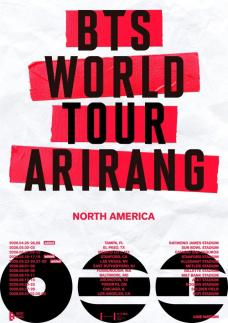 Editorial: "Arirang" and the next stage of K-culture BTS’s decision to name its new album and world tour Arirang should not be dismissed as a stylistic flourish or a marketing device. When the world’s most influential pop group foregrounds Korea’s most enduring traditional narrative, it signals not only how far K-culture has traveled, but where it may be heading next. Arirang is not a genre of music. It is a cultural language—one shaped by movement and separation, solidarity and recovery, repeated across generations and regions of the Korean Peninsula. Its designation as a UNESCO Intangible Cultural Heritage reflects this layered meaning. By choosing the name, BTS is making a quiet but consequential statement: K-pop has reached a stage where it no longer needs to dilute, neutralize or conceal its cultural origins for global acceptance. The most local story, it suggests, can now function as the most universal one. The economic effects surrounding the comeback—surging travel demand to Seoul and Busan, renewed consumption in host cities—are not incidental. They illustrate a broader shift in which Korean culture itself is becoming a destination, not merely an export. Concert tourism, by nature, remains episodic. Yet the larger question is whether such moments are allowed to dissipate as temporary windfalls, or leveraged into more durable cultural infrastructure. The global spread of K-culture can no longer be explained solely through content exports. Interest is moving beyond music, drama and games toward place, history and everyday culture. The prospect of BTS’s narrative intersecting with sites such as Gwanghwamun, Gyeongbokgung Palace or the Sejong Center for the Performing Arts underscores a critical point: tradition is not a relic of the past but a living asset, capable of meaningful dialogue with contemporary culture. This trajectory aligns with recent global attention to Korean-inspired virtual content and intellectual properties that extend traditional aesthetics into new narrative universes. Here, the responsibility of government and industry becomes clear. The globalization of Korean heritage cannot rest on the voluntary choices of artists alone. What is needed is an integrated strategy—linking performance, exhibition, tourism, education and digital platforms—to transform tradition into a repeatable and scalable cultural asset. Uncritical optimism would be misplaced, as would crude commercialization. But allowing the opportunity to pass unshaped is hardly a neutral choice. K-pop has already become part of the world’s musical mainstream. The more difficult question lies beyond that achievement. Can the door K-pop has opened allow Korean heritage to walk through naturally, without strain or spectacle? Arirang is not a finished answer. It is a starting line. The responsibility for extending this symbol into a global cultural language now lies with industry, policymakers and society alike. The world is listening. What remains to be decided is what story Korea chooses to tell—and with what depth. 2026-01-29 11:31:13
 -
 Asian equities swing flat in post-FOMC early trade; KOSDAQ unfazed SEOUL, January 29 (AJP) - Asian equities traded unevenly in early Thursday sessions following the Federal Open Market Committee (FOMC) decision, with key indices swinging between gains and losses as investors struggled to digest a flood of corporate earnings alongside a renewed rebound in the U.S. dollar. The previous rally in South Korea and Taiwan gave way to choppy, directionless trading, while mainland China and Japan remained clouded by uncertainty, making it difficult for investors to establish a clear near-term trend. As of 10:30 a.m. Seoul time, the Korean won strengthened, with the dollar down 4 won at 1,429.50. As widely expected, the Federal Reserve on Wednesday entered a new holding pattern on interest rates, signaling little urgency to resume cuts following contentious reductions at its previous three meetings. The decision to keep the benchmark federal funds rate unchanged at 3.50–3.75 percent was approved by a 10–2 vote. Fed Chair Jerome Powell said recent data had painted a somewhat brighter picture than at the last meeting, citing firmer economic growth and tentative signs of stabilization in the labor market. Despite U.S. President Donald Trump’s continued endorsement of a weaker dollar as “great,” the greenback found firm support in offshore trading. This followed Treasury Secretary Scott Bessent’s emphatic “Absolutely not” when asked whether Washington was deliberately encouraging yen strength to prevent an unwinding of yen-carry trades. The remarks caused the won’s early gains to fade. South Korea’s benchmark KOSPI was trading at 5,143 as of 10:30 a.m., down 0.54 percent, as the market took a breather after a monthlong record-setting rally. After hitting all-time highs for two consecutive sessions on Tuesday and Wednesday, the index appeared to have entered a consolidation phase. Performance among South Korea’s semiconductor blue chips diverged. Samsung Electronics fell 1.7 percent to 159,600 won, as its record fourth-quarter and full-year chip earnings were overshadowed by those of its local rival. SK Hynix, by contrast, rose 0.5 percent to 845,000 won, continuing to benefit from record earnings and a stronger fundamental valuation. Hyundai Motor climbed 2.5 percent to 505,000 won ahead of its earnings release and conference call later in the day, where it is expected to outline its robotics roadmap. Market attention remained focused on the 2 p.m. announcement, with investors cautious after its key subsidiary Kia reported a nearly 30 percent year-on-year drop in operating profit. Secondary battery stocks came under heavier selling pressure. LG Energy Solution plunged 4.3 percent to 412,500 won, once again relinquishing its position as South Korea’s third-largest company by market capitalization to Hyundai Motor. Samsung SDI also slid 4.0 percent to 380,500 won. In contrast, the tech-heavy KOSDAQ defied the broader cautious mood, rising 1.2 percent to 1,147, buoyed by government stimulus expectations and renewed momentum in robotics-related shares. Rainbow Robotics, in which Samsung Electronics is the largest shareholder, surged 11.0 percent to 772,000 won after Samsung publicly reaffirmed its commitment to the humanoid robot market. Robotics optimism also lifted EcoPro BM, which jumped 6.1 percent to 243,000 won, reclaiming the top spot in KOSDAQ market capitalization for the first time in four months. In Tokyo, the Nikkei 225 hovered in positive territory, up 0.2 percent at 53,480. After a weak open, the index reversed course following Bessent’s dismissal of bets against the yen. The yen stood at 153.30 per dollar, up 0.15 yen, though it is expected to weaken again as the dollar regains momentum offshore. Japanese exporters rallied on the currency shift. Toyota Motor rose 2.1 percent to 3,417 yen, while Honda Motor gained 1.5 percent to 1,522 yen. Among semiconductor stocks, Advantest stood out, surging after reporting operating profit of 78.7 billion yen, beating market consensus by 65 percent. Taiwan’s TAIEX slipped 0.6 percent to 32,610, paring part of Wednesday’s 2 percent surge. TSMC edged down 0.55 percent to 1,810 Taiwan dollars, while Foxconn fell 1.1 percent to 223 Taiwan dollars. MediaTek, however, rose 0.85 percent to 1,795 Taiwan dollars on forecasts that it will remain the world’s top mobile chip shipper through 2026. Mainland Chinese markets were mixed. The Shanghai Composite eased 0.15 percent to 4,145, while the Shenzhen Composite added 0.35 percent to 14,396. In Hong Kong, the Hang Seng Index slipped 0.4 percent to 27,707, cooling after the previous session’s nearly 3 percent rally driven by safe-haven demand for gold. 2026-01-29 11:23:11
 -
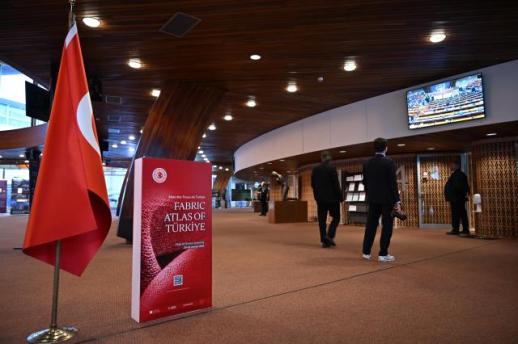 Turkish textile heritage exhibition opens at the Council of Europe SEOUL, January 29 (AJP) - The exhibition titled Fabrics Atlas of Türkiye, The Memory of Fabric officially opened yesterday at the Council of Europe in Strasbourg, France. Hosted by the Turkish Delegation to the Parliamentary Assembly of the Council of Europe (PACE), the event is scheduled to run through January 30 to coincide with the assembly’s winter session. The exhibition is designed to introduce the international community to the long-standing weaving traditions of Türkiye. It features a collection of textiles created using natural fibers and local raw materials, emphasizing production methods that prioritize environmental sustainability. In addition to finished fabrics, the display includes traditional weaving tools and miniature looms. Organized as part of the broader Fabrics Atlas of Türkiye project, the initiative operates under the auspices of First Lady Emine Erdoğan. During the opening, a message from the First Lady was shared, noting that the exhibition serves as a bridge to share the artistic and historical depth of Anatolian weaving heritage. She noted that such projects are essential for the preservation of shared cultural values and the promotion of dialogue between different societies. The event highlights traditional weaving as a sustainable, zero-waste practice that avoids industrial chemical processes. The items on display represent regional techniques from across the country, serving as a record of cultural identity and historical craftsmanship. Bjorn Berge, Deputy Secretary General of the Council of Europe, attended the opening and remarked on the significance of the traditional patterns and cultural diversity represented in the collection. Fatih Dönmez, Head of the Turkish Delegation to the Parliamentary Assembly of the Black Sea Economic Cooperation (PABSEC), stated that the exhibition reflects the country’s commitment to protecting cultural heritage while maintaining environmental responsibility. Zeynep Yıldız, a member of the Turkish Delegation to the Council of Europe and a member of parliament for Ankara, described the exhibition as a synthesis of centuries of cultural interaction that aligns with the founding principles of the Council of Europe. The opening ceremony was attended by members of parliament and international guests, marking the first time these diverse regional weavings have been brought together for an international showcase of this scale. The exhibition remains open to visitors at the Council of Europe building through the end of the week. 2026-01-29 11:21:21
 -
 South Korea ranks fifth in military power — but the list tells only half the story SEOUL, January 29 (AJP) - South Korea, as U.S. President Donald Trump often puts it, is fully capable in conventional warfare — and its global ranking largely backs that claim. Strip away nuclear weapons, and North Korea is no match. According to the 2026 Military Strength Ranking released by U.S.-based Global Firepower (GFP), South Korea placed fifth out of 145 countries, behind only the U.S., Russia, China and India. North Korea ranked 31st. GFP aggregates more than 60 indicators — ranging from the size of military units and defense spending to logistics and geography — into a composite index of conventional military power. Rather than spotlighting a single “wonder weapon,” the ranking aims to measure how much usable force a country can generate and sustain in a major conflict. The U.S. tops the list with a Power Index (PwrIndx) score of 0.0741, where a theoretical score of 0.0000 represents “perfect” capability. South Korea’s score of 0.1642 places it fifth overall. Modernization beyond today’s arsenal Beyond its current inventory, Seoul is pushing ahead with a series of flagship modernization programs designed to anchor its conventional edge into the 2030s and beyond. These include the Korean Next-Generation Destroyer (KDDX) program, which will deliver large, stealthy destroyers equipped with domestically developed radars and missiles; the homegrown KF-21 Boramae fighter, scheduled to enter service from 2026; a multibillion-dollar upgrade of the F-15K fleet; and the AKJCCS project to rebuild the Korea-U.S. joint command-and-control system with AI-enabled decision-support tools. Still, South Korea’s day-to-day military strength rests on a set of core platforms on land, at sea and in the air — the systems that translate budgets and plans into tangible combat power. Ground forces: tanks and big guns On the ground, South Korea relies on modern tanks and heavy artillery to support large conscript and reserve forces. Together, they allow the Army to hold defensive lines in rugged terrain and, if required, mount large-scale counterattacks. At the center of its armored units is the K2 Black Panther, a domestically built main battle tank roughly the size of a city bus, combining heavy armor, a powerful gun and advanced sensors that enable accurate fire on the move. Artillery provides the other half of the Army’s heavy punch. K9 self-propelled howitzers can rapidly move into position, fire on distant targets and relocate before counterfire arrives, while towed artillery remains largely assigned to fixed defenses and rear areas. Multiple-launch rocket systems such as Chunmoo add wide-area and long-range strike capability, creating a dense, layered wall of fire when combined with tanks and guns. Air power: a three-layer fighter fleet In the air, South Korea fields a three-tier fighter structure: stealth aircraft at the top, multirole fighters in the middle and upgraded workhorses at the base. At the high end is the F-35A, a fifth-generation stealth fighter designed to evade radar, gather intelligence and strike high-value targets while acting as a flying sensor hub for other forces. Below it, the F-15K — often described as a “missile truck in the sky” — carries heavy payloads for air-to-air combat and long-range strike missions. The KF-16, the Air Force’s most numerous fighter, handles routine patrols, interceptions and precision strikes. Ongoing upgrades to its radar and avionics are allowing older airframes to perform closer to modern standards. Over the next decade, the KF-21 will slot between the stealthy F-35A and upgraded fourth-generation fighters, further reinforcing South Korea’s qualitative edge. Naval power: big ships and silent submarines At sea, South Korea pairs large surface combatants with quiet submarines to protect its coastlines and sea lanes and to deter regional threats. The KDX-III Sejong the Great-class destroyers, each roughly the length of a football field and displacing more than 8,500 tons, are equipped with powerful Aegis radars and more than 120 vertical launch cells. They can track multiple targets simultaneously, intercept incoming missiles and aircraft, and serve as floating command centers for fleet operations. Newer FFG-III Chungnam-class frigates, displacing about 3,600 tons, add a stealthier, more versatile layer. Their four-sided integrated sensor masts provide 360-degree coverage, while modern anti-air and anti-submarine weapons make them well suited for routine patrols, submarine hunting and convoy protection closer to home. Below the surface, 214-class submarines and the larger 3,000-ton KSS-III Dosan Ahn Changho-class boats can remain submerged for extended periods, quietly tracking enemy vessels or positioning to launch torpedoes, cruise missiles and even ballistic missiles. Seoul continues to upgrade these high-end platforms while retiring older vessels to steadily raise overall fleet quality. A conventional ranking — with clear limits GFP’s ranking places North Korea in the low 30s for conventional strength, up several spots from last year. But the index is not designed to fully capture nuclear weapons, long-range missiles, cyber operations or special forces. South Korea’s fifth-place ranking therefore reflects its non-nuclear conventional capacity rather than the full balance of power on the peninsula. “Those rankings provide a useful snapshot of conventional forces, but they focus primarily on quantifiable metrics like the number of tanks and do not fully capture asymmetric factors such as nuclear weapons, cyber capabilities, or how a real war would unfold,” said Chun In-bum, a retired South Korean Army lieutenant general. Experts note that such indices, by design, focus on conventional capabilities and leave out the nuclear and strategic factors that would shape any real conflict on and around the Korean Peninsula. For Seoul, any serious assessment of security must account not only for North Korea’s nuclear and missile forces, but also for the strategic weapons fielded by neighboring powers — including China, Japan and the U.S. 2026-01-29 10:32:26
 -
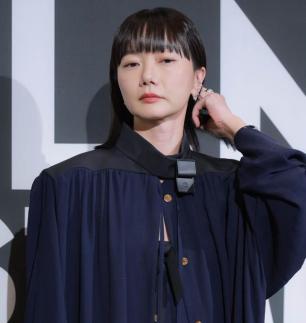 S. Korean actress Bae Doona appointed to Berlin International Film Festival competition jury SEOUL, January 29 (AJP) - South Korean actress Bae Doona has been appointed as a member of the international jury for the 76th Berlin International Film Festival. The festival organizers announced on Wednesday that Bae will join a panel of six other cinema professionals to determine the winners of the Golden and Silver Bears in the main competition category. The jury is led by German director Wim Wenders, who was previously named jury president. Bae will serve alongside a diverse group of international filmmakers, including Nepali director Min Bahadur Bham, Indian documentarian Shivendra Singh Dungarpur, American filmmaker Reinaldo Marcus Green, Japanese director HIKARI, and Polish producer Ewa Puszczynska. Together, they will evaluate 22 films selected for this year's competition. The appointment solidifies Bae's standing as a prominent figure in global cinema. Since her early roles in Bong Joon-ho's "Barking Dogs Never Bite" in 2000 and Park Chan-wook's "Sympathy for Mr. Vengeance" in 2002, she has maintained a prolific career in both South Korean and international productions. Her recent work includes the 2022 film "Broker," directed by Hirokazu Kore-eda, which also competed at major international festivals. Bae is expected to expand her international presence further with the upcoming sci-fi comedy "Alpha Gang," directed by David and Nathan Zellner, which is scheduled for a 2026 release. According to the Berlin International Film Festival's official website, the jury will be responsible for awarding the Golden Bear for Best Film to the winning producers. They also select recipients for several Silver Bears, including the Grand Jury Prize, Jury Prize, Best Director, Best Leading Performance, Best Supporting Performance, Best Screenplay, and Outstanding Artistic Contribution. The 76th edition of the Berlin International Film Festival is scheduled to take place from February 12 to February 22. 2026-01-29 09:58:13