
Journalist

AJP
-
 BTS’ Gwanghwamun comeback show set to draw huge crowds and boost Seoul economy BTS’ comeback stage at Seoul’s Gwanghwamun Square is two weeks away, and the city is already bracing for a surge of visitors. The group is set to hold a concert on the 21st to mark the release of its fifth full-length album, “Arirang (ARIRANG).” Retailers and the tourism industry are preparing for fans of the global BTS fandom known as ARMY arriving from around the world, with attention focused on the event’s economic ripple effects. ◇ 15,000 tickets gone in 30 minutes; officials forecast 260,000 people According to the industry on the 6th, general ticket sales for the Gwanghwamun concert — 15,000 seats sold through NOL Ticket last month — sold out in 30 minutes. Police and the Seoul city government estimate about 260,000 people will gather on the day of the show, centered on Gwanghwamun Square where the stage will be installed and extending to Deoksugung’s Daehanmun Gate and the area around Sungnyemun. Fans who failed to get tickets have already been camping near the seating area to get as close as possible, underscoring the intensity on the ground. Nearby lodging has been scarce. Hotels and guesthouses in the area are fully booked, and remaining rooms are being offered at prices several times higher than usual. Nearby shopping districts such as Myeongdong are also promoting BTS-related merchandise as they prepare for an influx of foreign visitors. ◇ Gyeongbokgung to close; Sejong Center cancels shows amid safety concerns The Korea Heritage Service said it will close Gyeongbokgung Palace and the National Palace Museum of Korea on the 21st to prevent safety accidents tied to crowding. The Sejong Center for the Performing Arts also canceled all indoor performances scheduled for that day, including musicals and ballet. BTS members are expected to follow a “king’s road” route — starting at Geunjeongjeon Hall inside Gyeongbokgung, passing the Woldae platform at Gwanghwamun and then taking the stage — a plan that organizers say will be broadcast live worldwide. ◇ KCTI estimates up to 1.2 trillion won per show; Gwanghwamun seen amplifying impact Industry officials expect the concert’s economic impact to reach the trillions of won. The Korea Culture & Tourism Institute has estimated that a single BTS concert in South Korea at a 65,000-seat venue after the end of the COVID-19 pandemic could generate an economic ripple effect ranging from at least 619.7 billion won to as much as 1.2207 trillion won. A research team led by Korea University Business School professor Pyeon Ju-hyeon found the direct and indirect economic impact of BTS’ three-day final concert at Jamsil Olympic Stadium in 2019 totaled about 922.9 billion won. A single concert held at Busan Asiad Main Stadium in 2022 was also assessed to have produced an economic effect approaching 1 trillion won. Some in the culture and tourism industry said the Gwanghwamun show’s reach could be larger because it will be livestreamed worldwide via Netflix and staged at what they called the symbolic heart of the nation’s capital. They said the impact could extend beyond tourism revenue to indirect value such as promoting K-culture and strengthening national branding. * This article has been translated by AI. 2026-03-07 06:03:24
 -
 ‘A Man Living With the King’ Becomes 2026’s First Film to Top 10 Million Viewers in South Korea The film “A Man Living With the King” has drawn 10 million moviegoers, marking a new milestone at the South Korean box office. According to the Korean Film Council’s integrated ticketing network on Thursday, the film, directed by Jang Hang-jun, surpassed 10 million cumulative admissions at about 6:32 p.m. on its 31st day in theaters. The achievement makes it the fourth historical drama in South Korea to reach the 10 million mark, following “The King and the Clown,” “Masquerade” and “The Admiral: Roaring Currents.” It is also the first film in two years to cross 10 million admissions since “The Roundup: Punishment” sparked a box-office boom in 2024, a sign of renewed momentum for theaters after a prolonged slowdown. Set in 1457 at Cheongnyeongpo, the story follows a village chief who volunteers to live at an exile site to revive his community and a young deposed king sent into exile. The film has won broad support from both critics and audiences, the distributor said. The 10 million milestone is also a career marker for its cast. Yoo Hae-jin, who anchors the film as village chief Eom Heung-do, now has five films that have reached 10 million admissions. Yoo Ji-tae, who plays power broker Han Myeong-hoe, earned his first 10 million-viewer film. Actor Park Ji-hoon, who plays the exiled young king Lee Hong-wi, achieved a rare feat by joining the “10 million actor” ranks with his first commercial film, the distributor said. Showbox told this outlet, “We sincerely thank all audiences who supported ‘A Man Living With the King’ and joined us in theaters.” A company official added that with family and friends gathering at theaters during the holiday period becoming less common, “every step taken by audiences to come to the cinema feels even more meaningful.” The official said the company would “work to present good films” and asked for continued interest and support. With its ensemble performances and weighty message, “A Man Living With the King” is expected to maintain its box-office run even after passing 10 million admissions.* This article has been translated by AI. 2026-03-06 21:30:12
 -
 Celltrion Vice Chairman Kim Hyeong-gi to Step Down; Inside Director Nominee Changed Kim Hyeong-gi, vice chairman and head of Celltrion’s global sales business who is known as a close aide to Chairman Seo Jung-jin, is stepping away from day-to-day management. Celltrion said on March 6, in a revised regulatory filing on its notice convening a shareholders meeting, that it changed its nominee for inside director ahead of its regular shareholders meeting scheduled for March 24. The company replaced Kim with Shin Min-cheol, head of the management division and a company president. A key agenda item for the meeting had been proposals to reappoint co-CEOs Ki Woo-sung and Kim as inside directors, with their terms set to expire at the end of March. After Kim indicated his intention to retire, the company plans to seek shareholder approval to appoint Shin as an inside director in his place. Kim is known as a core associate of Seo, with ties dating back to their time at Daewoo Motor. Shin, who is set to fill Kim’s role, oversees the management division after serving as head of the financial management headquarters and the management headquarters, and is expected to be appointed an inside director pending shareholder approval. * This article has been translated by AI. 2026-03-06 20:57:00
 -
 KPGA Tour Sets 20 Events for 2026 Season With Total Purse of at Least 24.4 Billion Won The 2026 Korean Professional Golf Association (KPGA) Tour will feature 20 tournaments with a total purse of at least 24.4 billion won, the tour said. The Korea Professional Golf Tour (KPGT) announced the 2026 schedule on March 5, saying the average purse per event so far is about 1.28 billion won. It said the season is focused on improving quality and the tour’s structure rather than simply expanding the number of events or total prize money. The season opens April 16-19 at La Vie Est Belle Golf & Resort with the 21st DB Insurance Promy Open, which has a 1 billion won purse. The event has served as the KPGA Tour opener 12 times, from 2014-2019 and from 2021-2026. A run of major events follows in late April and early May. The Woori Financial Championship (1.5 billion won) is set for April 23-26 at Seowon Valley Country Club. The 45th GS Caltex Maekyung Open (1.3 billion won) will be held April 30-May 3 at Namseoul Country Club as a co-sanctioned event by the Korea Golf Association (KGA) and the Asian Tour. In May, the KPGA Founders Cup (700 million won), created to honor founding members who established the KPGA in 1968, will be played May 7-10 at Golfzon County Yeongam45. The KPGA Gyeongbuk Open (700 million won) follows May 14-17 as a four-round event at Golfzon County Seonsan. The Kolon 68th Korea Open returns to Woojeong Hills Country Club on May 21-24. The KGA and Asian Tour co-sanction the event; its 2026 purse will be announced later. Last season it was played for 1.4 billion won. June begins with the 69th KPGA Championship with A-ONE CC, the tour’s longest-running event, on June 4-7 at A-One Country Club. It will offer 1.6 billion won, the largest purse among KPGA-only events. A-One has hosted the championship since 2016, making 2026 the 11th edition there. The KPGA Classic (700 million won) will be held on Jeju Island on June 11-14. The Hana Bank Invitational (1.3 billion won) follows June 18-21 at Namchuncheon Country Club; it shifts this year from a co-sanctioned event with the Japan Tour to a KPGA-only tournament. The first half ends June 25-28 with the KPGA Gunsan CC Open at Gunsan Country Club, with a purse of at least 700 million won. Since 2024, the event has added tournament proceeds and food-and-beverage sales to the purse. The total purse was set at 979,297,000 won in 2024 and 1,000,484,300 won in 2025, and the event plans to add proceeds again this year. The second half begins Aug. 27-30 with a new event, the SBS Open (tentative name), offering 700 million won. Another new tournament with an 800 million won purse is scheduled for Sept. 3-6. The 42nd Shinhan Donghae Open (1.5 billion won) will be played Sept. 10-13 at Jack Nicklaus Golf Club Korea. The event had been co-sanctioned by the KPGA Tour, Japan Tour and Asian Tour through last year, but will shift this year to a two-tour event with the KPGA Tour and Japan Tour. Ahead of Chuseok, the Golfzon Open (1 billion won) is set for Sept. 17-20. The Hyundai Marine & Fire Insurance Choi Kyung-ju Invitational (1.25 billion won) will be held Oct. 1-4 at Ferrum Club. Another new event with a 700 million won purse is scheduled for Oct. 8-11. The Charity Classic 2026 (1 billion won) will be played Oct. 15-18 at Seowon Valley Country Club. The Genesis Championship will be held Oct. 22-25 at Woojeong Hills Country Club. Co-sanctioned by the KPGA Tour and the DP World Tour, it will offer $4 million (about 5.91512 billion won). The 2026 Lexus Masters (1 billion won) follows Oct. 29-Nov. 1. The season finale, the KPGA Tour Championship in JEJU, will be played Nov. 5-8 at Teddy Valley Golf & Resort on Jeju. Players ranked high in Genesis Points after the Lexus Masters will be eligible, and the purse is 1.1 billion won. KPGT CEO Kim Won-seop said the 2026 season is designed to raise the standard of each event and improve the tour’s structure. “We will add distinctive elements to each tournament and make it a premium stage that creates new value for players, fans and brands,” Kim said. He also thanked title sponsors for their support “under difficult conditions,” and said the association would do everything it can for the sustainable growth of men’s golf in South Korea.* This article has been translated by AI. 2026-03-06 19:30:00
 -
 'The Man Who Lives With the King' Tops 10 Million Moviegoers in South Korea The film 'The Man Who Lives With the King' has surpassed 10 million admissions. Distributor Showbox said the movie’s cumulative audience topped 10 million as of 6:30 p.m. on its 31st day in theaters. It is the 34th domestic release in South Korea to reach the milestone. The achievement comes as overall theater attendance has fallen sharply. It is the first domestic release in two years to draw 10 million moviegoers. The period drama follows the deposed King Danjong, Yi Hong-wi (Park Ji-hoon), during his final days in exile in Gwangcheonggol, Yeongwol, Gangwon Province, where he mixes with local residents. The story centers on village chief Eom Heung-do (Yoo Hae-jin), tasked with protecting and monitoring the exile, as he forms a bond with Yi that transcends status and age. The film reached 1 million admissions on its fifth day, 2 million on its 12th, and 3 million on Lunar New Year’s Day on Feb. 17, its 14th day in release. It passed 4 million the next day. On March 1, it drew about 817,000 viewers in a single day, its biggest daily total since opening, and went on to exceed 10 million in 31 days. It is the fourth period film to reach 10 million admissions, following 'The King and the Clown' (2005), 'Masquerade' (2012) and 'The Admiral: Roaring Currents' (2014). * This article has been translated by AI. 2026-03-06 18:51:19
 -
 SC First Bank Net Profit Plunges 57% on Hong Kong H-Index ELS Provision, One-Off Costs SC First Bank said its net profit plunged last year, hit by one-time costs including a provision tied to sanctions over Hong Kong H-index equity-linked securities (ELS) and expenses for a special retirement program. The bank said Thursday that net profit for the year totaled 141.5 billion won, down 57.3% from 331.1 billion won a year earlier. The decline was driven largely by sizable one-off charges. In the fourth quarter, the bank booked 88.0 billion won in special retirement costs and set aside 151.0 billion won in provisions related to sanctions over Hong Kong H-index ELS. Net interest income fell as the net interest margin narrowed amid lower market rates. Net interest income came to 1.2076 trillion won, down 2.0% from 1.2321 trillion won the previous year, and the net interest margin dropped 0.16 percentage points over the period. Noninterest income also declined. While wealth management performed well, gains from securities and foreign-exchange derivatives fell, pulling noninterest income down 8.0% to 311.2 billion won from 338.3 billion won. Selling and administrative expenses rose on special retirement costs and higher labor and inflation-related expenses. The bank reported 1.0754 trillion won in such costs, up 17.7% from 913.6 billion won a year earlier. By contrast, total expected credit losses and other provisions fell 16.9% to 106.7 billion won from 128.4 billion won. Assets expanded. Total assets stood at 92.2781 trillion won at the end of last year, up 7.5% from 85.8409 trillion won a year earlier. Profitability indicators weakened. Return on assets was 0.15%, down 0.23 percentage points, and return on equity was 2.56%, down 3.53 percentage points. The ratio of nonperforming loans rose 0.14 percentage points to 0.56%. The bank also said its board approved a year-end dividend of 125.0 billion won and will submit it as an agenda item for a regular shareholders meeting on the 30th. After the dividend, the bank said its BIS total capital ratio was 18.59% and its common equity Tier 1 ratio was 15.65% as of the end of last year, remaining above regulatory requirements.* This article has been translated by AI. 2026-03-06 18:04:16
 -
 South Korea to Unveil First Mass-Production KF-21 Fighter This Month South Korea will unveil the first mass-production KF-21 Boramae fighter jet later this month, a milestone expected to start reshaping an Air Force fleet long centered on U.S.-made aircraft. Industry officials said Friday that a rollout ceremony for the first production aircraft will be held in the final week of this month at Korea Aerospace Industries (KAI) headquarters in Sacheon, South Gyeongsang province. Government and other key officials are expected to attend. The aircraft to be unveiled will undergo ground and flight testing before being delivered to the Air Force in the second half of this year. The Air Force plans to introduce 40 domestically built KF-21s in stages by 2028. It aims to secure 80 more by 2032, for a total fleet of 120. Deliveries of the KF-21 are expected to affect the Air Force’s fighter mix, including replacing aging F-4 and F-5 jets and reducing reliance on U.S. technology. Most of the Air Force’s main fighters, including F-16s and stealth aircraft, are produced in the United States, making the development of the supersonic KF-21 a significant step, officials said. South Korea’s push to develop indigenous combat aircraft gained momentum in December 2005, when the first mass-produced T-50 supersonic advanced trainer was delivered. In December 2015, the country began development of the KF-21, moving toward an independent fighter production system. Expectations are also rising for export growth, with Southeast Asian countries such as Indonesia and the Philippines, as well as Middle Eastern nations, cited as potential customers. Supporters point to the T-50’s exports to those markets as evidence of performance, and say additional orders are possible. The article said President Lee Jae-myung has also engaged in direct defense sales efforts with those countries, adding to export optimism. KAI plans to secure 6.544 trillion won — 62.7% of its overall order target this year — through exports of complete aircraft such as the KF-21. “The KF-21 project began with a feasibility review during President Kim Dae-jung’s administration in 2001, and full-scale development started in December 2015,” a KAI official said. “We expect both domestic adoption of the KF-21 and expanded exports.” 2026-03-06 18:03:25
 -
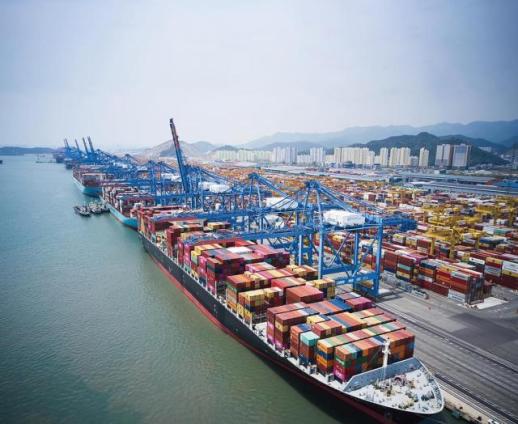 Middle East crisis deepens divide between South Korean industries SEOUL, March 6 (AJP) - A triple whammy of high oil prices, a weakening Korean won and rising raw-material costs is casting darkening clouds across South Korean industries following U.S.‑led airstrikes on Iran, as markets and companies grapple with the fallout from the escalating Middle East conflict. Energy-intensive sectors are seeing production costs soar due to rising oil and petroleum prices, with traditional manufacturing sectors including petrochemicals and steel facing the heaviest pressure as costs climb and demand weakens, according to industry insiders. As of early this week, international oil prices briefly surged to over US$80 a barrel. For a heavily export-driven country like South Korea, which depends on imports for more than 90 percent of its energy, higher oil prices translate directly into increased manufacturing costs. The South Korean currency has also been fluctuating, trading near 1,500 won against the greenback, further increasing the cost of importing raw materials. But not every sector is feeling the pinch. AI-driven industries including semiconductors, defense, and shipbuilding, are benefiting from strong global demand, creating a growing divide between sectors. The rising adoption of AI is giving the semiconductor industry fresh growth momentum. According to a forecast by market research Gartner, the global semiconductor market is expected to grow by about 16 percent this year from a year earlier, fueled by increasing investment in data centers and AI infrastructure, boosting demand for memory chips. Defense and shipbuilding sectors are also benefiting from a shifting global security environment. South Korea's defense exports have held at more than $10 billion in recent years, and shipbuilders have secured roughly three years' worth of orders as demand rises for LNG carriers and eco-friendly vessels. Experts warn that divides between sectors could widen further if the ongoing conflict in the Middle East drags on. "Some South Korean industries have been steadily losing ground to China, and crises like the Iran conflict would further expose their vulnerabilities," said Lee Bu-hyung of the Hyundai Research Institute. He emphasized the need for a long-term strategy to overhaul the country's industrial structure. 2026-03-06 17:54:10
 -
 Yeocheon NCC Declares Force Majeure as Hormuz Disruption Hits Naphtha Supply U.S. and Israeli airstrikes on Iran have heightened tensions in the Middle East, sending shock waves through South Korea’s petrochemical industry. With disruptions in naphtha feedstock supply after the closure of the Strait of Hormuz, Yeocheon NCC has declared force majeure, raising concerns among domestic companies that rely on its ethylene supplies. Industry officials and foreign media reported on Thursday that Yeocheon NCC notified major customers on March 4 that product deliveries could be delayed or adjusted and declared force majeure after it could no longer secure naphtha due to the Hormuz closure. The move followed a halt in imports of Middle East-origin naphtha, including from Saudi Arabia, amid the impact of Iran’s drone attacks and the strait’s shutdown. Yeocheon NCC is a joint venture of Hanwha Solutions and DL Chemical and is South Korea’s largest single ethylene production hub, with annual capacity of 2.285 million tons. As restructuring continues across the sector, its third plant has been shut down, leaving only Plants 1 and 2 operating. Hanwha Solutions confirmed reports of the force majeure declaration. The company was reported to have told some customers that contract performance could be temporarily delayed or revised due to disruptions in Middle East naphtha supply following the outbreak of war between the United States and Iran. In a letter to customers, Yeocheon NCC said it was declaring force majeure because the Middle East crisis had disrupted feedstock supply. It said it had no choice but to run all production facilities at minimum capacity starting March 4, outlining plans to cut operating rates. “As geopolitical tensions in the Middle East have suddenly and sharply escalated, we are experiencing severe disruptions in raw material procurement,” it said, adding that the Hormuz closure had significantly delayed the arrival of naphtha feedstock scheduled for delivery in March. Naphtha prices have risen more than 20% since the crisis began. Force majeure is a contract clause that can exempt a seller from liability when performance becomes difficult due to events beyond its control, such as natural disasters or war. The declaration is expected to directly affect Hanwha Solutions and DL Chemical, Yeocheon NCC’s major shareholders and key customers. Yeocheon NCC has supplied the two companies with ethylene and other basic feedstocks through pipelines. For ethylene, it supplies 1.4 million tons a year to Hanwha Solutions and 735,000 tons a year to DL Chemical. Analysts said the situation could worsen if the disruption drags on and inventories run down. NICE Credit Rating said that, considering cargoes shipped before late February and existing stockpiles, major domestic naphtha cracking centers appear to have about one month of reserves. It said companies are likely to respond by lowering operating rates, adjusting maintenance schedules and securing alternative sources to manage supply uncertainty.* This article has been translated by AI. 2026-03-06 17:39:29
 -
 Asian markets end first war week edgy, KOSPI most volatile SEOUL, March 6 (AJP) — Asian stock markets wrapped up one of their most volatile weeks in recent years as escalating tensions in the Middle East rattled global financial markets and pushed oil prices higher. The wildest swings were seen in Seoul, where panicky selling and frantic bargain-hunting traded places throughout the four-session, war-dominated week. The benchmark KOSPI closed at 5,584.87, down more than 10 percent from a week earlier before the strikes on Iran and 11 percent below its historic high of 6,347.41 on Feb. 26. In the first two sessions following the outbreak of hostilities, the KOSPI plunged 19 percent, before rebounding roughly 10 percent on Thursday. On Friday, the index barely stayed positive after swinging between 5,381.27 and 5,609.98 during the session. The tech-heavy KOSDAQ fared slightly better, edging up 0.43 percent to close at 1,154.67. Defense shares outperformed as investors bet on rising geopolitical demand. LIG Nex1 jumped 9.31 percent to 834,000 won on expectations for additional orders of missile interceptor systems deployed along Middle Eastern borders near Iran. Hanwha Aerospace rose 7.24 percent to 1,481,000 won, while Hanwha Systems gained 5.37 percent to 158,900 won and Hanwha Ocean climbed 3.77 percent to 126,700 won. Chipmakers, however, were primary targets for profit-taking. Samsung Electronics fell 1.77 percent to 188,200 won, while SK hynix slipped 1.81 percent to 924,000 won. Automakers and battery makers traded higher. Hyundai Motor rose 0.91 percent to 553,000 won, and Kia gained 0.36 percent to 167,000 won. LG Energy Solution added 1.62 percent to 377,500 won, while Samsung SDI jumped 4.59 percent to 410,500 won. Energy-related shares also advanced. Doosan Enerbility surged 8.29 percent to 98,000 won, and HD Hyundai Electric climbed 2.78 percent to 444,000 won. Internet and brokerage stocks posted gains as well. NAVER rose 1.14 percent to 222,500 won, while Mirae Asset Securities advanced 2.91 percent to 67,100 won. Financial shares were mixed. KB Financial slipped 1.07 percent to 147,400 won, Shinhan Financial declined 1.18 percent to 91,800 won, and Samsung Life Insurance fell 1.87 percent to 210,000 won. Among other large caps, Samsung Biologics dipped 0.18 percent to 1,644,000 won, while Samsung C&T dropped 3.24 percent to 283,500 won. SK Square declined 2.30 percent to 553,000 won, and Korea Zinc edged down 0.40 percent to 1,752,000 won. Retail investors dominated trading during the turbulent week, with net purchases totaling 2.95 trillion won ($2 billion). Foreign investors and institutions were net sellers, offloading 1.94 trillion won and 1.11 trillion won, respectively. Elsewhere in Asia, markets showed more moderate swings. Japan’s Nikkei 225 rose 0.62 percent to close at 55,620.84 on Friday, trimming part of the week’s losses. The benchmark index, however, remained down about 4.06 percent over the past five sessions, reflecting persistent caution among investors. China’s Shanghai Composite gained 0.38 percent to 4,124.19 on Friday, but the index still fell roughly 0.66 percent over the past five days, signaling a cautious recovery as investors weighed geopolitical risks and global market volatility. Separately, the Hurun Global Rich List reported that China — including Hong Kong, Macau and Taiwan — once again hosts the world’s largest number of billionaires, with 1,110 out of the global total of 4,020. Rupert Hoogewerf, founder of the Hurun Global Rich List, said the surge was partly driven by global stock market gains and the rapid expansion of artificial intelligence industries, with new billionaires emerging from Chinese AI firms such as MiniMax and Zhipu AI. 2026-03-06 17:32:19