
Journalist

AJP Special Team
-
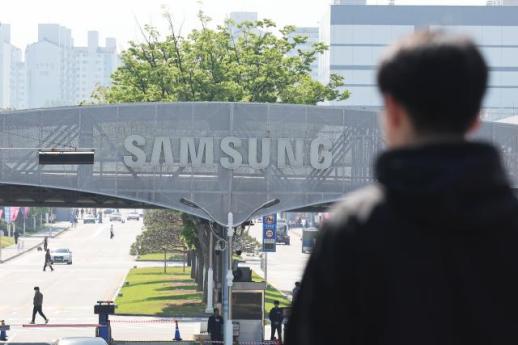 Samsung Electronics Proposes 600% Bonuses for Memory Division, 50-100% for Foundry Samsung Electronics has proposed a bonus of over 600% for its memory semiconductor division, while offering bonuses of up to 100% for its non-memory semiconductor sector, according to reports.On May 16, Yonhap News reported that Reuters obtained minutes from wage negotiation meetings that revealed Samsung's offer. The documents indicated that in March, Samsung proposed a bonus equivalent to 607% of annual salaries for employees in the Device Solutions (DS) division's memory sector. In contrast, the foundry and system LSI divisions, which are currently operating at a loss, were offered bonuses ranging from 50% to 100%.The DS division, responsible for Samsung's semiconductor business, consists of three main sectors: memory, system LSI, and foundry. While the memory division has recently seen substantial profits due to a surge in artificial intelligence (AI) demand, the other sectors have reported significant losses.Reuters reported that Kim Hyung-ro, the chief negotiator for the company, stated, "The system semiconductor division has recorded losses in the trillions of won, and frankly, if it weren't for our company, they would likely have gone bankrupt or closed down. How can we justify paying bonuses?"The labor union has expressed concerns that this disparity in bonuses could undermine the company's vision of becoming the top player in the system semiconductor market by 2030 and could lead to employee attrition. Union Chairman Choi Seung-ho remarked in the meeting minutes, "If the memory division receives a bonus of 500 million won while the foundry division only gets 80 million won, will those employees have any motivation to continue working?"The union plans to strike from May 21 to June 7 if the bonus negotiations do not reach a resolution. Amid the looming threat of a general strike, the company has proposed resuming negotiations, but the union insists it will proceed with the strike unless there is a change in the company's stance.If the general strike goes ahead, the financial impact could reach tens of trillions of won. Global investment bank JP Morgan recently reported that the strike could reduce Samsung's annual operating profit by over 40 trillion won. Union estimates suggest that production disruptions could result in losses ranging from 20 trillion to 30 trillion won.* This article has been translated by AI. 2026-05-16 13:51:49
 -
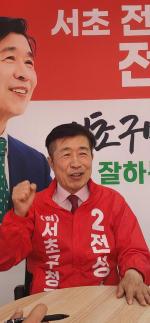 Seong-su Jeon Unveils 'Future Map' for Seocho with Key Urban Development Plans Seong-su Jeon, the People Power Party candidate for Seocho District mayor in the upcoming local elections, unveiled his 'Future Map for Seocho' on May 16, highlighting three key pledges: the underground construction of the Gyeongbu Expressway, the establishment of a global AICT city in Yangjae and Naegok, and the development of a community-centered care system. Jeon stated, "The future competitiveness of Seocho relies on spatial innovation, advanced industries, and improving residents' quality of life," emphasizing that "the starting and ending point of all policies is the residents." The first key pledge focuses on a major spatial transformation through the underground construction of the Gyeongbu Expressway and Banpo Road. By burying the Gyeongbu Expressway from Yangjae IC to Hannam IC, Jeon aims to eliminate the physical barrier that currently divides Seocho and transform the above-ground space into a community-friendly area featuring parks, greenery, and sports facilities. He plans to implement an AI-based Intelligent Transportation System (ITS) using digital twin technology to manage underground traffic in real-time and introduce eco-friendly ventilation and air purification systems to maintain high air quality in the parks and surrounding residential areas. Jeon remarked, "The three-dimensionalization of the Gyeongbu Expressway is not just a civil engineering project but a future project that will change the urban structure of Seocho," promising to create green, cultural, and recreational spaces that reflect residents' opinions. The second key pledge is the creation of a 'Global AICT City' in Yangjae and Naegok. Jeon aims to maximize the impact of the government's designation of the 'Yangjae AI Future Convergence Special Zone' and Seoul's 'Yangjae ICT Specific Development Promotion District' to develop Yangjae into a leading hub for future industries in South Korea. To achieve this, he plans to attract global unicorn companies through various incentives, including easing floor area ratio regulations, and strengthen the research and development ecosystem in collaboration with nearby research institutions and universities. Jeon also intends to cultivate practical talent in partnership with KAIST's AI Graduate School and establish the 'Seocho AICT Fund' to expand investment support for startups at various growth stages. He stated, "I will turn Yangjae and Naegok into not just a business district but a global technology innovation hub, making Seocho the heart of South Korea's AI industry." The third pledge focuses on establishing a 'Seocho-style Community Care' system. Jeon plans to create 'care hubs' that combine private creativity with public resources, allowing seniors and children to receive dignified care within their familiar living environments. By minimizing welfare blind spots through district-based care hubs and expanding smart care services integrated with IT technology, he aims to establish a 'Seocho welfare standard.' Jeon emphasized, "Care is not just welfare; it is a matter of community dignity," vowing to create a Seocho where no one, from children to seniors, is left behind. Additionally, Jeon highlighted the complex development around the Seoul Express Bus Terminal as a major focus. He plans to modernize and integrate the aging bus terminal underground while developing the above-ground area into a mixed-use complex of over 60 stories that combines commercial, residential, office, and tourism functions, forming a new urban axis connected to the Han River. By introducing direct underground access routes and multi-level pedestrian infrastructure, he aims to reduce traffic congestion and enhance accessibility to the Han River, promoting Seocho as a landmark. Jeon concluded, "Seocho is no longer a city that remains stagnant; I will fulfill my promises with the attitude of 'the residents come first.'"* This article has been translated by AI. 2026-05-16 13:16:13
 -
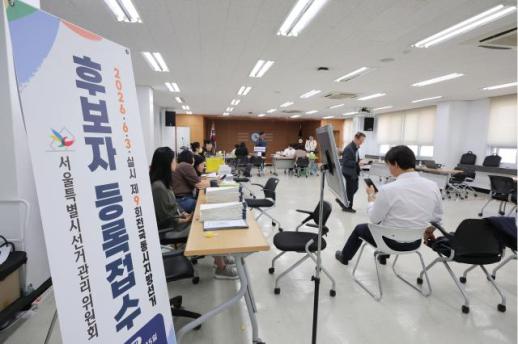 June 3 Local Elections: 7,829 Candidates Registered, 513 Uncontested Winners The registration period for candidates in the 9th nationwide local elections and the National Assembly by-elections, scheduled for June 3, has closed, with a total of 7,829 candidates registered. Among them, 513 candidates, including three heads of local governments and 510 local council members, were elected uncontested, marking the highest number in history.The National Election Commission announced on May 16 that this final tally was reached after accepting registrations for regional heads, local government heads, regional council members, local council members, proportional regional council members, proportional local council members, education superintendents, and National Assembly candidates over two days from May 14 to 15.The average competition ratio stood at 1.8 to 1, which is similar to the record low seen in the 2022 local elections.In this election, a total of 4,241 positions will be filled, including 16 regional heads, 227 local government heads, 933 regional council members (including proportional), 3,035 local council members (including proportional), 16 education superintendents, and 14 National Assembly members.For the regional head elections, 54 candidates registered, resulting in a competition ratio of 3.4 to 1. In the local government head elections, 585 candidates registered with a ratio of 2.6 to 1, while 1,657 candidates registered for regional council positions, yielding a ratio of 2.1 to 1. Additionally, 4,402 candidates registered for local council positions, with a ratio of 1.7 to 1; 354 for proportional regional council positions, with a ratio of 2.7 to 1; and 672 for proportional local council positions, with a ratio of 1.7 to 1. The education superintendent elections saw 58 candidates registered, resulting in a competition ratio of 3.6 to 1.Official campaigning will begin on May 21. The voter registration list will be finalized on June 2, and election notices, including ballots and guides, will be sent out by June 24.Meanwhile, there are 307 electoral districts where the number of registered candidates is equal to or less than the number of positions available, resulting in 513 uncontested winners, including three heads of local governments and 510 local council members. In the 2022 local elections, there were 508 uncontested winners.Among the uncontested candidates for local government heads are Kim Yi-gang, candidate for the mayor of Gwangju's Seo-gu, Kim Byeong-nae, candidate for the mayor of Gwangju's Nam-gu, and Lim Byeong-taek, candidate for the mayor of Siheung in Gyeonggi Province, all affiliated with the Democratic Party.In the regional council elections, 108 candidates, including those from Seoul's Eunpyeong 2 and Gwanak 1 districts, were elected uncontested. In the local council elections, 305 candidates, including those from Seoul's Jongno Na and Ra districts, secured their positions. For proportional local council members, 97 candidates were elected, including those from Seoul's Seongbuk and Dobong districts. 2026-05-16 13:09:33
 -
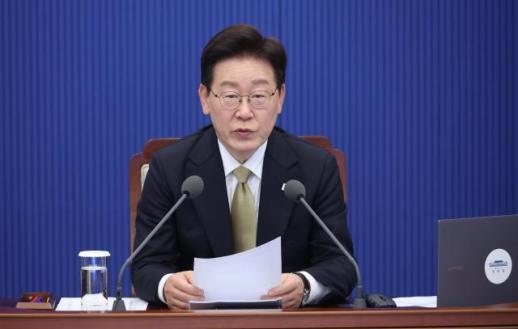 Nationwide Startup Initiative Attracts 60,000 Participants, President Lee Optimistic President Lee Jae-myung praised the success of the 'Everyone's Startup' initiative, the first project of the 'National Startup Era,' stating that it opens the path toward becoming a nation centered on practical entrepreneurship.On May 16, President Lee shared a post on X (formerly Twitter) from Han Seung-sook, Minister of the Ministry of SMEs and Startups, which read, "Everyone's Startup begins with 60,000 passionate challenges." He expressed his gratitude, saying, "Thank you, Minister Han Seung-sook, for this significant achievement. I look forward to the second, third, and n-th rounds as well."In her post, Minister Han noted, "The application period for 'Everyone's Startup' has closed. The results are truly remarkable. Over 60,000 individuals have taken on this challenge with their precious dreams over the past 50 days," adding, "The National Startup Era! The 60,000 challenges of Everyone's Startup prove it."'Everyone's Startup' is a public startup audition promoted by the Ministry of SMEs and Startups. Applications opened on March 26 and closed at 8 PM the previous day, with a total of 62,944 participants.The ministry plans to select 5,000 individuals in the first round, including 4,000 from the general and technology track and 1,000 from the local track. Participants selected from the general and technology track will receive 2 million won in phased startup activity funding, mentoring from experienced entrepreneurs, AI solutions, regulatory screening, and follow-up commercialization funding of up to 100 million won.The final winner will receive a grand prize of up to 500 million won and additional support totaling over 1 billion won, including follow-up investment connections. The local track winner will receive a prize of up to 100 million won and benefits related to follow-up investments.* This article has been translated by AI. 2026-05-16 12:48:41
 -
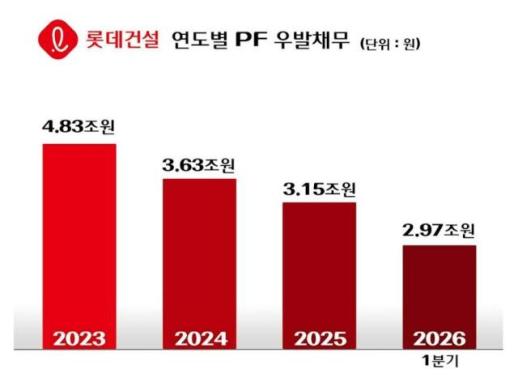 Lotte Engineering Reports 13-Fold Surge in Q1 Operating Profit Lotte Engineering has demonstrated a significant turnaround this year, focusing on improving its financial structure and profitability. The company’s selective bidding strategy and enhanced cost management have yielded notable results. According to data from the Financial Supervisory Service on May 16, Lotte Engineering reported consolidated sales of 1.6012 trillion won, an operating profit of 50.4 billion won, and a net profit of 17.1 billion won for the first quarter. Notably, the operating profit surged approximately 13 times compared to the same period last year, which recorded only 3.8 billion won. The net profit also increased 4.5 times from the previous year’s 3.8 billion won, indicating a clear turnaround. The primary factor behind this strong performance is the company-wide improvement in cost rates. The cost rate for the first quarter was 91.7%, down 3.7 percentage points from 95.4% in the same period last year. The reduction in revenue from high-cost projects, coupled with a rigorous monitoring system that improved profitability at various sites, has been credited with stabilizing the cost rate. The debt ratio for the first quarter fell to 168.2%, down 18.5 percentage points from 186.7% at the end of last year, continuing its improvement below the 200% threshold. Concerns regarding project financing (PF) contingent liabilities have also largely been resolved. The scale of PF contingent liabilities, which stood at 3.15 trillion won at the end of last year, decreased to 2.97 trillion won in the first quarter, a reduction of approximately 180 billion won, bringing it below the 3 trillion won mark. This level is considered stable, as it is below Lotte Engineering's equity of 3.5249 trillion won. The company plans to reduce contingent liabilities to the low 2 trillion won range by the end of the year through the transition to main PF. With a strengthened financial position, Lotte Engineering is also enhancing its business competitiveness. In the urban redevelopment sector, led by its premium brands 'Lotte Castle' and 'Leal,' the company has secured contracts for significant projects this year, including the reconstruction of the Garak Geukdong Apartments in Songpa District (484 billion won), the redevelopment of the Kumho District 21 in Seongdong District (624.2 billion won), and the reconstruction of the Yongho District 3 in Changwon (396.7 billion won), totaling 1.5049 trillion won in contracts. The company plans to further develop its capabilities as a comprehensive developer by utilizing real estate owned by group affiliates. The diversification of liquidity acquisition methods has also received positive feedback. Recently, Lotte Engineering became the first in the industry to develop asset-backed securities (ABS) using construction receivables from nearly completed projects, issuing AAA-rated bonds to raise 300 billion won. By issuing bonds with a rating higher than its own credit rating (A0), the company significantly reduced financing costs and enhanced market confidence. A Lotte Engineering official stated, “Our efforts to strengthen management have resulted in tangible improvements in financial indicators,” adding, “We will solidify our long-term growth momentum based on stable urban redevelopment competitiveness and group-linked developer capabilities.” According to Lotte Engineering, the proposed expansion of the 'group-linked developer business' is an extension of the management policy announced during a town hall meeting by CEO Oh Il-geun in March, reflecting his strong commitment as a development expert. The company is reportedly beginning long-term reviews of some sites owned by affiliates in Seoul. A Lotte Engineering representative noted, “The group-linked developer business utilizing affiliate sites has not yet determined specific projects, but it has set a long-term growth direction. Given the nature of large-scale mixed-use developments, there are many prerequisites such as consultations with permitting agencies, and we plan to solidify a visible blueprint within the next 2 to 3 years.”* This article has been translated by AI. 2026-05-16 12:46:06
 -
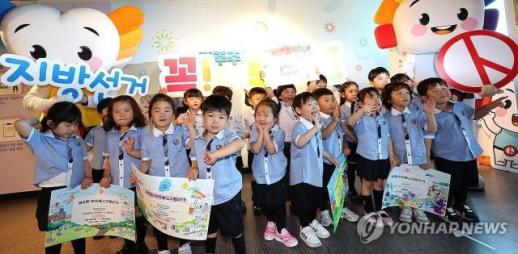 Local Election Competition Rate Hits Record Low of 1.8 to 1 The competition rate for candidates in the 9th nationwide local elections, scheduled for June 3, has been recorded at an average of 1.8 to 1. This figure, based on preliminary data before the candidate registration deadline, matches the final competition rate of the 8th local elections in 2022, indicating a trend of historically low competition. According to the National Election Commission, the overall competition rate stands at 1.8 to 1, with rates of 3.2 to 1 for metropolitan mayors, 2.6 to 1 for local mayors, 2.0 to 1 for provincial council members, 1.7 to 1 for local council members, and 3.3 to 1 for education superintendents. The competition rate for the National Assembly's by-elections is approximately 3.4 to 1. While there are variations by election unit, these figures generally reflect a decrease in competition intensity compared to the past. However, the term 'historically low' should be used cautiously, as it is based on preliminary figures rather than final counts. There may be some fluctuations once the candidate registration period closes. Nonetheless, the current trend suggests a potential structural change, as competition levels are similar to or lower than previous elections. The competition rate in local elections is a direct indicator of political participation. Generally, a higher competition rate indicates active political engagement and a wider array of choices. Conversely, a lower rate suggests a reduction in the pool of candidates and limits voter options. Particularly low competition rates in local council and mayoral elections may signal a weakening of local political foundations. Several factors contribute to this phenomenon. First, there is a decrease in incentives for political participation. While local politics are closely tied to residents' lives, there remains a strong perception that their influence and rewards are limited compared to national politics. This perception hinders the influx of new talent into the political arena. Second, there are institutional barriers to entry. The burden of election costs, organizational mobilization structures, and a party-centered election environment have been cited as factors limiting the entry of political newcomers. In particular, the structure in which party nominations determine election outcomes can weaken competition in the main elections and lead to lower overall competition rates. Third, there is a general fatigue with politics. Ongoing political disputes and low trust in policies contribute to a decline in the willingness to participate in politics. This affects not only voters but also potential candidates. However, the decline in competition rates should not be viewed solely as a negative phenomenon. In some respects, it reflects a reduction in the excessive proliferation of candidates in the past, leading to a reorganization around candidates with genuine competitive viability. Additionally, issues such as population decline and regional extinction also impact local election competition rates. In certain areas, the shrinking voter base is accompanied by a decrease in political participation. Ultimately, what matters more than the competition rate itself is the context behind it. Whether the current low competition rate results from a 'healthy refinement' or a 'decline in political participation' will shape policy responses. However, a comprehensive review of recent trends raises concerns that the latter is more pronounced. Addressing this issue requires a structural approach. Improvements in election cost mitigation, transparency in the nomination process, and expanded support for political newcomers must be pursued concurrently. It is also crucial to enhance the authority and responsibilities of local governments to elevate the practical significance of political participation. Local elections are a fundamental institution that underpins democracy. The competition rate of 1.8 to 1 is not just a statistic but a warning about the structure of political participation. A democracy with fewer choices cannot be healthy. What is needed now is not merely the expression 'historically low,' but a sober analysis of why such figures are recurring. Opening the doors to politics and restoring participation is the starting point for revitalizing local governance.* This article has been translated by AI. 2026-05-16 12:25:25
 -
 The Politics of Food Diplomacy: Trump, Kung Pao Chicken, and Peking Duck What is the most enduring language in international politics? It is neither military might nor economic power. Sometimes, it is a bowl of noodles, a piece of roasted duck, or a cup of tea. China has understood this for a long time. As Confucius stated in the "Analects," "Rituals value harmony" (禮之用 和爲貴), indicating that Chinese civilization has historically read its counterparts and adjusted relationships at the dining table before resorting to swords.During President Donald Trump's visit to Beijing, China once again showcased the essence of 'food diplomacy.' The final lunch menu presented by President Xi Jinping surprisingly featured not an extravagant royal dish, but Kung Pao Chicken, a Sichuan-style stir-fried chicken. At first glance, it appears to be a simple dish, but in Chinese diplomacy, food is never just food; it is a code and a message.Kung Pao Chicken is one of the most deeply rooted Chinese dishes in American society. It was created and consumed by Chinese laborers who migrated to the U.S. in the 19th century for railroad construction, mining, and farming. Its spicy yet familiar flavor has become a symbol of American Chinese cuisine. China chose to serve this dish to President Trump.Adding to the intrigue is a play on words. Trump's Chinese name is 'Chuanpu' (川普), while Sichuan cuisine is referred to as 'Chuan Cai' (川菜). This reflects China's unique cultural code of ambiguity, cleverly juxtaposing Trump's blunt political style with the bold flavors of Sichuan cuisine. The menu for the state dinner exemplified the meticulous nature of China's 'food diplomacy.' It was not merely a display of traditional Chinese dishes; it carefully considered President Trump's palate, American tastes, and Western dining culture.The state dinner on May 14 at the Great Hall of the People in Beijing included Peking Duck, a dish that symbolizes Chinese tradition and royal culture. Known for its crispy skin and tender meat, Peking Duck is a staple at state banquets for foreign leaders and represents the pride of China's capital.The menu also featured Cantonese lobster soup, crispy beef, and slow-cooked salmon with mustard sauce. Additionally, there were Chinese-style crispy dumplings, shell-shaped pastries, and even Italian tiramisu.The composition of the menu was highly symbolic. Peking Duck represented China's traditions and royal culture, while Cantonese seafood dishes signified openness and internationalism. The salmon with mustard sauce catered to Western tastes, and the tiramisu served as a bridge to European sensibilities. The flavors of East and West were harmoniously intertwined without conflict. The dining table effectively mirrored the current state of U.S.-China relations: competitive yet coexisting, clashing yet unable to completely turn away from one another.The atmosphere at the dinner was also carefully curated. The music included a mix of American and Chinese songs. Notably, when the song 'YMCA,' frequently used by Trump during his campaign, played, diplomats remarked that "China thoroughly researched Trump's personal political style and preferences." This was a classic example of Chinese hospitality aimed at honoring the guest's pride and narrowing psychological distances.Sun Tzu's "Art of War" states, "The best victory is the one that is achieved without fighting." Chinese diplomacy sometimes designs its banquet menus more intricately than missile strategies. Interestingly, this food diplomacy is not exclusive to Trump.Earlier this year, when South Korean President Lee Jae-myung visited China, President Xi Jinping personally recommended Beijing-style Jajangmyeon at the state dinner. This was not the sweet black bean noodles familiar to Koreans but a savory and light version typical of northern China. Xi reportedly said, "Try it and see how it differs from Korean Jajangmyeon."That remark was not merely a joke. Jajangmyeon originally came from Chinese Shandong laborers who brought it to Incheon and Seoul. However, it has since transformed into a completely different cultural dish in Korea. China is aware of this. In other words, Jajangmyeon represents a shared cultural memory between China and Korea amid conflict and competition. Xi Jinping placed that memory on the dining table.When welcoming Russian President Vladimir Putin, the menu changes again. China has shown a tendency to favor hearty northern dishes rich in meat and flavor for Russian leaders. Smoked duck, lamb dishes, stir-fried seafood, and rich broth-based foods frequently appear. Alongside these, vodka and traditional Chinese liquor, Baijiu, are served. This is not just hospitality; it symbolizes the geopolitical bond of "continental powers."Indeed, the dining settings for China-Russia summits often resemble a representation of the Eurasian continental order. The emphasis is on meat over seafood, and the robust flavors of northern cuisine are highlighted over the delicate Cantonese dishes. This indicates that China views Russia not as a "maritime power" but as part of the same continental civilization.The atmosphere shifts again when French President Emmanuel Macron visits Beijing. France considers food itself a part of its national identity. China emphasizes Cantonese seafood and wine pairings to highlight delicacy and artistry. It naturally connects French wine culture with Chinese tea traditions, and the dessert selection leans more towards European styles. This conveys the message that "China is not just a factory but a civilized nation." Macron, well-versed in cultural diplomacy from the Louvre and Versailles, was accurately understood by China.Dinners with German chancellors tend to have a more pragmatic atmosphere. Germany values order, balance, and stability over extravagance. Thus, China often presents relatively simple and structured course meals rather than overly stimulating or decorative dishes. Typical offerings include light fish dishes, health-focused mushroom and vegetable dishes, and restrained desserts. This reflects a dining experience of "trust and stability" tailored to Germany's industrial and manufacturing characteristics.In fact, food in Chinese diplomacy is not merely about hospitality. It is a vast narrative where history, civilization, economy, strategy, psychology, and symbolism all operate simultaneously. For 5,000 years, China has been a "civilization at the crossroads." As merchants, envoys, monks, and armies passed through the Silk Road, China developed the skill of understanding its counterparts. And at the center of this has always been food.The "Tao Te Ching" states, "A great nation remains lowly" (大國者下流), meaning that the stronger a nation is, the more it must embrace others. China sometimes seeks to embody this philosophy at the banquet table. Of course, the reality of U.S.-China relations is far from romantic. Strategic competition over semiconductors, AI, Taiwan, the South China Sea, and tariffs is becoming increasingly intense. However, it is interesting that even clashing nations strive to respect each other's cultures at the dining table.Trump enjoys Peking Duck, President Lee Jae-myung tastes Beijing-style Jajangmyeon, Putin indulges in Chinese lamb, Macron savors Chinese tea, and the German chancellor enjoys light Cantonese fish dishes. International politics is ultimately a human endeavor. And humans remember best when they share a meal together. Perhaps the world order is gradually shifting not at the summit table but in the banquet halls behind it.Between a plate of Kung Pao Chicken and a bowl of Jajangmyeon, the world quietly negotiates today.* This article has been translated by AI. 2026-05-16 12:16:48
 -
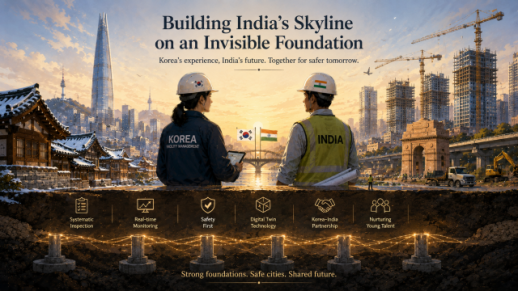 AJP Korea-India Essay Contest Winner: Bronze Prize SEOUL, May 15 (AJP) - As someone working at a facilities management corporation in Korea, the things I face most often are not the shining exteriors of buildings, but the invisible foundations and chains of safety measurements that support them. People often measure a city’s growth by the height of its skyscrapers. But from an engineer’s point of view, the true quality of a city is not about how high its buildings rise. It is about how safely those buildings can stand over time. Korea experienced rapid growth over the past several decades, and through many painful lessons, we built a detailed system for facility maintenance and safety management. When I think about this experience meeting today’s India — a country now going through one of the largest construction booms in the world — I believe the future value both countries can create together is limitless. India is currently one of the most dynamic countries in the world when it comes to building cities and infrastructure. Through projects such as the Smart Cities Mission and large-scale infrastructure development, roads, bridges, and high-rise buildings are being built every day. But from the perspective of a facility manager, construction is never the end point. It is only the beginning of a very long journey that may continue for decades. If the skill of raising a building is called “construction,” then the skill of keeping that building safe and alive for many years is called “facility management.” India’s construction market is expanding at an incredible speed, but the need for systematic maintenance and safety standards is growing just as quickly. As more structures are built, the importance of preventing large accidents and managing facilities properly becomes even greater. This is where a new form of trade between Korea and India can begin. In the past, trade mainly meant exchanging visible goods. But the trade of the future should involve sharing invisible values such as systems, knowledge, and safety. Korean facility management organizations have built strong experience in areas such as maintenance history systems, standardized inspections, and real-time monitoring technology. These systems could become powerful support for India’s massive infrastructure network. In particular, Korea’s advanced digital twin technology could work very well with India’s smart city projects. By creating virtual versions of real buildings, engineers can predict aging and risks before problems appear in real life. This is perhaps the most ideal form of cooperation: Korea’s advanced software technology meeting India’s enormous hardware market. I dream of a future where India’s talented young engineers learn Korea’s advanced facility management methods and apply them across infrastructure sites throughout India. Korea now needs new opportunities to share the knowledge and experience of its skilled safety experts, while India has a large and energetic workforce ready to absorb this expertise and protect the safety of its citizens. Indian engineers could manage their country’s growing skylines with the safety philosophy they learned from Korea, while Korea could continue improving its own maintenance technologies using the huge amount of data created through India’s expanding infrastructure projects. This would create a cycle where both countries grow together. More importantly, this is not only about technology. It is about sharing a culture that values human life and public safety above all else. In that sense, it is both a cultural partnership and a new form of trade. Facility management is never glamorous. It is a field that receives attention only when accidents do not happen. It works quietly in the shadows. But the stronger and deeper those shadows are, the brighter and taller the city above them can shine. Just as the Embassy of India and the Indian Cultural Centre have helped reduce the emotional distance between Korea and India, I believe the future relationship between the two countries should now grow further through practical cooperation in safety and infrastructure management. The small crack we inspect today may become the foundation for a much safer future tomorrow. In many ways, this idea closely reflects the theme of this contest: “Our Moments and Future.” When Korea’s experience and India’s energy come together to build a stronger foundation of safety, everyday life for Indian citizens will become more secure, and Korea’s safety industry will also gain new opportunities in the global market. I hope the sky we build together over India will be filled not with clouds of anxiety, but with the clear wind of trust. I truly believe that the path Korea and India walk together will ultimately become a road leading humanity toward a safer and more prosperous future. And I hope that the sincerity I have carried while quietly protecting people’s safety from unseen places will someday grow into something even greater above India’s rising skyscrapers. *The author, Choi Ji-su, is based in Korea. The author's writing was submitted in Korean, and was translated into English by AI. 2026-05-16 12:04:15
 -
 K-Art: Contemporary art in display at SETEC SEOUL, May 15 (AJP) -The '5th Seoul Art Fair (SAF),' diagnosing the present and envisioning the future of Korean contemporary art, opened at SETEC in Daechi-dong, Gangnam-gu, Seoul. The event features 160 gallery and individual exhibition booths with approximately 1,200 artists participating. Beyond a simple exhibition, it presents a new type of art market based on a clear direction of being 'artist-centered.' This year, artists from China, France, Germany, Japan, and other countries have joined to showcase diverse artworks, and a 'K-Art' exhibition promoting the globalization of Korean art is also being held. Visitors can directly communicate with artists, exchange information, and purchase desired works. The fair runs for four days from Thursday, May 14 through Sunday, May 17 at SETEC near Hakdong Station in Daechi-dong, Seoul. 2026-05-16 12:03:08
 -
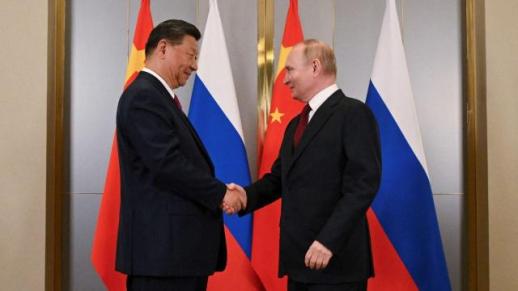 AJP Deep Insight: US-China Summit: Missing are the voices of Russia and EU No sooner had President Donald Trump concluded his summit with President Xi Jinping and departed China on May 15, 2026 than news emerged that Russian President Vladimir Putin would arrive in Beijing almost immediately afterward. On the surface, such a visit may not appear extraordinary. Putin has traveled to China many times before, and Sino-Russian summits have become familiar features of the geopolitical landscape. Yet this visit feels fundamentally different. The timing itself tells the story. That Putin is rushing to Beijing almost the moment the U.S.-China summit concludes suggests not confidence, but urgency. In international politics, true great powers project composure. Anxiety, especially visible anxiety, is often the first sign of diminishing strength. The war in Ukraine has exposed Russia’s structural vulnerabilities to the world. The successor state to the Soviet Union — once the only power capable of rivaling the United States globally — still possesses vast territory and immense nuclear capabilities. Yet the prolonged conflict has revealed the limitations of Russia’s economic foundation, industrial structure, and technological competitiveness. Most notably, the gap separating Russia from the world’s leading powers in semiconductors, artificial intelligence, aerospace systems, drones, and precision-guided weapons has proven far wider than many expected. The deeper problem lies in Russia’s economic architecture itself. Despite its geopolitical ambitions, Russia remains heavily dependent on oil, natural gas, and mineral exports. Such a model may generate temporary strength when commodity prices are high, but it is poorly suited for the defining industries of the 21st century. The emerging global order is increasingly driven by artificial intelligence, quantum computing, biotechnology, advanced semiconductors, and data infrastructure. In that race, Russia appears less like a future-oriented technological civilization and more like a resource empire struggling to preserve the remnants of past power. The European Union faces a different, but equally revealing, predicament. For decades, Europe was regarded as the world’s great civilian superpower — wealthy, stable, sophisticated, and morally influential. Yet the Ukraine war exposed profound structural weaknesses beneath that image. Europe’s industrial model had become deeply dependent on inexpensive Russian energy. Germany’s manufacturing engine has begun to lose momentum. France and Germany alike are facing weakening political leadership and rising internal fragmentation. Militarily, Europe still depends heavily on the American-led NATO framework for its ultimate security guarantees. As a result, the true geopolitical tigers of today’s world are no longer Russia and Europe, but the United States and China. The United States continues to dominate the global financial system, the dollar-based monetary order, advanced AI platforms, semiconductor design, and military power projection. China, meanwhile, commands the world’s largest manufacturing ecosystem, critical supply chains, rare earth resources, battery production, electric vehicles, and an enormous domestic market. The next tier of strategic powers may well belong not to Russia or Europe, but to Japan and South Korea. Japan remains a global leader in semiconductor materials, precision machinery, robotics, and industrial systems. South Korea has established unmatched competitiveness in memory semiconductors, AI infrastructure, batteries, shipbuilding, and digital cultural industries. Together with Taiwan’s semiconductor ecosystem, Northeast Asia has effectively become the oil field of the AI age. Russia and the European Union still possess military weight, historical prestige, and institutional influence. Yet in the decisive competition shaping the future — AI, platforms, semiconductors, and advanced technologies — they increasingly appear to be losing strategic momentum. In that sense, one might argue that they are gradually becoming “paper tigers”: outwardly formidable, yet drifting away from the true engines of future power. The recent U.S.-China summit symbolized precisely this transformation. Trump and Xi reportedly discussed Taiwan, North Korea, Iran’s nuclear issue, global supply chains, and the battle for AI supremacy. These are not isolated diplomatic topics. Together, they reveal the emergence of a new G2 era — not the bipolarity of the Cold War, but a new order shaped simultaneously by technology, finance, supply chains, AI, and geopolitical influence. In such an era, South Korea and Japan cannot afford to remain trapped indefinitely within the emotional architecture of 20th-century historical conflict. The wounds of colonial history are real and must never be trivialized. Memory and historical responsibility remain essential. Yet civilizations cannot survive on resentment alone. History must be remembered, but the future cannot be built solely upon inherited anger. The age of artificial intelligence is not merely a technological transition. It is ultimately a civilizational test. Humanity now faces a fundamental question: Will technology govern the human spirit, or will human wisdom govern technology? This is why the coming era must become what might be called a “Spirituality-Centered AI” age — an era in which ethics, philosophy, culture, and spiritual intelligence guide technological power. In this respect, South Korea and Japan represent a remarkably complementary partnership. South Korea possesses extraordinary dynamism, digital adaptability, semiconductor strength, and cultural influence. Japan contributes precision engineering, foundational scientific depth, industrial discipline, and systemic stability. Together, the two nations could form a civilizational and technological axis rivaled only by the United States and China. More importantly, Korea and Japan share a deeper cultural inheritance rooted in Confucian, Buddhist, and East Asian traditions. Unlike purely hegemonic models of power, these traditions emphasize harmony, balance, restraint, coexistence, and moral order. What Northeast Asia now requires is not politics imprisoned by yesterday’s emotions, but leadership capable of designing tomorrow’s civilization. The forthcoming meeting between Prime Minister Sanae Takaichi and President Lee Jae-myung in Andong should therefore not remain a mere diplomatic ceremony. It should become the starting point for a genuine Korea-Japan economic and technological community. The world is rapidly reorganizing itself into strategic blocs. The United States is consolidating North American supply chains. China is strengthening a Sinocentric economic sphere. Europe still operates through the EU single market. If Korea and Japan continue exhausting themselves in historical confrontation alone, both nations may ultimately become the greatest victims of their own division. A Korea-Japan economic community should not be understood merely as a free-trade arrangement. It should encompass joint semiconductor supply chains, AI collaboration, energy security partnerships, shared research and development, educational exchanges, digital finance systems, and future-oriented industrial integration. The I Ching (周易) offers a timeless insight:“When hearts are united, they can cut through metal.” That may be precisely what Korea and Japan now require — the courage to remember the past honestly while still choosing cooperation for the future. The most difficult obstacle, of course, remains the unresolved burden of history itself. Pain, suffering, and injustice cannot simply be erased. Yet civilizations do not endure through vengeance alone. The Tao Te Ching (道德經) teaches: “Respond to resentment with virtue.” Laozi’s wisdom was not naïve idealism. It was a philosophy of civilizational endurance — the belief that lasting order is built not upon endless retaliation, but upon moral restraint and higher equilibrium. The Dhammapada (法句經) expresses the principle even more directly: “Hatred is never ended by hatred. It is ended only by compassion. This is an eternal truth.” More than two thousand years later, those words remain painfully relevant to Northeast Asia. The Bible offers a parallel truth in Romans: “Do not be overcome by evil, but overcome evil with good.” This does not mean forgetting history. Rather, it means transcending the cycle of hatred in order to build a higher and more enduring order. The world’s great scriptures speak in different languages, yet they point toward the same horizon: reconciliation over vengeance, coexistence over perpetual hostility, and the courage to create a future greater than the wounds of the past. This is an age in which Trump, Xi, and Putin move the geopolitical chessboard. Yet the true challenge for Korea and Japan is not merely how to react to great powers, but how to avoid becoming permanently trapped beneath them. The time may finally have come for Korea and Japan to become a strategic axis of their own — not only for economic prosperity, but for the preservation of peace, balance, and civilizational wisdom in the AI age now unfolding before humanity. 2026-05-16 11:59:17