


Latest by
-
 LG CNS Signs Contract with Anthropic for 'Claude' Implementation LG CNS is embarking on an artificial intelligence (AI) transformation with the introduction of Anthropic's 'Claude'. On June 9, LG CNS announced that it has signed a contract with Anthropic for the implementation of 'Claude Enterprise'. This initiative aims to drive innovation in AI transformation (AX) for domestic companies. Notably, this contract is structured as a comprehensive agreement applicable to all affiliates of the LG Group, with LG CNS planning to accelerate AX at the group level. Claude is a corporate AI model gaining traction in the global market, known for its advanced reasoning capabilities, robust security, and ability to handle lengthy documents. LG CNS has evaluated it as a model that supports AX by focusing on enhancing work efficiency through AI agents integrated with internal systems, coding, and collaboration. Through this contract, LG CNS will make Claude accessible to all employees. The company also plans to actively promote AI-driven productivity innovations across various tasks, supporting the entire process of implementing and utilizing Claude for both LG Group companies and external firms as it expands its AX business. In 2023, LG CNS made an equity investment in Anthropic through LG Technology Ventures. The partnership has continued with efforts to provide Claude in a form optimized for domestic corporate clients. Moving forward, LG CNS aims to deepen its collaboration with Anthropic to continuously enhance AX services tailored to corporate environments. Currently, LG CNS is applying various generative AI technologies internally, refining its customized AI utilization framework. In February, the company introduced enterprise services in collaboration with OpenAI and established a reseller partner agreement to support the domestic supply and operation of 'ChatGPT Enterprise'. A reseller partner is an official collaborator authorized to sell AI services in the market. Additionally, LG CNS is strengthening its multi-AI system by implementing various AIs based on the purpose and usage environment, including the recent contract for Claude. Kim Tae-hoon, Vice President of LG CNS's AI Cloud Business Division, stated, "Collaboration with Anthropic marks a significant opportunity to launch an AX innovation model optimized for the domestic corporate environment. We will actively support the AX transformation of domestic corporate clients by combining LG CNS's AX capabilities with Anthropic's AI technology." Choi Gi-young, head of Anthropic's Korea branch, expressed, "Through our collaboration with LG CNS, we expect domestic corporate clients to apply safer and more reliable AI in their actual work environments. We will actively cooperate to establish Claude as an AI platform that supports corporate productivity and innovation."* This article has been translated by AI. 2026-06-09 10:15:00
 -
 Samsung and SK Hynix Consider New Semiconductor Plants in Honam Region Samsung Electronics and SK Hynix are reportedly exploring plans to establish semiconductor plants in the Honam region, drawing significant industry attention. According to a report by Hankyoreh on June 8, the proposal for new semiconductor facilities by Samsung and SK Hynix is a key topic in discussions among the government and major corporations regarding investment outside the capital region. The report indicates potential investment sites include Gwangju, where a military airport relocation is underway, and Jangseong in Jeollanam-do, which is developing a large-scale data center. If realized, this plan could lead to new investments worth trillions of won in the Honam area. Currently, Samsung's major semiconductor production bases are located in Pyeongtaek, Hwaseong, and Giheung in Gyeonggi Province. SK Hynix operates its production facilities primarily in Icheon and Cheongju, also in Gyeonggi Province. Many semiconductor backend processing and packaging facilities are concentrated in the Chungcheong region. As a result, industry experts are paying close attention to the possibility that the new investments could focus on advanced packaging plants or semiconductor backend processing facilities. With the recent expansion of the artificial intelligence (AI) semiconductor market, the importance of advanced packaging technology has surged, increasing the likelihood of attracting related facilities. Some analysts suggest that this review aligns with the regional balanced development policy of the Lee Jae-myung administration. Indeed, voices within the ruling party have consistently called for the decentralization of semiconductor industry infrastructure, which has been concentrated in the capital region since last year. President Lee Jae-myung also stated at a press conference marking his first anniversary, "I will soon unveil a large-scale investment project that will bring about a significant transformation in our growth strategy," adding, "There is a need to balance the issues between Yeongnam and Honam by investing more in Honam." However, as of now, both Samsung Electronics and SK Hynix have not issued any official statements regarding the establishment of semiconductor plants in Honam. The government has also not disclosed specific details about the investment scale or timeline. Meanwhile, the semiconductor industry anticipates that the increasing demand for AI semiconductors and the ongoing global supply chain restructuring could lead to significant changes in the domestic semiconductor landscape, influenced by government industrial policies and corporate investment strategies. On the same day, Newsis reported that representatives from both companies downplayed the establishment of semiconductor plants. A Samsung Electronics official told Newsis, "We are unaware of this matter and have no knowledge of it." Similarly, an SK Hynix official stated, "We are not aware of this issue." 2026-06-09 10:15:00
 -
 KDDX Project: Who Will Prevail, HD Hyundai or Hanwha Ocean? The competition between HD Hyundai Heavy Industries and Hanwha Ocean for the KDDX project is reaching its final stages. With the Defense Acquisition Program Administration expected to finalize the selection of the detailed design and lead ship construction contractor this month, both companies are intensifying their efforts. According to industry sources on June 9, the Defense Acquisition Program Administration has begun evaluating proposals for the KDDX detailed design and lead ship construction, with the contractor's identity likely to be revealed within the month. The KDDX project involves the construction of six 6,000-ton Aegis-class destroyers, utilizing domestic technology for the hull and combat systems, with a total project budget of 7.439 trillion won. The budget for the detailed design and lead ship construction is set at 882 billion won (including VAT). The project will proceed in phases: concept design, basic design, detailed design and lead ship construction, followed by subsequent ship construction. Hanwha Ocean was awarded the concept design contract, while HD Hyundai Heavy Industries secured the basic design contract. Both companies officially confirmed their participation in the KDDX second bidding round ahead of the deadline at the end of last month. A significant variable in this competition is the security penalty applied to HD Hyundai Heavy Industries. The shipbuilding project is evaluated based on technology, execution capability, and price, but the score differences between companies are typically narrow, meaning even a 0.1-point deduction can influence the outcome. This is why the 1.2-point security penalty imposed on HD Hyundai Heavy Industries has drawn attention in the industry. Previously, some employees of HD Hyundai Heavy Industries illegally obtained 12 classified naval documents, including the KDDX concept design from Daewoo Shipbuilding & Marine Engineering, and shared them internally. In November 2022, eight individuals were convicted in this case. Consequently, a security penalty was set to be applied until November 2025. However, after one individual was acquitted in the first trial, the prosecution appealed, leading to a guilty verdict in the second trial in December 2023. As a result, the Defense Acquisition Program Administration announced that the security penalty would be applied until December 2026. HD Hyundai Heavy Industries filed for an injunction against the extended penalty, but the court dismissed the request on June 5. This has led to analyses suggesting that Hanwha Ocean, which does not face a penalty, is in a relatively advantageous position in the KDDX bidding competition. An industry insider noted, "In shipbuilding projects, outcomes are often determined by narrow score margins, so a 1.2-point penalty can be a significant burden. While HD Hyundai Heavy Industries has clear strengths from its basic design work, the current environment seems to favor Hanwha Ocean due to the absence of a penalty."* This article has been translated by AI. 2026-06-09 10:15:00
 -
 South Korea's Q1 Nominal Growth Rate Hits 30-Year High at 17.1% Driven by Semiconductor Exports South Korea's economy experienced significant growth in the first quarter of this year, driven by strong semiconductor exports. The nominal growth rate increased by 17% compared to the same period last year, marking the highest level in 30 years. The Bank of Korea announced on June 9 that the real Gross Domestic Product (GDP) growth rate for the first quarter was recorded at 1.8%, an upward revision of 0.1 percentage points from the preliminary estimate released in April. This figure is double the initial forecast of 0.9% and represents the highest growth rate since the third quarter of 2020, when it was 2.3%. Quarterly growth improved following a contraction of -0.2% in the first quarter of last year, with subsequent growth rates of 0.6% in the second quarter and 1.4% in the third quarter, before a slight decline of -0.1% in the fourth quarter. This year, however, the economy rebounded sharply. Kim Hwa-yong, head of the Bank of Korea's National Income Division, stated, "The upward adjustment of 0.1 percentage points in the first quarter's real GDP growth rate will raise the annual growth rate by the same amount. We will revise our forecasts in August based on changing conditions." In May, the Bank of Korea projected a real GDP growth rate of 2.6% for the year. The growth in the first quarter was primarily driven by increases in exports and capital investment. Exports rose by 5.9%, mainly in information technology (IT) products such as semiconductors, while imports increased by 3.9%, driven by machinery, equipment, and automobiles. This marks the highest growth rate for exports since the third quarter of 2020 (14.9%) and the highest for imports since the fourth quarter of 2021 (4.0%). Construction investment grew by 1.4% due to increases in building and civil engineering projects, while capital investment surged by 6.6%, the highest growth rate since the first quarter of 2021 (9.2%). Private consumption increased by 0.6%, supported by higher spending on goods such as clothing and services like finance, while government consumption fell by 0.4% due to reduced health insurance expenditure. Compared to previous estimates, growth rates for capital investment (up 1.8 percentage points) and exports (up 0.8 percentage points) were revised upward, although imports also increased by 0.9 percentage points. The contribution of each sector to the first quarter's growth rate showed that net exports (exports minus imports) boosted the growth rate by 1.1 percentage points. Despite an increase in imports, the growth in exports was greater. Contributions from private consumption (0.3 percentage points), construction investment (0.2 percentage points), and capital investment (0.6 percentage points) accounted for a total of 0.7 percentage points from domestic demand. By sector, manufacturing grew by 3.9%, driven by increases in computers, electronics, optical instruments, and primary metals. The information and communication technology (ICT) manufacturing sector saw a remarkable growth of 15.4%, while non-ICT manufacturing experienced a decline of 0.9%. The nominal GDP growth rate for the first quarter reached 10.5%, the highest since the first quarter of 1976 (13.0%). Compared to the same period last year, it grew by 17.1%, the highest since the third quarter of 1995 (19.2%). The GDP deflator rose by 12.9% year-on-year. The GDP deflator, which is the ratio of nominal GDP to real GDP, serves as a comprehensive price index that includes exports and imports. Kim explained, "The rise in domestic prices is not the cause; rather, it is due to significant improvements in the profitability of export companies." He added, "We need to closely examine whether the increase in the GDP deflator is driven by domestic consumption or rising prices of export goods, noting that the current rise is influenced by a 23.5% increase in the export deflator, particularly in semiconductors." He emphasized that the expansion of nominal GDP growth is not due to rising domestic prices. "There were times in the 1970s, 1980s, and 1990s when the gap between nominal and real GDP exceeded 10%. It is important to distinguish this from cost-push inflation," he said. He further noted, "The expansion of corporate profits can provide resources for fiscal stability through increased corporate taxes, as well as for fostering future industries and enhancing potential growth rates through structural reforms. This can positively impact domestic demand through increased research and development (R&D) and capital investment." He added, "International organizations such as the Bank for International Settlements (BIS) measure household and government debt ratios against nominal GDP for international comparisons. The expansion of nominal GDP growth significantly lowers this ratio." In the first quarter, nominal Gross National Income (GNI) surged by 11.0% compared to the previous quarter, reaching the highest level in 50 years. The net income from abroad increased from 9.2 trillion won to 13.7 trillion won, surpassing the nominal GDP growth rate of 10.5%. The real GNI growth rate of 9.2% was at an all-time high. Improved terms of trade and an increase in real net income from abroad, which rose from 8.2 trillion won to 11.6 trillion won, significantly exceeded the real GDP growth rate of 1.8%. The total savings rate for the first quarter was 41.7%, up 5.7 percentage points from the previous quarter, the highest level since the fourth quarter of 1988 (41.9%). 2026-06-09 10:09:00
 -
 Han Byeong-do Calls for Immediate National Assembly Session to Investigate Ballot Shortage Han Byeong-do, the leader of the Democratic Party, announced on June 9 that he plans to convene an immediate session of the National Assembly to swiftly conduct a national investigation into the ballot shortage that occurred during the June 3 local elections. He also responded to the People Power Party's call to include President Lee Jae-myung and the Blue House in the investigation, urging them to refrain from politicizing the issue. During a meeting of the Democratic Party's leadership on the morning of June 9, Han stated, "The Democratic Party submitted a request for a national investigation into the ballot shortage on June 8. This incident has severely undermined both democracy and voting rights in South Korea." He added, "The National Election Commission has completely failed in its constitutional duty of managing and executing the elections due to this incident. It cannot be dismissed as a mere administrative error or mistake." He emphasized that President Lee has already directed the establishment of a joint investigation team and reiterated the need for an immediate session of the National Assembly for a thorough investigation. Han stressed, "In such a critical situation where voting rights are being violated, the responsibility of a political party is to ensure a thorough investigation." He admonished the People Power Party for attempting to politicize the issue, stating, "The People Power Party is turning this incident into a political conflict, causing confusion and division among the public. They are trying to include President Lee and the Blue House in the investigation while sidelining the need for truth. They should stop their provocative politics and agree to a national investigation to resolve the issue." Additionally, he promised a swift formation of the new leadership in the 22nd National Assembly. "When has the public ever asked us to avoid work for dozens of days under the pretext of negotiations? The National Assembly has no time to waste on fruitless political disputes or idle power struggles," he said. He urged the People Power Party to immediately start the formation of the new leadership once a new floor leader is elected on June 10, stating, "We will promptly complete the formation and fully activate the National Assembly's standing committees to address legislative matters concerning the people's livelihoods."* This article has been translated by AI. 2026-06-09 10:09:00
 -
 Musinsa Integrates ChatGPT to Enhance Fashion Recommendations Musinsa announced on June 9 that it will introduce its app integrated with OpenAI's conversational AI service, ChatGPT. This follows the launch of the 'ChatGPT for Kakao' service in March, which provided AI-driven style recommendations within the KakaoTalk platform, expanding its service reach to OpenAI's global platform.With the integration of ChatGPT, Musinsa aims to enhance the way users explore fashion and beauty products. The company is focusing on providing a personalized recommendation experience that reflects users' situations and preferences, moving beyond simple product sales. To achieve this, Musinsa has implemented its own commerce exploration interface, the Musinsa MCP (Model Context Protocol).Users can utilize the Musinsa app within ChatGPT to input details such as time, place, situation (TPO), weather, and preferred price range to receive tailored recommendations. For instance, users can ask, "Suggest an outfit suitable for work tomorrow" or "Show me outfits for my trip to Europe next month," and the AI will provide styling suggestions based on the context. Clicking on recommended products will direct users to the Musinsa online store, where they can view detailed information and make purchases.Musinsa plans to leverage ChatGPT as a new channel to broaden its engagement with both domestic and international users while enhancing its AI-based recommendation features during the fashion and beauty exploration process. A Musinsa representative stated, "We will expand our connections with global users to drive traffic to the Musinsa store and continue investing in AI technology based on our self-developed Musinsa MCP. Our focus will be on building an easy and smart interface for customers' fashion and beauty exploration journeys."Additionally, Musinsa has recently opened an official online store on Tmall Global, China's largest overseas shopping platform, as part of its strategy to expand its presence on global platforms and enhance AI-based services for international customers.* This article has been translated by AI. 2026-06-09 10:09:00
 -
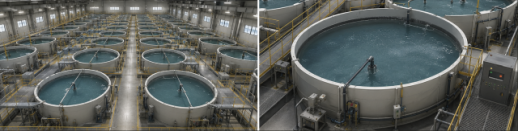 Pulmuone breaks ground on Korea's first land-based laver farm SEOUL, June 09 (AJP) - Pulmuone announced it had broken ground on South Korea's first research center for land-based cultivation of laver, or gim, at the Saemangeum national industrial complex, marking a push to commercialize a technology that could free the prized seaweed from the vagaries of the open sea. The center, built under a state project led by the Ministry of Oceans and Fisheries, will serve as a testbed for growing laver on land year-round, the food company said Tuesday. The 9,473-square-metre site will house cultivation tanks, seawater treatment systems and research facilities in a single integrated complex. At its heart will sit a bioreactor system, billed as the largest of its kind in the country, that fine-tunes temperature, light and nutrients to yield a steady harvest regardless of season. The first phase focuses on core infrastructure, with a second stage to add processing and storage buildings and sharply expand tank capacity. Pulmuone has chased the technology since 2021, winning a marine farming license in 2024 and running pilot studies with 10-ton tanks in Taean, on the country's west coast. The company aims to weave production, processing and distribution into a single industrial chain anchored in Saemangeum. The firm plans to share its model with local fishers and buy up their entire harvest, building what it called a virtuous cycle of stable rural income and reliable raw material. Beyond output, it frames the venture as a hedge against climate shocks and a step toward restoring marine ecosystems. "The Saemangeum R&D center will be an important turning point for proving and industrialising land-based laver farming technology," said Ahn Deok-jun, head of food tech division at Pulmuone. 2026-06-09 10:06:45
 -
 Post-Election Analysis: The Future of Lee Jae-myung's Government The nationwide local elections held on June 3, 2026, signify more than just a reshuffling of local power. This election was the first major political event since the inauguration of the Lee Jae-myung administration, marking a pivotal moment for the direction of national governance and the evolution of South Korea's political landscape. Based on the results, the Democratic Party appears to have gained an advantage. The party secured dominance across both metropolitan and local governments, successfully expanding its influence significantly beyond the central government and the National Assembly. However, interpreting this solely as a victory for the Democratic Party does not fully capture the reality. The People Power Party managed to retain key symbolic regions such as Seoul, Daegu, and Gyeongnam, maintaining a minimal foundation as a national party. Ultimately, this election represented both a victory for the Democratic Party and a survival moment for the People Power Party, indicating that South Korean politics is entering a new phase. One of the most notable aspects of this election is the shift in voter priorities. While past local elections were heavily influenced by regime judgment and regionalism, this election brought economic issues, industry, job creation, housing, AI, advanced industries, regional extinction, and balanced development to the forefront. In the capital region, housing, transportation, and youth employment emerged as key issues, while the Chungcheong region focused on building a semiconductor and advanced industry belt. The Yeongnam region emphasized manufacturing competitiveness and local economic recovery, whereas the Honam region discussed physical AI, future industries, and balanced development. This shift indicates that South Korean politics is gradually moving from an ideology-centered competition to a future growth strategy competition. Seoul was the most critical battleground in this election. The outcome in Seoul, the center of South Korea's political and economic landscape, serves as an important benchmark for future political dynamics. The Democratic Party launched a full-scale effort to reclaim Seoul, but the result was a retention of the mayoralty by Oh Se-hoon. This outcome cannot be simply interpreted as a victory for conservatism. Seoul's citizens demonstrated a tendency to separate their evaluations of the central government from those of the city administration. Many analysts suggest that practical factors such as community-focused policies, urban competitiveness, transportation infrastructure, and real estate issues played significant roles. Notably, real estate concerns seem to have influenced the middle class's voting behavior. Seoul remains a region where the centrist influence is paramount, with a strong preference for pragmatism over ideology. Therefore, the results in Seoul signal a broader shift in South Korean politics toward a performance-oriented approach. Mayor Oh Se-hoon has further solidified his presence as a prominent figure in the conservative camp through this election. His experience in city governance, regional competitiveness, stable image, and ability to appeal to centrist voters are seen as strengths. However, there are still challenges regarding the cohesion of his strong support base and the organizational foundation within his party. Considering that the key battleground in South Korean politics is currently among centrist voters, Oh's political value may have increased. Daegu and North Gyeongsang Province remain strongholds of conservative politics. However, the political landscape is not as monolithic as in the past. Political diversity is gradually expanding, particularly among younger voters, with new industrial issues such as AI, robotics, and future manufacturing gaining traction. Nevertheless, the Democratic Party did not manage to make significant inroads in these areas, indicating that political culture, organizational strength, and historical identity continue to exert strong influence. Gyeongnam exhibited similar trends, with a manufacturing-based industrial structure and a solid base of conservative voters allowing the People Power Party to successfully defend its core regions. However, the previously overwhelming dominance is showing signs of gradual decline. Within the Democratic Party, evaluations of the leadership of Jeong Cheong-rae following this election are mixed. Jeong is known for his strong political combativeness, clear messaging, and high support among party members. However, succeeding in a nationwide election requires not only consolidating the support base but also expanding appeal to centrist and non-supportive voters. Some analyses suggest that the limitations observed in certain regions are related to this issue. While this cannot be definitively attributed as the sole cause of the election results, it highlights the importance of balancing support consolidation with centrist expansion for the Democratic Party's long-term competitiveness. Prime Minister Kim Min-seok is also regarded as a significant political asset within the Democratic Party. He has built a stable image based on extensive political experience, policy expertise, and administrative experience, and is recognized for his understanding of economic, diplomatic, and security issues. Former party leader Song Young-gil, despite experiencing political ups and downs, still maintains a certain level of political influence. Ultimately, the Democratic Party faces the dual challenge of maintaining its current power while preparing for the post-Lee Jae-myung era. The People Power Party is also entering a new leadership competition. Former leader Han Dong-hoon is still considered a prominent politician, bolstered by high recognition and a strong support base. He is particularly noted for his political potential among younger voters and in certain areas of the capital region. However, a key challenge will be how convincingly he can present visions for national governance, economic, diplomatic, and industrial policies. Lawmaker Ahn Cheol-soo possesses strengths in science, technology, and innovation in the context of the AI era, while former lawmaker Yoo Seung-min retains symbolic significance in economic and reform conservatism. Former Minister Won Hee-ryong is also recognized for his strong drive and execution capabilities. However, it is difficult to definitively state that any one individual will lead the next political order at this time, as the political environment, economic conditions, and public sentiment can shift, potentially forming new dynamics. One of the most significant implications of this election is the change at the local level. While past local elections often reflected central politics, regions are now presenting diverse future strategies competitively. Chungcheong discusses semiconductor and advanced industry belts, Busan aims to become a global financial hub, and Ulsan focuses on future mobility industries. Daegu emphasizes robotics, while Gwangju discusses future mobility and AI industries. North Jeolla is also seeking new growth strategies centered around physical AI and renewable energy in the Saemangeum area. This indicates that local governments are evolving from passive entities waiting for central government support to active agents designing their own futures. Jeolla North Province is particularly noteworthy. Historically viewed as relatively marginalized during South Korea's industrialization, it now faces new opportunities in the era of the AI revolution and energy transition. The expansive industrial land and renewable energy infrastructure in Saemangeum, along with a relatively low cost structure, are seen as favorable conditions for data centers, advanced manufacturing, and physical AI industries. However, this does not guarantee immediate success. If a national AI strategy is combined with local balanced development policies, there is significant potential for Jeolla North Province to emerge as a new industrial hub. Future political schedules will also be crucial variables. The 2028 general election is likely to serve as a midterm evaluation of the Lee Jae-myung administration. If policies promoting AI, semiconductors, and advanced industries yield results and regional balanced development produces visible outcomes, the ruling party may find itself in a favorable position. Conversely, if economic conditions worsen or public livelihood issues intensify, the opposition may seize opportunities for counterattacks. At this point, it is prudent to keep various possibilities open rather than definitively asserting one side's advantage. The next presidential election in 2030 will likely follow a similar pattern. Given the nature of South Korean politics, presidential elections often culminate in discussions about the economy, public livelihood, and national competitiveness. Key evaluation criteria will likely include achievements in the AI industry, job creation for young people, stability in real estate, and revitalization of local economies. Citizens tend to assess governments based on tangible changes in their lives rather than political rhetoric. If 1987 marked the era of democratization, and 1997 the era of structural reform, the 2000s were characterized by the information and internet revolution. The period following 2026 is likely to be defined by AI, advanced industries, energy transition, and local transformation. The June 3 local elections may be recorded as the starting point of that change. This election was not merely about how many metropolitan leaders each party secured; it was a political milestone indicating the direction South Korea is headed. The Lee Jae-myung administration has secured a strong political foundation. However, what the public has conferred is not privilege but responsibility. It is now time to demonstrate economic and national achievements beyond political justifications. The public is no longer swayed by mere slogans; they are looking for jobs, income, housing, education, and hope for the future. Ultimately, the success or failure of South Korean politics in the future is likely to be evaluated based on performance rather than ideology. History records the aftermath of elections as more significant than the results themselves. Future historians may view the June 3, 2026, local elections not simply as a local election but as the moment South Korea began its transition toward becoming a center for the AI revolution and advanced industries, a time when local regions began to emerge as new pillars of national growth, and a period when politics shifted from ideological competition to a focus on national competitiveness. The election is over. However, the competition surrounding South Korea's future is just beginning. 2026-06-09 10:06:00
 -
 Korea Investment & Securities Raises Lotte Shopping Target Price Amid Growth Prospects Korea Investment & Securities projected on June 9 that Lotte Shopping will benefit from strong department store sales and the closure of Homeplus locations, raising its target price from 200,000 won to 230,000 won. The firm maintained its "buy" rating. Kim Myung-joo, a researcher at Korea Investment & Securities, stated, "The department store industry is entering a phase of structural growth, and the operating profit leverage effect for Lotte Department Store will continue throughout this year." He noted that both metropolitan and regional department stores are showing healthy sales trends. He added, "In the first quarter of this year, sales at Lotte Department Store's regional locations increased by 10% compared to the same period last year," explaining that stores that previously underwent asset write-downs due to sluggish regional markets are now contributing to improved performance as sales rise. Kim also highlighted the increase in foreign tourists visiting Busan, stating, "Lotte Department Store, which has the most locations in Busan, is expected to benefit from this trend." Looking ahead to the second half of the year, he expressed optimism about the benefits from Homeplus store closures. Kim noted, "With Homeplus deciding to close a total of 54 stores, existing Lotte Mart and Super locations are showing good performance," predicting that the growth rate for existing Lotte Mart stores will increase by 1.8 percentage points on an annual basis. He concluded, "After a prolonged period of underperformance, Lotte Shopping is entering a normalization phase for most of its business divisions, excluding electronics retail, starting this year," and added that he adjusted performance estimates upward to reflect better-than-expected results from the department store division.* This article has been translated by AI. 2026-06-09 10:00:00
 -
 Chinese Media Highlights Xi Jinping's Visit to North Korea Chinese state media are extensively covering President Xi Jinping's visit to North Korea, emphasizing the friendly atmosphere between the two nations after seven years. On June 9, the People's Daily, the official newspaper of the Communist Party of China, filled its front and second pages with photos and articles related to Xi's visit. The front page featured images of Xi and North Korean leader Kim Jong Un smiling and shaking hands during their summit, attending an official welcome ceremony at Kim Il Sung Square, and enjoying a performance together with their spouses. The newspaper also reported that a commentary published on the front page of the North Korean Workers' Party's newspaper, Rodong Sinmun, received enthusiastic responses in North Korea. The piece, titled "Inheriting the Past and Pioneering the Future, Advancing Together Through Trials to Continue Engraving a New Chapter of Traditional China-North Korea Friendship," was highlighted as a significant message ahead of Xi's visit. The People's Daily included analyses from domestic and international experts on the importance of Xi's visit. Yang Shiyi, a researcher at the Chinese International Trade Institute, stated, "Xi's visit will activate friendly exchanges between the Communist Parties of China and North Korea in all areas, promoting continuous joint development in socialist construction." Dong Xiangrong, a researcher at the Chinese Academy of Social Sciences, noted that Xi proposed expanding practical cooperation during the summit, indicating a significant direction for deepening China-North Korea relations. China Central Television (CCTV) dedicated 22 minutes of its 30-minute main news broadcast the previous evening to Xi's visit. The coverage detailed Xi and his wife's arrival at Pyongyang's Sunan International Airport, a car parade through the city, the welcome ceremony at Kim Il Sung Square, the summit, dinner, and the performance, emphasizing the friendly ties between the two countries. The broadcast repeatedly showcased scenes of Pyongyang citizens waving flags, balloons, and bouquets in celebration of Xi's arrival. Xi, who is making his first state visit to North Korea in seven years, is expected to conclude his two-day visit on June 9. On the second day of his visit, Xi is anticipated to start his schedule by paying respects at the "Friendship Tower" in Pyongyang, a symbol of China-North Korea friendship. Built in 1959, the tower commemorates the Chinese People's Volunteer Army's participation in the Korean War and is a customary stop for high-ranking Chinese officials visiting North Korea to showcase the friendly relations between the two nations. Xi also visited the tower during his 2019 trip to commemorate the 70th anniversary of China-North Korea diplomatic relations. Xi may hold a second meeting with Kim Jong Un over lunch, similar to their first visit seven years ago when the two leaders, accompanied by their spouses, visited the Friendship Tower before moving to the Kumsusan Palace of the Sun for a stroll and lunch in the rose garden. Xi is expected to depart for China later in the afternoon from Pyongyang's Sunan International Airport.* This article has been translated by AI. 2026-06-09 09:57:00