

Journalist

Abraham Kwak
-
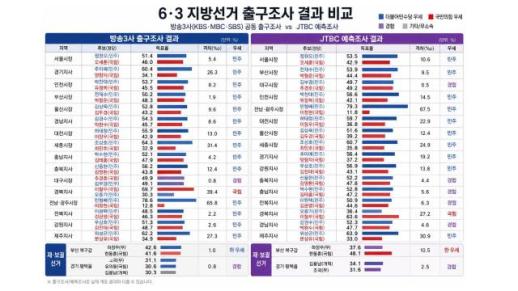 Conflicting Exit Polls Create Uncertainty in Local Elections The release of exit polls for the June 3 local elections has left both lawmakers and voters in confusion. This is due to conflicting results from the three major broadcasters—KBS, MBC, and SBS—and predictions from JTBC, which presented differing scenarios for the same elections. In some regions, the discrepancies were significant, leading to widespread questions about which results to trust before the vote counting began. According to the exit polls from the three broadcasters, the Democratic Party appears to be on track for a significant victory. In the Seoul mayoral race, candidate Jeong Won-o received 51.4% of the vote, leading Oh Se-hoon, who garnered 46.0%, by 5.4 percentage points. In the Gyeonggi gubernatorial election, candidate Choo Mi-ae achieved 60.4%, significantly ahead of Yang Hyang-ja, who received 34.1%. In the Incheon mayoral election, Park Chan-dae was projected to win with 53.7%, compared to Yoo Jeong-bok's 45.5%. In the Busan mayoral election, Jeon Jae-soo was expected to lead with 50.2% against Park Hyung-joon, who received 48.3%. The elections in Ulsan and Gyeongnam also forecast victories for candidates Kim Sang-wook and Kim Kyung-soo, respectively. Based on the three broadcasters' exit polls, the Democratic Party is interpreted to have a strong hold on the metropolitan area, as well as making significant gains in the so-called PK region of Busan, Ulsan, and Gyeongnam. Some analysts even suggest they have gained the upper hand in a nationwide election. However, JTBC's predictions tell a different story. While the Democratic Party maintained a lead in the Seoul, Busan, Incheon, and Gyeonggi races, JTBC classified five regions—Chungbuk, Chungnam, Gyeongnam, Jeonbuk, and Daegu—as competitive. Areas where the three broadcasters indicated a clear advantage for the Democratic Party were still considered toss-ups by JTBC. For instance, in the Chungbuk gubernatorial election, the three broadcasters reported Shin Yong-han leading Kim Young-hwan by 12.4 percentage points, while JTBC viewed it as a competitive race with only a 4.4 percentage point difference. Similarly, in the Gyeongnam gubernatorial election, the three broadcasters predicted Kim Kyung-soo would lead by 8.6 percentage points, but JTBC saw it as a close contest with just a 4.6 percentage point margin. The discrepancies were also notable in the Gangwon gubernatorial race, where the three broadcasters projected a 2.6 percentage point gap between Woo Sang-ho and Kim Jin-tae, while JTBC estimated a 13.8 percentage point difference. The Seoul mayoral race also showed a gap of over 5 percentage points between the two sources. The most striking difference emerged in the by-elections. In the Busan North Gap National Assembly by-election, the results were almost opposite. The three broadcasters reported Ha Jeong-woo with 42.6% and Han Dong-hoon with 41.6%, giving Ha a narrow lead. However, JTBC predicted Han would receive 48.1% while Ha would only get 37.6%, flipping the expected outcome beyond the margin of error. In the Gyeonggi Pyeongtaek election, the three broadcasters indicated a close race among candidates Jo Guk, Yoo Ui-dong, and Kim Yong-nam, all around 30%, while JTBC forecasted Kim Yong-nam would be in the lead. As a result, the political atmosphere remains cautious, with parties hesitant to declare victory or concede defeat immediately after the exit poll results were released. The Democratic Party may interpret the results from the three broadcasters as evidence of expanded influence in the metropolitan area, Chungcheong region, and parts of the PK region. In contrast, the People Power Party is focusing on the fact that many areas remain competitive according to JTBC, raising hopes for a potential turnaround. Particularly, regions like Daegu, Chungbuk, Chungnam, Gyeongnam, and Jeonbuk are seen as key areas for evaluating future electoral trends. While the three broadcasters show a strong Democratic Party advantage, JTBC suggests that it is difficult to predict outcomes until the counting is complete. This divergence in interpretations of the same election results illustrates the complexity of the current political landscape. Ultimately, the final answers will come from the vote counting results. Exit polls are important indicators of public sentiment, but it is rare for major broadcasters to have such conflicting predictions. This local election is likely to be remembered not only for the candidates' victories and defeats but also for the accuracy of the exit poll predictions.* This article has been translated by AI. 2026-06-03 19:24:00
 -
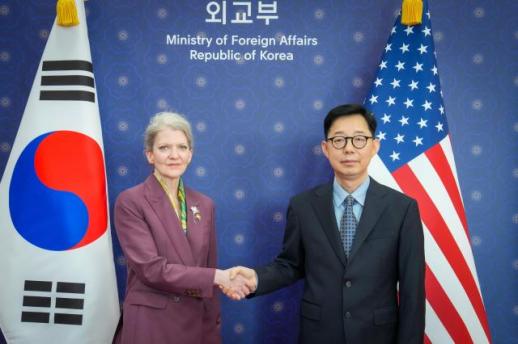 U.S.-South Korea Talks on Nuclear Submarines and Energy Cooperation Gain Momentum Discussions between the United States and South Korea regarding the acquisition of fuel for nuclear-powered submarines and uranium enrichment and reprocessing rights for civilian nuclear power plants are gaining significant momentum. The U.S. side has expressed agreement on the need for prompt results, marking a shift in the follow-up talks that had been delayed for several months since the leaders' agreement last October. However, domestic political conditions in the U.S. and trade issues are expected to be key variables in future negotiations. On June 3, delegations from both countries continued discussions at the Foreign Ministry headquarters on security cooperation issues, including the construction of nuclear-powered submarines and the acquisition of uranium enrichment and reprocessing rights. The Foreign Ministry stated, "Both sides have agreed to establish a performance review system throughout the year to achieve substantial results quickly and to accelerate future discussions." They discussed a general timeline for these talks, with plans for a second meeting as early as next month in Washington, D.C. The focus of these discussions appears to be on amending the existing South Korea-U.S. Nuclear Cooperation Agreement to grant South Korea enrichment and reprocessing rights. Currently, South Korea can only enrich and reprocess uranium below 20% with written consent from the U.S. In contrast, Japan requires U.S. consent only when enriching above 20%. The government is reportedly exploring ways to secure broader rights without repeating the lengthy five-year process of comprehensive amendments that occurred from 2010 to 2015, considering partial amendments or separate agreements to expedite the process. Additionally, they are advocating that establishing a trans-Pacific nuclear fuel supply chain would benefit U.S. energy security. Regarding nuclear submarines, key cooperation issues related to nuclear fuel supply were discussed. The government plans to develop its own reactor and propulsion system while sourcing low-enriched uranium fuel exclusively from the U.S. To receive military-grade nuclear submarine fuel, a separate agreement beyond the existing civilian nuclear cooperation agreement will be necessary. Experts view the AUKUS agreement, established between Australia, the U.S., and the U.K. in 2024, as a relevant reference point. Currently, the government is acutely aware of the importance of time. There is a sense of urgency to advance the agreement to a point of no return while Donald Trump maintains control over domestic policy. Since this agreement stems from Trump's personal decision, it could lose momentum if the Republican Party loses congressional power in the November midterm elections or if his term ends. Future negotiations are likely to be influenced by trade issues and concerns about non-proliferation. The postponement of security discussions this month was partly due to South Korea's investment pace in the U.S. and American dissatisfaction with the Coupang data breach incident. Additionally, due to U.S. concerns that South Korea could develop nuclear weapons, strong demands for stringent nuclear material controls and information security measures, similar to those in the AUKUS agreement, are expected to follow.* This article has been translated by AI. 2026-06-03 19:24:00
 -
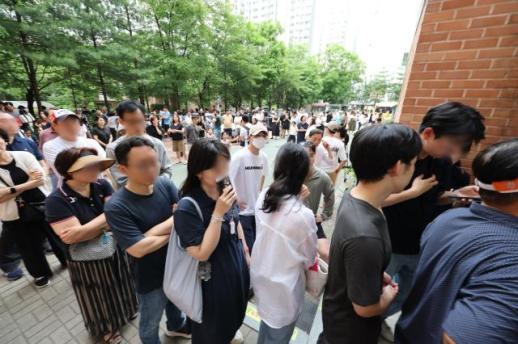 Voting Paper Shortage in Seoul's Gangnam, Songpa, and Gwangjin Districts During the local elections on June 3, some voters were turned away due to a shortage of ballots at polling stations. The National Election Commission responded by sending additional ballots and allowing voters waiting in line to cast their votes after the official closing time. However, the People Power Party expressed strong opposition to the situation. On June 3, Jeong Hee-yong, the party's secretary-general, stated at the party headquarters in Yeongdeungpo, Seoul, "The occurrence of voters being unable to vote due to a shortage of ballots goes beyond mere preparation issues; it is a dereliction of election management duties. We cannot contain our dismay." He further emphasized, "The cause of this incident must be clearly explained to the public. The People Power Party will not overlook the previous controversy over ballot transparency and the current shortage of ballots." The People Power Party's Seoul chapter confirmed that there was a shortage of ballots at several polling stations in Gangnam, Songpa, and Gwangjin districts. While the Election Commission hurriedly dispatched additional ballots, some voters chose to leave without voting. Bae Hyun-jin, chair of the Seoul chapter, criticized the situation, stating, "This is not just a simple mistake; it demonstrates a complete breakdown of the basic election management system and undermines the foundations of democracy." Given that the ballot shortage occurred in areas traditionally supportive of the People Power Party, the implications of this incident are expected to be significant. In response, Shin Dong-wook, chair of the Fair Election Assurance Committee, visited the National Election Commission in the evening to lodge a protest.* This article has been translated by AI. 2026-06-03 19:15:00
 -
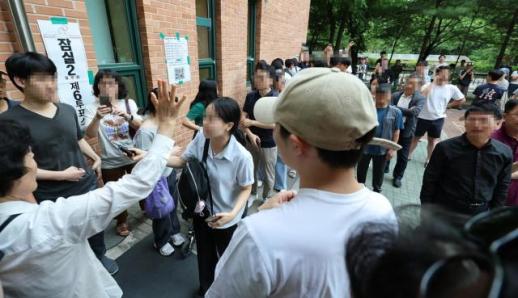 Korean Party Criticizes Voting Paper Shortages During Local Elections The People Power Party criticized the Election Commission on June 3 for ballot shortages at several polling stations during the local elections, demanding an investigation into the matter. According to Yonhap News, Jeong Hee-yong, head of the party's election campaign committee, made an urgent statement at the party's headquarters in Yeouido, Seoul, calling the incident "a shocking event that should not happen in the voting process of 2026 South Korea." He criticized the Election Commission for failing in its duties, stating, "The occurrence of voters being unable to cast their ballots due to a shortage of voting papers is a disgraceful level of negligence." Jeong also demanded swift action to ensure that those who could not vote are allowed to do so and insisted that the causes of the incident be clearly explained to the public. Song Eon-seok, co-chair of the campaign committee, stated in an urgent statement, "We will pursue a thorough investigation into this matter immediately after the election concludes and hold those responsible accountable." He strongly urged that citizens who waited past the voting deadline be guaranteed their right to vote. Bae Hyun-jin, chair of the Seoul City Party, also criticized the ballot shortage at a press conference, saying, "This issue undermines the foundations of democracy." He emphasized that it is not merely a simple mistake but evidence of a breakdown in the election management system. Bae noted that the Central Election Commission's response, attributing the issue to increased voter turnout, was inadequate, and he vowed to investigate whether the election management's negligence infringed upon citizens' rights. According to the People Power Party's own tally, as of 6 p.m. on June 3, ballot shortages were reported at 12 polling stations, including the fourth polling station in Munjeong 1-dong and the second polling station in Munjeong 2-dong in Songpa-gu, the sixth polling station in Jamsil 2-dong, the second polling station in Jamsil 7-dong, the fifth polling station in Jamsil 4-dong, the third and seventh polling stations in Garak 2-dong, the fifth polling station in Wirye-dong, as well as the fourth polling station in Cheongdam-dong in Gangnam-gu, the second polling station in Gaepo 2-dong, the sixth polling station in Guui 3-dong in Gwangjin-gu, and the seventh polling station in Noryangjin 1-dong in Dongjak-gu. Reports of related video evidence from each polling station have been received, and the party is demanding a thorough explanation from the Central Election Commission along with measures to prevent a recurrence.* This article has been translated by AI. 2026-06-03 19:12:00
 -
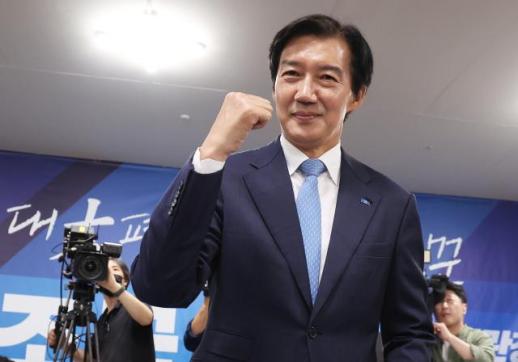 Choi's Party Confident in Pyeongtaek Election Lead, Choi Urges Patience The Choi Innovation Party expressed confidence in the lead of candidate Choi in the Pyeongtaek by-election, stating, "We have no doubt he will win." However, Choi himself urged caution, saying, "Let’s wait calmly until the final results are announced." At around 6 p.m. on June 3, the exit polls from three major broadcasters (KBS, MBC, SBS) indicated that Choi was leading in Pyeongtaek, prompting cheers from supporters. Seo Wang-jin, the party's floor leader, and Lee Hae-min, the secretary-general, were seen wiping away tears of joy. After the exit poll results were released, Choi met with supporters at his campaign office, expressing gratitude for their efforts: "You have worked hard for a long time. Thank you." However, Choi cautioned, "While the exit poll results are out, it doesn’t seem like the time to celebrate yet. We need to wait calmly and patiently. I appreciate your support and ask you to wait until the final results come in." In an interview with KBS, Seo remarked, "Choi has been competing fiercely between the two major parties. It has been a challenging situation, but I believe he has created a strong momentum for victory at the end. Although we are in a competitive situation now, I have no doubt we will ultimately win."* This article has been translated by AI. 2026-06-03 19:12:00
 -
 Korean Pharmaceutical Companies Shift Focus to Direct Sales and Distribution Networks Korean pharmaceutical companies are moving beyond simply expanding overseas sales to securing control over sales in foreign markets. They are not only exporting products but also establishing local distribution networks and sales organizations. This shift is seen as an attempt to change their revenue structure, as growth potential is limited in the domestic market, which is characterized by price reductions and intense generic competition. According to a report from the Korea Institute for International Economic Policy, the global pharmaceutical market is expected to grow from $1.67 trillion in 2024 to over $3 trillion by 2034. In contrast, South Korea accounts for only 1.7% of the global pharmaceutical market revenue. The United States holds 47.8%, the five major European countries account for 14.4%, and China and Japan represent 6.8% and 3.7%, respectively, highlighting a significant disparity. Expanding into international markets has become a common goal for domestic pharmaceutical companies. However, recent trends indicate that the ability to secure sales leadership in foreign markets is becoming a key competitive factor, rather than just the volume of exports. As distribution layers increase, companies face constraints on pricing strategies and market responsiveness. More companies are entering markets directly to secure leadership. GC Green Cross invested 138 billion won in 2024 to acquire full ownership of ABO Holdings, a local blood bank operator in the United States, to expand its local business from raw plasma procurement to finished product sales. The blood product 'Aliglo,' which entered the U.S. market, recorded sales of 34.9 billion won in the first quarter of this year, marking a nearly fourfold increase compared to the same period last year. Annual sales are projected to rise from 48.6 billion won in 2024 to 151.1 billion won last year. The company aims to achieve $1 billion in sales in the U.S. market by 2035, with Aliglo being a core growth driver. Celltrion established direct sales systems in Europe in 2020 and in the United States in 2023, expanding its sales network centered on local subsidiaries. In the U.S., the company has integrated production, supply, and direct sales distribution networks, enhancing its pricing competitiveness and negotiation power with pharmacy benefit managers (PBMs). With the direct sales system firmly in place, key products like Uplizna, Vegzelma, and Truxima have achieved the top prescription status in both European and U.S. markets. SK Biopharm successfully established direct sales in the U.S. with its self-developed epilepsy treatment 'Xcopri.' This marks the first instance of a Korean pharmaceutical company building a direct sales system in the U.S. based on its own new drug. The company believes that efficient market penetration is possible even with a limited workforce, prompting its decision to pursue direct sales. An SK Biopharm official stated, "The starting point for our direct sales success was the selection of the disease. We determined that central nervous system (CNS) disorders could be efficiently commercialized with a specialized sales team of about 80 to 120 people, compared to chronic diseases." The strategy for securing sales leadership is not limited to direct sales. Vietnam is noted for its strong pharmacy-centered distribution structure. Dongwha Pharmaceutical acquired a 51% stake in the Vietnamese pharmacy chain Trung Son Pharma for approximately 39.1 billion won in 2023, aiming to secure local sales channels. This approach focuses on establishing distribution networks rather than merely exporting products. The pharmaceutical market in emerging countries places significant importance on brand recognition, making it difficult for latecomers to disrupt market share once an initial foothold is established. The company plans to use its position in the Vietnamese pharmaceutical market as a springboard to expand into the Southeast Asian pharmaceutical and beauty markets. A Dongwha Pharmaceutical official remarked, "Many companies start their overseas expansion with quick and low-cost product exports. We decided to acquire the Vietnamese pharmacy chain to build direct relationships and trust with local consumers." An industry insider noted, "Pharmaceuticals face varying insurance systems and regulations in each country, making it challenging to establish local sales networks. While the initial investment burden is significant, it is meaningful as it allows for securing market leadership after establishing a presence."* This article has been translated by AI. 2026-06-03 19:03:00
 -
 Korean Pharmaceutical Industry Shifts to Export-Driven Growth Amid Domestic Challenges The Korean pharmaceutical industry is facing limits to its domestic growth and is rapidly transitioning to an export-driven model. With ongoing price reductions and market stagnation making it difficult to expand domestic sales, the performance of companies is increasingly reliant on global drug sales and royalties.According to industry reports, the first quarter of this year saw mixed results for pharmaceutical companies, with those heavily reliant on exports showing significant improvements, while companies focused on domestic markets struggled to grow. However, the domestic market has structurally limited growth potential. The government's ongoing price reduction policies and intensified competition in generics are making it increasingly difficult to secure profitability. There is a growing recognition in the industry that the existing domestic and wholesale-centered structure cannot sustain long-term growth.In this context, success in the global market and royalty income have become the core pillars of performance. Yuhan Corporation has seen significant profitability improvements from overseas sales and royalties of its non-small cell lung cancer treatment, Lurbinectedin. GC Pharma is accelerating its expansion in North America with its immunoglobulin product, Aliglo. SK Biopharm is transforming its performance structure with the U.S. sales growth of its epilepsy drug, Cenobamate, while HK inno.N continues its stable growth thanks to the overseas expansion of its gastroesophageal reflux disease treatment, K-Cab.Yuhan Corporation expects to surpass 100 billion won in annual operating profit as milestone payments and royalties from Lurbinectedin's technology transfer begin to materialize. GC Pharma anticipates approximately $300 million in sales by 2028 based on the growth of Aliglo in the U.S. SK Biopharm's Cenobamate generates annual sales of $400 million to $600 million in the U.S., with first-quarter sales this year reaching 197.7 billion won, a 48.4% increase from the same period last year. HK inno.N recorded 58.5 billion won in prescriptions for K-Cab in the first quarter, raising expectations for overseas expansion.The high exchange rate environment is particularly favorable for export-oriented companies. While the cost burden increases due to the import structure of raw pharmaceuticals, dollar-based sales offset this, leading to overall profitability improvements. Consequently, companies with a higher proportion of sales in advanced markets like the U.S. and Europe are benefiting relatively more.Ultimately, the competitive landscape of the domestic pharmaceutical industry is rapidly shifting from a domestic focus to an export-driven model. The business focus is moving beyond simple finished drug sales to include global drug commercialization, technology transfers, contract development and manufacturing (CDMO), and biosimilars.An industry insider stated, "The domestic prescription market is primarily serving as a basic revenue base, while actual growth and profitability are now determined overseas. The restructuring will accelerate around companies that secure new drugs and business models that can succeed in the global market."However, there are also concerns about the limitations of the current export-focused growth strategy. According to a report by the Korea Health Industry Development Institute, there have been over ten instances of technology transfers exceeding 1 trillion won from 2012 to 2024. While achievements are increasing, the industry is still criticized for not breaking free from a revenue structure dependent on global pharmaceutical companies.As a result, there is a growing call for stronger collaboration models between large domestic pharmaceutical companies and bio ventures. Bio ventures possess innovative technologies and early research capabilities, while large pharmaceutical companies have strengths in clinical development, approval, production, and distribution, allowing for mutually beneficial synergies.An industry representative remarked, "The industry will accelerate its restructuring around companies that not only transfer technology but also possess their own commercialization capabilities and global pipelines. A well-defined strategy is also required to build a collaborative ecosystem between large pharmaceutical companies and bio ventures."* This article has been translated by AI. 2026-06-03 19:03:00
 -
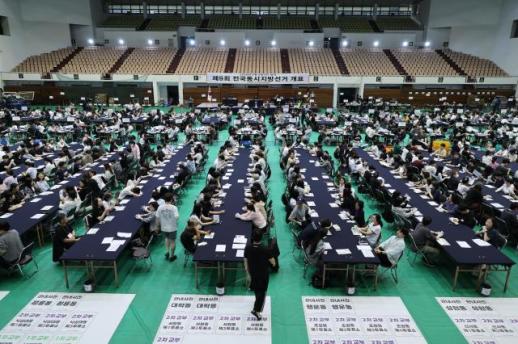 Ruling party leads in South Korean local election exit polls SEOUL, June 03 (AJP) -South Korea's ruling Democratic Party of Korea holds a strong lead in 11 out of 16 metropolitan mayoral and gubernatorial races, according to joint election-day exit polls released Wednesday. The projected outcomes position the party to expand its local administrative power as President Lee Jae-myung enters the second year of his term. The nationwide vote serves as the first major electoral test for the Lee Jae Myung administration, a critical midterm referendum on his first year in office. A decisive victory would grant the ruling party a unified mandate across administrative, legislative, and local levels, while a defeat for the opposition People Power Party could trigger immediate leadership restructuring. In the high-profile race for mayor of Seoul, the country's capital and primary political barometer, ruling party candidate Jung Won-oh leads opposition incumbent Oh Se-hoon by 51.4 percent to 46.0 percent. Control of the capital is historically viewed as a critical prize in South Korean elections due to the city's massive population and economic influence. Broadcasters classified several major regions as tight contests, including the southern port city of Busan and the metropolitan city of Daegu, which is traditionally regarded as the heart of South Korean conservatism. In the Daegu mayoral race, opposition candidate Choo Kyung-ho holds a razor-thin lead over ruling party candidate Kim Boo-kyum by 49.9 percent to 49.1 percent. In Busan, the ruling party's Jeon Jae-su maintains a narrow edge with 50.2 percent over the opposition's Park Hyung-jun at 48.3 percent. Meanwhile, the North Jeolla gubernatorial race shows the ruling party's Lee Won-taek leading independent candidate Kim Kwan-young by 48.5 percent to 46.3 percent. A separate prediction survey released by cable network JTBC projected the ruling Democratic Party of Korea to win 10 seats and the conservative opposition to win one seat. The network classified five regions as battlegrounds, listing Daegu, Chungnam, Chungbuk, Jeonbuk, and Gyeongnam as too close to call. The joint exit polls, conducted by major terrestrial broadcasters KBS, MBC, and SBS, were released simultaneously at 6 p.m. as polling stations closed across South Korea. 2026-06-03 19:00:17
 -
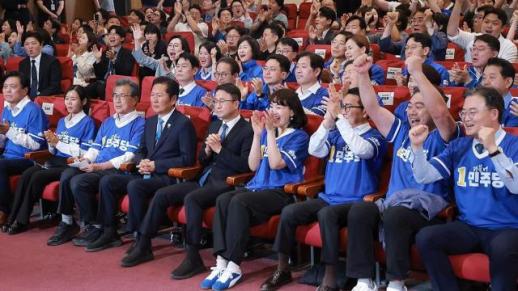 Democratic Party Claims Exit Polls Reflect Support for Lee Jae-myung's Government The Democratic Party of Korea on June 3 praised the exit poll results released at 6 p.m. as a reflection of public support for the stability of Lee Jae-myung's government. Lee Yeon-hee, head of the party's Central Election Countermeasures Committee, told reporters, "I won't make any definitive statements, but I believe this predictive survey confirms public sentiment supporting President Lee Jae-myung's effective governance." Lee expressed optimism about the situation in the Yeongnam region, noting, "There are tight races, especially in Daegu, and I hope candidate Kim Boo-kyum emerges victorious in the final count." Regarding the by-election for the Pyeongtaek constituency, he adopted a cautious stance, stating, "The exit poll results indicate a close race within the margin of error, so we will only know the final outcome once all ballots are counted. I still hope candidate Kim Yong-nam wins." On the gubernatorial election in Jeonbuk, he took a humble approach, acknowledging the competitive nature of the race between Democratic candidate Lee Won-taek and independent candidate Kim Kwan-young. He said, "I accept the sentiment of the Jeonbuk electorate with humility and will strive to understand their views better." He also addressed the issue of ballot shortages in some areas, urging the Election Commission to resolve the problems quickly, particularly in Seoul's Songpa District. Lee interpreted the projected voter turnout exceeding 60% as a sign of mobilization among Democratic supporters and moderates. He explained, "I analyze that both our supporters and those seeking stable governance came out to support the Lee Jae-myung administration and its policy momentum." According to exit polls released by three major broadcasters, the Democratic Party is expected to win in Seoul and 10 other locations, while four areas, including Busan, Daegu, Jeonbuk, and Gangwon, are predicted to be competitive. JTBC's predictive survey forecasts the Democratic Party winning in Seoul and 10 other areas, with Daegu, Chungnam, Chungbuk, Jeonbuk, and Gyeongnam classified as competitive regions.* This article has been translated by AI. 2026-06-03 19:00:00
 -
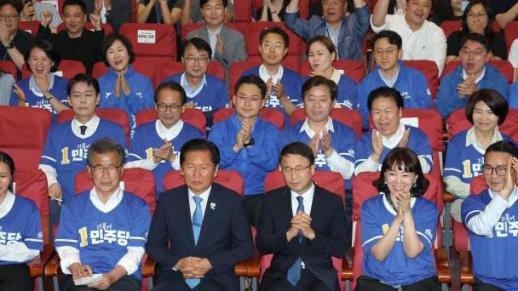 Democratic Party Expected to Dominate Local Elections, Retake Seoul and Busan Exit polls conducted by three major broadcasters—KBS, MBC, and SBS—indicate that the Democratic Party is poised for a significant victory in the local elections, leading in most regions across the country. The People Power Party is struggling even in its stronghold of Yeongnam, signaling a potential shift in the electoral landscape. The exit polls show the Democratic Party leading in Seoul, Gyeonggi, Incheon, as well as Busan, Ulsan, and South Gyeongsang, with the party ahead in 14 out of 17 metropolitan areas. The only region where the People Power Party is leading is North Gyeongsang, while Daegu is showing a very close contest. In the crucial Seoul mayoral race, Democratic candidate Jeong Won-o recorded 51.4%, leading People Power Party candidate Oh Se-hoon, who garnered 46.0%. This puts Oh's bid for a third term in jeopardy. In the Gyeonggi gubernatorial race, Democratic candidate Choo Mi-ae achieved 60.4%, significantly ahead of Yang Hyang-ja, who received 34.1%. In Incheon, Park Chan-dae also led with 53.7%, defeating Yoo Jeong-bok, who secured 45.5%, confirming the Democratic Party's strength across the metropolitan area. One of the biggest surprises in this election is in Busan, where Democratic candidate Jeon Jae-soo is projected to win with 50.2%, surpassing Park Hyung-jun, who received 48.3%. In Ulsan, Kim Sang-wook is leading with 52.8% against Kim Du-gyeom, who has 43.2%. In South Gyeongsang, Kim Kyung-soo is ahead with 54.3%, while Park Wan-soo trails with 45.7%. In Daegu, considered the last bastion of conservative support in Yeongnam, the race is extremely tight. People Power Party candidate Choo Kyung-ho is at 49.9%, while Democratic candidate Kim Boo-kyum is close behind at 49.1%. In contrast, in North Gyeongsang, Lee Cheol-woo is leading with 69.7% over Oh Jung-ki, who has 30.3%. The Democratic Party's dominance is also evident in the Chungcheong region. In Daejeon, Huh Tae-jung is leading with 55.9%, while in Sejong, Jo Sang-ho is at 64.3%. In South Chungcheong, Park Soo-hyun is slightly ahead with 52.1% against Kim Tae-heum's 47.9%, and in North Chungcheong, Shin Yong-han has 56.2%, leading Kim Young-hwan, who has 43.8%. In the Honam region, the Democratic Party's advantage is overwhelming. In Gwangju, Min Hyung-bae has 78.6%, and in North Jeolla, Lee Won-taek is narrowly ahead with 48.5% over Kim Kwan-young, who has 46.3%. While the results for the South Jeolla gubernatorial race have not been announced, a strong Democratic trend is expected to continue. In Gangwon, Woo Sang-ho is leading with 51.3% against Kim Jin-tae's 48.7%, and in Jeju, Wi Seong-gon has 62.2%, significantly ahead of Moon Seong-yu, who has 34.9%. The by-elections for the National Assembly are also highly competitive. In Pyeongtaek, Gyeonggi, Cho Kuk is at 31.1%, followed closely by Yoo Yi-dong at 30.6% and Kim Yong-nam at 30.3%, all within the margin of error. In Busan's Buk-gu Gap, Ha Jung-woo is leading with 42.6%, while Han Dong-hoon is at 41.6%, indicating a tight race. If the exit poll results reflect the actual vote counts, the Democratic Party will secure a decisive victory in its first nationwide election since the inauguration of the Lee Jae-myung administration, gaining momentum for governance. Conversely, the People Power Party may face demands for leadership restructuring and party reform as its traditional support base in Yeongnam shows signs of instability. However, in some areas like the Daegu mayoral race and the Pyeongtaek and Busan by-elections, the margins are very narrow, leaving the final outcomes uncertain. 2026-06-03 18:42:00