

Journalist

Abraham Kwak
-
 MyBrown Pet Insurance Surpasses 20,000 Subscribers in Just 10 Months The pet insurance market continues to grow, with products focused on everyday coverage rapidly gaining subscribers.MyBrown Pet Insurance announced on June 2 that it has surpassed 20,000 subscribers just 10 months after its launch.After reaching 10,000 subscribers in its first seven months, the company added another 10,000 in just three months. MyBrown attributed this rapid growth to increasing interest in practical pet insurance products that meet everyday needs.The expansion of coverage benefits has been a significant factor in attracting more subscribers. Recently, pet insurance has evolved beyond just covering surgeries and serious illnesses to include routine care and treatment for minor ailments.Data from insurance claims shows that the most frequently claimed condition was atopic, bacterial, and fungal dermatitis (10.7%). This was followed by otitis externa and otitis media (10.2%) and gastroenteritis (5.5%). Common issues such as foreign bodies in the gastrointestinal tract and vomiting were also among the top claims.In response to these healthcare demands, MyBrown has expanded its coverage to include MRI, CT, and endoscopic examinations, as well as conditions requiring recurrent treatment and management, such as seizures and pancreatitis.Subscriber preferences also indicate a strong inclination toward comprehensive coverage. The 'Black Plan,' which offers the broadest range of benefits, accounts for 58% of total subscriptions.Lee Yong-hwan, CEO of MyBrown, stated, "Many pet owners recognize the need for pet insurance but hesitate to enroll due to a lack of practical experience. We aim to enable more pet owners to utilize pet insurance by offering coverage that reflects common tests and conditions encountered during pet care, along with a convenient insurance experience."* This article has been translated by AI. 2026-06-02 10:27:00
 -
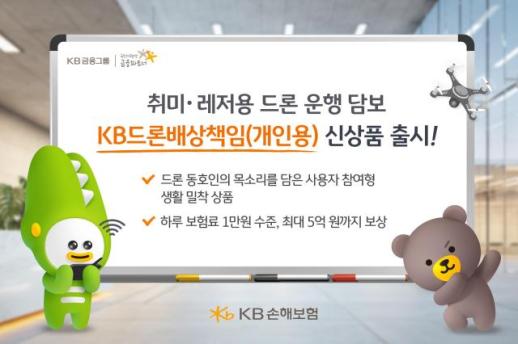 KB Insurance Launches Drone Insurance for Hobbyists, Offering Coverage Up to 500 Million Won As the number of hobbyist and recreational drone users increases, the market for personal drone insurance is expanding. On June 2, KB Insurance announced the launch of its "KB Drone Liability Insurance (Personal Use)," developed with input from members of the country's largest drone community, DronePlay.This new product is aimed at individual users, distinguishing it from existing drone insurance options that primarily cater to commercial and corporate users.In the product development process, KB Insurance conducted a survey of 413 DronePlay members, revealing that 98.5% of respondents recognized the need for personal drone insurance, while 76.0% expressed interest in purchasing it.Key factors considered by potential policyholders included reasonable premiums and coverage limits. In response, KB Insurance designed the product to lower premium costs while ensuring adequate coverage limits.The insurance offers coverage for up to 500 million won, with daily premiums around 10,000 won. Annual plans range from 50,000 to 130,000 won, depending on the selected coverage level.Jae-geun Jeong, Executive Director of KB Insurance's General Products Division, stated, "This product is significant as it is a user-participation insurance developed by listening to actual customer voices. We will continue to develop products that cover various risks and contribute to strengthening the social safety net." 2026-06-02 10:27:00
 -
 Labor Minister Kim Young-hoon: No Safe Workplaces in Arms Manufacturing Kim Young-hoon, the Minister of Employment and Labor, stated on June 2 that "there are no less dangerous workplaces in arms manufacturing" in response to the recent explosion at Hanwha Aerospace in Daejeon. He emphasized the need for a thorough investigation to fulfill the duty to protect the living. In a post on his social media, Minister Kim recalled a saying from his days as a train engineer: "Even a slight mistake can be fatal." He noted that a joint on-site investigation would begin shortly. According to the Labor Ministry, a joint investigation involving the ministry, the Korea Occupational Safety and Health Agency, and the National Forensic Service commenced at 10 a.m. on the same day. During a second meeting of the Central Industrial Accident Response Headquarters, Kim directed that the investigation be conducted safely and that the causes of the accident be thoroughly identified. He also instructed that necessary follow-up measures for accident prevention be implemented based on the findings. As this incident falls under the Serious Accident Punishment Act, the minister ordered a swift and strict investigation into violations of relevant laws, including the Industrial Safety and Health Act and the Serious Accident Punishment Act, with severe penalties for any infractions. Additionally, he called for comprehensive emergency safety inspections across booming sectors, such as semiconductor and defense manufacturing. Investigations into Hanwha Aerospace revealed a significant increase in contract volumes recently. This follows a fluorine leak incident at SK Hynix the previous day, which resulted in multiple injuries. Minister Kim plans to hold a national meeting with agency heads on June 4 to encourage local authorities to actively guide and inspect workplaces to enhance safety awareness. Earlier, at 10:59 a.m. on June 1, a fire caused by an explosion occurred in the cleaning room of the Hanwha Aerospace Daejeon plant, resulting in five fatalities, one serious injury, and one minor injury. This facility had previously experienced explosion incidents in 2018 and 2019, which resulted in the deaths of five and three individuals, respectively. It was revealed that safety management was inadequate at that time, leading to convictions for responsible parties on charges of negligent homicide. 2026-06-02 10:24:00
 -
 Eastar Jet Reports Over 1 Million Foreign Passengers, Half from Greater China Eastar Jet announced on June 2 that it surpassed 1 million foreign passengers last year, primarily on its Greater China routes. According to the airline industry, Eastar Jet recorded approximately 1.02 million foreign passengers in the previous year, with around 500,000 of them traveling on Greater China routes, accounting for half of all foreign passengers. In the first quarter of this year, 130,000 of the approximately 300,000 foreign customers also utilized Greater China routes. The proportion of foreign passengers on the Taipei-Songshan route has steadily increased from 57% in 2024 to 67% in 2025, reaching 69% in the first quarter of this year. Similarly, the Incheon-Zhengzhou route grew from 55% to 73% during the same period. The Incheon-Hong Kong route, which launched in March, is maintaining a passenger share of around 90%. Among domestic routes, demand for travel to Jeju is the highest. The foreign passenger share on the Jeju-Taipei route has consistently risen, reaching 86% in 2024, 94% in 2025, and 96% in the first quarter of this year. The Jeju-Shanghai route recorded a foreign passenger share of 98% in the first quarter. The number of foreign tourists visiting Busan is also on the rise. The foreign passenger share on the Busan-Taipei route increased from 79% in January to 86% in February and 92% in March this year. To strengthen its presence in the local market, Eastar Jet is deploying experienced sales staff as local branch managers and expanding its network with travel agencies and corporations. The airline is also actively scheduling night flights to enhance convenience for local customers. An Eastar Jet official stated, "We will continue to attract foreign passengers through localized strategies for each country and strengthen our route competitiveness by expanding local demand, contributing to the revitalization of the domestic tourism industry."* This article has been translated by AI. 2026-06-02 10:21:00
 -
 Samsung Electro-Mechanics Shares Plunge Over 12% Amid Profit-Taking Samsung Electro-Mechanics shares fell more than 12% in early trading, attributed to profit-taking following a recent surge in stock prices. According to the Korea Exchange, as of 10:06 a.m., Samsung Electro-Mechanics shares were trading at 1,756,000 won, down 249,000 won (12.42%) from the previous trading day. This marks a second consecutive day of decline after a 5.74% drop the day before. From April 1 to May 29, the company's stock skyrocketed approximately 422%, climbing from 407,500 won to 2,127,000 won, the highest increase among listed companies on the KOSPI during that period. The surge was driven by heightened expectations for growth in the semiconductor substrate and multilayer ceramic capacitor (MLCC) sectors, fueled by increased investment in artificial intelligence (AI) infrastructure. However, the rapid rise has led to increased pressure, resulting in concentrated profit-taking. Analysts continue to view Samsung Electro-Mechanics' long-term growth potential positively. They anticipate an increase in average selling prices (ASP) due to rising demand for flip chip ball grid array (FCBGA) and MLCC products, alongside the potential for sustained favorable market conditions based on long-term supply contracts (LTA). This month, brokerage firms have also been raising their target prices for the company. Mirae Asset Securities raised its target price to 2,800,000 won on June 1, while DB Securities set a target of 3,000,000 won. Jo Hyun-ji, a researcher at DB Securities, stated, "The investment point for Samsung Electro-Mechanics lies in its large-scale expansion amid a shortage situation and the demand secured post-expansion. We expect FCBGA sales to rise sharply to 1.9 trillion won in 2026, 2.8 trillion won in 2027, and 4.6 trillion won in 2028." She added, "Both FCBGA and MLCC have entered an unprecedented boom phase, and Samsung Electro-Mechanics possesses irreplaceable technological competitiveness among global component manufacturers."* This article has been translated by AI. 2026-06-02 10:21:00
 -
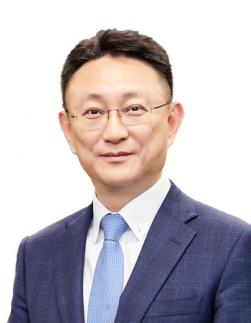 Kim Woo-seok of Samsung Asset Management: From Top Asset Manager to Standard in Wealth Management Kim Woo-seok, the CEO of Samsung Asset Management, embodies a financial entrepreneurial spirit focused more on stable growth than flashy victories. He is recognized as a seasoned financial professional with extensive experience in insurance, asset management, and risk management. Having built his expertise at Samsung Fire & Marine Insurance and Samsung Life Insurance, he now leads Samsung Asset Management, the largest asset management firm in South Korea.His management philosophy is straightforward: protect client assets while ensuring continuous growth. This approach drives his efforts to enhance the competitiveness of the KODEX ETF brand and to innovate in pension, OCIO, and AI-based management. The essence of Kim's leadership lies not in aggressive expansion but in 'long-term compounding management based on trust.'Understanding Risk in Asset ManagementKim's competitive edge stems from his background outside traditional asset management. He has worked in management, actuarial, and risk management at Samsung Fire & Marine Insurance and served as the head of asset management at Samsung Life Insurance, overseeing more than 200 trillion won in assets. Typically, insurance companies prioritize stability over profitability, as risk management is crucial due to the long-term nature of contracts. Kim applies this insurance philosophy to asset management.Today's financial markets are far more complex than in the past, with interest rates, exchange rates, and geopolitical risks moving simultaneously. Investors seek high returns but dislike volatility. The role of asset management firms is not just to present high yields but to manage risks while achieving long-term performance. Kim emphasizes this point repeatedly.He has stated, "A sustainable management system is more important than short-term results." This principle is reflected in the actual management strategy. In the competitive ETF market, Samsung Asset Management emphasizes product diversity and a long-term investment culture over reckless risk-taking. Advocating for the expansion of long-term investments centered on pensions and ISAs aligns with this philosophy.Kim believes the essence of investing lies in time and compounding. He stresses unwavering investment principles, even during market surges or declines. His philosophy is that the role of asset management firms is not to predict the market but to help clients outperform it, which has become a distinctive competitive advantage in the fiercely competitive financial industry.KODEX ETF: Achieving a Competitive EdgeSince Kim's appointment, Samsung Asset Management has strengthened its unparalleled competitiveness in the domestic ETF market. The firm's assets under management have surpassed 500 trillion won, and the KODEX ETF brand maintains about 40% market share, solidifying its position as the industry leader. Notably, KODEX 200 has surpassed 20 trillion won in net assets, establishing itself as a leading ETF in South Korea.Interestingly, Kim is not content with merely expanding market share. He emphasizes that creating a standard for wealth management that adds real value to customers' lives is more important than holding the title of the top firm.In fact, Samsung Asset Management is evolving ETFs from simple investment products into comprehensive wealth management platforms. The firm has expanded its product range to include U.S. and Chinese ETFs, bonds, gold, and thematic ETFs, facilitating easier portfolio construction for investors. As the ETF market grows, the number of products has surged, making choices more challenging for investors. Kim is committed to addressing this issue through both product and service innovation.The competition in the ETF space is no longer just about fees; it is about who can provide a better investment experience. Samsung Asset Management is broadening its investor engagement by expanding its ETF information platform and asset allocation services, aiming to transform from a company that sells ETFs into one that offers investment solutions.Notably, even amid fierce competition with Mirae Asset Global Investments, Samsung has managed to widen its market share gap, a significant achievement attributed to its operational capabilities and organizational execution.Pensions and AI: Setting Future Standards in Wealth ManagementKim's primary focus for the future market is pensions. He believes the future of the Korean capital market lies in long-term, accumulation-based investments rather than short-term trading. Samsung Asset Management is accelerating its efforts in the retirement pension market by expanding target date funds (TDF) and ETF-based pension products.This strategy is not merely about selling new products; it is a response to the rapidly growing demand for retirement asset management as Korean society ages. In the future, a financial company's competitiveness will likely be determined more by how long it can manage customer assets than by how many clients it has.Kim views pensions as a key growth area for the future, alongside AI. He envisions transforming Samsung Asset Management into a company that operates with AI rather than just utilizing it.Indeed, Samsung Asset Management is expanding its use of AI through its ETF information platform, FunETF, and asset allocation service, PortRabbit. Customers can compare and analyze numerous ETF products and receive portfolio recommendations tailored to their investment preferences.Additionally, the firm continues to excel in the OCIO market, having maintained its position as the primary manager for the public pension investment pool, establishing itself as a standard for public fund management. This recognition reflects not just the scale of its operations but also the trust and stability it has earned.Ultimately, Kim's leadership direction is clear. It is not just about maintaining the top position in the ETF market; it is about creating standards in the wealth management industry based on pensions, AI, and a long-term investment culture. Financial entrepreneurship does not solely mean risk and aggression; sometimes, safeguarding client assets and fostering long-term wealth can represent a greater innovation.SWOT Analysis:Strength: Kim Woo-seok's greatest strength is his risk management capability, having experience in both insurance and asset management. His proven ability in long-term investment and risk management, along with the KODEX brand and over 500 trillion won in assets under management, provides a strong competitive edge.Weakness: A management focus on stability may weaken aggressive growth momentum in a rapidly changing market. Additionally, global ETF competitiveness is seen as an area needing improvement compared to some competitors.Opportunity: The expansion of the retirement pension market, the popularization of ETFs, and the proliferation of AI-based asset management services present significant opportunities for Samsung Asset Management. The pension market is expected to be one of the fastest-growing financial sectors over the next decade.Threat: Ongoing challenges include global ETF competition from firms like Mirae Asset, fee reduction pressures, and increased volatility in capital markets. Managing profitability amid expanding operational scale remains a critical issue.* This article has been translated by AI. 2026-06-02 10:18:00
 -
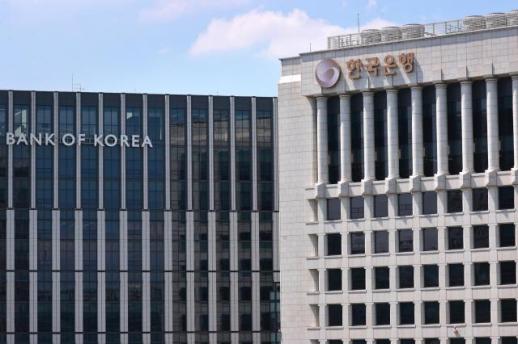 Bank of Korea Projects Inflation Rate to Remain Around 3% The Bank of Korea announced on June 2 that it expects the inflation rate to remain around 3% for the time being. Lee Ji-ho, head of the Bank's Economic Research Department, made the statement during a morning meeting to assess the inflation situation. He noted that the impact of rising oil prices is gradually spreading to other sectors. He added, "While there is significant uncertainty regarding the trajectory of inflation due to developments in the Middle East and the resulting oil price fluctuations, we will closely monitor the situation with vigilance." According to the data released, consumer prices in May rose by 3.1% compared to the same month last year, an increase from the 2.6% rise in April. Oil prices surged by 24.2% year-on-year, while prices for agricultural, livestock, and fishery products increased by 2.2%. Core inflation stood at 2.5%. Lee assessed that the rise in consumer prices in May was significantly influenced by the increased oil prices and higher service costs, particularly in travel-related sectors such as domestic and international airfares. He also projected that the inflation rate in June would remain similar to that of May due to sustained high oil price increases.* This article has been translated by AI. 2026-06-02 10:15:00
 -
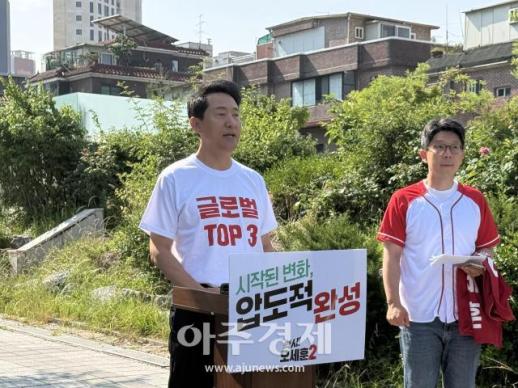 Oh Se-hoon: Seoul Needs an Experienced Mayor Ahead of Local Elections Oh Se-hoon, the People Power Party candidate for Seoul mayor, criticized his opponent, Jeong Won-o of the Democratic Party, on June 2, stating, "Labeling all unfavorable issues as 'negative campaigning' shows a fear of scrutiny." He added, "If you are running to manage a megacity like Seoul, you should never avoid verification." During a press conference held near Hyochang Park Station in Yongsan District, Oh pointed out that Jeong had missed the opportunity to convey his vision for Seoul by rejecting debate invitations. "By refusing to engage in discussions, he has completely failed to communicate his mindset or vision for the city," Oh said. Oh emphasized that candidates can clearly express their vision for the future of Seoul and South Korea through repeated debates. He suggested that voters have likely already formed their opinions about Jeong based on his refusal to participate. With just one day to go before the June 3 local elections, Oh launched his final campaign push, stating, "We cannot turn Seoul into a training ground for novice drivers. During this 'golden time' when we need to propel the city into a world-class metropolis, we need a veteran who has weathered numerous crises." Dressed in a white T-shirt emblazoned with the phrase 'Global TOP 3' in red, Oh expressed his commitment to elevate Seoul to one of the world's top three cities in terms of quality of life, global competitiveness, and attractiveness during his term. He also called for a balanced government in South Korea, arguing that with the Democratic Party controlling both the executive and legislative branches, Seoul must serve as a counterbalance to protect the nation's freedoms and rule of law. "A country where one side dominates is less secure than one where both sides check each other," he said, urging that Seoul remain a 'last bastion' against such imbalance. As the election approaches, the race for Seoul mayor remains tight. Recent polls indicate a negligible gap in support, with both the Democratic Party and the People Power Party classified as competitive in the region. Oh remarked, "I see the race as extremely close, and I will approach the final moments with the mindset of being 3-5% behind, giving my all as a challenger." Earlier that morning, Oh began his campaign in Yeouido near Yeouido Station and planned to visit various districts, including Yongsan, Mapo, Jung, Eunpyeong, Gangseo, Yangcheon, Guro, Geumcheon, Gwanak, Dongjak, and Seocho. He will conclude his campaign with a final rally near Sinchon Station in Seodaemun District before moving to Gwanghwamun to engage with citizens until the time when the use of loudspeakers is prohibited. 2026-06-02 10:15:00
 -
 May Livestock Prices Rise 5.8% as Government Activates Summer Supply Stabilization Task Force Last month, the consumer price index rose above 3% for the first time in two years and two months, with agricultural and livestock product prices increasing by 1.8% compared to the same month last year, driven by strong livestock prices. In response to potential supply shortages due to extreme heat and heavy rain, the government plans to activate a "Summer Agricultural and Livestock Supply Stabilization Task Force." According to the National Statistical Office's "Consumer Price Trends for May 2026," while agricultural product prices fell by 0.8% year-on-year, livestock prices surged by 5.8%. For agricultural products, prices of most vegetables, including cabbage, carrots, and onions, decreased, although prices for some items like rice and green onions rose. Rice prices have remained stable at around 62,000 won for a 20-kilogram bag since the government's grain supply plan was announced in February. The Ministry of Agriculture, Food and Rural Affairs (MAFRA) is closely monitoring rice price trends and plans to manage consumer burdens by considering additional government grain supplies if necessary, alongside discount support and demand requests from distribution companies. MAFRA anticipates that the price of green onions, which have recently increased due to delayed growth, will stabilize as shipments increase later this month. The rise in livestock prices is attributed to a decrease in supply caused by the spread of livestock diseases such as avian influenza and African swine fever. The number of cattle raised and the amount available for slaughter have decreased, while the price of imported beef remains relatively high due to reduced production in exporting countries like the United States and unfavorable exchange rates. Pork prices have seen a slight increase due to heightened demand during the family month. Although supply is expected to increase in the second half of the year compared to last year, various factors could affect this outlook. To alleviate consumer burdens, MAFRA is applying tariff quotas to pork processing materials to distribute demand for processed pork. The increase in egg and chicken prices is analyzed to be due to reduced supply resulting from expanded culling due to livestock diseases and delayed weight gain. Production conditions for eggs are expected to gradually stabilize after July, and MAFRA plans to continue supplying imported fresh eggs and pursue additional imports until production levels recover. The government is focusing on proactive measures to address potential supply disruptions in agricultural and livestock products during the summer. MAFRA has established a "Summer Agricultural and Livestock Supply Stabilization Task Force," led by Vice Minister Kim Jong-gu, to closely monitor growth trends and shipment conditions, aiming to stabilize the market through stockpile supplies in times of crisis. Park Jeong-hoon, head of MAFRA's Food Policy Office, stated, "Summer is a time when extreme weather events are likely to occur. We will strengthen monitoring of supply conditions by item and mobilize all available resources to stabilize agricultural and livestock prices."* This article has been translated by AI. 2026-06-02 10:06:00
 -
 KGM's MUSSO Surpasses 10,000 Sales, Leading Pickup Market with 86% Share KG Mobility (KGM) announced on June 2 that its traditional pickup truck, the MUSSO, has surpassed 10,000 cumulative sales just five months after its launch. Since its release in January, the MUSSO has sold 6,642 units in the domestic market and 4,896 units internationally, totaling 10,538 units globally by the end of May. This achievement reflects robust domestic growth and strong export performance, with the MUSSO exceeding the 10,000 sales mark before the first half of the year has concluded, indicating positive market reception. The domestic pickup market has become increasingly competitive due to the launch of new models by rival companies. From January to May, KGM sold a total of 10,360 units, including 3,718 MUSSO EVs and 6,642 MUSSO trucks, capturing over 86% of the market share and maintaining its position as the leading pickup brand. In May alone, the MUSSO brand sold 1,892 units in the domestic market, comprising 1,137 MUSSO trucks and 755 MUSSO EVs, achieving an impressive 88.3% market share. The success of the MUSSO is attributed to its diverse options and appealing features tailored to customer needs. KGM offers a multi-powertrain lineup, including gasoline, diesel, and electric models, allowing customers to choose based on their driving environment and purpose. The MUSSO's design emphasizes both rugged pickup aesthetics for off-road driving and a more urban-friendly grand style. KGM is also accelerating its global market expansion. The company recently completed a successful launch in Turkey, a strategic location, and is continuing to diversify its export channels with launch events in various countries. A KGM representative stated, "The MUSSO is an iconic model that has led the history and expansion of pickup trucks in South Korea. Surpassing 10,000 cumulative sales in just five months is a testament to our competitiveness in both the domestic market and global strategic markets." The representative added, "We will continue to introduce a diverse lineup under the MUSSO brand, aligning with the strong demand for leisure and the trend toward eco-friendly electrification, showcasing the strength of K-pickups on the global stage."* This article has been translated by AI. 2026-06-02 10:06:00