
Journalist

Aju Press
-
 Should You Switch to the New 5th Generation Health Insurance? The launch of the 5th generation health insurance is complicating decisions for current policyholders. While premiums have significantly decreased, changes in coverage structures mean that the extent of coverage can vary based on the treatments received. According to the Financial Services Commission on May 9, the key feature of the 5th generation health insurance is the enhancement of coverage for severe illnesses, while reducing coverage for non-severe, non-covered treatments. Premiums are expected to be about 30% lower than the 4th generation and over 50% lower than the 1st and 2nd generations. However, when choosing health insurance, it is essential to consider not only the premium levels but also past insurance payouts and future healthcare usage plans. For existing policyholders, if the expected insurance payouts exceed the annual premium, it is advantageous to maintain the current plan. Conversely, if anticipated payouts are lower than the premium, opting for reduced coverage to lower costs may be a sensible choice. For instance, a policyholder paying approximately 170,000 won per month for a 1st generation health insurance plan could see their monthly premium drop to around 20,000 won with a transition discount. Even after the three-year discount period, the premium would be about 40,000 won. By enrolling in a 'selective discount clause' that excludes low-usage items like physical therapy or non-covered injections, premiums could be reduced by 40% to around 100,000 won. However, switching to the 5th generation is most beneficial for those who rarely visit hospitals and find the high premiums of the 1st generation burdensome. If a policyholder with a 1st or 2nd generation plan anticipates treatment for a severe illness, it is advisable to maintain the existing coverage for broader protection, and consider switching to a selective discount clause after treatment when healthcare usage is expected to decrease. For those frequently visiting hospitals for treatments like physical therapy or extracorporeal shockwave therapy, it may be more advantageous to retain the existing health insurance. Particularly, the 1st generation plans often have lower out-of-pocket costs and favorable coverage conditions, so it is crucial to evaluate overall healthcare usage patterns and the extent of non-covered treatments before deciding to switch. Park Chang-sik, a senior official at Dongyang Life Insurance, stated, "For policyholders who do not have immediate plans for hospital visits and are not overly burdened by premiums, it is advisable to monitor future situations before hastily switching to the 5th generation. Conversely, those facing increased premium burdens due to aging should compare the cost-saving benefits and coverage structures before making a decision."* This article has been translated by AI. 2026-05-09 07:04:25
 -
 Trump Announces Three-Day Ceasefire Between Russia and Ukraine President Donald Trump announced that Russia and Ukraine have agreed to a ceasefire from May 9 to 11. According to a report by Yonhap News, Trump stated on May 8 (local time) on his social media platform Truth Social, "There will be a ceasefire between Russia and Ukraine from May 9 to 11." He also explained that during the ceasefire, all military activities will be halted, and a prisoner exchange of 1,000 individuals between the two countries will take place. Trump expressed gratitude to Russian President Vladimir Putin and Ukrainian President Volodymyr Zelensky for agreeing to the ceasefire, stating, "This ceasefire was requested by me." He added, "I hope this action will be the starting point for ending a long and deadly war. Negotiations are ongoing to conclude the largest conflict since World War II, and we are getting closer to an agreement every day." Previously, on May 4, Russia unilaterally declared a ceasefire for May 8 and 9, citing the Victory Day holiday. The ceasefire was later extended to May 10, but there was no prior consultation with Ukraine. There are speculations that Russia's unilateral ceasefire was aimed at ensuring the safe conduct of the Victory Day parade in Moscow on May 9. In response, Ukraine announced it would enter a ceasefire regime starting at midnight on May 5, without any separate agreement with Russia, but both sides continued their attacks without acknowledging each other's unilateral ceasefire declarations.* This article has been translated by AI. 2026-05-09 06:30:20
 -
 Chinese Thriller 'The Disappeared' Captivates Audiences During Labor Day Weekend A suspense thriller has taken Chinese theaters by storm during this year's Labor Day holiday. Leading the box office with over 200 million yuan (approximately $30 million) is 'The Disappeared' (original title: 消失的人). The film addresses dark societal issues such as the safety of single women, child-rearing, and gambling addiction, as a series of disappearances, murders, and sexual assaults unfold among neighbors in an aging urban apartment complex. Critics have praised its gripping portrayal of how modern silence and indifference can lead to tragedy. The film unfolds through four interwoven episodes. The son of Tang Yu (played by Zheng Kai) mysteriously vanishes from the apartment stairs on his way to school, while Lin Yutong (played by Liu Haochun), who lives alone in the same building, is assaulted by an unidentified intruder at night. Yan Wu (played by Chu Zhe), burdened by gambling debts, hides his father's body in a fish tank after he dies from a stroke following a night of heavy drinking. Meanwhile, the seemingly tranquil family of construction contractor Xu Zhijie begins to show signs of strain. Initially appearing unrelated, the incidents involving the four households gradually intertwine through subtle foreshadowing. Notably, the film keeps the identities of the child abductor and rapist shrouded in mystery until the end, leading the audience to constantly suspect all characters. In the confined space of the densely populated apartment complex, no one is free from suspicion. Based on the 2022 novel 'Sea Anemone' (original title: 海葵) by Chinese crime novelist Beikebang, the film uses the sea anemone—a carnivorous marine creature that appears gentle but harbors venomous stingers—as a metaphor for the complex duality of human nature, where seemingly ordinary and kind individuals hide dark secrets. Director Qing Weihua shared in an interview with local media that the inspiration for the film came from a moment of reflection while observing the closed doors of apartments in his building. He aimed to illustrate that unimaginable events can occur just beyond the doors of familiar spaces we traverse daily. Filmed in Chongqing, known for its mountainous terrain and intricate stairway structures, the city is often referred to as a 'six-dimensional city' or 'mountain city.' Its unique, labyrinthine atmosphere has made it a popular backdrop for suspense films. The use of local dialect mixed with standard Mandarin enhances the film's authenticity. Additionally, the film employs Hitchcockian suspense techniques, such as shadow play, amplified breathing sounds, and bloodstains on door frames, to heighten tension and serve as clues to the plot twists. Despite a relatively modest production budget of 30 million yuan, projections suggest that the final box office earnings will exceed 500 million yuan. According to China's Sina Finance, 'The Disappeared' has outperformed blockbuster films with budgets over 100 million yuan, demonstrating that low-budget films can achieve success with a solid storyline and high-quality content.* This article has been translated by AI. 2026-05-09 06:28:13
 -
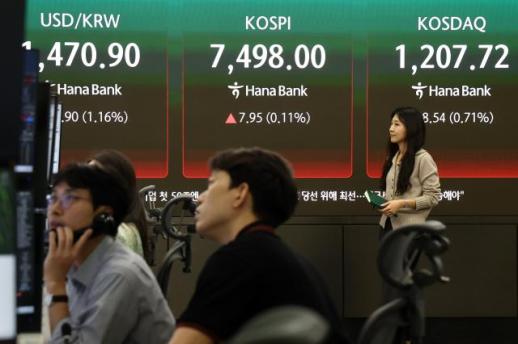 KOSPI Surpasses 7500 Amid Semiconductor Surge; Key Events Ahead Domestic stock markets have seen a strong rally led by the semiconductor sector, with the KOSPI index surpassing the 7500 mark for the first time. However, concerns about a rapid rise in the short term have emerged, as key events such as the U.S. Consumer Price Index (CPI) and the U.S.-China summit loom next week, suggesting potential sector rotation and increased volatility. According to the Korea Exchange, the KOSPI index closed at 7498.00 on May 8, up 7.95 points (0.11%) from the previous trading day. Over the week from May 4 to May 8, the KOSPI and KOSDAQ rose by 13.90% and 1.29%, respectively. This week, the domestic market continued its upward trend, fueled by a global semiconductor rally. Major semiconductor stocks, including Samsung Electronics and SK Hynix, attracted significant buying interest, pushing the KOSPI above 7500 during trading hours, with the market capitalization exceeding 600 trillion won. The strong performance of U.S. tech giants and growing expectations for investments in artificial intelligence (AI) have bolstered investor sentiment in the domestic semiconductor sector. Notably, the earnings reports from U.S. hyperscalers reaffirmed the growing demand for AI, serving as a catalyst for market gains. Amazon, Microsoft, and Google reported results that exceeded market expectations, with notable increases in cloud revenues related to AI. This has strengthened expectations for increased global semiconductor investments, leading to strong performances in domestic sectors related to AI infrastructure, including semiconductors and power equipment. Ha Geon-hyung, a researcher at Shinhan Investment Corp., stated, "While semiconductors remain the core focus, earnings forecasts have been adjusted in line with historical statistics following the first-quarter earnings announcements, and SK Hynix has reached appropriate valuations. We may see a slowdown in the explosive rise of the index around late May to June." In terms of sector performance, semiconductors led the index's rise with over a 20% increase for the week. Other sectors, including securities, trading, capital goods, steel, machinery, and insurance, also recorded double-digit gains. Conversely, media, consumer staples, telecommunications, cosmetics, clothing, and hotel and leisure sectors lagged behind. Analysts suggest that a differentiated market trend is emerging, with funds concentrating on AI infrastructure-related sectors. From a supply and demand perspective, foreign investors have been notably active, with net purchases exceeding 4 trillion won in the securities market this week, driving the index higher. However, some profit-taking movements have been observed amid the recent surge in semiconductor stocks, raising the possibility of sector rotation. Market analysts expect the domestic stock market to continue its upward trend next week, but they caution about the potential for increased volatility due to short-term overheating. Significant events are on the horizon, including the release of the U.S. April CPI and Producer Price Index (PPI), the U.S.-China summit, and the end of Federal Reserve Chair Jerome Powell's term. In particular, the market will likely assess the implications of inflation data for potential interest rate cuts later this year. Kim Yu-mi, a researcher at Kiwoom Securities, noted, "Both the U.S. and Iran face significant burdens from the prolonged conflict, suggesting that negotiations will continue. If the CPI does not significantly exceed market expectations, the negative impact on financial markets will be limited." She added that the U.S.-China summit will be a key point of interest, particularly regarding the potential easing of tariff conflicts and negotiations on semiconductor and rare earth supply chains. Experts believe that the existing trend led by semiconductors is likely to persist. However, due to the recent surge, there may be some rotation into other sectors. Industries supported by strong earnings and momentum, such as telecommunications equipment, shipbuilding, secondary batteries, and renewable energy, are being considered as alternatives. Na Jeong-hwan, a researcher at NH Investment & Securities, stated, "The current rise is based on upward earnings revisions. While maintaining core positions in leading sectors like semiconductors and power equipment, it is effective to expand portfolios into high-quality stocks within sectors where earnings revisions are gaining momentum."* This article has been translated by AI. 2026-05-09 06:25:40
 -
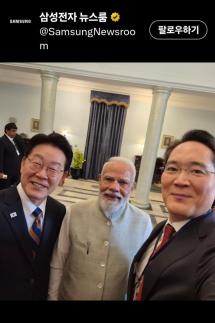 Lee Jae-Yong's Moment: Samsung Must Make a Decision The history of a company is recorded in numbers, but its fate ultimately hinges on choices. This conclusion aligns with my research on entrepreneurship. Companies do not grow solely through strategy; they leap forward through decisions. Strategies can be adjusted at any time, but decisions change the direction. These decisions are always made amidst incomplete information. The ability to manage that uncertainty is the essence of entrepreneurship. From this perspective, the recent news that Lee Jae-Yong has topped brand reputation rankings is not merely a matter of popularity. It signals that the market and society are once again focusing on Samsung and Lee Jae-Yong. More precisely, it indicates that expectations are building. Expectations always come with questions: Where is Samsung headed, and what will Lee Jae-Yong choose? These questions carry more weight now than ever. Looking back at Samsung's history, some answers have already been provided. Samsung has always made leaps not during times of success but when it took risky decisions. A prime example is its investment in semiconductors. At that time, Samsung lacked technology, the market was uncertain, and there was significant internal opposition. Objectively, the chances of failure outweighed those of success. Yet, a decision was made. This choice stemmed not from calculations but from perception. The judgment that "if we don't act now, we never will" transformed the company. In that moment, Samsung became a company of decisions rather than just strategies. At this juncture, the essence of entrepreneurship becomes clear. Economist Joseph Schumpeter defined entrepreneurs as those who execute "creative destruction." The power to disrupt the existing order and create a new one is what defines entrepreneurship. Frank H. Knight viewed it as the ability to manage uncertainty. He explained that taking risks in areas that cannot be insured is the entrepreneur's role. Joseph Schumpeter emphasized the agility to discover opportunities and act on them. Although these three definitions may seem different, they ultimately converge. Capturing opportunities in uncertain situations, making decisions, and taking responsibility for the outcomes—that is entrepreneurship. The issue is now. Lee Jae-Yong's recent period has been more about consolidation than expansion. He has been managing legal risks, stabilizing governance structures, and handling substantial inheritance taxes. All of this was a necessary process to eliminate external uncertainties. Without this groundwork, no investment or strategy would have held meaning. In that sense, this period can be seen not as a lack of entrepreneurship but as a time to lay the groundwork for exercising it. However, entrepreneurship does not manifest during the preparation phase. It reveals itself at the moment of choice. And that moment is now. Samsung must transition back to a phase of expansion. Lee Jae-Yong is now expected to fulfill his role as an entrepreneur rather than merely a manager. If the time for consolidation has ended, then the time for decisive action must begin. More importantly, the era has changed. AI is transforming the very structure of entrepreneurship. In the past, information asymmetry was central to entrepreneurship. The competitive edge lay in who could acquire information faster, analyze it more accurately, and act sooner. But that is no longer the case. Information is abundant, analysis is automated, and predictions are made by algorithms. In this context, the differentiating factor is no longer information but responsibility. In an age where AI handles analysis, what remains is human choice and the accountability that comes with it. Ultimately, entrepreneurship becomes a matter of attitude rather than ability. From this perspective, the challenges facing Samsung become clear. The first challenge is determining the direction beyond semiconductors. Samsung remains a semiconductor-centric company. Semiconductors are its heart and will continue to play a crucial role. However, in the AI era, the winners will not be semiconductor companies but platform companies. As seen with Apple, Amazon, and Google, companies that build ecosystems beyond hardware dominate the market. Samsung is also confronted with this question: Will it remain a manufacturing-centric company or expand into a platform company? This choice is not merely a technical issue but a matter of entrepreneurship. It is a question of whether to maintain existing success formulas or to reject them and choose a new path. The second challenge is organizational fairness. Recent controversies over compensation structures within Samsung are not just wage issues. They raise fundamental questions about whether the organization is perceived as fair. My research repeatedly confirms that organizations with vibrant entrepreneurship tend to have fair structures. When fairness is ensured, members are encouraged to take risks. When risk-taking is possible, innovation occurs. Conversely, when fairness erodes, challenges disappear, organizations become conservative, and ultimately lose competitiveness. Fairness is not a choice; it is a prerequisite. The third challenge is responsible leadership. In the AI era, leaders are no longer those who merely give orders. They are the ones who stand before the results. Leaders who blame technology or the environment when problems arise cannot gain trust. Only those who acknowledge responsibility and provide direction can move an organization forward. The Boeing case starkly illustrates this. Technical explanations alone could not restore market trust, but by acknowledging responsibility and reorganizing, they created a pathway to recovery. Entrepreneurship is completed in these moments of accountability. It is also necessary to revisit the characteristics of Korean-style entrepreneurship. Korean companies did not wait for perfect conditions. They executed quickly, mobilized their organizations, and found direction amid crises. This spirit of speed and decisiveness has driven the growth of the Korean economy. However, this spirit is now waning. A focus on stability, risk aversion, and distributed responsibility is eroding entrepreneurship. As companies grow, this tendency becomes stronger. Therefore, the role of leaders becomes even more critical. When organizations choose safety, leaders must choose risk. That is entrepreneurship. Lee Jae-Yong's actions reveal a quiet yet consistent flow: an awareness of social responsibility. Initiatives like supporting the Joseph's Hospital are not mere donations; they represent a long-term commitment. Entrepreneurship is not just about the ability to make money but how that money is connected to society. The emphasis on ESG by global companies reflects this same context. Companies are no longer merely economic entities; they are expanding into social entities. What remains now is the choice. Samsung has all the necessary conditions: funding, technology, talent, and a global network. What is lacking is not the conditions but the direction. And direction always begins with one person's decision. Entrepreneurship is not completed in a state of readiness; it is realized at the moment of choice. That choice moves organizations, changes markets, and alters the flow of industries. Can Samsung make a decisive choice again? This question is now directed at Lee Jae-Yong. The answer has yet to emerge. However, the direction is clear. Ultimately, entrepreneurship boils down to one principle: to decide and to take responsibility. This simple principle explains everything. Lee Jae-Yong stands at the most crucial point in Samsung's history. Will he repeat past success formulas, or will he create a new order? Will he make a stable choice or a risky one? Will he remain a leader of management or step up as a leader of decisions? Entrepreneurship is not a grand concept. It is an attitude that reveals itself at the moment of choice. And that attitude determines the future of the company. Now is that moment.* This article has been translated by AI. 2026-05-09 05:55:55
 -
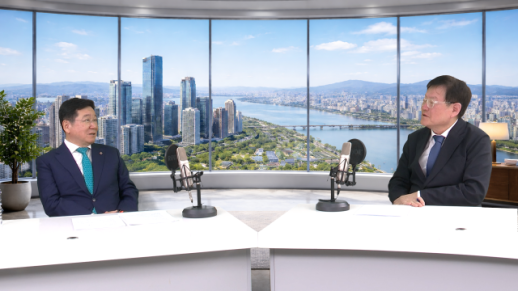 Samsung Compliance Chief Lee Chan-hee: 'Compliance is a Business Insurance' Business growth begins with speed, but sustainability is achieved through principles. Lee Chan-hee, chairman of the Samsung Compliance Committee and president of the Korea Scout Association, addressed the core challenges facing the South Korean economy and society with the concept of 'balance.' He diagnosed that any organization cannot endure if the balance between growth and compliance, competition and responsibility, and technology and humanity is disrupted. As South Korean companies enter a phase of competing in the global market, he emphasized the need to move beyond a purely performance-driven approach. In the past, speed and scale were competitive advantages, but now trust and sustainability are essential for a company's survival. He specifically likened compliance management to 'insurance against accidents,' explaining that it serves as the last line of defense for companies when crises arise. Lee's perspective extends beyond businesses to youth issues, education, and societal values. He diagnosed that today’s youth live in an era of material abundance but increased loneliness. He believes the solution lies in 'connection,' asserting that restoring relationships with nature, communities, and individuals is key to future societal competitiveness. His messages, stemming from his diverse roles as a legal professional, compliance monitor, and youth leader, converge on a single point: 'Uphold principles while maintaining balance.' This applies to businesses, society, and individuals alike as the sustainable path forward. - Why has compliance management become an important topic recently? 'In the past, South Korean companies grew primarily in the domestic market. However, that is no longer the case. We now face a situation where we must compete in the global market. In the global arena, simple price competitiveness or technological prowess is insufficient. Trust in a company becomes a crucial factor, and the foundation for building that trust is compliance. I describe compliance management as 'insurance.' While it is preferable to avoid accidents, compliance systems are the mechanisms that protect companies when issues arise. Ultimately, compliance management is essential for a company’s long-term survival.' - How do you see the culture of South Korean companies changing? 'In the past, the focus was on growth. The key was how quickly one could grow. Now, however, the concept of sustainable growth has gained importance. Concepts like ESG, responsible management, and internal controls have emerged as part of this trend. While growth and sustainability may seem like conflicting concepts, they must actually go hand in hand. I liken this to 'two people in a three-legged race.' If growth and compliance do not keep pace, the company is bound to stumble.' - What is the relationship between compliance and corporate competitiveness? 'Compliance is not a cost; it is an investment. Many companies view compliance as a regulation or burden, but I see it quite differently. Compliance reduces a company's risks and protects it in crisis situations. In the long run, companies that excel in compliance will have greater competitiveness.' - What is needed for companies to establish a global-level compliance system? 'Two things are necessary: internal and external factors. Internally, there needs to be a change in the perception of members. Compliance should be viewed not as something that must be done, but as something that is natural. Externally, companies must maintain independence from politics and power. If external pressures sway them, the compliance system can collapse.' - What role does the board of directors play in corporate governance? 'The board is not merely a decision-making body; it is a key institution that monitors management and provides direction. In the past, boards often operated in a formal manner. However, that is no longer the case. Diversity and expertise in board composition are crucial. It is important to have individuals who can genuinely contribute to corporate management, not just prominent figures.' - How should the internal control system be operated? 'Checks and balances are key. Audits, the board of directors, and compliance monitoring organizations should operate independently while also holding each other accountable. Additionally, a compliance body that manages the entire company in an integrated manner is necessary.' - What are the core principles that companies must adhere to? 'Fairness and innovation. Fairness is important not only within the organization but also in relations with external stakeholders. A structure must be created where no one is discriminated against. Innovation is a condition for a company’s survival. Companies that do not change will ultimately become obsolete.' - What is your perception of youth issues? 'Today’s youth are materially affluent but increasingly lonely. In the past, they naturally socialized with friends, but now they often spend time alone in a digital environment. This can weaken their social skills and sensitivity.' - What is the significance of scouting activities? 'Scouting is not just an activity; it is education. Living in nature and experiencing community teaches cooperation and responsibility. This experience can significantly change a youth's character and worldview.' - What skills do you believe are necessary in the age of AI? 'Memorization and information are no longer competitive advantages. AI can handle all of that. What will be important moving forward is humanity. Insight and empathy developed through diverse experiences and relationships will be key.' - Why have you declined to participate in politics? 'Politics is an important realm. However, the current political environment often prioritizes survival and power over essential values. I have determined that contributing to society in other areas is more meaningful than exacerbating conflicts.' - What is the essence of leadership? 'Balance and service. A leader should not lean toward one side. They must listen to all opinions and make balanced judgments. Additionally, it is the leader's role to help organizational members fulfill their roles.' - How would you like to be remembered as a leader? 'I want to be remembered as someone who lives happily among youth. Not as someone who defeats others, but as someone who is faithful to their own life.' : Lee Chan-hee, Chairman of Samsung Compliance Committee: Lee Chan-hee is a prominent public leader from a legal background. He served as the 50th president of the Korean Bar Association and currently holds the positions of chairman of the Samsung Compliance Committee and president of the Korea Scout Association. He has contributed to establishing corporate compliance and the rule of law while serving as a senior advisor at Yulchon LLC. He defines corporate compliance management not merely as regulation but as the 'foundation for sustainable growth.' Drawing on his extensive experience handling various corporate cases, he has emphasized that companies cannot survive long-term without securing trust. He also has a deep interest in youth education and social values. As president of the Scout Association, he emphasizes character education and community experiences for youth, working to cultivate future leaders. His activities, which connect the fields of law, business, and education, are explained by his philosophy of 'balance.' His leadership is characterized by a principled approach that avoids bias and a perspective that considers both organizations and society. He simply defines the essence of leadership as: 'Make decisions while maintaining balance.'* This article has been translated by AI. 2026-05-09 05:48:57
 -
 U.S. April Jobs Report Exceeds Expectations with 115,000 New Nonfarm Jobs The U.S. jobs report for April has significantly exceeded market expectations. As concerns about a recession ease, the timing for potential interest rate cuts by the Federal Reserve may also be reconsidered. The U.S. Department of Labor reported on May 8 that nonfarm employment increased by 115,000 jobs last month, far surpassing Dow Jones' forecast of 55,000 new jobs. The unemployment rate remained steady at 4.3%. Employment in sectors such as healthcare, transportation and warehousing, and retail saw substantial growth, while manufacturing jobs experienced a slight decline. This marks the first time in nearly a year that the U.S. market has shown a clear upward trend for two consecutive months. Prior to the report, there were predictions that job growth would slow significantly due to the ongoing conflict in the Middle East and rising international oil prices. However, the actual job growth figures indicate a robust trend, which may deepen the Federal Reserve's deliberations regarding interest rate cuts. Nonetheless, some analysts express concerns about the uncertainties stemming from the prolonged conflict in the Middle East. Continued high oil prices could lead to inflationary pressures and reduced consumer spending, potentially negatively impacting employment data.* This article has been translated by AI. 2026-05-08 22:00:23
 -
 HMM Approves Relocation of Headquarters from Seoul to Busan HMM Approves Relocation of Headquarters from Seoul to Busan HMM held an extraordinary shareholders' meeting on May 8 and approved a change to its articles of incorporation to relocate its headquarters from Seoul to Busan. The company plans to first move the CEO's office to Busan and then gradually consider relocating other organizational functions. The meeting took place at Park One Tower in Yeouido, Seoul, where HMM CEO Choi Won-hyuk stated, "As a leading national shipping company, we are committed to participating in the social mission of balanced national development and achieving continuous growth." Samsung Electronics Union Accepts Government Mediation, Resumes Negotiations The labor dispute between Samsung Electronics and its union has shifted from a potential clash to a renegotiation phase. However, the threat of a total strike has not been withdrawn, indicating that tensions may rise again depending on the outcome of future negotiations. According to the inter-company union on May 8, the union agreed to participate in post-adjustment procedures on May 11-12 at the government's request. Previously, the union had announced a total strike for May 21 due to unresolved disagreements over wages and performance bonuses. Industry analysts interpret this decision as more than just a scheduling delay, noting that the government's direct mediation suggests significant implications for the broader industry stemming from the Samsung Electronics labor dispute. Constitutional Amendment Proposal Fails Amid Filibuster by Opposition National Assembly Speaker Woo Won-sik attempted to bring 51 items, including a constitutional amendment proposal, to a vote during a session on May 8. However, the opposition party, People Power Party, requested a filibuster on all bills, leading him to withdraw the proposal. Woo criticized the opposition for abusing the filibuster process. People Power Party floor leader Song Eon-seok remarked after the session that any constitutional amendment pushed through without bipartisan agreement is fraught with dictatorship and misfortune. Woo stated, "I convened today’s session to avoid derailing the first constitutional amendment in 39 years, but seeing the response of a filibuster, I feel that proceeding with the agenda is futile, so I will not present the amendment." Finance Minister Proposes Restructuring Real Estate Market for Actual Users The government has assessed that the real estate market is entering a transition phase focused on actual residents, and it plans to review adjustments to tax benefits for rental business operators. Finance Minister Koo Yoon-cheol stated during an emergency economic meeting on May 8 at the Government Seoul Building, "The recent real estate market is moving away from overheating and is being restructured around actual residents." He added, "Loan regulations and land transaction permits are blocking speculative purchases, and expectations for rising housing prices are diminishing. The investment paradigm is also shifting from real estate to productive sectors like capital markets." Financial Authorities to Boost Inclusive Finance with $2 Billion Investment In light of President Lee Jae-myung's recent emphasis on expanding inclusive finance, financial authorities are set to enhance financial support for social solidarity economic organizations. They plan to supply approximately $2 billion this year through public and private financial institutions to promote social solidarity finance. The Financial Services Commission announced on May 8 that it held the first Social Solidarity Finance Council of 2026 at the Korea Inclusive Finance Agency in Jung-gu, Seoul. The meeting included government officials, policy financial institutions, and mutual finance associations to review the implementation and performance of social solidarity finance and discuss future plans. President Lee had previously stated during a Cabinet meeting on May 6 that the notion that financial institutions exist solely to make profits is problematic and called for strengthening the public nature of the financial sector.* This article has been translated by AI. 2026-05-08 21:57:45
 -
 BHC Expands into Vietnam's Chicken Market with Master Franchise Agreement South Korea's leading fried chicken brand is targeting the Vietnamese market. BHC has officially announced its entry through a master franchise agreement, while earlier this year, domestic venture capital firm The Ventures acquired a stake in Chicken Plus to accelerate local expansion. According to reports from Vietnamese media, including Tuoi Tre, BHC's parent company, Dining Brands Group, signed a master franchise agreement with Singapore-based Hao Open Food last month, marking its first step into the Vietnamese market. Hao Open Food operates food and beverage (F&B) and retail businesses across Southeast Asia and has established local distribution networks and logistics infrastructure in Vietnam. BHC is a top chicken chain in South Korea, operating over 2,300 stores worldwide, and aims to open 50 locations in major cities like Hanoi, Ho Chi Minh City, and Da Nang over the next decade. "We plan to steadily expand our store system and build our brand by leveraging the local partner's distribution network and operational capabilities," said Song Ho-seop, CEO of Dining Brands Group. BHC will maintain its core menu items, Bburinkle and Machoking, while also introducing offerings tailored to local tastes. Machoking, launched in 2015, has sold 40 million units and generated approximately 800 billion won in revenue by 2025. The growth potential of Vietnam's fried chicken market is evident in the numbers. According to Insight Asia's '2026 Vietnam Fast Food Market and Consumer Trends Report,' 82% of Vietnamese consumers chose chicken-related items during their most recent fast food visit, significantly outpacing burgers (11%) and pizza (7%). Major competitors in the Vietnamese fast food market include Lotteria (222 outlets), Jollibee (213), KFC (172), and McDonald's (37). In terms of revenue structure, chicken has distinct advantages. Among consumers who chose chicken items, 84% opted for combo meals that include chicken, drinks, and sides. Although combo orders account for only 68% of total orders, they contribute to 72% of sales, indicating high revenue efficiency. Orders through delivery platforms also exceed 47%, making chicken brands the biggest beneficiaries. Taste (74%) is the primary factor in consumer decision-making, followed by convenience (48%) and price (43%). ◆ The Ventures Acquires Stake in Chicken Plus Vietnam, Aiming for 270 Locations in Four Years Earlier in February, The Ventures became the largest shareholder of Chicken Plus Vietnam, marking its official entry into the local F&B market. Since opening its first store in 2016, Chicken Plus has grown to over 500 locations in South Korea and entered Vietnam in 2019, currently operating more than 100 stores nationwide. The Ventures acquired its stake through an overseas investment fund, with a domestic chicken franchise company participating as a strategic investor. There will be no changes to the existing management or staff following the acquisition. The fund plans to increase the number of Chicken Plus locations in Vietnam to 270 within four years by utilizing the existing store network and infrastructure, while also establishing its own poultry farm to enhance cost control and quality management through in-house production, distribution, and sales. Kim Dae-hyun, a partner in charge of Vietnam investments at The Ventures, stated, "The goal of this deal is to enhance asset value by combining the Korean restaurant chain with local infrastructure," adding, "The Vietnamese F&B market has significant growth potential." Meanwhile, Lotteria, operated by Lotte GRS, has been present in Vietnam since 1998 and continues to grow steadily. It has expanded its presence by offering chicken meals paired with rice, reflecting local culinary preferences. Additionally, BBQ has been steadily increasing its stores since entering Vietnam in 2007, focusing on major cities like Hanoi and Da Nang. Other domestic chicken brands, such as Gubne Chicken and Bon Chicken, have also entered the Vietnamese market, driven by local consumer demand for K-chicken.* This article has been translated by AI. 2026-05-08 21:30:51
 -
 Over 2.94 million apply for first round of high oil price relief payments More than 2.94 million people applied for the first round of the high oil price relief payments, with total disbursements amounting to 1.67 trillion won. The Ministry of the Interior and Safety announced on May 8 that as of 6 p.m. that day, 2,944,073 individuals had applied for the relief payments nationwide. The highest application rate was in Jeollanam-do at 93.6%, followed by Seoul (92.9%), Jeju (92.9%), and Busan (92.7%). Most regions recorded application rates above 90%, but Gyeongsangnam-do (87.8%), Gangwon (89.3%), and Gyeonggi (89.6%) fell below that threshold. Overall, 91.2% of the eligible 3,227,785 individuals applied for the support. The first round of relief payments targeted vulnerable groups, including basic livelihood recipients, those in the second-lowest income bracket, and single-parent families. Basic livelihood recipients received 550,000 won each, while those in the second-lowest income bracket and single-parent families received 450,000 won each. Additionally, residents of non-capital areas or designated population decline regions received an extra 50,000 won each. The government plans to resume payments for those who did not apply during the first round starting May 18, when the second round of payments begins.* This article has been translated by AI. 2026-05-08 21:09:36