

Journalist

CGTN
-
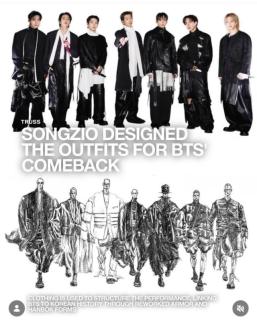 SONGZIO X BTS turns comeback stage into a living archive of Korean history SEOUL, March 22 (AJP) -SEOUL, March 22 (AJP) — BTS’s comeback stage at Gwanghwamun was not only a musical return but a carefully constructed visual manifesto, where fashion became the medium through which history, identity and future ambition converged. At the center of that statement was “Lyrical Armor,” a collaborative collection with Korean designer Songzio, which transformed the seven members into embodiments of Korea’s evolving cultural narrative. Rather than treating costume as embellishment, the collection functioned as narrative architecture — a wearable interpretation of Korea’s past reframed for a global present. The conceptual foundation drew from early Joseon-era armor, juxtaposed with the fluidity of hanbok and the expressive tradition of poets, painters and sorigun (traditional vocal performers). Armor plates became fragmented panels. Hanbok lines were stretched, tilted and reassembled. Seams were deliberately left raw, exposing what appeared to be the “wounds” of history — not concealed, but integrated into the design language. Within this framework, each BTS member occupied a symbolic role, turning the stage into a tableau of archetypes. RM, positioned as the “Hero,” wore a long, hanbok-inspired coat structured with armor-like plating. The piece balanced weight and flow, authority and restraint — a visual articulation of leadership grounded in cultural lineage. Jin’s “Artist” translated traditional elegance into modern tailoring, with layered structures referencing armor yet softened through draped movement, suggesting the transformation of emotion into form. SUGA, cast as the “Architect,” embodied construction itself. His look emphasized structure and tension — rigid elements offset by fluid lines — mirroring the duality of composition and introspection that defines his musical identity. J-Hope’s “Sorigun” brought rhythm into fabric. A reinterpretation of the dopo through a streetwear lens, his silhouette moved with kinetic asymmetry, reflecting both performance and improvisation. Jimin’s “Poet” leaned into fragility and lightness. His layered armor dissolved into air-like textures, with delicate embellishments that captured motion as if writing verse through movement. V’s “Doryeong” distilled restraint. Drawing from the scholar class, his look combined controlled tailoring with layered drapery, projecting quiet authority rather than overt spectacle. Jungkook, as the “Vanguard,” pushed forward. His deconstructed, military-inflected silhouette conveyed propulsion — a figure not rooted in history but moving through it, carrying its fragments into the future. Across all seven, a common language emerged: asymmetry, layering, and tension between structure and flow. It was a language that spoke to rupture — and to rebuilding. In doing so, “Lyrical Armor” aligned seamlessly with the broader arc of BTS’s comeback project, “Arirang,” which seeks to reconnect with Korean identity at a moment of global saturation. The conceptual core of “Lyrical Armor”, explained designer Jay Songzio in his homepage, lies in the fusion of strength and lyricism — combining the rigid armor worn by early Joseon warriors with the flowing hanbok of poets and sorigun who distilled collective grief and aspiration into verse and song. The result is a vision of “new-era heroes” who carry history not as burden, but as momentum toward the future. Songzio described the collection as an act of resistance against conventional boundaries of time, form and dress. Traditional structures were dismantled and reassembled into abstract fragments, creating avant-garde silhouettes that oscillate between expansion and restraint. Volumes swell and recede, while non-structural patterns and fluid draping move like kinetic sculpture, blurring the line between reality and imagination. As BTS stood before a crowd of more than 100,000 and millions more watching worldwide, they were not only performing songs. They were wearing a narrative — one that suggested that the future of K-fashion, like K-pop itself, based on hanbok identity. 2026-03-22 15:36:48
 -
 Hyundai Targets China and India Rebound With 46 New Models, Aiming for 1.28 Million Sales by 2030 Hyundai Motor is seeking a rebound in China and India, the world's No. 1 and No. 3 auto markets, by sharply expanding new-model launches. The push signals the company does not intend to abandon key markets, though intensifying competition from fast-growing local brands makes success uncertain. Hyundai said March 22 that CEO Jose Munoz, in a recent shareholder letter, set a goal of lifting combined annual sales in China and India to 1,276,500 vehicles by 2030. The targets are 832,500 in India and 444,000 in China. Based on last year's global sales of 7.27 million vehicles, the 2030 goal would represent about 23% of Hyundai's total, meaning roughly one in four vehicles would be sold in China or India. With sales in the two markets totaling 702,000 last year, the plan implies growth of about 82%. Both markets are considered essential, but Hyundai has struggled amid tougher competition. In China, Hyundai sales fell to 130,005 last year from 181,993 in 2024. In India, sales slipped to 571,878 from 607,934. Hyundai plans to launch 46 new models in China and India over the next five years, about 2.6 times the 18 introduced over the past five years. By year, new-model launches were 6 in 2021, 3 in 2022, 6 in 2023, 1 in 2024 and 2 in 2025. Munoz said Hyundai will introduce 20 new models in China over five years under a strategy of "in China, for China, to the world." For India, he said the company plans to roll out 26 new models backed by $5 billion in investment through 2030. Hyundai is also emphasizing localization. In India, it plans an electric SUV that will be planned, designed and produced locally, and it is considering bringing its premium Genesis brand to the market. In China, Hyundai last year launched its first strategic model there, the electric SUV Elexio. An auto industry official said local EV brands already dominate China, making a new approach urgent.* This article has been translated by AI. 2026-03-22 15:12:16
 -
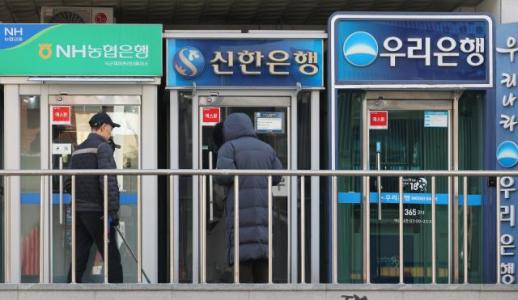 Korean Banks Brace for Asset Quality Strain as Middle East Tensions Lift Rates, Oil Rising global oil prices and bond yields tied to turmoil in the Middle East are heightening concerns over asset quality at South Korea’s banks. Vulnerable borrowers such as the self-employed and small businesses have struggled with debt service since the COVID-19 pandemic, and higher costs from a spike in oil prices are seen further weakening companies’ ability to repay. As of the end of February, the overall delinquency rate on won-denominated loans at the five major banks — KB, Shinhan, Hana, Woori and NH NongHyup — stood at 0.46%, according to the financial sector on Saturday. That was up 0.1 percentage point from 0.36% at the end of December, rising over two months. By borrower type, delinquency rates were 0.35% for households, 0.11% for large companies, 0.67% for small and midsize enterprises, and 0.56% for all corporate borrowers. Compared with the end of last year, the rates rose 0.05 percentage point for households, 0.08 point for large companies, 0.17 point for SMEs and 0.15 point for all corporate borrowers. The ratio of nonperforming loans on won-denominated lending at the five banks also increased to 0.40% at the end of February from 0.34% at the end of last year. The rise was largest for SMEs, up 0.12 percentage point, compared with 0.08 point for large companies and 0.04 point for households. Analysts warn the indicators could deteriorate further if the oil surge and Middle East risks persist. A prolonged period of uncertainty could squeeze corporate profitability and hit financially fragile SMEs hardest. The four major banks held 29.0567 trillion won in outstanding loans to petrochemical, airline and shipping companies as of the end of the fourth quarter of last year, the financial sector said. Within nine days of the Iran situation, the price of naphtha — a key feedstock those industries largely source from the Middle East — rose 28%, raising expectations of significant damage. Even so, corporate lending has continued to grow since the end of last year, adding to banks’ risk exposure. As of the end of last month, corporate loans at the five major banks totaled 854.3288 trillion won, up 6.9759 trillion won from the previous month. Looking ahead, if oil prices keep rising and supply-chain instability persists, the policy rate could shift back toward increases to curb inflation. Yields on one-year and five-year bank bonds climbed from 2.900% and 3.572% on Feb. 27, just before the Iran situation, to 3.033% and 3.907% as of March 20 — jumps of 0.133 percentage point and 0.335 point in three weeks. Banks have responded by building reserves. Major lenders are keeping loan-loss reserve coverage ratios between 160% and as high as 220%, and are monitoring lending in real time, including by adopting a risk-adjusted return on risk-weighted assets (RoRWA) metric to manage capital adequacy. “After the Middle East war, the uptrend in market rates and lending rates has strengthened,” a financial industry official said. “As shocks to the real economy accumulate, bad loans could visibly swell in a few years.” * This article has been translated by AI. 2026-03-22 15:03:00
 -
 South Korea’s Lee Sang-ho Wins Season-Ending Snowboard World Cup, Claims Record Fifth Title Lee Sang-ho, known as "Cabbage Boy," won the final event of the International Ski and Snowboard Federation (FIS) Snowboard World Cup alpine season. Lee defeated Austria’s Christoph Karner in the men’s parallel slalom final at the 2025-2026 FIS Snowboard World Cup in Winterberg, Germany, on March 21 local time. The victory was Lee’s fifth career World Cup win, making him the first South Korean to reach five FIS World Cup victories. Choi Ga-on, who won gold in the women’s snowboard halfpipe at this year’s Milan-Cortina d’Ampezzo Winter Olympics, is second among South Koreans in this category with four World Cup wins. Lee closed the season with two gold medals and one silver, including gold at the Slovenia World Cup in February and silver at an event in Poland in March. In a post on social media, Lee said he did his best to meet the expectations of those who supported him but still had many regrets about the season. He added that their support helped him finish strong despite difficult conditions, and he thanked them sincerely.* This article has been translated by AI. 2026-03-22 14:54:00
 -
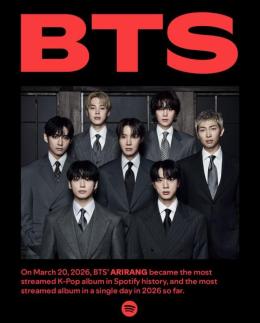 BTS’ ‘ARIRANG’ Sweeps Spotify Global Chart, Tracks Fill Top 14 All tracks from BTS’ new album, ‘ARIRANG,’ have entered Spotify’s global charts. Spotify said on the 21st that BTS’ fifth full-length album, ‘ARIRANG’ (ARIRANG), has become the most-streamed K-pop album of all time. It also ranked as this year’s most-played album in a single day, underscoring the release’s strong momentum. On Spotify’s “Daily Top Songs Global,” the title track “SWIM” went straight to No. 1 on the March 20 chart, while every song from the album placed from No. 1 through No. 14. Even the sixth interlude track, which features the sound of the bell of the Seongdeok the Great Divine Bell, charted. BTS also topped Spotify’s “Daily Top Artists Global.” The comeback also set records on Apple Music. ‘ARIRANG’ became the most-played K-pop album worldwide on its first day of release in Apple Music history. It also posted the biggest first-day streaming total ever for a pop album released by the group. The figures reflected global fan interest after a 3-year, 9-month hiatus. In South Korea, ‘ARIRANG’ has dominated album and streaming rankings. “SWIM” topped Melon’s daily chart for March 20, and held No. 1 on the real-time “Top 100” from 8 a.m. on the 21st through 1 p.m. on the 22nd. Physical sales were also strong: first-day sales surpassed 3.98 million copies, based on Hanteo Chart tallies, quickly exceeding the group’s previous best first-week record. The album also stayed No. 1 on Hanteo’s daily chart for two straight days (March 20-21). The album is described as capturing BTS’ identity and universal emotions they face. HYBE Chairman Bang Si-hyuk participated as executive producer, and RM led the album’s lyrics, expressing a sincere attitude of loving life.* This article has been translated by AI. 2026-03-22 14:39:17
 -
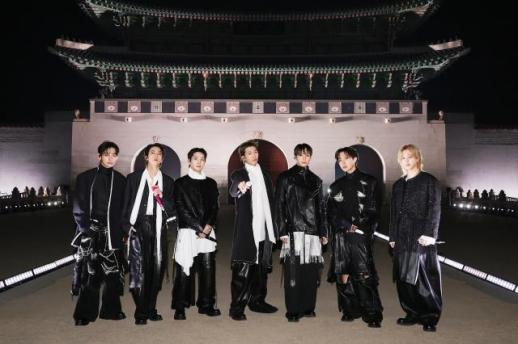 BTS Returns as Full Group With Free Gwanghwamun Square Concert for ‘Arirang’ Album “Thanks to BTS, I learned for the first time that ‘Arirang’ is a Korean folk song, and I was moved because the show captured Korea’s identity so well,” said Kiara, a fan from the Philippines, at Gwanghwamun Square on March 21. A K-pop fan since 2008, she said she has been an ARMY — BTS’ fan community — since the group’s debut. She said she even held off listening to the tracks released the day before so she could hear them first at the venue, giving a thumbs-up after hearing the title track, ‘SWIM,’ and the B-side ‘Body to Body.’ The square turned into what many fans described as a massive purple concert hall, reflecting BTS’ signature color, as crowds gathered to see the group perform together again after 3 years and 9 months. Organizers estimated 104,000 people attended, while Seoul’s real-time city data put the figure at 42,000. The turnout was calmer than some had expected, which helped operations run more smoothly. Fans outside the fenced-off official seating area of 22,000 watched large screens and sang along. Some recorded the show on their phones, while others video-called friends overseas to share the scene live. With about 6,700 police deployed, concertgoers passed through four checkpoints. Despite the tight security, the crowd remained orderly. At 8 p.m., a sweeping drone shot over Mount Bugak and Gyeongbok Palace opened the broadcast on Netflix to more than 190 countries. As 50 dancers lined up on the stage platform, the seven members appeared in black outfits that reinterpreted traditional armor in a modern style. RM, seated due to an ankle injury, opened with the group greeting: “It’s been four years. Hello, we are BTS.” He added, “We’ll give everything today. It’s been a long journey, but we’ve finally made it here.” BTS launched into tracks from the new album, including ‘Body to Body,’ ‘Hooligan’ and ‘2.0,’ quickly taking control of the square. ‘Body to Body,’ created in collaboration with the National Gugak Center, wove the melody of ‘Arirang’ into a modern beat, reflecting HYBE Chairman Bang Si-hyuk’s stated view that the starting point should be Korea’s most symbolic space. The group then performed global hits ‘Butter’ and ‘MIC Drop,’ drawing cheers and singalongs from fans, including many from overseas. Midway through the show, members spoke candidly about their time away. J-Hope said, “We worried we might be forgotten.” Suga said, “I thought intensely about what needed to change. I’m still anxious, but these feelings are ours, too.” RM added, “The answer wasn’t outside, it was inside. The goal of this album was to put ourselves into it.” Jimin said, “We’re not special people. We’re scared every time, but if we keep swimming, I believe we’ll find the answer someday.” V said he hoped their music could offer comfort, before the group performed ‘SWIM.’ For the encore, BTS performed ‘Mikrokosmos,’ with a production that placed the Big Dipper in the night sky above Gwanghwamun as fans’ light sticks shone like a field of stars. The next day, HYBE issued a statement thanking authorities for allowing the use of Gwanghwamun and residents for accepting the disruption. “Mature civic awareness made this concert shine even more,” the company said. It added it would develop specific plans to promote protection of national heritage and cultural assets and implement a long-term support system. BTS returned with a record 3.98 million copies sold on the album’s first day. The group is set to continue its global schedule with a world tour starting April 9 at Goyang Sports Complex. 2026-03-22 13:54:21
 -
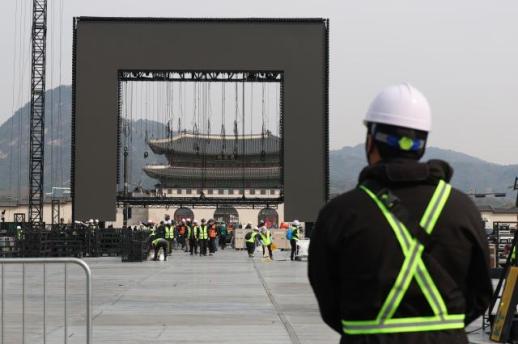 BTS comeback draws 104,000 to Seoul, lifts retail sales as event concludes safely SEOUL, March 22 (AJP) -The BTS’s comeback concert in central Seoul on Saturday drew more than 100,000 people and ended without a single major incident, delivering both a powerful display of K-culture’s global reach and a sharp boost to retail sales around the event zone. According to the Seoul Metropolitan Government on Sunday, an estimated 104,000 spectators gathered around Gwanghwamun Plaza on Saturday, as global fans — known as ARMY — joined Seoul residents in a rare citywide celebration. The event doubled as an economic catalyst, with convenience store sales in the area surging dramatically on the day of the concert. CU, operated by BGF Retail, said sales at 10 stores near Gwanghwamun jumped 270.9 percent from a week earlier, while three stores closest to the venue saw sales soar 547.8 percent. Sales of albums and newspapers, including BTS releases, surged 214.3 times, while demand for concert essentials spiked. Batteries rose 50.7 times, hot packs 12.8 times, portable chargers 11.9 times, cosmetics 11.4 times, and tissues 10.2 times, driven largely by fans preparing for long hours outdoors. Food and beverage sales also climbed sharply, with gimbap up 1,380.4 percent, sandwiches 1,146.7 percent, triangle kimbap 884.3 percent, bottled water 831.4 percent, and iced drinks 813.4 percent. GS25 reported similar trends, with sales at five nearby stores rising 233.1 percent, and the busiest location posting gains of up to 378.4 percent. Hot packs surged 5,698.8 percent, portable chargers 2,016.9 percent, and batteries 3,530.8 percent, while transportation card sales rose 647.5 percent amid heavy foot traffic and increased purchases by foreign visitors. Seven-Eleven said sales at 40 stores in the Gwanghwamun and Myeong-dong areas increased 117.0 percent from a month earlier, with some stores near the venue seeing sales jump as much as sevenfold. Emart24 also reported steady increases, including a 400 percent rise in battery sales and 260 percent in wet tissues compared with the previous week. Apart from law enforcement forces, city authorities mounted a large-scale safety operation to manage the crowds. A total of 3,400 personnel from city agencies were deployed, rising to about 8,200 when combined with staff from event organizer HYBE. A joint command post was activated at the Sejong Center for the Performing Arts from 10 a.m., 10 hours before the concert, coordinating efforts among city officials, police, fire authorities and organizers to monitor crowd conditions in real time. The Seoul Fire and Disaster Headquarters deployed 102 fire vehicles and 803 personnel, while police implemented a “stadium-style” crowd control system to disperse foot traffic and prevent congestion. Despite dense crowds, no safety incidents were reported. Preventive measures included the installation of safety barriers at 82 key locations, such as subway ventilation shafts and station entrances. Cleanup operations were completed swiftly, with 274 personnel and 53 vehicles deployed and about 40 tons of waste collected over two days. Major roads, including Sejong-daero, were reopened early Sunday morning after overnight restoration. Extensive multilingual support was also provided for international visitors. More than 600 interpreters and volunteers were deployed, and transport systems offered guidance in multiple languages across subway stations and bus stops. Seoul Mayor Oh Se-hoon said the event demonstrated the city’s global competitiveness. “This was more than a comeback stage — it was an opportunity to showcase Seoul’s cultural capacity and global standing,” he said. The city plans to extend the festive atmosphere through HYBE’s “The City Arirang Seoul” program, running through April 19 across key landmarks including the Han River and Dongdaemun Design Plaza. 2026-03-22 13:24:26
 -
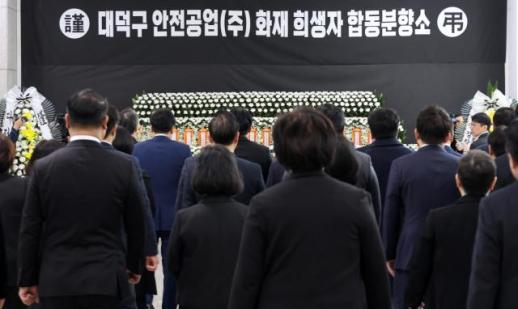 Daejeon factory fire kills 14; company chief apologizes amid probe into cause SEOUL, March 22 (AJP) - The head of a South Korean auto parts manufacturer publicly apologized on Sunday after a devastating factory fire in Daejeon left at least 14 workers dead and dozens injured, as authorities launched a full-scale investigation into the cause of the blaze. Sohn Ju-hwan, CEO of Anjeon Industry, visited a joint memorial altar set up at Daejeon City Hall, where he bowed deeply and expressed remorse before the victims. Holding a white chrysanthemum, Sohn stood in silence before the memorial tablets of the 14 deceased workers. After a prolonged pause, he broke down in tears, repeatedly saying, “I am truly sorry.” About 30 company employees accompanied him, some visibly emotional as they echoed his apology toward the victims. In a statement posted a day earlier on the company’s website, Sohn pledged full cooperation with authorities and promised support for victims and their families. “We extend our deepest condolences and sincere apologies to all those who lost their lives or were injured, as well as to their families,” he said. “We will take full responsibility by providing necessary support and ensuring recovery efforts.” The fire broke out at around 1:17 p.m. on Friday at the Anjeon Industry plant in Daedeok District, Daejeon, where about 170 workers were on site. The blaze, which took more than 10 hours to fully extinguish, left 14 people dead and at least 60 others injured, including two firefighters. Rescue teams recovered the final three missing victims from the charred second floor late Saturday afternoon, bringing the death toll to 14. Authorities said the fire spread rapidly, fueled by oil residue and accumulated dust inside the facility, while some 200 kilograms of sodium stored on site raised the risk of explosions and complicated firefighting efforts. At the time of the incident, many workers were resting near upper floors during lunch break, when thick smoke quickly blocked evacuation routes. Some reportedly jumped from windows to escape. The exact cause of the fire remains under investigation, though witnesses reported hearing an explosion shortly after the blaze began. Police have deployed a 131-member task force to determine the cause and assess potential negligence. A joint forensic inspection involving police, fire authorities and other agencies is expected once structural safety at the site is secured. Identification of the victims is ongoing, with DNA analysis being conducted by the National Forensic Service. As of Sunday, only one victim — a man in his 40s — had been formally identified. Authorities expect the identification process to be completed as early as Monday, after which families will be officially notified. President Lee Jae Myung visited the site on Saturday, calling for a thorough investigation and measures to prevent similar tragedies. “We will make every effort to determine the cause and ensure such incidents do not happen again,” said Kim Seung-ryong, commissioner general of the National Fire Agency. The Daejeon Metropolitan Government has established a joint memorial altar at City Hall, where citizens continue to pay their respects. 2026-03-22 13:06:00
 -
 Korea's 20-something employment slumps to 9- year low in Feb SEOUL, March 22 (AJP) -Employment of South Koreans in their late 20s has hit the lowest in nearly a decade as rapid engagement of artificial intelligence worsens job prospects for entry level amid economic slowdown. According to the National Statistical Portal (KOSIS) and job data from the Ministry of Data and Statistics, 2.346 million people ages 25-29 were employed in February, down 62,000 from a year earlier. It was the lowest February figure since 2017. The employment rate for the age group stood at 70.4 percent, down 0.5 percentage points on-year and the lowest for the month since 2022. The decline was broad-based across key industries. Losses were notable in manufacturing, as well as in information and communications and professional, scientific and technical services — sectors traditionally favored by younger workers seeking stable, high-quality jobs. Employment in information and communications for those in their late 20s fell by 52,000 from a year earlier, the steepest drop since 2014. The sector had recorded steady gains in recent years before turning negative in 2025 and declining for a second consecutive year. In professional, scientific and technical services, employment fell by 29,000, also the largest decrease since 2014, following a drop of 20,000 last year. The ministry said part of the decline may reflect a base effect after strong growth in those sectors in recent years. However, it also pointed to structural changes, including the spread of artificial intelligence, which may be reducing demand for entry-level roles in professions such as accounting and legal services. The sector includes research and development, architecture and engineering, as well as professional services such as lawyers, patent attorneys, accountants and tax specialists. Analysts say changes in corporate hiring are reinforcing the trend. Companies are increasingly favoring experienced workers who can contribute immediately, while entry-level recruitment has shrunk — delaying young people’s entry into the labor market. The impact is visible in rising unemployment. The number of unemployed people aged 25 to 29 rose to 179,000 in February, up 16,000 from a year earlier, pushing the unemployment rate up 0.8 percentage points to 7.1 percent. Broader youth indicators suggest even greater strain. The supplementary employment indicator No. 3, an expanded measure that includes underemployed and discouraged workers, rose to 17.4 percent for those aged 15 to 29, the highest February level since 2023. The indicator captures perceived joblessness beyond the official unemployment rate, including those seeking additional hours or marginally attached to the labor force. The government said it is closely monitoring youth employment conditions, with expectations that a forthcoming supplementary budget could include targeted job-support measures. By contrast, employment conditions for people in their 30s have remained relatively stable, supported by population growth and a rising employment rate. The divergence underscores a widening gap within the labor market, where entry-level opportunities are shrinking even as overall employment trends appear relatively steady. 2026-03-22 11:04:50
 -
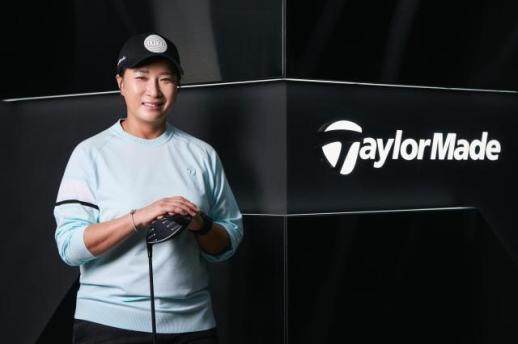 TaylorMade Names Park Se-ri as Brand Ambassador TaylorMade recently said it has selected Park Se-ri, a former South Korea national golf team coach, as a brand ambassador. Park is a leading figure in South Korean golf, highlighted by her 1998 U.S. Women’s Open title and 25 LPGA Tour victories, including five major championships. In 2007, she became the first South Korean player inducted into the World Golf Hall of Fame. After retiring, Park has worked as a coach and mentor, contributing to player development and the growth of golf culture. She served as the national team coach at the 2016 Rio de Janeiro Olympics, sharing in Park In-bee’s gold medal win. TaylorMade said its relationship with Park began in 2002, when the sides signed a major equipment deal. Park said using clubs that fit a player is most important and that TaylorMade clubs have helped her over the years. TaylorMade said the partnership will support an integrated performance branding strategy spanning both clubs and apparel. The company also plans support activities aimed at expanding participation in golf and working with local communities. It said it will provide test balls and clubs for junior golfers and visitors at “SERI PAK with Yongin” in Yongin as part of efforts to broaden golf culture. Looking back on her playing career, Park said it mattered most whether a brand builds golf with clear standards and direction. She said she felt TaylorMade has consistently shown the essence of golf through ongoing innovation, and that led to the partnership. A TaylorMade official said Park is a symbolic figure in South Korean golf and that her spirit of challenge and philosophy on performance align with the company’s brand direction. The official said TaylorMade will pursue a range of activities to show synergy between clubs and apparel and further strengthen its premium brand position.* This article has been translated by AI. 2026-03-22 10:54:00