


Latest by
-
 U.S. Launches Retaliatory Strikes Against Iran Amid Rising Tensions The United States has announced it has launched retaliatory strikes against Iran. This escalation follows the crash of a U.S. Army Apache helicopter near the Strait of Hormuz, raising military tensions between the two nations. On June 9, U.S. Central Command stated via X (formerly Twitter) that, "Under the direction of the Commander-in-Chief, we initiated defensive strikes against Iran starting at 5 p.m. today." The command described the operation as a proportional response to the previous day's helicopter crash. Earlier, an AH-64 Apache helicopter crashed while on a patrol mission over the waters of Oman near the Strait of Hormuz. Two crew members were rescued and reported to be unharmed. Central Command indicated that the cause of the crash is under investigation. President Donald Trump stated on Truth Social, "I received reports that Iran shot down a U.S. Apache helicopter." He confirmed that the crew members are safe but emphasized that the U.S. must respond to the attack. Reuters cited U.S. officials claiming the helicopter was downed by an Iranian drone. Iran has denied any involvement in the incident. State media, citing military sources, reported, "There have been no aggressive air operations in the Strait of Hormuz in the last 24 hours." However, they warned that if the U.S. resumes hostile actions citing the helicopter crash, they would respond decisively. This incident tests U.S.-Iran relations, which had been under a ceasefire since early April. Both sides have been negotiating an extension of the ceasefire and the resumption of navigation through the Strait of Hormuz, but the helicopter crash and subsequent retaliatory strikes have destabilized the negotiation environment. The Strait of Hormuz is a critical maritime route for oil and liquefied natural gas. Should Iran choose to retaliate, it could heighten instability in maritime transport and energy markets.* This article has been translated by AI. 2026-06-10 06:51:00
 -
 NASDAQ Falls 1% as AI Semiconductor Stocks See Renewed Selling The New York stock market closed mixed on June 9, with the NASDAQ and S&P 500 declining as renewed selling of artificial intelligence (AI) semiconductor stocks weighed on the indices, while the Dow Jones Industrial Average posted a slight gain. The Dow Jones Industrial Average rose by 86.10 points (0.17%) to close at 50,872.11. The S&P 500 fell by 19.08 points (0.26%) to finish at 7,386.65, and the NASDAQ dropped 250.84 points (0.97%) to end at 25,678.82. Initially, there was optimism for a rebound in tech stocks, but this momentum quickly faded. The decline in semiconductor and AI-related stocks contributed to a larger drop in the NASDAQ. The Philadelphia Semiconductor Index experienced significant fluctuations during the day, ultimately falling by 1.9%. The technology sector within the S&P 500 also decreased by 1.8%. Among individual stocks, Broadcom fell by 1.1%, and NVIDIA declined by 0.2%. The downward pressure on Broadcom followed a disappointing earnings forecast that raised concerns about its valuation. Despite the drop, the semiconductor index has risen 78.7% so far this year. Middle East tensions also dampened investor sentiment. President Donald Trump claimed on social media that Iran shot down a U.S. Apache helicopter patrolling near the Strait of Hormuz, prompting a response from the U.S. This statement led to increased volatility during the trading session, with the Chicago Board Options Exchange's Volatility Index (VIX) reaching its highest level since April 7. However, not all stocks fell; more stocks advanced than declined on the New York Stock Exchange. The Russell 2000 index rose by 0.4%, suggesting that some funds from tech stocks may have shifted into value and defensive stocks. Investors are closely watching the U.S. Consumer Price Index (CPI) for May, set to be released on June 10. The impact of rising energy prices due to the Middle East conflict on inflation is seen as a key factor that could influence the Federal Reserve's interest rate decisions. Last week's stronger-than-expected employment data has also heightened concerns about the possibility of interest rate hikes later this year. Additionally, the upcoming IPO of SpaceX has garnered market attention. The company is reportedly aiming to raise $75 billion and achieve a valuation of $1.75 trillion ahead of its public listing this week. The debut of such a large growth stock could reignite discussions about overheating in the tech sector, adding to short-term volatility.* This article has been translated by AI. 2026-06-10 06:45:00
 -
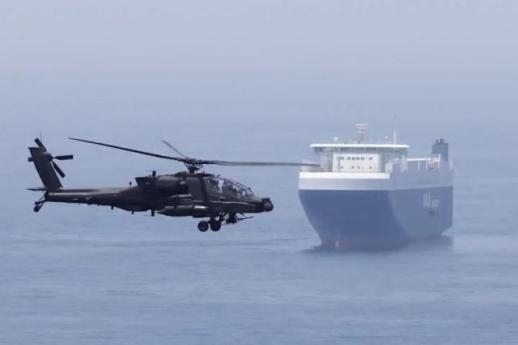 Trump Warns of Response as Iran Threatens Retaliation Amid Tensions in Hormuz U.S. and Iranian officials are at odds over the crash of a U.S. Apache helicopter near the Hormuz Strait. President Donald Trump claimed that Iran shot down the helicopter and warned of a forthcoming response, while Iran cautioned that it would react firmly if the U.S. uses the incident as a pretext for military action. Tensions in the Hormuz Strait are escalating as negotiations between the two nations continue. According to Reuters, an Iranian military source stated on June 10 that if the U.S. resumes hostile actions under the guise of the Apache helicopter crash, there will be a decisive response. The source also asserted that there had been no Iranian air operations in the Hormuz Strait over the past 24 hours. Trump previously announced on his Truth Social platform that he received reports indicating Iran shot down a high-performance Apache helicopter patrolling the Hormuz Strait the previous night. He noted that both pilots were safe and unharmed, adding, "The U.S. must respond to this attack." The U.S. Central Command reported that the AH-64 Apache attack helicopter crashed while conducting a patrol mission near the coast of Oman. The two crew members were rescued approximately two hours after the crash and are reported to be in stable condition. Central Command stated that the cause of the crash is currently under investigation. The circumstances surrounding the crash have not been officially confirmed. Axios reported, citing U.S. officials, that military investigations suggest an Iranian drone collided with the helicopter, although it remains unclear whether this was a deliberate attack. Reuters noted that a U.S. Navy unmanned surface vessel was deployed for the rescue, marking the first time U.S. forces have used such equipment to recover helicopter crew members at sea. Iran has also criticized U.S. operations near the Hormuz Strait. Iranian Foreign Minister Abbas Araghchi stated on X (formerly Twitter), "The Hormuz Strait is thousands of miles from the U.S. coast," adding that foreign military forces near their territory are always exposed to human error, accidental incidents, and potential conflict. He concluded that the best solution to reduce risks is for them to leave. The Hormuz Strait is a critical passage for oil transport in the Gulf region. As the blame game over the helicopter crash intensifies and retaliatory threats emerge, tensions in the Hormuz Strait are once again on the rise.* This article has been translated by AI. 2026-06-10 06:39:00
 -
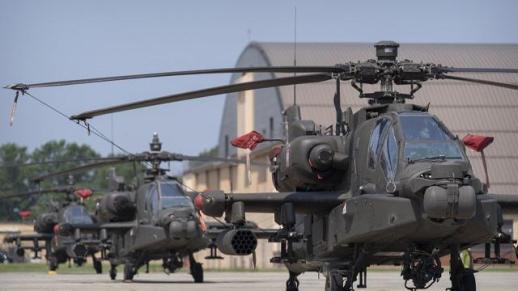 Iran Warns of Strong Response to U.S. Hostile Actions Following Helicopter Crash Iran has issued a warning that it will respond decisively if the United States resumes hostile actions following the crash of an Apache helicopter. According to a military source cited by Reuters on June 10, Iranian state media reported, "If the U.S. uses the Apache helicopter crash as a pretext to resume hostile actions, there will be a strong response." The source also noted, "There have been no Iranian aerial operations in the Strait of Hormuz in the past 24 hours." Earlier, President Donald Trump stated on Truth Social that he received reports from the military indicating that Iran shot down a high-performance Apache helicopter patrolling over the Strait of Hormuz the previous night. He added, "Both pilots are safe and unharmed," and emphasized that "the U.S. must respond to this attack." Iran has not provided a detailed response to these claims. Additionally, Iran criticized U.S. military operations near the Strait of Hormuz. Abbas Araghchi, Iran's Foreign Minister, stated on X, "Foreign forces near our territory are always exposed to human error, accidental incidents, and potential conflict risks." He further asserted, "The best solution to reduce these risks is for them to leave."* This article has been translated by AI. 2026-06-10 06:27:00
 -
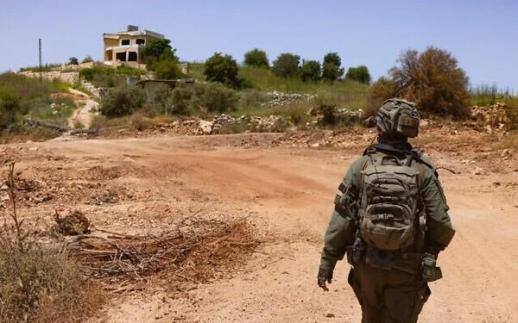 Israeli Military Prepares for Deeper Strikes Against Iran, Continues Operations in Lebanon Eyal Zamir, the Chief of Staff of the Israeli military, has indicated preparations for further strikes against Iran. During a visit to a command training facility in northern Israel on June 9, Zamir stated, "The Israeli military is ready to resume operations within Iran." According to Israeli media outlets i24 News and The Times of Israel, Zamir remarked, "Iran's attempts to create new rules of engagement and change the reality will fail." He described recent Israeli attacks on Iran as preparations for "much more significant and powerful strikes." Zamir added, "We are prepared to deliver another harsh and deep blow to Iran," emphasizing that the Israeli military is maintaining an immediate readiness to resume operations in Iran. He also addressed operations on the Lebanese front, stating, "The Israeli military is dismantling Hezbollah infrastructure in southern Lebanon and targeting sites, including underground facilities in the Bofort area." Recently, the Israeli military attacked Hezbollah targets in Lebanon, prompting Iran to launch missiles in retaliation. Although both sides have avoided large-scale further attacks, the Israeli military remains open to the possibility of renewed Iranian strikes. U.S. President Donald Trump has recently mentioned the possibility of negotiations with Iran, urging Israel to exercise restraint in its retaliatory actions. Zamir's comments come amid ongoing negotiations between the U.S. and Iran.* This article has been translated by AI. 2026-06-10 06:21:00
 -
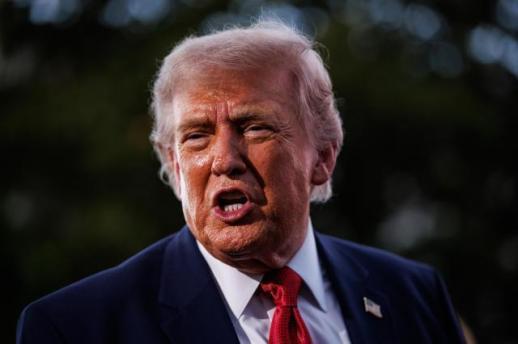 Trump Warns of U.S. Response After Iran Claims to Shoot Down Apache Helicopter President Donald Trump has warned of a U.S. response following Iran's claim that it shot down an American helicopter. The U.S. military reported that two crew members of an Apache attack helicopter, which crashed near the Strait of Hormuz, were rescued, and the cause of the crash is under investigation. On June 9, Trump stated on his social media platform Truth Social, "I received reports from the military that Iran shot down a high-performance Apache helicopter patrolling over the Strait of Hormuz last night." He added, "Both pilots are safe and unharmed," and emphasized, "The United States must respond to this attack." According to U.S. Central Command, the Army's AH-64 Apache helicopter was conducting a patrol mission near the coast of Oman when it went down. The crew was rescued approximately two hours later. Central Command noted that the cause of the crash is still under investigation. The circumstances surrounding the alleged shootdown have not been officially confirmed. Axios reported, citing U.S. officials, that an Iranian drone collided with the helicopter, but it remains unclear whether this was a deliberate attack. Reuters reported that a U.S. Navy unmanned surface vessel rescued the two crew members from the crash site, marking the first known instance of the military using an unmanned vessel for such a rescue operation. Iran criticized U.S. operations near the Strait of Hormuz. Iranian Foreign Minister Abbas Araghchi stated on X, "The Strait of Hormuz is thousands of miles from the U.S. coast," adding, "Foreign military forces close to our territory are always exposed to human error, accidents, and the risk of misfire during engagements." He concluded, "The best way to reduce risks is to leave." * This article has been translated by AI. 2026-06-10 06:12:00
 -
 2026 FIFA World Cup to be Jointly Hosted by Three Countries The 2026 FIFA World Cup, the largest global soccer festival, will kick off on June 12. This tournament marks the first time three countries— the United States, Mexico, and Canada—will jointly host the event, which will be the largest in history in terms of both participating teams and total prize money. One of the most significant features of the North America World Cup is its expanded format. The number of participating teams has increased from 32 to 48. The total number of matches will rise from 64 to 104, and the tournament will last for 39 days. This is the first joint hosting since the 2002 Korea-Japan World Cup, with matches taking place across 16 cities in the three countries: 11 in the U.S., three in Mexico, and two in Canada. With the increase in teams, the tournament's structure has also been revised. The 48 teams will be divided into 12 groups of four. The top two teams from each group, along with the eight best third-placed teams, will advance to the knockout stage, creating a new round of 32 before the traditional round of 16. Thanks to the expanded format, Uzbekistan, Jordan, Cape Verde, and Curaçao will make their World Cup debuts. As the tournament grows, so does the prize money. FIFA has confirmed a total prize pool of $871 million, nearly double the previous record of $440 million set during the 2022 Qatar World Cup. The winner will receive $50 million. Teams that qualify for the tournament, including Hong Myung-bo's squad, will secure a minimum of $12.5 million in base support and prize money, with the potential for additional earnings based on their performance. With the expanded tournament, some match regulations have also changed. A notable adjustment is in the tiebreaker rules for group standings. In the event of tied points, the results of matches between the tied teams will take precedence over overall goal difference and goals scored. If those matches end in a draw, then overall goal difference, goals scored, and fair play points will be used to determine rankings. This tournament will also introduce hydration breaks for the first time. Players will have a three-minute break to hydrate at the 22nd minute of each half, regardless of the weather conditions, differing from the cooling breaks implemented during the 2014 Brazil World Cup.* This article has been translated by AI. 2026-06-10 06:03:00
 -
 Nuclear Submarine Development Gains Momentum in South Korea Discussions surrounding the development of nuclear-powered submarines are intensifying. Reports indicate that a U.S. government delegation is engaged in practical negotiations, and South Korea's military has begun the process of acquiring nuclear submarines. After years of deliberation, this long-standing goal is transitioning into an actionable project. Many experts suggest that developing a nuclear submarine will take at least a decade. This estimate likely reflects the timeframes associated with other weapon systems or the technical challenges involved. While the Navy is working to convince the government of the necessity for nuclear submarines, the diplomatic negotiations for acquiring nuclear fuel remain outside of direct control. However, establishing the organization and operational framework to lead this project is within the realm of manageable oversight. The acquisition of external technology falls under the domains of policy and diplomacy, which will not be addressed in this article. Instead, we have entered a phase where it is crucial to determine the 'organization,' 'authority,' and leadership for this initiative. The development timeline (T) is influenced by the number of decisions (N), the average time per decision (Td), and the degree of parallel decision-making (P), expressed as T=N·Td/P. Thus, the development period is determined not only by technical difficulty but also by the speed of decision-making and the extent of concurrent processes. The U.S. nuclear submarine development process illustrates this point. While reactor development is undoubtedly complex, integrating nuclear power into a submarine operating in the extreme environment of the ocean involves numerous technical judgments. Minimizing delays in any single decision is critical to the overall success of the project. Ensuring system integrity must be the top priority for nuclear submarines. If high-level technical and engineering decisions become overly dependent on political and administrative procedures, significant delays are inevitable. The initiative must be driven under the authority and responsibility of a chief engineer with engineering judgment. The development of the USS Nautilus (SSN-571) exemplifies this approach. At 48, Captain Richard W. H. Ricker, who served as both a naval officer and a member of the Atomic Energy Commission (AEC), minimized bureaucratic interference while leading technical decisions. Interestingly, he proposed and implemented this organizational structure himself, believing that technical and engineering judgments should be independent of other authorities. From the project decision in March 1950 to its first voyage took 4 years and 10 months. Including two years of concept review, the entire process of fuel development, reactor design, land-based prototype construction, special material development, and submarine design and construction was completed in just six and a half years. The testing of the land-based prototype reactor and the construction of the operational reactor were conducted concurrently with only a six-month gap. Let’s examine the most critical technical variable. The first decision in reactor development must be the enrichment level of the fuel. Highly enriched uranium (HEU) is excluded from consideration due to its ease of weaponization. Low-enriched uranium (LEU), with options ranging from 3% to 19.9%, is available for civilian use. Enrichment level is not merely a numerical value; it influences reactor design, submarine size, operational and maintenance concepts, and overall lifecycle costs. A lower enrichment level necessitates a larger core, which increases the surface area that requires shielding and the radiation source. This leads to a cycle of interrelated design variables, including shielding weight, submarine displacement, propulsion power, required thermal output, and core size. Additionally, the enrichment level determines the fuel replacement cycle. U.S. submarines using HEU do not require fuel replacement during their lifecycle, while France's submarines using LEU undergo replacements every ten years during major overhauls. Thus, the decision on uranium enrichment must precede other design elements. In summary, the success of nuclear submarine development hinges on the approval of fuel usage, the acquisition of external technology, and the level of authority granted for technical and engineering judgments. It is crucial to establish a dedicated organization that transcends existing acquisition procedures. There is a growing consensus that nuclear submarine development tests the nation's technological capabilities, organizational design, and decision-making culture. Strengthening the government's negotiating power on this understanding will solidify the foundation for a successful project.* This article has been translated by AI. 2026-06-10 06:03:00
 -
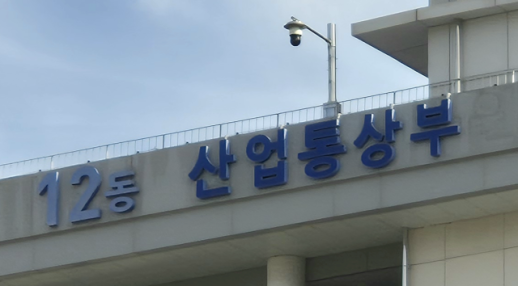 Kim Jeong-ho Receives Gold Tower Industrial Medal for Contributions to Infrastructure Expansion Last year, engineering contract performance reached an all-time high, prompting the government to honor individuals who contributed to strengthening engineering competitiveness. On June 10, the Ministry of Trade, Industry and Energy held the "2026 Engineering Day Ceremony" in Seoul's Dragon City in collaboration with the Korea Engineering Association. This year's event marked the 23rd anniversary and was themed "Engineering that Turns Imagination into Reality and Designs Everyday Life." The government awarded 40 individuals with government honors and ministerial commendations for their contributions to national industrial development and enhancing the competitiveness of the engineering sector. The highest honor, the Gold Tower Industrial Medal, was awarded to Kim Jeong-ho, CEO of Dasan Consultants, for his efforts in expanding world-class road and bridge infrastructure using domestic technology, thereby contributing to national economic development. Kim Seong-man, CEO of Mun Engineering, received the Silver Tower Industrial Medal for his contributions to building domestic information and communication infrastructure over the past five decades. Additionally, five presidential citations, four prime ministerial citations, and 29 ministerial and agency citations were presented. Last year's engineering contract performance reached 13.1 trillion won, the highest ever recorded. This increase is attributed to the expansion of large-scale infrastructure projects, including nuclear power, railways, and roads, as well as a rise in overseas project contracts, particularly in the Middle East and Southeast Asia. However, the global engineering market is rapidly shifting from traditional design services to digital twin, AI-based design, and smart construction. In response, the government plans to focus on three key initiatives: strengthening AI-based technological capabilities, diversifying overseas markets and supporting global expansion, and establishing a regulatory framework to secure industrial competitiveness. A ministry official stated, "To enable our companies to leap forward as global leaders in the steadily growing global market, securing competitiveness is of utmost urgency. We will realize K-engineering as a strong nation through AX technology innovation and enhancing global competitiveness."* This article has been translated by AI. 2026-06-10 06:03:00
 -
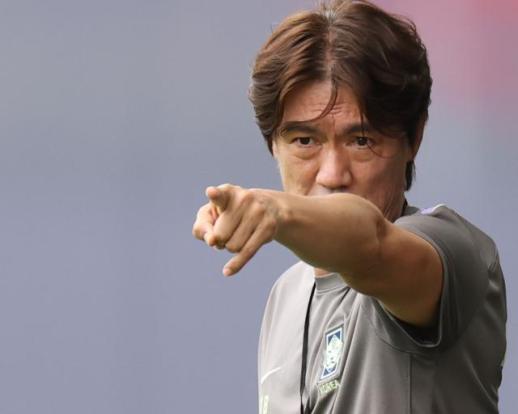 South Korea's World Cup Fate Rides on Opening Match Against Czech Republic Hong Myung-bo's South Korean squad is gearing up for their opening match against the Czech Republic at the 2026 FIFA World Cup, with experts emphasizing the significance of this first game. The South Korean team, ranked 25th by FIFA, will face the 39th-ranked Czech Republic on June 12 at 11 AM KST at Guadalajara Stadium. Following this match, they will play Mexico (14th) on June 19 and South Africa (60th) on June 25, both at the same venue. ◆Victory in First Match Could Lead to Success; Loss May Spell Trouble While the top three teams in the group can advance to the knockout stage, the first match remains crucial for gaining an advantageous position. Historical data supports this, as South Korea has secured points in all three previous World Cups where they advanced past the group stage (2002, 2010, and 2022). Even in 2006, despite failing to progress, they finished with four points after winning their opening match. Conversely, in the five tournaments where they lost their first match, they were eliminated from the group stage. Experts agree that winning the first match is essential for strategic planning in the subsequent games. KBSN commentator Kim Dae-gil stated on June 8, "We need to give everything in the first game. A result of at least a draw against the Czech Republic is necessary to execute our plans for the matches against Mexico and South Africa." KBS commentator Park Chan-ha echoed this sentiment, noting, "The outcome of the first group match will set the tone for the team's morale, impacting the games against Mexico and South Africa. The group draw is relatively favorable, and we have several advantages over the Czech Republic in terms of conditions. We must secure a positive result against them." ◆Czech Republic's Physicality and Height Pose Challenges The Czech Republic, a football powerhouse from Eastern Europe, has a rich history, having reached the finals in 1934 and 1962 and the quarterfinals in 1938 and 1990. However, since the split from Slovakia, their stature has diminished, with their only World Cup appearance since being in 2006. Their qualification journey was arduous, defeating Ireland in a penalty shootout in the semifinals and Denmark in the finals to secure a spot in the tournament after 20 years. The Czech team is known for its strong physical presence, with an average height exceeding 185 cm, making them formidable during set pieces and crosses. Their straightforward yet effective style includes sharp crosses and winning second balls, with tall forwards like Patrik Schick (191 cm) and Tomáš Holeš (199 cm) posing significant threats. Coach Hong is wary of these strengths. On June 6, ahead of a local adaptation training session, he remarked, "The Czech Republic is a team with distinct characteristics that are not easy to counter. Their physical advantages were evident in the recent match against Guatemala. We need to pay close attention to their strengths in set pieces and crosses, and overcoming the height difference will be crucial." Experts also highlight the Czech Republic's height as a primary concern. Kim noted, "The Czech team excels in set pieces like corner kicks and free kicks. In these situations, even their tall defenders join the attack aggressively. If we allow easy crosses from the flanks, our central defenders will struggle to cope. It's essential to apply pressure to prevent those initial crosses from coming in." Park added, "The Czech Republic's strength is that even when we know it, we may still fall victim to it. Ultimately, our offense will be key. The Czech team is likely to play conservatively, which could lead to increased possession for South Korea. The challenge will be how effectively we can disrupt their relatively slow defense during our attacks." ◆Adaptation to High Altitude and Humid Climate Favors South Korea South Korea is expected to have an advantage in environmental adaptation. Guadalajara Stadium is situated at an altitude of 1,571 meters, where the lower air density can lead to quicker fatigue and slower recovery. Adapting to high altitude is essential, and South Korea has completed this training during a three-week pre-camp in Salt Lake City, Utah. In contrast, the Czech Republic, having joined the tournament late after a challenging European playoff, has been training in Mansfield, Texas, and has not had the opportunity for high-altitude acclimatization. They plan to arrive in Guadalajara just the day before the match to minimize the effects of high altitude. Kim noted, "Czech players who have not adapted to the altitude will likely experience a significant drop in stamina during the second half. South Korea must capitalize on this fatigue and push hard in the second half, which could be a crucial key to victory." Additionally, the hot and humid climate of Guadalajara is seen as a positive factor for South Korea. The forecast for match day indicates over a 60% chance of rain. Park commented, "European players are particularly vulnerable to humid conditions, making this a very favorable situation for South Korea."* This article has been translated by AI. 2026-06-10 06:03:00