


Latest by
-
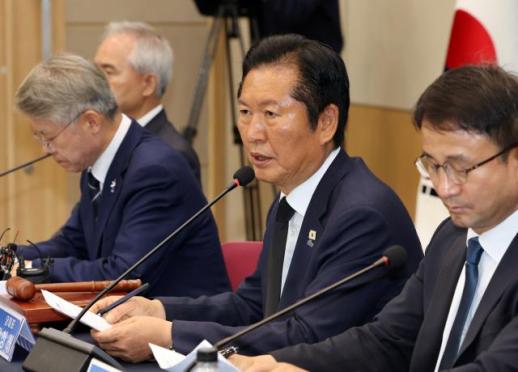 Rift Reignites in Democratic Party After National Convention Date Set The Democratic Party has decided to hold its national convention on August 17 in Daejeon, reigniting internal conflicts within the party. Some lawmakers are targeting leader Jeong Cheong-rae, pressuring him to ensure the next party leader can lead the success of the Lee Jae-myung administration, especially following the party's loss in the Seoul mayoral election during the June 3 local elections. On the same day the convention date was confirmed, several Democratic lawmakers voiced their concerns about Jeong's potential candidacy. Lawmaker Jo Gye-won criticized Jeong on Facebook, stating, "Jeong has not only failed to resolve internal conflicts but has also lost elections that should have been won. It is a painful situation where even the re-election of the government is uncertain. Despite this, he is fixated on challenging for the party leadership again." Jo further urged Jeong to stop using divisive language within the party, suggesting he should openly declare, "I have different views from President Lee Jae-myung, so I will align with the party's core values," to clarify his stance. Lawmaker Kim Yong-min echoed these sentiments, stating, "There is a growing sense of crisis due to division and conflict. The role of the party leader is crucial during such times." He added that the new leader must swiftly achieve complete conflict resolution, social reform, and political reform to unify the party and ensure the success of the Lee Jae-myung administration. Lawmaker Lee Geon-tae questioned the current leadership's focus, asking, "Is the leadership concentrating on party competition rather than evaluating and reflecting on the election? Does Jeong believe that discussing the one-person, one-vote system and supplementary investigative powers will help his re-election?" He called for the current leadership to step down, stating, "It is neither fair nor sensible for the current leadership, which should be evaluating the election, to manage the upcoming national convention." In response, Supreme Council member Park Gyu-hwan remarked, "They are trying to turn this election defeat into a scapegoat for accountability. The government and the ruling party are one body. If the party leader should resign, shouldn't the entire cabinet resign as well?" Park also criticized the pressure on Jeong to resign for the sake of a fair election, stating, "Is it appropriate to demand resignation from a party leader who has not even expressed intent to run for re-election? As President Yoon said, we must uphold our principles."* This article has been translated by AI. 2026-06-14 16:06:00
 -
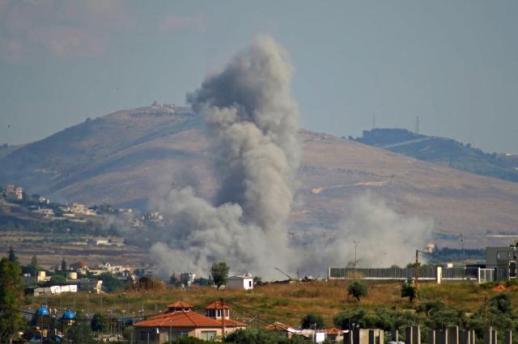 Israel Expands Airstrikes in Lebanon Targeting Hezbollah Amid U.S.-Iran Ceasefire Talks Amid speculation that a U.S.-Iran memorandum of understanding (MOU) could include a ceasefire on the Lebanon front, Israel has continued its airstrikes targeting Hezbollah in southern Lebanon. On June 13, local time, the Israeli military issued evacuation orders to residents of 20 villages in southern Lebanon before launching a large-scale airstrike against the Iran-aligned militant group Hezbollah. The airstrikes resulted in casualties, including the mayor of the southern Lebanese town of Alihan. Lebanon's National News Agency (NNA) reported that Israeli forces attacked several areas, including Tyre, Jezzine, and Nabatiyeh, with churches also being targeted. The Israeli military stated it struck over 70 Hezbollah facilities in southern Lebanon within the past 24 hours. In response, Hezbollah claimed to have attacked 19 Israeli military outposts, indicating ongoing clashes between the two sides. These hostilities come as the U.S. and Iran are engaged in discussions about a ceasefire MOU that may encompass the Lebanon front. Iran has maintained that any agreement with the U.S. must include a ceasefire in Lebanon. Abbas Araghchi, Iran's foreign minister, emphasized in a recent state TV interview that the unsigned MOU would address solutions for all fronts, including the Lebanon conflict. However, Israel has made it clear that it will not back down. Israeli Defense Minister Yoav Gallant stated that the country would not withdraw from occupied territories in Lebanon, asserting that the Israeli military would respond to both immediate and distant threats.* This article has been translated by AI. 2026-06-14 16:03:00
 -
 Jamsil elections protest swells as Seoul election authorities face probe SEOUL, June 14 (AJP) -Protests demanding a rerun of South Korea's June 3 local elections swelled back to hundreds over the weekend as investigators moved closer to questioning election officials over the ballot paper shortage scandal that has triggered the country's biggest election-related demonstrations in years. The demonstrations around Seoul's Olympic Handball Gymnasium in Jamsil, which served as a vote-counting center, entered their 10th day Sunday, with police increasingly preparing for a prolonged standoff rather than a quick resolution. According to unofficial police estimates, around 600 protesters remained at the site as of 10 a.m. Sunday. Attendance had peaked at roughly 19,000 people on Saturday evening, after thinning during weekday working hours. The protests began after ballot paper shortages disrupted voting at 26 polling stations, primarily in Seoul, during the June 3 local elections. National flags lined the protest area, while a growing number of demonstrators erected tents and makeshift shelters around entrances to the Olympic Park complex. One notable feature of the latest weekend rallies has been the return of younger participants in their 20s and 30s, some of whom insist the issue transcends traditional ideological divisions. "This is not a matter of left versus right," read signs carried by some protesters, reflecting an effort to broaden the movement beyond conventional conservative circles. The absence of a formal organizer has complicated the authorities' response. Unlike an earlier three-day blockade of a polling station in Jamsil, the current demonstration site is located away from residential neighborhoods, generating relatively few noise complaints. With vote counting already completed, police also have limited legal grounds to restrict the gatherings on election administration grounds. Police said peaceful demonstrations would be allowed to continue while individual illegal acts would be handled separately as authorities predict the protests won't likely end quickly. The next flashpoint could come Monday when sports organizations affected by the blockade of the handball arena plan to hold a press conference demanding access to the facility. Some groups are expected to attempt entry with police assistance. Authorities are also investigating allegations that protesters searched the belongings of youth national handball players and assaulted a television journalist covering the demonstrations. Meanwhile, a joint team of prosecutors and police is preparing to launch formal questioning of election officials after completing a search of National Election Commission (NEC) servers. According to legal sources, investigators finished analyzing and securing data from NEC servers on Saturday, including internal messaging records and approval documents related to ballot production decisions. The investigation centers on how the commission reduced ballot printing volumes to 50 percent of the expected voter base and whether warning signs were ignored before shortages emerged at polling stations. Investigators are expected to first summon working-level officials from election offices in Songpa, Seocho, Gangnam, Gwangjin and Dongjak districts, where shortages were most severe, before moving up the chain of command. Former NEC Chairman Roh Tae-ak, who resigned after publicly apologizing for the crisis, is expected to face questioning at a later stage. The joint task force is examining whether election officials improperly exercised authority or failed to fulfill their duties during the planning and response process. Search warrants executed earlier this week cited suspected violations of the Public Official Election Act, dereliction of duty and breach of trust. Investigators are particularly focused on whether internal objections were raised during decision-making and whether senior officials influenced the reduction in ballot printing despite foreseeable risks. The probe is expected to intensify next week as prosecutors and police complete the transfer and analysis of seized materials and begin witness interviews. 2026-06-14 15:52:51
 -
 Australia Defeats Turkey 2-0 in World Cup Opener, First Group Stage Win in 20 Years Australia secured a solid victory over Turkey, showcasing strong defense and counterattacks in their opening match.On June 14, Australia defeated Turkey 2-0 in the first match of Group D at the 2026 FIFA North America World Cup, held at BC Place in Vancouver, British Columbia.With this win, Australia earned three points, placing them second in Group D behind the United States, which won 4-1 against Paraguay the previous day. Both teams have the same points, but Australia trails in goal difference. This marks Australia's first group stage win in a World Cup opener in 20 years, since the 2006 tournament in Germany.Conversely, Turkey, making its first World Cup appearance in 24 years, suffered a loss in their opening match. Despite recording 30 shots, with 8 on target, Turkey could not break through Australia's defense.From the start, Australia employed a 5-4-1 formation, keeping a low line to thwart Turkey's advances. Turkey created an early opportunity in the 7th minute when Arda Güler penetrated the penalty area and took a shot.Australia took the lead in the 27th minute. Goalkeeper Patrick Beach saved Güler's shot and quickly initiated a counterattack. Nestor Irankunda received a pass from Paul O'Conner and scored with a low, powerful right-footed shot from the left side of the penalty area.Turkey continued to press for an equalizer, with Abdulkadir Bardakcı's long-range shot hitting the post in the 30th minute after being saved by Beach. Güler's shot in the 42nd minute also missed the target.The second half saw little change in momentum. Turkey increased possession and continued to attack, but Australia maintained its two-line defense. In the 64th minute, Cameron Burgess cleared a ball with his head inside the penalty area, and in the 66th minute, Aiden O'Neill blocked Güler's shot with his body.Australia struck again in the 75th minute with a counterattack. Corner Metcalf capitalized on a midfield mistake by Turkey's Ismael Yuksek, advancing into the penalty area and scoring with a left-footed shot into the bottom right corner.Turkey sought to reduce the deficit with headers from Kerem Aktürkoğlu in the 77th minute and a long-range shot from Hakan Çalhanoğlu in the 85th minute, but both attempts were thwarted by Beach's saves. Ultimately, Turkey failed to score and left the match without any points.* This article has been translated by AI. 2026-06-14 15:51:00
 -
 Reinventing South Korea: The AI Revolution as a Last Golden Opportunity History does not offer the same opportunities to every nation. Some remain on the periphery for centuries, while others miss critical chances and decline. Conversely, some countries seize pivotal moments to rise to the center of world history. South Korea belongs to the latter group. After its liberation in 1945, South Korea emerged from the devastation of the Korean War in the 1950s, overcoming poverty through industrialization in the 1960s and 1970s. By the 1980s and 1990s, it had reached the threshold of developed nation status through democratization and globalization. Since the 2000s, South Korea has grown into a technology powerhouse, drawing global attention with its advancements in semiconductors and information and communication technology (ICT). Now, South Korea stands at another historical crossroads. The local elections have concluded, and the administration of Lee Jae-myung is preparing for its second term. A change in the Prime Minister is being pursued, and both ruling and opposition parties are discussing a reshuffle of their leadership structures. While political changes are underway, a more significant transformation is occurring on the global stage. The United States and China are betting their national futures on the competition for artificial intelligence (AI) supremacy. The AI revolution, led by companies like NVIDIA, is shaking up industrial structures, with semiconductors, data centers, and power grids becoming new benchmarks for national competitiveness. Low birth rates and an aging population are straining economic and welfare systems, while the global order is undergoing massive changes characterized by supply chain restructuring and technological blockades. South Korea is at the center of the most significant structural changes since its industrialization. The world is currently experiencing the most significant civilizational shift since the Industrial Revolution. AI is not merely a new technology; it represents a new industrial order and a new operating system for civilization. Just as the steam engine sparked the Industrial Revolution, electricity ushered in the mass production era, and the internet led to the information revolution, AI is reshaping intellectual labor and the very fabric of societal governance. The criteria for national competitiveness are also changing. In the past, territory, population, and resources were paramount. Later, manufacturing, finance, and information technology defined national strength. Now, AI, data, semiconductors, energy, and the talent to utilize these resources will determine a nation's future. This shift presents both a crisis and an opportunity for South Korea. The essence of the AI revolution is the semiconductor revolution. Today, the global AI industry operates on NVIDIA's GPUs and the memory semiconductors produced by Samsung Electronics and SK Hynix. Notably, high-bandwidth memory (HBM), a critical component of AI servers, has emerged as a strategic asset that determines AI performance. If AI is the brain, memory is its memory; just as a brain cannot exist without memory, AI cannot function without it. South Korea is at the heart of the global memory semiconductor market. While the U.S. leads in AI platforms, it relies on South Korea for advanced memory technology. China is pushing for AI self-sufficiency but still faces limitations in the advanced memory sector. Europe is ahead in discussions on AI regulation and ethics but lacks production capacity. Thus, South Korea occupies a central position in the key supply chains of the AI era. The recent rise in the KOSPI index is no coincidence. Global capital is beginning to reassess Samsung Electronics and SK Hynix not merely as semiconductor companies but as essential infrastructure firms for the AI era. The term 'Korea Discount' was once common, but the global market is now recognizing South Korea's strategic value. However, it is crucial not to fall into the trap of thinking that semiconductors alone will secure the future. AI data centers consume vast amounts of electricity. As the AI industry grows, the importance of power grids and the energy sector will only increase. Robotics, autonomous driving, biotechnology, defense, smart cities, and manufacturing innovations will ultimately operate within the AI ecosystem. South Korea must transition from a semiconductor powerhouse to an AI powerhouse, and from an AI powerhouse to a physical AI powerhouse. It should lead the manufacturing sector's AI transformation by combining its world-class manufacturing competitiveness with AI. This will be a central task for South Korea's industrial strategy over the next decade. The industrial landscape must be reshaped. The same applies to politics. The essence of politics is not power; power is merely a means for the people. Following the local elections, both ruling and opposition parties face demands for change. Both the victorious and the defeated have heard the public's warning. Citizens desire solutions to problems rather than political strife and seek governance capabilities over partisan logic. What South Korean politics must do is not to undermine opponents but to design the nation's future. National competitiveness in the AI era cannot be built solely by businesses; government, the National Assembly, and local governments must work together. The political landscape must be restructured. Education is an even more fundamental issue. South Korea has grown through the power of education. Its world-class educational fervor has been a driving force behind industrialization, democratization, and informatization. However, success formulas are not eternal. The education system has produced individuals who can quickly find answers, but AI can find answers much faster than humans. Generative AI can summarize papers, write code, and analyze complex documents. Competitiveness in the AI era lies not in finding answers but in the ability to define problems, design new solutions, and possess insights and creativity unique to humans. Education must shift from answer-oriented to solution-oriented, from rote memorization to creative thinking, and from competition-based to problem-solving-focused. Educational reform in the AI era is not a choice but a matter of survival. The educational landscape must be redefined. The demographic issue is even more urgent. South Korea is becoming the fastest-aging country in the world. While the total fertility rate has rebounded, it remains among the lowest globally. Japan experienced low birth rates and aging before South Korea and invested vast budgets for decades but did not achieve the expected results. The lesson from Japan's experience is clear: birth rates respond to living conditions. The reasons young people delay marriage and childbirth are not solely financial; they also include job availability, housing, education costs, and labor conditions. In a country where young people cannot envision a future, a rebound in birth rates is unlikely. What is needed now is not just pro-natalist policies but a societal structure that allows youth to have hope. The issue of population decline is related; administrative, educational, and welfare systems designed for a growing population must be restructured to fit a declining one. The demographic landscape must be reshaped. Energy is also a critical variable that will determine the nation's future. AI data centers and semiconductor factories consume enormous amounts of electricity. To become an AI powerhouse, South Korea must also become an energy powerhouse. A long-term national energy strategy must be redesigned to include nuclear power, renewable energy, transmission and distribution networks, and energy storage systems. AI cannot exist without energy. Ultimately, South Korea faces a singular challenge: to reshape the industrial landscape, political landscape, educational landscape, demographic landscape, and energy landscape. This is not merely a matter of policy adjustment; it requires a comprehensive redesign of the national system. The true challenge for the second term of the Lee Jae-myung administration and the new Prime Minister's regime lies here. A country that allows policies to waver with each change of administration and alters its national vision with each change of ministry cannot lead in the AI era. What is needed now is not a five-year national agenda but a grand national strategy that looks ahead 20, 30, or even 50 years. Industrialization saved South Korea from poverty, and democratization transformed it into a developed nation. Now, the national transformation in the AI era is becoming a task that will determine the next century for South Korea. History does not grant opportunities to every nation. However, South Korea is facing yet another chance. The next five years will not merely determine the success or failure of any administration; they will shape the nation's destiny for the next 50 years. What is needed now is not political strife but design. It is time to reshape South Korea's future.* This article has been translated by AI. 2026-06-14 15:48:00
 -
 Samsung Electronics Preferred Shares Trade at 36% Discount Amid Market Rally While the stock market is reaching new highs, preferred shares are lagging behind. Major stocks like Samsung Electronics, Hyundai Motor, and LG Electronics are performing well amid a surge in artificial intelligence (AI) and robotics, but the preferred shares of these companies are not keeping pace. As demand for common shares increases, the gap between Samsung Electronics' common and preferred shares has widened to its highest level in five years. According to the Korea Exchange, as of June 12, Samsung Electronics' common shares closed at 322,500 won, while its preferred shares were at 207,000 won, resulting in a discount of 35.8% for the preferred shares. Although preferred shares do not carry voting rights, they have priority over common shares in terms of dividends. Typically, they trade at lower prices than common shares, with the discount determined by dividend appeal and liquidity. The price gap between Samsung's common and preferred shares has rapidly increased in recent years. The gap was 8.3% on June 11, 2021, and has steadily grown to 14.2% in mid-June 2023, 17.4% in 2024, and 18.5% in 2025. This year, the gap has soared to 35.8%, marking the highest level in five years. The prolonged discount on preferred shares, combined with the recent AI rally, has intensified the widening gap as investors focus on common shares. In the past month (from May 12 to June 12), individual investors purchased a net 17.1 trillion won worth of Samsung Electronics' common shares, compared to only 505.6 billion won in preferred shares. The net purchase of common shares was approximately 34 times greater than that of preferred shares, further increasing the price disparity between the two. Additionally, Samsung Electronics, as the top company by market capitalization on the KOSPI, is heavily included in major indices and exchange-traded funds (ETFs), attracting significant passive investment. In contrast, preferred shares have relatively limited trading volume and index inclusion. This trend is not unique to Samsung Electronics. As of June 12, the gap between LG Electronics' common and preferred shares reached 65.1%. Hyundai Motor's preferred shares showed discounts of 60.2% and 60.3% for its first and second preferred shares, respectively, while its third preferred shares had a discount of 61.6%. Analysts suggest that during market uptrends, investor funds tend to concentrate on common shares, leading to broader discounts across large preferred stocks. Market analysts identify shareholder return policies as a key factor in narrowing the discount gap. This year, the focus is on the scale of free cash flow (FCF), share buybacks, and the return ratio between common and preferred shares. Investors are keenly observing how Samsung Electronics' shareholder return policies may evolve and whether they can reduce the historically high discount on preferred shares. Kim Sun-woo, a researcher at Meritz Securities, predicts that Samsung Electronics' shareholder return plan for 2024 to 2026 will become clearer around November this year. He added, "With improvements in the memory market expected to significantly enhance cash generation capabilities, an increase in shareholder returns and the specification of policies could lead to a reevaluation of stock prices."* This article has been translated by AI. 2026-06-14 15:48:00
 -
 Hyundai and GS Construction Lead Urban Redevelopment Bids in First Half of 2026 The competitive landscape for urban redevelopment contracts in the first half of 2026 has shifted, with Hyundai Construction and GS Construction emerging as the frontrunners. Last year, Hyundai Construction and Samsung C&T led the market with contract values between 9 trillion and 10 trillion won, but this year, both Hyundai and GS have recorded contract amounts in the 7 trillion won range, establishing a strong lead. According to industry reports compiled on June 14, the cumulative contract amounts for urban redevelopment projects this year stand at 7.6946 trillion won for Hyundai Construction and 7.4694 trillion won for GS Construction. Together, their total contracts amount to 15.164 trillion won. Samsung C&T follows with 3.9018 trillion won, while Daewoo Construction and Lotte Construction have each secured over 1 trillion won in contracts. Hyundai Construction has rapidly surpassed the 7 trillion won mark by securing several large projects in the Apgujeong area. Last month, it won the construction rights for the redevelopment of Apgujeong District 3 and District 5. The Apgujeong District 3 project has a construction cost of 5.561 trillion won, while Hyundai's share of the Apgujeong District 5 project, which has a total construction cost of 1.496 trillion won, amounts to 1.0472 trillion won. GS Construction has also led the market in the first half by winning contracts for projects including Songpa Hanyang 2nd, Gaepo Woosung 6th, Seongsu Strategic Redevelopment Zone 1, Seocho Jinheung Apartments, Yongin Suji Samsung 4th, and Gunpo Geumjeong 4th. Additionally, GS Construction was selected as the new contractor for the redevelopment of Seongnam Sangdaewon District 2 during a recent assembly meeting, which has been included in the industry’s contract totals. However, the Seongnam Sangdaewon District 2 project faces legal disputes. DL E&C has received a court ruling to suspend the effect of the assembly's decision to terminate the contract, and following the assembly's approval of the contract termination and selection of GS Construction, DL E&C has indicated plans for legal action. The construction cost of 1.9217 trillion won for the Sangdaewon District 2 project may change depending on the outcome of the ongoing litigation. Samsung C&T ranks third with a contract amount of 3.9018 trillion won. It has secured contracts for the redevelopment of Daechi Sangyong 1st, Apgujeong District 4, and the integrated redevelopment of Sinbanpo 19 and 25, as well as Bangbae Sin Samho. The construction costs for these projects are approximately 689.2 billion won for Daechi Sangyong 1st, 2.1154 trillion won for Apgujeong District 4, 443.4 billion won for Sinbanpo 19 and 25, and 653.8 billion won for Bangbae Sin Samho. Daewoo Construction recorded 2.9153 trillion won, while Lotte Construction reported 1.5049 trillion won. Posco E&C achieved 647.7 billion won, and SK Eco Plant secured 204.8 billion won. In contrast, DL E&C, IPARK Hyundai Development, and Hyundai Engineering have reported no new contract awards as of this date. DL E&C lost the bid for Apgujeong District 5 to Hyundai Construction and is currently embroiled in disputes over the contractor change for Sangdaewon District 2. There are still variables to consider as the first half of the year comes to a close. Samsung C&T is set to hold a meeting on June 20 to select a contractor for the redevelopment of Gaepo Woosung 4th, with an estimated construction cost of 814.54 billion won. If approved, Samsung C&T's total contract amount for urban redevelopment projects this year could rise to 4.7 trillion won. DL E&C is also aiming for its first urban redevelopment contract of the year at the contractor selection meeting for Mokdong District 6 on June 27. DL E&C has secured the status of the sole preferred bidder for this project, which has a projected cost of 1.2129 trillion won. Industry analysts suggest that the polarization of contract awards in the first half of the year reflects a structural change in the redevelopment market, beyond mere performance gaps. As construction costs rise and financial burdens increase, companies are increasingly focusing on selecting key projects that offer better profitability and brand impact rather than pursuing aggressive expansion. Lee Tae-hee, a researcher at the Korea Construction Industry Institute, stated, "While large construction firms actively participate in projects with proven profitability, such as those in Apgujeong and Seongsu, interest in areas with relatively lower profitability is waning. The preference for brand recognition among assembly members is further intensifying the concentration of contract awards." 2026-06-14 15:45:00
 -
 Construction Firms Shift Focus to Seongsu, Yeouido, and Mokdong After Apgujeong As the bidding war for redevelopment in Apgujeong concludes, construction companies are now turning their attention to Seongsu, Yeouido, and Mokdong. The second half of the year is expected to see a resurgence in competition as large-scale projects worth between 1 trillion and 2 trillion won begin the contractor selection process. According to the redevelopment industry on June 14, the Seongsu Strategic Redevelopment Zone is anticipated to be the primary battleground in the upcoming bidding wars. The Seongsu 2, 3, and 4 districts are moving forward with contractor selection, establishing themselves as key players in Seoul's redevelopment market following Apgujeong. The first area where competition is becoming evident is Seongsu 4 District. This project, valued at 1.3628 trillion won, has Daewoo Engineering & Construction and Lotte Engineering & Construction vying for the construction rights. Initially, a general meeting was scheduled for June 27, but disputes over bid proposals and promotional regulations may push this date to July. Daewoo has claimed that some of Lotte's proposals may violate bidding guidelines and has refused to sign the comparison table, reportedly seeking administrative guidance from the Seongdong District Office and the city of Seoul. The Seongdong District Office has also expressed concerns about potential misunderstandings regarding Lotte's proposal to guarantee a minimum relocation fee of 2 billion won. The final decision will rest with the association's delegate council. Seongsu 2 and 3 districts also present variables. Seongsu 2 District, with an estimated construction cost of about 1.7846 trillion won, is critical for resuming the contractor selection process, while Seongsu 3 District is seeing interest from major firms like Samsung C&T. However, construction companies are tightening their selective bidding strategies, making the actual bidding landscape fluid. In Yeouido, the bidding for riverfront redevelopment is gaining momentum. The Shimbun Apartments and Mokhwa Apartments have recently entered the contractor selection phase. The Shimbun Apartments are set to be a 59-story complex with 2,491 units, while Mokhwa Apartments will feature 49 stories and 416 units. The anticipated construction costs are approximately 11.5 million won and 13.7 million won per square meter, respectively. Yeouido, along with Apgujeong and Seongsu, is considered one of the premier redevelopment sites along the Han River. The combination of expectations for high-rise redevelopment and the symbolic significance of the location is likely to continue attracting interest from major construction firms. In addition to Shimbun and Mokhwa, smaller redevelopment projects like Hwarang are also gaining speed. The Mokdong New Town redevelopment represents another significant aspect of the second-half market. This area consists of 14 complexes, with the total project size estimated at around 30 trillion won. The bidding process is expected to begin with District 6, followed by District 7 and other complexes being pursued through a trust method. Hyundai Engineering & Construction, GS Engineering & Construction, Daewoo Engineering & Construction, and Lotte Engineering & Construction are establishing brand lounges and promotional spaces in the Mokdong area to enhance engagement with association members. Given the varying speeds of projects and conditions among the complexes, a dual strategy focusing on specific complexes and long-term planning is anticipated. Beyond Seongsu, Yeouido, and Mokdong, the Yongsan Seobinggo Shin Dong-A and Jamsil Rose 1, 2, and 3 projects are also attracting the attention of major construction firms. These projects are significant due to their location along the Han River and their scale, making them key variables in future bidding wars. The core of the second-half bidding will be selective bidding. Major construction firms are evaluating not only the size of the projects but also their profitability, brand impact, association conditions, and financial burdens. While Seongsu, Yeouido, and Mokdong have strong location competitiveness, the substantial construction and relocation costs mean that the actual competitive landscape may vary significantly by project. An industry insider stated, "While Apgujeong was the focal point of the redevelopment bidding in the first half, Seongsu, Yeouido, and Mokdong are expected to lead the market in the second half. However, as construction and financial burdens increase, major firms are likely to strengthen their selective bidding strategies, focusing on profitability and symbolic significance rather than participating in every project."* This article has been translated by AI. 2026-06-14 15:45:00
 -
 Joint Investigation Team to Launch This Week Amid Voting Paper Shortage Crisis The joint investigation team, led by Kim Tae-hoon, deputy chief prosecutor at the Seoul Central District Prosecutors' Office, has entered a critical phase of its inquiry into the unprecedented voting paper shortage that occurred during the June 3 local elections. The team has secured key evidence and is ramping up its enforcement actions. According to legal sources on June 14, the investigation team established its office at the Seoul Central District Prosecutors' Office on June 9 and plans to complete staffing, data transfers, and administrative groundwork by midweek. The team has completed searches at seven locations, including the Central Election Management Commission and local election offices in Seoul's Gangnam, Seocho, Songpa, Gwangjin, and Dongjak districts, over a three-day period starting June 11. Notably, the search of the Central Election Management Commission's server, which contains large volumes of electronic data, continued into the weekend as investigators meticulously reviewed internal messenger conversations, approval records, voting paper printing plans, and budgets. The police team assigned to the investigation has also been fully organized and is currently classifying and transferring seized materials at the Seoul Metropolitan Police Agency's Special Investigation Unit. It is reported that the team is analyzing the seized items over the weekend while gradually transferring relevant materials to the prosecutors. Once the transfer of investigative materials is complete, the team plans to summon key officials from the Election Commission as witnesses for questioning. Initially, the team is expected to call in staff from the election offices in the affected Gangnam districts and Gwangjin and Dongjak by the end of this week. The investigation will reconstruct the chaos and response on election day before summoning high-ranking officials, including former Election Commission Chairman Noh Tae-ak and former Secretary General Heo Cheol-hoon, to trace the decision-making process. On June 12, the investigation team imposed travel bans on 14 key individuals responsible for the crisis, including Noh and Heo. Preliminary investigations have also been conducted with citizens who were unable to vote, election officials, and whistleblowers. The success of this investigation hinges on proving the intent of Election Commission officials. The search warrants cite violations of the Public Official Election Act (prohibiting election interference by public officials and obstructing the freedom of elections), dereliction of duty, and allegations of embezzlement and breach of trust. However, under Supreme Court precedents, simple administrative errors or negligence do not warrant criminal penalties. Dereliction of duty charges are also difficult to prove unless it can be shown that an individual knowingly failed to perform their duties. Consequently, the investigation team will focus on analyzing seized materials and questioning related individuals to track the decision-making processes within the Election Commission and identify the causes of the voting paper shortage. This crisis arose on June 3, the day of the 9th nationwide local elections, when some polling stations ran out of voting papers. The investigation team confirmed that the Election Commission printed fewer ballots than the number of voters and lacked operational procedures or guidelines to address the shortage. In response to the crisis, both Noh and Heo resigned, and the Election Commission issued a public apology. Acting Chairman Wi Cheol-hwan stated on June 11 that the decision to set a minimum printing ratio of 50% for ballots was based on an increase in leftover ballots from the previous election and difficulties in inspecting and storing ballots. Despite this explanation, political parties, including President Lee Jae-myung, have strongly criticized the Election Commission, and protests denouncing the agency have continued at the Olympic Park Handball Stadium in Songpa, which served as a counting center.* This article has been translated by AI. 2026-06-14 15:45:00
 -
 Jamsil Ballot Counting Center Protest Enters Tenth Day Amid Calls for Reelection The protest at the Jamsil ballot counting center, triggered by a shortage of ballots for the June 3 local elections, entered its tenth day on June 14. With an increase in family participants, the turnout was notably higher than on weekdays. At the entrance of the Jamsil counting center, citizens expressed diverse demands, including calls for the restoration of voting rights and international cooperation in investigations. On the afternoon of June 14, a visit by Aju Economy to the area in front of the Olympic Park handball stadium noted a significant crowd compared to weekdays. According to real-time urban data from Seoul, the population in Olympic Park reached up to 16,000 at 2 p.m. Among the participants, those in their 30s made up 22.9%, indicating that families and young people in their 20s and 30s, who typically find it hard to join protests during the week due to work or studies, were present. Despite temperatures nearing 30 degrees Celsius, participants continued to protest in their own ways. Volunteers distributed sunscreen, water, and insect repellent to encourage participation. A couple visiting with their child attached a South Korean flag to their stroller for a photo opportunity, while family groups sought shade under trees, waving flags. Unlike the previous weekend's chants for a “reelection,” participants on this day shouted for “fraud-free elections, reelections, same-day voting, and manual counting.” The gathering at the Jamsil counting center featured a mix of voices. Some participants called for the restoration of voting rights. A young man encountered while making signs stated, “Without elections, democracy is over,” emphasizing the need for voting rights. A man in his 40s pointed out the ballot shortage issue, insisting it must be resolved solely for the benefit of the people. Some citizens, holding umbrellas adorned with both South Korean and U.S. flags, protested against election fraud. They carried signs demanding “U.S.-Korea joint international investigation,” “Down with the Chinese Communist Party (CCP),” and “Eliminate communism.” A tour bus parked nearby operated under the guise of a “cooling shelter for voters,” but it also displayed messages like “We stand with you from America.” Meanwhile, police have assessed that dispersing the protest in the short term is unfeasible and are preparing for a prolonged situation. They stated they would ensure peaceful protests while strictly addressing any illegal activities. Police warned that continued acts of insult or obstruction could lead to criminal charges. Investigations are also underway regarding incidents involving the youth handball team and assaults on journalists. Sports organizations based at the handball stadium have expressed distress over the blockade of the Jamsil counting center. They attempted negotiations with protesters to access their offices, but talks broke down, disrupting their operations. Fencing, in particular, is facing challenges as it approaches the Asian Championships this week. Yoo Seung-min, president of the Korean Sports Council, along with the federation and nine member sports organizations, plans to hold a press conference on June 15 to discuss the impact and the need for normalizing operations.* This article has been translated by AI. 2026-06-14 15:39:00