
Journalist

HAN Joon ho
-
 SK Biopharm Q1 Operating Profit Jumps to 89.8 Billion Won on Cenobamate U.S. Growth SK Biopharm posted its strongest results on record, driven by accelerating U.S. growth of its epilepsy drug cenobamate, sold in the United States as Xcopri. The company said in a regulatory filing on 7 that its first-quarter operating profit on a consolidated basis totaled 89.8 billion won, up 249.7% from a year earlier. Revenue rose 57.8% to 227.9 billion won. A company official said the quarter was notable because operating profit came in close to 90 billion won even as research and development and marketing costs increased from a year earlier, marking an all-time high. The official added that a structure in which sustainable profit and cash flow generated by cenobamate are reinvested into R&D is taking hold, putting the company on what it described as a virtuous cycle. Net profit was 102.7 billion won, up 423.5%. U.S. cenobamate sales rose 48.4% to 197.7 billion won, supporting the overall gain. Prescription metrics also improved, the company said. In March, total monthly prescriptions (TRx) approached about 47,000, and new patient prescriptions (NBRx) topped 2,000 for the first time. For further growth, SK Biopharm said it submitted a New Drug Application to the U.S. Food and Drug Administration in March for an oral suspension formulation. It is also seeking to file within the year to expand indications to primary generalized tonic-clonic seizures (PGTC) and pediatric patients. The company is also pushing overseas expansion. In China, it began commercialization in March through partner company Ignis Therapeutics. In Japan, it said approval procedures are under way within the year.* This article has been translated by AI. 2026-05-07 10:36:18
 -
 Arm Says Demand for Its Data Center AI Chip Has Doubled, Challenging Nvidia’s Grip British chip designer Arm says demand for its in-house data center artificial intelligence chip is running ahead of expectations, accelerating its shift into selling finished chips. The move puts Arm into more direct competition in an AI chip market that has largely grown around Nvidia’s graphics processing units, as Arm pushes its own CPU-based product. The Financial Times and The Wall Street Journal reported that Arm said in an earnings release on 7일(현지시간) that combined demand for its self-developed data center chip, the “AGI CPU,” is projected at $2 billion for fiscal 2027 and 2028. That is double the $1 billion demand forecast Arm gave when it introduced the chip in March. Arm kept its revenue outlook for the chip at $1 billion, saying it has not yet secured enough supply to meet the full $2 billion in projected demand. On a conference call, Arm CEO Rene Haas said the $1 billion figure cited in March reflected “secured supply” that could support that level of demand. He said that includes access to memory, wafers, packaging and test equipment, and that the company is now working to line up supply to support $2 billion in demand. Haas added that the company is working around the clock “to find the right solutions for customers.” Arm expects revenue from the chip to begin showing up in the fourth quarter of its current fiscal year. Arm has long grown by licensing semiconductor design intellectual property to companies including Nvidia, Google and Amazon. By launching its first finished, in-house chip in its roughly 35-year history, Arm is also positioning itself as a competitor to some of its existing customers. The FT said that early in the AI boom, demand for CPUs was relatively limited as customers rushed to buy Nvidia GPUs to train AI models. More recently, it said, demand has risen for CPUs that support running AI applications, benefiting Arm as well as Intel and AMD. Haas said demand for the AGI CPU “exceeded expectations” and that Arm has established itself as a computing platform for the AI era. He also forecast that CPU demand will quadruple in the future. Arm said it expects supplying technology for AI data centers to become its biggest business over the long term. It maintained its target of reaching $15 billion in chip revenue by 2031. “The direction is clear,” Haas said, adding that customers want Arm “at the center of the data center.” The push also aligns with a strategy by Arm’s largest shareholder, SoftBank Chairman Masayoshi Son, to build an AI semiconductor supply chain. Son has promoted what he calls the “Izanagi Project” to foster an AI chip ecosystem that can take on Nvidia. Haas was appointed last month as CEO of SoftBank International Group, taking a central role in that strategy. Record revenue, but rising costs in focus Arm reported first-quarter revenue of $1.49 billion, up 20% from a year earlier and a record high. Adjusted earnings were 60 cents a share, above the market estimate of 58 cents. Royalty revenue rose 11% to $671 million on growth in smartphones and AI applications, though it fell short of some market expectations. License and other revenue climbed 29% to $819 million, beating expectations; the company attributed the increase to stronger demand for AI chip design and platforms. For the second quarter, Arm forecast revenue of $1.21 billion to $1.31 billion and adjusted earnings of 36 cents to 44 cents a share. The market expects revenue of $1.25 billion and adjusted earnings of 37 cents a share. Arm executives said costs tied to building out supply chains are likely to be a near-term burden. They said operating expenses are expected to rise sequentially by a few percentage points each quarter this year, but projected that by year’s end revenue growth will outpace expense growth. Arm shares have more than doubled so far this year on expectations for its new AI chip. After the earnings release, the stock fell in after-hours trading as concerns about supply constraints and rising costs drew attention.* This article has been translated by AI. 2026-05-07 10:34:52
 -
 Kakao posts record first-quarter earnings as AI fuels Korea's platform giants SEOUL, May 07 (AJP) - South Korea's platform giants are converting an artificial intelligence investment cycle into top-line momentum, with Kakao joining rival Naver in delivering AI-revved first-quarter earnings. According to regulatory filings on Thursday, Kakao's consolidated operating profit jumped around 65.9 percent from a year earlier to 211.4 billion won ($145.7 million) on an adjusted basis, while revenue climbed 11.1 percent to 1.94 trillion won — both first-quarter records. The figures reclassify Kakao Games as a discontinued operation following its planned divestiture. Platform revenue, the company's core engine, rose 16 percent to 1.18 trillion won. Talk Biz advertising sales advanced 16 percent to 338.4 billion won, helped by a 27 percent surge in business-messaging revenue as financial-sector advertisers ramped up spending and Kakao diversified its message products. Mobility and payments, grouped under "platform others," climbed 30 percent to 506.5 billion won. Kakao Mobility logged a third consecutive quarter of double-digit growth across taxi, parking and last-mile logistics, while Kakao Pay topped 300 billion won in quarterly revenue for the first time. "The first quarter was encouraging in that we achieved qualitative growth by reinforcing our fundamental competitiveness," Kakao CEO Chung Shin-a said, adding that Kakao would now pivot from a messenger used by 50 million Koreans into "an agentic AI platform." Shares of Kakao edged down 0.70 percent to 45,959 won as of 10:30 Thursday amid broad KOSPI profit-taking. The company, running a chat platform that most Koreans use, has been racing to embed generative AI across its services, including a high-profile tie-up with OpenAI to integrate ChatGPT-based features into KakaoTalk, alongside infrastructure and model partnerships aimed at accelerating its agentic AI roadmap. The tailwind echoes that of larger rival Naver, which reported earlier a 16.3 percent jump in first-quarter revenue to 3.24 trillion won and a 7.2 percent rise in operating profit to 541.8 billion won, as AI-integrated advertising and consumer-to-consumer commerce drove growth. Naver said AI now accounts for more than half of its advertising revenue growth through sharper targeting, while its global ventures arm — anchored by Spain's Wallapop, Poshmark and Kream — saw sales climb 18.4 percent. The company has also signed memorandums with AMD and Tata Consultancy Services to build out AI infrastructure and cloud services 2026-05-07 10:33:58
 -
 LG Uplus Q1 Operating Profit Rises 6.6% to 272.3 Billion Won on Subscriber Growth LG Uplus said revenue and operating profit rose in the first quarter, helped by subscriber growth and gains in its corporate infrastructure business. On May 7, the company reported first-quarter 2026 consolidated revenue of 3.8037 trillion won, up 1.5% from a year earlier. Service revenue rose 3.3% to 3.0370 trillion won, while handset revenue fell 5.2% to 766.9 billion won. Operating profit increased 6.6% to 272.3 billion won. Mobile revenue climbed 3.2% to 1.6526 trillion won on higher subscriber lines and stronger core telecom competitiveness. Mobile service revenue, excluding interconnection revenue, rose 3.7% to 1.5878 trillion won. Total mobile subscriber lines grew 6.4% from a year earlier to about 30.931 million, with a net increase of 220,000 lines during the quarter. MNO lines rose 7.1% to about 21.967 million, and MVNO lines increased 4.7% to about 8.964 million. 5G handset subscribers rose 11.0% to 9.473 million, lifting 5G penetration among handset subscribers to 84.2%. MNO service ARPU, excluding IoT and MVNO lines, edged up 0.3% to 35,646 won. Smart home revenue, which includes IPTV and internet, increased 4.1% to 656.3 billion won, supported by growth in gigabit internet subscribers. Internet revenue rose 7.9% to 320.0 billion won, and internet subscribers posted a net gain of 62,000 in the quarter to 5.64 million, up 4.5% from a year earlier. IPTV revenue increased 1.5% to 335.1 billion won, and IPTV subscribers rose 2.8% to 5.767 million. Corporate infrastructure revenue grew 6.3% to 435.6 billion won. AIDC revenue jumped 31.0% to 114.4 billion won on expanded colocation and DBO sales. Solution revenue slipped 0.8% to 117.9 billion won, and corporate line revenue fell 0.1% to 203.3 billion won. Voice revenue rose 1.1% to 84.5 billion won. Internet phone revenue fell 1.1% to 40.9 billion won, while corporate and international voice revenue increased 3.2% to 43.6 billion won. "LG Uplus aims to build a stable profit structure by making stronger profitability in its core telecom business a key task and systematically securing competitiveness in its AX business," said CFO and CRO Yeo Myeong-hee. "We will consistently pursue this strategic direction to accelerate mid- to long-term growth and continue to enhance corporate value," she said. LG Uplus said it will not pay a first-quarter dividend. The company said it will maintain its current dividend policy of paying twice a year, with interim and year-end dividends, instead of quarterly dividends. 2026-05-07 10:27:07
 -
 BTS gets state-visit red-carpet treatment in Mexico SEOUL, May 07 (AJP) - K-pop supergroup BTS appeared alongside Mexican President Claudia Sheinbaum at the presidential office in Mexico City on Thursday, drawing tens of thousands of fans ahead of the group's sold-out stadium concerts. Sheinbaum welcomed the seven-member band during her regular morning press briefing, known as "Mañanera," describing BTS as artists who "always convey messages of friendship, peace and love." The group is scheduled to perform at Estadio GNP Seguros on Thursday, Saturday, and Sunday, the third stop on the North American leg of their "ARIRANG" World Tour, following Tampa and El Paso. All three concerts were sold out immediately after tickets went on sale, local organizers said. The Mexico City Chamber of Commerce estimated the performances could generate approximately $107.5 million in economic activity. After Mexico City, the tour moves on to Stanford and Las Vegas before heading into Europe. BTS is also set to return to Latin America in October, with dates scheduled in Bogotá, Lima, Santiago, Buenos Aires and São Paulo. Member Jimin shared a brief video from the scene on his Instagram story, captioning it "Mexico, Gracias" with purple heart. BTS remains the most-streamed K-pop act in Mexico, which ranked as the world's fifth-largest K-pop streaming market, according to a report published by Spotify in August 2025. The group's 2020 album "MAP OF THE SOUL : 7" topped Mexico's most-streamed K-pop albums list, while "Dynamite" ranked as the country's most-streamed K-pop song. Eight of Mexico's top 10 most-streamed K-pop albums were BTS releases, Spotify said. On the global charts, BTS' latest title track "SWIM," from its fifth studio album "ARIRANG," ranked No. 2 on both Billboard's weekly Global Excl. U.S. and Global 200 charts for a sixth consecutive week as of May 4. 2026-05-07 10:23:41
 -
 Markets Rally on Hopes for U.S.-Iran Deal, but Key Gaps Remain Global financial markets have moved quickly on signs of progress in U.S.-Iran talks. Global oil prices fell nearly 7% in a day, and New York stocks set fresh record highs. South Korea’s Kospi also briefly topped 7,500 for the first time, and the won-dollar exchange rate returned to prewar levels. Investors are betting that Middle East risks could ease sooner than expected — a familiar burst of weekend optimism from the region. The United States and Iran are said to be discussing the possibility of signing a memorandum of understanding to end the war. Reported items on the table include limits on Iran’s uranium enrichment and a halt to operations at nuclear facilities, a phased easing of U.S. sanctions, and normalization of shipping through the Strait of Hormuz. U.S. President Donald Trump added to expectations by saying the chances of an agreement were “very high.” For markets, that suggests the worst-case scenario — a surge in oil prices and a shock to global supply chains — may be less likely. Still, the current rally appears to reflect optimism that may be running ahead of the negotiations. Markets have begun pricing in a “postwar” outlook, but the talks still face wide gaps on core issues. U.S. demands go beyond a simple ceasefire. They are described as including dismantling nuclear facilities such as Fordow and Natanz, removing enriched uranium, round-the-clock inspections by the International Atomic Energy Agency, and long-term limits on enrichment — steps that amount to a redesign of Iran’s nuclear program. Iran, however, is unlikely to accept such terms without parallel guarantees for regime security and sanctions relief. The Strait of Hormuz is also a high-stakes issue, combining sovereignty concerns with economic pressure, making a deal harder to reach. For that reason, the recent market response may be better understood as relief that escalation risks have eased, rather than confidence in a durable peace framework. The United States is pursuing talks while maintaining military pressure and a maritime blockade, and Iran has not withdrawn its claim to authority over transit controls. Tensions have not disappeared; they appear to have been temporarily lowered to a manageable level. The episode also carries broader implications for the international order. With the Strait of Hormuz — a key route for global oil shipments — effectively used as a geopolitical bargaining chip, vulnerabilities in energy security and the system of freedom of navigation have again been exposed. That is not only a Middle East issue. It increases volatility across global logistics and financial systems. The recent swings in oil prices, exchange rates and semiconductor stocks underscore how instability around the strait can ripple through the world economy. South Korea’s sensitivity reflects its heavy reliance on imported crude and maritime transport. Stability in oil prices and the exchange rate is clearly positive, but it is too early to read the current moment as a return to structural stability. Foreign inflows, driven largely by short-term expectations of reduced geopolitical risk, could also reverse. For now, markets are reacting to the possibility that “the worst can be avoided.” Whether that turns into a sustainable agreement and a restoration of order will depend on what is negotiated — and how it is implemented. The international community is watching to see whether this round of Middle East uncertainty can move beyond short-lived hope and toward a more stable framework. * This article has been translated by AI. 2026-05-07 10:21:22
 -
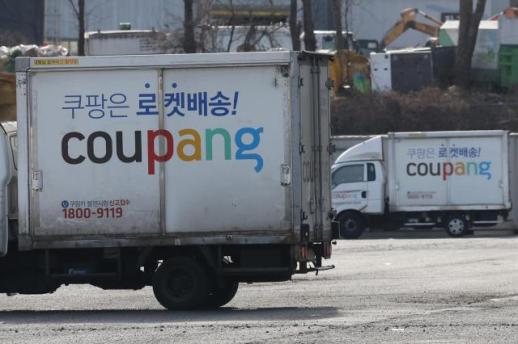 Coupang credit card transaction volume surpasses levels recorded before data leak SEOUL, May 07 (AJP) - April credit card transaction volume for South Korean e-commerce leader Coupang surged back to record levels, signaling that the platform's market dominance remains intact. The rebound follows a massive personal information breach revealed late last year, according to mobile index data released by artificial intelligence firm IGAWorks on Thursday. IGAWorks' data showed that monthly credit and debit card payments for Coupang reached 4.6 trillion won ($3.1 billion) in April. This represents a 3.8 percent increase compared to October 2025, the month before the company officially announced the data leak. March payments followed a similar trajectory, rising 4.1 percent above October levels and 3.2 percent above November levels. The figures indicate that consumer spending stabilized quickly after an initial dip following the privacy scandal. The platform's influence is particularly strong among South Korea's most affluent shoppers. Roughly 90 percent of all high-spending e-commerce users are active on the platform. Industry analysts attribute this resilience to the convenience of the platform's overnight "Rocket Delivery" service and its "Wow membership program," similar to Amazon's "Prime" membership program. The high level of dependency on these daily services has made it difficult for South Korean online shoppers to migrate to rival platforms. Meanwhile, Coupang founder Kim Beom-seok said during an earnings call on Wednesday that sales growth hit a low point in January but improved significantly throughout the spring. He noted that the speed of recovery accelerated through February and March. By late April, we had recovered about 80 percent of the Wow members who had canceled their subscriptions after the privacy incident," Kim Beom-seok said. He added that the vast majority of existing customers and members did not leave the platform following the breach. Performance across the broader domestic market was mixed during this period. While Gmarket saw a 12 percent rise in credit card transactions in April, 11st experienced a 9.6 percent decline. Global competitors AliExpress and Temu also saw transaction volumes fall by 7.2 percent and 2.4 percent, respectively. The recovery in transaction volume contrasts with the company's recent financial performance. Coupang's parent company, Coupang Inc., reported a first-quarter operating loss of 354.5 billion won, or 244 million dollars, marking its first deficit in seven quarters. Higher operational costs fueled the deficit as selling and administrative expenses jumped 17 percent to 3.72 trillion won. The company also saw its active user base decline by 700,000 during the first quarter to a total of 23.9 million people. This shift has had a direct impact on the company's workforce. According to data from the National Pension Service of South Korea, direct employment at Coupang and its logistics subsidiaries fell by approximately 3,600 people in March alone. The total headcount for the company's direct employees stood at 87,135 at the end of March. 2026-05-07 10:16:10
 -
 Hyundai Motor shares rise on expectations for Boston Dynamics’ Atlas developer model reveal Hyundai Motor shares climbed in early trading on expectations surrounding the release of a developer model of the humanoid robot Atlas. According to the Korea Exchange, Hyundai Motor was trading at 567,000 won as of 9:58 a.m. on the 7th, up 3.09% from the previous session. Market watchers said investor sentiment was boosted by a recently released video of Atlas’ developer model from Boston Dynamics, Hyundai Motor Group’s robotics affiliate. The video was first posted on YouTube and showed the robot’s movements. Brokerages also pointed to the potential for an expanded robotics business. Daol Investment & Securities said it expects a “structural rise in valuation” tied to commercialization on multiple fronts, citing Boston Dynamics’ commercialization, Nvidia’s adoption of “AlphaMayo,” and Waymo’s rollout of an autonomous-vehicle foundry business. It maintained a “buy” rating and a target price of 740,000 won. Shinyoung Securities said a key variable for Hyundai Motor’s share price in the second half of the year will be whether the company consolidates Boston Dynamics’ production entity into its financial statements. Shinyoung said that if Boston Dynamics’ production and related operations are consolidated, it could be a strong driver for a valuation re-rating. If the current equity-method structure remains, it said, the outcome would fall short of market expectations. It added that, from an earnings perspective, it is watching raw-material cost pressures from rising prices and the size and timing of settlements within the supply chain. Shinyoung maintained a “buy” rating and a target price of 630,000 won. * This article has been translated by AI. 2026-05-07 10:09:00
 -
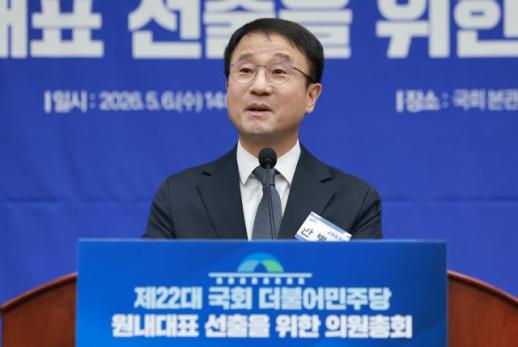 DP Floor Leader Han Byung-do Urges Vote on Constitutional Amendment, Calls on PPP to Join Han Byung-do, the Democratic Party’s floor leader who won a second term, said May 7 he would push for swift passage of a constitutional amendment, move quickly to form the National Assembly’s second-half leadership and complete the Lee Jae-myung government’s legislative agenda. Speaking at his first policy coordination meeting since taking office again, Han warned the People Power Party, which has adopted opposition to the amendment as its party line, that it would face “irreversible public judgment” if it continues to block the measure. Han said the National Assembly would convene a plenary session later in the day to vote on the amendment drafted jointly by the Democratic Party and five opposition parties. He said the proposal would add the spirit of the Bu-Ma Democratic Protests and the May 18 movement to the Constitution’s preamble, strengthen parliamentary control over declarations of martial law and spell out the state’s duty to pursue balanced national development. Responding to the People Power Party’s claim that the proposal is an election-driven pledge, Han challenged the party to specify which provisions it considers political. He said giving the Assembly stronger authority over “illegal martial law” is intended to prevent dictatorship, and added that, as President Lee Jae-myung has said, the public would view opponents of the amendment as defending illegal martial law. Han urged People Power Party lawmakers to take part in the vote, saying those with “even a shred of conscience and conviction” should not stay away. If the party avoids what he called a historic responsibility, he said, it would face “irreversible public judgment.” Han also said the second-half organization of the 21st National Assembly took 54 days, and warned against wasting time while neglecting people’s livelihoods. He said he would prepare the new Assembly lineup without gaps to avoid even a brief constitutional vacuum. He said the Assembly would complete the election of the second-half speaker and deputy speakers at a plenary session on May 20, then promptly choose standing committee chairs to begin legislation aimed at addressing the Middle East crisis and stabilizing livelihoods. Han said he would also work to complete the Lee government’s major policy agenda through legislation by the end of this year.* This article has been translated by AI. 2026-05-07 10:06:44
 -
 LG Electronics Launches All-in-One Heat Pump Boiler to Expand Electric Heating in South Korea LG Electronics is launching an all-in-one heat pump system boiler in South Korea, aiming to capitalize on the shift toward electrification in the heating market. The company plans to expand adoption of residential heat pumps by offering a high-efficiency electric alternative in a market still dominated by gas boilers. The company said Thursday the new product combines the outdoor unit and key system components into a single package. That design eliminates the need for separate refrigerant piping work and can use a home’s existing hot-water pipes, making it easier to meet demand for boiler replacements. LG Electronics has operated a domestic system boiler business since 2011 and has supplied residential all-in-one heat pump system boilers since 2018. The new model uses an air-source heat pump that draws heat from the air to provide space heating and hot water. LG Electronics said it can deliver about four to five times as much heat energy as the electricity it consumes, cutting energy costs by about 40% to 60% compared with fossil-fuel boilers. LG Electronics said the product meets standards tied to a government program to deploy 3.5 million heat pumps by 2035 as part of a plan to cut greenhouse gas emissions by 5.18 million metric tons. While upfront costs are higher than for conventional boilers, the company said government subsidies and energy savings could allow payback within five to six years, depending on usage conditions. The company also highlighted environmental features. It uses R32 refrigerant, which it said has a global warming potential 68% lower than R410A, a refrigerant commonly used in heating and cooling equipment. LG Electronics said the system can supply high-temperature hot water even in low winter temperatures and supports remote control through the LG ThinQ app. Industry observers say South Korea’s heating market remains centered on city-gas boilers, but demand for heat pumps could rise first in new housing and public buildings as carbon-cutting rules and electrification policies take hold. LG Electronics said its heat pump business has already been tested in Europe. At MCE 2026, a global HVAC exhibition held recently in Milan, Italy, both its residential heat pump outdoor and indoor units received awards. The company also cited supply deals for a new housing complex in the Netherlands and projects serving more than 100,000 households across five countries in southern Europe. LG Electronics is also expanding its heat pump lineup beyond residential use to commercial and industrial markets. It supplies its Multi V i system air conditioners to large commercial facilities and is promoting large chillers for industrial sites such as data centers, factories and power plants. The company operates cold-climate research centers in South Korea, Alaska in the United States, Oslo in Norway and Harbin in China to develop next-generation technologies. Lee Jae-sung, president and head of LG Electronics’ ES Business Division, said the company will work to develop the domestic market based on technology and business experience built in Europe and other global markets.* This article has been translated by AI. 2026-05-07 10:05:54