

Journalist

Imran Khalid
-
 Naver Labs and Lotte Innovate Expand Physical AI Business As the market for Physical AI, which enables artificial intelligence to perceive and interact with the real world, continues to grow, Naver Labs and Lotte Innovate are enhancing their related businesses. Naver Labs is focusing on building infrastructure that allows robots to navigate spaces, while Lotte Innovate is accelerating the commercialization of service robots and humanoids based on its retail and logistics operations. Naver Labs is concentrating on creating a robot-friendly environment using spatial data technologies such as digital twins, autonomous robots, and high-precision indoor mapping. This infrastructure-based Physical AI strategy supports AI in understanding and moving through real spaces. The key lies in accurately replicating real-world spaces in digital form. Naver Labs is advancing technology that allows robots to autonomously navigate buildings and recognize their surroundings, relying on high-precision indoor maps and location recognition technologies. This foundation enables AI and robots to understand and move through spaces without human intervention. At Naver's second office, known as '1784', autonomous robots are already handling in-house deliveries and logistics tasks. The integration of robots, cloud technology, and digital twin technology has successfully created an environment where AI operates smoothly in real spaces. Lotte Innovate is focusing on the commercialization of AI robots in retail and logistics. Its unique strength lies in the ability to immediately apply AI robots in real-world settings by leveraging the vast infrastructure of its group affiliates. With diverse business sectors including retail, logistics, hotels, and entertainment, the company can quickly validate tailored Physical AI services across industries. Lotte Innovate is expanding its Physical AI business around its integrated AI platform, 'iMember'. This platform combines generative AI, vision AI, and voice AI with group service data to provide customized services. Recently, the company has enhanced the AI agent functionality, further extending its business into the realm of Physical AI that recognizes and interacts with real spaces. A notable example is the humanoid robot 'Roy', which is linked to convenience stores. Utilizing vision AI, Roy can autonomously recognize products on shelves and guide customers with information about product locations and details. It can learn new location information even when product arrangements change. Currently, a proof of concept (PoC) is being conducted in the first-floor store of the Seoul headquarters. At the recent World IT Show (WIS), Roy demonstrated its ability to accurately recognize snacks and beverages in a simulated convenience store environment and respond to customer inquiries. For instance, when a user requests, "Recommend a snack I can buy for 6,000 won," the robot analyzes the shelf with vision AI and provides recommendations based on price and product information, including their locations. It can also assist in finding specific product locations or checking for promotional items at a practical level. Lotte Innovate recently showcased Roy at the Lotte World Tower Sky Run event, demonstrating its humanoid technology. The company plans to expand its application to actual group locations, such as Lotte Mart and logistics centers, to enhance roles in inventory management, product recommendations, and logistics automation. The company is also accelerating efforts to secure global-level AI technology competitiveness. In February, it obtained the international standard certification for AI system quality, 'ISO/IEC 25058', and recently followed up with the certification for the international standard for AI management systems, 'ISO/IEC 42001'. Industry insiders note, "The Physical AI market has transcended simple robot development. Various technological domains, including spatial data, autonomous driving, vision AI, and logistics automation, are organically combining, leading to rapid market expansion." 2026-05-31 13:54:00
 -
 UN Faces Bankruptcy Risk Due to Unpaid Contributions from US and China The United Nations is facing a severe financial crisis due to unpaid contributions and delayed payments from the United States and China. According to the Wall Street Journal on May 30, the US and China, which together account for 42% of the UN's core budget, have delayed billions of dollars in payments, putting the organization at risk of bankruptcy. UN Secretary-General António Guterres warned that the UN is "heading toward bankruptcy" and stated that the likelihood of a financial collapse is very high. If current trends continue, the UN is projected to run out of cash by mid-August, coinciding with the process of selecting Guterres's successor. The US currently owes $4.284 billion, which includes $2.037 billion in regular budget arrears and $2.247 billion in peacekeeping budget arrears. The administration of President Donald Trump has characterized the UN as a bloated and inefficient organization, insisting that it will only pay its dues after significant restructuring. The US has called for further staff reductions, cuts to business-class travel, and increased use of machine translation. According to UN regulations, if a member state's arrears exceed the contributions for the previous two years, it loses its voting rights in the General Assembly. There are concerns that the US could lose its voting rights as early as 2027 if the arrears continue. China, the second-largest contributor to the UN, is also exacerbating the financial crisis. Recently, during Foreign Minister Wang Yi's visit to the UN, China paid $844 million for peacekeeping costs but still owes $455 million. The Wall Street Journal noted that while China presents itself as "effectively the largest financial contributor to the UN," it has delayed payments, worsening the UN's financial situation. Historically, China paid its dues within months at the beginning of each year, but since 2022, it has postponed payments until the end of the fiscal year. Some experts interpret the unpaid dues and delayed payments from both the US and China as a means to pressure the UN to meet their political demands. Jodi Herman, a senior director at the UN Foundation, stated, "The US is not paying its fair share of dues, and China has been exploiting the payment system for years." The Wall Street Journal reported that China is leveraging its alliance with the Group of 77, a coalition of developing countries, to exert influence during UN budget discussions. It also pointed out that China provides minimal funding for UN humanitarian programs. The UN's unique accounting rules are also contributing to the financial crisis. The UN refunds unspent funds based on member states' dues assessments by the end of the year. However, unpaid dues can also be treated as unspent budgets on the books, making them eligible for refunds. This year alone, $299 million in non-existent cash has been recorded as refundable credits, with projections suggesting this could rise to $400 million next year. Earlier this year, Guterres urged member states in a letter to reform these regulations, stating, "We are trapped in a Kafkaesque cycle of being asked to refund non-existent cash." In response to the financial crisis, the UN has initiated significant austerity measures. It plans to cut 3,000 staff positions, reduce interpretation hours, and postpone maintenance of its New York headquarters. Additionally, the UN is accelerating the withdrawal of peacekeeping forces from conflict zones in Africa, such as the Democratic Republic of the Congo, and is cutting peacekeeping budgets. Reimbursements to developing countries like Nepal and Bangladesh that have deployed troops for peacekeeping are also being delayed. There are growing concerns within the UN that if cash shortages materialize, staff salaries could be halted, and food and security programs could be paralyzed.* This article has been translated by AI. 2026-05-31 13:39:00
 -
 One Year of Lee Jae-myung's Government: Focus on Curbing Speculative Demand As of June 4, the real estate policy of Lee Jae-myung's government, which marks its first anniversary, has emphasized a market order centered on actual residents and the suppression of speculative demand. The government has implemented a series of financial, tax, and administrative regulations since taking office, applying strong pressure on multiple homeowners and gap investors. The stringent regulations have sent warning signals to the overheated high-end housing market, effectively dampening speculative buying. However, critics argue that the focus on curbing demand has revealed limitations in expanding actual supply and stabilizing rental markets. Shortly after taking office, the government introduced measures such as the June 27 financial regulation plan, the October 15 housing market stabilization measures, and the resumption of increased capital gains taxes for multiple homeowners, tightening loans, transactions, and tax regulations simultaneously. Following these regulations, there were short-term effects, including a slowdown in price increases and a surge in urgent sales in some areas of Gangnam and the Han River belt. However, a concerning trend has emerged over time: a lockup of inventory. According to real estate big data firm Asil, as of May 29, the number of apartment listings in Seoul stood at 61,767, a 9.8% decrease from 68,495 on May 9, just before the end of the capital gains tax exemption. Analysts suggest that multiple homeowners are withdrawing listings or opting for gifting properties, resulting in reduced market supply. Price trends are also becoming unstable again. According to the Korea Real Estate Agency, the apartment sales price increase rate in Seoul for the third week of May was 0.31%, the highest level in seven months. While the price surge in Gangnam has slowed, demand has shifted to areas in northern Seoul and the outskirts, where regulations are relatively less stringent. The instability in the rental market is another key factor in evaluating the government's policies. The government believed that transferring homes owned by multiple homeowners to actual residents would limit shocks to the rental market. However, concerns are growing about a decrease in rental listings and rising prices. Lee Chang-moo, a professor at Hanyang University, analyzed at a seminar titled 'Evaluation of Lee Jae-myung's Government's Real Estate Policy After One Year and Future Tasks' that the average rent in Seoul has increased by 8.66% over the past 11 months since the government's inception. In the four northern districts of Gangbuk, Nowon, Dobong, and Seongbuk, rent prices have risen by 12.63%, while monthly rents have increased by 13.14%. The government is also pursuing supply measures. Through the September 7 plan, it set a target to supply 1.35 million housing units in the metropolitan area during its term, and in early January, it announced plans to supply 10,000 units in the Yongsan International Business District. Recently, it has also announced plans to expand non-apartment supply, public rental purchases, and utilize idle urban spaces. However, there are still criticisms regarding the lack of specificity about the timing, location, and quality of the supply that the market desires. While construction goals and permit quantities have been presented, the actual move-in dates, competitive locations, and quality standards to replace preferred apartments remain unclear. Choi Hwang-soo, a professor at Konkuk University, commented, "The government's justification for suppressing speculative demand was clear, but the details needed to create an exit for the market's self-correction were lacking." Ko Jun-seok, CEO of J.Edu Investment Advisory, stated, "If new supply is not expected to come out immediately, there should have been consideration for opening a pathway for existing listings from multiple homeowners to enter the market." 2026-05-31 13:39:00
 -
 Construction Firms Target Southern Gyeonggi Semiconductor Belt Amid Market Recovery Construction companies are accelerating their efforts to tap into the housing market in the semiconductor belt of southern Gyeonggi Province, including Yongin and Pyeongtaek. As the housing market remains sluggish and the construction industry faces challenges, the anticipation of long-term residential demand is growing due to the establishment of additional production and research fabs in the Yongin, Pyeongtaek, Hwaseong, and Suwon areas. According to the real estate industry on May 31, construction firms are highlighting the accessibility to semiconductor industrial complexes and proximity to workplaces as key marketing points for their projects in southern Gyeonggi. The government has announced plans to attract a total of 622 trillion won in private investment to create the world's largest semiconductor mega-cluster, drawing attention to the so-called 'Yong-Pyeong-Hwa-Su' semiconductor belt in the housing market. Yongin is the area where construction companies are most actively promoting the benefits of the semiconductor industry. Hyundai Engineering & Construction is offering the 'Hillstate Yongin Mark Valley' project in the Agok-ri area of Nam-sa-eup, emphasizing its proximity to the national industrial complex for advanced system semiconductors and the Yongin semiconductor cluster. This development will consist of 660 units. Daewoo Engineering & Construction is also targeting demand from the semiconductor belt in Yongin. The company is currently marketing the 'Yongin Prugio One Cluster Park,' highlighting the benefits of the Yongin advanced system semiconductor cluster and the convenience of commuting to industrial complexes. This project will feature six buildings with a total of 710 units, ranging from 80 to 134 square meters, across 29 floors. In Pyeongtaek, supply is continuing around the Godeok International Planning District, which is considered a residential area supporting Samsung Electronics' Pyeongtaek campus. A consortium led by Woomee Construction is offering the 'Pyeongtaek Godeok Woomeelin Prestige,' targeting demand from the Samsung campus. Kumho Construction is also presenting 'Godeok New Town Atera,' a public housing project with 630 units in Block A-63 of the Godeok International Planning District. For construction firms, the semiconductor belt provides a clear marketing advantage in a sluggish housing market. Developments near industrial complexes are expected to attract workers during the establishment of large production facilities, and demand for housing is likely to increase once operations begin, as more employees and research personnel move into the area. Supply conditions are also noteworthy. The cumulative number of housing units available in Gyeonggi Province this year has reached 26,030, a 53.9% increase compared to the previous year, while unsold units have decreased by 8.3% to 12,205. During the same period, the number of completed units has dropped by 38.9% to 21,209. This suggests that while new supply is increasing, the reduction in unsold units and the decline in completed units indicate a steady demand for new apartments. In Yongin's Cheoin District, the focus is shifting towards land, compensation, and infrastructure ahead of apartment developments. According to the Ministry of Land, Infrastructure and Transport, the national industrial complex in Icheon and Nam-sa-eup is set to receive project approval by December 2024, with compensation negotiations expected to begin by the end of 2025, and construction slated to start in the second half of 2026. The Korea Land and Housing Corporation (LH) is also planning to initiate construction of the industrial complex after finalizing land sales in the second half of this year. In contrast to Yongin, Pyeongtaek has already demonstrated the effectiveness of its production base. Demand for housing near the Samsung Electronics Pyeongtaek campus has formed around the Godeok International Planning District, with further supply continuing. However, the pace of recovery in the sales market is relatively slow as the area absorbs large-scale developments like Godeok New Town and Brain City. A representative from a construction firm noted, "Not all projects in the semiconductor belt will succeed just because of the name. The absorption of demand will vary based on the distance to the industrial complexes, the timing of transportation network openings, pricing, and the volume of units available for occupancy." He added, "Factors such as the commencement of national industrial complexes, compensation, subsequent supply in the Godeok International Planning District, the impact of the GTX-A line opening, and demand from Samsung Electronics' headquarters and research and development will be key elements in marketing these developments." 2026-05-31 13:27:00
 -
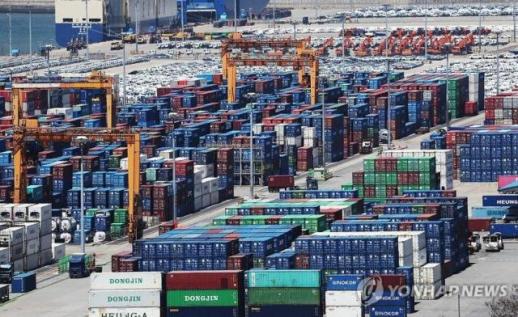 South Korea's Economy Poised for 10% Nominal Growth for the First Time in 24 Years South Korea's economy is showing promising signs, with projections indicating that this year's nominal Gross Domestic Product (GDP) growth rate could reach the 10% range for the first time since 2002. This surge is attributed to rising semiconductor export prices and strong export performance, significantly boosting the nominal size of the South Korean economy. The Bank of Korea has recently revised its real growth forecast for this year from 2.0% to 2.6%. The current account surplus forecast has also been significantly raised to around $250 billion. As nominal GDP increases, the ratios of household debt and national debt to GDP are expected to decrease. If nominal GDP grows by 10%, estimates suggest that the household debt ratio could fall to the low 80% range. A growth of 12-13% could bring the government closer to its target of an 80% debt ratio by 2030. This is undoubtedly a positive signal. The two burdens that have weighed on the South Korean economy have been household debt and national debt. Household debt dampens consumption and heightens financial instability, while national debt becomes a burden for future generations. Improvements in these indicators would positively impact the economy's resilience. However, one must critically assess whether this nominal growth is a result of structural improvements in the South Korean economy or merely a temporary illusion created by the semiconductor boom. Nominal GDP reflects both real growth and price factors. Even if the same quantity is sold, an increase in export prices will lead to a larger nominal GDP. A significant portion of the expected double-digit nominal growth stems from rising semiconductor prices and strong exports. While semiconductors are indeed a backbone of the South Korean economy, the semiconductor cycle has historically alternated between booms and busts. Thus, a decrease in the household debt ratio does not signify the end of the household debt problem. The effect of a larger GDP lowering the ratio is substantial. The actual scale of debt, repayment burdens, real estate prices, and interest rate conditions must continue to be managed. The same applies to the national debt ratio. While nominal GDP growth may improve the ratio, without reforming the expenditure structure, fiscal burdens could increase again. Just because a health check shows an increase in height and a lower body mass index does not mean weight loss has occurred. The same principle applies to the economy. The focus should not only be on improving ratios but also on enhancing the underlying structure. South Korea's structural challenges remain significant. Issues such as low birth rates, an aging population, a declining working-age population, an oversupply of self-employed individuals, a lack of competitiveness in the service sector, and youth unemployment persist. The semiconductor boom will not automatically resolve these problems. In fact, the more prosperous the period, the more urgent the need for reform. If tax revenues increase and fiscal capacity improves, it is crucial to invest in future industries and talent development, such as AI, semiconductors, biotechnology, robotics, and aerospace, rather than diverting funds to short-term expenditures. While today's semiconductors have revitalized the South Korean economy, tomorrow's growth drivers must emerge from AI and new industries. Achieving a nominal growth rate in the 10% range for the first time in 24 years is undoubtedly an opportunity. However, this opportunity will not become a blessing on its own. It is essential to decide whether to squander the time gained from semiconductors or to invest it in preparing for the future. A positive signal has been lit. However, we must not let go of the steering wheel. Reforming during prosperous times, investing during booms, and preparing for the future are the fundamentals, principles, and common sense of economics.* This article has been translated by AI. 2026-05-31 13:21:00
 -
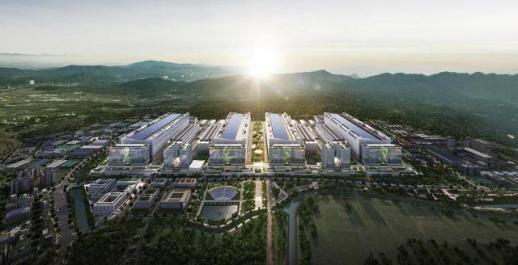 Yongpyeonghwa-su Semiconductor Belt Emerges as New Growth Axis in Southern Gyeonggi The southern Gyeonggi region, connecting Yongin, Pyeongtaek, Hwaseong, and Suwon, is emerging as a new growth axis in the metropolitan real estate market, driven by the semiconductor industry. The government's plan for a semiconductor mega-cluster, coupled with significant investments from Samsung Electronics and SK Hynix, has shifted residential demand patterns, fueled by performance bonuses, interest in non-regulated areas, and expectations for expanded transportation networks like the GTX. Historically, the southern Gyeonggi real estate market has been influenced by accessibility to Seoul and new city infrastructure. However, proximity to semiconductor industry hubs and residential demand have become key factors. The so-called 'Yongpyeonghwa-su' semiconductor belt, which encompasses Yongin, Pyeongtaek, Hwaseong, and Suwon, is gaining attention for this reason. According to industry sources, the government plans to attract a total of 622 trillion won in private investment to develop the world's largest semiconductor mega-cluster in southern Gyeonggi by 2047. This initiative aims to add 16 new fabs, including 13 production fabs and three research fabs, to the existing 19 production and two research fabs in the region. Yongin will serve as the central hub, with a national industrial complex for advanced system semiconductors being established in the area of Yongin's I-dong and Namsa-eup. According to Yongin City, this industrial complex will cover 7.77 million square meters, with development scheduled from 2023 to 2031. Samsung plans to invest 360 trillion won in this area by 2052. Additionally, SK Hynix is involved in the Yongin Semiconductor Cluster in Wonsam-myeon. Pyeongtaek and Hwaseong are already functioning as semiconductor hubs, centered around Samsung's production facilities. The Pyeongtaek Godeok International Planning District has established itself as a residential area supporting the Samsung Pyeongtaek Campus, while Hwaseong has integrated industry and housing through the Samsung Hwaseong and Giheung campuses and the Dongtan New Town. Suwon serves as a research and talent hub, supported by Samsung's headquarters and R&D facilities, along with universities and business centers. Market trends are also changing. According to the Korea Real Estate Agency, as of May 25, the cumulative increase in apartment prices this year has been 8.16% in Yongin Suji, 5.30% in Yongin Giheung, 4.73% in Suwon Yeongtong, and 4.48% in Hwaseong Dongtan. In comparison, the average increase in Seoul was 3.68%, with Songpa at 2.38% and Gangnam at 0.16%, highlighting the significant price growth in the major semiconductor areas of southern Gyeonggi. Transaction trends support this shift. In April, apartment sales in Gyeonggi increased by 20.1% compared to the same month last year, while sales in Gangnam's four districts dropped by 24.3%. Dongtan saw a remarkable 112% increase in transactions in the first quarter, with 2,283 deals recorded, indicating that rising prices are accompanied by increased transactions. Another factor bolstering the semiconductor belt is liquidity. In February, SK Hynix paid its employees a performance bonus equivalent to 2,964% of their base salary. While it is difficult to directly link performance bonuses to rising property prices, analysts suggest that high-income jobs and cash flow are supporting housing demand in southern Gyeonggi. The regulatory environment also plays a role. Following the real estate measures implemented in October last year, areas of Seoul and parts of Gyeonggi were designated as regulated zones, with Suwon's Yeongtong, Jangan, and Paldal districts, as well as Yongin's Suji district, classified as adjustment target areas and speculative overheating zones. In contrast, regions like Hwaseong Dongtan, Yongin Cheoin, and Pyeongtaek are classified as having relatively fewer regulatory burdens, raising the possibility of capital movement. The expansion of transportation networks is another factor accelerating regional integration. The GTX-A line from Suseo to Dongtan is set to open in March 2024, enhancing accessibility to Dongtan. The Indukwon-Dongtan line, which will connect Anyang, Uiwang, Suwon, Yongin, and Dongtan, is under development with a target completion in 2028. The overlap of the semiconductor industry and the expanded rail network increases the likelihood that major cities in southern Gyeonggi will form a cohesive living area. However, there are disparities within the semiconductor belt itself. While prices and transactions have surged in Yongin Suji, Giheung, Suwon Yeongtong, and Hwaseong Dongtan, Pyeongtaek has seen a slower recovery in its sales market due to the absorption of large-scale developments like the Godeok International New Town and Brain City. Nonetheless, demand for housing near the Samsung Pyeongtaek Campus remains strong. An industry insider stated, "The essence of the Yongpyeonghwa-su semiconductor belt is not merely an industrial complex boon. It is forming a broad growth axis where semiconductor production facilities, R&D, partner companies, transportation networks, and residential demand are moving in tandem." They added, "However, within the same semiconductor belt, regional differentiation is inevitable due to factors such as the volume of new housing, regulatory status, and the pace of transportation network expansion." 2026-05-31 13:21:00
 -
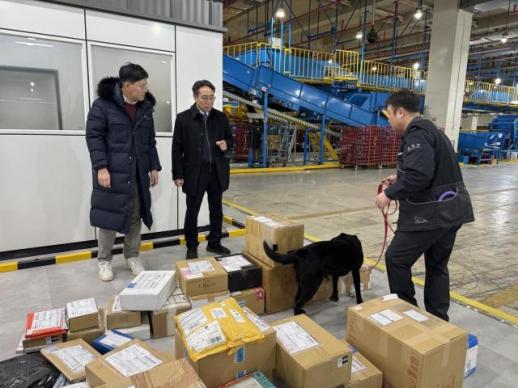 AI Technology Competes with Drug Detection Dogs Who feels the most tension at airport arrivals? Smugglers. And the entity they fear most is not customs officers or advanced scanning equipment, but detection dogs. For decades, dogs have been at the forefront of the war on drugs. Detection dogs, such as German Shepherds and Labrador Retrievers, have demonstrated abilities beyond human olfactory imagination, locating drugs hidden deep within travelers' bags or concealed in containers. Generally, a dog's sense of smell is known to be tens to thousands of times more sensitive than that of humans. While people can detect perfume, dogs can distinguish the individual chemical compounds mixed within it. However, recent news suggests that dogs may soon have new competition. The Korea Customs Service is accelerating the development of an 'Electronic Nose' that combines AI with olfactory sensors. This electronic device mimics the olfactory principles of humans and detection dogs, analyzing fine particles in the air while AI learns to identify drug components. In short, artificial intelligence is beginning to 'smell.' Many people associate AI with generative models like ChatGPT, which answer questions, write text, and translate. However, the true stage of the AI revolution is not confined to computer screens but is unfolding in the real world. AI is already mimicking human vision, identifying criminals in CCTV footage, and interpreting CT and MRI scans in hospitals. It is also beginning to resemble human hearing, recognizing voices and performing real-time translations. Now, AI is starting to imitate human smell. The Korea Customs Service's push to develop the electronic nose is clear: drug smuggling methods are becoming increasingly sophisticated. In the past, smugglers often hid drugs in travelers' bags or cargo. However, the situation has changed. Now, drugs are concealed within items purchased online, mixed with coffee beans, placed in perfume bottles, or hidden inside children's toys. Some even disguise drugs in liquid form to resemble beverages or conceal them within pharmaceutical packaging. For instance, U.S. customs once detected fentanyl hidden inside car parts. Mexican drug cartels have attempted to smuggle drugs across the border in fruit transport vehicles or agricultural product boxes. In China, a new method has emerged where synthetic drugs are sent in tiny amounts by splitting international express shipments into hundreds. Smugglers use coffee, spices, and perfumes to mask odors. However, AI is not deceived. Instead of smelling, AI reads chemical patterns. It analyzes the drug components hidden beneath coffee scents or concealed within perfume fragrances. While humans can be fooled, molecules cannot. The growing attention on electronic nose technology is largely due to the fentanyl crisis in the United States. Originally a medical painkiller, fentanyl has become a key product in the illegal drug market due to its potency in extremely small doses. In recent years, tens of thousands of people in the U.S. have died from fentanyl-related overdoses, creating a serious social issue. This is why the U.S. government considers it a national security threat. The Department of Homeland Security (DHS) and Customs and Border Protection (CBP) are actively implementing AI-based drug detection systems, particularly along the Mexican border. This integrated platform combines X-ray equipment, chemical sensors, image recognition technology, and AI analysis systems. Even with thousands of vehicles and tens of thousands of shipments crossing the border, AI prioritizes identifying potential threats. U.S. researchers are also working on digitizing the olfactory patterns of detection dogs. This involves AI learning from the behaviors of detection dogs in response to specific smells and the corresponding chemical data. It represents an attempt to convert decades of experience accumulated by detection dogs into a digital asset. China is taking a more aggressive approach. The country is establishing a national integrated surveillance system that connects AI surveillance cameras, olfactory sensors, and big data. This system links airports, ports, logistics centers, and border checkpoints into a single network. As e-commerce surges, leading to an increase in small-scale drug smuggling, AI analyzes cargo information while olfactory sensors detect chemicals, creating a multi-layered defense network. Interestingly, both the U.S. and China are not looking to eliminate detection dogs. Currently, many experts believe that the most effective approach is for detection dogs and AI to work together. AI conducts initial screenings, while detection dogs provide final confirmations, similar to how doctors utilize AI diagnostic programs. The significance of the electronic nose extends beyond drug enforcement. This technology illustrates that AI is digitizing human senses one by one. AI cameras mimic human vision. Voice recognition technology imitates human hearing. The electronic nose emulates human smell. Some research is also underway to develop an 'E-Tongue' for taste analysis and 'electronic skin' for touch. Humanity has long advanced computers as 'thinking machines.' Now, we are creating 'feeling machines.' The applications of electronic noses are vast. In healthcare, research is ongoing to analyze specific chemicals released in the breath of patients with lung cancer, diabetes, and Alzheimer's. A future may emerge where diseases can be diagnosed with a single breath. In the food industry, electronic noses can evaluate the quality of wine, coffee, and cheese, as well as determine food spoilage. In Japan, technology is being developed to measure the freshness of tuna using electronic noses. In environmental fields, they can detect toxic gas leaks early and analyze air pollutants. In agriculture, they can detect odors from crops affected by pests, and in livestock farming, they can identify animal diseases early. The Korea Customs Service's electronic nose project is not merely a drug detection technology. It represents one of the starting points of a new industrial revolution where AI, sensors, and big data converge. Many people view AI as a competitor to humanity. However, looking back at history, technology has not eliminated humans. Cars have extended human legs, telescopes have expanded human vision, and telephones have enhanced human hearing. Computers have augmented human brains. AI is no different. AI does not take away human smell; it extends it. Thus, the Korea Customs Service's electronic nose project is not just a technology development story. It marks the beginning of a new era where human olfaction is transformed into data, and AI learns to detect crime. In the past, the war on drugs was the responsibility of detection dogs and customs officers. In the future, it is likely that detection dogs and AI will fight together. One day, the most feared presence at airport arrivals may not be barking dogs. Instead, it could be an AI quietly passing by travelers, remembering millions of scent data without wagging its tail or barking. This is not merely a technological competition; it is the beginning of a civilizational change where human senses are digitally expanded.* This article has been translated by AI. 2026-05-31 13:12:00
 -
 Why Political Campaigns Focus on Strong Supporters Instead of Centrists There is a recurring scene during elections: as the campaign nears its end, politicians' rhetoric becomes more aggressive, and attacks on opponents intensify. Rather than persuading centrist voters, candidates increasingly focus on energizing their base. Policy discussions fade away, leaving only emotional appeals. The upcoming June 3 local elections are no exception. Interestingly, while political leaders often emphasize the importance of centrist voters, their actions suggest otherwise. Political analysts have long noted that in national elections, it is ultimately the 5% of centrist voters who decide the outcome. Historical election results show that the final decision often rests not with the strong supporters but with undecided centrists. Yet, as the election approaches, political parties tend to prioritize rallying their base over expanding their appeal to centrist voters. This local election follows a similar trend. Leaders from both major parties are making strong statements daily. While criticisms of the opposing camp have escalated, strategies for regional development and visions for citizens' livelihoods are relatively absent. In fact, party leaders who should be guiding the election are sometimes viewed as liabilities in competitive districts. Why do political parties make such choices? The answer lies in the fact that while centrist voters are difficult to mobilize, strong supporters react immediately. Strong rhetoric generates news coverage and spreads rapidly on social media, often earning immediate applause. In contrast, persuading centrist voters is a slow and complex process that requires explaining policies and presenting realistic alternatives, which takes time. While a politics centered on strong supporters may benefit elections, it incurs costs for society as a whole. The public becomes increasingly polarized, and opposing factions are viewed not as discussion partners but as targets for attack. When the goal of politics shifts from problem-solving to consolidating factions, national competitiveness inevitably declines. Voters also need to change. Each election cycle, sensational statements and political disputes dominate the news, but ultimately, it is not these words that will shape the future of communities. What matters is not who delivers the most flamboyant attacks, but who has the capability to foster urban growth. It is not about who shouts the loudest, but who can create jobs and support local industries. Politics should inherently aim for the middle ground. The essence of politics is to persuade individuals with diverse viewpoints and find common ground. However, recent trends show that political parties are increasingly veering toward the extremes. This tendency intensifies as elections draw nearer. Ultimately, it is not the voices of politicians that sustain democracy, but the judgments of voters. The assertion that the 5% of centrist voters decide elections is not merely electoral engineering; it signifies that the direction of South Korea is ultimately determined by citizens who quietly observe and then head to the polls. Politics should be driven by reasoned judgment, not excitement. A healthy democracy is shaped not by the loudest voices but by the wisest choices.“The Gi·Won·Sang column is a representative opinion piece that identifies the essence of Korean society and global trends based on the principles of 'basic, principle, common sense' of Aju Economy.” 2026-05-31 13:09:00
 -
 HD Hyundai Chairman Chung Ki-sun Remembers Sacrifices of Veterans HD Hyundai has continued its efforts to honor the noble sacrifices and dedication of war heroes this year. On May 31, the company announced that it commemorated fallen soldiers at the National Cemetery in Seoul, the National Cemetery in Yeongcheon, and the National Cemetery in Goesan in observance of National Defense Month.Chairman Chung Ki-sun visited the National Cemetery in Seoul, where he laid flowers and offered incense at the Memorial Tower to honor the fallen soldiers. He then participated in a cleanup effort in Section 25, a designated area for HD Hyundai, where he and employees removed weeds and cleaned gravestones, enhancing the memorial's significance and encouraging those who joined him.On the same day, HD Construction Machinery signed a memorandum of understanding (MOU) with the Ministry of Veterans Affairs at the National Cemetery to establish a memorial facility honoring UN veterans. The agreement was signed by Minister Kwon Oh-eul and CEO Moon Jae-young of HD Construction Machinery, with Chairman Chung and Dessie Dalkie Dukamo, the Ethiopian Ambassador to South Korea, in attendance.Under the MOU, HD Construction Machinery will support the construction of a memorial facility for veterans from UN member countries and provide the necessary construction equipment. The first overseas memorial facility will be established in Addis Ababa, the capital of Ethiopia, which was the only African country to send ground troops during the Korean War.HD Hyundai is also committed to supporting veterans and the families of national heroes. Since 2022, HD Korea Shipbuilding & Marine Engineering and HD Hyundai Heavy Industries have alternately donated 20 million won annually to support children of Navy veterans and those facing financial difficulties. Additionally, since 2021, HD Construction Machinery has partnered with the Ministry of Veterans Affairs on a 'House Remodeling Project' to improve the living conditions of families of national heroes, with plans to assist a total of 21 households by the end of this year.Chairman Chung stated, "It is our responsibility to remember the sacrifices and dedication of veterans who faced fear without hesitation and to pass this legacy to future generations. HD Hyundai will continue to honor and remember those who dedicated themselves to our country."Approximately 200 employees, including Chairman Chung and CEO Moon, participated in this memorial activity. Furthermore, the HD Hyundai 1% Sharing Foundation continues to support descendants of veterans with living expenses and essential goods. Notably, in 2024, the foundation established a sisterhood with frontline military units and donated construction equipment and vans to enhance the welfare of soldiers fulfilling their national defense duties. 2026-05-31 13:03:00
 -
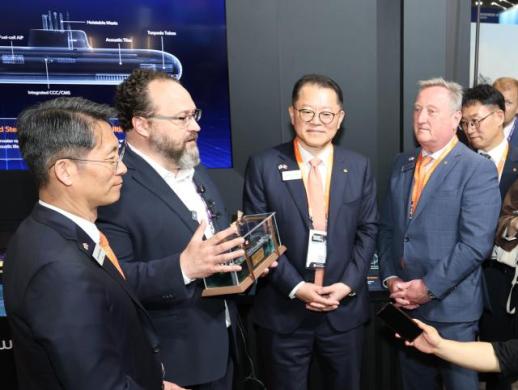 Hanwha Ocean Concludes CANSEC 2026, Intensifies Efforts for CPSP Contract Hanwha Ocean successfully concluded Canada’s largest defense exhibition, CANSEC 2026, and is ramping up efforts to secure the Canadian Submarine Program (CPSP) contract. According to industry sources on May 31, Hanwha Ocean showcased the proven capabilities of the KSS-III submarine, currently in operation with the Republic of Korea Navy, along with its industrial cooperation strategy across Canada. The key themes highlighted were "submarine capabilities" and "contributions to the Canadian economy." Notably, on the second day of the exhibition, Ontario's Minister of Economic Development Victor Fedeli visited the Hanwha Ocean booth. During the event, major defense companies such as Seaspan, Irving Shipbuilding, Babcock Canada, and CAE, as well as representatives from Invest Nova Scotia and the University of Waterloo, also visited. Hanwha Ocean presented its "Pan-Canada Economic Strategy," detailing the industrial cooperation network it has built and its economic impact. The company has established partnerships with over 100 Canadian firms and institutions across sectors including shipbuilding, defense, automotive, advanced manufacturing, energy, aerospace, infrastructure, and high technology. This foundation supports local production, technology transfer, supply chain participation, workforce development, and maintenance capabilities. If selected as the contractor for the CPSP, Hanwha Ocean envisions creating over 22,500 jobs annually and generating an economic impact of approximately $94 billion. This initiative is seen as a national industrial project that extends beyond mere submarine acquisition, providing long-term growth momentum for Canada's manufacturing and defense ecosystems. Colton LeBlanc, Minister of Growth and Development for Nova Scotia, discussed provincial cooperation regarding the CPSP project with Hanwha Ocean and LIG D&A during his visit to the booth. Flavio Volpe, President of the APMA, who visited on the first day, stated, "The collaboration between Hanwha and APMA will serve as an important starting point for expanding industrial cooperation between Canada and South Korea. I hope we can continue long-term cooperation with our partners in Korea to enhance Canada's future industrial competitiveness." Hanwha Ocean actively promoted the KSS-III submarine's verified operational capabilities and technological strengths. The KSS-III is the world's first diesel submarine to utilize both air-independent propulsion (AIP) and lithium-ion batteries, offering excellent submerged endurance and operational flexibility. With advanced low-noise design technology and combat systems, it is evaluated as a platform that meets the Canadian Navy's requirements for next-generation submarines. Additionally, Kim Kyung-ryul, Chief of Naval Operations, Lee Yong-cheol, Director of the Defense Acquisition Program Administration, and Lim Gi-mo, South Korea's Ambassador to Canada, visited the Hanwha booth to engage with key figures in Canadian politics and industry, supporting efforts to secure the CPSP contract. Kim Hee-cheol, CEO of Hanwha Ocean, remarked, "CANSEC 2026 demonstrated that the CPSP project proposed by Hanwha Ocean is not just a submarine acquisition initiative but a long-term industrial cooperation model that grows alongside the Canadian industry. Hanwha Ocean aims to be a reliable long-term partner that contributes to enhancing Canada's security capabilities and economic growth based on our proven submarine technology and extensive industrial cooperation network across Canada." Meanwhile, Hanwha Ocean is working to increase its chances of securing the contract by establishing a "Pan-Canada Economic Strategy" that includes partnerships with over 100 Canadian defense companies and universities, promising local job creation and technology transfer. 2026-05-31 13:03:00