

Journalist

Jack L. Rozdilsky
-
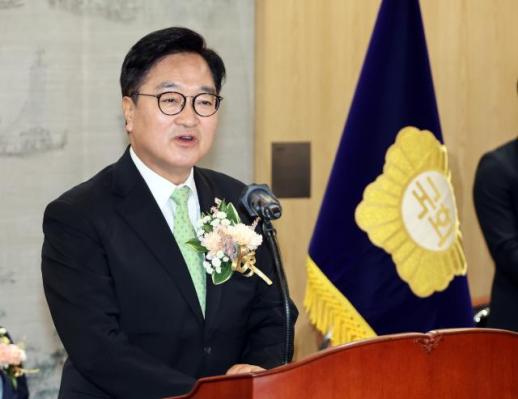 National Assembly Leadership Concludes Term; Woo Won-sik Emphasizes Unity The leadership of the 22nd National Assembly, including Speaker Woo Won-sik and Deputy Speakers Lee Hak-young and Joo Ho-young, officially concluded their terms during a retirement ceremony on May 29. Speaker Woo reflected on the past two years, stating, "The National Assembly must always prioritize the people." During the ceremony held in the National Assembly, Woo remarked, "I believe we have worked to protect democracy and, through that democracy, to safeguard the lives of the people." He emphasized the need for the National Assembly to continuously operate for the benefit of the public, stating, "There are many barriers in the National Assembly, including conflicts, political strife, and partisanship. If the Assembly becomes stalled due to these barriers while the people's lives continue without pause, it will only make life harder for the public and widen the gap between the Assembly and the people." Woo added, "I will return to being a regular member starting tomorrow. I will persistently work to ensure that democracy, proven through the lives of the people, becomes the strongest weapon for those who are weak. It has been a great honor to serve as Speaker during such a complex and critical time over the past two years." Deputy Speaker Lee expressed gratitude, saying, "Speaker Woo led us exceptionally well over the past two years. We faced historical challenges together and overcame them. It has been a tremendous honor for me, and I sincerely thank everyone who shared this honor with us." Deputy Speaker Joo noted, "The first half of the National Assembly has seen many events, but as the opposition, there were many regrets. I question whether we have properly checked the executive branch under the principle of separation of powers, as the ruling party has unilaterally supported the government." He added, "Successful democracies are based on tolerance and restraint. I have worried that we might be going astray due to ignorance and arrogance."* This article has been translated by AI. 2026-05-29 16:27:00
 -
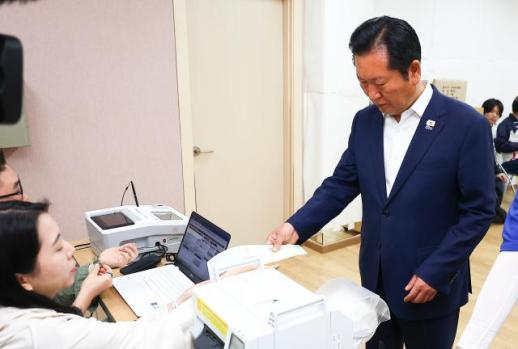 Early Voting Begins for June 3 Local Elections in South Korea 6·3 지방선거와 국회의원 재·보궐선거 사전투표가 29일부터 이틀간 실시되는 가운데 여야 지도부 및 후보들은 적극적으로 사전투표에 나서며 시민들의 참여를 독려했다.Early voting for the June 3 local elections and the National Assembly by-elections began on May 29 and will continue for two days. Leaders and candidates from both major parties actively participated in early voting and encouraged public participation.Jung Cheong-rae, the head of the Democratic Party's election campaign committee, cast his vote at a local community center in Mapo-gu, Seoul, on May 29. After voting, he told reporters, "If we win in Seoul, we win the nation," expressing his desire to secure a victory in the capital. He added, "If you want the person you hope for to win, please vote. I hope to show the forces that have attacked our democracy the seriousness of the Constitution through the power of your vote."Meanwhile, People Power Party leader Jang Dong-hyuk participated in the main voting, while floor leader Song Eon-seok planned to vote early on the second day, May 30, in his constituency of Gimcheon, North Gyeongsang Province.Candidates for local leadership positions also began their schedules with early voting and encouraged voter turnout. Both Jung Won-o, the Democratic Party candidate for Seoul mayor, and Oh Se-hoon, the People Power Party candidate, participated in early voting.Jung completed his vote at the early voting site in the administrative complex of Sogong-dong, Jung-gu, and told reporters, "The citizens' demand for new energy and new leadership will be revealed in this election. The results may be close, but I will strive for victory with that hope."Oh visited the early voting site at the Hanam-dong community center in Yongsan-gu, where he stated, "Seoul stands at a crossroads of whether to move toward the future or regress, and whether Korea's democracy will advance or fall into dictatorship. I hope voters will deeply consider how to lead President Lee Jae-myung with a more humble approach through this election."In Busan, a key battleground, Democratic Party candidate Jeon Jae-soo and Ha Jung-woo, a candidate for the Busan North District by-election, both participated in early voting. Jeon stated, "I will complete the vision of Busan as a maritime capital with the citizens of Busan," emphasizing the need for representation, as there are currently no ruling party members among the 18 Busan National Assembly members.Ha added, "If I become a representative who has worked with the government, ruling party, and the Blue House in my district, we can quickly overcome the shortcomings of the past 20 years of development," appealing for votes.Independent candidate Han Dong-hoon, who voted early, criticized Ha, saying, "A candidate who cannot even vote alone cannot lead the North District," and expressed sympathy for Jeon, stating, "Ha is becoming a significant burden for Jeon." People Power Party candidate Park Min-sik also completed early voting on the same day.* This article has been translated by AI. 2026-05-29 16:24:00
 -
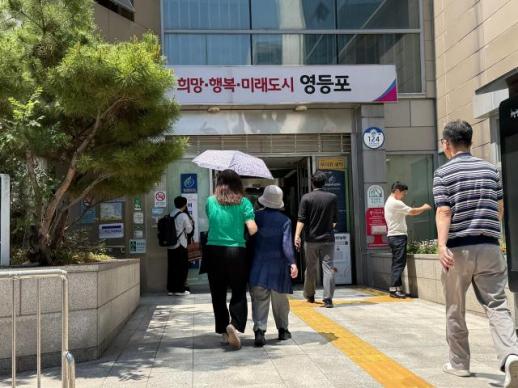 Early Voting Kicks Off for Local Elections Amid Calls for Housing Solutions On the first day of early voting for the June 3 local elections, the early voting site at the Yeouido Community Center in Yeongdeungpo, Seoul, was bustling with voters during lunchtime. Many citizens voiced their concerns, calling for solutions to the housing crisis as they participated in the voting process. Located in Yeouido, where many office workers are employed, the community center saw long lines forming outside the polling station by 11:30 a.m., reflecting the high interest in this local election. Office workers arrived wearing their employee badges or dressed in business attire and work uniforms. Additionally, military personnel, visually impaired individuals, and seniors received assistance to cast their votes. As noon approached, the line stretched approximately 150 meters from the entrance. Some voters, upon hearing that the wait would exceed 30 minutes, decided to leave and return after lunch. The unusually hot weather prompted many to use umbrellas, hand fans, and portable fans to stay cool. After voting, citizens uniformly expressed their desire for the next mayor of Seoul to address the housing issue. A man in his 60s, who voted for Jung Won-oh of the Democratic Party, stated, "The most important issue in this election is real estate," emphasizing the need for more opportunities for younger generations. A woman in her 20s who supported Oh Se-hoon of the People Power Party echoed similar sentiments, saying, "I hope a living environment can be created for those in their 20s to live alone in Seoul. The burden of rent and housing prices is too high." A man in his 40s who also voted for Oh remarked, "While we need to expand housing supply through reconstruction and redevelopment, it should be done in a balanced way to avoid price instability." He noted that the political discourse has been overshadowed by allegations and conflicts rather than policy competition. Interestingly, despite earlier polls favoring Jung, there were signs of momentum for Oh among voters, who cited his experience as a four-term mayor as a reason for their support. A woman in her 30s, identifying as undecided, said, "There aren't any standout candidates, but I chose Oh. It's important whether he can check the Blue House and the ruling party. I hope he works for the country." Both the woman and the man who supported Oh highlighted his current position as mayor, believing he has a better understanding of city governance, and praised his extensive administrative experience. By 12:30 p.m., the long lines that had extended outside the entrance had noticeably diminished. A polling station official reported that approximately 1,600 people had voted by that time, an increase of about 300 from 11:42 a.m. According to the National Election Commission, the national average voter turnout by 3 p.m. was recorded at 8.15%, which is 0.9 percentage points higher than the early voting rate of 7.25% at the same time during the 2022 local elections. Early voting will continue for two days, from 6 a.m. to 6 p.m., at 3,571 locations nationwide. Voters aged 18 and older must present a government-issued ID that includes their date of birth and photo, such as a resident registration card, passport, or driver's license. Mobile IDs are also accepted, but screenshots or image files are not valid. Voters casting ballots at polling stations in their registered districts will receive a ballot, mark it, and place it directly into the ballot box. However, voters at polling stations outside their registered districts must receive both a ballot and a return envelope, mark the ballot, place it in the envelope, seal it, and then submit it into the ballot box. Detailed locations of early voting sites can be found on the election commission's website or by calling their hotline at 1390.* This article has been translated by AI. 2026-05-29 16:24:00
 -
 Kia and Hyundai Face Tensions as Wage Negotiations Begin As Hyundai Motor Group enters the wage and collective bargaining phase this year, tensions are rising in the automotive industry. While Hyundai has already accelerated negotiations, Kia has shown differences even before scheduling its initial meeting, increasing pressure on the group.According to industry sources on May 29, Kia plans to hold its first meeting between labor and management as early as next week to kick off this year's negotiations. The Kia union had initially proposed to meet on this day, but the meeting did not take place.The management sent a formal notice to the Kia union two days earlier, on May 27, suggesting a postponement of the schedule. The management cited that the overall timeline for this year's negotiations was progressing faster than expected as the reason for the delay. Consequently, Kia's negotiations will be slightly delayed.Recently, the Kia union finalized its demands for this year's negotiations during a delegate meeting. Key demands include a basic salary increase of 149,600 won, a bonus equal to 30% of operating profit, inclusion of average wages in the bonus calculation, increases in production line and service allowances, hiring new employees to match the number of retirees this year (1,830), and the abolition of the dual wage system.Regarding the revision of the collective agreement, the union's core demands include hiring new employees through domestic factory investments, increasing bonuses from 750% to 800%, reducing weekly working hours to 4.5 days, introducing new models at domestic factories, and extending retirement age linked to national pension eligibility.The management's attempt to delay the negotiation schedule is interpreted as a strategy to minimize group-level pressure, especially with ongoing negotiations at Hyundai. Recently, labor disputes over issues like the so-called 'N% bonuses' have spread among companies like Samsung Electronics and SK Hynix, raising expectations for increased tensions over bonuses and wage structures in the automotive sector during this year's negotiations.Hyundai has already shown significant differences in positions during its negotiations this year. The eighth round of negotiations is scheduled for next week, and the union continues to present its demands to the management. However, the management reportedly finds it challenging to realistically accept the major demands. The Hyundai union is demanding that 30% of last year's net profit be distributed as bonuses to union members and employees of partner companies.During the seventh round of negotiations held on May 27, substantial differences in views between labor and management were noted regarding these demands. Industry insiders predict that as Kia enters the negotiation phase, the intensity of labor disputes in the automotive sector this year could be higher than in previous years, with the possibility of both Hyundai and Kia resorting to strikes.An industry source stated, "While Hyundai's negotiations are ongoing, we are still in the explanation phase, and there are significant differences in opinions between labor and management."* This article has been translated by AI. 2026-05-29 16:24:00
 -
 South Korean households spend more as income gap widens in Q1 SEOUL, May 29 (AJP) - South Korean households spent more in the first quarter, but their savings declined as spending grew faster than earnings for the first time in nearly two years, the Ministry of Data and Statistics said on Friday. According to the ministry, average monthly household income rose 2.4 percent from a year earlier to 5.48 million won (US$4,000) in the first quarter of 2026. Among them, average income for salaried workers stood at 3.42 million won. Average monthly household spending rose 5.3 percent from a year earlier to 3.11 million won, marking the fastest increase since the first quarter of 2023, and spending exceeded income for the first time since the second quarter of 2024. The average propensity to consume also increased 1.7 percentage points to 71.5 percent. The income gap widened as lower-income households faced growing financial pressure, while large performance bonuses at major companies such as Samsung Electronics and SK hynix boosted earnings among higher-income households. The average propensity to consume among the bottom 20 percent reached 155.3 percent, with households earning an average of 1.17 million won per month but spending 1.46 million won. By contrast, households in the top 20 percent saw the strongest income growth, with average monthly income rising 4.2 percent to 12.38 million won. They were also the only group to see their income grow, up 2.6 percent to 4.08 million won. As a result, the income gap between the two groups widened to 6.59 times from 6.32 times a year earlier. The ministry attributed the widening gap partly to wage growth at large corporations and performance bonuses from major chipmakers such as Samsung Electronics and SK hynix, which were partly reflected in February's income data. Households in the top 20 percent of the income bracket tend to include a higher proportion of employees at large companies, where wage gains were stronger in the first quarter. 2026-05-29 16:19:02
 -
 White Buffalo Resembling Trump Saved from Slaughter in Bangladesh A white buffalo in Bangladesh, famous for resembling U.S. President Donald Trump, has dramatically escaped slaughter just before it was to be sacrificed. The local government halted the slaughter due to "excessive public interest and safety concerns." According to the UK’s Daily Mail on May 28, the buffalo, weighing 750 kilograms, gained attention online while living on a farm near the capital, Dhaka. With its blonde-like forelock and pink skin, the buffalo became popular on social media, with local residents even naming it "Donald Trump." The so-called "Trump" buffalo was slated to be sacrificed for Eid al-Adha, the largest Islamic holiday. However, as photos and videos circulated on social media, visitors flocked to see the buffalo, prompting the Bangladeshi government to intervene. According to reports, Interior Minister Salahuddin Ahmed ordered the buffalo to be excluded from the sacrifice due to security concerns, and refunds were issued to the buyer. The buffalo is expected to be relocated to the National Zoo in Dhaka. A representative from the Interior Ministry explained to local media, "We decided to halt the slaughter considering the unusually high public interest and safety." The buffalo's owner stated, "My brother jokingly started calling it Trump because of its hairstyle," adding that albino buffaloes are generally known for their gentle nature.* This article has been translated by AI. 2026-05-29 16:18:00
 -
 KOSPI surges to record 8,476 on Iran-Hormuz deal reports SEOUL, May 29 (AJP) - The KOSPI surged 3.55 percent to close at a record 8,476.15, its sharpest advance this week, as reports of a United States-Iran deal in principle to reopen the Strait of Hormuz unleashed a broad rally that lifted autos and batteries alongside semiconductors — a breadth the AI-driven run had conspicuously failed to deliver in prior sessions. The catalyst was unambiguous. A senior American official confirmed during the session that Washington and Tehran had reached a framework agreement to reopen the Strait, with Secretary of State Marco Rubio signaling a formal announcement was imminent, though cautioning that any initial deal would be time-limited rather than a permanent settlement. For South Korea — which sources roughly 70 percent of its crude through the waterway — the relief was immediate. Oil prices fell, the inflation premium compressing Korean assets eased, and the market re-rated broadly rather than selectively. Samsung Electronics rose 5.84 percent to 317,000 won ($210.3), recovering sharply from Thursday's retreat, while SK hynix advanced 1.92 percent to 2,333,000 won. The more telling signal came from Hyundai Motor, which surged 6.79 percent to 723,000 won — a name whose rally tracks Hormuz relief directly, given its dependence on Middle Eastern and European export lanes. The contrast with Thursday's session, when the index slid 0.53 percent even as SK hynix held firm, illustrated how different today's driver was: not AI demand, but geopolitical de-escalation reaching sectors that had been left behind. Foreign investors remained net sellers for a sixteenth consecutive session, extending a streak during which they have unloaded nearly 50 trillion won, a cumulative figure that now dwarfs any comparable episode in the Korean market's history, including the COVID-19 panic of 2020. Domestic individuals and institutions absorbed the supply for the third straight session, continuing the structural shift that has sustained record highs even as foreign capital exits. The Korean won closed at 1506.5 against the dollar — that number is the key test of whether today's Hormuz relief reached the currency, or whether the inflation pressure the Bank of Korea cited just one session ago remains unresolved. The breadth figures published this morning set the day's advance in sharper relief. Over the past month, 82 percent of the 2,764 stocks listed on the KOSPI and KOSDAQ have declined even as the headline index has risen nearly 24 percent — fewer than one in seven listed names has advanced. Today's sector rotation into autos and batteries was a partial answer to that concentration, not a resolution of it. Japan's Nikkei 225 closed up 2.53 percent at 66,329.50, with SoftBank Group advancing 4.60 percent to 7,453 yen as geopolitical relief lifted the region broadly. China moved in the opposite direction, the Shanghai Composite declining 0.65 percent to 4,072.09, with CATL and BYD both closing marginally lower — a reminder that the Hormuz story transmits more directly to energy-import-dependent economies like Korea and Japan than to China. The Iranian deal framework, if it holds, reshapes the inputs to nearly every forecast that matters for Korean markets. Lower oil prices reduce the imported inflation that drove the Bank of Korea's hawkish tilt on Thursday. A stabilizing won would ease the foreign-selling cycle that has defined May. And a broader sector rally, if today's auto and battery gains persist, would begin to address the concentration risk that has made the headline index a misleading indicator of how most Korean investors have actually fared this year. Whether Friday's relief translates into a durable repricing depends on whether the deal is signed, not merely signaled. 2026-05-29 16:11:50
 -
 The world is getting thinner on a needle, and Korea wants in SEOUL, May 29 (AJP) - South Korean companies have a knack for catching up — and then overtaking. Their latest target is a class of drugs first designed to manage blood sugar that has since become the most coveted weight-loss tool on the planet, reshaping pharmacy shelves, celebrity bodies, and the business model of personal trainers everywhere. The drugs, known as GLP-1 receptor agonists, mimic a gut hormone that curbs appetite and slows digestion. Marketed by Denmark's Novo Nordisk as Wegovy and by Eli Lilly as Mounjaro and Zepbound, they have delivered double-digit weight loss in clinical trials and turned obesity treatment into one of the most lucrative frontiers in modern medicine. The numbers are staggering. Mounjaro and Zepbound together accounted for nearly 56 percent of Eli Lilly's $65.2 billion in revenue in 2025. Novo Nordisk's diabetes and obesity segment generated roughly $44 billion. Lilly's CEO has said 20 to 25 million patients are now on the two companies' drugs. What began as a medical breakthrough has long since spilled into popular culture. In Korea, interest in Wegovy surged after Bang Si-hyuk — the once-portly chairman of K-pop powerhouse HYBE — appeared markedly slimmer in public, reportedly with the drug's help. Overseas, a parade of slimmed-down celebrities has fueled a social-media frenzy that critics say glamorizes a dangerous thinness. The hype has outrun both the supply chains and, at times, the science. Studies show the drugs must be taken indefinitely to keep weight off; research published this year found that patients who quit regain weight up to four times faster than those who stop conventional dieting. Researchers are still mapping the fuller picture. Large observational analyses have linked semaglutide to sharply lower rates of Alzheimer's diagnosis — but the first major Phase III trials, reported in March, found that an oral form of the drug did not slow the disease's progression. A separate concern, that the drugs strip muscle along with fat, has driven much of the current innovation race. More recent studies temper the alarm, suggesting the apparent loss comes largely from liver and other tissue rather than skeletal muscle, and that strength is mostly preserved. The side effects, though, are real. Korean regulators have logged cases of acute pancreatitis, gallbladder disease, and kidney failure among Wegovy users, alongside prescriptions wrongly issued to children and pregnant women. Cost has divided the world into haves and have-nots. In the United States, list prices have topped $1,000 a month, pushing some patients to buy abroad. In China, Wegovy launched at around $193. Indian generics — available after patents lapsed there — have appeared for as little as $14. Korea sits somewhere in between. Wegovy is not covered by national health insurance, leaving patients to pay 400,000 to 800,000 won (roughly $290 to $580) per four-week pen, though a price war touched off by Mounjaro's arrival has since pushed some clinics lower. That gap, combined with easy access through clinics and telemedicine apps, has bred misuse: prescriptions have flowed from psychiatry, dentistry, and ophthalmology offices. On Wednesday the country's drug-safety ministry said it would tighten controls on overseas purchases and customs clearance, citing a surge in purely cosmetic use. It is into this turbulent, fast-globalizing market that Korean firms are pressing their case — not as pioneers, but as fast followers betting on better formats and lower prices. The local push rests on three ideas: pills for the needle-averse, longer-lasting injections, and drugs that spare muscle. A 2025 survey across 21 countries found 62 percent of respondents preferred oral weight-loss drugs over injectables, which drew only 16 percent. Hanmi Pharmaceutical said Wednesday it will present eight studies on two obesity candidates at the American Diabetes Association meeting in New Orleans next week, including the first disclosure of HM500197, a peptide designed to build muscle while cutting fat. Celltrion said Friday it had begun primate toxicity testing of CT-G32, a drug acting on four biological targets simultaneously, with a regulatory filing planned for the first half of next year and an oral version targeted for 2028. Samsung has joined the race too, with Samsung Bioepis striking a March deal to develop a monthly version of semaglutide and Samsung Biologics weighing U.S. manufacturing plants. Because the drugs' full range of effects remains uncharted, researchers are probing where else they might reach. At the Korea Research Institute of Bioscience and Biotechnology, scientists are studying GLP-1's potential as an anti-aging therapy. "Both Novo Nordisk and Eli Lilly spoke at an international aging conference last year about developing GLP-1 as an anti-aging treatment," said Oh Doo-byoung, head of the institute's Aging Research Institute. "Many experts believe obesity drives aging by triggering inflammation, and there is an idea that GLP-1 could counter that — and even help reverse aging, though nothing is settled yet." Oh added that his institute is exploring exercise-mimicking drugs to see how they might help older people losing muscle mass. "There are honestly so many indications that some call it a cure-all," he said. "If an anti-aging drug is developed, it too could likely be used across a wide range of conditions." 2026-05-29 16:08:57
 -
 US House bill broadens guardrails against USFK troop cuts amid China rivalry SEOUL, May 29 (AJP) - A new U.S. House defense bill seeks to strengthen congressional guardrails against any reduction of American troops in South Korea, at a time when the role of U.S. Forces Korea is increasingly being discussed in the broader context of Washington’s Indo-Pacific strategy and rivalry with China. The chairman’s mark of the fiscal 2027 National Defense Authorization Act, or NDAA, would amend a provision in the fiscal 2026 defense law that restricts the use of funds to reduce the number of U.S. troops stationed in or deployed to South Korea below 28,500. Under the 2026 NDAA, funds authorized by that law cannot be used to cut the U.S. military presence in South Korea below the current level or to complete a transfer of wartime operational control of the South Korea-U.S. Combined Forces Command in a way that deviates from a bilaterally agreed plan, unless the defense secretary submits required certifications and assessments to Congress. The 2027 House draft goes a step further by broadening the funding restriction. Instead of applying only to amounts authorized under the NDAA itself, the draft would prohibit the use of funds “authorized to be appropriated by this Act or otherwise made available for fiscal years 2026 or 2027” for such purposes. The change appears aimed at closing a potential loophole that could allow the administration to use other defense funds to carry out troop reductions, even if NDAA-authorized funds were restricted. If enacted, the provision would make it harder for the executive branch to move forward with a unilateral or rapid reduction in U.S. Forces Korea without first going through congressional oversight procedures. The provision comes amid lingering concerns in Seoul that the Trump administration could push for a reshaping of U.S. overseas military posture as part of its broader pressure campaign on allies to shoulder more defense costs and take on larger regional security roles. “The U.S. will not be able to act entirely on its own,” said Koh Yu-hwan, a professor of North Korean studies at Dongguk University. “Given its strategic competition with China, it would be difficult for Washington to reduce U.S. Forces Korea significantly. It may be able to scale back some ground troops, but there is little reason to move them to Japan or Guam, especially when Camp Humphreys in Pyeongtaek is such an advanced and well-established base.” Koh said Washington may still pressure Seoul over defense cost-sharing or other alliance issues, but the strategic value of the U.S. military presence in South Korea remains too important to abandon. “For South Korea, even the symbolic presence of U.S. troops serves as a deterrent,” he said. “For the United States, there are few locations as strategically useful as South Korea when it comes to keeping China — and even Russia — in check.” During Trump’s first term, the possibility of reducing U.S. troops in South Korea repeatedly surfaced alongside contentious defense cost-sharing negotiations. Congress responded at the time by inserting troop-level safeguards into annual defense policy bills. Similar concerns have resurfaced since Trump returned to office, particularly as his administration has reviewed U.S. force posture in Europe and other regions. The House draft does not itself order the United States to maintain troops in South Korea permanently, nor does it eliminate the possibility of a reduction. But it would require the defense secretary, in consultation with senior military, diplomatic and intelligence officials, to certify that any reduction below 28,500 is in the national security interest of the United States and follows consultations with allies, including South Korea and Japan. The required assessment would also have to analyze the impact of such a reduction on U.S., South Korean and Japanese security, U.S. deterrence, the defense posture of U.S. Indo-Pacific Command and the ability of American forces to carry out contingency plans, including operations beyond the Korean Peninsula. That last point is drawing renewed attention after Gen. Xavier Brunson, commander of U.S. Forces Korea, recently described South Korea as a “dagger” in the heart of Asia from China’s strategic perspective. His remarks underscored Washington’s growing view of the Korean Peninsula not only as a frontline against North Korea but also as a key strategic location in the wider Indo-Pacific theater. Brunson has also previously emphasized the need for closer operational links among South Korea, Japan and the Philippines, reflecting the U.S. military’s push to build a more networked regional deterrence posture. For Seoul, the developments point to a two-sided challenge. On one hand, the House NDAA language could reassure South Korea by making abrupt U.S. troop cuts more difficult. On the other hand, the growing emphasis on the peninsula’s strategic value in a potential China-related contingency could fuel debate over how far South Korea should align with U.S. regional operations beyond deterring North Korea. The Chinese Embassy in Seoul has strongly criticized Brunson's remarks, portraying South Korea and USFK as a forward base aimed at China, warning that he had “clearly crossed the line.” The bill remains a draft and must still go through committee deliberations, House passage and negotiations with the Senate before becoming law. But the language offers an early signal that Congress is seeking to preserve oversight over U.S. force posture in South Korea as the Trump administration weighs broader changes to America’s global military footprint. 2026-05-29 16:01:38
 -
 New York–inspired fashion brand opens flagship store in Seoul's Yeonnam-dong SEOUL, May 29 (AJP) - Contemporary designer brand CARLYN held the grand opening of its new flagship store in Seoul's trendy neighborhood of Yeonnam-dong on Friday. Known for its New York–inspired modern aesthetic, CARLYN has built a following among young consumers in South Korea and across Asia for its handbags and accessories. The new four-story store features an exterior inspired by the brand's signature quilting design, with spaces divided into four themes — "volume," "freedom," "lightness," and "colorways" —offering visitors an immersive experience of the brand's collections. Located in Seoul's hip district near Hongik University areas, a popular destination for young people and international tourists, the store is expected to attract plenty of visitors and raise the brand's profile. The opening event was attended by Wendy of K-pop girl group Red Velvet, Yook Sung-jae of boy group BTOB, Leeseo of girl group IVE, as well as Thai actors EMI, BONNIE and MIK. 2026-05-29 16:01:27