
Journalist

Jang Suna
-
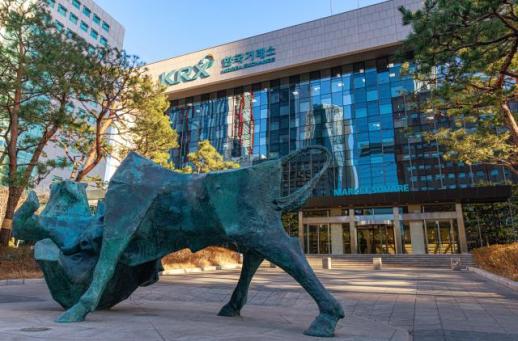 KOSPI Companies Report 175% Increase in Operating Profit, Excluding Samsung and SK Hynix This year, the KOSPI index has risen by 74%, driven by ample liquidity and the so-called "Samsung and SK Hynix effect." This trend is reflected in the earnings of KOSPI-listed companies. In the first quarter, the operating profit of KOSPI-listed companies increased by 175% compared to the same period last year. However, excluding Samsung Electronics and SK Hynix, the increase was only about 2%. According to the Korea Exchange's report on the first-quarter earnings of December fiscal year-end companies, the consolidated operating profit of 639 listed companies reached 156.3194 trillion won, marking a 175.83% increase year-on-year. Revenue was 927.5409 trillion won, and net profit rose by 141.4436 trillion won, reflecting increases of 19.49% and 177.82%, respectively. The consolidated operating profit margin improved to 16.85%, up 9.55 percentage points from the previous year, while the net profit margin rose to 15.25%, an increase of 8.69 percentage points. Samsung Electronics and SK Hynix continued to dominate, with their first-quarter revenue at 157 trillion won and operating profit at 84 trillion won, accounting for 31.73% of total revenue and 77% of operating profit. Excluding these two companies, the remaining listed firms saw revenue and operating profit increase by 2.36% and 2.05%, respectively. Among various sectors, 12 industries, including electronics and non-metallic minerals, reported increased operating profits, while eight sectors, including entertainment and culture, and paper and wood, experienced declines. The debt ratio of KOSPI-listed companies was 108.74%, a decrease of 1.64 percentage points compared to the end of last year. Among the 639 companies analyzed based on consolidated financial statements, 504 reported net profits, a 3.60% increase from the previous year. In the KOSDAQ market, six out of ten listed companies reported profits, with significant increases in operating and net profits. According to the Korea Exchange, the combined operating profit of 1,273 KOSDAQ companies reached 4.1284 trillion won, up 78.17% year-on-year. Revenue increased by 21.72% to 84.9461 trillion won, while net profit surged by 171.22% to 4.4342 trillion won. The operating profit margin and net profit margin improved to 4.86% and 5.22%, respectively, up 1.54 percentage points and 2.88 percentage points from the previous year. The debt ratio for the first quarter was 122.03%, an increase of 9.23 percentage points compared to the end of last year.* This article has been translated by AI. 2026-05-19 17:15:00
 -
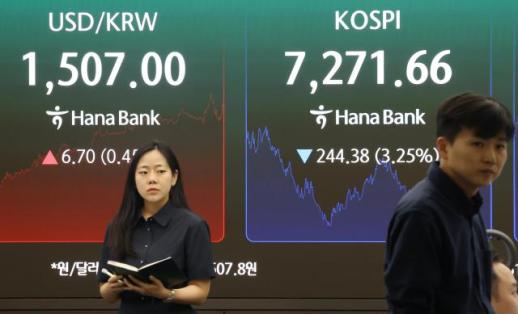 Korea's bond and currency retreat deepens rate hike bias SEOUL, May 19 (AJP) - South Korean bonds and currency took a renewed beating amid broad strengthening in the greenback and a global debt retreat amid jitters over government borrowing to finance war costs and inflation risks with little sign of the Gulf crisis abating. Long-dated sovereign bonds across major economies — including the United States, Japan, and the United Kingdom — have hit levels unseen in two to three decades. And Korean bonds rank among the worst performers, despite the country's inclusion in the FTSE World Government Bond Index (WGBI). Korea's 10-year benchmark yield closed Tuesday at 4.210 percent, easing 2.9 basis points from Monday's annual high of 4.239 percent, narrowing the spread with the equivalent U.S. Treasury to just 36 basis points. The 10-year U.S. Treasury was trading at 4.608 percent as of 0545 GMT. Unlike equities, Korean bonds have been battered by prolonged Middle East conflicts. The 10-year yield has surged more than 31 basis points since end-April and 85 basis points since December — outpacing a 22-basis-point rise late April and a 42.64-basis-point climb from December in equivalent U.S. Treasuries, and a 21-basis-point and 67-basis-point jump in Japanese government bonds over the same periods. Concerns are mounting domestically that bond supply-and-demand conditions are deteriorating rapidly. Kang Seung-won, a fixed-income analyst at NH Investment & Securities, attributed the recent yield spike not to a simple sell-off but to a "buyer strike." Investors, he said, are reluctant to aggressively buy bonds at a time when the government is expanding issuance, the economy is holding up better than expected, and the central bank has kept the door open to further tightening. The government set its Treasury bond issuance volume for May at approximately 19 trillion won, up from the prior month. Market observers noted that despite improving prospects for tax revenue on the back of a semiconductor sector recovery, signals that the government intends to channel those resources into economic stimulus rather than fiscal consolidation have added further pressure to the bond market. "Since the government has shown a stance averse to tightening, a sentiment appears to be spreading that additional Treasury issuances could be on the horizon," a bond market source said on condition of anonymity. The global bond rout is compounding the pressure. The U.S. 30-year Treasury yield hovered at 5.18 percent on Monday, its highest in roughly 19 years, while Japan's 10-year yield touched 2.789 percent Tuesday, a near 29-year high. Markets have pointed to soaring energy prices stemming from the Middle East conflict and anxiety over expanded fiscal spending by major economies as key drivers of upward pressure on long-term rates. Global financial markets are also reassessing the return of so-called bond vigilantes — investors who protest runaway inflation and heavy government borrowing by selling bonds and driving yields higher. Analysts noted that anxiety intensified after U.S. Treasury Secretary Scott Bessent refrained from offering market-stabilizing assurances during the recent Treasury sell-off. The won has mirrored the bond market's woes. The currency closed at 1,505.7 per dollar in Seoul on Tuesday, strengthening 7.4 won from the previous session, though it remains under sustained pressure. The won had briefly recovered to 1,470.5 on May 6 — buoyed by broad dollar weakness and a concentrated wave of exporter dollar-selling — but the rebound proved short-lived. As Middle East risks re-escalated and pushed international crude prices back above $100 per barrel, safe-haven demand for the dollar reasserted itself. South Korea's heavy dependence on crude oil imports is seen as a key amplifier of won weakness: rising oil prices tend to push up import costs and widen the trade deficit, fueling further dollar demand among market participants. Combined with the bond market's deterioration, fears of foreign capital outflows are growing. If the dual weakness in bonds and the currency — marked by simultaneous rises in long-term yields and the exchange rate — persists, broader domestic financial market volatility could escalate. 2026-05-19 17:13:01
 -
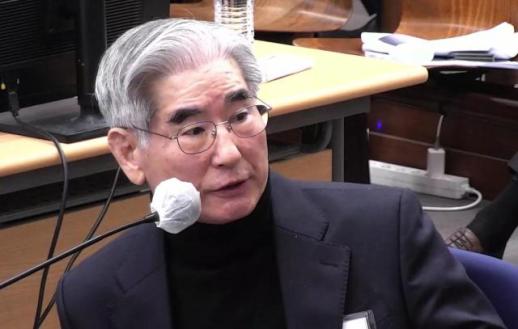 Former Defense Minister Kim Yong-hyun Sentenced to Three Years for Evidence Tampering On May 19, a South Korean court sentenced former Defense Minister Kim Yong-hyun to three years in prison for obstructing official duties and instructing evidence tampering. The Seoul Central District Court's 34th Criminal Division, led by Judge Han Seong-jin, found Kim guilty of using his position to undermine the legitimate judicial process, deeming his actions a serious crime against the state. The court affirmed all charges brought against Kim by the special prosecutor's office. It specifically noted that Kim's directive to destroy evidence made it difficult to uncover the truth surrounding the declaration of martial law. "The defendant (Kim Yong-hyun) committed the crime by exploiting his significant position as Defense Minister, and his actions through evidence tampering hindered the discovery of the substantive truth regarding the martial law declaration," the court stated. The court also ruled against Kim's actions in delivering a secure phone to former Army Intelligence Commander Noh Sang-won, emphasizing that handling security equipment is a legitimate duty of the presidential security service. "Noh, at the time, was a civilian and had issues with his qualifications, yet the defendant deceived the security service into believing the phone was necessary for investigations," the court pointed out, indicating a clear intent to obstruct the security service's official duties. Additionally, the court rejected Kim's defense team's claims of prosecutorial abuse of power, stating, "Considering the investigation period and the suspension of the investigation under the insurrection special prosecutor law, it cannot be concluded that the prosecution abused its power. While the charges may seem somewhat broad, this is unavoidable given the nature of the actions and does not impede the defendant's right to defense." The court also largely dismissed the defense's arguments against the admissibility of evidence collected during the search and seizure, recognizing it as lawful. However, the court took into account that Kim had no prior criminal record at the time of the offenses, which was a mitigating factor in his sentencing. Kim is accused of deceiving the presidential security service to deliver a secure phone to Noh on December 2, 2024, the day before the martial law was declared. According to the special prosecutor's investigation, Noh used the secure phone as the head of the 'Second Investigation Team,' which was formed immediately after the martial law was declared to investigate allegations of election fraud. Furthermore, Kim is also charged with instructing his civilian secretary, Yang, to destroy key documents related to the martial law, including a public address and printed proclamations, two days after the martial law was declared on December 5. This case marks the first indictment following the establishment of the special prosecutor's team led by Jo Eun-seok, which was formed shortly after Jo's appointment on June 12 of last year. The special prosecutor's office charged Kim with obstructing official duties and instructing evidence tampering just seven days after Jo's appointment.* This article has been translated by AI. 2026-05-19 17:12:00
 -
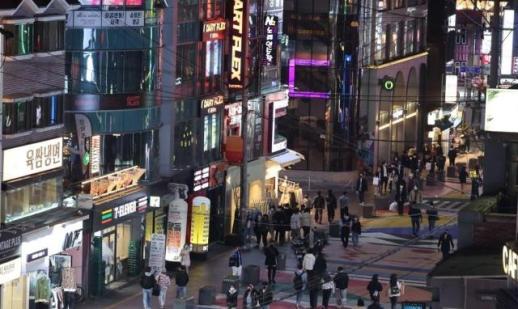 Foreign Tourists Drive Shift from Offices to Hotels Near Hongdae In the bustling commercial areas near Hongdae and Sinchon, foreign tourists have emerged as a key consumer demographic, prompting some office buildings to convert parts of their spaces into accommodations. This shift is attributed to the growing demand for lodging and tourism services driven by international visitors. While sales in college areas have increased, the vacancy rates for small businesses have also risen. This trend is linked to a decline in the proportion of consumers in their 20s and the growing prevalence of delivery, online, and contactless shopping. According to a report from Aju Economy on May 19, rental agreements for accommodations have recently been signed for several floors of the Master Building in Changcheon-dong, Seodaemun-gu. This building, which stands 10 stories tall and is located a four-minute walk from Hongdae Station, was previously the headquarters of Master Motors. After plans for a complete sale were abandoned, it was listed for rent starting in the fourth quarter of last year. Rental prices have been steadily rising. Data collected by the commercial real estate service firm R Square shows that a rental listing in the Fidelia Tower, within walking distance of Sinchon Station, had a net operating cost (NOC) of 174,200 won per square meter in the third quarter of last year. This marks an increase from 142,500 won in the first quarter of 2022 and 170,800 won in the fourth quarter of 2024. NOC represents the total rental cost including management fees. According to the Korea Real Estate Agency, the office vacancy rate in the Hongdae and Hapjeong areas was 6.1% in the first quarter of this year, higher than the Seoul average of 5.2%. However, it was below the city average in the third and fourth quarters of last year. Jeong Seon, CEO of Jeongseon Estate, noted, "Office rentals in this area are limited in supply, and large buildings that have been completed in the past three years have often been leased before they were even finished. With consistent demand, rental prices have been increasing by 3% to 5% annually." As spending by foreign tourists increases, sales in the Hongdae area have also shown an upward trend. According to the Seoul Business Analysis Service, sales in the Hongdae area reached 618.7 billion won last year, a 30.1% increase from 475.5 billion won in 2021. Sales figures for the following years were 590.3 billion won in 2022, 626 billion won in 2023, and 635.9 billion won in 2024. According to Orange Square, which operates the Wowpass payment platform for foreign tourists, Hongdae ranks as the third most popular area for foreign tourist spending. In contrast, the Sinchon area has seen a slowdown in growth. Sales in the Sinchon area were 331.2 billion won in 2021, 383.8 billion won in 2022, and 417 billion won in 2023, but dropped to 407.2 billion won in 2024 and 382.6 billion won last year, marking two consecutive years of decline. This disparity highlights differing trends in foreign tourist demand and foot traffic within the same college town. However, the increase in sales has not benefited all local businesses equally. Since last year, the vacancy rate for small businesses in college areas has surged. Small businesses are defined as those with two stories or fewer and a total floor area of less than 330 square meters. The vacancy rate for small businesses in the Hongdae and Hapjeong areas reached 14.2% in the third quarter of last year, more than tripling from 4.6% in the previous quarter. The vacancy rate remained in double digits at 13% in the first quarter of this year. The Sinchon and Ewha areas also recorded a vacancy rate of 15.1% in the third quarter of last year, maintaining that figure into the first quarter of this year, significantly higher than the 4.6% recorded in the second quarter of 2025. The share of domestic consumers in their 20s, who were once the primary demographic in college areas, has also declined. In the Sinchon area, the revenue share from consumers in their 20s fell from 33.3% in 2021 to 27.2% last year. Similarly, in the Hongdae area, the share dropped from 47.9% in 2021 to 43.4% last year. The end of the COVID-19 loan extension measures for small business owners and self-employed individuals in September of last year has also contributed to the financial burdens of struggling small stores, increasing their costs for loans and rent. Lee Soo-jin, a researcher at the Consumer Trend Analysis Center at Seoul National University, stated, "The changes in consumer patterns are significant. The rise of delivery, online, and contactless shopping has reduced the frequency of in-person visits to stores." She added, "The sharp increase in vacancy rates indicates that policy impacts are substantial. With the end of loan extensions for small business owners and self-employed individuals, the burden has increased for the most vulnerable stores."* This article has been translated by AI. 2026-05-19 17:07:04
 -
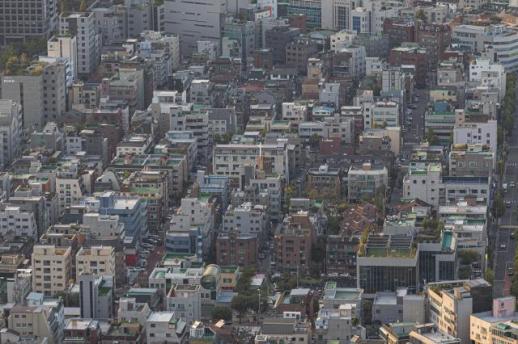 Seoul Villa Transactions Surge 31% Amid Rental Crisis The volume of villa transactions (including multi-family homes) in Seoul has increased by more than 30% this year compared to last year. As the rental crisis for apartments intensifies, demand is shifting to the relatively lower-priced non-apartment market, while investment interest is also returning, particularly in areas undergoing early redevelopment. According to the Ministry of Land, Infrastructure and Transport's real transaction disclosure system, from January to May 19, 2026, there were 15,157 villa transactions in Seoul. This marks a 31.0% increase (3,587 transactions) from the same period last year, which recorded 11,570 transactions. This represents the most significant recovery since the sharp decline in transactions following rental scams in 2023. The recovery trend, which began in the second half of last year in certain redevelopment areas, has now spread across Seoul. By district, Jongno-gu saw the highest increase in transaction volume, rising 150.0% compared to last year. However, analysts note that Jongno's overall transaction volume is relatively small, making it susceptible to base effect influences. More substantial increases were observed in districts such as Gwangjin-gu, Dobong-gu, Seodaemun-gu, and Gangbuk-gu. In Gwangjin-gu, villa transactions surged from 617 last year to 1,071 this year, a 73.6% increase. Dobong-gu followed with a 63.6% rise, Seodaemun-gu with 47.8%, and Gangbuk-gu with 36.4%. Other districts, including Songpa-gu, Eunpyeong-gu, and Yangcheon-gu, also experienced notable increases. Gwangjin-gu's growth is attributed to investment demand driven by redevelopment expectations in the Jayang and Junggok-dong areas. Villas in the early stages of redevelopment require relatively lower initial investments, and the possibility of purchasing with a rental guarantee—known as 'gap investment'—has led to continued inquiries from investors. A real estate agent in Gwangjin-gu stated, "With lower entry prices than apartments and the anticipation of redevelopment, there is a simultaneous movement of demand for both living and investment purposes. We are also seeing steady inquiries from those looking to purchase villas as a form of asset investment." In contrast, the increase in transactions in outer districts like Dobong, Gangbuk, and Seodaemun is seen as being driven more by actual housing needs than investment. According to Asil, the number of rental listings in Dobong-gu has decreased by over 14% in the past ten days, totaling 164 listings. As apartment rental prices rise rapidly and listings dwindle, tenants are moving towards older villas or non-apartment markets, which have lower deposit burdens. Statistics from the Korea Real Estate Agency indicate that last month, rental prices in Seongbuk-gu rose by 0.92%, the highest increase in Seoul, followed by Gwangjin-gu (0.96%), Nowon-gu (0.79%), Seodaemun-gu (0.78%), and Dongdaemun-gu (0.77%). A decrease in supply is also cited as a factor influencing market dynamics. According to the Ministry of Land, Infrastructure and Transport, the number of completed villas in Seoul dropped from 23,389 units in 2021 to just 4,329 units last year, an 81.5% decline. With both actual and investment demand flowing into the market, signs of price rebounds are emerging in some areas. The Korea Real Estate Agency's "April National Housing Price Trend Survey" reported a 0.55% increase in Seoul's housing price index. Both apartments and villas have continued to rise in price this year, with the average sale price of villas increasing by 0.62% last month, surpassing the apartment price increase of 0.55% during the same period. However, some experts caution against declaring a full market recovery. There remains significant regional polarization, and transactions for less desirable locations or older villas continue to lag. Kim Hyo-seon, a senior real estate analyst at KB Kookmin Bank, noted, "In key areas like Gwangjin, Yongsan, and Dongjak, investment demand is driven by redevelopment expectations that circumvent land transaction permit regulations, while in outer districts, the majority of purchases are motivated by actual housing needs due to rising living costs. However, unlike earlier this year, villa prices have risen significantly, and market risks persist, so it is advisable to refrain from hasty purchases and to adopt a wait-and-see approach."* This article has been translated by AI. 2026-05-19 17:03:32
 -
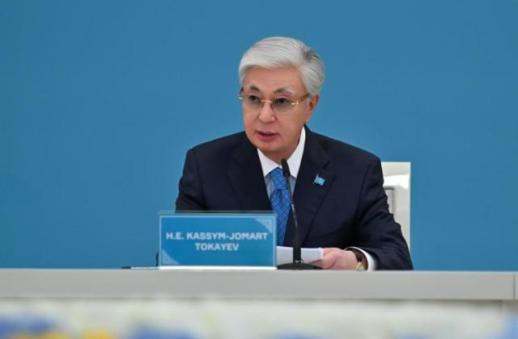 Kazakhstan's President Tokayev urges digital alliance among Turkic states SEOUL, May 19 (AJP) - President of Kazakhstan Kassym-Jomart Tokayev urged member nations of the Organization of Turkic States to build a unified artificial intelligence and digital framework to secure sustainable advancement amid an unstable global environment, the Embassy of Kazakhstan in the Republic of Korea said Tuesday. Speaking at an informal summit in the city of Turkistan on May 15, Tokayev positioned technological cooperation as a vital tool for economic resilience. The initiative highlights a growing trend among regional blocs to establish independent digital infrastructure and tech sovereignty. Leaders at the summit focused on pooling technological resources to accelerate economic integration, as the organization transitions from a cultural and historical alliance into a practical high-tech and trade partnership. During his address, Tokayev introduced several practical proposals to deepen integration across the bloc, including the mutual recognition of digital signatures and electronic documents. He also proposed the creation of a joint information technology hub called Turkic AI, which would be located at the newly established Alem.ai International Center for Artificial Intelligence in Astana. To support the regional ecosystem, Kazakhstan plans to offer specialized educational grants to citizens of other Turkic states at a planned artificial intelligence university. The country has recently accelerated its domestic tech agenda by enacting a national Digital Code, passing a law on artificial intelligence, and launching two supercomputers. The Kazakh president also stressed that technological advancement must be balanced with the preservation of cultural heritage. He called for the development of a convention to protect Turkic civilization alongside a multilingual digital platform dedicated to the history and culture of the member nations. Tokayev explicitly rejected characterizations of the regional grouping as a geopolitical or military bloc, emphasizing its strictly cooperative focus. "Recently, opinions have been voiced portraying our organization as a military alliance," Tokayev said. "It is obvious that those spreading such speculation pursue malicious goals and seek to sow discord. It is a unique platform aimed at strengthening trade, economic, technological, digital, cultural, and humanitarian cooperation among brotherly nations." 2026-05-19 17:00:00
 -
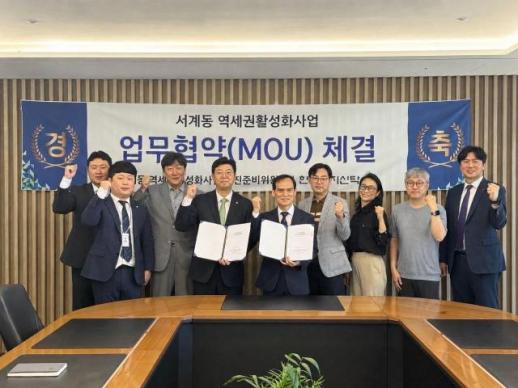 Yongsan District Signs MOU with Korea Land Trust for Station Area Revitalization The Seogye-dong Station Area Revitalization Committee in Yongsan District announced on May 19 that it signed a memorandum of understanding (MOU) with Korea Land Trust on May 15 to advance a trust-based redevelopment project. The revitalization project aims to transform the aging low-rise residential areas in Seogye-dong, specifically the sites at 234-5 (Zone A) and 32-1 (Zone B), into a vibrant hub with a total of 578 housing units (407 in Zone A and 171 in Zone B) centered around the Seoul Station area. The project site is strategically located at the intersection of Seoul Subway Lines 1, 4, Airport Railroad, and Gyeongui-Jungang Line, having passed the selection review for the station area revitalization project by the Seoul city government in March. On April 14, a bidding announcement was made for the trust company, leading to Korea Land Trust being selected as the final pre-trust company to sign the agreement. The committee stated, "We will work closely with Korea Land Trust, which has demonstrated outstanding results in trust-based redevelopment projects, to transform the area into a landmark around Seoul Station." The Seogye-dong revitalization project falls within the district unit plan area, where the need for improving the residential environment has been consistently highlighted due to the concentration of aging housing. Nearby areas, including the northern Seoul Station development project and the rapid integrated planning redevelopment in the Seogye-dong 33 area, are undergoing significant development, which is expected to create synergies. Particularly, the project benefits from excellent transportation access as it is part of the Seoul Station area, with easy connections to major arterial roads such as Manrijae-ro and Cheongpa-ro, which will diversify urban functions through enhanced connectivity with surrounding regions. Following the signing of the MOU, the committee and Korea Land Trust plan to promptly initiate the designation of the redevelopment area and the selection of the project implementer. A representative from Korea Land Trust remarked, "Given the large-scale redevelopment projects underway in the vicinity, we will strive to create differentiated residential value within Seoul through systematic development." Meanwhile, the station area revitalization project has been underway since 2019, aimed at creating a living space that integrates work, residence, and leisure activities.* This article has been translated by AI. 2026-05-19 17:00:00
 -
 S. Korea launches cyber breach probe panel ahead of law SEOUL, May 19 (AJP) - South Korea's Ministry of Science and ICT launched a statutory committee empowered to investigate major cyberattacks, moving to shore up the country's defenses against an escalating wave of digital intrusions. The cyber breach investigation committee held its inaugural meeting on Tuesday, marking the formal stand-up of a body created under a revised Information and Communications Network Act passed in response to a string of high-profile breaches last year. The urgency behind the move is hard to overstate. Breaches at top mobile carriers SK Telecom and KT, along with incidents at Lotte Card and e-commerce platform Yes24, exposed millions of South Koreans' personal data in 2025 alone — a sobering streak that rattled confidence in a country long regarded as a global IT leader. Once fully operative, the committee can initiate ex officio investigations into serious incidents — even without a company filing a report — when evidence of a breach is clear or significant public harm is at risk. The revised law is not scheduled to take effect until Oct. 1, but the ministry moved up the committee's launch to build out a public-private response framework in advance, allowing the body to function in an advisory capacity in the interim. The 13-member panel draws on academic experts and private-sector security professionals alongside specialists from the Korea Internet & Security Agency, the Financial Security Institute, and the National Security Research Institute. Members with confirmed ties to companies under investigation will be barred from participating, the ministry said. "We will do our best to effectively respond to cyberattacks by combining private-sector expertise with the government's public mandate," Vice Minister Ryu Je-myung said at the meeting, where attendees also discussed AI-driven security threats and avenues for deeper cooperation between industry and the state. 2026-05-19 16:59:08
 -
 Kim Jeong-cheol Accuses Jung Won-oh of Claiming Diminished Capacity During Assault Trial On May 19, Kim Jeong-cheol, the Reform Party's candidate for Seoul mayor, pointed out that Jung Won-oh, the Democratic Party's candidate, claimed diminished capacity during his assault trial related to past incidents. Jung has previously explained that his altercations stemmed from differing views on the May 18 Democratic Uprising. During a press conference at the National Assembly, Kim stated, "The court documents indicate that Jung argued he was in a state of diminished capacity due to alcohol. While he now claims he fought over the May 18 issue, he previously asserted in court that he was intoxicated and not in control of his faculties." Kim criticized Jung's inconsistency, saying, "It doesn’t add up that Jung, who claimed he couldn’t remember due to drinking, now asserts that the fight was over differing views on the May 18 Democratic Uprising." He further emphasized that there is a societal consensus that alcohol should not lessen the responsibility for violence. "Yet Jung claimed diminished capacity due to alcohol during his trial, and the Democratic Party has put forth such a candidate for mayor of Seoul," he said. Kim also highlighted that there was no sincere remorse or reconciliation with victims noted in the court documents regarding Jung's past crimes. The ruling did not mention any mitigating circumstances such as the defendant's remorse, agreements with victims, or character references, which are typically considered in sentencing. "The ruling confirms that there was no agreement with the victims or any sincere remorse or apology when the judge determined the sentence," Kim said. "Jung has emphasized that the court documents speak for themselves, but he can no longer hide behind them." Accompanying Kim at the press conference, Cheon Ha-ram, the Reform Party's floor leader, remarked, "A fine of 3 million won is equivalent to a year's salary based on the minimum wage at that time, indicating that the court imposed a very severe sentence. Furthermore, since Jung's claims about the May 18 incident and diminished capacity contradict each other, he has either misled the public or the court, or both." Jung was fined 3 million won in July 1996 for assaulting two citizens and two police officers while drinking in Yangcheon District in October 1995, when he was an aide to the Yangcheon District Mayor. According to the minutes from the Yangcheon District Council, the incident reportedly stemmed from Jung's demand for an overnight stay with a female employee at an entertainment establishment, which was refused. In response, Jung has maintained that the altercation was due to differing views on the May 18 Democratic Uprising. However, according to a recording released by People Power Party lawmaker Joo Jin-woo, the victim stated, "To my recollection, there was no argument related to May 18 at all." In light of these developments, the People Power Party filed a complaint against Jung on May 18 for disseminating false information and perjury, alleging that he misrepresented his past assault record and falsely accused lawmakers Kim Jae-seop and Joo of wrongdoing by releasing the council minutes and victim recordings.* This article has been translated by AI. 2026-05-19 16:57:00
 -
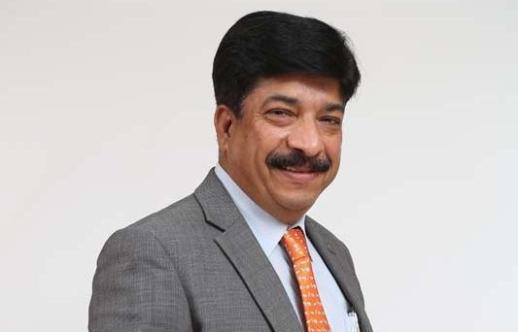 OPINION: Beijing summit and structural stabilization of global commerce KARACHI, May 19 (AJP) - The international economic order has entered a period of profound structural transformation, forcing a reassessment of how the world’s two largest economies manage their deep systemic interdependencies. For the past several years, the prevailing consensus across global capitals dictated that the financial and industrial relationship between Washington and Beijing was headed toward a permanent and destructive fracturing. However, the high-stakes Beijing summit between President Donald Trump and Chinese President Xi Jinping has challenged this dominant narrative, delivering a concrete framework for strategic stability paired with immediate commercial deliverables. Coming at a time of heightened global market jitters and persistent Indo-Pacific tensions, this development establishes a vital floor under the international system. It demonstrates that intense competition can be successfully channeled within predictable boundaries to protect global commerce and prevent dangerous miscalculations. This crucial stabilization was not an accidental breakthrough but the result of meticulous, highly synchronized diplomatic groundwork and a deliberate, high-level effort to foster an atmosphere of mutual respect. A striking manifestation of this pragmatic approach occurred at South Korea's Incheon International Airport, where Chinese Vice Premier He Lifeng and U.S. Treasury Secretary Scott Bessent held an extraordinary, closed-door bilateral session. Lasting three hours in a secure airport conference facility, this unannounced meeting served as the primary administrative mechanism to coordinate the summit agenda, establish institutional consensus, and align specific commercial expectations before the state leaders convened in Beijing. The choice of a neutral, third-country logistics hub for senior-level economic coordination underscores the intense operational flexibility being deployed by both powers to isolate critical trade data from broader geopolitical noise. Crucially, this diplomatic engineering was matched by significant rhetorical and symbolic overtures from the highest levels of Chinese leadership. In the weeks leading up to the summit, President Xi Jinping set a constructive tone by issuing a series of public statements that underscored the deep historical ties and structural alignment between the two nations, deliberately steering away from aggressive posturing. Upon President Trump’s arrival in Beijing, this goodwill translated into highly visible diplomatic gestures. President Xi extended an exceptionally warm welcome, hosting an intimate, small-group dinner at a historic state venue prior to the formal plenary sessions. Throughout the summit, Xi explicitly described the economic relationship as a mutually beneficial, win-win endeavor. By framing the bilateral bond not as an ideological battleground but as a shared responsibility for global stability, these deliberate gestures signaled Beijing’s deep interest in sustaining commercial flows and lowering the geopolitical temperature. To understand why this summit marks a critical turning point for the global economy, the breakthrough can be analyzed through three distinct structural pillars that define this new era of managed engagement. The first pillar centers on tangible, interest-driven commercial reciprocity. Rather than pursuing an unrealistic and self-defeating separation of the two largest economies, the summit prioritized practical economic leverage to secure targeted market access. China’s commitment to major purchases of American agricultural products, energy resources, and Boeing aircraft represents a significant stabilization mechanism for primary industries. By building upon historical peaks where agricultural exports alone reached over thirty-six billion dollars, these balanced outcomes reinforce domestic incomes while providing Beijing with predictable access to essential commodities. This pragmatic economic integration proves that commercial flows can be sustained to mutual advantage even as both nations continue to fortify their respective industrial bases and diversify supply chains. The second pillar involves the creation of a sophisticated framework for strategic stability, replacing unmanaged friction with structured competition. This architecture relies on a clear conceptual progression: utilizing cooperation as a baseline where mutual interests align, bounding unavoidable competition within institutional guardrails, managing friction through direct communication, and preserving long-term peace as a shared aspiration. This formula does not eliminate intense rivalry in advanced sectors like artificial intelligence, semiconductors, or advanced manufacturing, but it establishes critical diplomatic shock absorbers. By reinforcing direct leader-level dialogue, upgrading military hotlines, and initiating targeted technical discussions regarding AI-related strategic risks, the framework substantially reduces the risk of accidental escalation around sensitive regional friction points. The third pillar reflects a transition toward a smarter realism in international diplomacy, moving past the ideological polarization that has long constrained global policy. The presence of major corporate executives in Beijing, representing leading financial institutions and advanced manufacturing firms, underscored a fundamental reality: global supply chains and capital markets remain deeply intertwined. By leveraging economic strength to extract specific commercial commitments while maintaining strict vigilance on core national security interests, the approach establishes a disciplined middle path. This strategy rejects pure confrontation as cost-prohibitive and avoids total accommodation as counterproductive, opting instead for a hard-nosed bilateralism that allows both powers to advance their core interests without destabilizing the broader international order. For the wider global audience, this diplomatic reset carries immediate consequences for international trade and investment over the next six months. The stabilization of the Washington-Beijing corridor removes a significant portion of the geopolitical risk premium that has weighed heavily on global markets, lowering transaction costs for international businesses and offering a reliable anchor for global growth. When the two largest drivers of global demand achieve a predictable modus vivendi, the benefits ripple across the international system, easing inflationary pressures and providing long-term predictability for corporate capital expenditure decisions. The broader lesson for policymakers is that the international system functions best when major powers prioritize pragmatic dealmaking over systemic disruption. The outcomes achieved in Beijing, spearheaded by the preparatory diplomacy between Bessent and He Lifeng in Seoul and solidified by President Xi's reassuring statesmanship, illustrate that engagement with China is not a sign of vulnerability but an exercise in strategic clarity. It acknowledges China's legitimate and indispensable role in the global economy while ensuring that competition remains bounded by rules that protect international stability. Progress over the coming months will ultimately depend on the steady execution of these purchase agreements and the institutionalization of the new trade dialogue mechanisms, specifically the proposed permanent committees designed to process bilateral investment friction. Yet, the framework established at the summit offers the most realistic path forward for the global economy. By combining firm domestic defense with structured bilateral cooperation, this disciplined diplomacy ensures that both powers can coexist as indispensable anchors of global prosperity, providing a much-needed measure of steadiness to an anxious world. 2026-05-19 16:53:04