

Journalist

Jinkyu, Myung
-
 Expanded World Cup brings new chances for Asia as South Korea looks beyond 11th straight berth SEOUL, June 1 (AJP) - This year's World Cup, now just over a week away, will be remembered as special for several reasons. It will be the first hosted by three countries in the quadrennial football extravaganza's history, spread across vast distances in North America and, most notably, the first to expand from 32 to 48 teams. For Asia, the number itself matters almost as much as the tournament. What once felt like a narrow gate to the sport's grandest stage has widened significantly, as more Asian teams will now compete than ever before, with eight countries from the region - Australia, Iran, Japan, Jordan, Qatar, Saudi Arabia, South Korea and Uzbekistan - having qualified. And for South Korea, which made its 11th consecutive World Cup appearance, the moment brings mixed emotions, pride in reaching the tournament again, but also concern about what lies ahead. The country remains one of the most consistent teams on the global stage, qualifying every four years, while players and coaches have changed and the sport has become faster and more technical. But the steady presence can sometimes hide underlying stagnation. With the expansion of the World Cup, qualification has taken on a different meaning, especially in Asia. In the past, teams had to compete for only a few spots, making qualification highly competitive. This pressure pushed countries like Japan, Iran, Saudi Arabia and South Korea to constantly improve, develop talent, and stay competitive. The expanded format gives Asia around eight World Cup berths, which is good news for countries that once saw qualification as nearly impossible. As a World Cup appearance can boost domestic interest, attract investment, and inspire the next generation of players, countries such as Iraq, Uzbekistan, and Viet Nam could benefit the most, potentially making Asian football more diverse and unpredictable. FIFA, the governing body of the World Cup, is fully aware of this. More teams mean bigger markets, larger audiences, and greater global influence. However, critics say the expansion could weaken the tournament's quality, as weaker teams may lead to more one-sided matches. There are also concerns that qualification may lose some of its meaning if too many countries see it as achievable. But from Asia's perspective, the change is hard to resist. For decades, European and South American powerhouses have enjoyed structural advantages such as stronger leagues, deeper talent pools and greater representation at major tournaments. Expansion gives the rest of the football world a rare chance to close that gap. Japan increasingly speaks about winning the World Cup as a realistic goal, not just relying on advancing to the group stage. Saudi Arabia's investment in football has become impossible to ignore, while Iraq and Uzbekistan are grooming ambitious new generations, which is gradually breaking down the long-standing hierarchy in Asian football. South Korea, meanwhile, has seen its football profile improve, driven by star players including striker Son Heung-min. However, that success has at times masked deeper structural issues. Should the country now invest more aggressively in youth coaching and infrastructure for domestic players? Should the national team develop long-term strategies that are less dependent on individual stars? These questions are more difficult than assessing tournament outcomes, but they are ultimately the ones that matter. The expanded 48-team World Cup signals a new era in which South Korea no longer needs to prove it just belongs to the tournament. Now it must prove what it can do once it gets there. 2026-06-01 09:27:10
 -
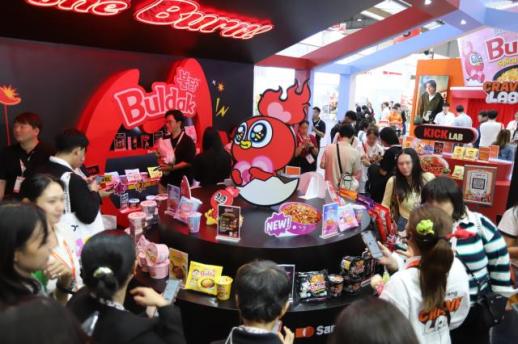 Samyang Foods wraps up THAIFEX-ANUGA 2026 with record booth traffic SEOUL, June 01 (AJP) - South Korean instant noodle maker Samyang Foods drew about 48,000 visitors to its booth at THAIFEX-ANUGA 2026, Asia's largest food trade fair, as the company pressed its push into Southeast Asian markets. The five-day event ran from May 26 to 30 in Bangkok, where Samyang staged an experiential showcase under the "Samyang Crave Lab" concept, dividing its booth into dedicated zones — or "brand labs" — for its three key labels: Buldak, MEP, and Tangle. Visitors sampled flagship products including Buldak and Carbonara Buldak, alongside locally tailored offerings from the MEP and Tangle lines. Southeast Asia currently accounts for about 20 percent of Samyang's total export revenue, with Thailand, Indonesia and Vietnam serving as the primary growth markets. The company said it plans to deepen its local consumer base through a broader product portfolio and stronger brand communication. "Through this THAIFEX, we were once again able to confirm global consumers' interest not only in Buldak, but also in our diverse brands such as MEP and Tangle," said a Samyang Foods spokesperson. "We will continue to bring differentiated products and brand experiences that reflect the needs of local consumers to the global market." 2026-06-01 09:27:01
 -
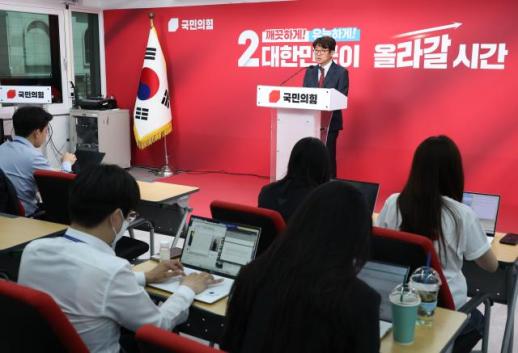 Yoo Yi-dong Vows to Pursue Unification with Hwang Kyo-ahn Until the End Yoo Yi-dong, the People Power Party candidate for the Pyeongtaek by-election, stated that he will strive for unification with Hwang Kyo-ahn, the candidate from the Liberty and Innovation Party, "until the last moment." During an appearance on SBS Radio's "Kim Tae-hyun's Political Show" on June 1, Yoo responded to a question about the possibility of unification with Hwang. Previously, on May 28, Yoo held an urgent press conference at the People Power Party headquarters in Yeouido, proposing unification to Hwang, stating, "We must unite the strength of conservatives." In response, Hwang criticized Yoo's proposal during a press conference the same day, calling it a "political show for the sake of appearances" and demanded Yoo's withdrawal from the race. When asked about Hwang's comments, Yoo said, "I proposed unification, and if he says I should withdraw, I have nothing to say. There is a strong desire in the region to unite the scattered conservative voices." Yoo added, "If conservatives are divided, it will only pave the way for the ruling party candidates in Pyeongtaek. Public sentiment is shifting significantly, and I must heed the residents' calls to unite the conservative voices." He further criticized Hwang's past actions, stating, "What he was trying to block through his hunger strike was the ruling party's unilateral constitutional amendment. There is also a special law to dismiss charges against the current president." He warned that if Kim Yong-nam from the Democratic Party and Cho Kuk from the Justice Party are elected, such attempts will become overtly aggressive. Yoo expressed hope that by uniting, they could prevent such developments, urging others to consider this significant cause. In response to Cho's criticism of Yoo's unification proposal as "nonsense," Yoo pointed out the hypocrisy, stating, "This is a typical case of 'do as I say, not as I do.'" He questioned Cho's motives, asking, "Is he seeking unification with Kim, who has been accused of loan sharking, or is it a unification to promote loan sharks? What will he say to that?"* This article has been translated by AI. 2026-06-01 09:27:00
 -
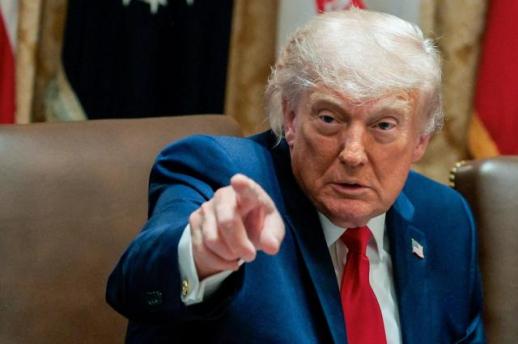 Trump: Iran Must Not Develop or Acquire Nuclear Weapons President Donald Trump has stated that he will not allow Iran to develop or acquire nuclear weapons. In an interview on May 30 with Fox News, hosted by his daughter-in-law Lara Trump, the president discussed the potential for a peace agreement with Iran, saying, "I will make a deal. We can open the Strait of Hormuz immediately with a signature." However, he emphasized that a key condition is that Iran must not possess nuclear weapons. Trump noted, "They (Iran) agreed. They originally said they would not develop nuclear weapons, and when I asked, 'What if you buy nuclear weapons?' they said they would not develop or purchase military weapons in any way. That is a significant difference." He added, "I am not in a hurry. Slowly, but surely, we are getting what we want," and warned, "If we do not get what we want, we will end it in another way," suggesting the possibility of resuming military action if negotiations break down. Trump's comments come as the U.S. and Iran continue to negotiate the final details of a peace agreement. Earlier, The New York Times reported that Trump had not approved a preliminary memorandum of understanding (MOU) between the U.S. and Iran and had sent it back to Iran with strengthened conditions. However, specific details of the revisions were not disclosed. Iranian news agency Tasnim reported that Iran is also expected to propose new amendments. A source stated, "The exchange of drafts between the two sides is ongoing, and Iran will certainly reflect its own amendments in the agreement. Nothing has been finalized yet." The source also noted that Iran is thoroughly preparing for the possibility of a no-deal situation.* This article has been translated by AI. 2026-06-01 09:24:00
 -
 Kim Joo-hyung Finishes Tied for 54th at PGA Charles Schwab Challenge Kim Joo-hyung finished tied for 54th at the PGA Tour Charles Schwab Challenge, which featured a total prize pool of $9.9 million. On June 1, local time, at Colonial Country Club in Fort Worth, Texas, Kim recorded a final round of 4-over par 74, with four bogeys and no birdies. With a total score of even-par 280, Kim concluded the tournament in a tie for 54th place. After starting strong with a 6-under par 64 to tie for first in the opening round, Kim struggled in the subsequent rounds, posting a 2-over par 72 in the second round and an even-par 70 in the third round. He aimed for a comeback in the final round but ultimately dropped further in the standings, leaving him disappointed. Russell Henley of the United States claimed the victory. Henley made consecutive birdies on holes 16 through 18 to tie with Eric Cole, also from the U.S. In the first playoff hole on the 18th, Henley secured a birdie, while Cole made par, allowing Henley to lift the winner's trophy. This victory marks Henley's first win of the season and his sixth career title, with a winner's prize of $1,782,000 (approximately 26.8 billion won). Defending champion Ben Griffin finished tied for third with a total score of 11-under par 269.* This article has been translated by AI. 2026-06-01 09:24:00
 -
 KOSPI Surpasses 8,500 for the First Time Amid Strong Performance from Major Stocks The KOSPI index broke through the 8,500 mark for the first time in history during early trading, setting a new all-time high. The index was buoyed by strong performances from major stocks, including Samsung Electronics and Hyundai Motor. According to the Korea Exchange, as of 9:10 a.m., the KOSPI was trading at 8,588.11, up 111.96 points (1.32%) from the previous trading day. The index opened at 8,485.67, up 9.52 points (0.11%), and then continued to rise, surpassing the 8,500 mark during trading. Individual investors purchased a net 620 billion won worth of stocks, while institutional investors bought 241.6 billion won. In contrast, foreign investors sold a net 855.2 billion won worth of stocks. Most of the top market capitalization stocks showed strong performance. Samsung Electronics rose by 2.52%, Hyundai Motor by 4.15%, Samsung Life by 1.93%, Samsung C&T by 5.32%, Doosan Enerbility by 5.68%, and LG Energy Solution by 0.22%. However, SK Hynix fell by 0.47%, SK Square by 1.38%, Samsung Electro-Mechanics by 5.03%, and HD Hyundai Heavy Industries by 1.44%. At the same time, the KOSDAQ index was trading at 1,055.14, down 19.66 points (1.83%) from the previous trading day. The index opened at 1,072.77, down 2.03 points (0.19%), and continued to decline. In the KOSDAQ market, foreign investors purchased a net 78.6 billion won worth of stocks, while institutional investors bought 4 billion won. Conversely, individual investors sold a net 78.9 billion won worth of stocks. The top market capitalization stocks in the KOSDAQ showed mixed results. Rainbow Robotics rose by 12.82%, Alteogen by 0.41%, Rino Industry by 0.92%, and HLB by 0.79%. On the other hand, EcoPro BM fell by 4.61%, EcoPro by 4.03%, Juseong Engineering by 7.50%, Kolon TissueGene by 5.86%, Samchundang Pharmaceutical by 6.19%, and Pepton by 3.65%.* This article has been translated by AI. 2026-06-01 09:18:00
 -
 Hyundai Motor Securities Upgrades Hanol BioPharma's Target Price on IMVT-1402 Reassessment Hyundai Motor Securities maintained its "buy" rating for Hanol BioPharma on June 1 and raised its target price from 85,000 won to 93,000 won. This adjustment is based on a reassessment of the pipeline's value following the clinical performance of the FcRn therapeutic IMVT-1402. Research analyst Kim Hyun-seok stated, "Considering the limited competition in the market and the efficacy of the clinical data, the company is significantly undervalued." Hyundai Motor Securities analyzed that the key indications for IMVT-1402, including thyroid eye disease (TED) and treatment-resistant rheumatoid arthritis (D2T RA), target patient groups that do not respond to existing therapies, highlighting a substantial unmet medical need. Kim noted, "In particular, the D2T RA registration trial achieved impressive efficacy rates of 72.7% for ACR20, 54.5% for ACR50, and 35.8% for ACR70 among patients who failed two or more advanced treatments. This is comparable to the existing first-line TNF-α inhibitors and even exceeds the results of JAK inhibitors used as second-line treatments." Consequently, there is potential for FcRn inhibitors to replace existing therapies for certain patient groups. Kim added, "The gap in corporate value compared to competitors is excessive. When compared to the market capitalization of global FcRn therapeutic competitor Azenex, Hanol BioPharma is currently undervalued."* This article has been translated by AI. 2026-06-01 09:18:00
 -
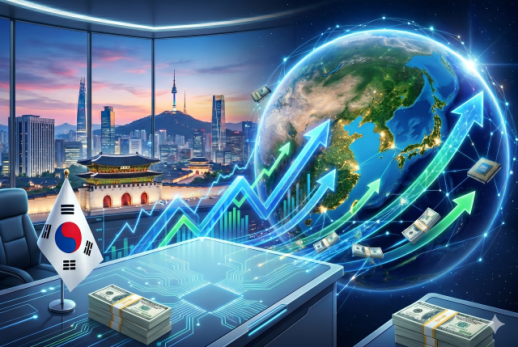 ASIA DEEP INSIGHT: Is declaration of second national founding necessary Now? From AI Semiconductors to Physical AI, South Korea's 100-Year Strategy Physical AI and Manufacturing AX: South Korea's Second Industrial Revolution As explored in Part 1, the AI revolution begins with the semiconductor. Yet, history-altering technologies have never remained confined to specific components or devices. The 18th-century steam engine was not a mere power source; it built railways and factories, igniting the Industrial Revolution. Nineteenth-century electricity was not simply energy; it illuminated cities and birthed mass production. The 20th-century internet, too, was more than a communication tool; it spawned e-commerce and the platform economy, linking the globe into a single network. The same holds true for AI. While the world today fixates on generative AI and semiconductors, historians a decade from now will likely record the late 2020s as the starting point of the Physical AI revolution. Until now, AI has largely resided behind screens. We have conversed with it, asked it to draft documents, and watched it generate images. But this is only the beginning. Moving forward, AI will step out into the real world, transforming into robots, automobiles, factories, and entire cities. AI is evolving from a technology that simply answers questions into one that physically moves, judges, and acts. This is Physical AI. The moment AI transcends digital boundaries to command physical space, humanity will cross the threshold of another industrial revolution. The recent maneuvers of global technology giants clearly illustrate this trajectory. Moving beyond the race for large language models, major U.S. AI companies are pouring astronomical investments into robotics, autonomous driving, and industrial automation. AI semiconductor firms are developing robot operating systems and simulation platforms, while automakers are turning their vehicles into massive AI platforms. Tesla is cultivating its humanoid robot, Optimus, as a future growth engine, and leading American tech firms are accelerating the development of industrial robots and automated logistics. If the smartphone was the definitive terminal of the internet era twenty years ago, robots and autonomous vehicles will undoubtedly be the core terminals of the AI era. Here, South Korea stands in a highly unique position. The United States boasts dominance in software and platforms, while China wields a colossal domestic market and state-driven investment power. However, nations possessing both a robust manufacturing base and cutting-edge technological capabilities are surprisingly rare. South Korea is home to world-class shipbuilding, automotive, battery, semiconductor, and electronics industries. A country that simultaneously commands top-tier shipbuilding technology, the world’s leading memory semiconductors, formidable global auto production capacity, and premier battery enterprises is a rarity. In the era of Physical AI, this convergence of physical and high-tech manufacturing becomes a tremendous strategic asset. Consider the shipbuilding industry. While Korean shipyards currently hold world-class technological prowess, many processes still rely heavily on skilled human labor. When AI and robotics enter the equation, the landscape changes entirely. In the design phase, AI can analyze hundreds of thousands of blueprints to propose the optimal structure; on the production floor, robots will execute welding, painting, and inspection. By leveraging digital twin technology, engineers can verify a vessel’s safety and performance in a virtual environment long before laying the keel. Even after a ship sets sail, AI will monitor engine health and fuel efficiency in real time to ensure optimal routing. Shipbuilding will evolve from a traditional manufacturing sector into a data-driven, ultra-precision industry. The automotive industry faces a similar metamorphosis. Historically, a car’s competitiveness was defined by engine performance and fuel efficiency. In the vehicles of tomorrow, software and AI will dictate market dominance. A single electric vehicle contains thousands of semiconductors, with AI orchestrating its every movement. As autonomous driving technology matures, the automotive sector will transition from a mechanical industry to a software industry. Soon, how intelligently a vehicle can make decisions and pilot itself will matter far more than traditional manufacturing metrics. If South Korea’s auto industry successfully navigates this AI transition, it will leap from being a mere exporter of finished cars to a vanguard nation of future mobility platforms. The battery sector is yet another linchpin of the Physical AI era. AI can optimize battery production lines, forecast lifespans with precision, and maximize energy efficiency. The fusion of AI and advanced batteries will spawn entirely new industrial ecosystems that extend far beyond electric vehicles, encompassing Energy Storage Systems (ESS), smart grids, and next-generation power networks. The global battery market is already swelling into the hundreds of billions of dollars, and demand will only accelerate alongside the proliferation of EVs and AI data centers. Because South Korea already harbors the world’s premier battery corporations, the synergistic potential of integrating AI is bound to be explosive. Logistics and maritime ports will experience an equal upheaval. Busan Port is a world-class transshipment hub, and Incheon Port serves as a critical Northeast Asian logistics artery. When AI-driven logistics systems are fully deployed, the movement and storage of containers, customs procedures, and route optimization will be entirely automated. Pairing autonomous cargo vessels with AI logistics platforms will slash costs and drive efficiency to its absolute peak. Positioned at the crossroads of global trade, South Korea is perfectly situated to be one of the first nations to implement and master these transformative changes. Even agriculture is no exception. AI will analyze soil conditions and shifting climate patterns to prescribe optimal farming methods, while drones and autonomous agricultural machinery will step in to resolve acute labor shortages. Given the severe aging and demographic decline currently confronting rural Korea, AI-driven agriculture is not a luxury but an existential necessity. Farming, too, is pivoting from a labor-intensive tradition to a data-intensive science. The unifying concept behind all these shifts is AX—AI Transformation. If the era of digital transformation was defined by collecting and utilizing data, the era of AI transformation is defined by data independently judging and executing tasks. Factories will operate themselves, equipment will self-diagnose, and logistics will self-optimize. We are shifting from an epoch where humans made every decision to one where AI serves as a co-decision maker. Much of the management and control functions that humans have performed over the centuries since the dawn of the Industrial Revolution will gradually transfer to artificial intelligence. The world is already locked in a fierce AX race. Germany is pushing smart manufacturing innovation through its Industry 4.0 initiative, while the United States is accelerating industrial transformation via cloud computing and AI. China is funneling immense capital into AI-based factory modernization under its Made in China 2025 strategy. Global consulting firms project that AI-driven manufacturing innovation will trigger tens of trillions of dollars in productivity gains. This is not merely a technological upgrade; it is a fundamental realignment of national competitiveness. The path South Korea must chart is unequivocal. We must not settle for remaining a semiconductor powerhouse; we must become the world’s preeminent AI manufacturing nation. Semiconductors are the starting line, but manufacturing AX is the grand expansion. South Korea must transcend being a country that merely manufactures AI chips to become a country that reinvents its entire industrial base through AI. To achieve this, a comprehensive national strategy is imperative. We cannot passively rely on the isolated successes of a few corporate champions. Education, research and development, industrial policy, power infrastructure, and regulatory reform must advance in absolute lockstep. We need robust power grids to feed AI data centers, universities and research institutes to cultivate world-class AI talent, and a dynamic investment ecosystem that nurtures innovative startups. Semiconductors and batteries, robotics and software, data centers and the power grid must all be interwoven into a single, cohesive national agenda. The electricity grid, in particular, is the critical bottleneck of the Physical AI era. AI data centers consume staggering volumes of energy; a single facility housing thousands of cutting-edge AI servers can demand as much power as an entire mid-sized city. The International Energy Agency already forecasts a drastic surge in global electricity demand driven by AI proliferation. Consequently, an AI superpower must simultaneously be an energy superpower. Without a holistic infrastructure encompassing nuclear power, renewable energy, next-generation transmission and distribution systems, and utility-scale energy storage, sustaining AI competitiveness will be impossible. Ultimately, competition in the Physical AI era transcends a mere technological arms race; it is a clash of national systems. Semiconductors, data centers, power grids, manufacturing, education, research, and financial ecosystems must operate seamlessly as a unified platform. South Korea already stands at this starting line. The only question is how swiftly we can move. If the AI semiconductor was our first window of opportunity, Physical AI and manufacturing AX represent the second. The nation that successfully seizes this second chance will undoubtedly anchor the global industrial order of the mid-21st century. If 20th-century South Korea forged the "Miracle on the Han River" through rapid industrialization, 21st-century South Korea can engineer a second miracle through Physical AI and manufacturing AX. This is not merely a matter of economic growth; it is a profound turning point that will dictate the nature of the South Korean state for the next hundred years. The contours of that answer are already emerging. If AI semiconductors inaugurated South Korea’s new industrial age, Physical AI will be the instrument with which we design our future civilization. The next hurdle is no longer technological—it is visionary. And that vision is precisely what we will explore in Part 3: 'Great Korea' and the Declaration of a Second National Founding in the AI Era. 2026-06-01 09:14:20
 -
 Blue Origin's New Glenn Rocket Explosion Raises Concerns for NASA's Artemis Program Blue Origin's next-generation rocket, New Glenn, experienced a significant explosion during an engine test. This incident is expected to disrupt the timeline of NASA's crewed lunar exploration program, Artemis. According to reports from Reuters and other outlets, the explosion occurred on May 28 during an engine static fire test at Launch Complex 36 at Cape Canaveral Space Force Station in Florida, just ahead of a planned launch next week. Blue Origin announced on social media platform X (formerly Twitter) that "an anomaly occurred during the static fire test" and stated, "We will provide updates as more information becomes available." The company confirmed that there were no reported injuries. Founder Jeff Bezos also addressed the incident on X shortly after it occurred. He noted that it is too early to determine the root cause but confirmed that an investigation is underway. He emphasized, "We will restore everything that needs to be rebuilt and resume flights." New Glenn is a large reusable launch vehicle under development by Blue Origin. Industry experts have viewed it as a potential competitor to SpaceX's Falcon 9 and Starship. The explosion raises concerns about potential delays in NASA's Artemis project. Reuters reported that delays in Blue Origin's development schedule could impact the overall lunar exploration plans. NASA plans to use lunar landers developed by Blue Origin and SpaceX for the Artemis 4 mission, scheduled for 2028. Recently, NASA signed a contract with Blue Origin worth approximately $280 million to transport exploration equipment to the lunar surface using the uncrewed lunar lander Mark 1 as part of the Artemis program. The repercussions of this explosion may also affect Amazon's low Earth orbit satellite internet project, Project Kuiper. Industry sources indicate that Amazon is obligated to place more than half of its planned constellation of 3,200 satellites into orbit by July. Antoine Grunier, a partner at the consulting firm Analysis Mason, noted that SpaceX's Starship took about a year to recover from a launch pad explosion. He predicted that while Blue Origin will eventually recover, it will likely take several months. He added, "Many other launch service providers have also exhausted their spare capacity, which could lead to increased demand for SpaceX's services, resulting in time and financial pressures."* This article has been translated by AI. 2026-06-01 09:09:00
 -
 LG Uplus Launches Combined YouTube Premium and Google AI Pro Subscription LG Uplus is set to launch a combined subscription package that includes YouTube Premium and Google AI Pro. This move comes as domestic telecom companies increasingly utilize AI subscription services as key tools for customer retention and differentiation, targeting users who seek both content consumption and AI capabilities. Starting June 2, LG Uplus will offer the "YouTube Premium + Google AI Pro" package through its subscription platform, Yudok. The monthly fee for the package is 29,000 won, approximately 34% cheaper than subscribing to the two services separately. VIP members and above can apply an additional discount coupon of 4,000 won, bringing the monthly cost down to 25,000 won. YouTube Premium provides ad-free video viewing, background playback, offline storage, and access to YouTube Music. Google AI Pro, based on Google's generative AI service, features the latest Gemini 3.1 Pro engine for text and image generation, a "Deep Research" function that analyzes vast information to create comprehensive reports, and integration with Gmail and Google Docs. The package also includes 5TB of Google One cloud storage, shareable among up to five family members. LG Uplus explained that this product is aimed at creators and highly engaged users who consume content on YouTube while extracting insights or generating images using AI. Previously, Yudok offered a Google AI Pro package linked to everyday coupons from brands like Domino's Pizza, Olive Young, and Mega Coffee, but this new offering focuses on digital productivity. "Through the synergy of these two powerful services, customers will experience seamless innovation from content viewing to AI-based tasks," said Jo Yong-seong, head of partnership business at LG Uplus. He added, "We will continue to introduce customized products that precisely analyze diverse customer usage patterns, establishing LG Uplus Yudok as the top choice for AI subscriptions." The trend of integrating generative AI subscriptions into telecom plans and platforms is already evident in the industry. SK Telecom offers OpenAI's ChatGPT Plus subscription as a benefit linked to its AI service, A.Dot. Meanwhile, KT has opted to connect its Copilot-based AI service to corporate clients through a partnership with Microsoft.* This article has been translated by AI. 2026-06-01 09:03:00