

Journalist

KI SU JEONG
-
 Real Estate Agents Face Decline as Closures Outpace New Openings The national real estate agency sector is entering a phase of decline, with closures outpacing new openings for the third consecutive year, marking the end of the era of 110,000 licensed real estate agents. As the stagnation in real estate transactions continues, the number of new entrants is also sharply decreasing, leading to a significant structural contraction in the industry. According to the Korea Association of Licensed Real Estate Agents, the number of active real estate agents peaked at 118,952 in 2022 but fell to 115,071 in 2023 and further to 111,877 in 2024. Industry analysts attribute the recent decline in the number of real estate agents to a sharp decrease in new openings rather than an increase in closures. New openings have plummeted from around 20,000 in 2017 to just 9,152 last year, representing a decline of more than half in eight years. The enthusiasm for the real estate agent qualification exam is also waning. In October of last year, 148,004 applicants registered for the exam, marking the first time since 2016 that the number fell below 200,000. Once viewed as a stable source of income for middle-aged individuals seeking a second career after retirement, there is now a growing trend of potential entrants abandoning the idea of entering the market altogether. A significant factor contributing to this decline is the sharp drop in commission income, which is the primary revenue source for real estate agents. The tightening of government loan regulations, policies focused on actual residence, and the expansion of land transaction permit zones have led to a slowdown in both sales and rental transactions, destabilizing the income base for the agency sector. Real estate agents earn commissions when transactions are successfully completed. They can charge fees within the legally mandated limits for sales or rental agreements, but if no transactions occur, they do not generate any income. Seojin Hyung, a professor at Kwangwoon University’s Department of Real Estate Law, stated, "Due to the mandatory residence requirement and loan regulations, it is now difficult to buy or sell properties even if one wants to. The significant drop in transaction volume has worsened the management of real estate agencies, and with stricter regulations on multiple homeowners, it will be challenging to improve the market conditions in the near future." Shin Kwang-moon, a senior researcher at the Korea Association of Licensed Real Estate Agents, noted, "The primary reason for the deteriorating conditions in the real estate agency sector is the decrease in available listings. With transactions declining, operational costs such as advertising continue to rise, and recently, the proportion of direct transactions has increased, leading to more agencies unable to sustain themselves and closing down." 2026-06-04 16:03:00
 -
 Korean Won Exceeds 1530 Against Dollar Amid Geopolitical Tensions The won-dollar exchange rate has surpassed 1530 won for the first time in over two months. This increase is attributed to rising military tensions between the U.S. and Iran, which have driven up international oil prices, along with the impact of additional tariffs imposed by the U.S. Concerns are growing that if the conflict in the Middle East escalates, the upper limit of the exchange rate could rise further. On June 4, the exchange rate closed at 1529.7 won, up 13.3 won from the previous trading day. The rate opened at 1530.0 won, marking the first time it has opened above 1530 since March 10, 2009, during the global financial crisis when it was at 1554.0 won. This is also the first time the rate has exceeded 1530 won during trading since March 31. The exchange rate has remained in the 1500 won range for the past 13 trading days. Despite a strong warning from Bank of Korea Governor Rhee Hyun-sung during a press briefing after the Monetary Policy Committee meeting on May 28, stating, "We will respond firmly to any excessive concentration in the exchange rate. We will not tolerate it," the upward trend has not yet reversed. Geopolitical instability in the Middle East continues to push the exchange rate higher. With U.S.-Iran peace negotiations faltering and both sides continuing military actions even after a ceasefire, international oil prices are under renewed upward pressure. Additionally, the U.S. Trade Representative announced on June 2 that it would impose an additional 12.5% tariff on South Korea, leading to continued foreign selling in the domestic stock market and further weakening the won. As a result, foreign exchange reserves decreased to $426.99 billion at the end of last month, down $880 million from the previous month. Deputy Prime Minister and Minister of Economy and Finance Koo Yun-cheol held a market situation review meeting on the morning of June 4, stating, "In a situation of high external uncertainty, we are closely monitoring to prevent the spread of anxiety. We will take immediate action if excessive concentration occurs." As the situation in the Middle East is expected to persist longer than anticipated, there are predictions that the upper limit of the exchange rate could rise further. In particular, if the blockade of the Strait of Hormuz continues, there could be a simultaneous increase in global oil inventory depletion and inflationary pressures. The upcoming U.S. Consumer Price Index (CPI) and Federal Open Market Committee (FOMC) results are also likely to exert upward pressure on the exchange rate. Moon Da-un, a researcher at Korea Investment & Securities, noted, "At the current level, it is difficult to gauge the next upper limit, as any level seems excessive. For now, the pressure is quite high, so we expect that the pace of increase will be moderated with the influx of dollar selling as authorities remain vigilant about interventions at every 10-won increment." Conversely, some analysts believe that if the Middle East risks subside, the exchange rate could stabilize. Park Sang-hyun, a researcher at iM Securities, stated, "With the easing of high oil price risks, improvements in domestic economic fundamentals, and an expanded current account surplus, the won is likely to strengthen in the second half of the year. If the Middle East risks are resolved, it could quickly fall below 1450 won." 2026-06-04 16:03:00
 -
 Regulating Dual Listings: Balancing Shareholder Protection and Corporate Growth The announcement of guidelines prohibiting dual listings is imminent. Since the inauguration of the Lee Jae-myung administration, the enhancement of the capital market and shareholder value has emerged as a key policy priority, prompting financial authorities to accelerate regulatory reforms. While there is optimism that this will curb the longstanding practice of dual listings in South Korea, concerns persist that it may stifle companies' investment capabilities. When a parent company is already listed, adding a profitable subsidiary can dilute the value for existing shareholders. A notable example occurred during the listing of LG Energy Solution, which faced backlash from LG Chem shareholders. Similar controversies have arisen around the listings of affiliates by SK, Kakao, and POSCO. The intention of financial authorities to strengthen shareholder protection is understandable. The frequently discussed "Korea Discount" is also linked to inadequate protection for minority shareholders. It is true that many foreign investors have raised questions about the governance structures of domestic companies. However, there are practical considerations to address. The industrial structures of the United States and South Korea differ significantly. The U.S. stock market is dominated by finance, platforms, software, and high-tech companies, with a well-developed startup ecosystem and venture capital market. Promising businesses have diverse avenues for securing growth funding, even without separating from their parent companies. In contrast, South Korea is a manufacturing-centric nation. Most emerging industries, including semiconductors, batteries, future vehicles, and robotics, require substantial capital investment. From research and development to building production facilities, astronomical funding is necessary. Consequently, many companies have relied on subsidiary listings to secure growth capital. For instance, LG Energy Solution has utilized funds raised from its listing to expand its North American production base and develop battery technology. SK On is also keeping the door open for a potential listing to secure large-scale investment resources. The recently highlighted sectors of robotics, artificial intelligence (AI), and biotechnology will inevitably require significant capital in the future. A blanket ban on dual listings could reduce the ability to raise investment funds for future projects, potentially leaving South Korean companies at a disadvantage in the fiercely competitive high-tech industry. Shareholder protection and industrial competitiveness are not mutually exclusive; both are important. The key lies in finding a balance. Rather than an outright ban, reasonable regulation could serve as a practical alternative. If subsidiary listings are unavoidable, opportunities for existing shareholders to receive priority allocations could be expanded, and procedures to objectively verify any potential dilution of parent company shareholder value could be strengthened. Exploring measures such as independent board reviews and enhanced protections for minority shareholders, similar to practices in the U.S. and Japan, could also be beneficial. Above all, it is crucial to avoid a regulatory overreach. Addressing market dissatisfaction with specific cases by viewing all dual listings negatively poses risks. Simply applying foreign examples without considering the industrial realities of a manufacturing-centric nation like South Korea could lead to unintended consequences. The purpose of the capital market extends beyond just protecting shareholders; it also plays a vital role in supporting corporate growth and industrial development. It would be detrimental if the pursuit of enhancing shareholder value stifles the seeds of future growth potential. The guidelines on dual listings will significantly impact the South Korean capital market and industrial competitiveness. Financial authorities must find a balance between the goal of restoring market confidence and the reality of fostering corporate growth. As the saying goes, excessive regulation or indiscriminate allowances are not solutions. What is needed now is a sophisticated regulatory framework that reflects industrial realities rather than a principle-less ban.* This article has been translated by AI. 2026-06-04 16:00:00
 -
 Strong Semiconductor Exports Push South Korea's Trade Surplus with China Near $10 Billion Global semiconductor price increases have led to a seven-month rise in South Korea's exports to China, resulting in a trade surplus. This marks a significant shift from three years of trade deficits between the two nations. However, there are concerns that the current gains may be short-lived due to rising semiconductor prices, prompting the need to identify 'post-semiconductor' sectors for growth. According to the Ministry of Trade, Industry and Energy, exports to China reached $18.9 billion last month, an 80.9% increase compared to the same period last year. This marks the seventh consecutive month of growth since a turnaround in November of last year, with export volumes steadily increasing. The surge in exports is largely attributed to strong global demand for semiconductors, which has driven prices higher. In May, semiconductor exports to China skyrocketed by 243.2% year-on-year, totaling $9.88 billion. This increase is fueled by high memory prices, as South Korea capitalizes on rising demand for artificial intelligence (AI). The outlook remains positive. Market research firm TrendForce indicates that sustained AI demand is putting upward pressure on high-bandwidth memory (HBM) prices. If HBM prices rise sufficiently, South Korean semiconductor manufacturers could increase production of profitable DRAM. Analysts predict that the strong export performance of semiconductors could continue into next year. In addition to semiconductors, exports of IT products such as wireless communication devices and computers are also on the rise. Exports of agricultural and fishery products and cosmetics, driven by the Korean Wave, have increased by 19% ($150 million) and 5% ($140 million), respectively, indicating a robust performance in consumer goods exports. With strong export figures, there are expectations that South Korea's trade surplus with China, which has been in deficit for three years, could turn positive. The trade balance shifted to a surplus of $350 million in January and has since expanded, reaching $3.79 billion last month. From the beginning of the year until May 25, the trade surplus totaled $9.36 billion. According to the Korea International Trade Association's K-stat statistics service, the trade surplus with China first surpassed $10 billion in 2003, peaking at $62.8 billion in 2013. From 2010 to 2018, South Korea maintained a trade surplus with China ranging from $30 billion to $60 billion, accounting for nearly half of the country's overall trade surplus, as South Korea exported intermediate goods that China processed for export to the U.S. and Europe. However, amid escalating U.S.-China rivalry and China's strengthening manufacturing sector, South Korea recorded a trade deficit of $18.1 billion in 2023. This trend continued with deficits of $6.9 billion in 2024 and $11.2 billion last year, marking three consecutive years of deficits. The once lucrative Chinese market, which previously generated surpluses exceeding $60 billion, has become increasingly dependent on semiconductor prices. Calls for industrial policies that account for potential declines in semiconductor prices are gaining traction. The Ministry of Trade is focusing efforts on consumer goods exports, which are showing strong performance, particularly given the significant economic scale of individual Chinese provinces. A ministry official stated, "Any fluctuations in semiconductor prices could increase export volatility, so we aim to establish distribution networks across provinces to enhance export performance."* This article has been translated by AI. 2026-06-04 16:00:00
 -
 SOOP Executives Buy Back Company Shares to Enhance Accountability and Shareholder Value SOOP's key executives have initiated a share buyback to strengthen accountability and enhance shareholder value. On June 4, SOOP announced that CEO Choi Young-woo, CEO Lee Min-won, Chief Technology Officer (CTO) Choi Dong-geun, and Chief Financial Officer (CFO) Lee Byung-ho acquired company shares through market purchases. Choi and Lee each purchased shares worth approximately 100 million won, while CTO Choi and CFO Lee acquired shares valued at around 50 million won each. The company explained that this share buyback reflects the executives' confidence in the company's competitive position and long-term growth potential, aligning the interests of management and shareholders to enhance corporate value. With this buyback, SOOP plans to accelerate the execution of its core strategies, including enhancing platform services, expanding collaborations with streamers and partners, growing its global user base, and improving its revenue structure. The goal is to strengthen both profitability and growth. Additionally, SOOP announced a three-year shareholder return policy at its annual general meeting in March of last year. The company plans to allocate more than 25% of its consolidated net income for shareholder returns over the next three years and has changed its dividend criteria from free cash flow to net income.* This article has been translated by AI. 2026-06-04 16:00:00
 -
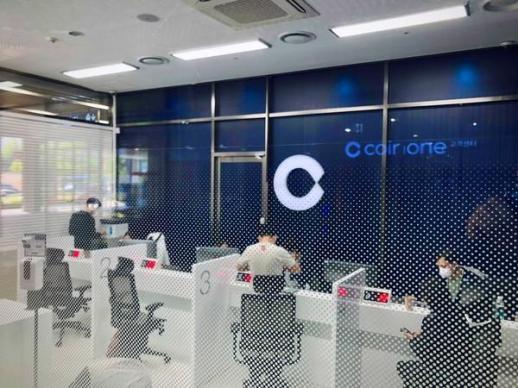 Korea Investment & Securities takes 20% of Coinone in crypto deal SEOUL, June 4 (AJP) - Korea Investment & Securities has acquired about 20 percent of cryptocurrency exchange Coinone and formed a joint-shareholder structure with global exchange OKX and Com2uS Holdings, the firm said on Thursday. The move positions the company to become an issuance hub for security tokens ahead of new rules taking effect early next year. The brokerage acquired 159,610 Coinone shares in total, combining 68,894 existing shares held by Com2uS Holdings with 90,716 newly issued shares, in a deal reported at around 80 billion won (US$52.3 million). The purchase makes Korea Investment & Securities the third-largest shareholder in Coinone at roughly 20 percent, behind Coinone chief executive Cha Myung-hoon at 30.36 percent and Com2uS Holdings at 24.54 percent. OKX secured a stake of about 20 percent as well, joining as a co-third-largest shareholder. Presenting the partnership at a joint press conference at Coinone's headquarters in Yeouido, Seoul, Korea Investment & Securities president Kim Sung-hwan called the deal a strategic rather than a financial investment, "aimed at preempting the role of a hub connecting institutional finance and the crypto-asset market," and cited Coinone's security record, with no incidents since its founding, as the reason for choosing it. The firm has already sent a request for proposal to market participants to build its own platform for issuing security token offerings, tokenized versions of conventional assets, which it intends to design as an integrated system covering standardized securities such as bonds and money market funds. The timing is tied to a regulatory shift. Under recently revised legislation, the Electronic Securities Act and the Capital Markets Act, brokerages will be able to issue and distribute token securities from early next year, a change expected to create a structure in which securities firms handle issuance while crypto exchanges support distribution. The move also anticipates a roadmap from the Financial Services Commission, which has begun preparing a phased framework for the tokenization of conventional securities and on-chain settlement and is due to release revised subordinate regulations and guidelines in July. A company official said Korea Investment & Securities is separating the two functions, using its own platform for issuance and the KDX consortium for distribution. Korea Investment & Securities said it plans to combine its traditional financial compliance capabilities with Coinone to strengthen internal controls, while pursuing products built on token securities and stablecoin linkages to target the global digital asset market. Whether the bet pays off quickly is another question. S&P Global Ratings, in a recent analysis, judged the impact of the Coinone investment on Korea Investment & Securities' risk-adjusted capital ratio, a measure of capital strength relative to risk, to be limited, and said the stake was unlikely to generate substantial profit in the short term. Its value, the agency concluded, lies in establishing a base for positioning in the digital asset market once the new rules arrive, a payoff measured in years rather than quarters. 2026-06-04 15:57:08
 -
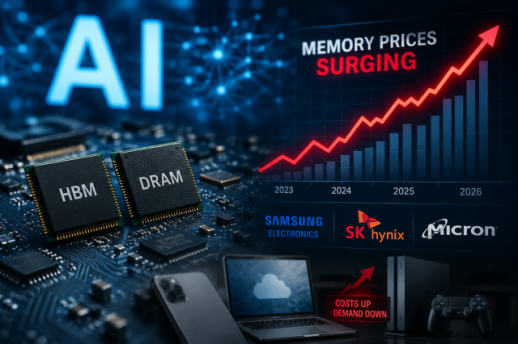 Surge in Memory Chip Prices Driven by AI Demand, Morgan Stanley Warns of 'Chipflation' Investment in artificial intelligence (AI) data centers has triggered a shortage of memory chips, leading to rising prices for electronics and cloud services. Morgan Stanley has labeled this phenomenon as 'chipflation,' indicating that the memory bottleneck has evolved into a macroeconomic concern beyond the semiconductor industry. According to a report by Reuters on June 3, Morgan Stanley stated in a 66-page document that "the issue that began with AI infrastructure bottlenecks is now spreading to hardware margins, device purchasing power, cloud costs, inflation, and policy, becoming a macroeconomic worry." The root cause of the price increases is the soaring demand for memory used in AI applications. Demand for high-bandwidth memory (HBM) and DRAM has surged, but building new factories and expanding production capacity takes years. While some semiconductor companies have begun to expand, Morgan Stanley believes that the complexity and costs involved will make it difficult to resolve the supply shortage in the short term. Analysts suggest that this situation may differ from past semiconductor cycles. Major cloud providers and AI companies are securing production capacity through long-term contracts and advance purchases, creating a competitive environment where traditional PC and smartphone manufacturers are vying for a more limited supply. Morgan Stanley characterized this as a 'sustained supply-demand adjustment' rather than a temporary boom. The cost burden is already shifting to the hardware and cloud markets. Reuters reported that electronics companies like Sony and Lenovo have raised prices, and major tech firms have indicated additional spending due to rising memory costs. Microsoft revealed in April that approximately $25 billion of its projected $190 billion in spending for the year would stem from increased chip prices. Rising prices could dampen demand for PCs and smartphones. Market research firm IDC estimates that the PC and smartphone markets could significantly shrink in 2026 due to price pressures, particularly affecting lower-priced products where purchase delays are likely. Conversely, memory manufacturers are poised to see improved performance. Reuters noted that Samsung Electronics, SK Hynix, and Micron account for about 90% of global DRAM production, with their stock prices rising more than threefold this year. Morgan Stanley analyzed that while memory companies benefit from price increases, margin improvements, and enhanced visibility, hardware manufacturers face challenges in absorbing costs, passing on prices, redesigning products, and the risk of reduced demand. The U.S.-China semiconductor conflict is also exacerbating supply uncertainties. Export restrictions and supply chain fragmentation are tightening memory supply further. Morgan Stanley believes that while subsidies from various countries may help expand production capacity in the long term, they are unlikely to alleviate short-term price pressures.* This article has been translated by AI. 2026-06-04 15:57:00
 -
 South Korea's Trade Surplus with China on the Horizon Amid Semiconductor Boom South Korea is on the verge of returning to a trade surplus with China. After more than four years of deficits, the recovery is largely driven by a surge in semiconductor exports and increased demand for advanced electronic components due to the expansion of the artificial intelligence (AI) industry.This is certainly welcome news. China remains South Korea's largest trading partner and one of its biggest export markets. In recent years, the South Korean economy has faced challenges, including a slowdown in the Chinese economy, shifts in industrial structure, and the U.S.-China conflict, which have all contributed to sluggish exports to China. The trade deficit with China has been viewed not merely as a statistical change but as a warning sign regarding the competitiveness of South Korean manufacturing.However, the prospect of a trade surplus should not be viewed with unqualified optimism. The current recovery does not hold the same significance as in the past.Once, China was a country that struggled to operate its manufacturing sector without South Korean intermediate goods. Semiconductors, displays, steel, and petrochemical products flowed into Chinese factories, which processed them for sale in global markets. This naturally led to substantial trade surpluses for South Korea.Today, however, China is different. It is no longer just the 'world's factory.' Through large-scale national investments and technological development, it is transforming into a powerhouse of advanced manufacturing. In sectors such as steel, shipbuilding, and petrochemicals, as well as batteries and displays, Chinese companies have reached a level that poses a threat to South Korean firms. Some industries have even been assessed as having surpassed South Korean capabilities.The recent recovery in exports to China is primarily driven by semiconductors. Increased investment in AI servers and rising prices for memory chips are boosting exports, but the high dependence on specific items remains a concern. Should the semiconductor market decline or if China accelerates its technological self-sufficiency, the current surplus structure could be jeopardized at any time.Ultimately, what matters is not just the size of the surplus but its substance. A structure that relies solely on selling large quantities to China will not secure sustainable competitiveness. South Korea must supply products and technologies that China cannot produce on its own. This is why technological competitiveness has become more important than price competitiveness.South Korea's focus should be clear. It must continue to widen the technological gap in fields such as AI semiconductors, advanced packaging, next-generation memory, biotechnology, and aerospace—areas where China will find it challenging to catch up in the short term. To ensure that the recent surge in semiconductor exports does not remain a temporary cyclical phenomenon, there must be national-level investments in research and development and industrial growth.Furthermore, the perspective on the Chinese market needs to change. South Korea should move away from a structure centered on intermediate goods exports and expand its competitiveness into consumer goods and services sectors such as K-content, healthcare, tourism, and beauty. At the same time, while maintaining its presence in the Chinese market, a balanced trade strategy that explores new markets in Southeast Asia and India is essential.China presents both a threat and an opportunity for the South Korean economy. While it can no longer compete using past success formulas, it can still become the largest market if it secures new competitive advantages.Now is not the time to rest on the laurels of a surplus created by semiconductors. South Korea must acquire the technologies and industries that China urgently needs to usher in an era of 'super-gap trade.' This is the path to transforming a temporary rebound in trade with China into sustainable national competitiveness. 2026-06-04 15:57:00
 -
 Coupang CLS Launches Heat Illness Prevention Campaign for Delivery Workers Coupang Logistics Service (CLS) announced on June 4 that it has launched a heat illness prevention campaign for contract delivery workers, starting from Ilsan Camp 1 on May 29 and expanding to major camps nationwide.According to CLS, the campaign is aimed at contract delivery workers who are not subject to mandatory health screenings under current regulations, making them more vulnerable to neglect in health management. Medical staff will visit the sites to assess health conditions and promote CLS's fully funded health screening program.CLS set up a health management booth at Ilsan Camp 1, where KMI Korea Medical Institute staff provided consultations on heat illness prevention, encouraged health screening reservations through a prize event, and distributed heat illness prevention kits.On that day, KMI medical staff advised delivery workers on heat illness prevention methods based on their blood pressure, blood sugar, cholesterol, and body composition measurements, as well as their health history.Additionally, Kim Young-woong, CLS Chief Safety Officer (CSO), inspected the large air-conditioned cooling zone system at Ilsan Camp 1 to ensure effective heat illness response measures. CLS also provided prevention kits containing electrolyte drinks, ice neck wraps, oral rehydration salts, and heat illness prevention guideline cards to delivery workers participating in the campaign.CLS operates a large air-conditioned cooling zone equipped with curtains to prevent cold air leakage and ceiling-mounted air conditioning systems. Although external temperatures reached 29 degrees Celsius on the campaign day, the cooling zone maintained a temperature below 20 degrees Celsius.A CLS representative stated, "To achieve tangible health improvement, the participation of contract delivery workers is crucial, and we will continue to encourage their involvement in future activities."Meanwhile, according to the Korea Disease Control and Prevention Agency, heat illnesses occur due to prolonged exposure to high temperatures and include heat stroke, heat exhaustion, heat cramps, heat syncope, and heat edema. The most common, heat exhaustion, occurs when excessive sweating leads to inadequate hydration and salt supply. Those experiencing heat exhaustion should drink water to rehydrate and move to a cool place, such as one with air conditioning, to rest.* This article has been translated by AI. 2026-06-04 15:54:00
 -
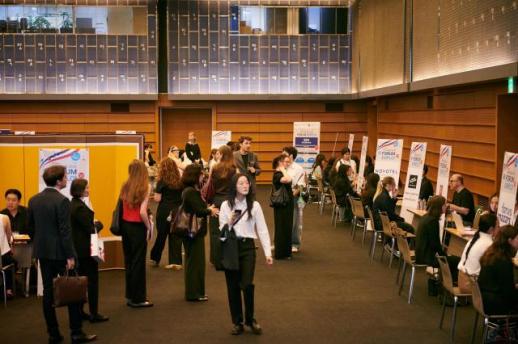 French Chamber of Commerce Hosts Successful 'Career Forum 2026' in Busan The French Chamber of Commerce in Korea (FKCCI) and the French Embassy in Korea co-hosted the 'Career Forum 2026 (Forum Emploi)' last week, with support from the Korea Chamber of Commerce and Industry (KCCI), Pusan National University, and Alumni Day, a global cooperation program of the French Ministry of Foreign Affairs. This year’s event was particularly significant as it was held in Busan for the first time, aligning with the Lee Jae-myung administration's '5 Regions, 3 Special' policy for balanced regional growth. The seventh Career Forum took place on May 27 in Seoul, attracting over 700 attendees who engaged with representatives from 24 major French and global companies, including Louis Vuitton, Novotel, JCDecaux, Richemont, Assurances, Povis Mazar, De'Longhi, and Linas. The event featured conferences across four industry sectors: hospitality and food service, manufacturing, services, and luxury and beauty, providing participants with insights into the latest industry trends, hiring market demands, and various career opportunities. Additionally, the event offered programs aimed at enhancing participants' competitiveness in the international job market, including workshops on resume writing in Korean, English, and French, interview strategies, practical business French, and insights into French corporate culture. The forum continued on May 29 at Pusan National University, marking the first time the event was held in Busan. Approximately 50 participants attended, engaging in various programs designed to facilitate direct interaction between job seekers and company representatives, including recruitment presentations and career talks. The Busan event is seen as a significant milestone, expanding the forum's reach beyond Seoul and creating new opportunities for students and young talent in the southern regions, including Busan and Gyeongnam, to connect with French, Korean, and global companies. The FKCCI aims to connect talent with companies through the Career Forum, promoting global careers for job seekers and continuously strengthening ties within the Korea-France business community. This year marks the 140th anniversary of diplomatic relations between Korea and France and the 40th anniversary of the FKCCI, coinciding with various activities to enhance economic cooperation between the two nations following French President Emmanuel Macron's visit to Korea in April. Since its establishment in 1986, the FKCCI has served as a bridge to foster the Korea-France business community, currently supporting over 475 member companies in their operations within both markets. The FKCCI ranks sixth in revenue among 125 French chambers of commerce worldwide and third among foreign chambers of commerce operating in Korea, based on last year's figures. 2026-06-04 15:54:00