

Journalist

KI SU JEONG
-
 Election Commission Apologizes for Ballot Shortage Amid Ongoing Protests The National Election Commission (NEC) issued a public apology for an unprecedented ballot shortage that prevented voters from casting their votes during the June 3 local elections. Despite the apology, conservative groups have continued to protest outside the NEC headquarters since the previous night, and several top officials have been reported to authorities. On June 4, conservative groups gathered outside the NEC office in Gwacheon, Gyeonggi Province, to express their outrage over the ballot shortage that occurred during the election. Among the protesters was Jeon Han-gil, a lecturer who has long claimed election fraud. He led hundreds of demonstrators in a protest demanding the election be declared invalid. Jeon claimed over a microphone that evidence of election fraud was rampant across the country, while protesters waving South Korean and American flags chanted slogans such as "Election Fraud Legislative Dictatorship," "Declare the Election Invalid," and "Stop the Counting," demanding access to the NEC's main entrance. Other notable figures at the protest included PD Lee Yong-don, Professor Moss Tan from Liberty University in the U.S., and Hwang Kyo-ahn, head of the Liberty and Innovation Party. As daylight broke, some protesters left, but Jeon and others remained at the NEC's main entrance, confronting police who had deployed over 300 officers, including riot police, in anticipation of potential unrest. Complaints have also been filed against key NEC officials. The conservative civic group, the People's Livelihood Countermeasure Committee, reported NEC Chairman Noh Tae-ak, Secretary General Heo Cheol-hoon, Seoul Election Commission Chairman Oh Min-seok, and others to the Seoul Metropolitan Police Agency for abuse of power and neglect of duty. The committee stated, "Depriving citizens of their right to vote undermines and destroys the foundations of liberal democracy," and called for a suspension of the counting process and a national audit until the issue is resolved. Civic group Participation Solidarity also issued a statement criticizing the NEC for its lax management of election procedures, which led to a fundamental infringement of voters' rights. They emphasized that the NEC's excuses were unacceptable given the anticipated increase in voter turnout due to early voting. They called for a thorough investigation to clarify how such a shocking situation occurred and to hold those responsible accountable. Despite ongoing complaints and protests from civic groups, the NEC has firmly stated that there will be no re-election. In a statement, the NEC explained that the ballot shortage at some polling stations on election day does not constitute grounds for postponement or re-election under the Public Election Act. They pledged to make every effort to investigate the matter and implement measures to prevent a recurrence once the counting process is complete. Secretary General Heo also expressed deep regret, stating, "We sincerely apologize for the inconvenience caused to citizens who came to exercise their precious right to vote and for undermining public trust in fair election management. The NEC recognizes the seriousness of this issue and will accurately identify the causes and problems behind the ballot shortages at certain polling stations and establish preventive measures immediately after the counting concludes." On June 3, some polling stations in Gangnam, Gwangjin, and Songpa districts of Seoul experienced ballot shortages, leading to disruptions in voting. In some locations, voting was halted around 4:10 PM, and voters were issued waiting numbers. The NEC later confirmed that 14 polling stations (12 in Songpa, 1 in Gangnam, and 1 in Gwangjin) were affected by the ballot shortage. However, the People Power Party claimed that ballot shortages also occurred at some polling stations in Incheon’s Yeonsu District and Dongtan District in Gyeonggi Province.* This article has been translated by AI. 2026-06-04 15:12:00
 -
 Farmers' Cooperative Invests $882 Million to Support Onion Prices Amid Decline Recently, as onion prices have plummeted, the National Agricultural Cooperative Federation (NACF) announced on June 4 that it will invest 882 billion won (approximately $682 million) to implement additional purchases and loss compensation measures for farmers.According to the NACF, the wholesale price of onions at Garak Market last month was 570 won per kilogram, a 30% decrease from 812 won during the same period last year. In response, the NACF is rolling out support measures ahead of the peak shipping season for mid-late season onions to stabilize farmers' operations.To facilitate additional purchases of onions from local cooperatives, the NACF will allocate 800 billion won in special interest-free funds and focus on supporting packaging and sorting operations.Additionally, a 32 billion won loss compensation program will be implemented. If the market price of onions shipped through the NACF falls below the standard price, farmers will receive up to 200 won per kilogram in support. Cooperatives participating in joint marketing will also receive compensation of 50 to 150 won per kilogram for incurred losses.The NACF plans to promote onion consumption through a 24 billion won initiative utilizing its nationwide distribution network. This includes large discount events at Hanaro Mart, providing onion juice at NACF financial branches as cooling stations, distributing onions to customers at NACF gas stations, enhancing sales at direct agricultural markets, and increasing supply to military units.Kang Ho-dong, Chairman of the NACF, stated, "The ongoing price weakness due to increased onion supply this year has significantly impacted farmers. The NACF will mobilize all its resources to ensure that the onions cultivated by farmers receive fair prices."* This article has been translated by AI. 2026-06-04 15:12:00
 -
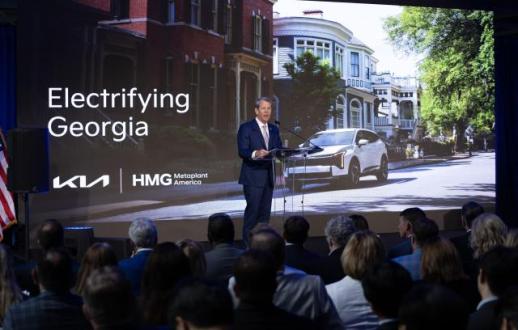 Kia begins production of hybrid version of Sportage SUV at Georgia plant SEOUL, June 4 (AJP) - Kia has begun production of the hybrid version of its Sportage SUV at a plant in Georgia, U.S., marking the first Kia model and first hybrid vehicle in the plant's lineup, the automaker said on Thursday. Kia America and Hyundai Motor Group Metaplant America (HMGMA) held a ceremony at the Ellabell, Georgia, plant on Tuesday to mark the start of production, with the first vehicle produced there brought onto the stage by an autonomous parking robot. The Sportage is the third model to be built at HMGMA, following Hyundai's Ioniq series of electric vehicles. Kia said the addition expands the plant's scope to cover both electric and hybrid vehicles. The start of production gives Kia more capacity to serve the U.S. SUV market and supports its broader push to electrify its lineup in North America. Kia plans to combine production capacity at HMGMA with its existing plant in West Point, Georgia, to secure annual production capacity of up to 550,000 vehicles by 2030. Tuesday's ceremony was attended by Georgia governor Brian Kemp, Kia North America and Kia America President and CEO Yoon Seung-kyu, HMGMA CEO Tony Heo, Korean Consul General in Atlanta Lee Jun-ho, and other employees. Kemp said HMGMA has built a strong team since production began in 2025 and is now adding another vehicle for customers across the country. Yoon said the Metaplant represents Kia's second major investment in Georgia and reflects the company's view of the state as a growing automotive manufacturing center. "The Sportage, which received product upgrades last year, is one of Kia's best-selling models," Yoon said. "Production at the Metaplant is expected to further strengthen Kia's growth in the U.S." Heo said the plant was able to prepare for its first hybrid and first Kia model through its flexible production system and manufacturing capabilities. 2026-06-04 15:10:31
 -
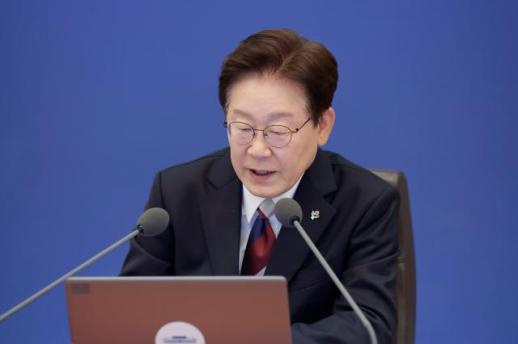 President Lee Emphasizes Cooperation with New Local Governments President Lee Jae-myung stated on June 4 that with the elections concluded, the political sphere must unite to focus on improving the livelihoods of citizens, achieving regional balanced development, and fostering national unity.During a senior secretary meeting at the Blue House, President Lee congratulated those who were elected and offered condolences to those who faced disappointing results.Wearing a tie featuring blue, red, and white colors to symbolize unity, President Lee emphasized, "Regardless of the competition during the election, all parties must work together as partners to protect the lives of the people and build a better future for the nation." He pledged that the government would humbly respect the will of the people expressed in the local elections and actively cooperate with newly elected local governments, regardless of their political affiliations.He added, "We will gather the hearts of all citizens and devote our efforts to advancing their lives and the development of South Korea."President Lee noted that today marks the beginning of the second year of his administration, stating, "All public officials must tighten their shoelaces and focus their efforts on accelerating government policy implementation."However, he expressed significant regret regarding the shortage of voting papers that occurred in some areas of the capital region during the June 3 local elections. He remarked, "It is deeply regrettable that there were unacceptable gaps in election management, which should be thorough in a democratic republic."He pointed out, "All state agencies have a duty to ensure that there are no gaps in the process of exercising the sacred right to vote. Unfortunately, residents in some areas of Seoul experienced significant confusion and inconvenience due to the lack of voting papers."President Lee emphasized that relevant authorities must use all the powers and responsibilities of the executive branch to clarify the reasons for the issues that arose and hold accountable those who should be responsible.Additionally, regarding disaster prevention and safety measures for the summer season, he urged, "We must mobilize all available resources to prevent disasters such as heatstroke, flooding, landslides, and collapses of retaining walls, which often lead to significant casualties in summer." He called for thorough inspections of high-risk areas, including construction sites and aging public facilities.He also directed that improvements to break areas for facility management workers, such as security and cleaning staff, be reflected in public institution evaluations. President Lee noted, "While the right to rest for facility management workers is legally guaranteed, the actual situation on the ground remains inadequate. All central and local governments, as well as public institutions, must expedite improvements to these facilities and reflect the results in their evaluations."He added, "I urge the upcoming ninth local governments to pay special attention to this matter and ensure that the basic rights of those who quietly support the lives of citizens in unseen ways are guaranteed." 2026-06-04 15:09:00
 -
 Korean Beef Promotion Agency Promotes Beef Jerky on Jerky Day The Korean Beef Promotion Agency launched a campaign to promote Korean beef jerky on June 4, coinciding with Jerky Day. According to the agency, Jerky Day is a unique food industry celebration derived from the pronunciation of the numbers 6 (육) and 4 (포). As the trend of "healthy pleasure" gains traction, beef jerky is increasingly recognized as a convenient snack for protein supplementation, moving beyond its traditional role as a drinking companion. The agency is actively promoting the idea that Korean beef jerky is an ideal food for nutrition before and after outdoor activities and exercise. With the rise in hiking and camping activities, the advantages of beef jerky become even more apparent. It is individually packaged for easy consumption without cooking and requires minimal refrigeration, making it convenient to carry. Its compact size is also beneficial for hiking and camping. Nutritionally, Korean beef jerky is competitive. A 30-gram bag contains about 13 grams of protein, equivalent to a typical protein bar, while only providing 98 calories and 3 grams of fat, making it an easy option for protein supplementation around workouts. The animal protein in Korean beef is well-balanced with essential amino acids, which can aid in muscle maintenance and growth. It also contains various nutrients such as zinc, iron, and B vitamins, contributing to normal energy metabolism and bodily functions. Trust in the ingredients is another differentiating factor for Korean beef jerky. It is made from cattle raised and processed under strict standards, preserving its rich flavor and umami, with a tender texture that appeals to a wide range of ages. Min Kyung-cheon, chairman of the Korean Beef Promotion Agency, stated, "On Jerky Day, we aim to widely promote the value of Korean beef jerky, which combines taste, nutrition, and convenience. As outdoor activities and exercise increase, we hope people enjoy a healthy and vibrant summer with Korean beef jerky, which provides easy nutrition without the hassle of cooking or storage."* This article has been translated by AI. 2026-06-04 15:06:00
 -
 Labor Minister Kim Young-hoon: Close Support for Labor-Management Negotiations in Second Half of Year The Ministry of Employment and Labor is activating its support system for labor-management negotiations ahead of the wage and collective bargaining season in the second half of the year. In light of the recent explosion at Hanwha Aerospace, the ministry also plans to strengthen joint inspections of industrial safety and labor standards in the defense and semiconductor sectors.On June 4, the ministry held a national agency heads meeting at the Government Sejong Complex, chaired by Minister Kim Young-hoon, to review responses to labor relations, prevent industrial accidents, and assess the impact of the prolonged conflict in the Middle East on the job market.While Samsung Electronics recently reached a wage agreement without a strike, labor disputes over performance bonuses continue among some large companies. In response, the ministry has decided to establish 'Labor-Management Negotiation Support Teams' in eight regional offices across the country. These teams will collaborate with local labor committees to facilitate dialogue and compromise between labor and management and to prevent disputes.During the meeting, Minister Kim stated, "Claims that the revised labor union law triggered recent disputes over performance bonuses are unfounded. We must consider the law's intent to institutionalize dialogue between primary and subcontractors to achieve mutual growth."He emphasized the need to build a close support system to help major workplaces reach agreements through dialogue and compromise, stating that issues related to performance distribution should lead to the growth of companies and the development of both primary and subcontractors, benefiting all stakeholders through social dialogue.The meeting also addressed measures to prevent a recurrence of the recent explosion at Hanwha Aerospace. The ministry plans to conduct urgent joint inspections focusing on industries where production has surged, such as semiconductors and defense, and will implement preventive oversight at sites with a history of similar accidents.Minister Kim remarked, "We need to examine whether defense companies have neglected external oversight and checks due to their status as national security facilities. We must adhere to the principle that there can be no compromise when it comes to safety, and I urge you to focus all efforts on guiding and inspecting industrial safety and labor standards in the defense and semiconductor sectors."The ministry also discussed strategies for responding to extreme heat during the summer months. Before the peak heat season begins, the ministry plans to conduct thorough checks on the implementation of the 'Five Basic Rules for Heat Safety' and guidelines to prevent suffocation accidents in confined spaces. Special attention will be given to construction sites and industries vulnerable to heat, such as logistics and delivery.Additionally, the ministry is preparing for potential sector-specific shocks due to the ongoing conflict in the Middle East. It will enhance guidance on the eligibility requirements for employment retention support funds in sectors such as aviation and plastics, and will assess the employment situation in regions designated for proactive responses to employment crises to provide tailored support.Minister Kim concluded, "We must closely monitor the impact of instability in the Middle East on the labor market and ensure that timely support is provided to local governments to prevent the employment situation in proactive response regions from deteriorating."* This article has been translated by AI. 2026-06-04 15:03:00
 -
 Lee's 'AI Highway' Gains Momentum with West Coast Belt The Lee Jae-myung administration's vision for an 'AI Highway' is expected to gain traction with the establishment of a West Coast belt following the June 3 local elections. On June 4, industry and political sources reported that candidates from the Democratic Party, who made AI industry development a key campaign promise, were elected in regions dense with AI infrastructure, including South Chungcheong, Daejeon, North Jeolla, and South Jeolla. With the Democratic Party dominating the areas surrounding Seoul, analysts believe the groundwork for a nationwide AI expansion route, referred to as the 'AI Highway,' has been laid. The Ministry of Science and ICT previously announced that it would exempt preliminary feasibility studies for AI innovation hub projects in four regions: Gwangju, Daegu, North Jeolla, and South Gyeongsang. The initiative aims to support the development of region-specific AI transformation (AX) models. Key projects include the Gwangju AX demonstration valley, Daegu's regional AX innovation technology development, North Jeolla's collaborative intelligence physical AI-based software platform ecosystem, and South Gyeongsang's human-AI collaborative LAM development and global demonstration project. Among these, the North Jeolla and Gwangju (South Jeolla) hubs have gained new momentum with the election of mayors aligned with the government. Min Hyung-bae, elected as the first mayor of the Gwangju-Jeonnam integrated special city, pledged to create a new growth axis for South Korea by combining the energy industry of Jeonnam with Gwangju's strengths in AI, semiconductors, and mobility. In North Jeolla, Lee Won-taek was elected with a focus on linking the region to the government's AI innovation hubs. The strategic position of South Chungcheong in the West Coast belt is noteworthy. Park Soo-hyun, elected governor of South Chungcheong, emphasized his commitment to aligning with government AI policies, making 'AI Capital Chungcheong' a central campaign promise. With semiconductor clusters and large-scale data center infrastructure, South Chungcheong is expected to play a pivotal role as a practical hub for the AI Highway. In the metropolitan area, the foundation for AI policy alignment has also been established. Choo Mi-ae, elected governor of Gyeonggi Province, expressed her determination to foster the AI industry ecosystem in the region. Incheon Mayor-elect Park Chan-dae also campaigned on expanding AI infrastructure in the metropolitan area, indicating a collaborative framework with government AI policies outside of Seoul. As a result, the Lee Jae-myung administration's AI Highway is likely to accelerate along the West Coast belt connecting Gyeonggi, Incheon, South Chungcheong, Daejeon, North Jeolla, and Gwangju. With the election of opposition party leaders in Daegu and South Gyeongsang, the prioritization of policy alignment has emerged as a new variable among the four AI innovation hubs. In Daegu, Choo Kyung-ho has proposed fostering five future industries: AI, robotics, future mobility, bio, and semiconductors, making economic recovery a top priority. In South Gyeongsang, Governor Park Wan-soo emphasized economic growth and the revitalization of regional key industries. Both leaders have made economic recovery their foremost agenda, prompting discussions on how to align with the current government's policies. In Seoul, Mayor Oh Se-hoon has successfully secured re-election and is expected to continue his independent AI city strategy. Choi Byung-ho, a professor at Korea University’s Human-Inspired AI Research Institute, stated, "Considering energy, manufacturing, and infrastructure, the development of local AI industries will inevitably concentrate along the coastline. With all elected officials prioritizing economic recovery after this local election, it is crucial to determine the direction of that focus. If the emphasis is placed on employment, exports, and value creation through AI, local AI industries will gain strength."* This article has been translated by AI. 2026-06-04 15:00:00
 -
 Naver to Meet Nvidia's Jensen Huang as Physical AI Gains Traction Jensen Huang, CEO of Nvidia, is scheduled to visit Naver's headquarters on June 8 to meet with Naver Chairman Lee Hae-jin, raising interest in the potential expansion of AI collaboration between the two companies. Industry observers are noting Naver's potential emergence as a key player in the Physical AI era, beyond just Sovereign AI. According to industry sources, Naver has proactively secured data and ecosystems, which are critical components of Physical AI. Naver's D2SF currently allocates over 10% of its portfolio to companies related to Physical AI, investing across the entire value chain from perception to action, including vision sensors, behavioral data, industrial AI, and robot control. Physical AI refers to technologies that enable robots, drones, and autonomous vehicles to perceive their surroundings, make judgments, and take actions. While generative AI learns from text and image data on the internet, Physical AI requires learning from real-world data, such as human movements, actions, and spatial information. Naver's strength lies in its data. As the operator of search, shopping, maps, and blogs, it has amassed the largest user data in South Korea. Insights into user interests, consumption patterns, mobility information, and content usage behaviors are seen as valuable assets for future AI applications that aim to understand and predict human behavior. Naver D2SF's investment portfolio aligns with this strategy. 'Summer Robotics' is developing next-generation vision sensors that serve as the eyes of robots, a key technology needed for Physical AI to quickly recognize its environment. 'Movin' has developed the world's first LiDAR-based markerless 3D motion capture technology, which excels in acquiring human motion data necessary for Physical AI learning. 'Machina Labs' is creating an enterprise AI operating system that supports decision-making in industries such as automotive, semiconductors, and defense. 'Clobot' provides software for integrated control and operation of different types of robots. Industry experts evaluate that Naver is securing a technological ecosystem across all areas of Physical AI, including perception, cognition, action, and control. Recently, Naver also invested in 'UbiFly,' a drone company developing AI-based autonomous flight technology. UbiFly raised 60 billion won earlier this year from investors including Kreet Ventures and NXC, marking the largest single investment in a domestic drone startup. Drones are considered a representative application of Physical AI, linking to Naver's expansion strategy in defense and logistics. Naver is also recognized as a key player in the Sovereign AI sector. It is a leading full-stack AI provider in South Korea, possessing its own large language model (LLM), cloud services, and data centers. Recently, it has been pursuing the establishment of LLMs based on local languages and Sovereign AI projects in overseas markets, including Saudi Arabia. An industry insider stated, "In the era of generative AI, internet data was crucial, but in the Physical AI era, human behavioral data will become the key asset. Naver is positioned to be a central player in domestic Physical AI, as it secures not only AI models and infrastructure but also data and a startup ecosystem."* This article has been translated by AI. 2026-06-04 15:00:00
 -
 NVIDIA CEO Jensen Huang to Dine at Popular Korean BBQ Ahead of Visit NVIDIA CEO Jensen Huang is set to visit South Korea on June 5, sparking significant interest in the location of his anticipated "pork belly and soju" gathering. On June 4, the online media outlet "Namda-reun Detail" reported that the venue for the dinner has been confirmed as the Seongsu-dong restaurant "Seokam Saengsogeumgui." According to sources in the industry, "NVIDIA has made a reservation at Seokam Saengsogeumgui in Seongsu-dong. Other popular options like 'Ggubdang' and 'Nam Young' were likely unavailable due to high demand from regular customers for reservations, making them unsuitable for a large event." Prior to this confirmation, various social media platforms had circulated a list of potential restaurants where Huang might host the gathering with business leaders. The list included strong contenders such as the stone grill restaurant "Seokam Saengsogeumgui," the well-equipped "Gojibok" known for its aged pork, the Michelin Bib Gourmand recipient "Ggubdang," and the charcoal-grilled pork neck specialty restaurant "Nam Young." In response to the news, one netizen speculated, "The app allows reservations, but if you factor in that Friday evenings are fully booked, the only options left are Ggubdang, Nam Young, and Seokam. I think it will be a place where the staff grills the meat, so Seokam is out. It's between Ggubdang and Nam Young, but Ggubdang is famous for its pork neck... I’d say there’s a 60% chance for Nam Young and 40% for Ggubdang." After the confirmation of Huang's visit to "Seokam Saengsogeumgui," netizens commented, "I don't know if it's a good restaurant, but it will definitely become one," "The owner seems to have hit the lottery," "The wait at the Yongsan location is incredibly long," "Who will grill the meat? Maybe the youngest staff member?" and "Are there related stocks? Salt-grilled meat -> salt -> Sinan -> Sinan Group -> Husteel, I'm going all in on Husteel." 2026-06-04 15:00:00
 -
 Korean Trade Minister Confirms No Increase in U.S. Tariffs Beyond Last Year's Agreement Korean Trade Minister Kim Jeong-kwan stated on June 4 that tariffs imposed on South Korea under the U.S. Trade Law Section 301 will not exceed the levels agreed upon last year. In a post on social media, Kim revealed that he held a video conference with U.S. Secretary of Commerce Gina Raimondo the previous evening. He noted that the meeting focused on reviewing the implementation of the Korea-U.S. tariff agreement and reaffirming both sides' commitment to compliance. Kim emphasized, "We will do our utmost to maintain the balance of benefits achieved through the Korea-U.S. tariff agreement in the future." Last year, South Korea and the U.S. negotiated to lower mutual tariffs to 15% and secured most-favored-nation treatment for semiconductors. Additionally, South Korea committed to a $350 billion investment in the U.S. However, the U.S. government has temporarily applied a 10% global tariff on South Korea following a Supreme Court ruling earlier this year that deemed mutual tariffs illegal. The U.S. Trade Representative (USTR) is conducting a Section 301 investigation to address this situation. Following an announcement of a 12.5% tariff related to forced labor, an investigation into overproduction remains ongoing. Concerns have arisen that the tariff rates could exceed last year's agreement of 15%. Kim's video conference with Raimondo appears to have been aimed at clarifying the U.S. stance on this issue. Earlier, Yeohang-gu, head of the Trade Negotiation Bureau, met with USTR representative Jamieson Greer to stress the importance of maintaining the balance of benefits under the existing Korea-U.S. tariff agreement. According to the Ministry of Trade, Yeohang-gu discussed current issues with Greer during the OECD Ministerial Council Meeting held in Paris on June 3. During this meeting, Yeohang-gu gained insights into the background of the Section 301 investigation results related to the import ban on products made with forced labor and the ongoing investigation into overproduction. He underscored the necessity of maintaining the balance of benefits established by the Korea-U.S. tariff agreement. The U.S. side reportedly reaffirmed its intention to comply with the Korea-U.S. tariff agreement. Both parties also reviewed the status of the commitments made in the joint statement issued by the leaders of both countries last November and agreed to maintain close communication to ensure the smooth implementation of related follow-up measures. Yeohang-gu stated, "It is essential that not only the results of the Section 301 investigation but also future trade issues are discussed within the framework of the Korea-U.S. tariff agreement," adding that they will respond calmly to the remaining Section 301 procedures.* This article has been translated by AI. 2026-06-04 14:51:00