
Journalist

Kang Min seon
-
 KT Prohibits External Directors from Exercising Influence, Revises Ethics Code KT announced that its board of directors held a meeting on May 12, where they approved revisions to the board's ethics code and updates to the external director delegation contracts. The revised ethics code for external directors now includes a provision stating that "external directors shall not exercise influence that undermines fairness or independence regarding the company's personnel, business, or investment matters." External directors will be required to complete a "self-assessment checklist for external director ethics compliance" every six months to ensure adherence to the ethics code. KT aims to strengthen its compliance and ethics-focused board management system through this initiative. The external director delegation contracts have also been updated. The revised contracts specify that external directors must comply with relevant regulations, including laws, the company's articles of incorporation, the corporate governance charter, and the external director ethics code. Additionally, if violations of related regulations or breaches of independence and ethics are recognized, the board may take actions such as issuing warnings, recommending non-participation in board and committee votes, or suggesting resignation through board resolutions. Kim Yong-heon, chair of KT's board of directors, stated, "With the launch of the new board, we are implementing system improvements to enhance compliance with laws and the ethical consciousness of individual directors, thereby establishing a more responsible board management system. We will contribute to the sustainable growth of the company and the enhancement of corporate value through continuous improvements in governance." Meanwhile, KT's board previously amended regulations to expand the management autonomy of the CEO last month.* This article has been translated by AI. 2026-05-14 12:13:26
 -
 Special Prosecutors Launch Investigation into Presidential Office Relocation Audit The second Comprehensive Special Investigation Team, led by Jin Eul-jong, has initiated a forced investigation into the audit process conducted by the Board of Audit and Inspection regarding the relocation of the presidential office and residence during the Yoon Suk Yeol administration. The special prosecutors are focusing on whether any illegal activities occurred during the audits carried out from 2022 to 2024. In a press release on May 14, the special prosecutors stated, "We are investigating whether there were any illegal activities in the audit process concerning the 'relocation of the presidential office and residence.' To secure necessary materials for the investigation, we are executing search warrants at four locations, including the Board of Audit and Inspection and three residences, starting at 9 a.m. today." The special prosecutors noted that they could not disclose specific details about the search targets or the nature of the allegations, citing the ongoing investigation. After taking office, President Yoon Suk Yeol relocated the presidential office to the Ministry of National Defense building in Yongsan and the presidential residence to the former residence of the Minister of Foreign Affairs. Following these changes, allegations of favoritism and illegal activities arose regarding the selection of construction firms and budget execution, prompting the Board of Audit and Inspection to conduct an audit, the results of which were announced last year. During that audit, the Board of Audit and Inspection determined that 21gram, the company overseeing the residence construction, began work before the contract was signed and subcontracted to several unqualified firms, violating the Construction Industry Basic Law. However, key allegations regarding how 21gram was awarded the contract remain unresolved, leading to criticism of the audit's thoroughness. The special prosecutors plan to examine whether the Board of Audit and Inspection failed to adequately investigate the circumstances surrounding the awarding of the construction contract and the budget execution structure, based on the materials secured during the searches. They are also looking into potential connections between 21gram and Kim Geon-hee, as 21gram sponsored exhibitions run by Kim's company, Kobana Contents, and was responsible for the design and construction of its office. Allegations of personal ties between Kim Geon-hee and the company's representative have also been raised. Reports indicate that 21gram demanded payment for construction costs without objective evidence, and that government budgets were improperly reallocated and executed based on directives from the presidential office without proper verification or adjustment. According to the Construction Industry Basic Law, a comprehensive construction business license is required for expansion and structural reinforcement projects, but 21gram is only registered as an interior construction company, raising legal concerns about its involvement in the residence expansion project. It has also been confirmed that 21gram received over 1.4 billion won in construction payments before the completion inspection was conducted. The special prosecutors are expanding their investigation, viewing this as a case of illegal budget reallocation by the government. On the same day, Yoon Jae-soon, former Chief Secretary to the President, is being summoned as a suspect in relation to allegations of abuse of power. He is accused of being involved in the budget reallocation and payment processes during the relocation of the presidential residence. Following the investigation of Kim O-jin, former Vice Minister of Land, Infrastructure and Transport, as a suspect the previous day, the special prosecutors plan to summon Kim Dae-ki, former Chief of Staff to the President, as a suspect on May 15. They have previously secured relevant materials through searches of related government departments, including the Ministry of Strategy and Finance and the Ministry of the Interior and Safety.* This article has been translated by AI. 2026-05-14 12:11:28
 -
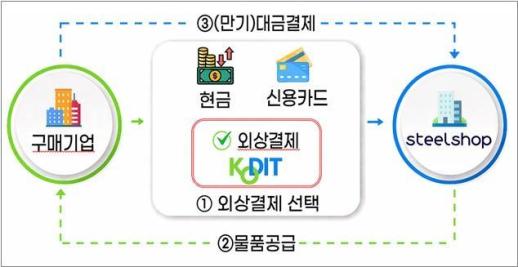 Korea Credit Guarantee Fund Expands Digital Supply Chain Guarantee Service with Dongkuk Steel The Korea Credit Guarantee Fund is expanding its business-to-business (B2B) platform guarantee services to include Dongkuk Steel. On May 14, the fund announced that it will extend its 'Pay-One Guarantee' service, which was previously available to Hyundai Steel, to Dongkuk Steel. The Pay-One Guarantee is an electronic commerce collateral guarantee that allows companies to conduct credit transactions when purchasing goods on B2B platforms. The entire process, from application to issuance and limit management, is carried out within the seller's platform. With this partnership, companies using the guarantee will be able to purchase goods on Dongkuk Steel's steel distribution platform, 'Steel Shop,' using the guarantee certificate as collateral for online credit transactions. This is expected to help purchasing companies reduce cash liquidity burdens while securing necessary raw materials reliably. The process has also been streamlined, eliminating the need for separate visits. By linking the systems of the Credit Guarantee Fund and the distribution platform, automatic assessments based on data will be conducted, allowing companies to receive guarantee certificates on the same day within their pre-assigned limits. The Credit Guarantee Fund believes that this service expansion will contribute to stabilizing raw material supply in the steel industry and enhancing transaction convenience for corporate clients. A fund official stated, “We hope this service expansion will assist steel companies in stabilizing their raw material supply, and we will continue to expand B2B guarantee services across various industries to contribute to building stable supply chains.”* This article has been translated by AI. 2026-05-14 12:09:53
 -
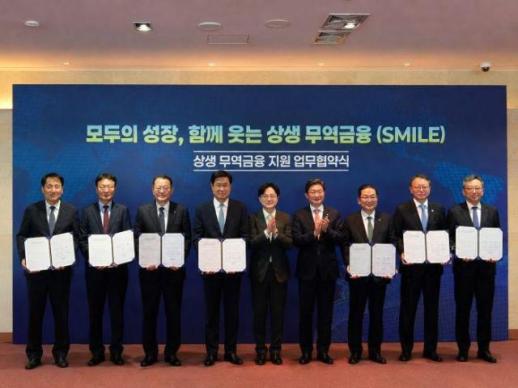 Shinhan, Hana, and Woori Banks Provide 1 Trillion Won to Support Korean Shipbuilders Major commercial banks are launching a 1 trillion won financial support initiative to enhance the export competitiveness and supply chain stability of the shipbuilding industry.On May 14, financial sources reported that Shinhan Bank, Hana Bank, and Woori Bank signed a financial cooperation agreement to provide 1 trillion won to the suppliers of their main client companies, Samsung Heavy Industries, HD Hyundai Heavy Industries, and Hanwha Ocean.The signing ceremony took place on May 13 at the Hotel Hyundai by Lahan in Ulsan, attended by Minister of Trade, Industry and Energy Kim Jeong-kwan, Financial Services Commission Chairman Lee Ok-won, and the presidents of the three banks, among others.This agreement aims to provide stable liquidity to the suppliers of the shipbuilders, strengthening the export supply chain and supporting the co-prosperity of large corporations with small and medium-sized enterprises. President Yoon Suk Yeol emphasized the importance of government support for maintaining employment and developing the shipbuilding ecosystem during a meeting with industry representatives the previous day.Initially, Shinhan Bank and Samsung Heavy Industries will jointly contribute 21.3 billion won, with the Korea Trade Insurance Corporation providing a total of 300 billion won in special guarantees to Samsung Heavy Industries' suppliers. The selected companies will benefit from liquidity support through special guarantees and full coverage of guarantee fees, reducing their financing costs.Hana Bank plans to provide a total of 400 billion won in financing to support the management stability of small shipbuilders and equipment suppliers in collaboration with HD Hyundai Heavy Industries. Earlier in January, the two companies contributed a total of 28 billion won (Hana Bank 23 billion won, HD Hyundai Heavy Industries 5 billion won) to the Korea Trade Insurance Corporation and signed a business agreement for preferential financial support for recommended suppliers.Woori Bank also plans to supply a total of 300 billion won in financial support through a joint contribution with Hanwha Ocean, with Woori Bank contributing 17.8 billion won and Hanwha Ocean 3.5 billion won. The two banks will utilize the Trade Insurance Corporation's guarantee program to provide trade finance and corporate working capital loans to small and medium-sized suppliers within the shipbuilding supply chain.* This article has been translated by AI. 2026-05-14 12:09:07
 -
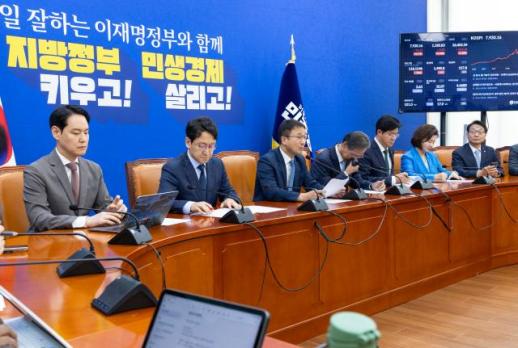 Democratic Party Urges People Power Party to Cease Negative Campaigning The Democratic Party called on the People Power Party on May 14 to refrain from negative campaigning, stating it would respond firmly to falsehoods. Han Byeong-do, the party's floor leader, urged the opposition to stop spreading misinformation ahead of the June 3 local elections. During a policy coordination meeting at the National Assembly, Han referenced the People Power Party's recent allegations against Jeong Won-o, the party's candidate for Seoul mayor, regarding a past violent conviction. He described the claims as "merely one-sided assertions based on the opposing side's statements from 30 years ago." Han further noted that similar unfounded allegations had been made against Lee Jae-myung, the then-Gyeonggi governor, during his own tenure as a lawmaker. He emphasized that the repetition of such negative campaigning must be met with serious and decisive action. Lee Joo-hee, the party's spokesperson, commented that while competitive elections can be beneficial, the current situation involves the People Power Party focusing on discrediting opponents without presenting concrete policies. She expressed concern that the continuation of such tactics, which go beyond simple criticism to include falsehoods, would increase public fatigue. Lee urged the People Power Party to refrain from negative campaigning based on misinformation.* This article has been translated by AI. 2026-05-14 12:06:29
 -
 Hanwha Aerospace Demonstrates Integrated Combat System in Romania Hanwha Aerospace has successfully completed a demonstration of its integrated manned and unmanned combat system in Romania.The company announced on May 14 that it was the only South Korean firm to participate in a performance demonstration event linked to the International Defense Exhibition (BSDA 2026) held at an outdoor tactical training site near Bucharest.The demonstration showcased the integrated operation of the Tigon wheeled armored vehicle, the GRUNT multipurpose unmanned vehicle, and Estonia's Milrem Robotics-developed THeMIS. The event particularly highlighted a future battlefield scenario where manned armored vehicles and unmanned ground vehicles work in tandem. The GRUNT and THeMIS unmanned ground vehicles were deployed in advance to conduct reconnaissance and surveillance missions in hazardous areas, while the Tigon armored vehicle was responsible for troop transport and fire support.Subsequently, the demonstration included the use of unmanned vehicles for logistics supply and casualty evacuation. The GRUNT is a next-generation multipurpose unmanned vehicle developed based on the existing Arion-SMET. It drew attention for its hybrid drive system, a maximum payload capacity of 900 kg, autonomous follow driving, automatic recognition and tracking, and electronic warfare response capabilities.This event is significant as it marks the first live performance demonstration of a domestically developed military unmanned vehicle in Europe, showcasing its competitiveness in the European and global multipurpose unmanned vehicle market.Recently, there has been a growing demand in the defense industry for integrated manned and unmanned systems to reduce troop losses and enhance operational sustainability.Park Byeong-ho, head of Hanwha Aerospace's LS4 project division, stated, "The successful completion of the first performance demonstration of domestically developed UGVs in Europe has proven our technological competitiveness and operational scalability in the global market. It is also meaningful in that it has validated the capabilities of integrated manned and unmanned systems in a practical environment, suggesting a direction for the development of multipurpose unmanned systems that the South Korean military is pursuing."* This article has been translated by AI. 2026-05-14 12:05:37
 -
 Rise in A Grades at U.S. Colleges Linked to ChatGPT Use A study has found that the introduction of OpenAI's ChatGPT has led to a rapid increase in A grades at U.S. colleges, particularly in courses with heavy writing and coding assignments. The influence of generative artificial intelligence (AI) on assignment evaluations is raising concerns about the reliability of grades as a hiring criterion for companies. According to a report by The Wall Street Journal on May 13, Igor Chirikov, a senior researcher at the University of California, Berkeley's Center for Studies in Higher Education, stated in a recently published paper that the proportion of A grades in college courses with high potential for AI use has significantly increased since the release of ChatGPT. Chirikov analyzed over 500,000 grades from a large public university in Texas between 2018 and 2025. The university's transparency in sharing syllabi and grade distributions allowed for a comparison of assignment types and grade changes across courses. The analysis revealed a notable increase in A grades in courses with substantial writing and coding assignments, particularly in the humanities and engineering fields. Until 2022, there was little difference between courses with high and low exposure to AI, but following the launch of ChatGPT, A grades in AI-exposed courses rose more rapidly. In courses with high AI exposure, the number of A grades awarded by professors increased by approximately 30%. Conversely, the proportion of A- and B+ grades declined. Courses with a higher percentage of homework assignments completed at home also saw a greater likelihood of students receiving A grades. Chirikov expressed skepticism about interpreting this trend as an improvement in student learning outcomes. He suggested that students may be leveraging generative AI to enhance their assignment results. "Learning requires a process of solving problems independently, and AI can weaken this process," he noted. The implications extend to corporate hiring practices. As the job market for new graduates cools, companies are tightening their criteria for filtering applicants. According to the National Association of Colleges and Employers, the percentage of companies using GPA as a hiring criterion increased from 37% in 2023 to 42% recently. Global investment banks like Barclays and Morgan Stanley have set minimum GPA requirements for certain internship positions. However, the proliferation of AI is clouding the significance of GPA. Just as AI has diminished the reliability of evaluations for cover letters and resumes, there are growing concerns that grades may reflect a student's access to and ability to use AI rather than their actual capabilities. Some prestigious universities are beginning to address the issue of relaxed grading standards. Harvard University is discussing a cap on the percentage of A grades awarded, while Yale University noted in a report last month that "grades are meant to convey what a student has learned, but currently, they are not fulfilling that function effectively." In response to these challenges, some universities are moving to change their evaluation methods. Chelsea Shine, a professor teaching negotiation and business ethics at the Wharton School of the University of Pennsylvania, confirmed that after recognizing the ease with which students could achieve perfect scores on assignments using AI, she has reduced the weight of homework and increased the emphasis on midterms and in-class quizzes.* This article has been translated by AI. 2026-05-14 12:01:41
 -
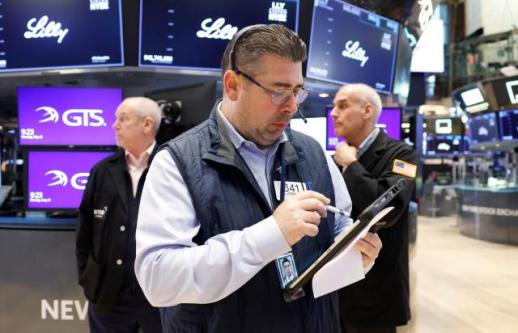 U.S. Semiconductor Stocks Reach Highest Overbought Levels Since Dot-Com Bubble U.S. semiconductor stocks are signaling the highest levels of overheating since the dot-com bubble. While expectations for increased investment in artificial intelligence (AI) infrastructure have driven a rally in semiconductor stocks, concerns are rising that the sector's growing weight could pose risks to the broader U.S. stock market. According to Reuters on May 13, the Philadelphia Semiconductor Index (SOX) surged 64% since late March. In comparison, the S&P 500 index rose about 17% during the same period. Notably, Micron and AMD saw their shares jump by 138% and 129%, respectively, while Intel's stock skyrocketed nearly 193%. Reuters noted that large capital expenditures for AI infrastructure have boosted semiconductor demand, resulting in an investment frenzy that has spread beyond Nvidia, which initially led the charge. Steve Edwards, a senior investment strategist at Morgan Stanley Wealth Management, described the situation as a "perfect combination," stating, "There is a solid fundamental story, and the technical momentum is quite strong." He added, "These two factors have created a very enthusiastic and optimistic investor base, driving momentum forward." However, even optimistic investors in semiconductor stocks are preparing for a potential cooling of the rally. Reuters reported that the recent surge in semiconductor stocks is being compared to the dot-com bubble of 1999-2000. Peter Tuz, president of Chase Investment Counsel, remarked, "Whenever you see something rising parabolically, you have to ask yourself, 'Is the mood getting too euphoric?'" He indicated that he has sold some Qualcomm shares in response. Technical indicators are also flashing warning signs. On May 8, the SOX's weekly Relative Strength Index (RSI) reached 85.5. The RSI is a technical indicator that shows overbought or oversold levels of an asset, and this figure marks the highest overbought level since the peak of the dot-com bubble in March 2000. Investor Michael Burry, known for his role in the film "The Big Short," has maintained his put option bets on the iShares Semiconductor ETF (SOXX). Put options give the holder the right to sell an asset at a predetermined price, typically used to bet on price declines. The overheating of semiconductor stocks is also seen as a burden on the broader U.S. stock market. Currently, semiconductor and semiconductor equipment stocks account for 18% of the S&P 500 index. According to institutional brokerage Johnstreead, 70% of the $5.1 trillion increase in market capitalization for the S&P 500 this year has come from gains in semiconductor and memory stocks. Michael O'Rourke, chief market strategist at Johnstreead, warned, "Now that they occupy such a large share of the S&P 500, any correction or disappointment could pose risks to the broader market." Continued Optimism Despite these concerns, optimism about the semiconductor sector remains strong. Market research firm Gartner forecasts that global semiconductor revenue will increase by 64% this year, reaching $1.3 trillion. Earnings for semiconductor and semiconductor equipment companies within the S&P 500 are also expected to rise by about 95%, significantly exceeding the initial forecast of 62% growth at the beginning of the year. King Lip, chief strategist at Baker Avenue Wealth Management, stated, "There is demand for AI infrastructure and computing and networking, which represents a multi-year capital expenditure cycle, and we see this as a very interesting trend for semiconductors." Ayako Yoshinaka, senior investment strategist at Wells Enhancement, added, "Considering the fundamentals driving many of these companies, I believe there is still room for growth."* This article has been translated by AI. 2026-05-14 12:00:54
 -
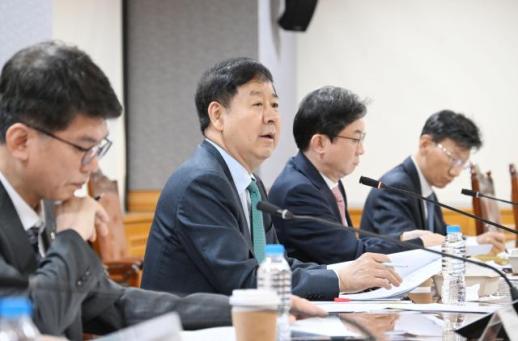 Samsung Strike Could Impact South Korean Economy, Government Warns 정부는 삼성전자의 파업이 현실화 될 경우 한국경제의 성장 뿐 아니라 수출, 금융시장 등 전방위적인 타격이 발생할 것으로 보고 문제 해결에 속도를 내야 한다는 입장을 밝혔다. Koo Yoon-cheol, Deputy Prime Minister and Minister of Economy and Finance, chaired a joint "Market Situation Inspection Meeting" at the Bankers Association in Seoul, where he reviewed recent trends in the financial and foreign exchange markets and assessed risk factors. The meeting included Bank of Korea Governor Shin Hyun-song, Financial Services Commission Chairman Lee Ok-won, and Financial Supervisory Service Chairman Lee Chan-jin. During the meeting, participants discussed the potential impact of a strike at Samsung Electronics on the South Korean economy. They expressed concerns that such a strike could pose significant risks to growth, exports, and the financial market. The attendees emphasized the need for prompt and principled negotiations between labor and management to resolve the issue before a strike occurs. The participants noted that the South Korean economy is showing stronger growth than previously expected, driven by robust semiconductor performance, while the fundamentals of the macroeconomy and the financial and foreign exchange markets remain solid. However, they also acknowledged ongoing uncertainties due to conflicts in the Middle East, which have contributed to rising government bond yields and exchange rates, indicating persistent volatility in the financial and foreign exchange markets. Amid these risk factors, there were concerns about increased stock selling by foreign investors and speculative trading offshore, which have heightened volatility in the foreign exchange market compared to the fundamentals of the South Korean economy. Nevertheless, some participants suggested that if external uncertainties, such as the Middle East conflicts, are resolved, the foreign exchange market could stabilize in the near future. They pointed out that favorable conditions, including healthy foreign liquidity and recent institutional improvements like the inclusion in the World Government Bond Index (WGBI), the National Pension Service's new framework, and the return of domestic market accounts (RIA), contribute to supply and demand stability. Additionally, the historically high current account surplus is seen as a supportive factor for market stability. Overall, the stock and bond markets are showing generally positive trends. The KOSPI index recently reached the upper 7,000s, marking a significant leap in market capitalization. Participants stressed the importance of continuously improving the capital market structure to elevate South Korea to a leading global market. The bond market has risen due to expectations of domestic economic growth stemming from strong first-quarter GDP performance. Furthermore, the structural demand for Korean government bonds has improved with foreign capital inflows following WGBI inclusion, allowing for stable management of the bond market.* This article has been translated by AI. 2026-05-14 11:53:30
 -
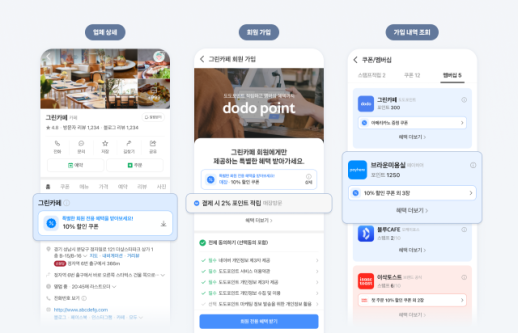 Naver Place Enhances CRM Integration to Retain Loyal Customers Naver Place is expanding its integration with customer relationship management (CRM) services to enhance the convenience of membership management for business owners. On May 14, Naver announced that business owners using Naver Place can now utilize membership integration features with CRM services such as Dodo Point, Pay Here, and Okay Force through the Smart Place system. Dodo Point, Pay Here, and Okay Force offer marketing solutions that include coupon issuance, point accumulation, and discount benefits for membership members. With the integration of Naver Place and CRM, promotions and benefits for members can now be accessed through Naver Place and Naver Maps. The status of membership benefits, including discount coupons, will be displayed on store pages within Naver Place and Naver Maps. Naver believes this will facilitate better management of loyal customers. Users can explore stores or make reservations on Naver Place and Naver Maps while immediately receiving membership-linked coupons and information about point accumulation benefits. MY Place offers a feature that allows users to view membership and benefit information for each business at a glance. According to Naver, one in four users who downloaded membership-exclusive coupons from store pages used those coupons during payment. The company assesses that the integration of Place and CRM is effectively driving customer traffic and increasing sales. In addition to CRM, Naver Place is also expanding integration with membership management systems operated by franchise brands. In February, Naver began integrating with the membership management system of the Toast franchise, Isaac Toast. Naver plans to continuously enhance the connectivity between Naver Pay Connect devices and Naver Place memberships throughout the year. Naver Pay Connect provides features for ordering, payment, writing reviews, and accumulating points. Various service functions linked to Place memberships, such as membership sign-up and stamp coupon application, will also be added. Recognizing the growing importance of user data acquisition in the era of generative AI, Naver is expanding its data collection scope to offline environments. The offline payment device, Naver Pay Connect, is being utilized as a key tool for this purpose. Naver Pay Connect is integrated with Naver Place, allowing for the accumulation of user-generated content (UGC) from both business owners and users. Through this strategy, Naver aims to build a data ecosystem that encompasses not only online platforms but also offline small businesses. Naver Pay Connect devices are currently being implemented in various establishments, including restaurants and beauty salons. Naver anticipates that this will create a seamless process for location exploration, reservations/orders, payments, point usage and accumulation, and reviews. Lee Se-hoon, head of Naver Place business planning, stated, "We introduced the membership integration service to help Place business owners expand their new customer base while consistently managing their loyal customers. In the future, we plan to effectively support business operations by enhancing the integration of ordering, reservations, reviews, and memberships in line with the expansion of Npay Connect devices."* This article has been translated by AI. 2026-05-14 11:50:58